
GuideAlabaster Dawn
Alabaster Dawn Dungeons Guide: Exploration and Settlements
About the game
Alabaster Dawn
Radical Fish Games · Radical Fish Games
This Alabaster Dawn dungeons guide covers the other half of what the skill tree guide doesn't: not how to build your character, but how the exploration loop connects to your build. If you're newer to the game, the Alabaster Dawn early access overview covers the basics, while the Alabaster Dawn complete guide hub gathers the current cluster coverage.
The exploration loop in Alabaster Dawn is genuinely different from CrossCode's. Radical Fish changed the design philosophy, and understanding how the dungeons and settlement restoration work together changes how you approach the game's pacing.
TL;DR: Alabaster Dawn dungeons are shorter and less puzzle-dense than CrossCode. Settlement restoration is the exploration reward loop: it unlocks mastery materials, new areas, and better shops. Reach the first settlement restoration before committing your mastery build. The world map lets you place your own reminders and mark objectives, so getting stuck never lasts long. Chapter 2 introduces elemental resists, so prep your coverage before entering.
Alabaster Dawn dungeons guide: how exploration actually works (quick answer)
Alabaster Dawn's exploration loop has three parts that feed each other. The broader Alabaster Dawn review explains why that loop matters to the game's Early Access pacing:
- Dungeons produce loot and materials
- Materials feed settlement restoration
- Restored settlements unlock better mastery materials and dungeon access
CrossCode players expecting long, intricate puzzle dungeons will find this loop unfamiliar at first. Alabaster Dawn's dungeons are intentionally shorter. A typical Chapter 1 dungeon runs 20-40 minutes, and each one connects to a settlement or zone that has restoration objectives. You're not just clearing dungeons to progress the story; you're building toward the restoration that makes the next dungeon manageable.
Radical Fish also built in a low-friction way to avoid getting lost: the world map lets you drop your own reminders, mark objectives, and fast travel between landmarks and checkpoints, so you decide how much guidance you use.
Alabaster Dawn status: September 2026
Steam currently lists Alabaster Dawn in Early Access at $21.24 with a 15% discount from $24.99 and 2,235 all-language reviews labeled "Very Positive." The latest official 0.2.0 update says the second dungeon, The Trial of Cryo, is mostly complete, but its boss fights and some swamp content are still being finished. The developers now target late September to October for version 0.2.0, so the dungeon loop below should be read as the current 0.1-era guide rather than a promise that the next dungeon has already shipped. The Early Access overview has the wider release context.
Key takeaways
- Dungeons are shorter and less puzzle-dense than CrossCode (designed for progression, not marathon runs)
- Settlement restoration is the primary exploration reward: materials in, unlock out
- Complete the first settlement restoration before your mastery build commits
- The world map lets you drop reminders and mark objectives on demand; nothing is forced on you
- Chapter 2 introduces elemental resists more actively: have elemental coverage ready
- Optional roguelite side story unlocks after finishing the EA narrative (~10 hours)
How the dungeon structure differs from CrossCode
CrossCode's dungeons were technically impressive and demanding. Multi-room puzzle chains required retaining logic across entire dungeon floors. Each dungeon was a significant time investment, and there was no hint system. The community eventually documented every puzzle in detail because the dungeons were genuinely difficult to solve without external reference.
Alabaster Dawn's dungeons are different by design. Radical Fish made a deliberate change: shorter dungeon sequences with fewer multi-room logic dependencies. The puzzles exist, but they're self-contained within smaller areas. You're not tracking a solution across three rooms while also fighting enemies; you're solving something in the room you're in, moving on, and continuing through the dungeon at a pace that feels like an action RPG rather than a puzzle marathon.
The world map's reminder and objective-marker system is the capstone of this philosophy. In CrossCode, a player stuck on a puzzle had no official recourse beyond community documentation. In Alabaster Dawn, you can pin a note to yourself, mark a target on the map, or fast travel back to a landmark and reassess, all without leaving the flow of exploration. The intent is to keep exploration moving without removing the challenge for players who want to solve puzzles independently.
Both approaches are valid. CrossCode's dungeon design was a defining feature of the game for players who loved its complexity. Alabaster Dawn's approach is designed to make the exploration loop sustainable across a longer development timeline, where new content arrives in Early Access updates and players are expected to revisit the world repeatedly.
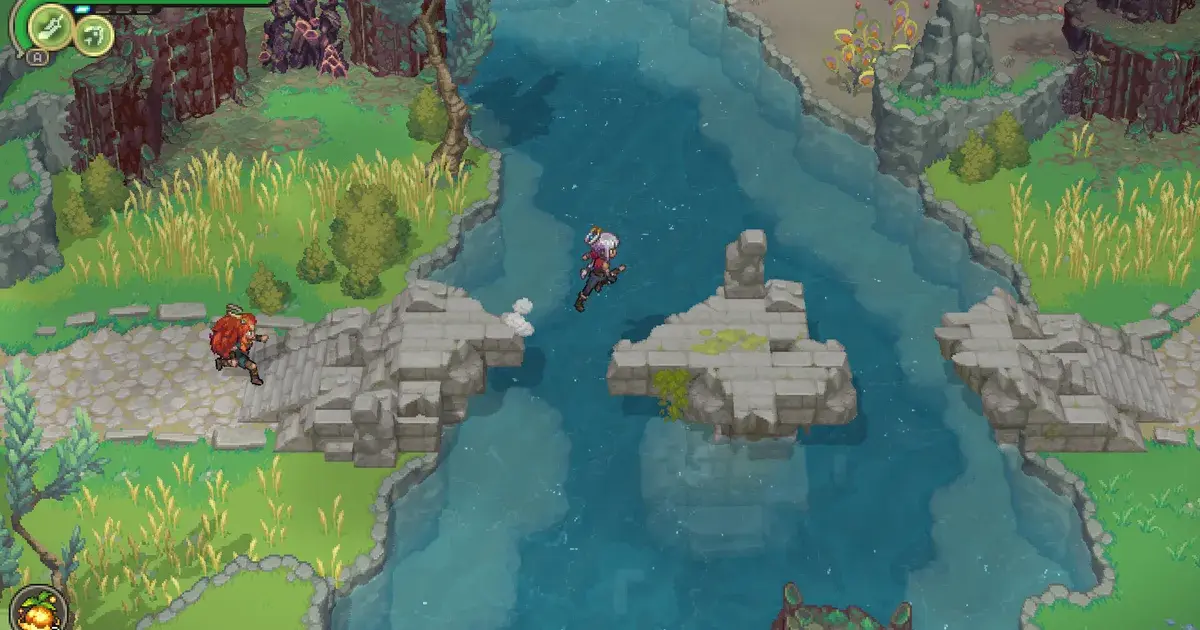
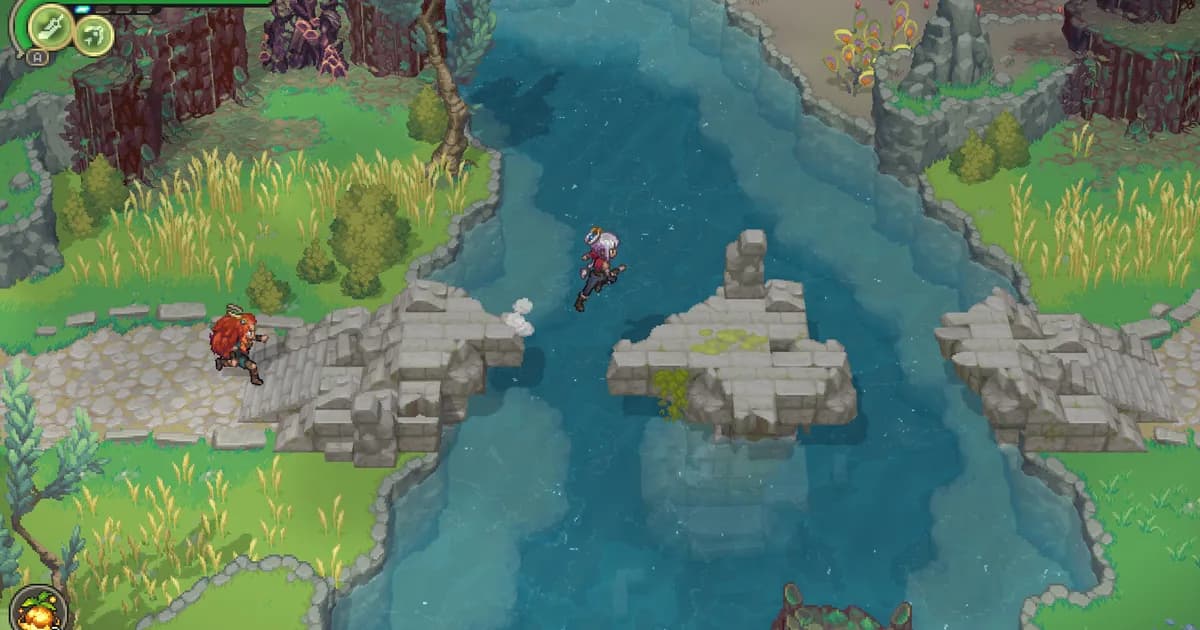
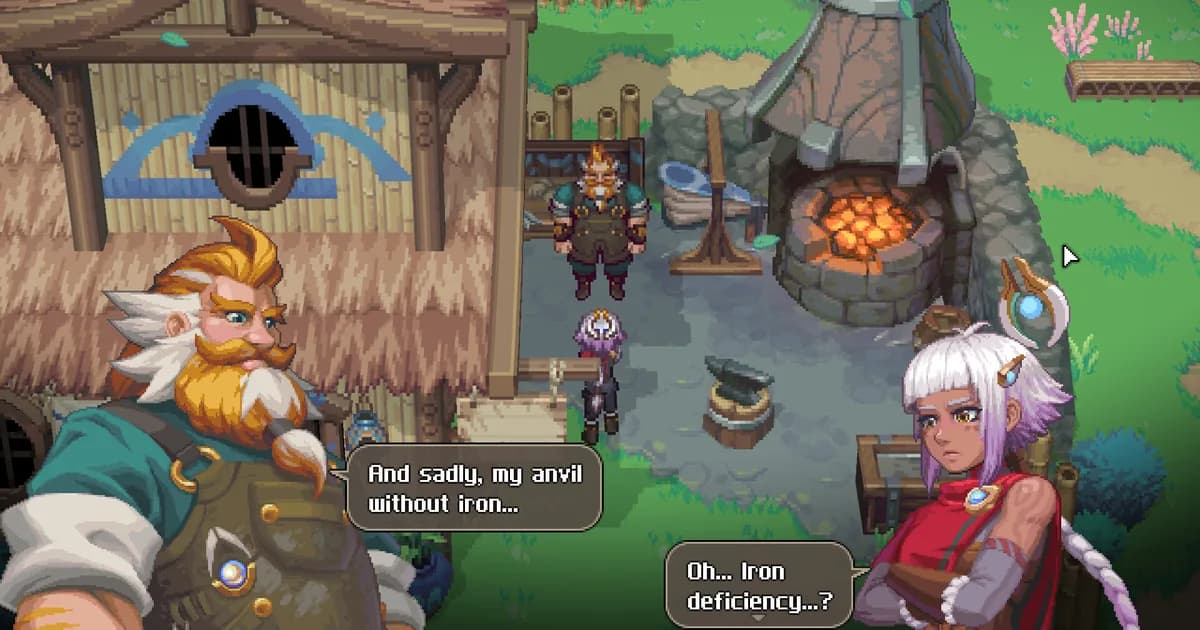
Overworld traversal between dungeon zones, the shorter, more self-contained sequences that replace CrossCode's longer multi-room puzzle chains.
GODEEPER: The tips guide covers how the weapon and element system works in general, including how to approach Chapter 1 encounters before the dungeon complexity increases. Alabaster Dawn Tips: Weapons, Elements, and Cabbage →
Settlement restoration: why it matters for your build
Settlement restoration isn't just a cosmetic reward. Restored settlements unlock:
- Mastery material sources: new drops and crafting options that aren't available before restoration
- Shop inventory expansions: weapon options and consumables that improve your run
- Adjacent dungeon access: some areas gate on settlements being partially or fully restored
The skill tree guide is explicit on one timing recommendation: reach the first settlement restoration before locking in your mastery build. This is because the restoration rewards can include items that shift what's worth investing in. Committing to a deep same-element build and then finding the restoration rewards favor a cross-element approach is recoverable but wasteful.
Chapter 1 exploration priority, in order:
- Get to the first settlement restoration milestone
- Collect enough mastery materials to push your primary weapon to Tier 2
- Explore secondary areas for supplementary materials, but don't spread mastery thin doing it
Chapter 1 gives you enough materials for one weapon to reach Tier 2 comfortably. The settlement restoration puts you in a position to know whether your build direction is supported by what unlocks at Tier 3.
Step-by-step: getting to the first settlement restoration
Step 1: Pick your weapon pair based on early drops
Chapter 1's enemy variety is low, so any two weapons will work mechanically. The decision is about elemental coverage for Chapter 2. Pick one element as your primary and one as your secondary. The primary is where your mastery materials go; the secondary provides coverage for Chapter 2 resists.
Step 2: Push primary weapon to Tier 2 before Chapter 2
Tier 2 mastery requires a moderate material investment and unlocks the passive that changes your combat output meaningfully. Tier 3 extends the aerial combo window on aggressive weapon types: it's a visible unlock, not just a stat increase. Getting to Tier 2 is the Chapter 1 completion signal.
Step 3: Reach the first settlement restoration milestone before committing further
Don't invest your Tier 3 materials until you've seen the restoration rewards. The restoration unlocks new mastery material sources, and those sources determine whether a same-element or cross-element build is more practical going into Chapter 2.
Step 4: Complete the first restoration and reassess
After restoration, check what's now available in the settlement shop and what new mastery material drops have opened up. This is where you decide whether to continue the same-element path (faster to Tier 3, less elemental coverage) or swap to cross-element (more coverage, slower to Tier 3).
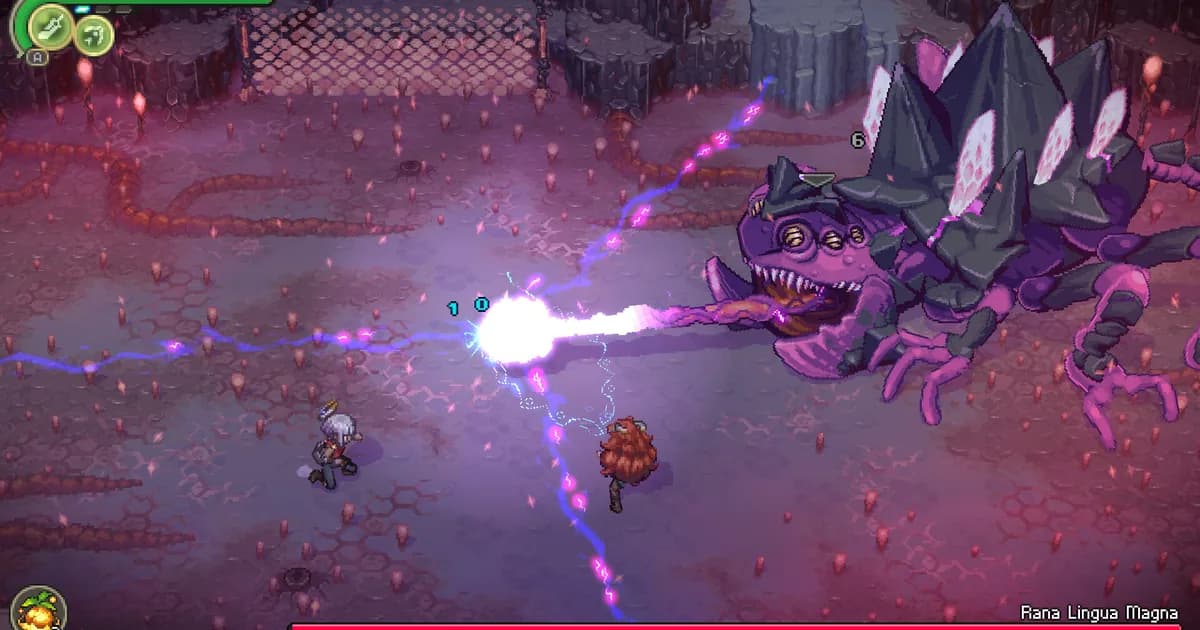
A self-contained dungeon puzzle room, the kind of shorter, single-room sequence Alabaster Dawn favors over CrossCode's longer multi-room logic chains.
Getting unstuck: the world map's hint tools
There's no companion that hands you directional puzzle hints in Alabaster Dawn. That's a common assumption CrossCode veterans bring in, and it's worth correcting before it sends you looking for a feature that isn't there. What Radical Fish actually built is a self-service toolset on the world map: reminders you place yourself, objective markers, and fast travel between landmarks and checkpoints.
Some notes on how it actually works in practice:
Reminders are player-placed, not automatic. If you spot something you can't reach yet or want to remember a location, you mark it yourself. Nothing pops up unprompted to redirect you.
Fast travel shortens the backtrack. Checkpoints and landmarks are fast-travel points, so stepping away from a puzzle to reassess and coming back doesn't cost you the walk.
It works for navigation, not combat. The map tools don't give build or combat advice. If you're stuck in a fight, the combat system and your mastery choices determine the outcome; the map is specifically for spatial and objective confusion.
Cabbage is along for the story, not the puzzles. Juno's sidekick comments on the world and the plot as you explore, but players who finished the current Early Access build report Cabbage doesn't function as a hint system. If you're stuck on a puzzle, the map tools above are what's actually there to help, not a summonable companion.
GODEEPER: The full mastery and build system (including which weapon types benefit most from Tier 3 unlocks and how to read your mastery investment across the two-weapon setup) is covered in the Alabaster Dawn skill tree guide. Alabaster Dawn Skill Tree: Best Builds →
Chapter 2 preparation: what the dungeon design changes
Chapter 2 introduces elemental resists more actively than Chapter 1. In Chapter 1, most enemies take normal damage from all elements. In Chapter 2, enemy types start having genuine resistance to specific elements, which means having one element locked in as your only source of damage creates hard matchup problems.
What same-element builds face in Chapter 2:
Same-element pairings (both weapons from one element) reach Tier 3 faster and have higher peak output within their element's weakness windows. The issue is when an enemy type resists that element: the same-element build fights at a significant disadvantage for that encounter type. Chapter 2 has enough resistant enemy variety that same-element players should expect harder fights on those types.
What cross-element builds handle better:
Cross-element builds (each weapon from a different element) have at least one element with full damage on most Chapter 2 enemy types. Their ceiling is lower than same-element within a weakness window, but their floor against resistant enemies is significantly higher. The Alabaster Dawn tips guide covers the same element-coverage decision from the weapons-first perspective.
The practical preparation:
Before Chapter 2, confirm your secondary weapon has enough mastery to be usable when your primary element is resisted. Tier 1 secondary is the minimum. A secondary weapon at Tier 1 that covers elemental gaps is better than a secondary at Tier 1 that overlaps with your primary's weaknesses.
The first settlement restoration milestone gives you the materials to prepare for this. That's the mechanical link between the exploration loop and the build system.
Tips: common exploration mistakes
Ignoring settlement restoration until forced. The restoration materials come from natural exploration, but players who treat dungeons as purely story progression sometimes find themselves behind on restoration milestones when they need the unlocked shop options or mastery materials.
Not using the map's reminder tools out of CrossCode stubbornness. CrossCode veterans sometimes avoid the map's reminder and marker tools on principle, wanting the original blind-puzzle experience. The dungeons in Alabaster Dawn are genuinely more straightforward, so you'll be stuck less often. But when you are stuck for more than five minutes, dropping a marker and stepping back to reassess is faster than replaying the same room entry repeatedly.
Spending mastery materials on secondary weapon before first restoration. Wait until after the first restoration. The unlocks can change what's worth investing in.
Not checking settlement restoration requirements before a dungeon run. Restoration milestone requirements sometimes include specific materials that drop in adjacent dungeons. Knowing what you need before entering saves a second run.
Related Reading
- Alabaster Dawn Skill Tree: Best Builds and Tips 2026: covers all 8 weapons, 4 elements, mastery tiers, and the three build paths available in the current EA build
- Alabaster Dawn Tips: Weapons, Elements, and Cabbage: foundational tips including how the element system works, weapon loadout for new players, and what Cabbage does
- Alabaster Dawn Review: CrossCode's Shadow, Its Own Light: the full Early Access assessment covering what works, what doesn't, and whether it's worth buying now versus waiting for full release
- Blighted Preview: Drinkbox Studios' Next Action RPG (Fall 2026): what Drinkbox has confirmed about the 3D combat system and blight mechanics, and how it compares to their prior work
Frequently Asked Questions
How long are Alabaster Dawn dungeons? Chapter 1 dungeons run roughly 20-40 minutes depending on exploration depth. Chapter 2 dungeons are longer. The full EA build covers about 10 hours through mid-Chapter 2.
What's the point of settlement restoration? Restoration unlocks mastery material sources, new shop options, and access to adjacent dungeon areas. Completing the first settlement restoration before committing your mastery build is specifically recommended because the unlocks can inform which weapon investment direction makes sense.
Is there an in-game hint system? Not a companion-driven one. The world map lets you place your own reminders, mark objectives, and fast travel between landmarks and checkpoints, so how much guidance you use is up to you. Cabbage, Juno's sidekick, comments on the story but doesn't function as a puzzle-hint system.
Is Alabaster Dawn worth buying now versus waiting? The Early Access review covers this at length. Short version: buy if you're invested in Radical Fish Games and want to play as it develops; wait if you want the next dungeon and swamp content in one larger drop. The official roadmap does not give a firm 1.0 date, and the current 0.2.0 target is late September to October. The current roughly 10-hour EA build is enjoyable as a complete experience.
How do I prepare for Chapter 2 from Chapter 1? Primary weapon at Tier 2 mastery, secondary weapon at Tier 1 minimum, elemental coverage confirmed (don't run two weapons of the same element without understanding the Chapter 2 resist implications), and first settlement restoration completed for the material unlocks.
Does the roguelite side story require finishing the main EA narrative first? Yes. It unlocks after completing the EA campaign (~10 hours). It offers procedural dungeon runs with different structure than the main world exploration.
References
- Alabaster Dawn on Steam: official store page with the current Early Access price and feature list.
- Alabaster Dawn official announcements: current 0.2.0 development status and release window.
- Alabaster Dawn Early Access trailer: official Radical Fish Games trailer.
- Radical Fish Games on X: official studio account.
- r/CrossCode community: CrossCode and Radical Fish discussions including early Alabaster Dawn impressions from the fanbase
Was this guide helpful?
About the author

News Reporter
Games journalist and news hound with 7 years covering industry moves, studio announcements, and patch notes. Chilean. Writes tight, edits tighter.
- 7 years games journalism
- Industry and esports specialist
- Early access coverage
Keep reading
Alabaster Dawn Skill Tree: Best Builds and Tips 2026
Guides · 10 min
Alabaster Dawn Complete Guide: 5 Weapons, Builds & Tips
General · 13 min
Alabaster Dawn Review: CrossCode's Shadow, Its Own Light
Reviews · 9 min
Alabaster Dawn Tips: 8 Weapons, 4 Elements, and More 2026
Guides · 9 min
Alabaster Dawn Gems Guide: Divine Gear and Growth Charts
General · 12 min
Alabaster Dawn Somu's Dream Guide: Keys & Blessings
General · 12 min
Game deals · affiliate links

Disclaimer
This article is published for informational and entertainment purposes. It does not constitute professional financial, legal, or technical advice. Game performance, online services, patch schedules, and store listings change. Verify critical details (pricing, system requirements, regional availability) with publishers and storefronts before you buy. Affiliate links, where present, help support our editorial work and are labelled in our affiliate disclosure.
Comments
Loading comments…