
GameBrief · General
Alabaster Dawn Complete Guide: Weapons, Builds, Dungeons
Alabaster Dawn complete guide hub: 8 weapons, 3 build paths, dungeon exploration, new player tips, and the 8.0 Early Access review, all in one place.
Reviewing
Alabaster Dawn
Radical Fish Games · Radical Fish Games
This Alabaster Dawn complete guide brings together every article GameBrief has published on Radical Fish Games' CrossCode successor: the weapon mastery breakdown, the dungeon and settlement exploration guide, the new-player tips, and the full Early Access review. If you're deciding whether to buy in now or want a single page that answers "how do the weapons work" and "is it worth it" in one place, this is that page.
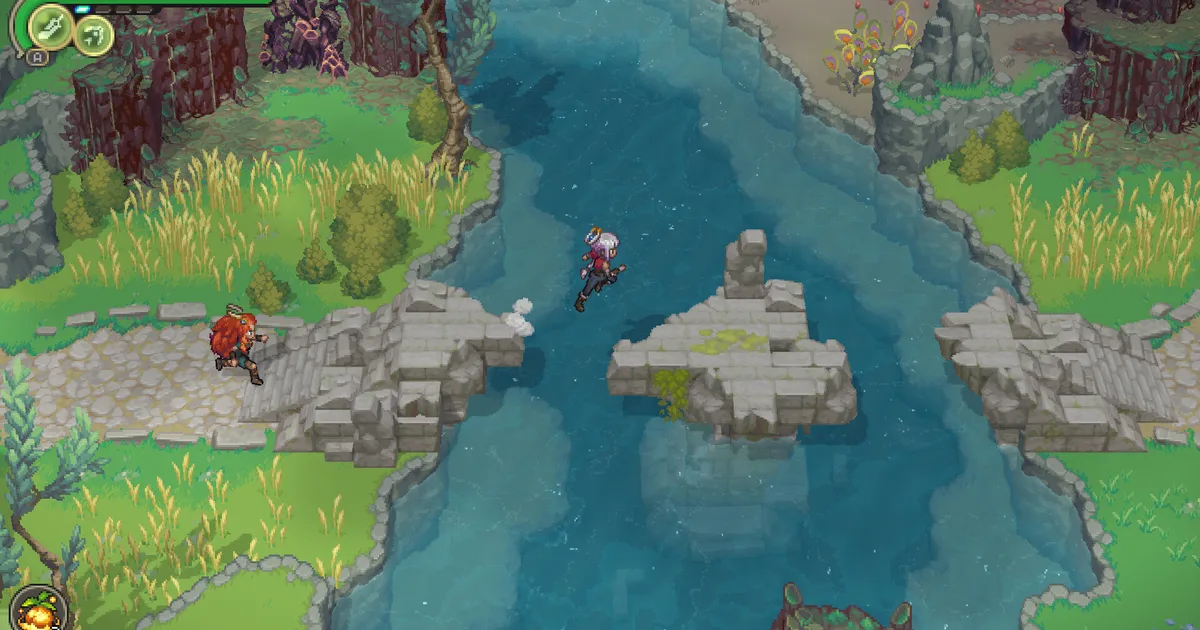
TL;DR: Alabaster Dawn is Radical Fish Games' first release since CrossCode, in Steam Early Access since May 7, 2026 at $24.99 with a "Very Positive" rating. The EA build runs about 10 hours through mid-Chapter 2 of a planned 7-chapter, 40-hour story. Combat centers on 4 elements, 8 weapons, and a per-weapon mastery tree; commit to one weapon early rather than spreading investment thin. GameBrief's review scores the current build 8.0/10.
Key takeaways
- Developer and publisher: Radical Fish Games (the German studio behind CrossCode), self-published
- Released Steam Early Access May 7, 2026. Price: $24.99, "Very Positive" user rating (2,208 reviews)
- Combat: 4 elements, 8 weapons total (2 per element), 2 equipped at once, each weapon with its own 3-tier mastery skill tree
- Current EA build: roughly 10 hours through mid-Chapter 2 of a planned 7-chapter, ~40-hour story
- Dungeons were deliberately redesigned to be shorter and less puzzle-dense than CrossCode's, replaced with a self-service world map (player-placed reminders, objective markers, fast travel) instead of a companion hint system
- Settlement restoration is the core exploration reward loop: it gates chapter progression and mastery material access
- Steam Deck Verified from day one; save file compatibility guaranteed across all EA updates
- GameBrief's Early Access review scores the build 8.0/10
What is Alabaster Dawn? (quick answer)
Alabaster Dawn is an action RPG from Radical Fish Games, previously known internally as Project Terra and in active development since at least 2023. You play Juno, the Outcast Chosen, who wakes up after a force called Nyx turns the world of Tiran Sol into a wasteland and causes its gods to vanish. The core loop pairs combat against Nyx's corrupted creatures, called Nuemera, with restoring ruined settlements that unlock new zones and story chapters.
Radical Fish built Alabaster Dawn as a deliberate departure from CrossCode rather than a spiritual sequel. Combat draws from Devil May Cry and Kingdom Hearts as much as it draws from CrossCode's own element-swapping system, and the puzzle-dungeon design that split CrossCode's audience was rebuilt from the ground up. Lead Programmer Felix Klein described the goal directly: dungeons would be "shorter, but not super short either, and... also somewhat less puzzle-heavy." That's a measured answer, not a retreat from puzzles altogether, just a reduction in the density that turned CrossCode's fourth dungeon, the Rhombus Mines, into an informal quitting point for a chunk of that game's players.
The Early Access build launched May 7, 2026, exclusively on Steam, and covers roughly 10 hours through the middle of Chapter 2. The full game targets seven chapters and around 40 hours, with Radical Fish estimating at least two years of Early Access ahead. Save file compatibility is guaranteed across every update between now and 1.0, a specific commitment the studio made publicly rather than something players have to assume.
For the full breakdown of what changed structurally from CrossCode and why, see the Alabaster Dawn early access overview.
Skill tree and builds
Alabaster Dawn's build system runs on 4 elements and 8 weapons, 2 per element, with 2 active equip slots. Both equipped weapons are live in combat simultaneously, and each of the 8 weapons has its own independent 3-tier mastery tree. Mastery isn't shared across weapons in the same element: a Fire weapon at Tier 2 doesn't carry any of that progress over to the other Fire weapon.
Each tier changes what a weapon can actually do, not just its numbers. Tier 1 unlocks a passive and one extra active move. Tier 2 adds another passive and extends the base combo, and it's the single most impactful node in the tree for most weapons. Tier 3 is the payoff: a unique active move that doesn't exist at lower tiers, plus a passive that changes the weapon's core behavior rather than just buffing its damage.
Mastery materials come from enemies, exploration, and settlement restoration rewards, and the supply is calibrated, not unlimited. Chapter 1 gives you enough to push one weapon comfortably to Tier 2, or two weapons partway. That's the reason build commitment matters so early: split your investment across three or four weapons trying to "try everything," and you'll reach Chapter 2 with several Tier 1 weapons, which plays worse than two weapons at Tier 2.
There are three viable build paths documented so far. Aggressive single-element focus equips both weapon slots from the same element and rushes the primary to Tier 3 fast, at the cost of a hard matchup whenever Chapter 2 throws a resistant enemy at you. Two-element coverage, the recommended path for a first playthrough, equips one weapon from each of two different elements, pushes the primary to Tier 2, and keeps the secondary at Tier 1 purely for coverage, so you're rarely without an answer to a given enemy's weakness. Secondary investment for the roguelite is an end-of-EA build for players who've cleared the main campaign and want the optional roguelite side story to feel fair, since that mode's difficulty scales against your total mastery investment rather than assuming a fresh Tier 1 secondary.
Boss fights add another layer to this. Bosses are Nuemera, the creatures corrupted by Nyx, and each one has a time-limited elemental weakness window during the fight. A high-mastery weapon in the right element burns through that window in fewer hits; a Tier 1 weapon in the same element still benefits, but needs the window to reopen to use it efficiently. Rana Lingua Magna, a frog-type Nuemera, is one of the named boss fights where this shows up clearly.
The full weapon-by-weapon breakdown, all three build paths in detail, and tier-by-tier prioritization live in the Alabaster Dawn skill tree and builds guide.
Dungeon exploration guide
Alabaster Dawn's exploration loop is one of the clearest breaks from CrossCode, and it's built around three connected pieces: dungeons produce loot and materials, materials feed settlement restoration, and restored settlements unlock better mastery materials and further dungeon access. You're not clearing dungeons purely to advance the story; you're building toward the restoration that makes the next dungeon manageable.
Chapter 1 dungeons run roughly 20 to 40 minutes depending on how thoroughly you explore, considerably shorter than CrossCode's multi-hour puzzle gauntlets. Chapter 2 dungeons are longer and introduce elemental resistances more actively, which is the point where a same-element build starts feeling the gap a two-element build doesn't.
Settlement restoration itself isn't a cosmetic reward. Restored settlements unlock new mastery material sources, expand what a settlement's shop sells, and open access to adjacent dungeon areas that were gated before restoration. The recommendation that carries across every guide GameBrief has published on this game is the same: reach the first settlement restoration before you commit your mastery build, because the rewards it unlocks can shift what's actually worth investing in.
The other major departure from CrossCode is how Alabaster Dawn handles players getting stuck. There's no companion that hands out directional puzzle hints. Cabbage, Juno's sidekick, comments on the story and the world as you explore, but doesn't function as a hint system despite some early preview coverage suggesting otherwise. What Radical Fish actually built is a self-service toolset on the world map itself: reminders you place yourself, objective markers, and fast travel between landmarks and checkpoints, none of it gated behind a resource cost. If a puzzle isn't clicking after a few minutes, stepping back through the map and reassessing beats grinding the same room blind, the way CrossCode sometimes forced players to.
For the full walkthrough of how the exploration loop, settlement restoration, and Chapter 2 preparation fit together, see the Alabaster Dawn dungeons and exploration guide.
Tips for new players
The single most common early mistake is treating mastery like a toy box instead of a commitment. Alabaster Dawn's opening hour is forgiving enough that players who spread mastery materials across four or five weapons don't feel the cost immediately, and then hit a wall in Chapter 2 that reads like difficulty design but is really an unprepared build catching up with them. Pick a two-element pairing, commit a primary weapon, and use the first settlement restoration as your deadline to stop experimenting.
The second adjustment new players (especially CrossCode veterans) need to make is combat tempo. CrossCode rewarded patient, measured element-swapping and careful positioning. Alabaster Dawn, drawing from Devil May Cry and Kingdom Hearts, rewards front-loading aggression: committing to combos, using air attacks against enemies with top-down vulnerabilities, and taking the punish window after a dodge rather than retreating. Players who play it like CrossCode's slower rhythm take damage they don't need to and miss the fight flow the combat is built around.
A few practical habits carry across every guide in this cluster:
- Equip your two weapon slots from different elements, not the same one, so you always have an answer to a resistant enemy type
- Save manually before every Nuemera boss fight; autosaves cover the room entrance but not the fight itself
- Do settlement restorations in the story's order rather than whatever looks most accessible, since the mastery material rewards are calibrated to that sequence
- Don't rush the roguelite side story before finishing the main EA campaign; its difficulty assumes a well-developed primary weapon
Alabaster Dawn is also Steam Deck Verified from day one, and the mastery UI works fully on a controller without needing the mouse, which matters if you're planning to play the Early Access build away from a desk.
For the full new-player walkthrough, including the exact weapon-loadout steps and a longer list of common mistakes, see the Alabaster Dawn tips guide.
Is Alabaster Dawn worth playing?
GameBrief's Early Access review scores Alabaster Dawn 8.0/10, and the short version is that Radical Fish shipped a confident first release, not a compromise. The weapon mastery system has real mechanical depth: a weapon at Tier 3 doesn't just hit harder than the same weapon at Tier 1, it plays differently, with a genuinely new move rather than a scaled-up number. Settlement restoration gives exploration a function beyond loot, since every restored town is a progression gate rather than a side quest. And the reminder-and-fast-travel toolset on the world map addresses CrossCode's most documented friction point without removing the underlying puzzle design for players who want it.
The honest caveats matter just as much. Ten hours is the real content total right now, and that's only about a quarter of the planned seven-chapter game. The optional roguelite side story exists but is underexplained in the current build. CrossCode fans who specifically loved the three-hour puzzle gauntlets will feel their absence: Alabaster Dawn's dungeons are shorter by design, and that's a real trade-off, not a false one dressed up as a positive.
Radical Fish has been transparent about all of this ahead of and during launch, which matters for the buy-now-versus-wait question every Early Access title raises. The studio's pedigree from CrossCode, a game that took five years to build and is still cited as a benchmark for 2D action-RPG movement, is doing real work here: this plays like a game made by people who know their craft, even at 25% of its planned scope.
Read the full Alabaster Dawn review for the complete pros, cons, and verdict on the May 2026 EA build.
All Alabaster Dawn guides
Everything GameBrief has published on Alabaster Dawn, in one list:
- Alabaster Dawn Early Access: CrossCode Fans Need to Know: what launched on May 7, how the dungeon redesign and world map hint tools work, and what Radical Fish has said about the roadmap to 1.0.
- Alabaster Dawn Review: CrossCode's Shadow, Its Own Light: the full 8.0/10 Early Access review, covering the weapon system, the dungeon redesign, and whether it's worth buying now versus waiting.
- Alabaster Dawn Skill Tree: Best Builds and Tips 2026: all 8 weapons, all 4 elements, the 3 build paths, and which mastery tiers to prioritize first.
- Alabaster Dawn Dungeons Guide: Exploration and Settlements: how the dungeon and settlement restoration loop works, Chapter 2 preparation, and the world map's hint tools in practice.
- Alabaster Dawn Tips: Weapons, Elements, and Getting Unstuck: weapon loadout steps for new players, element commitment timing, and what CrossCode veterans get wrong first.
Related Reading
- Alabaster Dawn Early Access: CrossCode Fans Need to Know: the structural overview of what changed from CrossCode and why.
- Alabaster Dawn Skill Tree: Best Builds and Tips 2026: the full weapon and mastery breakdown for players ready to commit to a build.
- Alabaster Dawn Review: CrossCode's Shadow, Its Own Light: the complete 8.0/10 verdict on the May 2026 Early Access build.
- Kristala Review: PS5 and PC Feline Souls-Like With Caveats: the closest recent action-RPG comparison point for an Early Access title with similar ambitions.
- Best Indie Games Under $20: for players deciding whether Alabaster Dawn fits their current budget.
Frequently Asked Questions
What is Alabaster Dawn? Alabaster Dawn is an action RPG from Radical Fish Games, the studio behind CrossCode. It entered Steam Early Access on May 7, 2026. You play Juno, the Outcast Chosen, restoring settlements across the ruined world of Tiran Sol after a force called Nyx caused the gods to vanish.
How many weapons does Alabaster Dawn have? 8 weapons total, split evenly across 4 elements (2 weapons per element). You equip 2 at once, one per active slot, and each weapon has its own 3-tier mastery skill tree that you build up independently of the others.
How long is Alabaster Dawn in its current Early Access build? Roughly 10 hours through mid-Chapter 2 of a planned 7-chapter, 40-hour story, plus an optional roguelite side story. Radical Fish Games expects at least 2 years of Early Access before the full release.
Is Alabaster Dawn worth buying right now? GameBrief's review scores the Early Access build 8.0/10. The weapon mastery system and settlement restoration loop are already strong, but 10 hours is only about a quarter of the planned game, so it suits players who want to grow with an Early Access title.
How is Alabaster Dawn different from CrossCode? Dungeons are shorter and less puzzle-dense, replacing CrossCode's multi-room logic chains with a self-service world map (player-placed reminders, objective markers, fast travel). Combat is also faster, drawing from Devil May Cry and Kingdom Hearts alongside CrossCode's own system.
Is there a hint system if you get stuck in Alabaster Dawn? Not a companion-driven one. Cabbage, Juno's sidekick, comments on the story but does not dispense puzzle hints. The world map lets you place your own reminders, mark objectives, and fast travel to reassess, so how much guidance you use is up to you.
Should I spread mastery across all 8 weapons in Alabaster Dawn? No. Chapter 1's mastery material supply is calibrated to push one weapon to Tier 2, not several weapons to Tier 1. Commit to a primary weapon before the first settlement restoration, and keep a differently-elemented secondary for coverage.
References
About the author

Critical game theorist with a background in film criticism. Writing for print and digital outlets since 2015. Specialises in genre analysis and design heritage.
- Background in film criticism
- 10 years games coverage
- Genre theory and design history specialist
Keep reading

Disclaimer
This article is published for informational and entertainment purposes. It does not constitute professional financial, legal, or technical advice. Game performance, online services, patch schedules, and store listings change. Verify critical details (pricing, system requirements, regional availability) with publishers and storefronts before you buy. Affiliate links, where present, help support our editorial work and are labelled in our affiliate disclosure.
Comments
Loading comments…