
GuideAlabaster Dawn
Alabaster Dawn Tips: 8 Weapons, 4 Elements, and More 2026

About the game
Alabaster Dawn
Radical Fish Games
The alabaster dawn tips that actually matter in the current Early Access build aren't individual combat tricks: they're about understanding the weapon slot system before you invest mastery points anywhere that you'll regret.
Most players coming from CrossCode (Radical Fish Games' previous game) spend the first few hours importing habits that don't translate. The element system is different. The combat pacing is different. The puzzle density is intentionally lower. And the world map's self-service hint tools change how you should approach puzzle sections entirely, since there's no companion character handing out answers.
This guide covers weapon loadout strategy, element commitment, how to actually use the world map when you're stuck, settlement priority, and the specific adjustments CrossCode veterans need to make by Chapter 2.
TL;DR: Equip two weapons from different elements: never two of the same. Push one weapon to Tier 2 mastery before trying anything else. When a puzzle isn't clicking, use the world map's reminders and fast travel to step back and reassess rather than grinding it out blind. Restore settlements in story order, not by what looks useful. The roguelite side story is end-of-EA content.
Alabaster Dawn tips: quick answer
Use two active weapon slots from different elements, then invest deeply in one primary weapon before spreading mastery points. Radical Fish's current store description confirms 4 elements and 8 weapons; a current Steam discussion also documents an upgrade that adds a third saved loadout, so do not confuse the two in-combat slots with the number of profiles you can save. When stuck, mark the objective on the world map, fast travel away, and return after restoring the next settlement if the story gate is unclear.
Alabaster Dawn status: September 2026
Steam currently lists Alabaster Dawn in Early Access at $21.24 with a 15% discount from $24.99 and 2,235 all-language reviews labeled "Very Positive." The latest official 0.2.0 post says the second dungeon, The Trial of Cryo, is mostly finished, including its maps, puzzles, and encounters, while the wider swamp and remaining boss work are still in progress. The post points toward a late-September-to-October release window rather than claiming that 0.2.0 has already shipped. The dungeon exploration guide tracks that content status separately.
Key Takeaways
- Two active weapon slots: equip from different elements to cover more enemy weaknesses
- Mastery trees are per-weapon: depth in one matters more than spreading across all 8
- No hint companion hands you answers: the world map's reminders, markers, and fast travel are the actual self-service toolset when you're stuck
- Settlement restoration is the critical path; skipping it for exploration hits a content wall
- Roguelite side story is tuned for players who've finished the EA main content
- CrossCode veterans: combat is faster, punish windows are shorter, unlearn the measured-swap reflex
Overview: what alabaster dawn tips need to cover first
Alabaster Dawn has an accessible opening. The first hour plays smoothly even without understanding the underlying systems: enemies are forgiving, puzzle solutions are clear, and the story pulls you forward at a good pace. That surface-level smoothness is the trap. The transition into Chapter 2 is where players who haven't internalized the weapon and mastery rules hit a difficulty spike that reads like poor design but is actually a setup they haven't prepared for.
The mechanical core that separates an easy Chapter 2 from a frustrating one is mastery depth. Alabaster Dawn's 8 weapons each have their own skill tree. The trees unlock passives and active moves: a Tier 3 mastery weapon has a fundamentally different move set than the same weapon at Tier 1. Players who spread mastery investments across five weapons to "try everything" reach Chapter 2 with five Tier 1 weapons, which is worse than two weapons at Tier 2 each. The Alabaster Dawn complete guide hub keeps the current weapon and dungeon references together.
The other factor is the combat tempo shift from CrossCode. Alabaster Dawn draws from Devil May Cry and Kingdom Hearts in its fight design: faster commitment windows, more aggressive aerial opportunities, shorter punish windows after dodges. CrossCode's element system rewarded patience and deliberate positioning. This game rewards front-loading aggression. Players who play it like CrossCode take unnecessary damage and miss the fight flow.
Understanding these two things (mastery depth and combat tempo) makes every other tip in this guide easier to apply.
GODEEPER: The Alabaster Dawn early access overview covers what Radical Fish changed structurally from CrossCode and why: useful context on the dungeon redesign and the world map's hint tools before going deeper on combat.
Step-by-Step: weapon loadout for new players
Step 1: Understand the two combat slots. You equip two weapons at a time. Each weapon belongs to one of 4 elements, with 2 weapons per element: 8 total across the game. Both slots are active in combat simultaneously. The game can also unlock an additional saved loadout profile, but that does not turn combat into a three-weapon system.
Step 2: Pick weapons from different elements for your two slots. Two weapons of the same element makes your loadout rigid. Enemies in Alabaster Dawn have elemental weaknesses that appear from Chapter 1 onward, and having two different elements active means one of your weapons is always hitting a weakness somewhere in the fight. Same-element pairings leave you overexposed when your element isn't strong against the current enemy.
Step 3: Pick your primary weapon and invest the mastery tree first. Once you have your two-element pairing, designate one as primary. That's the weapon you invest mastery into first. The Tier 1 mastery upgrades are inexpensive; Tier 3 is expensive but dramatically changes how the weapon plays. Push your primary weapon to Tier 2 before investing anything into your secondary or any other weapon.
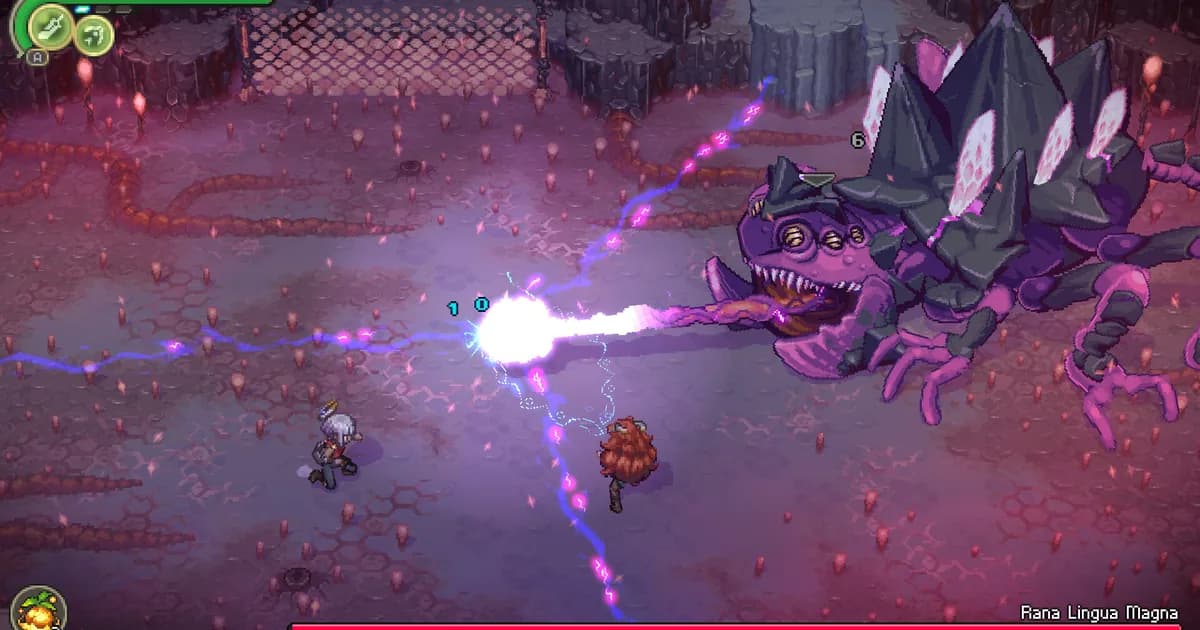
Step 4: Use your high-mastery weapon on bosses, secondary for clearing groups. Each boss (a Nuemera, one of the creatures corrupted by Nyx) has an elemental weakness window during the fight. Bring your high-mastery weapon for the boss encounter. Use your secondary for clearing the enemy groups in normal exploration.
Step 5: Swap loadouts only after hitting Tier 2 on your primary. New weapons become available through the story and settlement restoration. The temptation to try them immediately is strong. Resist until you've reached Tier 2 on your original primary. Swapping your primary before Tier 2 means you've split mastery investment without the depth to make either weapon effective in Chapter 2.
The two-slot weapon system: both active in combat simultaneously. Different elements in each slot covers more ground per fight.
The element system: commit to one before Chapter 2
Four elements, eight weapons, two slots. That math means you won't use all eight at full effectiveness in a single playthrough. That's intentional: Alabaster Dawn's replay value comes partly from trying different element combinations across runs.
For a first playthrough, commit to one primary element before the end of Chapter 1. The story doesn't force a choice, which is the reason players don't commit: the game never tells you to. But the mastery economy makes the decision for you. Mastery materials accumulate across exploration and enemy kills, and there aren't enough in Chapter 1 to push two different primary elements to Tier 2 simultaneously.
The first settlement restoration is a sensible checkpoint for deciding whether your primary weapon deserves more investment. Before that point, experiment cheaply; after it, pick a primary element pair and stop resetting your plan every time a new weapon appears. The Alabaster Dawn skill-tree guide has the weapon-by-weapon investment context.
Which element to start with is a personal preference call in the early game. Chapter 1 enemies don't punish element choice heavily enough to make one choice noticeably better than others. What matters is that you've made a choice before Chapter 2, not which choice it is.
The secondary element choice matters less than the primary. Your secondary weapon's job is coverage: it fills in weaknesses your primary doesn't cover. A Tier 1 secondary in a useful element is better than a Tier 2 secondary in an element that overlaps with your primary.
Getting unstuck: the world map's tools, not a hint companion
The biggest structural departure from CrossCode isn't a character that hands you answers. There's no companion built in to help when you're stuck on a puzzle, and that's worth correcting up front, since it's a common assumption CrossCode veterans bring in.
What Radical Fish actually built is a self-service toolset on the world map: you can pin a reminder to yourself, mark a target, or fast travel back to a landmark and reassess, all without leaving the flow of exploration. None of it is gated behind a resource cost the way a limited-use hint mechanic would be, so there's no "use it too often and run short later" trade-off to manage. The tools are there to keep you oriented, not to solve the puzzle for you.
Most puzzle blocks in Chapter 1 and early Chapter 2 aren't about obscure solutions: they're about a specific interaction the player has overlooked. If you find yourself stuck, the practical move is to fast travel out, clear your head on a different objective, and come back rather than grinding the same loop for twenty minutes. The world map is built for exactly that kind of reset.
CrossCode veterans specifically tend to under-use this. CrossCode's puzzles trained patience: spending 15 minutes on a single puzzle with no way to step back was normal, because there was no alternative. Alabaster Dawn's puzzle sections are intentionally shorter, and the self-service tools mean there's no reason to grind through frustration the way CrossCode sometimes forced you to. Use the reminders and fast travel earlier than your CrossCode instincts suggest.
GODEEPER: For players whose main interest in Alabaster Dawn is the roguelite side story rather than the main campaign, the best roguelike games 2026 guide covers the current landscape: including other indie roguelites that overlap with the side story's format.
Settlement restoration gates each story chapter: exploring past a blocked zone before restoring the preceding town hits a hard content wall.
Tips: alabaster dawn tips for veterans and newcomers
Combat pacing in Alabaster Dawn is faster than CrossCode. In CrossCode, a patient player who timed element swaps and positioned carefully could minimize most damage. That playstyle works in Alabaster Dawn's Chapter 1. By Chapter 2 it's suboptimal: the combat rewards front-loading aggression. Commit to the combo, use air attacks, take the punish window after your dodge. Players still playing it safe miss the fight rhythm the game is built around.
Settlement restoration drives story chapters forward; skipping it to explore further in a biome hits a hard content wall. Do the restoration in the order the story offers it.
Juno's air mobility is generous by design. Several early-game enemy types have a top-down vulnerability that aerial attacks exploit better than ground approaches. If a ground strategy isn't working on a particular enemy cluster, go vertical.
Save manually before boss rooms. The EA build places autosave checkpoints before boss encounters but not within them. A disconnect mid-boss restarts from before the room. Manual saves cost nothing; use them before every Nuemera boss fight.
The roguelite side story's difficulty scales with how much mastery you've accumulated. Players who reach it with shallow mastery find it significantly harder than the main campaign implied. Players with deep mastery in a primary weapon find the difficulty in line with where they are. Treat it as end-of-EA content rather than a parallel track.
Alabaster Dawn is Steam Deck Verified. Default graphical settings target stable performance on Deck hardware without any manual adjustment.
Frequently Asked Questions
What is the weapon slot system in Alabaster Dawn? Alabaster Dawn gives you two active weapon slots, each holding a weapon from one of the 4 elements Juno can wield. You have 8 weapons total across the game: 2 per element. Each weapon has its own mastery tree. The practical rule: equip weapons from two different elements, not two weapons from the same element, to cover more enemy weaknesses in a fight.
How do you get unstuck on a puzzle in Alabaster Dawn? There's no companion that hands you a directional hint. Radical Fish built a self-service toolset into the world map instead: reminders you place yourself, objective markers, and fast travel back to a landmark so you can reassess without losing exploration flow. Cabbage is a real character, but a narrative one, not a hint source.
How do elements work in Alabaster Dawn? Juno can wield 4 elements, with 2 weapons available for each element: 8 weapons total. You equip 2 at a time, one per slot. Each weapon has its own mastery skill tree that unlocks stronger moves and passives as you invest. The depth of mastery in each weapon affects how aggressively you can play with it: a Tier 3 mastery weapon plays differently than the same weapon at Tier 1.
Is Alabaster Dawn harder than CrossCode? Alabaster Dawn's combat is faster than CrossCode's but not necessarily harder: the difficulty profile is different. CrossCode rewarded methodical element swapping and careful positioning. Alabaster Dawn rewards more aggressive commit-and-attack patterns inspired by Devil May Cry and Kingdom Hearts. CrossCode veterans often find the opening hours easier (simpler puzzle design) but need to actively adjust their combat reflex.
How long is Alabaster Dawn in Early Access? It is still an in-progress Early Access slice, and the official sources checked here do not give a firm 1.0 date, final chapter count, or guaranteed total playtime. Treat any older estimate as a snapshot of an earlier build, not a promise. The 0.2.0 announcement is the reliable place to check whether the next dungeon update has shipped.
When should I start the Alabaster Dawn roguelite side story? After finishing the main EA story content. The roguelite side story is tuned for players who have built significant mastery in their primary weapon: players who jump to it early find the difficulty significantly steeper than the main campaign implies. It runs in parallel, but treat it as end-of-EA content rather than a parallel track.
References
- Alabaster Dawn on Steam: official page, EA patch notes, Radical Fish Games
- Alabaster Dawn official announcements: current 0.2.0 progress, dungeon status, and update timing.
- Alabaster Dawn Early Access trailer: official gameplay and system context.
- Radical Fish Games on X: developer updates and release notices.
- Radical Fish Games: studio behind CrossCode and Alabaster Dawn
- Alabaster Dawn Early Access Overview: full breakdown of structural changes from CrossCode
- Best Indie Games Under $20: for players deciding whether Alabaster Dawn fits their budget
- Best Roguelike Games 2026: for players interested in the roguelite side story format
Related Reading
For the structural context behind these tips, the Alabaster Dawn early access overview covers why Radical Fish redesigned the dungeon format, why the world map's hint tools were built in, and how the combat shift from CrossCode happened. For players who want to see how Alabaster Dawn fits into the broader landscape of 2026 indie releases, the best indie games under $20 guide covers other titles in the same price range that may complement or precede an Alabaster Dawn run.
- Alabaster Dawn Complete Guide: Weapons, Builds, Dungeons: the complete guide hub for weapons, builds, dungeons, and the review verdict.
- Alabaster Dawn Review: CrossCode's Shadow, Its Own Light: how the combat and dungeon redesign work in practice.
- Alabaster Dawn Skill Tree: Best Builds and Tips 2026: weapon and element investment context.
- Alabaster Dawn Dungeons Guide: Exploration and Settlements: the dungeon format and settlement loop in detail.
Was this guide helpful?
About the author

Senior Critic & Analyst
Former game data analyst turned critic with 11 years covering indie and mid-tier games. Based in Austin. Runs spreadsheets on games most people just play.
- 11 years games criticism
- Former game economy analyst
- Roguelike and strategy specialist
Keep reading

Alabaster Dawn Review: CrossCode's Shadow, Its Own Light
Reviews · 9 min
Alabaster Dawn Early Access: CrossCode Fans Need to Know
General · 8 min
Alabaster Dawn Skill Tree: Best Builds and Tips 2026
Guides · 10 min
Alabaster Dawn Dungeons Guide: Exploration and Settlements
General · 8 min
Alabaster Dawn Gems Guide: Divine Gear and Growth Charts
General · 12 min
Alabaster Dawn Somu's Dream Guide: Keys & Blessings
General · 12 min
Game deals · affiliate links

Disclaimer
This article is published for informational and entertainment purposes. It does not constitute professional financial, legal, or technical advice. Game performance, online services, patch schedules, and store listings change. Verify critical details (pricing, system requirements, regional availability) with publishers and storefronts before you buy. Affiliate links, where present, help support our editorial work and are labelled in our affiliate disclosure.
Comments
Loading comments…