
GameBrief · Guides
Fatekeeper Skill Tree: Branching, Alteration, and Respec
Reviewing
Fatekeeper
Paraglacial · THQ Nordic
The Fatekeeper skill tree trips up new players for two separate reasons. It looks like a rigid set of three elemental schools when the game itself only confirms three broader attribute paths, and the branching rules changed significantly with Patch 0.1.3 on July 30, 2026. If you're reading advice about the tree from before that patch, including anything describing a locked ring system or an NPC-gated respec, it's already out of date.
TL;DR: Fatekeeper's skill tree is built around three attribute paths, Strength, Precision, and Sorcery, confirmed on the game's own Steam page. Elemental groupings like Fire, Cryomancy, and Wind are informal community terms for spells inside Sorcery, not an official school list Paraglacial has published. Patch 0.1.3 (July 30, 2026) disconnected every major branch's first node from the central starter nodes, so you can specialize much earlier than before. Respeccing no longer needs an NPC or currency: a Respec Potion sits on the chart table in Haven and does a full tree reset for free, and a separate +1 Skill Point potion is hidden in the world.
Fatekeeper skill tree: what it actually does (quick answer)
Fatekeeper's skill tree branches across three attribute paths, Strength, Precision, and Sorcery, plus a separate Alteration layer that modifies spells you already have instead of adding new ones. Paraglacial's own Steam page confirms this structure directly: the game supports viable builds "whether you lean into raw strength, nimble precision, or devastating sorcery."
Inside Sorcery specifically, players group spells informally into "schools": Fire, Cryomancy, Wind, and Telekinesis all come up constantly in community discussion. Paraglacial has never published an official list under those names, so treat them as useful shorthand rather than a category the game enforces anywhere in its own UI.
As of Patch 0.1.3, branching opens up much earlier than it used to. Paraglacial disconnected the first node of every major branch from the central starter nodes, so you're no longer forced deep into one path before another becomes reachable.
The Alteration tree sits outside the three attribute paths entirely. Its nodes change how spells behave at a mechanical level, regardless of which path you've invested in.
How branching works after Patch 0.1.3
The most common Fatekeeper skill tree complaint on Reddit, before late July 2026, sounded like this: "I can't pick what I want, everything is locked." That complaint described a real system: picking a starting node committed you to that ring section until you'd invested enough points to reach a distant junction where branching finally opened up.
Patch 0.1.3's own notes describe the fix directly: the first node of every major branch has been disconnected from the central starter nodes, letting you branch into any specialization much earlier during progression. In practice, that means you no longer have to fully commit to one attribute path's inner nodes before another path's entry point becomes reachable. You can start pulling from Strength and Sorcery early instead of grinding one path to its outer ring first.
The same patch also added a Radial Menu, which changes how you navigate and select nodes on top of the branching change itself.
What this means for point allocation: stat nodes are still worth prioritizing early, because they're flexible investments that feed any build regardless of which attribute path you settle into. Power (+5 Mana, +3% Elemental Damage, and +3% Max Mana Node Efficiency bundled into a single node), Fortitude (+10% Health), and Wrath (+10% Melee Weapon Damage) are all confirmed flat-bonus nodes worth grabbing early. Insight (+10% Alchemy Skill) pulls double duty if you're leaning on potions, including the new Respec and Skill Point potions, as part of how you play.
GODEEPER: If you're still deciding which path to start in, the full build guide covers six viable archetypes with specific node orders for each. Fatekeeper Best Build Guide 2026 →
Attribute paths and the "schools" community shorthand
Paraglacial's own Steam page confirms three build paths for Fatekeeper: Strength, Precision, and Sorcery. That's the taxonomy the developer actually uses. What most guides (including an earlier version of this one) call "elemental schools", Fire, Cryomancy, Wind, and sometimes Telekinesis, are informal groupings the community uses to talk about specific Sorcery spells. Paraglacial hasn't published an official list under those names, so treat the descriptions below as how players talk about these spells, not a canonical in-game category.
Fire-themed spells lean into area denial. They coat surfaces and enemies with ignition states, and they work well with oil-type environmental elements to hit multiple targets at once. Confirmed named nodes in this cluster include Excessive Flames and Burning Axe, though Paraglacial hasn't published a full effect breakdown for either beyond the name.
Cryomancy-themed spells revolve around a freeze-then-shatter interaction: apply freeze, then land a follow-up hit or spell to trigger burst shatter damage. This setup-and-payoff pattern is one of the more consistently cited strategies in community discussion, though exact freeze-duration and shatter-multiplier numbers aren't documented in any official patch notes.
Wind was the weakest school at launch but received a significant rework in Patch 0.1.2. Windblast now scales with Spellpower across three dimensions: arc, physics impact, and range (4 meters at base, extending to 6 meters and beyond with Spellpower investment). The Herald of Winter skill received identical changes in the same patch. Wind's role is crowd control: pushing enemies off ledges, interrupting charge attacks, and creating space in tight corridors. At high Spellpower investment, Windblast moves smaller enemies reliably and generates genuine breathing room in multi-enemy rooms.
Telekinesis-themed spells are a smaller, less-discussed grouping. Two confirmed nodes here are Savant, which cuts spell cost by 50%, and Dark Arts. Both sit under this informal cluster rather than under Fire, Cryomancy, or Wind.
Other confirmed names from the current build, whether skill nodes or gear, include Ricochet, "MORE!" (+2 Projectiles), Kutracite, Guards Vermillion, Lord of the Skies, Storm Surge, and Ornate Dagger. Paraglacial hasn't detailed exact effects for all of them beyond what's in the patch notes and the in-game tooltips, so treat this as a name reference rather than a build guide for each one.
If you're starting fresh and want spells that are clearly working in the current build, Wind (post-Patch 0.1.2) and the Cryomancy freeze-shatter loop both have clear, community-verified payoffs early. Fire spells ask for more setup before they pay off in multi-enemy rooms.
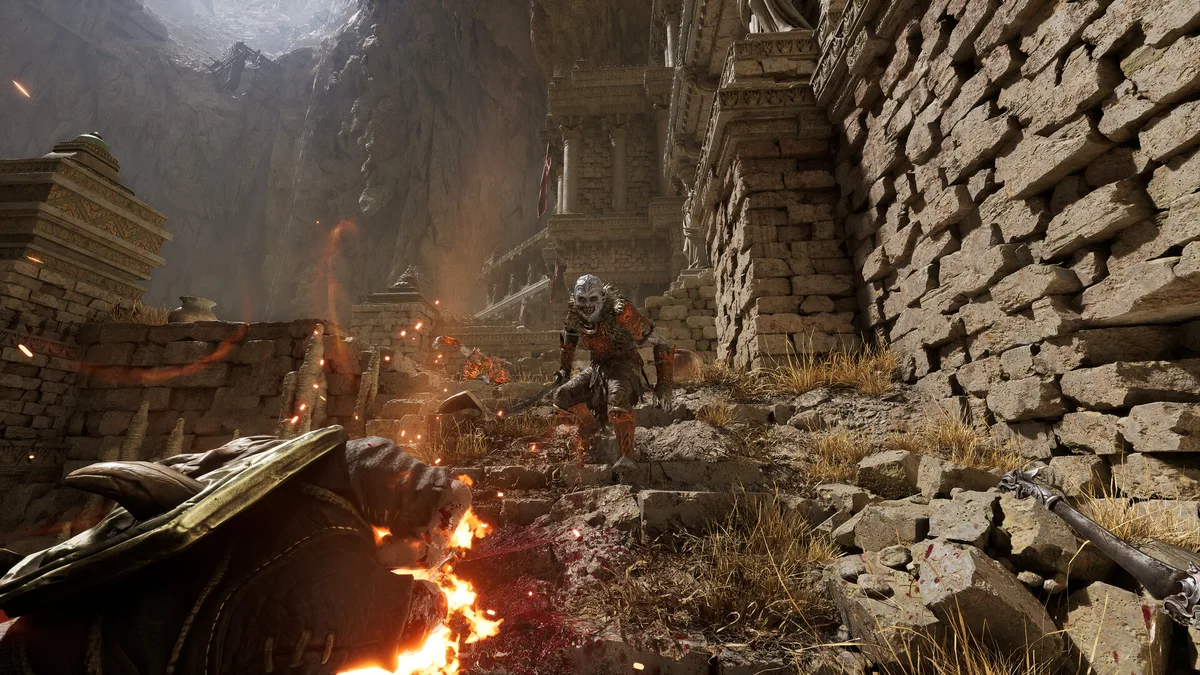 A close-range fight against a masked enemy in the ruins, the kind of encounter where Fire's ignition stacking or Cryomancy's freeze-shatter combo both have room to work.
The Alteration tree: your actual build multiplier
Most Fatekeeper skill tree discussions focus on which path or "school" to pick. That misses where a lot of real build differentiation happens.
The Alteration tree is a non-elemental section of the skill tree. Its nodes don't add flat fire damage or freeze duration on their own. Instead, they change how existing spells behave at the execution level. Patch 0.1.3's own notes reference "alterations of the same spell" as a real system Paraglacial is building out, so the general concept is confirmed even where specific node effects aren't.
One specific example that's circulated in earlier guides on this topic isn't confirmed: a "Split Cast" node supposedly making Fireball strip armor on contact instead of igniting. That claim has no independent corroboration in official patch notes or Paraglacial's own communications, so it doesn't belong in a fact-checked guide. A spell-modifying node with an effect like that would be consistent with the general system Paraglacial describes, but the specific name and effect can't be confirmed until Paraglacial documents it or someone verifies it directly in-game.
What is confirmed: the Alteration tree rewrites the function of spells you already have rather than just scaling their numbers up. Reaching it requires moving through ring tiers first, but since Patch 0.1.3 it no longer requires fully committing to one attribute path first, since branch entry points connect much earlier than before.
This is the build theory most guides skip: which attribute path you pick matters less than which Alteration nodes you take once you reach that layer. Two players running similar Sorcery-heavy builds with different Alteration choices can end up with meaningfully different playstyles, even where the specifics of any one Alteration node aren't fully documented yet.
GODEEPER: For the full Early Access picture, including what content exists now and how the skill tree fits into the broader progression. Fatekeeper Early Access Review 2026 →
How to respec: the Respec Potion in Haven
Fatekeeper's respec system changed completely with Patch 0.1.3, released July 30, 2026. Before that patch, there was no way to respec at all. Paraglacial's own patch notes describe the addition directly: "To encourage experimentation, we've also added Respec and +1 Skill Point potions to the game. The skill point potions are hidden throughout the world, while the respec potion can be found sitting comfortably on the chart table in Haven."
Item: Respec Potion, a consumable. Location: The chart table in Haven, Fatekeeper's hub area. Cost: None. It's a free pickup, not something you buy with an in-game currency. Unlock condition: None. There's no NPC dialogue, no story gate, and no boss fight standing between you and it.
Using the potion does a full skill tree reset. You can't undo individual nodes selectively, it clears the whole tree and you rebuild from scratch.
The +1 Skill Point potion is a separate item entirely. Instead of resetting your tree, it hands you one extra point to spend. Paraglacial hid these throughout the explorable world rather than placing them in Haven, so finding them is closer to normal exploration than a guaranteed pickup.
There's no cost curve and no in-game currency tied to respeccing, and no story-progression requirement gating it. If you picked a path early and want to try something else now that branch entry points open up much earlier under the same patch, using the potion costs you nothing but the trip back to Haven.
Short version: experiment freely. The potion is free, it isn't gated behind story progress, and Patch 0.1.3's branching change already makes it easier to pull from more than one attribute path without needing a full reset in the first place.
Skill tree builds worth trying
Three configurations are working well in the current build, based on what the community has been testing:
Cryomancy plus Alteration shatter build. Invest in Cryomancy inner nodes for freeze duration and freeze application speed, then take Alteration nodes that improve the shatter window or add secondary effects to shatter triggers. The freeze-shatter loop becomes faster, and the burst damage window opens consistently against elite enemies.
Wind with high Spellpower. Post-patch Windblast and Herald of Winter scale hard with Spellpower, so a Wind build that prioritizes Spellpower stat nodes at ring junctions becomes genuine crowd control. The key is accumulating Spellpower early through the stat paths at blue access nodes rather than going deep into Wind's inner school nodes first.
Alteration-first generalist. Some players prioritize reaching the Alteration tree as quickly as possible, using stat nodes like Power and Fortitude to get there rather than diving deep into one path's inner nodes. Since Patch 0.1.3 disconnected branch entry points from the central starter nodes, this route is faster than it used to be. It produces a generalist early character that becomes specialized once the Alteration nodes are locked in, slower to feel powerful but more flexible for discovering which Alteration nodes suit your playstyle.
Gear matters alongside node choices too. Paraglacial's own patch notes confirm a ring called Wardens Loop and weapons named Hatchet of Swiftness and Skull Club, all fixed for bugs in recent updates, meaning they're live and functional in the current build even though this guide hasn't covered their specific stats.
For detailed node orders and gear synergies by archetype, the Fatekeeper best build guide covers each of these configurations in depth. If the skill tree mechanics are still clicking into place, the Fatekeeper beginner tips guide covers the foundational decisions that make the skill tree choices clearer.
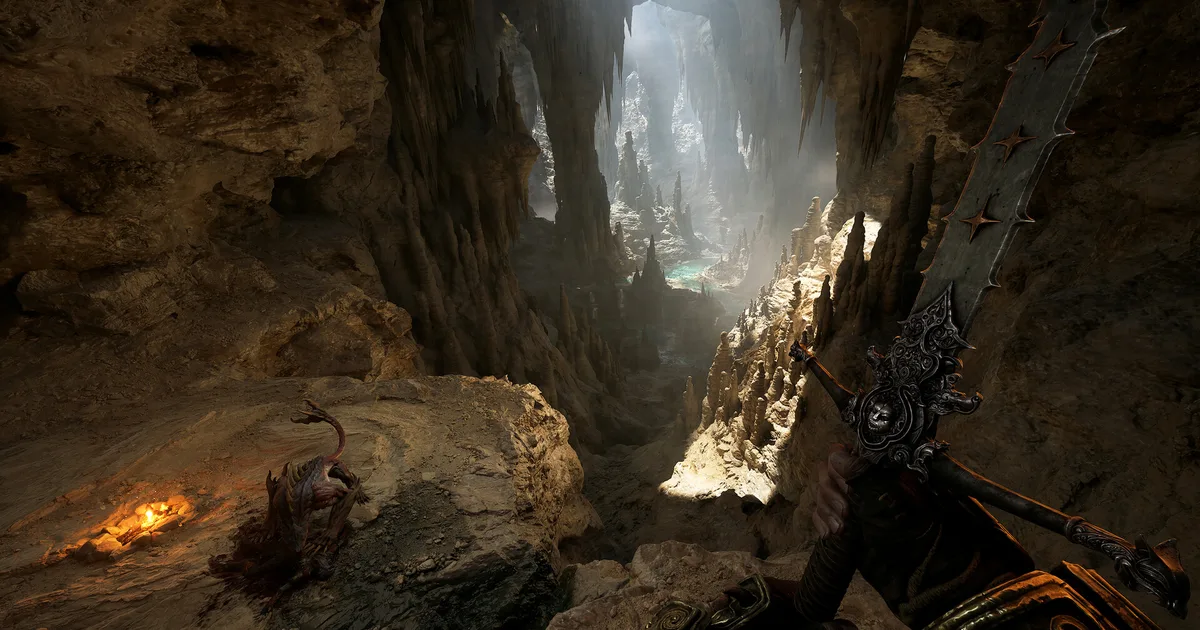
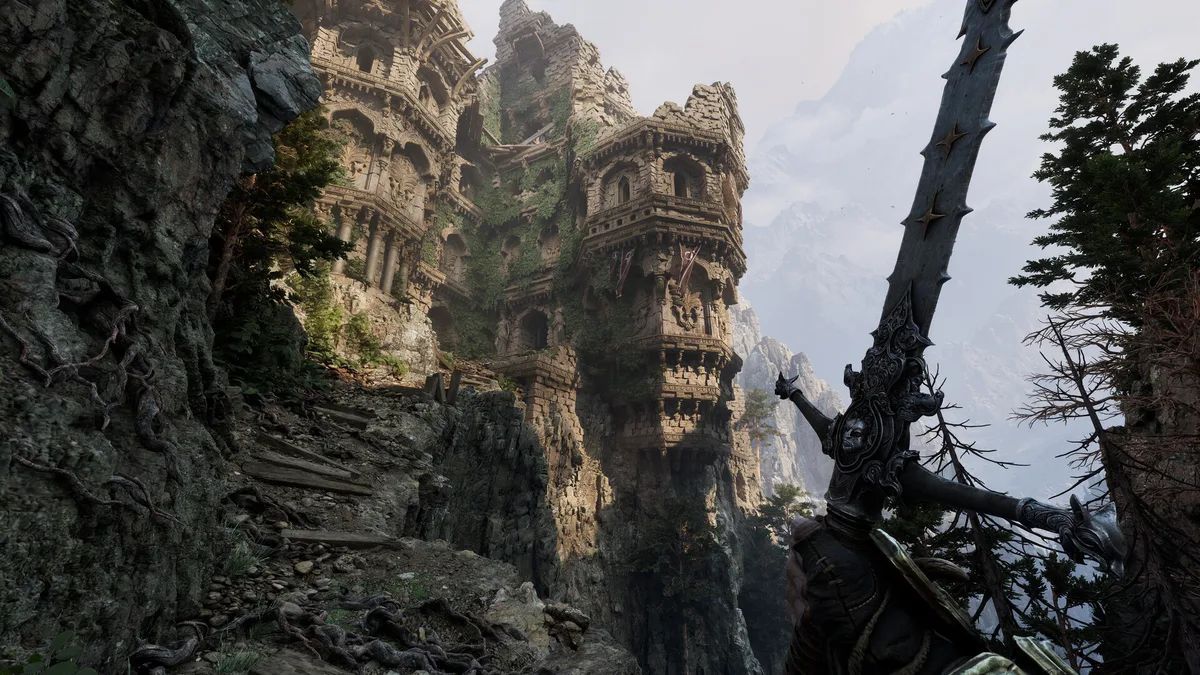 The kind of vertical, ruin-heavy terrain that rewards a build with real mobility and crowd control, not just raw single-target damage.
Related Reading
- Fatekeeper Best Build Guide 2026: Six viable build archetypes with specific node order priorities and stat path strategies for each attribute path.
- Fatekeeper Tips: Beginner Guide to Early Access 2026: Core mechanics, combat basics, and early decisions that affect how the skill tree plays out.
- Fatekeeper Patch 0.1.2: Windblast Rework and New Save Spot: Wind rework details and the same patch notes that flagged skill tree changes as the next priority.
- Fatekeeper: What It Is, What You Get, and Is It Worth It: Overview of the full early access build, content scope, and whether the current state is worth your time.
- Fatekeeper Deck Archetypes Guide 2026: How archetypes interact with skill tree choices for players looking to specialize further.
Frequently Asked Questions
How does the Fatekeeper skill tree work? You commit to a starting node along one of three attribute paths, Strength, Precision, or Sorcery, and invest points outward through ring tiers. Patch 0.1.3 disconnected every major branch's first node from the central starter nodes, so you can reach other specializations much earlier than before.
What is the Alteration tree in Fatekeeper? It's a non-elemental section of the tree that modifies how existing spells behave rather than adding raw damage. Patch 0.1.3's notes reference alterations of the same spell as a real concept, though Paraglacial hasn't published a full list of every specific alteration effect.
Can you respec your skill tree in Fatekeeper? Yes, using a consumable Respec Potion found sitting on the chart table in Haven, added by Paraglacial in Patch 0.1.3 (July 30, 2026). It does a full tree reset with no currency cost and no NPC or story gate. A separate +1 Skill Point potion is hidden elsewhere in the world.
What are the three attribute paths in Fatekeeper? Steam's own store copy confirms Strength, Precision, and Sorcery as the three build paths: raw strength, nimble precision, or devastating sorcery. Community terms like Fire, Cryomancy, and Wind describe informal spell groupings inside Sorcery, not an official school list.
Why does my skill tree feel locked in Fatekeeper? Before Patch 0.1.3, every branch's first node sat behind the central starter nodes, so you had to commit deep before reaching other paths. That gate is gone now: branch entry points connect much earlier, so a locked feeling usually means you're on a pre-patch build or very early in a fresh run.
What changed in Fatekeeper's Patch 0.1.3 skill tree update? Paraglacial disconnected each major branch's first node from the central starter nodes for earlier specialization, added a Radial Menu, and introduced Respec and +1 Skill Point potions. It's the skill-tree-focused update the 0.1.2 notes had flagged as coming.
Where do you find the Respec Potion in Fatekeeper? It sits on the chart table in Haven, the game's hub area, added in Patch 0.1.3. There's no NPC dialogue or unlock condition attached to it. You pick it up and use it whenever you want a full tree reset.
References
- Fatekeeper on Steam: official Early Access page, store description, and patch update history
- Fatekeeper Patch 0.1.3 Notes on Steam: Radial Menu, skill tree branching changes, and the Respec/Skill Point potion additions
- Fatekeeper Patch 0.1.2 Notes: Windblast rework details and the developer signal that flagged skill tree changes as next
- PCGamesN: Fatekeeper developer overwhelmed by community enthusiasm: developer quotes on community reception and development priorities post-launch
Was this guide helpful?
About the author

Senior Critic & Analyst
Former game data analyst turned critic with 11 years covering indie and mid-tier games. Based in Austin. Runs spreadsheets on games most people just play.
- 11 years games criticism
- Former game economy analyst
- Roguelike and strategy specialist
Keep reading


Disclaimer
This article is published for informational and entertainment purposes. It does not constitute professional financial, legal, or technical advice. Game performance, online services, patch schedules, and store listings change. Verify critical details (pricing, system requirements, regional availability) with publishers and storefronts before you buy. Affiliate links, where present, help support our editorial work and are labelled in our affiliate disclosure.
Comments
Loading comments…