
GameBrief · General
Fatekeeper Guide: Builds, Archetypes, and EA Review
Fatekeeper guide hub: all 11 articles covering builds, archetypes, skill tree, and Early Access review. Paraglacial's first-person RPG at $9.99 on Steam.

Reviewing
Fatekeeper
Paraglacial · THQ Nordic
This Fatekeeper guide covers builds, archetypes, the skill tree, and our EA review for Paraglacial's first-person RPG published by THQ Nordic. The game dropped into Early Access on June 2, 2026, with two hours of content and a price tag that raised a few eyebrows. It's sitting at Very Positive on Steam now, 80% approval across more than 10,500 reviews, a strong signal more than two months into Early Access. But two hours is also two hours, and whether you buy now or wait for 1.0 depends on what kind of player you are.
TL;DR: Fatekeeper is a first-person action RPG in Early Access at $9.99. Five archetypes (Pyroclast, Frost Reaper, Wind Dancer, Blood Knight, Alchemist) combine into cross-path builds through a branching skill tree. The EA build runs about 2 hours. Melee-Fire is the best starter route. Full-magic builds struggle against the first boss. Paraglacial targets 15 hours for the 1.0 release.
This hub collects every Fatekeeper guide in one place. Use it to find exactly what you need, whether you just bought the game or you're grinding for an archetype synergy you haven't cracked yet.
Fatekeeper guide: what is this game? (quick answer)
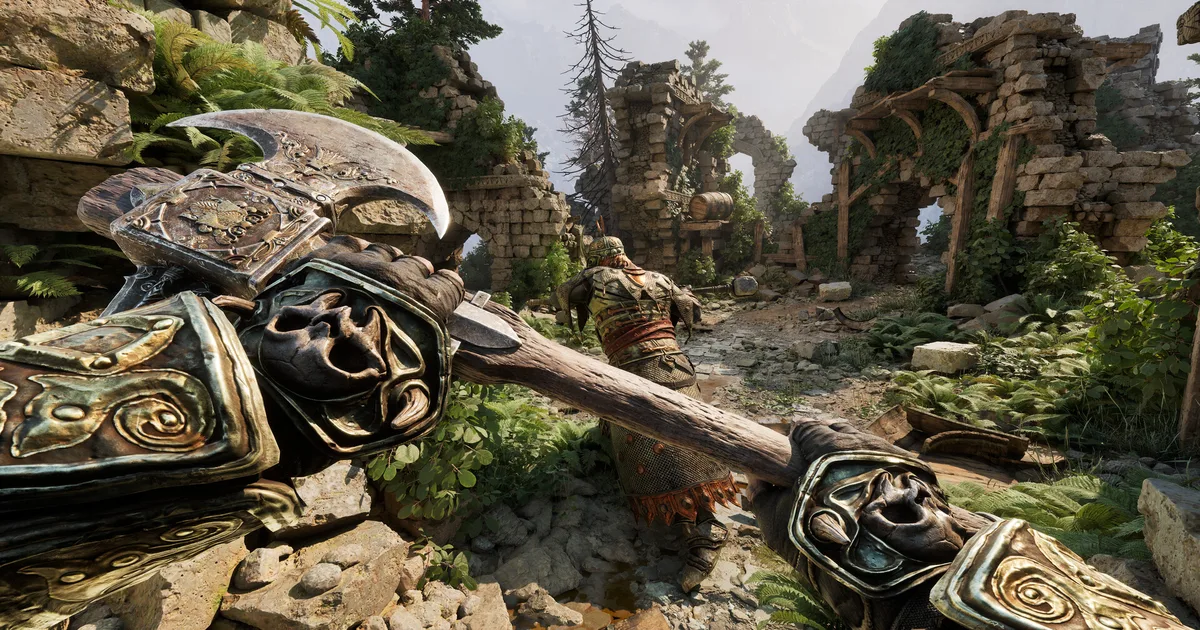
Fatekeeper puts you in first-person view in a handcrafted world shaped by past cataclysms, where ruins, relics, and the choices you make determine who your character becomes. Combat is melee-focused with spell support layered on top: you can build toward pure physical damage, pure spellcasting, or hybrid paths that use one to feed the other.
The defining system is the skill tree, built on three confirmed attribute paths: Strength, Precision, and Sorcery. Community guides (including this site's) group recurring playstyles into five informal "archetypes," but those are shorthand labels, not an official class system Paraglacial has named or ranked. Knowing how the underlying attributes and nodes interact matters more than chasing a specific label.
Paraglacial developed this as a first commercial release, and it's a small team: 13 people, by the studio's own account in its Steam Early Access Q&A. THQ Nordic picked it up for publishing and helped fund the Early Access period, which started June 2, 2026, at $7.99 and shifted to $9.99 standard pricing after June 16. Paraglacial's own Steam Q&A says it plans roughly 18 months in Early Access before 1.0, with more story content, more skill tree nodes, and a replayability system patch 0.1.2 first hinted at.
If you've played action RPGs like Mortal Shell or Hellpoint, the structure will feel familiar. The difference is the archetype depth: Fatekeeper wants you making real build choices from the first hour, not just bumping a stat bar.
Key takeaways
Use this Fatekeeper guide hub to navigate the full article list below. Quick reference:
- Fatekeeper is in Early Access on Steam at $9.99 (app ID 2186990), developed by Paraglacial and published by THQ Nordic
- Very Positive on Steam: 80% of roughly 10,550 reviews are positive as of August 19, 2026
- EA build contains roughly 2 hours of story content; 1.0 targets 15 hours
- Three confirmed attribute paths (Strength, Precision, Sorcery); the five "archetypes" below (Pyroclast, Frost Reaper, Wind Dancer, Blood Knight, Alchemist) are informal community labels, not an official class system
- Dash is not optional: every build uses it to survive the first-person combat encounters
- No multiplayer, no co-op: Paraglacial has confirmed the game is single-player only
- Patch 0.1.3 (July 30) added a radial menu, reworked attack controls, and introduced the game's first respec system; patch 0.1.2 reworked Windblast scaling and added a save point in Forgotten Halls
- Is Fatekeeper Multiplayer? Solo-Only in Early Access: there's no multiplayer and none is planned, and why the combat design makes solo-only a structural choice.
The five archetypes: what each one does
Fatekeeper doesn't hand you a class-selection screen; the five archetype names below are community shorthand for recurring build directions built on the game's three confirmed attribute paths (Strength, Precision, Sorcery), not official damage types Paraglacial has named. Each direction still changes how the combat loop feels and what kind of mistakes you can afford, so the labels are useful even though they're informal.
Pyroclast is the fire archetype. It deals high burst damage and has the best single-target pressure of any archetype in the current build. The drawback is setup time: Pyroclast spells need a moment to land and they don't recover health. If you're getting hit while casting, the damage output doesn't compensate. Best combined with Blood Knight nodes for some sustain, or played defensively with Wind Dancer mobility to avoid the hits that punish fire casting.
Frost Reaper is the control archetype. Ice spells in Fatekeeper slow enemies and stack a Chill debuff that, when maxed, creates brief windows where enemies take increased damage from any source. This makes Frost Reaper the best choice for players who like methodical combat: apply Chill, switch to a secondary damage type, burst the frozen window, repeat. It's slower than Pyroclast but forgiving for players still learning attack patterns.
Wind Dancer amplifies mobility. The archetype's nodes increase dash distance, reduce dash cooldown, and add damage procs to dash actions. At full investment, you're a moving target that punishes enemies on your way through rather than stopping to cast. It's the hardest archetype to use well because the offense relies on positioning decisions made in real time, but the defensive ceiling is the highest in the game once you get the movement feel.
Blood Knight is the sustain archetype and the friendliest starting choice. Its nodes convert melee damage into health recovery, give bonus armor during sustained combos, and buff weapon damage. The first boss in the game punishes stationary casting, and Blood Knight's melee focus naturally sidesteps that. For a first playthrough, Blood Knight first with a second archetype added later is the easiest way to reach the end of the EA content.
Alchemist is the status archetype. It applies Poison, Burn, Weakness, and other debuffs that stack across archetypes. A single Alchemist debuff can amplify Pyroclast burst damage by 40% when Weakness is applied. The catch is that Alchemist nodes are mostly passive, meaning you need another archetype's active spells to actually use the amplified damage. It's a support layer, not a standalone path. If you enjoy optimizing numbers, Alchemist is satisfying. If you want to feel strong fast, save it for a second run.
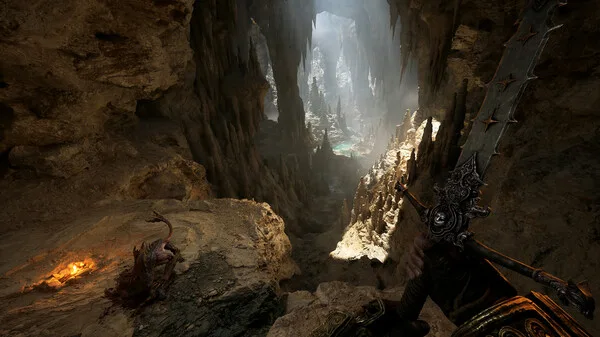 Fatekeeper's first-person combat perspective with the archetype skill ring HUD visible at the bottom of the screen.
GODEEPER: Full breakdown of all five community-named build directions, which confirmed skill nodes support each, and what's still unverified. Fatekeeper Archetypes Guide: 5 Build Paths Explained →
- Fatekeeper Advanced Builds Guide: Synergies and Bosses: how to sequence build stages and approach the Derelict Waterways boss fight, with confirmed facts separated from community speculation.
Best builds for Early Access: three routes that work
Three approaches have proven themselves in Fatekeeper's EA build. They all clear the current content, but the skill gap between them is real.
Melee-Fire (recommended for new players): Take Blood Knight as your primary and add Pyroclast secondary nodes starting around the midpoint of the EA run. Blood Knight sustain carries you through the first boss. Once you have Pyroclast burst available, alternating between melee combos and fire spells creates natural rhythm where the melee generates health and the fire closes encounters fast. This build doesn't need precise positioning and is the most forgiving of mistakes.
Telekinesis (utility route): This isn't technically a standalone archetype, but Fatekeeper's Telekinesis skill pulls ranged enemies into melee range and interrupts their attacks. Combining Telekinesis with Blood Knight or Frost Reaper makes the game significantly easier for ranged-heavy encounters. If you've died multiple times to a specific fight, checking whether Telekinesis counters the enemy type is often the answer. It's less a "build" and more a technique worth having in your toolkit regardless of archetype.
Full Caster (lategame route): Pure Pyroclast or Alchemist-heavy builds are powerful but require understanding the first boss's mechanics to survive long enough to get there. Full-magic builds hit significantly harder than hybrid builds at equivalent investment, but they rely on proper use of Wind Dancer mobility or Frost Reaper Chill windows to avoid eating hits while casting. If you want to play a caster, spend your first skill points in Blood Knight to survive the opening, then transition after the first boss.
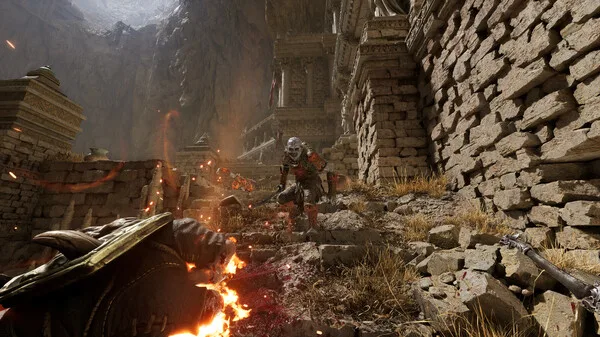 The archetype ring skill tree in Fatekeeper, showing two active paths and the branching nodes that lock off alternatives once chosen.
GODEEPER: Full build analysis for all three routes with skill node recommendations and lategame adjustments. Fatekeeper Best Build: Melee, Fire, and Caster Routes →
The Fatekeeper skill tree: how ring branching works
The skill tree in Fatekeeper is structured as concentric rings, each representing a deeper level of archetype investment. Rather than a linear progression, you reach branch points where you choose between two or three nodes that push the skill in different directions. Once you pick a branch, the alternatives close off, so what you choose actually sticks.
There are two types of rings in the tree: rings tied to your primary attribute investment (what community guides label into the five informal "archetype" directions) and the Alteration ring. The Alteration ring sits between those clusters and modifies how your skills behave rather than adding new ones. Investing a point in Alteration after a fire-focused node, for example, might extend a spell's duration or add a secondary effect. Every build benefits from some Alteration nodes because they deepen the effectiveness of whatever direction you've committed to, even though the five-archetype naming itself is community shorthand rather than an official Paraglacial system.
Respeccing didn't exist in Fatekeeper until patch 0.1.3 on July 30, 2026. That update added a Respec Potion, found sitting on the chart table in Haven (the game's hub area), plus Skill Point potions hidden throughout the world that each grant one extra point on use. The respec potion clears your entire build in one go rather than letting you undo individual nodes, so treat it as a full restart, not a quick tweak, and save it for a genuine path change rather than a minor adjustment.
The dash is not linked to the skill tree but functions as a universal mechanic that every archetype relies on. It has no cooldown in the traditional sense: it drains a stamina-style Fade meter that recovers quickly. New players who try to ignore the dash and tank hits will find the combat unforgiving. Once you internalize dashing as a core action rather than an emergency option, the difficulty curve drops significantly.
- Fatekeeper Skill Tree: Branching, Alteration, and Respec: how ring branching works, what the Alteration tree changes, and how respeccing works after patch 0.1.3.
Is Fatekeeper worth playing? Early Access review verdict
Fatekeeper scored 7.2 in our Early Access review. That's a real recommendation, not a polite shrug. The atmosphere and first-person melee feel are the clear strengths. Paraglacial built something that genuinely feels different from the overcrowded action RPG space, and the archetype combinations give the two hours of content more replay value than the runtime might suggest.
The limitations are real and worth knowing before you buy. Two hours is two hours. The second and third areas in the EA build are shorter than the opening, and the final encounter closes abruptly without resolution. Players expecting a complete act of content will be disappointed. Players who enjoy tuning builds and want a strong foundation to experiment on will get more out of it.
The Very Positive rating on Steam is accurate as of mid-August, and it's actually improved since our last check: the game sat at Mostly Positive in late July and has since crossed into Very Positive territory. 80% approval at more than 10,500 reviews is honest signal, not hype. The remaining 20% negative reviews cluster around two complaints: content length and one specific boss fight that counters full-magic builds without enough warning. Both are solvable through the tips and build guides below, and both are things Paraglacial is actively addressing.
Patch 0.1.2 reworked Windblast, a spell that was dealing flat damage regardless of build investment, to scale with Spellpower, and added a save point in Forgotten Halls, just before the game's first major fight. Patch 0.1.3 followed on July 30 with a new radial menu for spells, weapons, and consumables, reworked attack controls (light and heavy attacks now share one button by default), better Low and Medium graphics presets, and the game's first respec option, a potion found in Haven. The game is more polished than it was at launch, and Paraglacial has kept up a steady patch cadence since.
At $9.99, it's a reasonable bet on an Early Access game from a studio showing clear competence and iteration. If you're the type of player who enjoys watching a game grow from EA to 1.0 and having opinions that feed back into development, this is worth picking up now.
- Fatekeeper Review: 2 Hours Now, 15 Hours at Launch: our scored verdict on the EA build, at $9.99 with more than 10,500 Steam reviews.
- Why Is Fatekeeper So Cheap? The $9.99 Price Explained: why the $9.99 EA price reflects 2 hours now with 15 hours planned for 1.0.
How long is Fatekeeper?
The current EA build takes roughly 2 hours for a direct first playthrough. Players who explore optional side routes and experiment with multiple archetype branches during a single run can stretch it to 3 to 3.5 hours. A second playthrough going straight through the content runs about 70 minutes.
Paraglacial's stated roadmap targets 15 hours for the 1.0 release. That's a big jump, roughly eight times what's there now. The developer has been specific about what's coming: additional story chapters, a full second act, expanded skill tree nodes, and the replayability layer first mentioned in the patch 0.1.2 notes.
Fatekeeper at EA is basically a strong prologue. The combat feel is genuinely there, and the systems are solid. The question is how long it takes to reach 15 hours, and Paraglacial hasn't given a 1.0 date yet. If content cadence matters to you, check the Steam news page before buying: they've been posting development updates roughly every 2 to 3 weeks.
- Fatekeeper How Long to Beat: 2 Hours Now, 15 Planned: exact completion times by playstyle, and what the 15-hour 1.0 roadmap covers.
All Fatekeeper guides
Every guide published on this site for Fatekeeper, organized by topic.
Getting started
- Fatekeeper: What It Is, What You Get, and Is It Worth It: full overview of what the game is, what EA delivers, and whether it's the right buy at $9.99.
- Fatekeeper Tips: 11 Things to Know Before You Start: dash is mandatory, Telekinesis counters ranged enemies, and full-magic builds struggle with the first boss. What to know before your first hour.
- Why Is Fatekeeper So Cheap? The $9.99 Price Explained: Paraglacial priced it low intentionally for Early Access, with a price increase planned as content ships toward 1.0.
- Is Fatekeeper Multiplayer? Solo-Only in Early Access: there's no co-op, none is planned, and why the combat design makes solo-only a structural choice rather than a missing feature.
Builds and archetypes
- Fatekeeper Best Build: Melee, Fire, and Caster Routes: the three viable build paths for the EA build, with skill node priorities and the transition points between phases.
- Fatekeeper Archetypes Guide: 5 Build Paths Explained: all five archetypes with the specific skill nodes that define each path and how cross-archetype mixing actually works.
- Fatekeeper Advanced Builds Guide: Synergies and Bosses: how to sequence build stages and approach the Derelict Waterways boss fight, with confirmed facts separated from community speculation.
- Fatekeeper Skill Tree: Branching, Alteration, and Respec: how ring branching works, what the Alteration tree does for every build, and how the patch 0.1.3 Respec Potion (found in Haven) resets your build for free.
Game information
- Fatekeeper Review: 2 Hours Now, 15 Hours at Launch: full scored review (7.2) covering atmosphere, combat feel, archetype depth, and the limitations of a 2-hour EA window.
- Fatekeeper How Long to Beat: 2 Hours Now, 15 Planned: exact completion times by playstyle and what the 1.0 roadmap promises.
Patch notes
- Fatekeeper Patch 0.1.2: Windblast Rework and New Save Spot: Windblast now scales with Spellpower, a new save point added near the final EA encounter, FOV options added.
Frequently Asked Questions
Is Fatekeeper worth buying in Early Access? At $9.99, Fatekeeper is worth it if you're patient with unfinished games. The EA build offers about 2 hours of genuinely strong content with a first-person melee feel that stands out in the genre. Paraglacial has a clear roadmap to 15 hours at 1.0. If you want a complete game, wait for launch. If you want to shape your build preferences while the content arrives, buying now makes sense.
What is the best Fatekeeper build for beginners? The Melee-Fire route. Start with Blood Knight nodes for life-steal sustain, which carries you through the first boss. Add Pyroclast burst nodes after the first major encounter. This combination gives you both healing and damage without requiring the precise positioning that caster builds demand.
How many archetypes are in Fatekeeper? Fatekeeper has no official class system; three confirmed attribute paths (Strength, Precision, Sorcery) form the actual skill tree. Five build directions (Pyroclast, Frost Reaper, Wind Dancer, Blood Knight, Alchemist) are informal community shorthand for recurring playstyles, not a system Paraglacial has named. The Alteration tree modifies whatever direction you've committed to rather than being a sixth path.
Does Fatekeeper have multiplayer? No. Single-player only, with no co-op planned. The combat system is designed around solo first-person encounters, and Paraglacial has been explicit that multiplayer isn't on the roadmap.
How long does Fatekeeper take to beat? About 2 hours for the EA build on a direct first run. With exploration and build experimentation, you can get 3 to 4 hours before the content loops. Paraglacial's 1.0 target is 15 hours.
What did patch 0.1.2 change? Windblast now scales with Spellpower instead of dealing flat damage, a new save point was added in Forgotten Halls, and FOV slider options were introduced. It was the first major balance pass after the EA launch. Patch 0.1.3 followed on July 30, adding a radial menu, reworked attack controls, and the game's first respec system (a potion found in Haven).
What is the Alteration tree? A secondary ring cluster in the skill tree that modifies how your archetype abilities behave rather than adding new skills. It's not an archetype, it's a modifier layer. Every build benefits from some Alteration investment because it makes your core skills significantly more effective without requiring a full archetype pivot.
References
- Fatekeeper on Steam: store page with current price, Very Positive review rating, and EA status.
- Fatekeeper Steam announcements: official patch notes, including 0.1.2's Windblast rework and 0.1.3's radial menu, control, and respec changes.
- Paraglacial on Twitter/X: developer account with roadmap posts and patch previews.
- Fatekeeper Review: 2 Hours Now, 15 Hours at Launch: full scored review covering the EA build.
- Fatekeeper Best Build: Melee, Fire, and Caster Routes: complete build guide for the current meta.
Related Reading
- All Fatekeeper coverage: every Fatekeeper guide, review, and news post published on GameBrief, in one index.
- Fatekeeper Review: 2 Hours Now, 15 Hours at Launch: our full verdict on the EA build, atmosphere, and whether the $9.99 price holds up.
- Fatekeeper Tips: 11 Things to Know Before You Start: the fastest way to avoid the first-hour mistakes that most new players make.
- Fatekeeper Best Build: Melee, Fire, and Caster Routes: three viable routes with skill node priorities for the current content window.
- Fatekeeper Skill Tree: Branching, Alteration, and Respec: how the ring branching system works and what respeccing actually costs.
- Fatekeeper Archetypes Guide: 5 Build Paths Explained: full breakdown of what each archetype does and how cross-path mixing interacts.
About the author

Senior Critic & Analyst
Former game data analyst turned critic with 11 years covering indie and mid-tier games. Based in Austin. Runs spreadsheets on games most people just play.
- 11 years games criticism
- Former game economy analyst
- Roguelike and strategy specialist
Keep reading

Disclaimer
This article is published for informational and entertainment purposes. It does not constitute professional financial, legal, or technical advice. Game performance, online services, patch schedules, and store listings change. Verify critical details (pricing, system requirements, regional availability) with publishers and storefronts before you buy. Affiliate links, where present, help support our editorial work and are labelled in our affiliate disclosure.
Comments
Loading comments…