
GameBrief · General
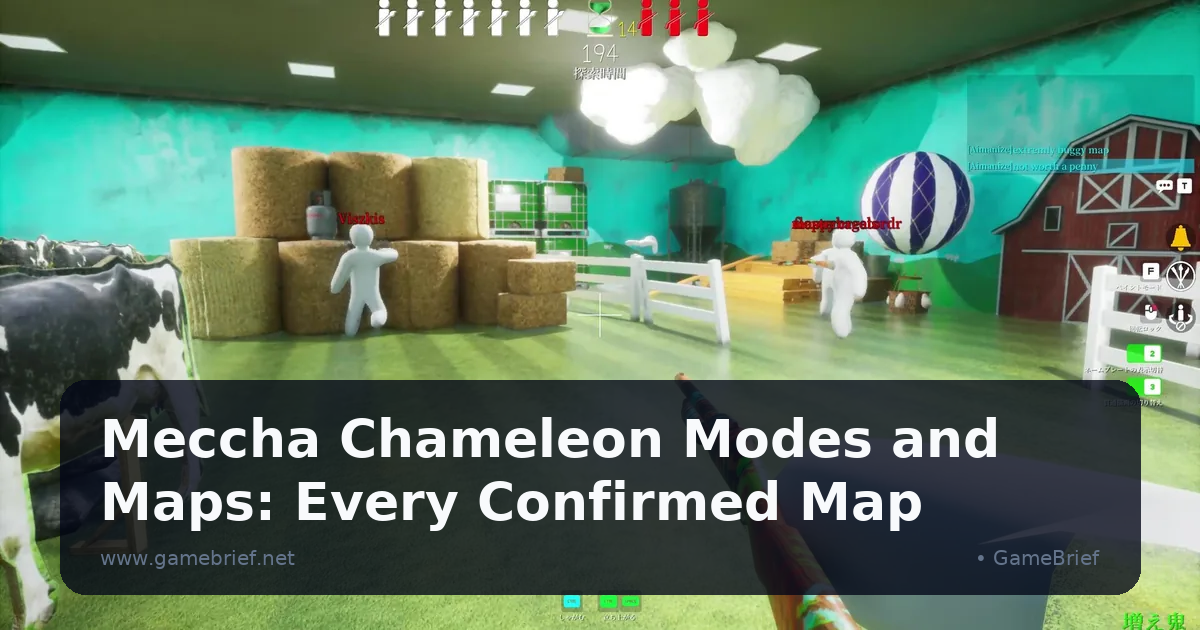
Meccha Chameleon Modes and Maps: Every Confirmed Map
Reviewing
Meccha Chameleon
lemorion_1224
This Meccha Chameleon modes and maps guide covers every mode and map confirmed through official Steam patch notes, not guesswork, since the game's own official terminology differs in places from what community shorthand has settled on. Meccha Chameleon shipped June 9 with a handful of maps and two modes, and the two-person team has barely slowed down since.
TL;DR: Meccha Chameleon has four confirmed modes (Basic, Growing Demon, Double Mode, Reverse Chicken Race) and at least 11 official maps added or expanded since launch, including two branded collaborations (HIKAKIN Museum, Garten of Banban). Community Workshop maps exist separately and are not official content.
What modes and maps does Meccha Chameleon have? (quick answer)
Four officially named modes: Basic, Growing Demon, Double Mode, and Reverse Chicken Race, the last of which is a genuinely new mechanic added mid-2026 rather than a Basic-mode reskin. Alongside those, at least 11 official maps are confirmed through dated patch notes, spanning launch-day content through two branded collaboration maps added in July.
Key takeaways
- Four confirmed modes: Basic, Growing Demon, Double Mode, Reverse Chicken Race
- Reverse Chicken Race, added July 2 2026, flips the Hunter's job from shooting on sight to deducing identity from body paint
- 11 official maps confirmed via dated Steam patch notes, from launch through late July
- Two branded collaboration maps: HIKAKIN Museum and Garten of Banban
- Community Workshop maps are unofficial and separate from this list entirely
The four confirmed modes
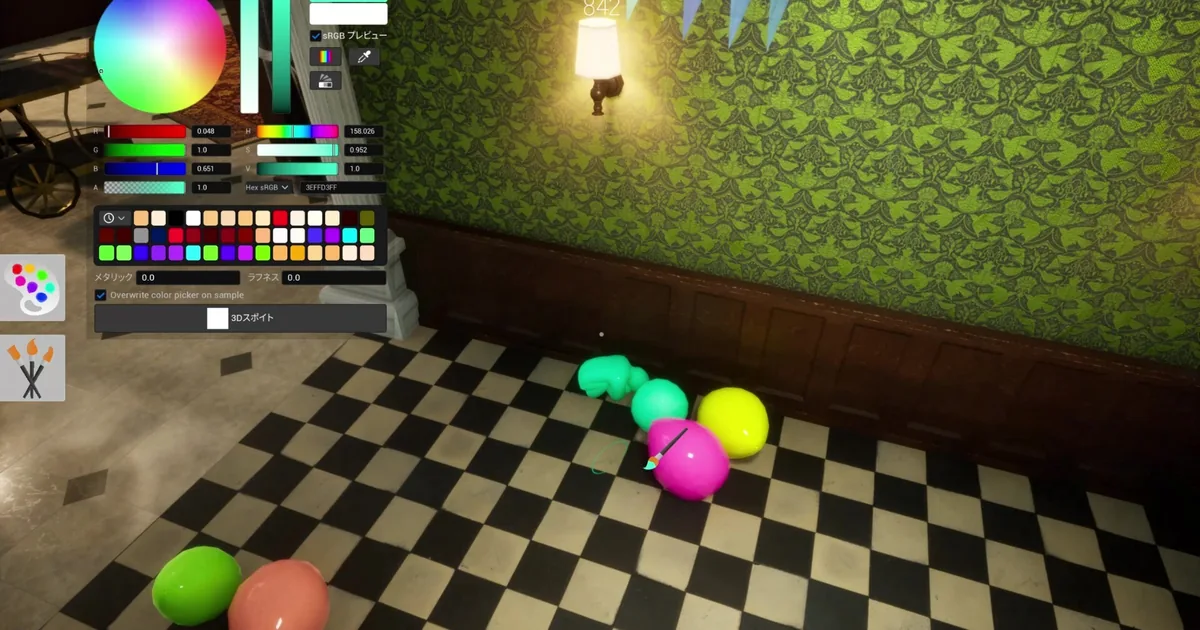
Basic is the standard hide-and-seek loop: Hiders paint themselves into the environment, Hunters search and shoot. This is the mode most players learn on.
Growing Demon is confirmed as a real, officially named mode alongside Basic (both appear together in the same patch note discussing end-of-game hiding-spot reveals). The developers haven't published exact rules for how Growing Demon differs mechanically from Basic beyond the name itself, so don't trust a specific mechanical explanation you find elsewhere unless it cites an actual patch note. What is confirmed is that the developer's own player-count recommendation splits by mode: Basic plays best with 2-4 players, and Growing Demon wants the wider 6-10 range to feel right.
Double Mode is confirmed to exist by name in a bug-fix note referencing clone behavior specific to it, but the patch notes don't spell out its full rule set beyond that. Treat it as a real, shipped mode with an unconfirmed exact rule set rather than guessing at specifics.
Reverse Chicken Race (Japanese: Gyakusan Chicken Race) is the newest and best-documented of the four, added in update 2.4.0 on July 2, 2026. The official patch note describes it directly: "Deduce the hidden player's identity from their body paint, find them first, and rack up points! If hiding, earn points by staying unnoticed! Player with most points wins!" It's a meaningful structural flip from Basic: instead of a Hunter shooting anything suspicious, the Hunter has to correctly identify who they're looking at based on paint job alone. The mode went through rapid balance patches right after launch, including an added "Rotate in Place" option and a halved point value (1000 to 500) for finding the countdown target, both signs the developers were actively tuning it in its first week.
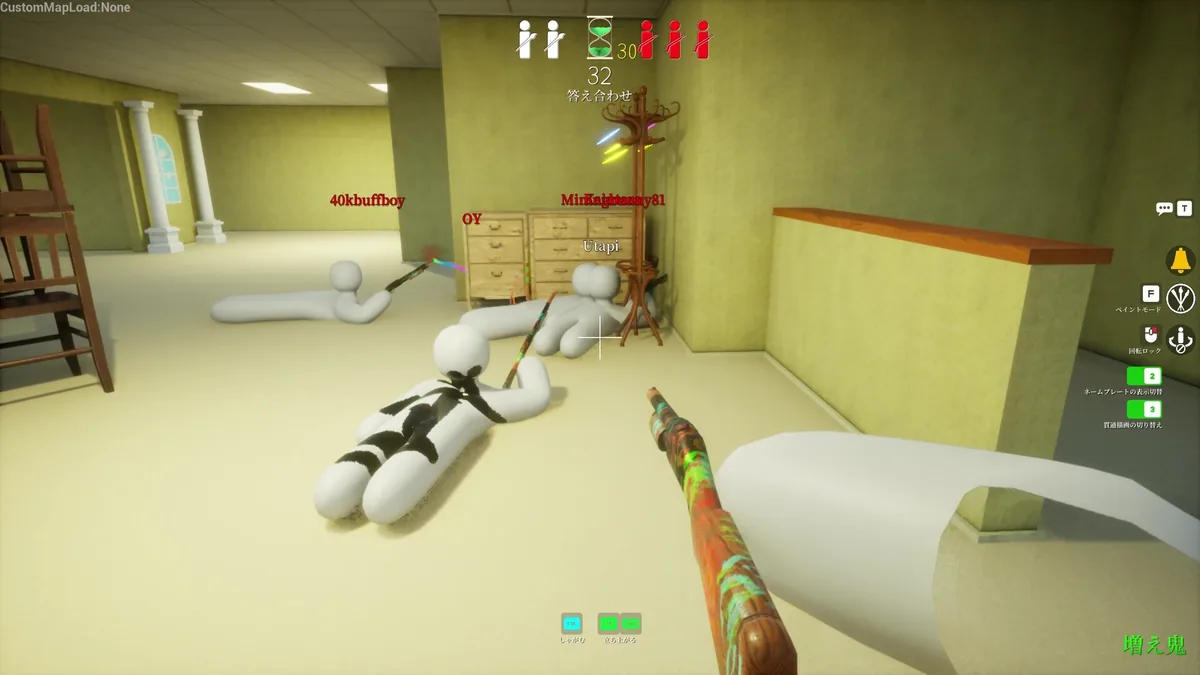 The reveal phase at the end of a round, where colored trick-shot marks and a countdown timer confirm who was actually found.
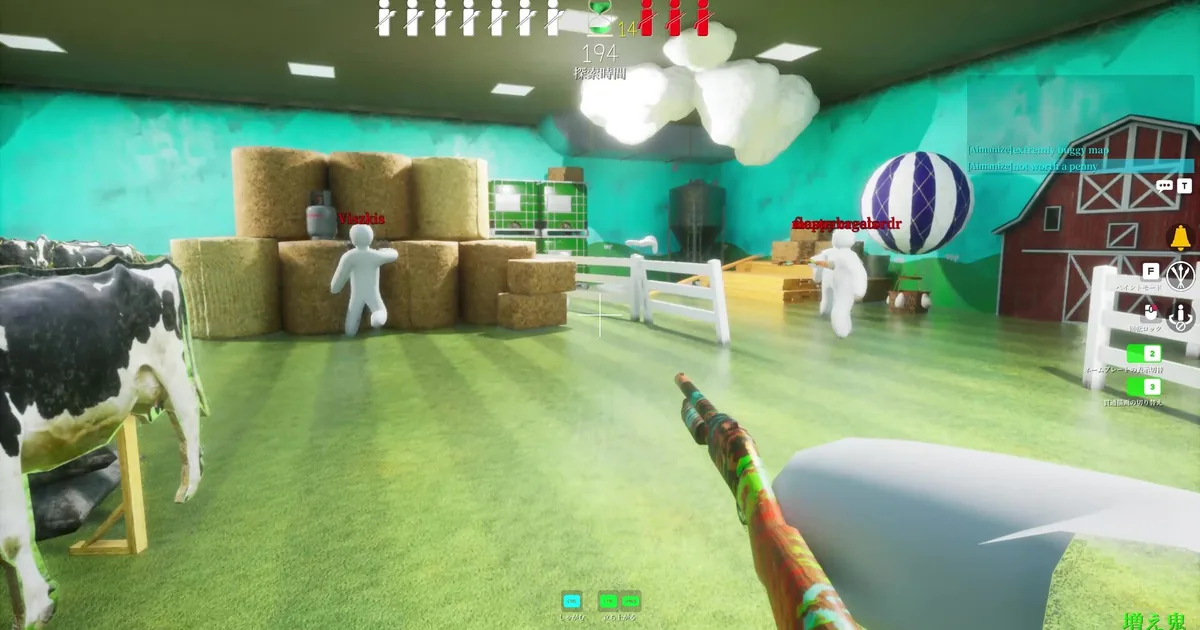 A Growing Demon round in progress, confirmed by the on-screen Japanese label for the mode.
All 11 confirmed official maps, by patch date
Every map below is either explicitly named as "added" in a dated official Steam changelog, or referenced by name in a bugfix note that confirms it already existed at that patch. This list does not include community Workshop maps, which are a separate, unofficial category covered below.
| Map | Status | Patch |
|---|---|---|
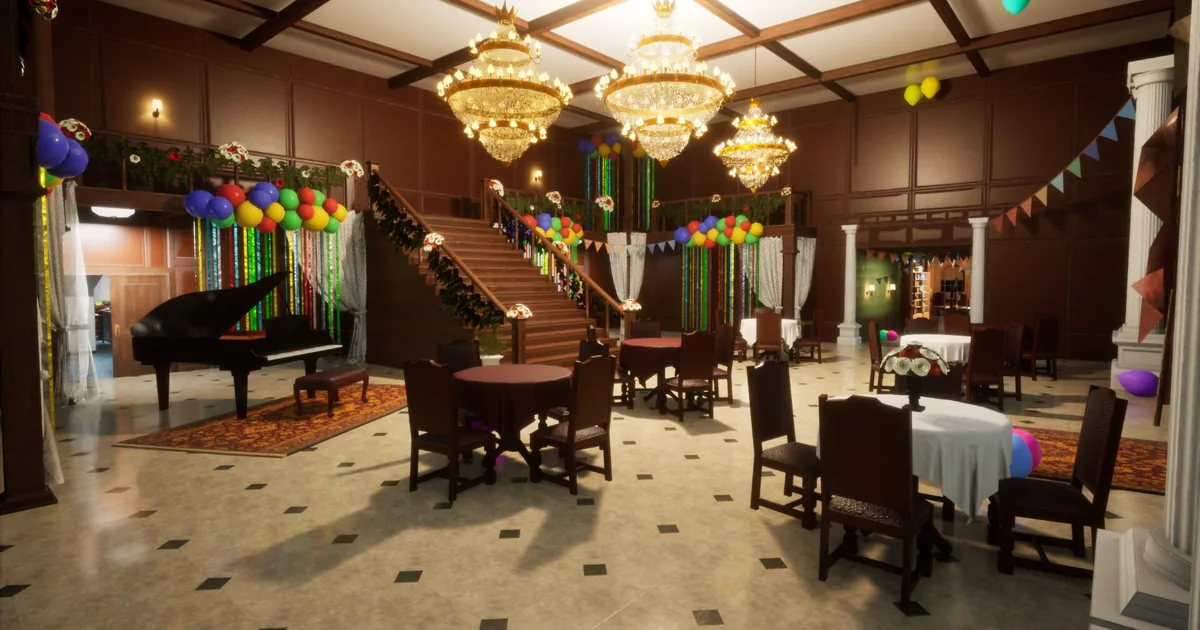
| Hide-and-Seek Mansion | Pre-existing, later got map randomization | update 2.2.0 (Jun 28) |
| The Backrooms | Pre-existing, reworked | update 2.1.0 (Jun 27) |
| Penguin Hotel | Pre-existing, expanded then randomized | update 1.4.0 (Jun 17) / 2.7.0 (Jul 12) |
| Sewer | Pre-existing, random elements added | fix 2.2.1 (Jun 28) |
| Sugarland | Added | update 1.4.0 (Jun 17) |
| Osaka | Added, later reworked | update 1.7.0 (Jun 22) / reworked Jul 4 |
| HIKAKIN Museum | Added (collab) | update 2.6.0 (Jul 10) |
| Egypt | Added | update 2.7.0 (Jul 12) |
| Death Burger | Added | update 2.8.0 (Jul 17) |
| Greece | Added | update 3.0.0 (Jul 20) |
| Garten of Banban | Added (collab) | update 3.1.0 (Jul 25) |
That's a new or reworked map roughly every week since launch, which is an aggressive pace for a two-person team. Osaka is worth calling out specifically: it was the "Japan-themed map" the developers teased ahead of its addition, and it was significant enough to warrant a full rework only two weeks after it first shipped.
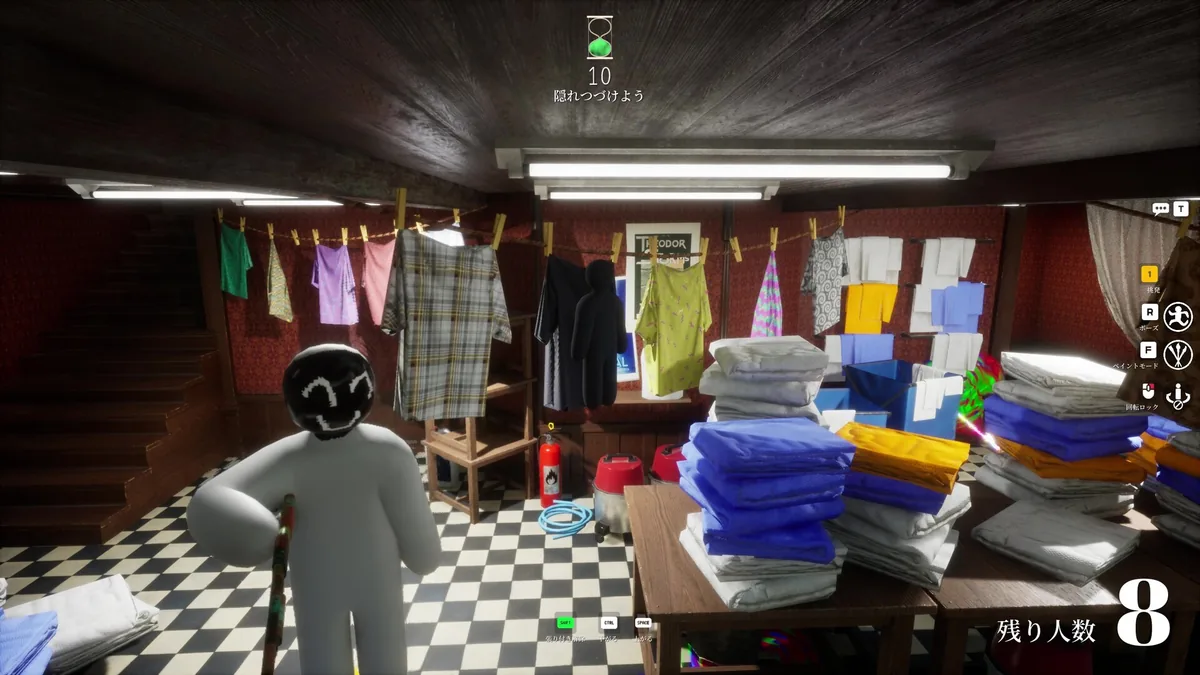 A laundry room area, one of the more prop-dense hiding environments across the map roster.
The two collaboration maps
HIKAKIN Museum, added July 10, is an official collaboration with Japanese YouTuber HIKAKIN, confirmed to include collab-exclusive gimmicks and a taunt sound unique to the map. The developers had teased "a new collaboration with a famous Japanese star" a week before it shipped, and the timing lines up exactly.
Garten of Banban, added July 25, is a crossover with the Garten of Banban horror game IP. This is the more recent of the two collaborations and the most recent map addition confirmed at the time of writing.
Map randomization is a per-map toggle rather than a blanket setting: collab maps default to OFF in the random-map lottery, which means Hosts have to specifically opt in if they want HIKAKIN Museum or Garten of Banban showing up in a randomized rotation rather than assuming it happens automatically. For a lobby that wants variety without repeatedly landing on the same two or three maps, checking the randomization settings before starting a session is worth the extra thirty seconds, since the default configuration doesn't necessarily reflect what a Host actually wants once the collaboration maps are in the mix.
Workshop maps are not official content
Two names worth flagging specifically: "Laser Tag Neon" and "Chroma Grid Arena" are player-made Steam Workshop maps, not developer-built content, and should not be treated as part of the official 11-map roster above. This distinction matters beyond just accuracy: a security researcher identified both of these specific maps as malware droppers in late July 2026, and the developers shipped a security patch (update 3.1.0) specifically addressing the vulnerability that let a malicious Workshop map execute code on launch. The developers' own safety statement is unambiguous that the base game itself was never compromised, but it's a real reason to be selective about which community maps you subscribe to and launch.
Frequently Asked Questions
What game modes does Meccha Chameleon have? Four confirmed modes: Basic, Growing Demon, Double Mode, and Reverse Chicken Race. Reverse Chicken Race is the newest, added July 2 2026, where the Hunter deduces a hidden player's identity from their body paint instead of shooting on sight.
How many maps are in Meccha Chameleon? At least 11 official maps confirmed through dated Steam patch notes: Hide-and-Seek Mansion, The Backrooms, Penguin Hotel, Sewer, Sugarland, Osaka, HIKAKIN Museum, Egypt, Death Burger, Greece, and Garten of Banban.
What is Reverse Chicken Race in Meccha Chameleon? A mode where Hiders earn points for staying unnoticed while Hunters earn points by correctly identifying and finding a hidden player based on their body paint job, rather than the standard shoot-first Hunter loop.
Is there a collaboration map in Meccha Chameleon? Yes, two confirmed: HIKAKIN Museum (with Japanese YouTuber HIKAKIN, added July 10 2026) and Garten of Banban (a crossover with the horror game IP, added July 25 2026), each with collab-exclusive gimmicks.
What is Growing Demon mode in Meccha Chameleon? An officially named mode alongside Basic mode, confirmed via Steam patch notes. The developers haven't published exact rules for how it differs from Basic beyond the name, so treat the extra intensity as something to feel out in a lobby rather than a documented mechanic.
Are community Workshop maps the same as official maps? No. Maps like Laser Tag Neon and Chroma Grid Arena are player-made Steam Workshop content, not developer-built maps. Treat Workshop maps as unofficial, and see the developers' own safety guidance before downloading any of them.
Related Reading
- Meccha Chameleon Complete Guide: the hub for every Meccha Chameleon guide on this site.
- Meccha Chameleon Advanced Tips: Clones, Poses, and Hunter Play: the clone/decoy system and community pose strategy this guide doesn't cover.
- Meccha Chameleon Guide: How the Camouflage System Works: the painting, scoring, and lobby-size fundamentals.
References
- Meccha Chameleon on Steam: official store page and patch notes.
- Meccha Chameleon Steam news hub: the source for every patch date cited in this guide.
Was this guide helpful?
About the author

News Reporter
Games journalist and news hound with 7 years covering industry moves, studio announcements, and patch notes. Chilean. Writes tight, edits tighter.
- 7 years games journalism
- Industry and esports specialist
- Early access coverage
Keep reading

Disclaimer
This article is published for informational and entertainment purposes. It does not constitute professional financial, legal, or technical advice. Game performance, online services, patch schedules, and store listings change. Verify critical details (pricing, system requirements, regional availability) with publishers and storefronts before you buy. Affiliate links, where present, help support our editorial work and are labelled in our affiliate disclosure.
Comments
Loading comments…