
GameBrief · General
Meccha Chameleon Complete Guide: Modes, Maps, Tips
Meccha Chameleon complete guide hub: painting system, all 4 modes, 14+ maps, clones, poses, and the Workshop security scare, all in one place.
Reviewing
Meccha Chameleon
This Meccha Chameleon complete guide hub is where every guide on this site for the game lives: the camouflage system, every mode and map, the clone system and pose strategy, and what actually happened during July's Workshop security scare. Meccha Chameleon turned a two-person team's freehand-paint hide-and-seek idea into one of 2026's biggest indie surprises, and the patch cadence since launch has kept pace with the sales numbers.
TL;DR: Meccha Chameleon launched June 9, 2026, passed 20 million copies sold by August 12, and holds Very Positive reviews across 84,000+ ratings. Four modes (Basic, Growing Demon, Double Mode, Reverse Chicken Race), 14+ official maps, a clone/decoy system that's riskier than it looks, and a July Workshop malware scare that never touched the actual game. $5.99 on Steam, still being patched weekly.
What is Meccha Chameleon? (quick answer)
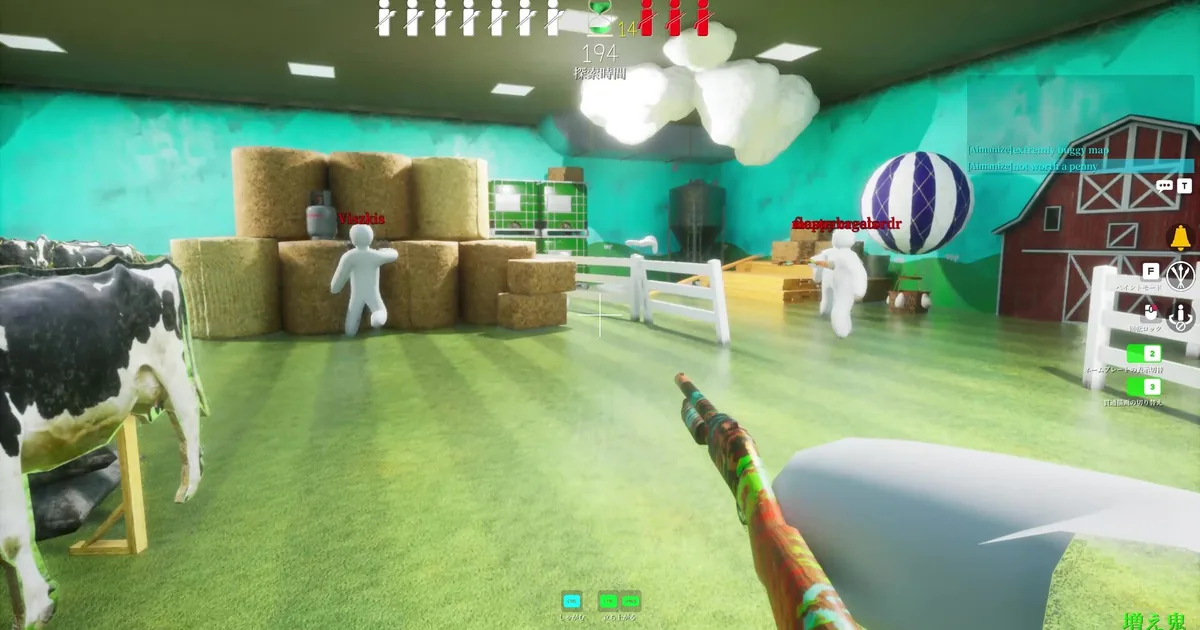
A hide-and-seek party game where Hiders freehand-paint their character (color, metallic and roughness sliders, no fixed costume) to blend into the environment before a Hunter tracks them down and shoots. Built by a two-person team in about two months with zero marketing budget, it spread entirely through TikTok, YouTube, and Twitch clips after its June 9, 2026 launch.
Key takeaways: everything confirmed at a glance
- Developer: lemorion_1224 (maps and models) and Haganeiro (systems), a two-person team with no marketing budget behind the launch
- Second-highest revenue game on Steam in June 2026, behind only Fortnite, per Newzoo's Game Performance Monitor's tracked data
- Launched June 9, 2026 at $5.99; sold 15 million copies by July 5, 2026 and passed 20 million by August 12, 2026
- Very Positive on Steam across 84,000+ reviews
- 4 confirmed modes: Basic, Growing Demon, Double Mode, Reverse Chicken Race
- 14+ official maps, including 3 branded collaborations (HIKAKIN Museum, Garten of Banban, Exit 8)
- A clone/decoy system exists but destroying a clone destroys your real body too
- A July 2026 Workshop malware scare was patched; the base game was never compromised
All Meccha Chameleon guides on this site
- Meccha Chameleon Guide: How the Camouflage System Works: the painting mechanics, scoring, and lobby-size fundamentals.
- Meccha Chameleon Modes and Maps: Every Confirmed Map: all 4 modes explained and all 11 official maps by patch date.
- Meccha Chameleon Advanced Tips: Clones, Poses, Hunter Play: the clone system, community pose strategy, and how Hunters actually find you.
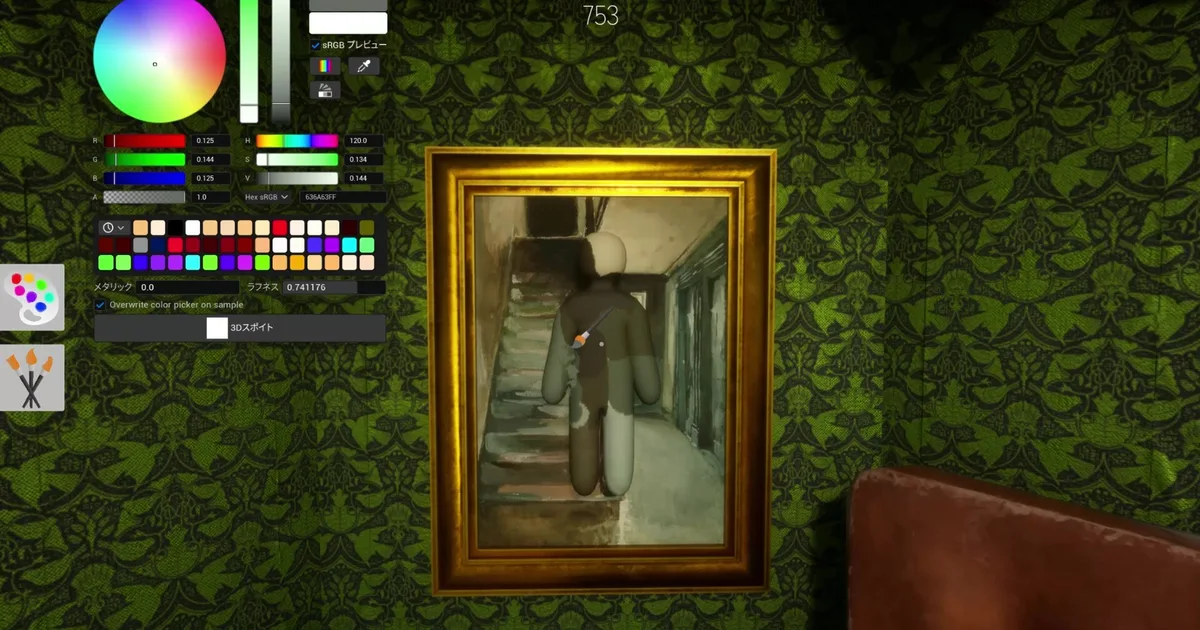
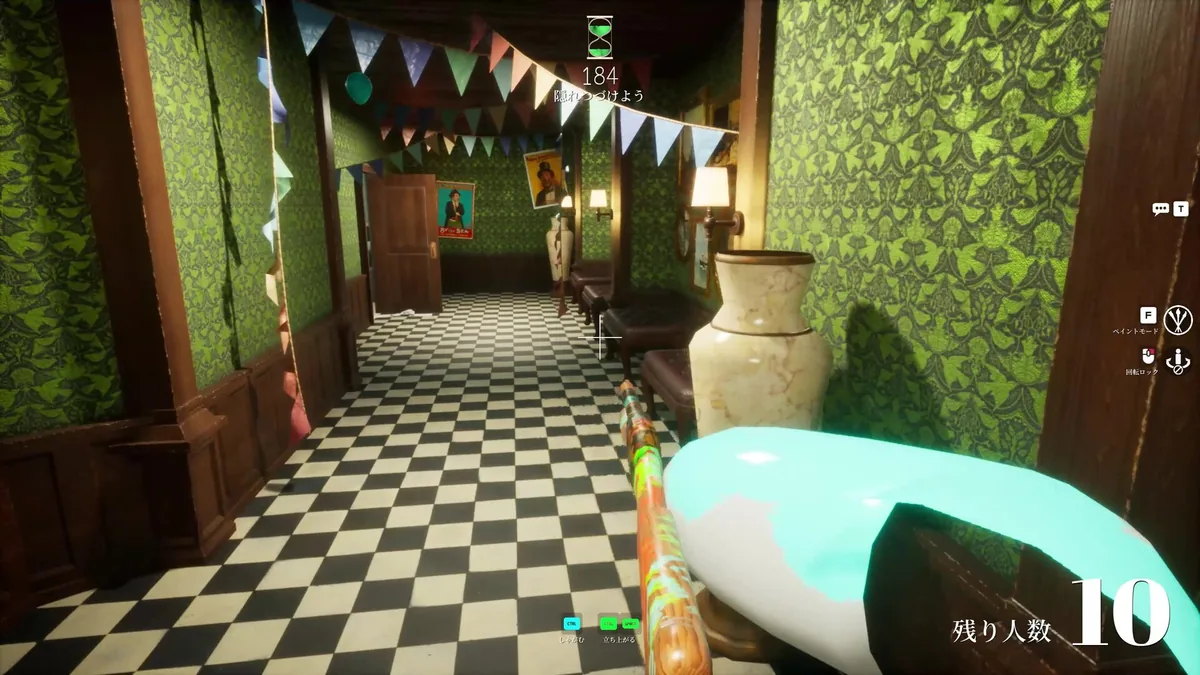 One of the Hide-and-Seek Mansion's more decorated corridors, part of the map roster covered in the modes and maps guide.
The two developers behind it
Meccha Chameleon comes from a two-person team: lemorion_1224 handled maps and models, and Haganeiro handled system development. They built the game in roughly two months, with no marketing budget behind the launch. All official communication, patch notes, milestone posts, and safety statements alike, comes through Steam posts signed "lemorion1224," with a confirmed developer X/Twitter account at @lemorion1224. There's no dedicated developer YouTube channel; the game's own trailer is hosted directly on Steam's CDN rather than as a public YouTube upload, which is part of why so much of this game's visibility has come from player-made clips rather than official video marketing.
That small-team, no-marketing origin is worth keeping in mind when reading anything about the game's design decisions. Patch notes read like a developer directly explaining changes to players, not a studio's PR-filtered announcement, and the pace of content (weekly-plus new maps and modes for over a month straight) is the kind of output normally associated with a much larger team.
Launch numbers and how they've moved
Sales milestones came fast and kept climbing: 1 million copies by June 14, five days after launch, then 2 million the next day, 3 million the day after that, 5 million by June 19, 7 million by June 21, 10 million by June 26, and 15 million by July 5. Growth didn't stop there either: the developers posted an official "Over 20 million units sold!" milestone on August 12, more than two months after launch. That's not a launch spike that faded after opening weekend, it's sustained growth across the entire summer. Concurrent player counts moved the same direction: an early source citing launch-week data (around the 1 million sales mark) put a peak concurrent count in the low tens of thousands with well over 100,000 simultaneous Twitch viewers, and later, higher-sales-count sources cite a much larger peak concurrent figure, among the higher counts recorded on Steam in 2026. The review base has grown in step: from the tens of thousands cited in earlier coverage of this game to 84,630 total reviews (73,947 positive) as of this hub's most recent update, still holding at Very Positive.
One data point worth knowing if you're deciding whether the game is worth the money at all: per Newzoo's Game Performance Monitor, Meccha Chameleon was the second-highest revenue game on Steam in June 2026, trailing only Fortnite. For a $5.99 game built by two people with no marketing spend, that's an extraordinary result, and it's the kind of number that explains why the patch cadence has stayed so aggressive well past launch: there's a genuinely enormous player base to keep serving new content to, and a two-person team that size doesn't get to coast on a single good launch month the way a bigger studio with a marketing runway might.
Where to start if you're new to the coverage
If you haven't played yet, start with the existing camouflage guide on this site: it covers the painting mechanics, scoring, and lobby-size fundamentals that everything else assumes you already understand. Trying to jump straight into clone strategy or mode-specific tactics without that foundation will make less sense than it should.
If you already know the basics and want to know what's changed since launch, the modes and maps guide is the more useful next stop: it lays out all four confirmed modes and all eleven official maps by patch date, which doubles as a rough timeline of how much the game has grown since June. Players specifically trying to get better at finding good hiding spots, understanding the clone system, or reading how Hunters actually play should go straight to the advanced tips guide, since that's where the community-sourced pose strategy and the Hunter-side mechanical detail live, rather than material duplicated from either of the other two guides in this cluster.
Anyone who came to this hub specifically because of the Workshop security news should read that section above, then treat the modes and maps guide's brief note on Workshop maps as the practical follow-up: it explains exactly which two map names were implicated and why official maps aren't affected. That's a genuinely different concern from anything covered in the advanced tips guide, so don't assume the security note applies to poses, paint jobs, or clone strategy; those remain entirely unaffected cosmetic and gameplay choices.
Ongoing patches worth watching
Every specific number in this hub, review counts, sales figures, the exact map and mode roster, reflects what was confirmed at the time of writing. This is an actively, aggressively patched game from a team that has shipped new content on a weekly-or-faster cadence for well over a month straight, which means some of these specifics will be outdated by the time you're reading this rather than months from now. That's not a criticism of the coverage, it's the nature of writing about a game that's still this early in its post-launch life and still growing this fast. If you're relying on an exact figure for something important, the linked Steam news hub in the references below is the fastest way to confirm whether anything has moved since this hub was last checked.
This hub gets updated as those numbers move and as new guides get added to the cluster, so it's the page to bookmark rather than any single leaf article if you want the current state of the whole picture.
Why this spread so fast
The developers themselves have been candid that no marketing budget was behind the launch. What actually drove it was clip culture: painting yourself into a portrait frame or a suit of armor and watching a Hunter walk past inches away is inherently funny and inherently shareable, and that translated directly into TikTok, YouTube, and Twitch clips without anyone needing to pay for it. Sales milestones came fast and kept coming: 1 million copies by June 14, 5 days after launch, climbing to 15 million by July 5, then past 20 million by August 12. That's not a launch spike that faded, it's sustained growth well past the first month.
The patch cadence is the real story here
Roughly every 1 to 3 days early on, and still weekly or better into mid-August, a two-person team has shipped new maps, new modes, character options, localization, and bug fixes on a pace usually associated with much bigger studios. Reverse Chicken Race (a genuinely new mode, not a reskin) shipped July 2. HIKAKIN Museum, the first branded collaboration map, shipped July 10. Garten of Banban, a second collaboration with a horror game IP, shipped July 25. A Plump body type, a new character option, shipped July 26. The collaboration map Exit 8 shipped August 1, the Deep Sea map shipped August 7, and the Shopping Mall map shipped August 16, the same patch note in which the developers stated that map would be the last new official (non-collaboration) map addition for now. If you played this game in its first week and haven't been back, there is genuinely more here now than there was at launch.
The Workshop security scare, briefly
In late July 2026, an independent security researcher identified two Steam Workshop maps, named "Laser Tag Neon" and "Chroma Grid Arena," as malware droppers that triggered on launching the map rather than merely subscribing to it. The developers shipped a security patch (update 3.1.0) addressing the vulnerability and removed the identified malicious maps from Workshop. Separately, while investigating the issue, a company system engineer's own PC was infected, which the attacker used to bypass 2FA and briefly hijack the official Discord server. Multiple official Steam posts were explicit that the base game itself was never compromised, since Steam's publishing infrastructure prevents a single compromised PC from pushing a tampered game update. If you're active in Workshop content for this game, the practical takeaway is simple: be selective about which community maps you subscribe to and launch, and don't trust anything posted on the Discord during a period when staff are warning about a hijack.
Frequently Asked Questions
What is Meccha Chameleon? Meccha Chameleon is a hide-and-seek party game where Hiders freehand-paint their character to blend into walls, floors, and props before a Hunter finds them. It launched June 9, 2026 from a two-person team and sold 10 million copies in 16 days with zero marketing budget.
Is Meccha Chameleon still popular? Yes. It holds Very Positive reviews across more than 84,000 ratings and had sold over 20 million copies by mid-August, with an active weekly patch cadence still adding new maps and features.
How much does Meccha Chameleon cost? $5.99 standard price on Steam, occasionally discounted further during Steam sales. It's Windows-only natively, though GeForce NOW support was added so it's playable on Mac and lower-spec PCs through cloud streaming.
Is Meccha Chameleon safe to download? The base game is safe. A July 2026 security incident involved two malicious Steam Workshop maps, not the game itself; the developers patched the vulnerability and confirmed the core game was never compromised. Be selective about which community Workshop maps you subscribe to.
Who made Meccha Chameleon? A two-person team credited as lemorion_1224 (maps and models) and Haganeiro (systems development), built in roughly two months with no marketing budget. It spread entirely through TikTok, YouTube, and Twitch clips.
How many players can play Meccha Chameleon? The developers recommend 2 to 10 players for the smoothest experience, with a hard lobby cap of 24. Stability depends heavily on the host's connection past 13 players.
Pricing, platforms, and cross-play access
Meccha Chameleon is $5.99 standard price on Steam, and the game has run at least one confirmed sale since launch (a 15% discount posted directly by the developer). It's natively Windows-only, with no listed Mac or Linux build, but GeForce NOW support was added specifically so players on Macs or lower-spec PCs could still access it through cloud streaming rather than being locked out entirely. That's a deliberate accessibility decision from a small team, not an afterthought: expanding reach to hardware that can't run the game locally is exactly the kind of move that supports the sales numbers above rather than capping them at whoever already owns a gaming PC and a Windows install.
The game also picked up meaningful reach through streamer and creator adoption beyond the clip-culture spread already covered. Streamers including Shroud, xQc, Jynxzi, and TheBurntPeanut all played it during the viral window, and VTuber Mori Calliope ran an English-language stream as well. None of that changes anything about how the game actually plays, but it's part of why the concurrent player numbers climbed as fast as they did: large-audience streamers picking up a $5.99 game with an inherently funny, clip-friendly core loop is close to a best-case scenario for organic growth, and it compounds with the TikTok and YouTube clip spread rather than competing with it for attention.
A note on terminology across this guide cluster
Steam's own official copy is not perfectly consistent about what to call the player who searches for Hiders: the store page description says "Seeker," while nearly every official patch note instead says "Hunter" (Hunter FOV, Hunter ammo option, Hunter TPS view, and so on). Both terms are legitimately official, just used in different official contexts, and this guide cluster generally follows the patch-note convention ("Hunter") when discussing specific mechanical changes, since that's the terminology tied to the actual confirmed numbers. If you see either term used elsewhere, they refer to the same role.
Similarly, the developers use "Basic" and "Growing Demon" as the official names for the game's two original modes. An earlier version of this site's own camouflage guide used different, unofficial names for these modes; that was corrected once a dedicated research pass checked the claim directly against official Steam patch notes and found no source for the old naming. It's a useful reminder for any reader cross-checking this game elsewhere: community nicknames and even earlier drafts of official-sounding coverage can drift from what the developers actually call something, and the patch notes are the most reliable tiebreaker when two sources disagree. This is exactly why every specific claim across this guide cluster traces back to a dated patch note or an official Steam post rather than a secondhand summary, even where that made a section slower to write.
References
- Meccha Chameleon on Steam: official store page, patch notes, and current review data.
- Meccha Chameleon Steam news hub: source for every sales milestone and patch date cited across this guide cluster.
- PCGamesN: Meccha Chameleon malware scare coverage: independent press coverage of the July 2026 Workshop security incident.
About the author

Critical game theorist with a background in film criticism. Writing for print and digital outlets since 2015. Specialises in genre analysis and design heritage.
- Background in film criticism
- 10 years games coverage
- Genre theory and design history specialist
Keep reading

Disclaimer
This article is published for informational and entertainment purposes. It does not constitute professional financial, legal, or technical advice. Game performance, online services, patch schedules, and store listings change. Verify critical details (pricing, system requirements, regional availability) with publishers and storefronts before you buy. Affiliate links, where present, help support our editorial work and are labelled in our affiliate disclosure.
Comments
Loading comments…