
GameBrief · General
Blood West Scavengers Guide: How the Roguelite Loop Works
Blood West Scavengers turns the western survival shooter into a repeatable run. You choose a scavenger, take contracts, search altered regions for gear and secrets, and carry part of that progress into the next attempt. The important systems are the calendar, the Demonic Sun, contracts, region difficulty, and the difference between a run reward and a permanent unlock.
TL;DR: Scavengers is a roguelite mode with selectable scavenger starts, contracts, altered Canyons, Swamps, and Mountains maps, and a 31-day progression calendar. Death starts another attempt while longer-term progression continues. The Demonic Sun can lead to a deadly Spirit after prolonged exposure, so keep moving, use shelter, and spend money on upgrades that improve the next run rather than chasing one perfect inventory.
Current status: September 2026 (quick answer)
The current Steam snapshot used for this audit listed the Blood West base game at $12.49 on sale, 50% off, with 89% positive from 3,849 English reviews and 74% positive from 43 recent reviews. The Scavengers DLC was listed at $4.24 on sale, 15% off, against a $4.99 list price. These are prices captured at audit time and can change.
The official Scavengers announcements describe a roguelite take with new scavenger starts, contracts, money, traders, regions, weapons, artifacts, treasure maps, events, blessings, and a 31-day progression arc. They also say that the mode does not simply stop after day 31. This article uses those current notes rather than the older claim that there are exactly eight scavengers or that every meta item carries in the same way.
Blood West Scavengers guide: how a run works
At the start of a run, choose the scavenger that fits the route and equipment you expect to use. The official deep dive describes different starts with different skills, equipment, and unlocks. That means the choice is not just a character skin. Read the selection screen and note what the run gives you before deciding whether to spend early money on a replacement.
The run itself is a loop of contracts, exploration, combat, and selling or upgrading. Contracts give the attempt a direction, while the changed region layouts encourage you to search familiar maps again. The official material names the Canyons, Swamps, and Mountains and says enemy and loot locations have changed. Treat a remembered route as a hypothesis, not a guarantee.
Death is part of the loop. You lose the current attempt, choose again, and use the progression that the mode preserves. Because the exact carry rules can change with patches or a particular unlock, check the current run summary instead of assuming that every rifle, artifact, or item enters the next attempt.
The 31-day calendar and long-term progression
The calendar is the clearest structure in Scavengers. The official deep dive describes 31 days, new starts and unlocks as the calendar advances, and rising pressure over a longer survival. Official update notes also mention calendar unlocks at days 5, 10, and 20, plus fixes for missing day icons and a skipped day 5 entry.
This gives you a practical priority: do not spend the first attempts trying to perfect a day that has no new unlock attached to it. Push far enough to open the next calendar milestone, then use the improved start to search more dangerous content. The calendar is progression, not a promise that every day has a unique mission.
The mode also has a later pressure curve. Mountains are described as harder than the Canyons and Swamps, and survival becomes more difficult after the initial calendar arc. Save an upgrade that helps you enter a harder region with enough supplies rather than buying a small improvement that only makes an easy early fight faster.
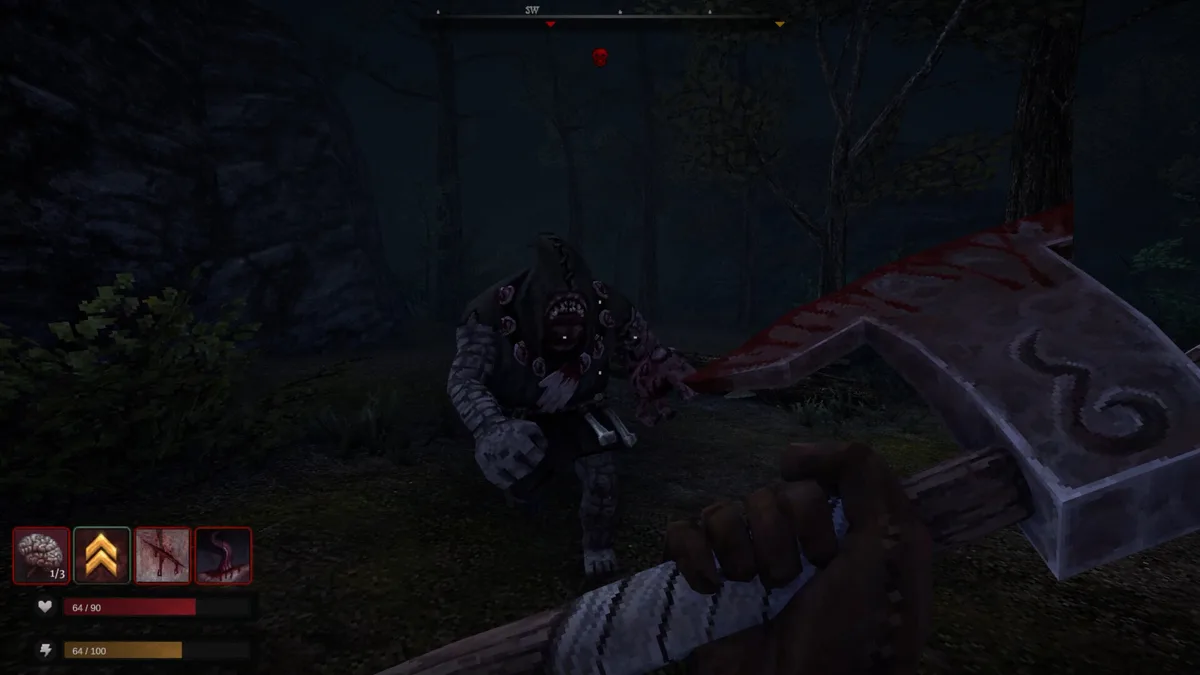 The map is familiar, but the roguelite route changes which region and contract should be your next priority.
The Demonic Sun and Spirit threat
The Demonic Sun is an attrition mechanic, not just a visual filter. The official deep dive says prolonged exposure can be followed by a new deadly Spirit and that the escalation can be avoided for a time. The practical response is to keep the run moving, use shelter or safer routes when available, and avoid treating an exposed area as a place to idle while sorting every item.
Do not confuse the Demonic Sun with a fixed timer that instantly ends a run. The source describes a risk that builds through prolonged exposure, and the current game can give you room to plan. If a contract sends you across open ground, finish the essential objective first, then decide whether the next search is worth the exposure.
The same rule applies to inventory management. Open menus in a safe place when possible. If the next objective is optional, the best decision may be to return with the contract reward instead of gambling the whole attempt for one more chest.
Contracts, traders, and loot priorities
Contracts provide the clearest reason to leave a safe route. Take one that matches your current weapon, region, and carrying capacity. The official overview describes contracts, money, better gear, and trader unlocks as the run's forward motion. Use the reward to make the next attempt more consistent, not just to increase a single damage number.
The mode adds new weapons, craftable artifacts, treasure maps, riddles, mini-locations, map events, collectible figurines, blessings, variants, trophies, and challenges. That list is broad by design. You do not need to search every secret on the first successful run. A contract plus one safe detour is a better baseline than a route that spends all ammunition for a speculative collectible.
When you reach a trader, compare the purchase with the next calendar milestone. A weapon that solves the next region's enemy type may be better than a general upgrade. If you are still learning the region, keep enough money for ammunition, healing, and a return route before buying a novelty item.
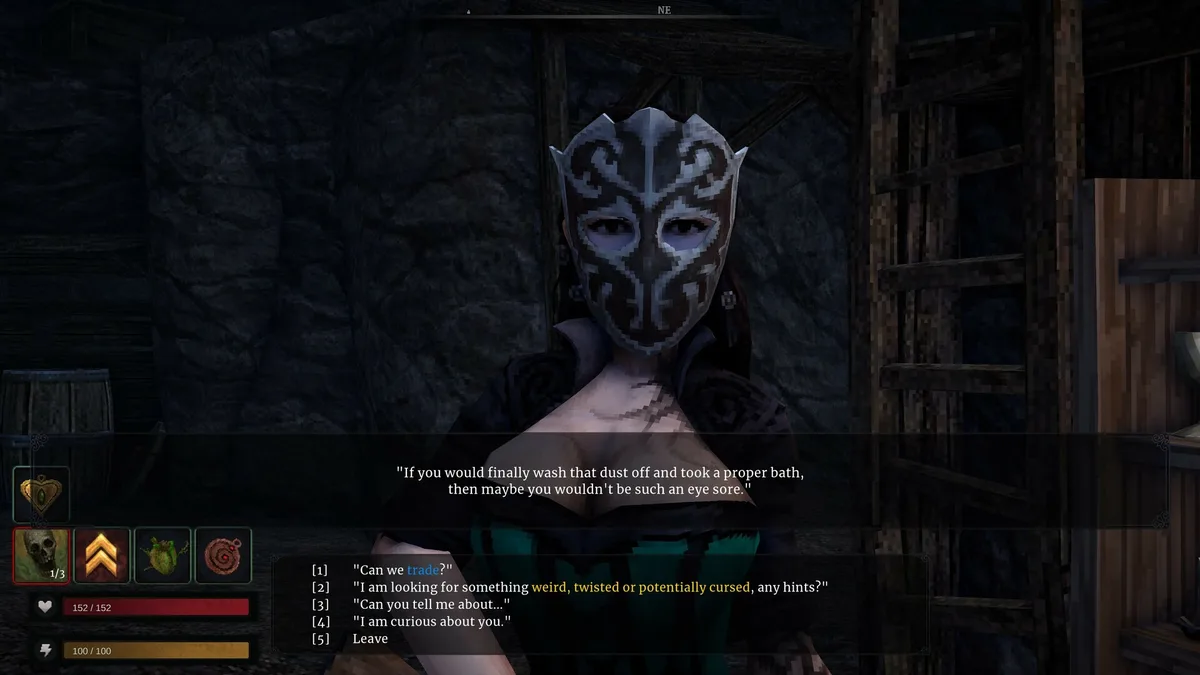 Spend run money with the next region and contract in mind. A full inventory is not the same as a prepared run.
The Watch and other timing tools
The Watch is useful because a small timing advantage can change a shot or escape. The current community reference describes it slowing time by 15% for one second when aiming down sights, once every five seconds. That is a short window. It is not a constant slow field and should not be described as one.
Use the effect at the moment a target commits to an attack or when you need one careful shot. Do not waste it while walking between points of interest. If a future patch changes the duration or trigger, the cooldown and effect should be rechecked in the current item reference before this section is expanded.
Other priorities are less glamorous: ammunition, healing, a reliable weapon for the region, and enough space to carry a contract item. The Blood West Scavengers weapons tier list and Scavengers review can fill in those decisions without turning every run into a collection checklist.
Step-by-step: build a safer Scavengers run
1. Read the start: Check the selected scavenger's equipment, skills, and unlocked options before leaving the starting area.
2. Choose one contract: Pick a goal that matches the region, weapon, and supplies you already have.
3. Set a return point: Mark a safe route back before entering an unfamiliar altered map or exposed area.
4. Spend exposure carefully: Keep moving under the Demonic Sun and use shelter before optional looting turns into a Spirit risk.
5. Bank the progress: Return with the contract reward or calendar milestone rather than treating one extra chest as mandatory.
6. Improve the next start: Use the retained progression to make the next attempt more reliable, then push toward the next calendar unlock.
Frequently asked questions
What is Blood West Scavengers?
It is a roguelite mode built around scavenger starts, contracts, altered versions of the three regions, and longer-term progression.
Do you lose everything when you die?
You lose the current run and start another scavenger attempt. The mode preserves longer-term progression, while the exact item carry rules should be checked in the current run summary.
How long is the calendar?
The official deep dive describes 31 days and says there is no hard stop after that arc. Later survival is harder, so the calendar is a milestone structure rather than a final victory timer.
How do I handle the Demonic Sun?
Avoid idling in exposure, use safer routes or shelter, and finish essential contract work before taking optional detours. Prolonged exposure can be followed by a deadly Spirit.
How many scavengers are playable?
The official material used here says a handful rather than giving a verified fixed roster count. Ignore old articles that state an exact number without a current source.
Related Reading
- Blood West Scavengers Review: first-run priorities and mode context.
- Blood West Scavengers Weapons Tier List: choosing weapons for altered regions.
- Blood West Scavengers Review: carrying-capacity and contract context.
- Blood West Scavengers Review: exposure and route-planning context.
- Blood West Scavengers Weapons Tier List: region and loadout context.
- Blood West Scavengers Review: the current article-cluster entry point.
References
- Blood West on Steam: current base-game price, reviews, and DLC links.
- Blood West official announcements: Scavengers deep dive, version 1.1, and hotfix notes.
- Blood West Watch reference: current community documentation for the Watch timing effect.
Was this guide helpful?
About the author

Senior Critic & Analyst
Former game data analyst turned critic with 11 years covering indie and mid-tier games. Based in Austin. Runs spreadsheets on games most people just play.
- 11 years games criticism
- Former game economy analyst
- Roguelike and strategy specialist
Keep reading


Disclaimer
This article is published for informational and entertainment purposes. It does not constitute professional financial, legal, or technical advice. Game performance, online services, patch schedules, and store listings change. Verify critical details (pricing, system requirements, regional availability) with publishers and storefronts before you buy. Affiliate links, where present, help support our editorial work and are labelled in our affiliate disclosure.
Comments
Loading comments…