
GameBrief · General
Coffee Talk Tokyo Endings Guide: All 11 Character Routes
Reviewing
Coffee Talk Tokyo
This Coffee Talk Tokyo endings guide starts with one number: eleven. That's how many named characters get their own good ending, one per person who sits down at the counter, and the only place that confirms the exact count without guessing is the game's own achievement list. I pulled that list straight from Steam's API before writing a word of this guide, because every fan recipe thread I read while researching this had already been corrected at least once since the May 21 launch.
TL;DR: Coffee Talk Tokyo tracks 11 individual character good endings (Ash, Erika, Emi, Blue, Vin, Fuku, Makoto, Kenji, Yuki, Jun, Ayame), confirmed by Steam's achievement schema and by Chorus Worldwide's own launch post announcing "a brand new cast of 11 characters." The story runs 15 in-game nights. A good ending depends on correctly reading and brewing what each visitor actually asks for across their whole arc, not one late-game choice, and several routes overlap in ways that can affect each other.
How many endings does Coffee Talk Tokyo have? (quick answer)
Eleven character-specific good endings, plus a completionist achievement (ACH_FINISH_GOOD_ALL) for landing all 11 in a single save. That count comes directly from Steam's achievement data and matches Chorus Worldwide's own launch-day announcement, which described the cast as exactly 11 characters. A few other figures, like the returning regular Hendry, show up in secret storylines without a good-ending slot of their own.
Coffee Talk Tokyo endings guide: key takeaways
- 11 characters, 11 good endings. Ash, Erika, Emi, Blue, Vin, Fuku, Makoto, Kenji, Yuki, Jun, and Ayame each have a dedicated
ACH_FINISH_GOOD_*achievement. - Outcomes accumulate, they don't branch on one choice. Every correctly brewed drink across a character's full 15-night arc pushes their ending state, not a single dialogue pick.
- Storylines overlap. Blue and Vin share a secret-story achievement, and so do Fuku, Yuki, and Emi. A bad drink in one can bleed into another's arc.
- Hendry, Rachel, and Akiko aren't part of the core 11. They appear in optional secret stories, confirmed by achievement names separate from the main
FINISH_GOODset. - 44 achievements total, covering the 11 endings, three tiers of Tomodachill social unlocks, drink mastery, and Challenge Mode runs.
Overview: what is Coffee Talk Tokyo?
Coffee Talk Tokyo is the third entry in Toge Productions' Coffee Talk series, following the original Coffee Talk (January 29, 2020) and Coffee Talk Episode 2: Hibiscus & Butterfly (April 20, 2023). This time Chorus Worldwide takes the developer's seat, building a standalone story in a new late-night cafe in Tokyo rather than continuing the Seattle setting of the first two games. It launched on Steam for $14.99 on May 21, 2026, after Chorus pushed the date back from an originally announced March 5, 2026 window; the delay post from the team said plainly that they needed "extra time... to deliver the best possible experience from day one" rather than ship something unfinished. As of early September 2026, it sits at Very Positive on Steam, with 529 total reviews (476 positive).
You play the barista again. Customers, some human, some yokai, sit down across the counter, order something specific or something vague, and talk through whatever they're carrying that night. What you brew, and how closely it matches what they actually needed rather than what they literally said, is the entire feedback loop the game runs on.
If cozy, character-driven games set in a very specific real place are your thing, this isn't the only one on the site.
GODEEPER: Another slice-of-life game that leans hard on a single real location and a cast of regulars, this one a 1990s Japanese convenience store. inKONBINI Game: What It Is and Is It Worth Buying? →
The 15-night structure: how each character's ending gets decided
Coffee Talk Tokyo's story runs across 15 in-game nights. Characters don't all show up every night, and several nights introduce new faces while carrying forward threads from ones who already visited. The game doesn't gate an ending behind a single climactic choice the way a lot of visual novels do.
Step-by-Step: what actually moves a character toward their good ending
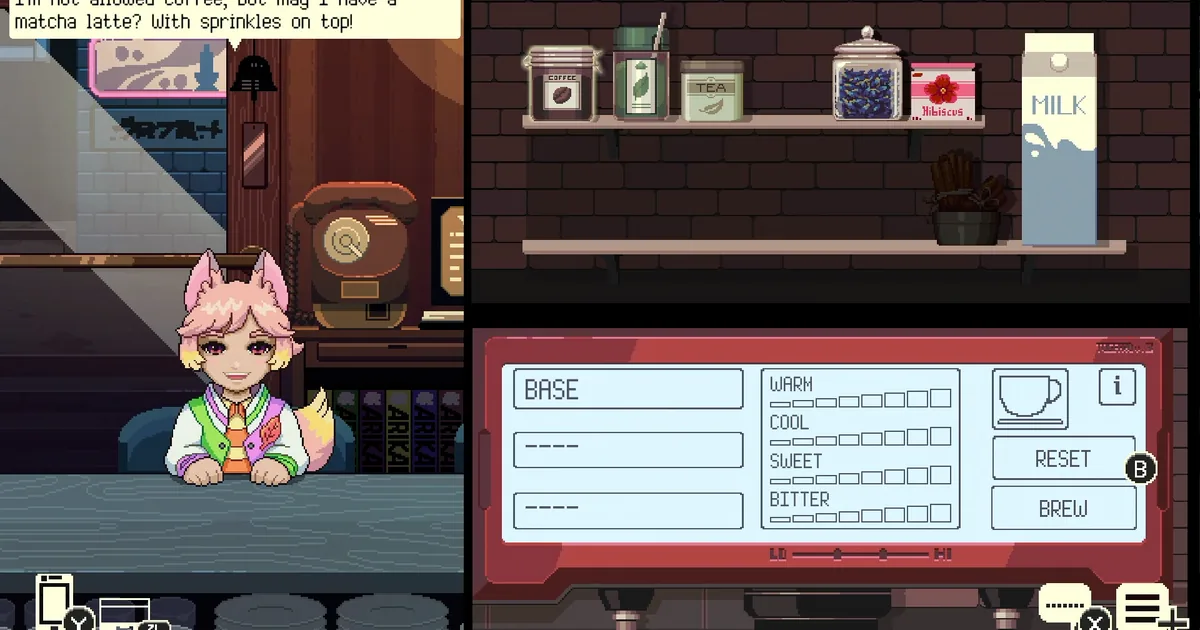
- Listen before you brew. Every customer states a mood or a specific craving in dialogue before the order screen opens. The literal drink name they say isn't always the one that satisfies them; sometimes it's the warm, cool, sweet, and bitter sliders on the brewing screen that matter more than the exact recipe name.
- Match the temperature they ask for. Community testing found this is an easy miss: a character can request a drink hot on one visit and the same drink iced later, and serving the wrong temperature counts as a wrong order even if every ingredient is correct.
- Use the Brewpad for anything you've already unlocked. Once you've correctly made a "special" drink, it's saved to the Brewpad reference so you don't have to re-derive the ratio next time that character (or a different one) asks for something similar.
- Keep serving through all 15 nights, not just the nights that feel plot-heavy. Good endings track the accumulated pattern of correct service across a character's entire arc, so skipping a "minor" visit still counts against you.
- Pay attention to characters who share scenes. Blue, Vin, and Jun cross paths repeatedly; Fuku, Yuki, and Emi do too. A wrong drink for one sometimes shows up as a changed line of dialogue for another later on, which is the game's way of telling you something drifted off-course.
- Watch for Ayame's Day 15 payoff. Her arc closes with a reunion with a character named Akiko, and it's the clearest single moment in the game where the accumulated choices of an entire route resolve on-screen rather than being implied.
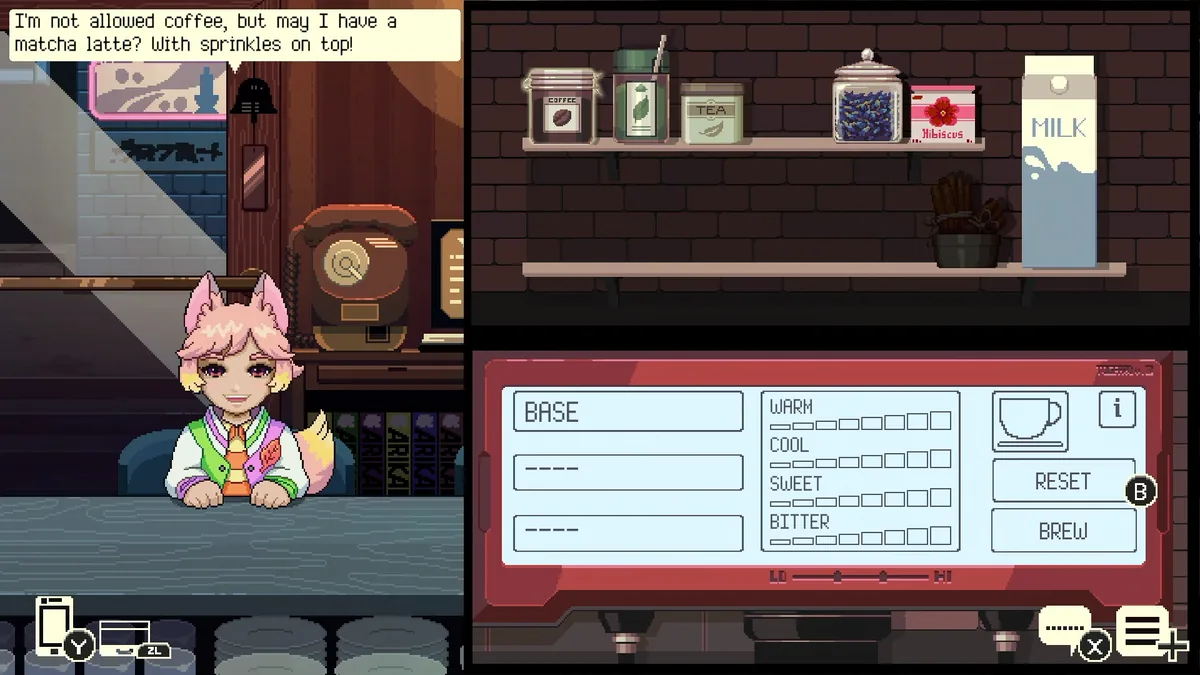 The order screen a customer's request actually gets checked against: base ingredient plus the four flavor sliders, not just a recipe name.
Coffee Talk Tokyo endings guide: all 11 character routes, confirmed
Every name below is pulled directly from Steam's achievement schema (ACH_FINISH_GOOD_ASH through ACH_FINISH_GOOD_AYAME), not inferred from a playthrough or a fan wiki. I'm not going to invent motivations or backstory details I haven't verified, but here's what's confirmed for each and where their arc connects to others.
- Ash has an individual good ending, confirmed by achievement data and cross-referenced against community drink logs from launch week.
- Erika likewise has a standalone good-ending achievement; her arc doesn't appear in any of the secret-story groupings.
- Emi is grouped with Fuku and Yuki in a shared secret-story achievement (
ACH_SECRET_STORY_FUKU_YUKI_EMI), meaning their three storylines intersect at some point. - Blue shares a secret-story achievement with Vin (
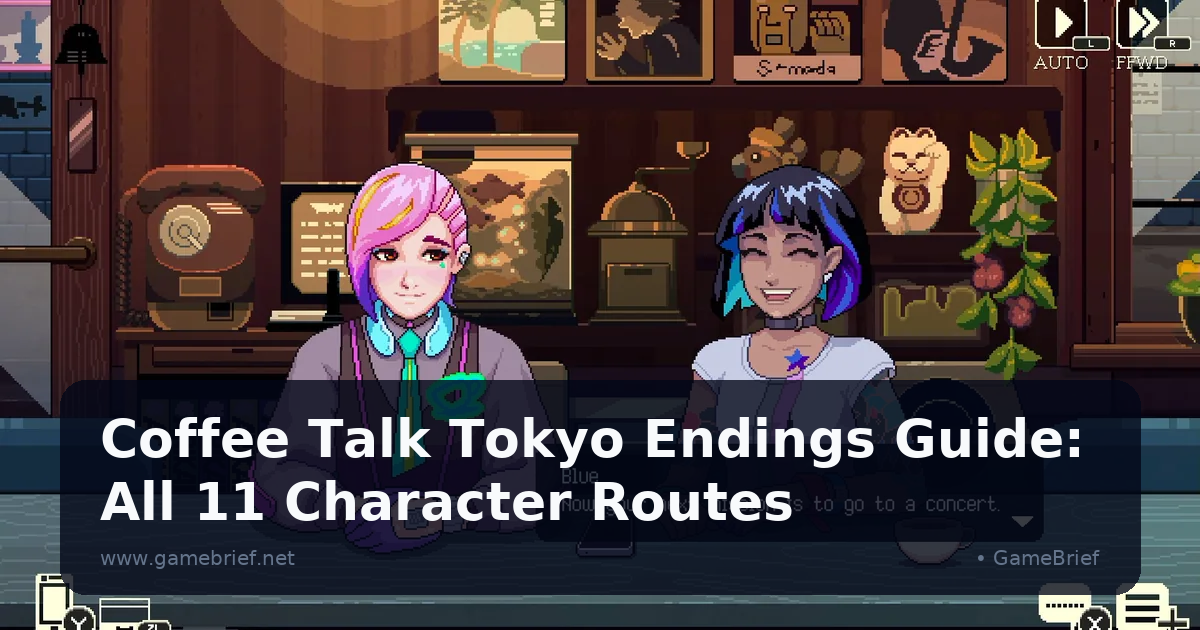
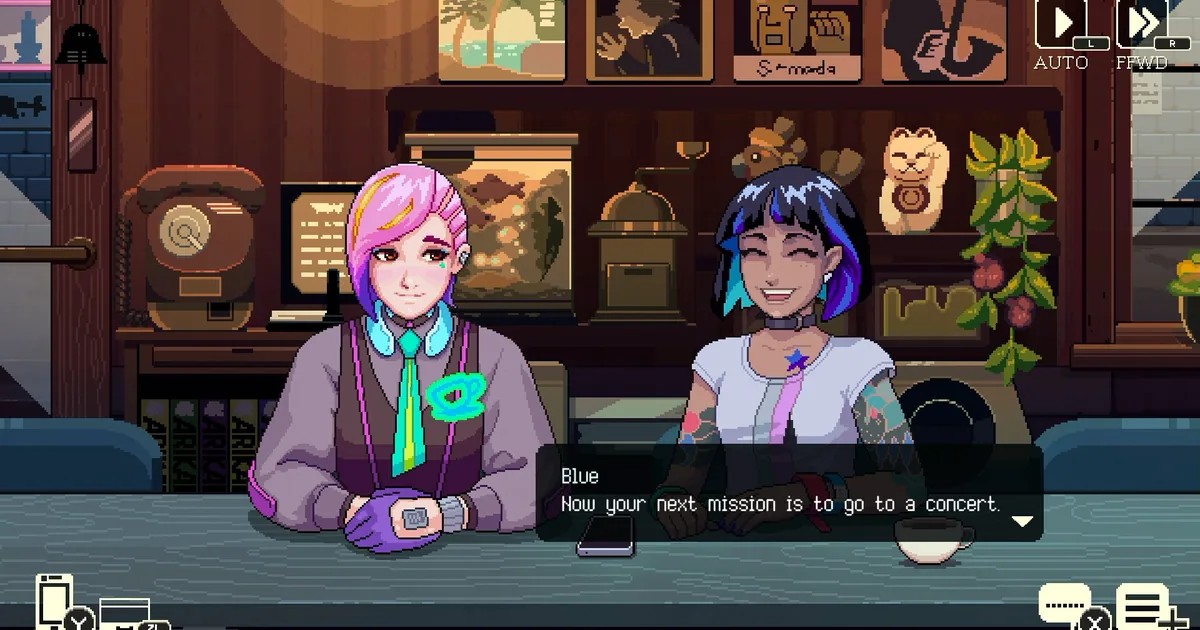
ACH_SECRET_STORY_VIN_BLUE). She's also the character shown mid-scene in this guide's header image, giving a customer her next "mission." - Vin, per Chorus Worldwide's own second devlog, is the Assistant Barista: a human character built to be a constant presence at the cafe across the whole story, distinct from Freya's role in the original Coffee Talk. Vin lives above the shop and is the player character's closest in-fiction friend.
- Fuku is part of the Fuku/Yuki/Emi secret-story cluster and also appears alongside Ayame in achievement data tied to their intertwined finale.
- Makoto has a standalone good-ending achievement with no secret-story crossover flagged in the data.
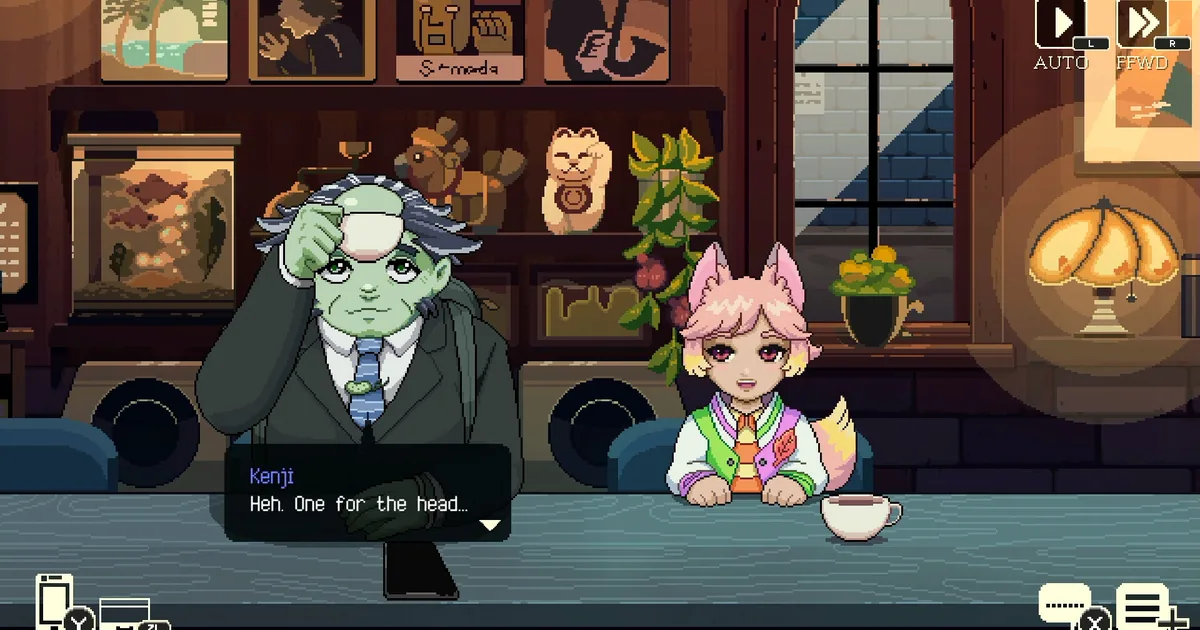
- Kenji has his own secret-story achievement in addition to his main good ending; screenshots from the Steam page show him as a green-skinned yokai regular in a suit, seated with a separate fox-eared character.
- Yuki rounds out the Fuku/Yuki/Emi trio.
- Jun has a dedicated secret-story achievement and is described in existing community writeups as connected to Blue's storyline as well.
- Ayame has the most heavily cross-referenced arc of the eleven: a secret-story achievement of her own, plus a second one shared with a character named Akiko (
ACH_SECRET_STORY_AYAME_AKIKO), which lines up with her Day 15 reunion scene.
Two more names show up in the achievement list without a FINISH_GOOD slot: Hendry, a cat-eared regular with his own secret-story achievement (91.8% of players have already triggered it, making it close to unmissable), and Rachel, who has a secret story but a much lower unlock rate (30.9%), suggesting a more easily missed side thread. A cast this size, built almost entirely on small talk across a counter, is closer to what our Wax Heads review describes than to a typical branching visual novel.
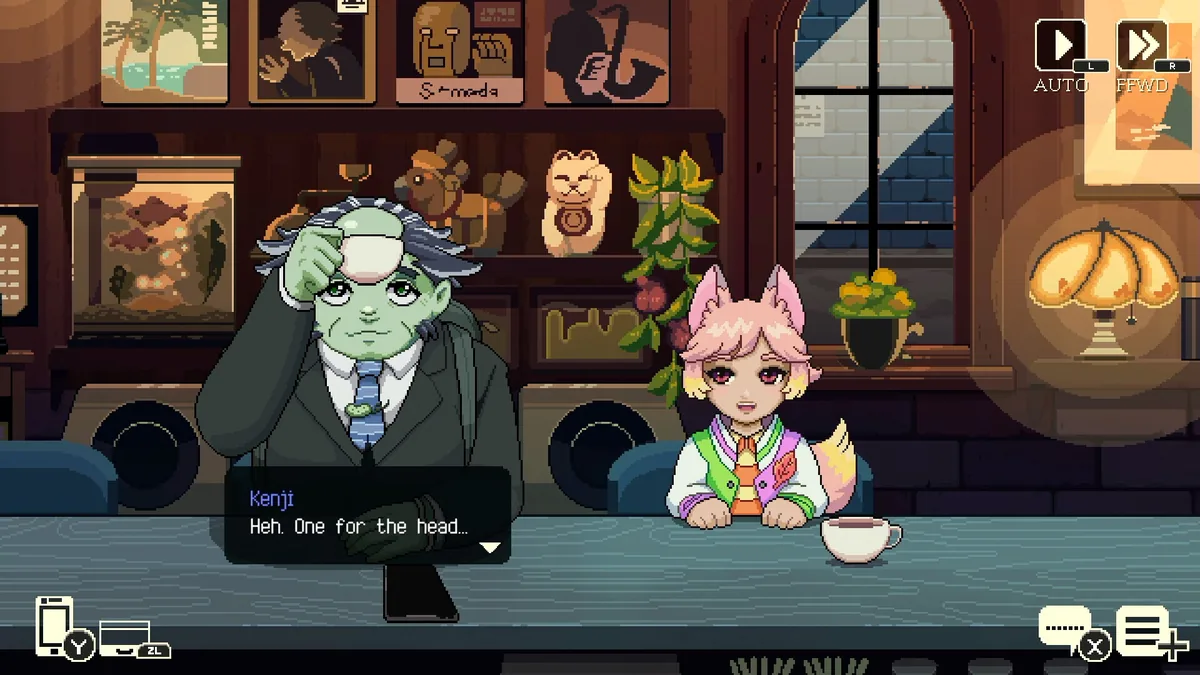 Kenji, one of the 11 characters with a confirmed good ending, seated with a companion during one of his counter visits.
The Brewpad, connected storylines, and secret stories
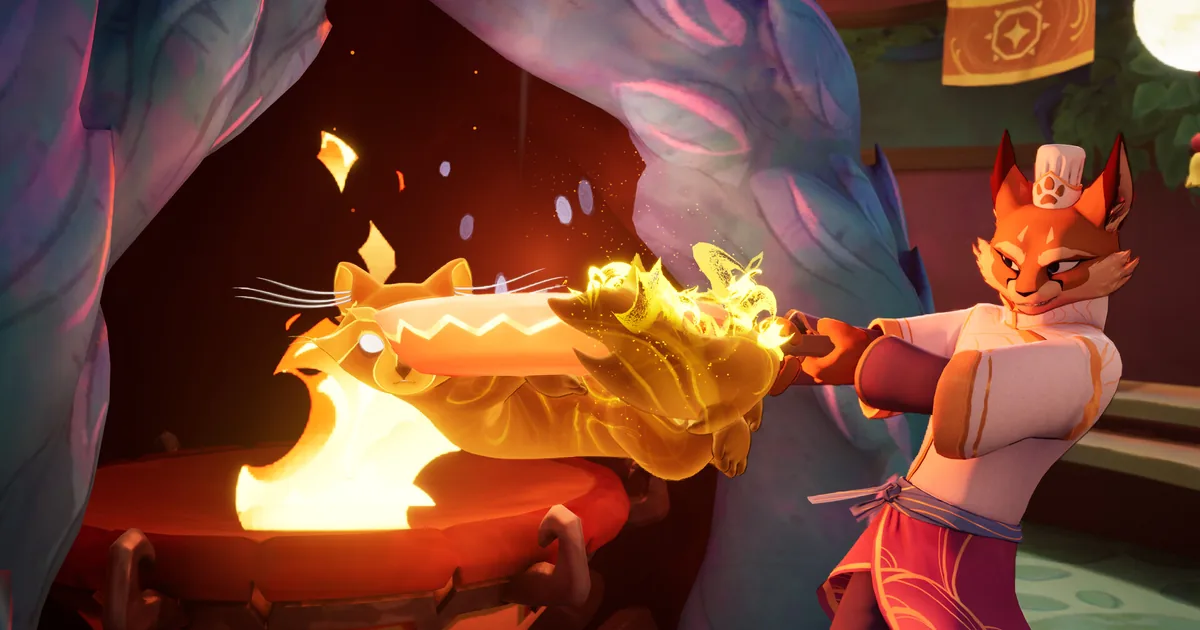
The core brewing loop hasn't changed much from earlier Coffee Talk games: pick a base (coffee, tea, or something else on the shelf), add up to two more ingredients, choose hot or iced, and hand it over. What's new in Tokyo is the expanded Tomodachill social feed (Coffee Talk's in-fiction social media app) and stencil-based latte art, where you etch a design like a torii gate into the foam using pour, etch, and stencil tools before serving.
Players who fully unlocked the Brewpad catalog after launch counted 54 distinct special drink recipes, though this number comes from community testing rather than an official source, and it took two separate players cross-checking their results to land on it. That same community effort found and reported a genuine bug: a Tropical Tea recipe that worked with either mango or lychee as the final ingredient at launch only accepted lychee after a patch. If you're using an older drink guide and a recipe that used to work suddenly doesn't, that's very likely why. It's a useful reminder that day-by-day recipe tables for a game still receiving patches go stale faster than the achievement data they're built on top of.
The connected storylines are the part most walkthroughs undersell. Chorus Worldwide's third devlog described the whole cast as unified by an overarching theme:
"As much as our characters are all individuals with many different backgrounds and issues to sort through, we also wanted them to be united by some shared worries and desires... there was one overarching idea that kept coming up: the theme of change."
That shared thread shows up mechanically, not just thematically. Blue and Vin's paths cross enough to earn their own joint achievement. Fuku, Yuki, and Emi do too. Serve someone the wrong drink and it's not always that character's ending that visibly shifts first; sometimes it's the next name in their circle who says something slightly different than expected. It's the same overlapping-regulars structure our inKONBINI guide points to as the thing slice-of-life games get right when they bother to do it.
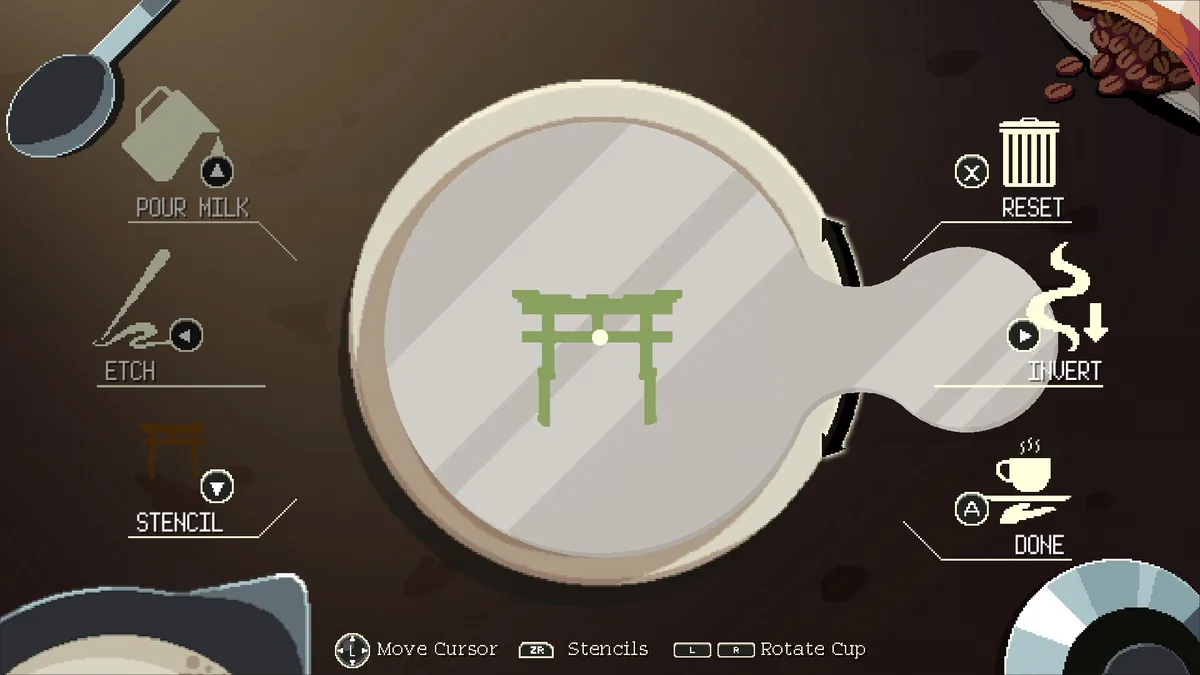 The stencil based latte art tool, here etching a torii gate design, one of the mechanics new to the Tokyo entry.
Tips for locking in every good ending
- Take a screenshot or note of anything a character says they're "not allowed" to have. These restriction lines (allergies, dietary rules, personal reasons) override the literal drink name they request and matter more for scoring the correct outcome.
- Don't rush through Tomodachill posts. Reading and liking posts on the in-game social feed unlocks extra dialogue paths and character profile depth that the base conversations don't always surface.
- If a drink you've made before suddenly "doesn't count," check the temperature toggle first. This is the single most common self-inflicted mistake reported by players who 100%'d the game, ahead of actual ingredient mix-ups.
- Play through blind once before chasing all 11. The connected storylines mean an optimization-first run can flatten moments that are meant to land as surprises, and Coffee Talk Tokyo is a short enough game (most of a weekend, not a marathon) that a second pass for cleanup isn't a big ask.
Is Coffee Talk Tokyo worth playing, and what does the Deluxe Edition add?
At $14.99 with a Very Positive rating across 529 reviews in early September 2026, Coffee Talk Tokyo lands in the same budget bracket as most of the games we track for value.
GODEEPER: Coffee Talk Tokyo's $14.99 launch price puts it comfortably inside this range; see how it stacks up against other recent picks. Best Indie Games Under $20 2026: 7 Top Budget Picks →
A separate Deluxe Edition Upgrade is also listed on Steam, which per the developer's own devlog bundles a 10-track City Pop soundtrack album, a Seattle-set prologue chapter tying back to the original game, and a digital artbook. None of that content affects the ending system covered in this guide; it's a cosmetic and bonus-content layer on top of the same story. If you want a short, dialogue-forward game that isn't trying to be a farming sim or a management game wearing a cozy coat, this is closer to a straightforward visual novel with a scoring system bolted on, and that's a smaller, more specific pitch than most "cozy games" roundups make it sound like.
Common mistakes that ruin a good-ending run
- Assuming one wrong drink is unrecoverable. It usually isn't. The system tracks a pattern across 15 nights, not a single pass/fail moment, so don't reload a save over one mistake unless you're chasing a 100% completion run specifically.
- Ignoring secondary characters who "don't seem important" early. Hendry's secret story has a 91.8% unlock rate precisely because most players stumble into it without trying; treating early, seemingly minor visitors as filler is how the less obvious threads (like Rachel's, at a 30.9% unlock rate) get missed entirely.
- Copying a pre-patch recipe table without checking the date it was written. The Tropical Tea bug above is the clearest documented example, but it's not the only recipe that's shifted since May 21.
- Treating this like a branching dating-sim with mutually exclusive paths. It isn't. The overlapping storylines mean careful play can realistically land all 11 good endings in a single well-managed save, rather than forcing a choice between characters.
Frequently Asked Questions
How many endings does Coffee Talk Tokyo have? Eleven, one per named character: Ash, Erika, Emi, Blue, Vin, Fuku, Makoto, Kenji, Yuki, Jun, and Ayame. Each has its own good-ending achievement on Steam. A twelfth achievement unlocks once every route ends well in the same save.
How do you get the good ending for each character in Coffee Talk Tokyo? Serve the drink a character actually asks for, correctly, every time they visit across all 15 nights. Outcomes track accumulated correct orders per character rather than one big decision, so one missed drink rarely wrecks the whole route.
Can you get every good ending in one playthrough? Yes, but a few storylines overlap. Blue's arc runs alongside Vin's, and Fuku's connects to Yuki's and Emi's, per the game's own secret-story achievements, so a wrong drink in one can quietly affect another later.
Who is Hendry in Coffee Talk Tokyo? A cat-eared regular tied to his own secret-story achievement, separate from the 11 main good-ending routes. He's optional color, not a required stop for a clean good-ending run.
How many nights does Coffee Talk Tokyo last? The main story runs 15 in-game nights behind the counter. Ayame's arc, which ends with her reunion with Akiko, closes out on the final night.
Do you need to have played the earlier Coffee Talk games first? No. Chorus Worldwide built Tokyo as a standalone chapter with a new cast in a new city. Longtime players will catch a few musical callbacks, but nothing about the story requires it.
References
- Coffee Talk Tokyo on Steam: official store page, price, review data, and system requirements.
- Coffee Talk Tokyo - Official Launch Trailer on YouTube.
- Chorus Worldwide: official developer page for the game.
- r/CoffeeTalkGame: official community subreddit, source for post-launch drink recipe corrections referenced above.
Related Reading
- inKONBINI Game: What It Is and Is It Worth Buying?: another cozy, character-driven slice-of-life game built around one specific real-world setting.
- Best Indie Games Under $20 2026: 7 Top Budget Picks: where Coffee Talk Tokyo's $14.99 price point lands relative to the rest of the site's budget picks.
- Wax Heads Review: Record Store Sim That Gets Music Right: a different genre, same idea, a small narrative-first sim built around one location and a cast of regulars.
Was this guide helpful?
About the author

Indie & JRPG Critic
Indie game evangelist and lifelong JRPG fan covering small studios since 2017. Mumbai-born, London-based. Writes the way she talks.
- 7 years indie games coverage
- JRPG and visual novel specialist
- Narrative design focus
Keep reading

Disclaimer
This article is published for informational and entertainment purposes. It does not constitute professional financial, legal, or technical advice. Game performance, online services, patch schedules, and store listings change. Verify critical details (pricing, system requirements, regional availability) with publishers and storefronts before you buy. Affiliate links, where present, help support our editorial work and are labelled in our affiliate disclosure.
Comments
Loading comments…