
ReviewCoffee Talk Tokyo
Coffee Talk Tokyo Review: Cozy, But Losing Its Edge
Coffee Talk Tokyo review: the brewing loop and art are as good as ever, but longtime fans are right that the writing feels softer than the first two games.
Coffee Talk Tokyo review, upfront: the cafe counter still feels exactly as good to run as it did in the first two games, and that's not nothing. Toge Productions shipped this third entry May 21, 2026 through publisher Chorus Worldwide Games, moving the series from Seattle to a late-night Tokyo cafe with an entirely new cast of humans and yokai. Our Coffee Talk Tokyo endings guide already covers all 11 character routes in detail if you're past the buying decision; this review is about whether the game earns that 15-night investment in the first place.

Sponsored

About the game
Coffee Talk Tokyo
Toge Productions · Chorus Worldwide Games
Reception
Pros
- The brewing loop (base, two ingredients, hot or iced, stencil latte art) is as satisfying as any entry in the series
- 11 fully realized character routes, each with its own confirmed good ending, more content per character than most cozy visual novels attempt
- Tokyo setting and pixel art are gorgeous, especially the late-night lighting in the counter scenes
- Deluxe Edition's Seattle-set prologue is a genuine bonus for returning fans, not a reskinned cosmetic pack
Cons
- Writing leans noticeably more didactic than the first two games: several real-world social issues get raised and resolved inside single conversations
- The yokai and supernatural cast members rarely have their fantasy nature affect the actual plot, a step back from earlier entries where it mattered directly
- Getting every good ending in one save turns character conflict into something closer to a checklist than a story
Verdict
A gorgeous, mechanically satisfying entry in the series that trades some of its predecessors' bite for a gentler, more crowd-pleasing story.
Gameplay: the brewing loop still works
Every customer states a mood or a craving before the order screen opens, and matching it means picking a base (coffee, tea, or something from the wider Brewpad shelf), up to two more ingredients, a hot-or-iced toggle, and, new to Tokyo, stencil-based latte art where you etch a design into the foam with pour, etch, and stencil tools. It's a small, forgiving system, not a precision rhythm game, but it's genuinely satisfying in the way a good cozy loop should be: low stakes, real texture, and just enough room to get a drink subtly wrong without it feeling punishing.
Structurally, the game runs 15 in-game nights, and best endings depend on correct drinks plus dialogue choices across the routes. A dedicated walkthrough warns that missing even one required order can jeopardize a character's best ending, so the system is less forgiving than a simple accumulated-score model. Eleven named characters (Ash, Erika, Emi, Blue, Vin, Fuku, Makoto, Kenji, Yuki, Jun, and Ayame) each get their own fully written good ending, which is a genuinely large amount of content for a $14.99 visual novel, more than The Doll Shop or most other narrative-forward cozy games attempt at this price point.
The achievement side is separate from the review's story verdict. Our Coffee Talk Tokyo achievements guide lists the 44 Steam achievements and the completionist path.
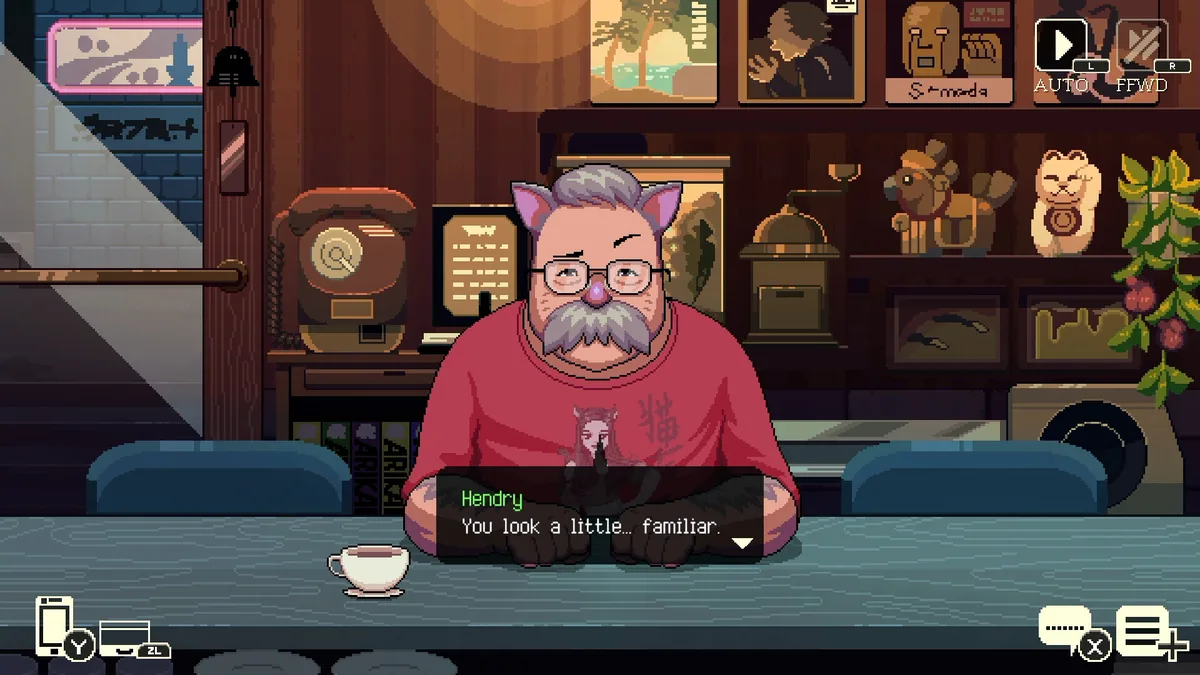 Hendry, a cat-eared regular tied to his own secret-story achievement, is exactly the kind of quiet, specific character writing the game still does well.
BESTPRICE: Want Coffee Talk Tokyo? These stores list it: Buy on Eneba → Buy on Green Man Gaming → Buy on Kinguin →
Story: where the real disagreement is
Sponsored

Here's where this review has to depart from the easy version of itself. Steam's Very Positive rating tells you the game is broadly well-liked, and it is. But a specific, well-argued critique has been circulating among longtime series fans since launch, and it's worth taking seriously rather than smoothing over: the writing in Tokyo feels noticeably more didactic than the first two games. One fan's Reddit post lists how much the game touches on in a short span (spoon theory, stay-at-home dads and gendered domestic labour, Gen Z versus older-generation work attitudes) and says the conversations feel "more like model answers than scenes." Another player in the same thread put it more bluntly: getting all the good endings in the same run "turns the game into more of a wish fulfillment simulator than a visual novel."
The sharper version of that critique is about the yokai. Coffee Talk has always used its supernatural cast to say something specific: a werewolf's temper, a vampire's borrowed decades of perspective, that stuff mattered to the plot, not just the character design. Fans say most of Tokyo's cast could be swapped for ordinary humans without changing much; one negative Steam review argues that "Tokyo doesn't understand the importance of inter-species relationships" the way the earlier games did. Replies in the same Reddit thread give examples: Jun is blind, and the water doesn't cure it, only returning his power for about a minute, while Kenji and Jun's multi-generational feud resolves within about two days. These come from players who loved the earlier games and came in wanting to love this one too.
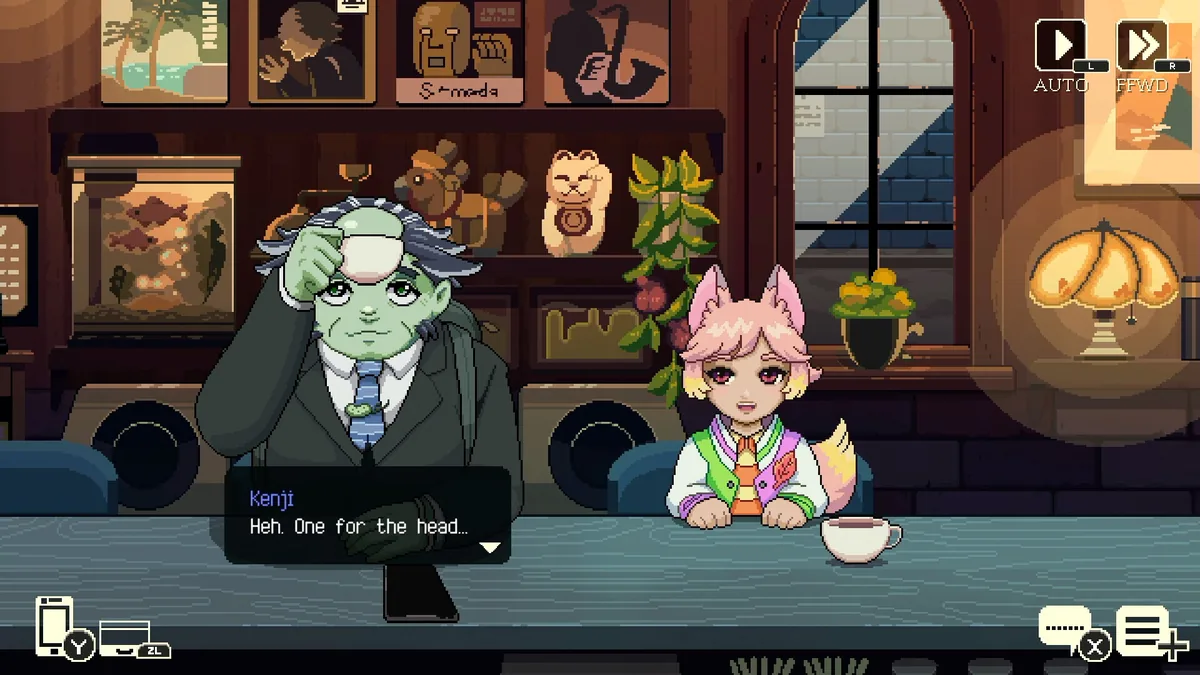 Kenji is one of several cast members whose supernatural traits (here, visibly non-human features) rarely drive the plot the way earlier Coffee Talk games used similar details.
None of this makes the game bad. It makes it a gentler, more crowd-pleasing entry than the series' reputation suggests, and if you're coming in fresh rather than as a returning fan measuring it against Seattle, that distinction may not register at all. If you loved the first two games specifically for their sharper edges, go in knowing what you're getting.
GODEEPER: If you've already decided to play and want the full route-by-route breakdown without spoiling the ending itself, our companion guide covers exactly that. Coffee Talk Tokyo Endings Guide: All 11 Character Routes →
Price, Deluxe Edition, and who this is for
At $14.99, Coffee Talk Tokyo sits comfortably in budget territory for a narrative game this size. A separate Deluxe Edition Upgrade bundles a 10-track City Pop soundtrack album, a Seattle-set prologue chapter tying back to the original Coffee Talk, and a digital artbook. That prologue is the one piece of Deluxe content worth calling out specifically: it's a real narrative bonus for returning fans, not cosmetic dressing on the same story. If you've never played the earlier games, the base edition is the better place to start; none of the Deluxe content changes or requires prior context to enjoy the Tokyo storyline itself.
Worth noting for anyone who tracked the announcement: Coffee Talk Tokyo was originally revealed with a March 5, 2026 target window at a State of Play Japan showcase, and actually launched May 21, a roughly two-and-a-half-month shift. That's a modest delay by industry standards and nothing the final release shows obvious scars from.
Verdict
Who it suits: newcomers and players who want a cozy late-night visual novel with a brewing minigame that still feels good. Not every fan agrees with the critique above: one reviewer who played all three games calls this one "by far my fav. one", and another describes it as "a more serious twist on the Coffee Talk visual novel formula" that tackles harder topics. Newcomers with no baseline for comparison have the least to lose.
Who should wait: longtime fans who loved the first two games for their subtlety. The most upvoted negative Steam review comes from someone who loved the first two and stopped believing it would "get better" by day 5. If the softer, more agreeable writing worries you, a sale is a fair time to find out.
Frequently Asked Questions
Is Coffee Talk Tokyo worth playing? Yes, if you want a short, atmospheric visual novel with a genuinely enjoyable brewing minigame. Longtime series fans should go in knowing the writing is gentler and more didactic than the first two games, a real and specific complaint from returning players, not just Steam review noise.
How long is Coffee Talk Tokyo? The main story runs 15 in-game nights. A single good-ending route takes a few hours; chasing all 11 character routes plus the secret stories in one save extends that significantly, since a few storylines overlap and affect each other.
Is Coffee Talk Tokyo connected to the earlier Coffee Talk games? It's a spin-off set in a new city (Tokyo instead of Seattle) with an entirely new cast, developed by the same studio, Toge Productions. The Deluxe Edition adds a Seattle-set prologue chapter that ties back to the original game specifically for returning fans.
What do critics of Coffee Talk Tokyo's writing actually say? The most specific, recurring complaint from longtime fans is that the writing feels overstuffed and frictionless: real-world social issues get raised and neatly resolved within single conversations, and the yokai cast's supernatural nature rarely drives the actual plot the way it did in earlier entries.
Does Coffee Talk Tokyo have voice acting? No. Like the rest of the series, it's text-based dialogue with a City Pop-inflected soundtrack, which the Deluxe Edition expands with a dedicated 10-track album.
Is the Deluxe Edition of Coffee Talk Tokyo worth it? For fans of the original Coffee Talk specifically, yes: the Seattle-set prologue chapter is a genuine narrative bonus, not just cosmetic extras. If you're new to the series, the base game is the better place to spend first.
Related Reading
- Coffee Talk Tokyo Endings Guide: All 11 Character Routes: the full route-by-route breakdown for every character mentioned in this review.
- Starsand Island Review: another cozy game built around relationship routes, worth comparing if character writing quality is your main deciding factor.
- Tales of Seikyu Review: a different yokai-inflected cozy game that leans harder into its supernatural cast mattering to the plot.
- Winter Burrow Review: a cozier, quieter pick if Coffee Talk Tokyo's dialogue-forward pace isn't what you're after.
- Best Indie Games Under $20 2026: where Coffee Talk Tokyo's $14.99 price lands among other budget-friendly picks this site tracks.
References
- Coffee Talk Tokyo on Steam: official store page, price, and review data.
- Coffee Talk Tokyo - Out Now Trailer (PlayStation): official launch trailer.
- "Is it just me or does Coffee Talk Tokyo's writing feel a little too frictionless?" (r/CoffeeTalkGame): the community discussion this review's writing critique draws from, including replies from multiple longtime series players.
About the author

Indie & JRPG Desk
GameBrief's byline for indie, JRPG, visual novel and cozy games. Warm, direct, and willing to say which one to buy.
- Indie, JRPG and visual novels
- Early access and survival
- Sources listed per article
Keep reading
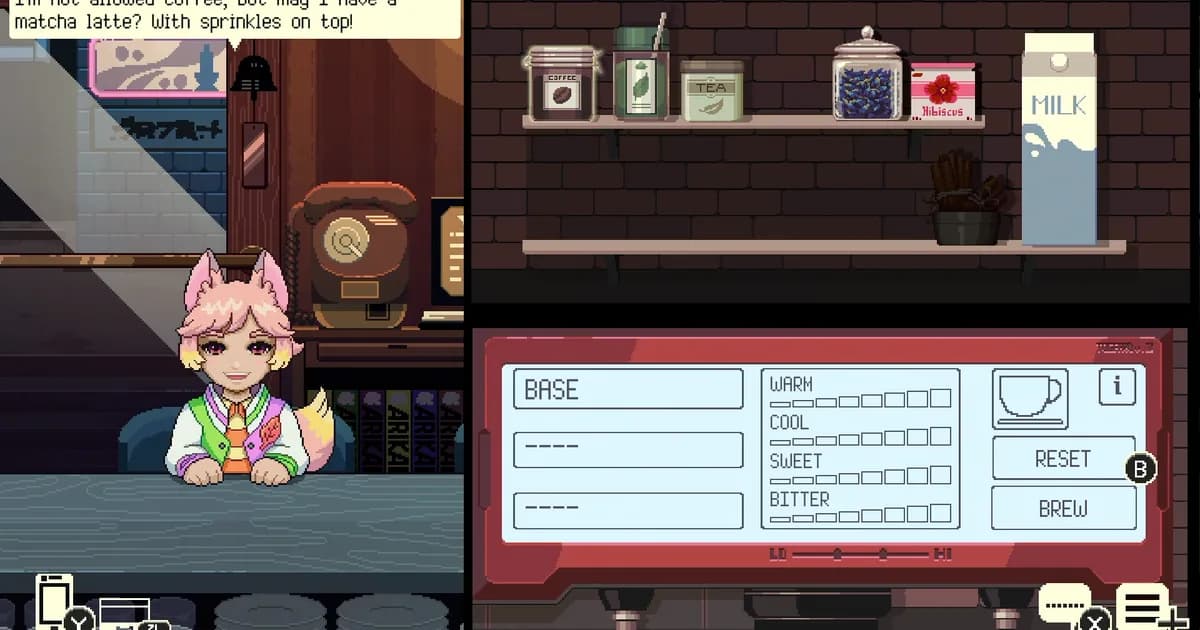
Coffee Talk Tokyo Drink Recipes: All 54 Brewpad Specials
General · 11 min
Coffee Talk Tokyo Achievements Guide: All 44 Unlocked
General · 10 min

Coffee Talk Tokyo Endings Guide: All 11 Character Routes
General · 15 min
Dressmaker Review: A Cozy Sewing Sim With Real Craft
General · 9 min
ReStory Review: Is the Mid-2000s Tokyo Repair Sim Worth It?
Reviews · 12 min
Doloc Town Review: Farming the Wasteland, One Platform Up
General · 9 min
Sponsored
Disclaimer
This article is published for informational and entertainment purposes. It does not constitute professional financial, legal, or technical advice. Game performance, online services, patch schedules, and store listings change. Verify critical details (pricing, system requirements, regional availability) with publishers and storefronts before you buy. Affiliate links, where present, help support our editorial work and are labelled in our affiliate disclosure.
Comments
Loading comments…