
NewsThe Legend of Zelda: Ocarina of Time
Ocarina of Time Remake Changes: What's New vs the N64
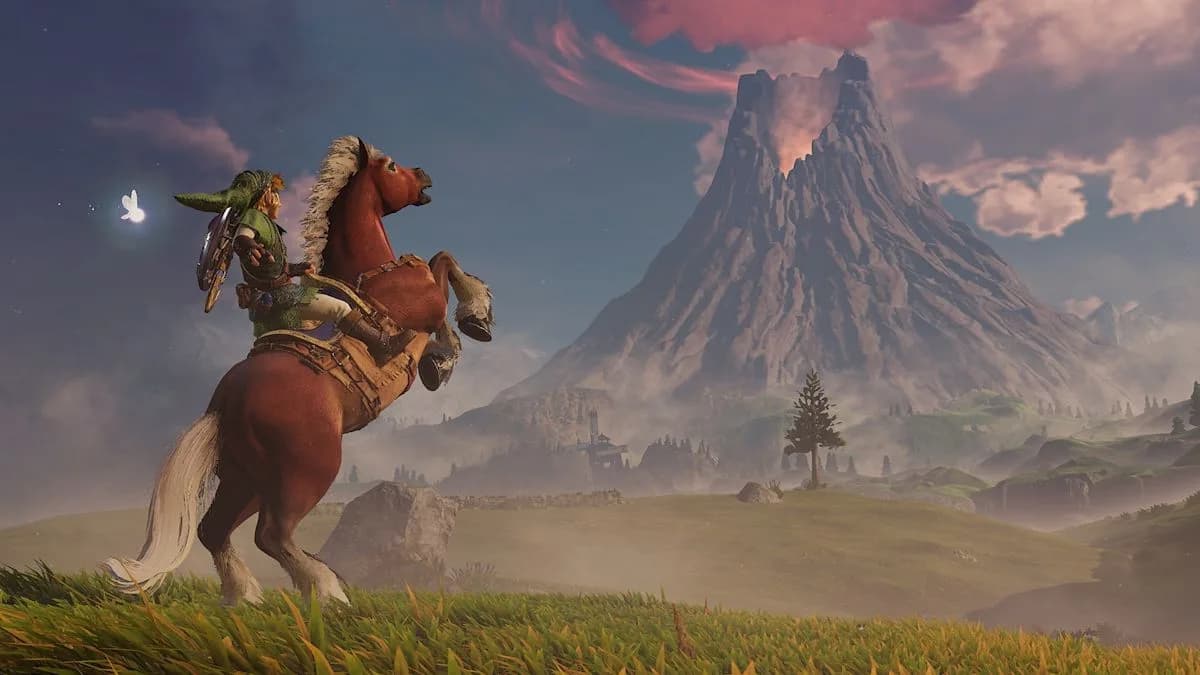
Nintendo rebuilt how Link moves, how you see Hyrule and how the Water Temple explains itself. The temples and quests stayed put, and so did the loading screens between regions, and that is the point of this remake.
VerdictIf you have never finished Ocarina of Time, play the Switch 2 remake: the controls, camera and quest log fix what made the N64 version hard to return to. If you know it by heart, buy it for the voiced story and rebuilt puzzles, not for new content, because there are no new temples or side quests.
The Ocarina of Time remake changes how you play far more than what you play. On Switch 2, Link has a jump button, a sprint, a free camera and an item scroll on the right bumper; the Water Temple now points you to the places that change the water level; the cutscenes are fully voiced. What stayed is the game itself. The 9 News Australia reviewer, who finished it in 22 hours, says an N64 strategy guide still covers "99% of what's here" and that "there are no new temples, there are no new side quests". Here are the differences we could confirm, which version wins on each one, and who should still prefer the 1998 original.
Sponsored

About the game
The Legend of Zelda: Ocarina of Time
Nintendo
Who should play which version
Newcomers should start with the remake. The N64 game asked you to remember every hint you heard once; the remake adds a quest log, Threads of Time, which the same reviewer calls "a revelation", and Nintendo's own developers say they added "various adjustments to make it easier to understand where the player is headed" once the camera became free (Ask the Developer, Part 3).
Veterans get a different deal. You are paying $59.99 digital or $69.99 for the physical edition on Nintendo's US store for a story you know, now voiced, in a Hyrule you can finally look around. If the original's exact feel is what you love, the N64 version (or the 3DS remake) still has it, because a few changes below alter muscle memory on purpose.
The structure is also unchanged. Asked on Reddit whether it plays like Breath of the Wild, one player answered that "you can still do quite a bit out of order. But certainly not as open as A Link Between Worlds, Breath of the Wild or Tears of the Kingdom" (u/kapnkruncher, r/NintendoSwitch, November 4).
N64 vs remake at a glance
| Area | N64 (1998) | Switch 2 remake (2026) | Winner |
|---|---|---|---|
| Jumping | Automatic at set ledges | Jump button, jump anywhere | Remake |
| Moving fast | Spam roll | Hold the roll button to sprint | Remake |
| Camera | Fixed, Z-target to recentre | Free camera, left trigger still snaps it behind Link | Remake |
| Items | Three C-buttons via the menu | D-pad for ocarina, masks, boots, Navi; right bumper scroll for the rest | Remake, after an adjustment period |
| Aiming | Stick only | Gyro aiming with the slingshot and bow | Remake |
| Water Temple | Menu trips for the Iron Boots, no guidance | Easier toggling, lattice walls, lights that lead to the water switches | Remake |
| Loading | Between every area | Gone for most buildings, kept between Hyrule Field and its regions | Remake, narrowly |
| Story | Text boxes | Fully voiced cutscenes, Link stays silent | Remake |
| Content | Original temples and side quests | Same temples, same side quests | Tie |
| Price | Nothing more if you already own it | $59.99 digital, $69.99 physical | N64, if you already own it |
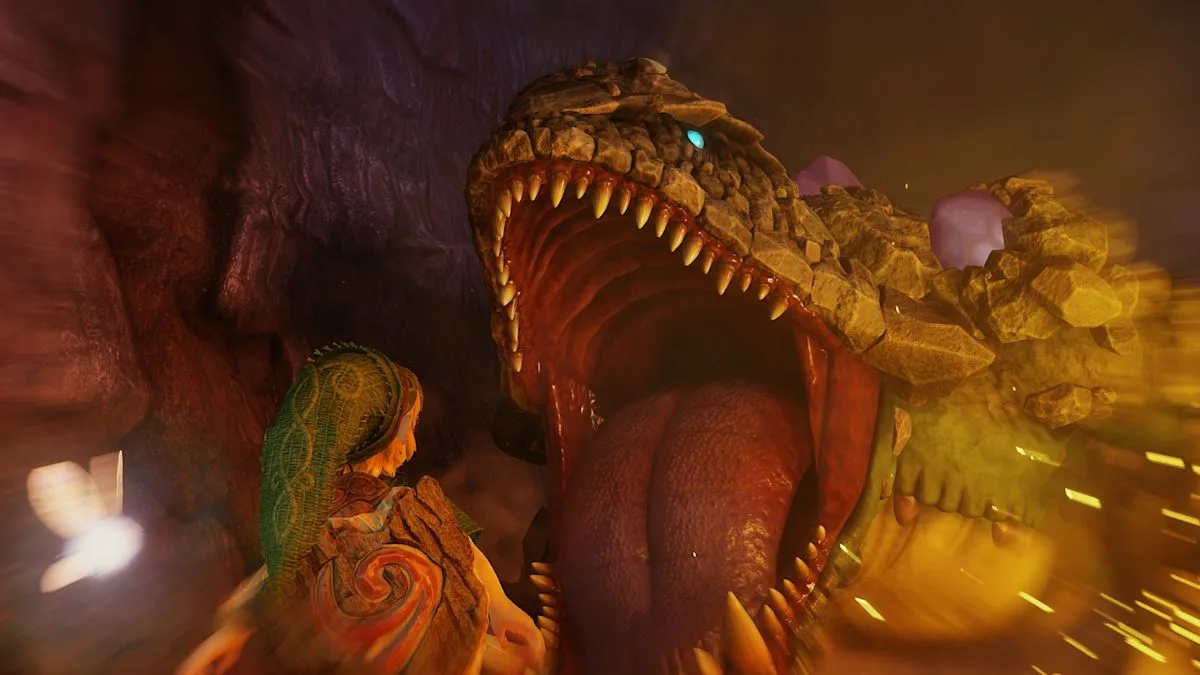 Image: Nintendo, Nintendo eShop screenshot
Controls: a jump button, a sprint and a new item scroll
Sponsored

The original had no jump button; Link leapt automatically when you ran off certain edges. Director HokWai Ng says "we removed auto-jump" and "made it possible to jump anywhere with a single button press" (Part 3). Game Informer, watching the September 8 Direct demo, also noted that Link "can also now swim faster" (Game Informer).
Two details show how carefully Nintendo handled old habits. The Jump Attack first used Breath of the Wild's two-step input, and producer Eiji Aonuma "just couldn't get the hang of it", so the team "added a way to perform it with a single button press". Rolling across Hyrule Field survives too; you can now also "dash by holding down the Roll Attack button". The 9 News reviewer says sprinting and jumping "completely change the way that you play moment to moment", and mapped sprint to a Pro Controller back button to make jump-while-sprinting easier.
Items moved. The D-pad holds the ocarina, masks, boots and Navi, and "everything else" sits on the right bumper (9 News review), with ZR to use the selected item per Game Informer. Gyro aiming is optional, and it rescues the worst part of 1998: "shooting from the back of Link's horse, Epona, is actually tolerable now". Our pick: remake, clearly.
Camera and map: free look, but the loading screens stay
Free camera control changes how familiar places read. The 9 News reviewer found Kokiri Forest and Kakariko "borderline unrecognisable" at first because he was seeing them from new angles, and a tap of the left trigger still snaps the view behind Link (9 News review). Castle Town, a fixed-camera screen on N64, is now a place you walk around, and time keeps flowing in towns instead of freezing (Game Informer).
What did not happen is a seamless Hyrule. Ng says the team "chose not to make the entire world seamless, instead using separate maps for different areas" so each new region keeps its arrival moment (Part 2). In practice most building doors no longer load, but per the pre-launch demo, fades remain between Hyrule Field and the places off it (gameranx). The 9 News reviewer says those that remain "never really slow the action down for more than a second or two", yet still wishes they were gone. We side with Nintendo here: Ocarina's regions were built as separate rooms, and gluing them together would have meant inventing terrain. Remake wins this axis, narrowly.
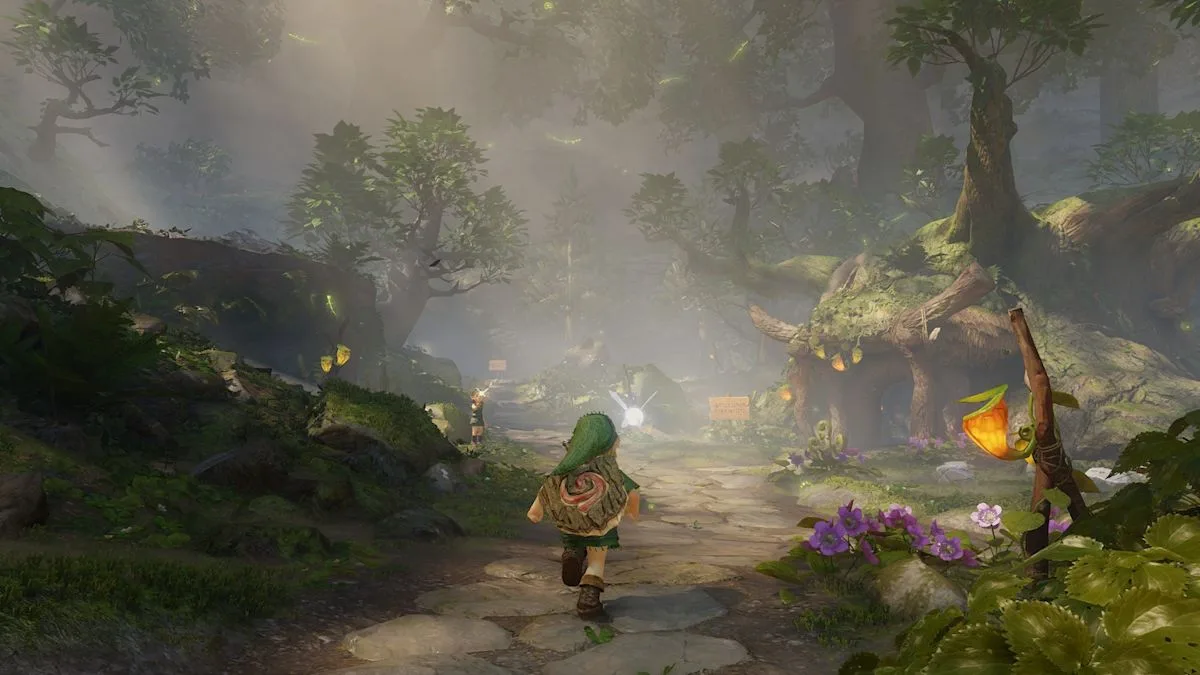 Image: Nintendo, Nintendo eShop screenshot
Dungeons and bosses: the Water Temple explains itself
Aonuma calls this one "overdue homework": "I wanted to do something about the Water Temple I created 28 years ago." The remake makes "item toggling much easier" and swaps some solid walls for "lattice-style structures" so you can see the rooms beyond (Part 3). The 9 News review adds the part the interview kept quiet: "giant fluorescent lights" lead you to the spots where the water level changes (9 News review). It is still a hard dungeon; it is no longer an unfair one.
Smaller fixes follow the same logic, making a rule visible instead of expecting you to guess it:
- Gohma now "guards its weak point with those arms anytime it's immune to attack", per Nintendo's program director Hiroki Taguchi.
- King Dodongo's tongue falls out after he swallows a bomb, and you hit the tongue (Arlo).
- The Deku Tree ladder now drops when you shoot an eye switch instead of the ladder itself (Arlo).
- Skulltulas spin to attack, which opens their back to you (Arlo); Gold Skulltulas need one hit instead of two, and a new item beeps when one is near.
- The Kokiri Sword chest moved to the middle of its room, which the 9 News reviewer says makes sure "the player had learned how to jump", and the Hyrule Castle sneaking section was reworked.
Arlo also points out the Hookshot now works like a claw that grabs, not a spike that pierces. Our pick: remake, and the Water Temple alone justifies it for anyone who quit there in 1998.
Voice, music and an ocarina you can actually play
Cutscenes are fully voiced. Ng says the graphics upgrade made that necessary, but the team refused to touch iconic sounds such as Navi's "Listen!" and ran blind auditions for voices closest to the original; in Japan, "one of the actors we selected had actually voiced the same character in the Nintendo 64 version" (Part 4). Link remains silent (gameranx). Navi talks less: her comments now pop up in small speech bubbles while you keep playing.
Sound lead Masato Ohashi says some tracks "combine a live full orchestra with sounds from the original Nintendo 64 version". And the ocarina can be played for real: the Switch 2 microphone uses voice recognition, so a real ocarina, or humming, triggers songs (Game Informer). Aonuma admits it does not make the game easier. It is still the change most likely to make a living room laugh.
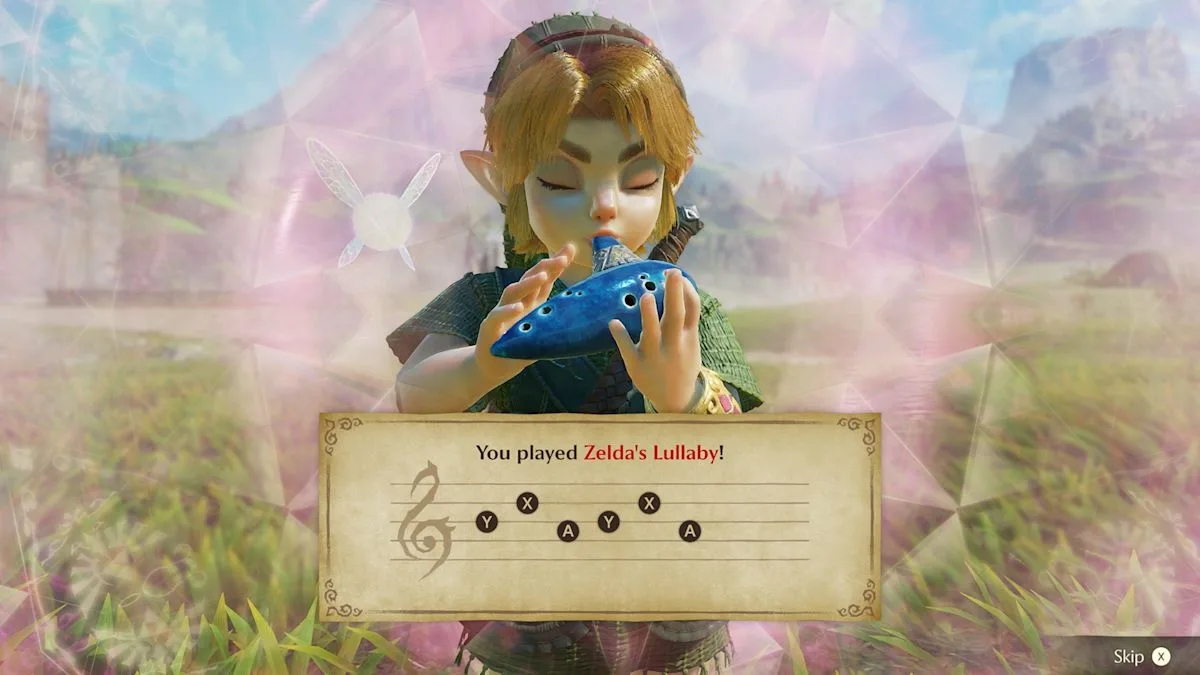 Image: Nintendo, Nintendo eShop screenshot
Threads of Time, Zelda Notes and the day-one patch
Threads of Time is a quest log drawn as a tapestry: new illustrations and passages unlock as the story moves, "eventually coming together to form a single tapestry" (Part 3). It does not hand-hold side content; the 9 News reviewer notes side quests "are still completely missable" and that the quest for a certain sword is "as obscure as ever".
Zelda Notes, the companion service in the Nintendo Switch App on your phone, arrived with Version 1.1.1 on November 4: "ZELDA NOTES is now supported" and "several issues have been addressed" (Nintendo Support). You earn points in the game to unlock songs in the app, can share your own ocarina songs by QR code, and get a daily quiz drawn from over 2,000 questions, with extra tries bought with in-game rupees (Nintendo). If you bought the cartridge, you could play before the digital unlock; digital owners could pre-download the patch but had to wait for launch day.
What did not change, and why that matters
The dungeon list, the side quests, the story beats and the way Kokiri Forest leads to the Deku Tree and out into Hyrule Field are the same. Ng said the team "didn't want to change the feel of each location or the way the locations connected with one another" (Part 2). Visually it is not flawless either: the 9 News reviewer says the resolution "does look a little crunchy in spots".
That makes this a remake in the strict sense: new controls, presentation and puzzle wiring around an unchanged adventure. It is also a full-price purchase, with no upgrade pricing listed on the eShop, unlike The Witcher 3 Remastered's free upgrade, and it lands in a busy anniversary season for Nintendo-platform classics, alongside what is left of Pokémon's 30th. If you want a full list of differences between a sequel and the game before it, our GTA 6 vs GTA 5 comparison does the same exercise.
Our call: the remake wins every axis that affects play, ties on content, and loses only on price for people who already own the original. For anyone who bounced off the N64 camera or the Water Temple, it is the version to play now.
References
- The Legend of Zelda: Ocarina of Time, Nintendo eShop (US): release date, digital price, play modes
- The Legend of Zelda: Ocarina of Time Physical Edition, Nintendo (US): physical price
- Ask the Developer Vol. 24, Part 2, Nintendo: separate maps, keeping area connections
- Ask the Developer Vol. 24, Part 3, Nintendo: jump, Jump Attack, dash, camera, Water Temple, Gohma, Threads of Time
- Ask the Developer Vol. 24, Part 4, Nintendo: orchestra, microphone ocarina, voice casting
- How to Update The Legend of Zelda: Ocarina of Time, Nintendo Support: Version 1.1.1 notes
- Ocarina of Time Remake Has Fully Voiced Cutscenes, A Jump Button, And Tons More, Game Informer: Direct demo details, Zelda Notes
- Ocarina of Time Remake Launches This November, Game Informer: release date
- In-depth review: The Legend of Zelda Ocarina of Time Remake, 9 News Australia (YouTube): full playthrough observations
- The Ocarina of Time Remake Changes I Appreciate Too Much, Arlo (YouTube): dungeon and boss changes
- Zelda: Ocarina of Time Remake, Biggest Changes, gameranx (YouTube): loading and voice details from the trailers
- Version 1.1.1 thread, r/NintendoSwitch: player discussion on launch day
About the author

GameBrief's byline for metroidvanias, RPGs, comparisons and design history. Places each game in its genre and argues both sides before picking one.
- Metroidvanias and RPGs
- Comparisons and design history
- Sources listed per article
Keep reading
Witcher 3 Remastered Release Date: Free Upgrade Explained
News · 6 min
Pokémon 30th Anniversary Events and Games: What's Left
News · 8 min

Graveyard Keeper 2 vs Graveyard Keeper: Key Differences
Features · 12 min

GTA 6 vs GTA 5: Every Confirmed Difference So Far (2026)
General · 11 min
Denshattack: Release Date, Platforms, and the July Delay
General · 3 min

Gambonanza vs Balatro: Which Roguelike Is Worth It?
Guides · 10 min
Sponsored
More game deals
Disclaimer
This article is published for informational and entertainment purposes. It does not constitute professional financial, legal, or technical advice. Game performance, online services, patch schedules, and store listings change. Verify critical details (pricing, system requirements, regional availability) with publishers and storefronts before you buy. Affiliate links, where present, help support our editorial work and are labelled in our affiliate disclosure.