
ReviewHow to Fish
How to Fish Review: A Co-op Hit With a Solo Problem
How to Fish review: physics-driven co-op fishing, trick shots, boss fights, Steam Deck Verified support, and cheap group chaos with friends.
Reviewing
How to Fish
Dazed Games · Dazed Games
Score
Reviewed build: 1.0.12
Pros
- Physics-driven fishing and combat produces genuinely funny, unscripted moments in a group
- The trick-shot money multiplier rewards creative play once you find it, even though the exact values are not documented in the UI
- Patch 1.0.11 made the game Steam Deck Verified, while 1.0.12 added Steam Cloud and rebalanced piranha, tuna, and final-boss explosives
- Low-poly art style runs on modest hardware, and full controller support with PlayStation/Xbox glyphs works out of the box
Cons
- Solo play can feel badly matched against bosses like the puffer fish and albatross, with player reports describing group-oriented health and damage pressure
- The core loop (fish, sell, upgrade, repeat) wears thin for a lot of players within a few hours, per Steam's own negative-review trend
- The trick-shot multiplier values aren't documented anywhere in-game; everything players know about it came from community testing on Reddit
- The game is still a compact experience, and early crash, save, and settings complaints mean buyers should use the current patch rather than judge it by launch notes
Verdict
How to Fish is a genuinely funny co-op fishing-shooter worth its $7.99 price with a group online, but solo players and anyone expecting a long progression game should keep expectations modest.
How to Fish review, and the short version is this: it is a fishing game where the fish shoot back, and it is much funnier with friends than it is alone. Dazed Games' physics-based co-op shooter launched August 20, 2026. The official Steam page currently shows an Overwhelmingly Positive English score, while the review count changes daily and the patch feed has moved well beyond the launch build. A review built only on a headline score would miss what the game feels like now: funny group physics, a thin progression loop, and a solo mode that can still feel badly matched.
TL;DR: How to Fish is a compact co-op fishing shooter at $7.99. Patch 1.0.11 made it Steam Deck Verified, and Patch 1.0.12 added Steam Cloud and balance fixes. The trick-shot economy and physics comedy work best with a group; solo players should treat the boss balance and short loop as the main caveats.
Current status: September 2026
The current official Steam snapshot shows an Overwhelmingly Positive English score and a $7.99 price. The review count changes daily, so the score is the durable buying signal. Dazed's September patch notes list Steam Cloud in 1.0.12, piranha and tuna balance changes, and a final-boss explosive fix. Patch 1.0.11 also marked the game Steam Deck Verified and added save-backup and corruption fixes.
The store page still describes the game as a 1 to 4 player experience, while an earlier patch note announced support for lobbies of up to eight. I treat the store description as the safer current player-count promise and mention the larger lobby note only as patch history. Either way, the game is best judged as short, repeatable group chaos rather than a long solo progression game.
How to Fish review: the verdict up front
Recommended, mostly for groups. Rating: 7.6/10. The physics comedy and the trick-shot economy genuinely work when you've got backup; solo players and anyone chasing depth beyond a weekend should wait for the price to drop further.
Key takeaways
This How to Fish review is built from what's actually in the review section, patch notes, and the community, not just the headline Very Positive score:
- How to Fish costs $7.99 and has an Overwhelmingly Positive English score on Steam; the review count is a moving number
- The physics-driven combat and trick-shot money multiplier are the game's real hook, but the exact payout values remain community-tested rather than clearly documented in the UI
- Solo play is a genuine weak point. Several reviews describe bosses as difficult alone, with group-oriented health and damage pressure
- A cluster of Steam reviews describe the core loop wearing thin after the first few hours, separate from the game's overall Very Positive score
- Patch 1.0.11 added Steam Deck Verified support and save fixes; Patch 1.0.12 added Steam Cloud and balance changes for piranha, tuna, and the final boss
Overview: what How to Fish actually is
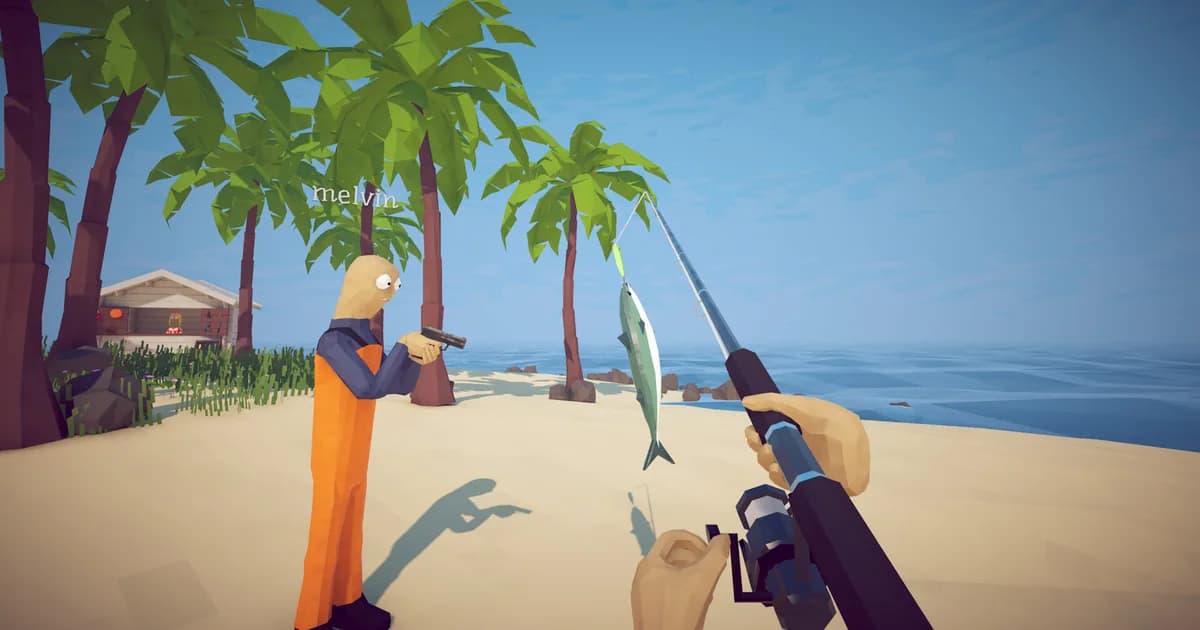
You and up to seven friends crash a boat into a small island after a night of drinking. The only way home is to learn how to fish, which the game explains to you almost not at all: a rod, a knife, and an NPC named Melvin running a shop are basically the entire tutorial. Everything from there is physics-driven and mostly self-taught, which is either a design philosophy or an accident, and Dazed Games hasn't clarified which. Given how the game plays, I'd guess the former.
It's built in Unity with a deliberately blocky low-poly look, full controller support with correct PlayStation and Xbox button glyphs, and Steam Achievements. The official store page lists PC support. The premise sounds like a one-joke pitch, and for the first ten minutes it kind of is: cast a line, catch a fish, sell it, repeat. What changes that is the physics layer underneath, where rods, weapons, and creatures all interact with ragdoll-style momentum. That's the same mechanical DNA that made Pratfall a breakout co-op hit earlier this year, and it's clearly the influence here, just filtered through a shooting-gallery fishing sim instead of a slapstick obstacle course.
 Ragdoll physics let you climb, fall, and generally misuse the terrain in ways that clearly weren't the primary design goal but end up being half the appeal.
Gameplay: the trick-shot system, and where it strains
The best thing in How to Fish isn't the fishing. It's what happens once you're armed and the money multiplier kicks in. Killing creatures in specific ways pays a bonus on top of the base reward: a small bump for a standard aimed kill, more for melee, more still for quickscoping or no-scoping, and a large payout for a "dogfight" kill, which is landing a shot while both you and the target are airborne. None of this is explained in the UI, and none of it is confirmed in Dazed Games' own patch notes. Players figured the whole system out themselves on r/HowToFish, and one review I read described hitting a 6x multiplier on a seagull at 20fps with a sniper rifle, which is a pretty accurate summary of what a good session looks like: chaotic, a little dumb, genuinely fun to describe to someone afterward.
That's the part that works. But the system leans hard on group play, and it can feel poorly matched when a group is not there. Steam's negative reviews return to this constantly. Players describe bosses as close to impossible with fewer than three competent people, especially the puffer fish and albatross. Those are player reports, not an official scaling table, so I would not turn them into an exact health formula. If you are planning to buy this alone, read our How to Fish beginner guide first. It covers the albatross fight in more detail and is honest that dynamite alone can underperform against it.
Note: Weapons can overheat during sustained fire, and multiple players have asked how to cool one down after a boss fight goes long. It isn't documented anywhere official, but pacing your shots instead of holding the trigger down noticeably helps.
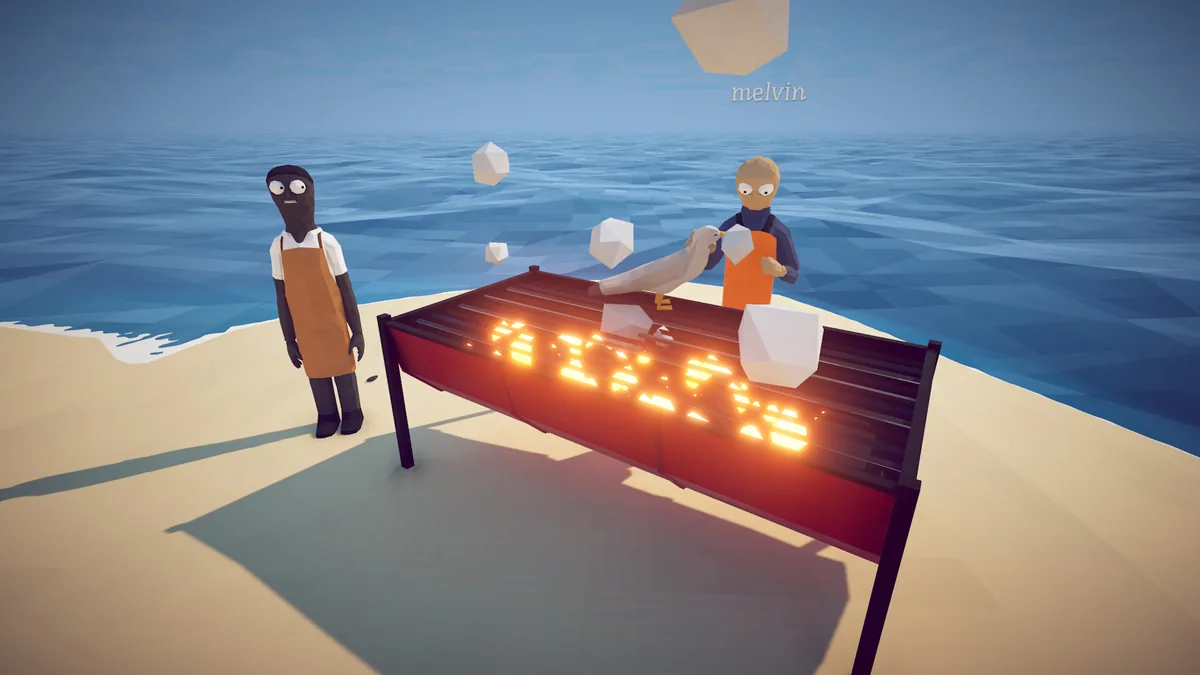 One of the game's stranger vignettes: a seagull, caught rather than fished, headed for the grill. This is where the physics-comedy tone earns its keep, and also where it starts to feel like a novelty you've already seen.
Repetition is the other recurring complaint, and it's worth taking seriously rather than waving off as "just a short game." Several negative reviews describe the loop, fish, kill, sell, upgrade, as funny for the first ten minutes and then flat: the same fish species, the same islands, the same shop rotation, without much reason to keep going once you've seen the trick-shot system once. That's a fair criticism of a game whose entire pitch is chaos-first novelty. The physics comedy covers for a genuinely thin progression structure, and it covers for it well with friends in the room. It covers for it a lot less on a fourth solo session, which is the tension this How to Fish review keeps circling back to.
Launch-week polish is uneven too, which is normal for a two-person studio moving this fast but still worth flagging plainly. Early reports included crash-on-launch issues, a mouse-sensitivity polling bug, and save corruption. Patch 1.0.11 added save backups and corruption fixes, while 1.0.12 added Steam Cloud. The current build is in a better place than the launch notes, but the compact design and missing depth are still part of the recommendation.
How to Fish review: final verdict
The Good
- Physics-driven fishing and combat produces genuinely funny, unscripted co-op moments
- Trick-shot money multiplier rewards creative kills once you understand it
- Steam Deck Verified support and current balance fixes are real positives, but the store's safer player-count promise remains 1 to 4
- Runs comfortably on modest hardware; full controller support out of the box
The Cons
- Solo play is close to unplayable against several bosses
- Core loop wears thin for a lot of players within a few hours
- Trick-shot values are undocumented; everything is community-tested, not official
- Missing audio/video settings and a string of early bug reports at launch
Buy this with people you already plan on playing games with tonight, not as a solo pickup. The trick-shot economy and the physics chaos are legitimately funny in the way a good couch-co-op game is funny, and $7.99 is still a fair ask for a few group sessions. It is not built to hold up as a 20-hour solo game, and reviewing it as if it were misses what Dazed Games actually shipped. Watch the official release trailer before buying if you want a clearer sense of the tone; it nails the physics chaos.
Rating: 7.6/10
Frequently Asked Questions
Is How to Fish worth buying? Yes, if you have at least one other person to play with. At $7.99, it is still a low-risk buy for a few funny co-op sessions. Solo players should temper expectations because the boss pressure often feels designed around a group.
Is How to Fish good to play solo? It is the game's weakest mode. Multiple Steam reviews describe bosses like the albatross and puffer fish as difficult alone, with weapon and enemy balance that can feel tuned for a group rather than one player.
How long is How to Fish? There's no official runtime, but Steam reviews cluster around a few hours to a couple of evenings before the loop repeats without new content. It's built for repeat co-op sessions, not a long single playthrough.
What are the biggest complaints about How to Fish? Repetition after the first few hours, weak solo balance, an undocumented trick-shot system, and rough launch polish (no separate audio/video settings, some early crash and save bugs).
Does How to Fish run well on lower-end PCs? Yes. The low-poly Unity art style is light on hardware, and Patch 1.0.11 marked the game Steam Deck Verified. The store page lists PC support.
What's the trick-shot multiplier in How to Fish? A money bonus for creative kills like melee, quickscoping, no-scoping, or hitting something mid-air. It's real and confirmed by many players, but the exact numbers are community-tested, not listed in official patch notes.
Related Reading
- How to Fish Beginner Guide: practical early tips for the albatross fight, weapons, and solo expectations.
- Best Indie Co-op Games on Steam: more group-first indie games if How to Fish works better with friends.
- Pratfall Complete Guide: another physics-comedy co-op loop built around emergent failures.
- ReStory Review: a calmer single-player alternative with a longer narrative repair loop.
- MOUSE: P.I. For Hire Review: a contained single-player shooter for players who want more campaign structure.
- Pax Autocratica Review: a systems-heavy alternative when the progression layer matters more than physics chaos.
- Windrose Multiplayer Guide: a broader co-op reference for planning roles and shared resources.
- Subnautica 2 Co-op Guide: a slower survival co-op contrast with explicit supply-chain planning.
- Mortal Shell II Review: another review where current patches matter to the buying recommendation.
References
- How to Fish on Steam
- How to Fish | Release Date Trailer (Dazed Games, official YouTube)
- Dazed Games official site
- r/HowToFish: community subreddit where the trick-shot multiplier values and several complaints in this review were sourced
- How to Fish beginner guide: this site's tips guide for players still deciding whether to buy solo or with a group
About the author

Games Critic
Games writer and reluctant optimist who has reviewed over 400 titles across 9 years. Irish, currently in Berlin. Has strong opinions about tutorial design.
- 400+ games reviewed across 9 years
- Platformer and horror specialist
- Narrative design focus
Keep reading
How to Fish Beginner Guide: 8-Player Co-op Tips (2026)
Guides · 12 min
How to Fish Boss Guide: All 10 Encounters in Order
General · 18 min

How to Fish Achievements Guide: All 28 Steam Unlocks
General · 17 min
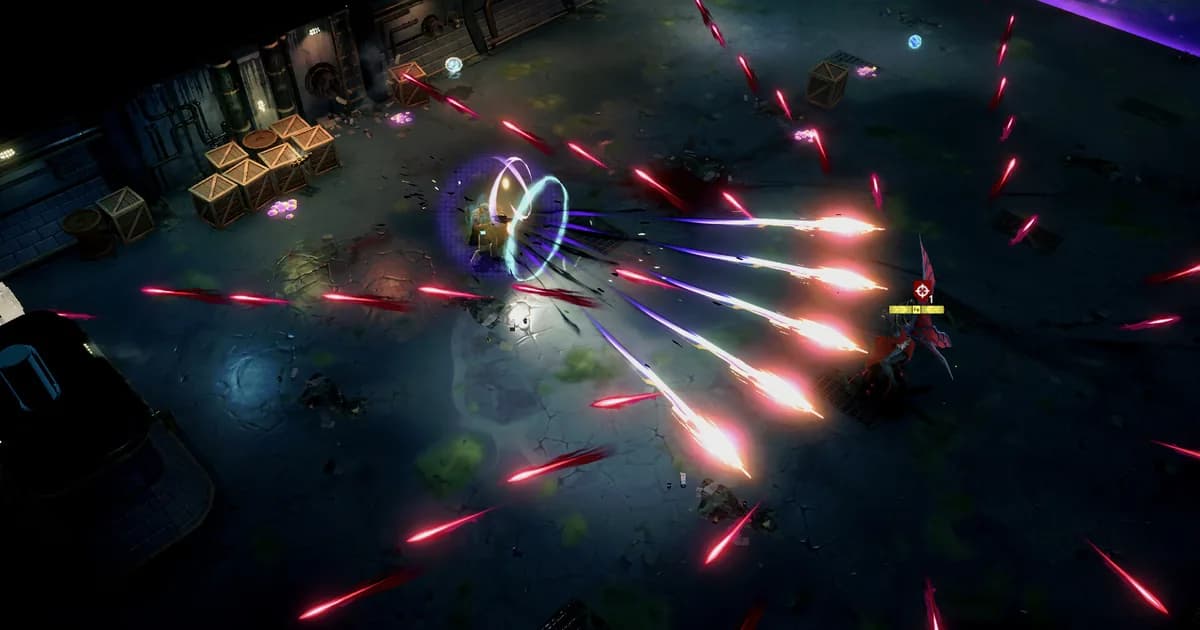
RIFTSTORM Review: Early Access Extraction Shooter, Tested
General · 13 min
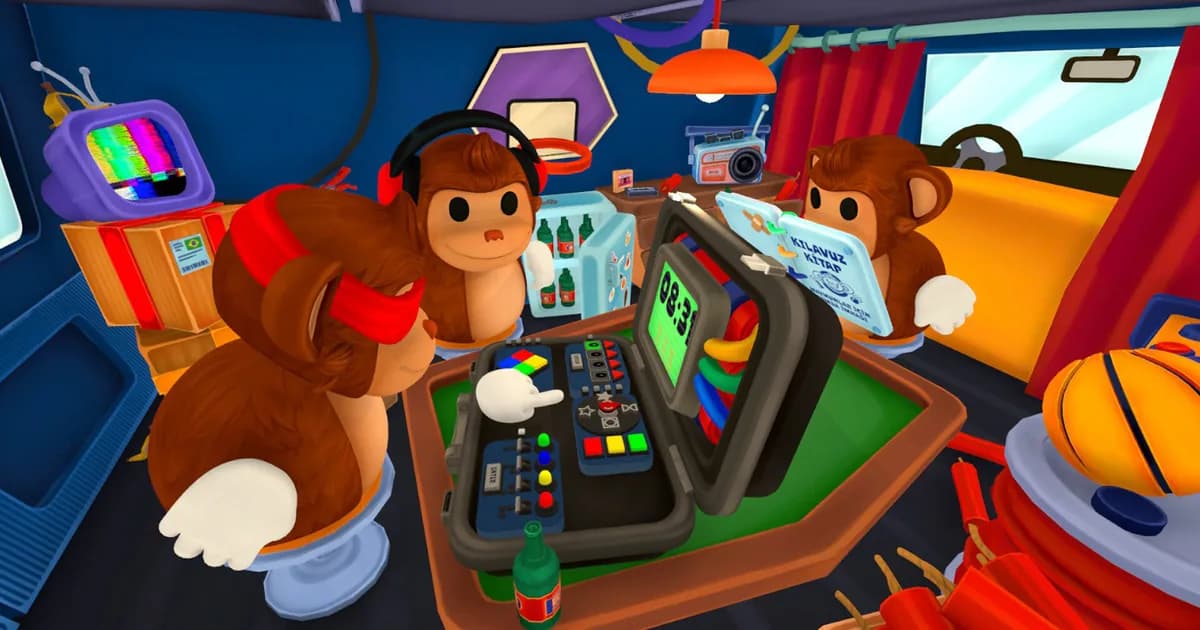
BOMBANANA Review: 3 Monkeys, One Bomb, No Text Chat
Reviews · 11 min
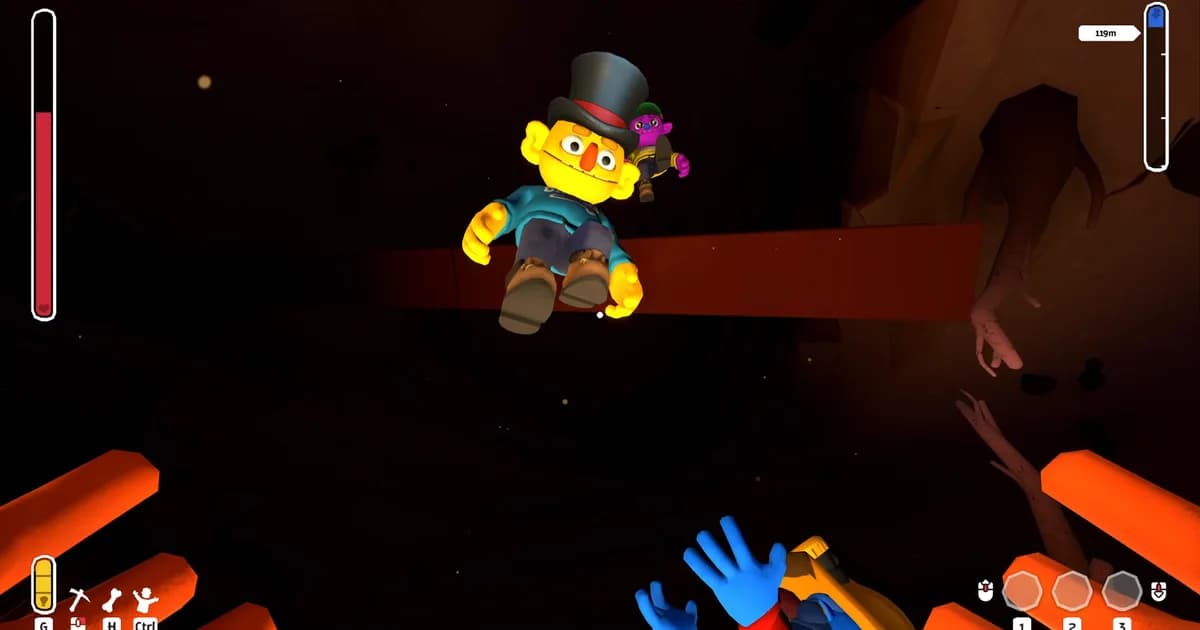
Pratfall Review: Is the 250-Player Chaos Worth It?
General · 8 min
Game deals · affiliate links

Disclaimer
This article is published for informational and entertainment purposes. It does not constitute professional financial, legal, or technical advice. Game performance, online services, patch schedules, and store listings change. Verify critical details (pricing, system requirements, regional availability) with publishers and storefronts before you buy. Affiliate links, where present, help support our editorial work and are labelled in our affiliate disclosure.
Comments
Loading comments…