
ReviewHalloween: The Game
Halloween: The Game Review: Banned Before It Launched
Halloween: The Game review: Mixed on Steam, a strong Michael Myers premise, Patch 1.1.0 crash fixes, and a removed closet minigame. Who should wait.
This Halloween: The Game review starts with the strangest fact first: it's Mixed on Steam across a large pile of player reviews, and the game is now fully released. IllFonic's asymmetric horror take on Michael Myers launched on September 8 after Deluxe Edition early access, then received patches through 1.1.0. The country-wide ban and the pulled closet minigame remain part of the launch story. Here's what the game delivers, not what the marketing promised.
Sponsored

About the game
Halloween: The Game
IllFonic · IllFonic Publishing / Gun Interactive
Reception
Pros
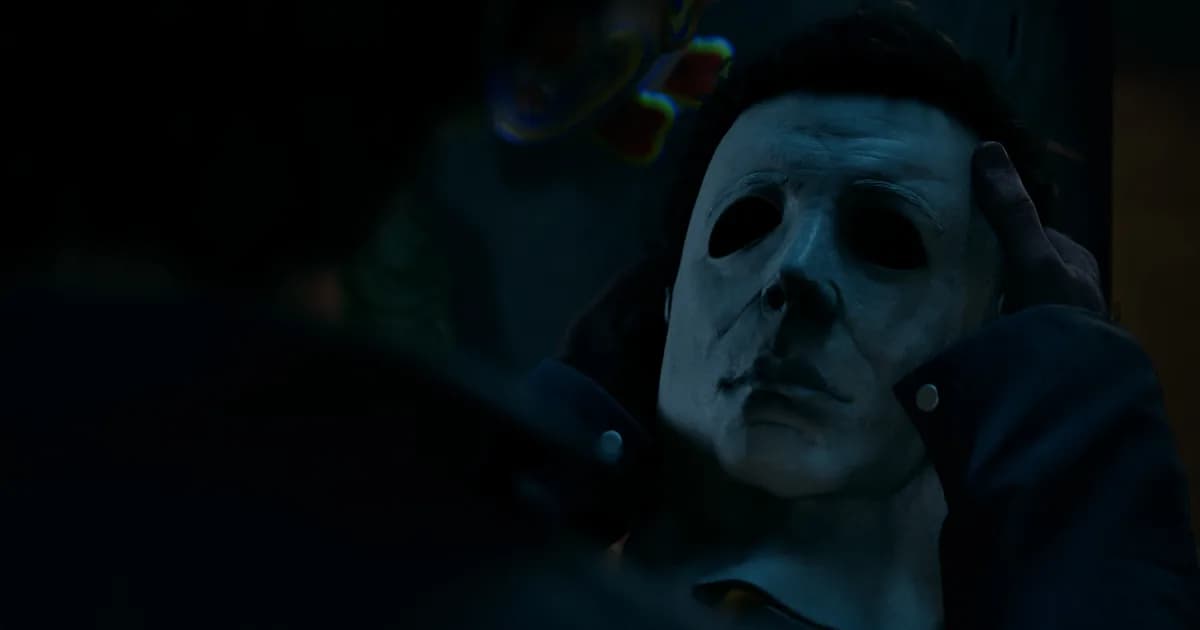
- The mask-on moment and the slow-walk chase genuinely capture what made the original film's Michael Myers scary
- Mixed on Steam, but from a very large base of player reviews, so the split is real rather than noise
- Free 'The Night He Came Home' singleplayer mode retells the 1978 film from Michael's perspective, a genuinely new angle for the license
- IllFonic shipped a hotfix within days addressing the most common crash reports, a fast response for an Early Access launch
Cons
- Multiple game-breaking bugs reported: Michael turning invisible, players getting stuck in fridge doors, NPCs freezing or refusing to follow commands
- Pulled the two-person closet minigame days into Deluxe Early Access with no changelog entry; IllFonic only explained it afterwards, calling it a "major oversight"
- Banned outright in Australia over a drug-use depiction, while the ultra-violence in the same game passed classification
- Deluxe Edition buyers paid $59.99 to access what several reviews describe as a beta-quality build
Updated 2026-10-16: The Australia ban now cites the Classification Board's own statement and The Guardian, and the closet-minigame section now includes IllFonic's explanation for removing it. Patch 1.1.0 shipped October 6 with crash fixes and optimization (patch notes), and a Halloween content update with a new free map is on the way.
Sponsored

Key Takeaways
- Base edition released September 8, 2026 at $39.99. The $59.99 Deluxe Edition granted early access before the wide launch.
- Mixed on Steam across all languages, from a large post-launch sample rather than an early-access snapshot.
- 1v4 asymmetric multiplayer (Michael Myers vs. Heroes of Haddonfield) plus a free singleplayer mode retelling the 1978 film from Michael's perspective.
- Refused classification in Australia because smoking marijuana gives survivors a gameplay advantage, per the Classification Board's own statement.
- A two-person closet minigame was patched out during Deluxe early access; IllFonic later called it "a major oversight."
Overview
IllFonic knows this genre. This is the studio behind Friday the 13th: The Game and Predator: Hunting Grounds, both built on the same 1-vs-many asymmetric formula, and Halloween is a direct continuation of that playbook with a different license. One player becomes Michael Myers, hunting the quiet suburban streets of 1978 Haddonfield. Up to four others play Heroes of Haddonfield, arming themselves with household items, alerting neighbors, and trying to survive the night. Built on Unreal Engine 5, the pitch is a "living, breathing" sandbox where NPCs react, call the police, and can be armed to fight back.
Fans weighing whether this beats other recent horror-adjacent multiplayer picks should also see our Frog Sqwad co-op extraction platformer coverage for a lighter, less bloody alternative built around a similar tension-and-teamwork idea. The most genuinely interesting addition over Friday the 13th is "The Night He Came Home," a free standalone singleplayer mode retelling the original 1978 film's events through Michael's own eyes. It's the first time this specific angle has been playable rather than just watched, and it's a smart way to give solo players something real instead of leaving singleplayer as an afterthought bolted onto a multiplayer-first game.
GODEEPER: For a different horror sandbox built around NPC-driven emergent systems, our Abiotic Factor coverage breaks down a very different genre doing something structurally similar. Abiotic Factor Beginner Guide: Tips for New Players →
What worked and what broke at launch
The core chase loop works the way you'd hope. Michael doesn't run, he walks, and the game leans hard into that: watching him approach at a fixed, unhurried pace while your own character can't quite get the door open in time is the exact tension the 1978 film built its reputation on. When it clicks, it clicks.
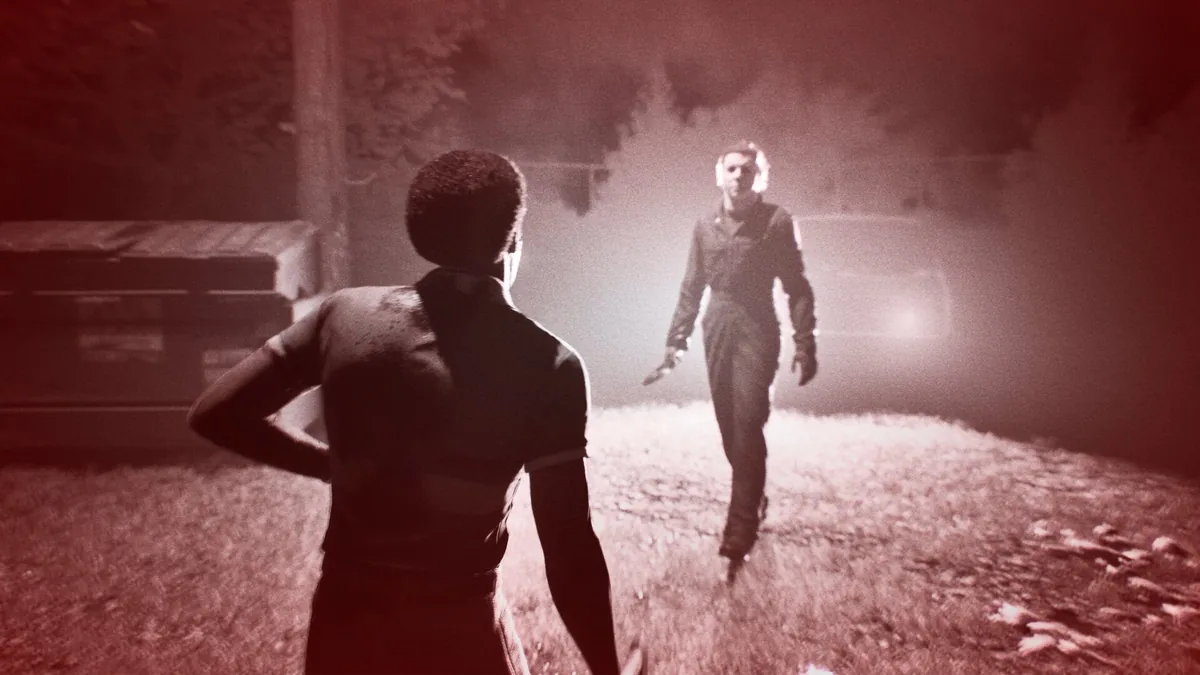 The slow, unhurried approach is the one thing the game consistently gets right: no sprint button, no jump scares needed, just the dread of watching him close the distance.
The launch build's biggest problems were systemic. Early Steam reviews described Michael turning invisible, a player clipped into a fridge door, and NPCs that froze, ignored commands, or failed to follow basic pathing. One negative review put it bluntly: the NPC is "basically everything you need to do in this game", which made their unreliability a bigger problem than a cosmetic bug list, since the Hero side's strategic layer depends on convincing and coordinating with them. Another negative review, from a player who still played 15 hours on day one and laughed through it, said buyers were "paying $20 to bug test" given the state of that build.
IllFonic has been responsive at least: an "Early Access - Hotfix 1" patch shipped within days specifically targeting the most common crashes. The studio followed it with patches 1.0.1 through 1.0.4, and its October 2 preview says Patch 1.1.0 is scheduled for October 6 with more crash, performance, NPC, map, UI, and balance fixes. That's a faster cadence than a lot of Early Access launches manage in their first week, closer to the pace our Abiotic Factor Tarasque boss guide documents for a survival game that also leaned on rapid post-launch patching to fix a rough system.
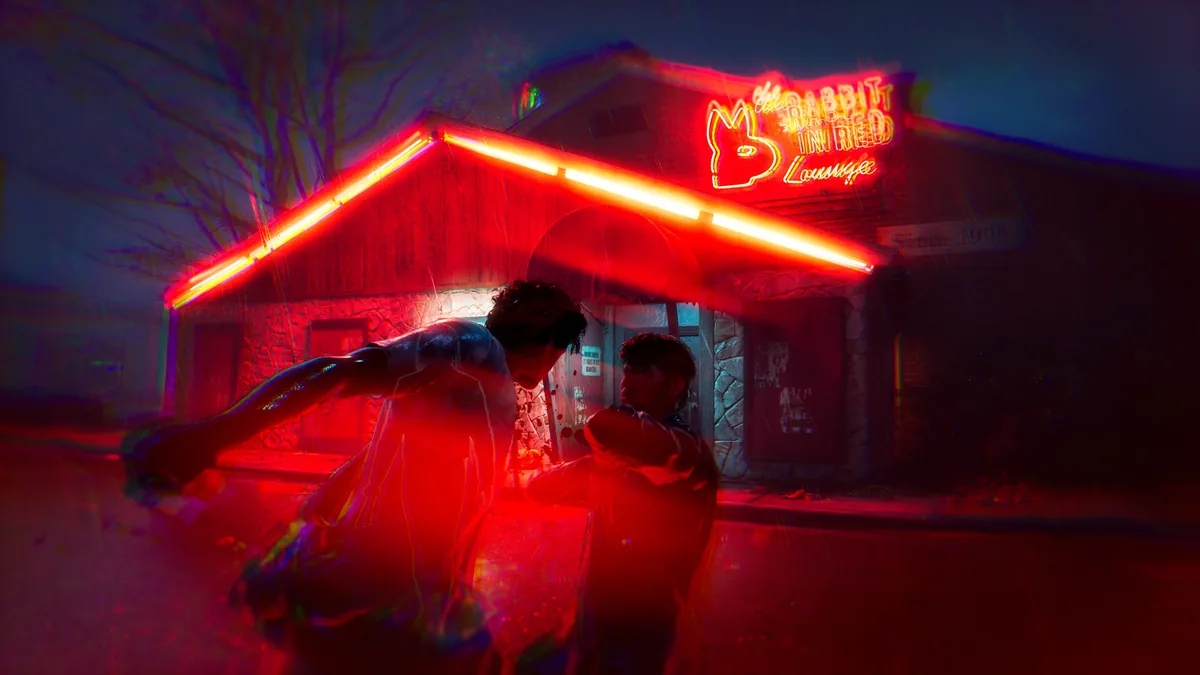 The Rabbit in Red Lounge, a location pulled straight from the original film, rendered with a deliberately grainy, VHS-adjacent color treatment throughout the game's visual style.
The controversy nobody was expecting
Two separate stories broke around Halloween: The Game before its wide release, and neither is the kind of thing a licensed slasher game usually generates. First: the game is banned outright in Australia. The Classification Board's statement says the game "contains illicit drug use that is linked to an incentive or reward," and The Guardian spells out the mechanic: survivors can smoke marijuana to see where Michael Myers is. That's the only reason the Board gives, which reads as strange in a game built entirely around a masked killer stabbing people. It's a quirk of how Australia's guidelines treat drug rewards, not a call IllFonic controlled.
Second, and more directly IllFonic's own call: a Two-Person Power-Up minigame let two survivors hiding in the same closet "Ask Out" and mash a button for a "Stronger Together" buff. It existed in the Deluxe Edition's early access build, then a hotfix removed it a few days in without a changelog line. IllFonic explained afterwards: in a statement reported by Metro, it said end-game reinforcement characters could engage with the minigame, "which was a major oversight on our part." Steam reviews pull both ways: one player who loves the game says IllFonic "simply panicked at seeing streamers react online", while another says removing it "doesn't make up for the fact that they made it in the first place". Removing content is a normal part of live development. Pulling it silently and explaining only afterwards, in a build people already paid a $20 premium to access early, is what turns it into a trust question.
GODEEPER: For another multiplayer game handling its Early Access period very differently, our WARDOGS coverage breaks down how transparent, even self-deprecating communication can shape early reception before launch. WARDOGS Early Access Preview: What the Open Beta Showed →
Rubric assessment
Chase tension: strong. The slow-walk pursuit and the moment-to-moment dread of a Michael encounter are the game's clearest success, and they're the part most directly inherited from IllFonic's Friday the 13th experience.
Technical stability: weak. Invisible-Michael bugs, fridge softlocks, and unreliable NPCs aren't minor jank, they're the kind of issues that can end a match outright, and they're common enough in recent reviews to read as systemic rather than isolated.
Trust and communication: mixed. A fast hotfix is a good sign. A quietly removed feature in a paid early-access tier is not, and it's the kind of decision that costs more goodwill than the feature itself was probably worth.
Value at current price: depends on the edition. $39.99 for the live base edition is a reasonable ask for this genre, especially after the first launch patches. $59.99 for Deluxe was a difficult proposition when it asked players to pay a $20 premium for beta access.
Readers weighing this against other licensed horror multiplayer picks should also see our Ground Branch 1.0 coverage for how a different tactical multiplayer game handled its own rocky full-release transition, and our How to Fish review if a lighter, less bug-prone co-op experience is what you're actually after this week. For a different flavor of dread entirely, our Static Dread: The Submarine launch coverage covers a horror game trading a masked killer for claustrophobic isolation, and our Cthulhu: The Cosmic Abyss review is worth a look if puzzle-driven horror interests you more than an asymmetric chase.
Verdict
Who it suits: asymmetric-horror fans who play with friends and want the chase fantasy from the film. Positive Steam reviews from long-haul players say it works: one with over 130 hours calls it "really fun game, especially with friends", and another with 22 hours calls it "the best asymmetrical multiplayer horror game (next to Friday the 13th)". "The Night He Came Home" is a real, free single-player addition worth trying regardless of how you feel about the multiplayer side.
Who should wait: anyone paying full price for the single-player alone, and players who quit over bugs or grind. The single-player mode weighs in "at around 5ish hours" per one negative review, and another negative review says the game is fun at heart but has "more flaws than there are pros". Even fans complain about having to prestige every weapon individually, and negative reviews describe NPCs running straight into Michael. Check the state of the next patch before committing at $39.99 if bugs are a deal-breaker. The Deluxe Edition's $20 premium was a poor trade for the pre-launch build, especially with a content removal IllFonic never explained.
If genre pedigree matters more to you than IP recognition, our MOUSE: P.I. For Hire review and Blood Dungeon review both cover recent releases from teams with a track record worth knowing about, the same kind of studio-history context that matters here given IllFonic's own Friday the 13th history.
Frequently Asked Questions
Is Halloween: The Game worth buying? For asymmetric-horror groups who play with friends, it can be; Steam reviews are Mixed. The $39.99 base version is live and Patch 1.1.0 (October 6) brought crash fixes and optimization, so read the latest patch notes before buying if bugs are a deal-breaker.
Why is Halloween: The Game banned in Australia? Australia's Classification Board refused the game classification because it contains illicit drug use linked to a gameplay advantage: survivors can smoke marijuana to see where Michael Myers is. Material refused classification cannot be sold, hired, advertised or legally imported in Australia. The board's own statement is dated August 14, 2026.
What happened to the closet minigame in Halloween: The Game? A Two-Person Power-Up minigame let two survivors hiding in the same closet "Ask Out" and mash a button for a "Stronger Together" buff. A hotfix removed it during the Deluxe early access. IllFonic later said end-game reinforcement characters could engage with it, which it called "a major oversight on our part."
When does Halloween: The Game release? The base $39.99 edition released on September 8, 2026. The $59.99 Deluxe Edition granted early access before launch, which is why reviews appeared before the wider release.
Is Halloween: The Game multiplayer only? No. Alongside the 1v4 asymmetric multiplayer (one player as Michael Myers, four as Heroes of Haddonfield), there's a free singleplayer story mode, "The Night He Came Home," retelling the 1978 film's events from Michael's point of view.
References
- Halloween: The Game on Steam: official store page, editions, and current reviews.
- Halloween: The Game Patch Preview 1.1.0: official October 2 preview of the next patch.
- Launch Trailer | Halloween: The Game: official trailer, IllFonic YouTube channel.
- Statement on Halloween: The Game: Australian Classification Board, August 14, 2026, on the Refused Classification decision.
- The new Halloween video game has been banned in Australia, and not because of the violence: The Guardian, on the marijuana mechanic behind the ban.
- Halloween video game removes interactive sex scene involving Donald Pleasance: Metro, on the removed minigame and IllFonic's statement.
About the author

Action & Design Desk
GameBrief's byline for platformers, horror and action games. Dry, short paragraphs, strong opinions about tutorials and boss design.
- Action, platformers and horror
- Tutorials, onboarding, boss design
- Sources listed per article
Keep reading
Dressmaker Review: A Cozy Sewing Sim With Real Craft
General · 9 min
Graveyard Keeper 2 Review: A Bigger, Stranger Keeper
General · 9 min
Coffee Talk Tokyo Review: Cozy, But Losing Its Edge
General · 8 min
BOMBANANA Review: 3 Monkeys, One Bomb, No Text Chat
Reviews · 11 min
Moonlighter 2 Review: Why the 3D Leap Actually Works
Reviews · 8 min
WARDOGS Review: 100-Player Chaos Worth the Rocky Launch
Reviews · 8 min
Sponsored
Disclaimer
This article is published for informational and entertainment purposes. It does not constitute professional financial, legal, or technical advice. Game performance, online services, patch schedules, and store listings change. Verify critical details (pricing, system requirements, regional availability) with publishers and storefronts before you buy. Affiliate links, where present, help support our editorial work and are labelled in our affiliate disclosure.
Comments
Loading comments…