
GameBrief · General
Subnautica 2 Co-op Guide: Setup, Roles, and Strategy

Reviewing
Subnautica 2
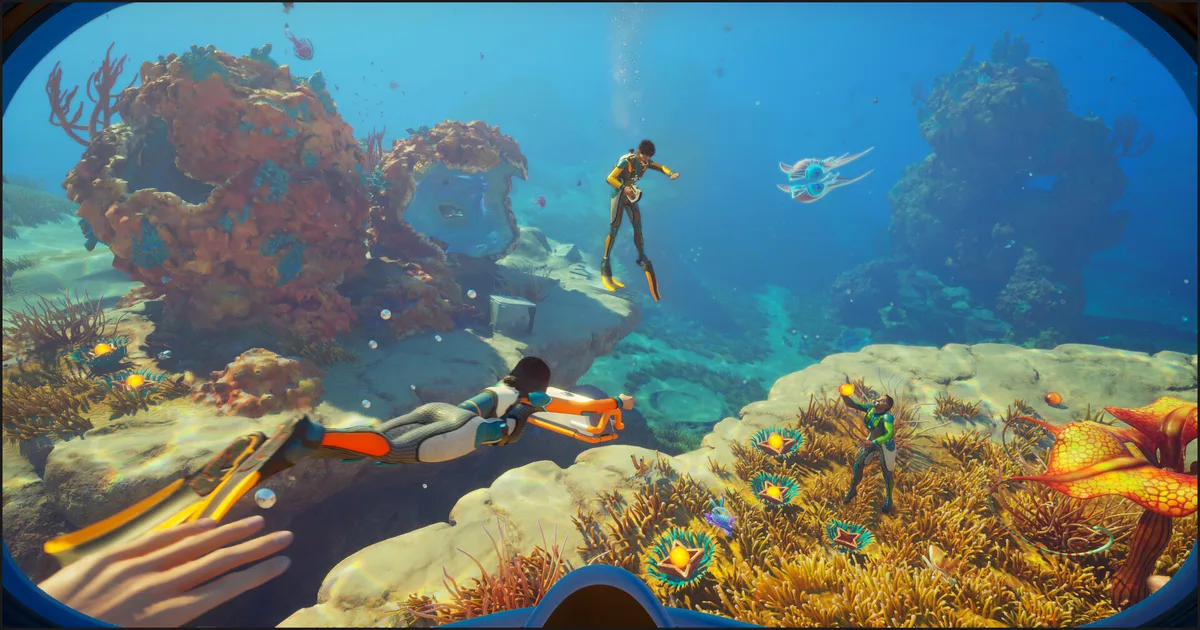
Subnautica 2 co-op has the fingerprints of intentional design. Per-player survival stats. Independent DNA trees. A shared base every player can wreck. Unknown Worlds built a game where four people underwater have to actually talk to each other: or pay for it.
This guide covers Subnautica 2 co-op specifically: how to get a session running, how to split roles between 2 and 4 players, how base progression changes when multiple people are building, and what you do when a Leviathan appears and four people need a plan in under ten seconds.
TL;DR: Subnautica 2 supports 1-4 players online with cross-play between PC and Xbox. Each player manages their own oxygen, hunger, and inventory, with no shared health pool. Vehicles are per-player, so every co-op member needs their own Tadpole submersible. The shared base is collective, DNA trees and Fabrication queues are individual, and the Buddy System now adds proximity voice chat, revives, and trading. Leviathans are unkillable, so coordinated evasion remains the group strategy.
How does Subnautica 2 co-op work? (quick answer)
- In Subnautica 2 co-op, each player manages their own oxygen, hunger, and inventory: there is no shared health pool
- Vehicles are per-player; a 4-player team needs 4 Tadpole submersibles before deep dives
- DNA modification is independent: two players can specialize in different biological upgrade trees simultaneously
- The Fabrication module is required for advanced crafting and should be the shared base's first priority
- Leviathans are unkillable in Subnautica 2 co-op; coordinated aggro rotation is the only group survival strategy
- In 2-player sessions, a builder/explorer split outperforms two explorers by roughly 30-40% on base progression speed in the first 3 hours
Current status: September 2026
Unknown Worlds' Early Access 1.2 Buddy System update added cross-platform proximity voice chat, player revives, emotes, player trading, Tracking Tags, and two new characters. The September hotfix also addressed multiplayer furniture and push-to-talk issues. This guide's original session and role advice still applies, but groups no longer need an external voice app by default.
Overview
This guide covers Subnautica 2 co-op as of Early Access launch (May 14, 2026, version 0.1). Unknown Worlds has confirmed additional co-op features are planned, so creature scaling numbers and shared inventory options may shift in future patches.
Scope: Subnautica 2 co-op session setup, role division, shared base progression, vehicle coordination, Leviathan response. Out of scope: the DNA modification system in depth, base construction blueprints, or vehicle combat. The Subnautica 2 vehicles guide covers the Tadpole in detail.
To get value from this guide, you need about one hour with the solo tutorial or enough familiarity to navigate the crafting interface. At least one player in the group should know what the Fabrication module costs to place.
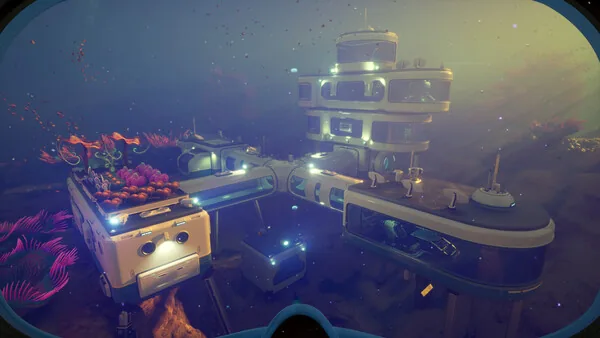 Shared base building is the co-op advantage: solo players can't run resource and exploration loops simultaneously.
Step-by-step: Subnautica 2 co-op session setup
Phase 1: session setup
Step 1: Host creates the session. From the main menu, select New Game → Multiplayer, then set session visibility. The two options that matter: Friends Only (anyone on your Steam list can join without prompting) and Invite Only (you send individual invites). Public sessions exist. Don't use them for co-op: a stranger leaving mid-session leaves incomplete base construction that nobody asked for.
Step 2: Set the difficulty before anyone joins. In Freedom mode, death carries no inventory penalty. In Survival, items drop at the death location. This applies to every player in the session. Change it after the third person connects and you're restarting the world.
Step 3: Joining players connect via Steam invite or the in-game Join menu. The host's session appears under Multiplayer → Join Game → Friends. Right-clicking the host's name in the Steam overlay and selecting Join Game is faster if everyone is already on voice.
Step 4: Verify everyone loaded into the same spawn zone. All players start at the same surface beacon. Check this before anyone moves. It's the default co-op meeting point and a quick confirmation that the session is actually working.
Phase 2: role assignment
Most Subnautica 2 co-op groups skip this step. That's usually why they stall out around hour two.
Step 5: Designate one Builder and one (or more) Explorers. The Builder stays within 200m of the starting beacon and focuses on base modules. Explorers range out for surface and shallow-water resources and bring them back. In a 4-player session, two Builders and two Explorers is the efficient split. Three Explorers and one Builder works if the Builder is fast and the group is comfortable with slower base progress.
Step 6: The Builder's first job is the Fabrication module. Advanced crafting is locked without it: for everyone. The required materials are accessible in the starting biome. A Builder who knows what they're doing should have it placed within 45-60 minutes. If resources are coming in slowly, Explorers drop whatever they're doing and prioritize Fabrication materials above all else.
Step 7: Explorers take separate resource routes, not shared ones. Inventories are personal in Subnautica 2 co-op. Two Explorers looping the same 200m radius are competing for the same nodes, and both will come back short. One goes north, one goes east. See the Subnautica 2 resources guide for which nodes spawn what in each starting zone.
GODEEPER: The Tadpole build requirements per player make resource coordination critical in co-op. Subnautica 2 Vehicles Guide: Every Submersible Explained →
Phase 3: base progression in a group
Step 8: Designate shared storage in the first 30 minutes. The Subnautica 2 co-op base has shared and private storage zones. Put at least one large container on the shared side and call it the materials bin. Without it, Explorers default to hoarding resources in personal inventories, the Builder waits, and nothing gets built.
Step 9: Module build order: Fabrication → power generation → oxygen network. Explorers range further and earlier than solo players, which means they die more often. An oxygen network that extends recharge range from the base is the most death-preventing module in the first three hours of Subnautica 2 co-op. The Subnautica 2 base building guide has the full module priority breakdown; for co-op specifically, the oxygen network moves up the list.
Step 10: Every player needs their own Tadpole before any dive below 150m. Root Canyon runs 364-750m and is the deepest biome you can currently explore. Vehicles are per-player: there's no sharing. A group with only two Tadpoles ready and attempting deep exploration means two people in unpowered suits at depth. That's how co-op sessions end at hour three.
Phase 4: deep dive coordination
Step 11: Stagger descents by 90-120 seconds. Multiple players hitting the same narrow entry point simultaneously creates a bottleneck and competes for oxygen pockets on the way down. The second player drops when the first has reached target depth and sent an all-clear.
Step 12: Keep one player near the surface on deep dives. In 3-4 player Subnautica 2 co-op sessions, one person stays within 80m of surface. They can reach the base faster in an emergency and relay danger signals to anyone below. It reads as the boring job. It pays off when something goes wrong at 800m and someone needs to get back quickly.
Step 13: Call your DNA targets before each dive. Two players sampling the same creature are wasting one of them. A quick "I'm going for Root Canyon fauna" before descent takes ten seconds. Splitting thermal-resistance and pressure-resistance between two players unlocks a combined depth-and-temperature range that neither could reach alone.
GODEEPER: DNA modification specialization paths are covered in detail in the early access tips breakdown. Subnautica 2 Early Access Tips: What Nobody Tells You →
Tips
2-player vs 4-player: the math changes
In 2-player Subnautica 2 co-op, one Builder and one Explorer is close to optimal. The Explorer covers ground while the Builder places modules without stopping to gather. Base progress runs at roughly 140% of solo speed.
In 4-player, the bottleneck shifts. Four people generate more raw materials than two Builders can place, so the constraint becomes module blueprints, not resources. Three Explorers and one experienced Builder (a configuration that would slow things down in 2-player Subnautica 2 co-op) works in 4-player because the Builder is the rate limiter, not the supply chain.
Don't bring everyone to a Leviathan encounter
The instinct in Subnautica 2 co-op is to group up when something dangerous appears. With Leviathans, this makes it worse. The Collector (Sparse Plains) has a detection radius that expands with the number of players nearby: four people at 20m pull more aggro than two at the same distance. The Shiver (Void) works differently: it's boundary-triggered rather than detection-based, but a larger group crossing the Early Access boundary together is still harder to retreat cleanly.
One player draws aggro and moves in a single direction. Everyone else goes lateral and increases depth separation. After 30-40 seconds of sustained movement the Leviathan typically resets. Two Tadpoles can outmaneuver either Leviathan without much coordination. Four Tadpoles at depth is harder: more trail in the water, higher chance someone re-enters the detection radius right as it's resetting. Smaller teams handle Leviathan encounters more cleanly than larger ones.
Oxygen kills more groups than Leviathans
Nobody is tracking four oxygen gauges simultaneously without voice. Set a shared rule before diving below 200m: when the first player hits 40%, everyone turns back. Not 20%. The 40% threshold covers slower Tadpole operators and unexpected route blockages on the return. Most Subnautica 2 co-op deaths in Root Canyon are oxygen failures during rushed ascents, not Leviathan contact.
The base is shared. Everything else isn't.
Infrastructure is collective. Each player's DNA tree, Fabrication queue, and vehicle loadout are personal. Four players can run four completely different upgrade specializations in parallel. That's genuinely the best part of Subnautica 2 co-op and the mechanic most groups don't use because they spend the first hour doing the same things. Push everyone toward divergent paths early.
Voice matters more than most co-op games
Without it, you're reacting. With it, you're coordinating: oxygen calls go out before 20%, the surface anchor actually works, and Leviathan evasion becomes something you can plan rather than improvise. The Buddy System now includes cross-platform proximity voice chat, so use that for in-game calls or keep an external app if your group prefers a persistent channel.
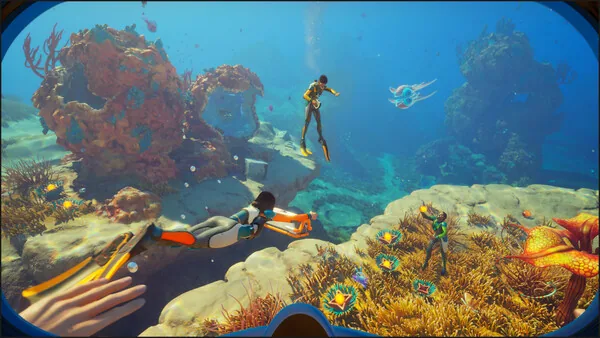 Divide roles before your first deep dive: one resource gatherer, one base builder, one scout.
Subnautica 2 co-op common mistakes
Running overlapping resource routes. Two Explorers looping the same 150m radius deplete nodes faster than they regenerate and both come back short. Assign cardinal directions on session start. Don't cross into each other's zones until one area is fully depleted.
Building the base too far from Root Canyon. Surface-start bases require significant transit to reach it. That's fine in solo. In co-op, four players making that trip repeatedly is a lot of wasted time and oxygen. A secondary relay module (oxygen tank and a few storage slots) partway to Root Canyon is cheap to build and pays back quickly.
All four players descending into a new biome together. In Subnautica 2 co-op, the first visit to any new area should be two players, not four. Full group descents on uncharted routes have ended more sessions than anything else. Two players can retreat and report back. Four players hitting an unexpected Leviathan patrol in a tight choke point have fewer options.
Letting the Fabrication queue clog. Multiple players can queue items at the same time. The module processes one item at a time. Without someone watching the queue, it backs up with items from four people and nobody gets what they need. The Builder's job isn't just placing modules: it's also managing the queue order across the group's current priorities.
Everyone unlocking the same DNA modification. In Subnautica 2 co-op, four players with thermal resistance are four players capped at whatever depth thermal resistance allows. The DNA system pays out for groups that diverge. One player with pressure adaptation and one with thermal tolerance together can reach biomes neither could access solo.
Frequently Asked Questions
How do you join a friend's game in Subnautica 2? From the main menu, select Multiplayer, then Join Game. Your friend must have their session set to Friends Only or Invite Only in the game settings. Steam invite also works: right-click their name in your friends list and select Join Game.
Does each player need their own Tadpole submersible in Subnautica 2 co-op? Yes. Vehicles in Subnautica 2 are per-player: the Tadpole is not shared. Each person needs to craft their own from the Fabrication module. This affects resource planning: a 4-player session requires 4 complete Tadpole builds before any deep exploration is practical.
Is the base shared in Subnautica 2 co-op? Yes. The base is a shared persistent structure that all players contribute to and can access equally. Any player can add modules, place items in shared storage, or expand the base. Individual inventories remain private.
Can players do the DNA modification system separately in Subnautica 2 co-op? Yes. DNA sampling is per-player: each person samples creatures independently and builds their own modification profile. This means two players can specialize in different DNA trees simultaneously, which is one of the biggest co-op advantages over solo play.
What happens when a player dies in Subnautica 2 co-op? The Buddy System lets a downed player be revived before they reprint. If they reprint, the official update notes place them at their assigned Biobed; check the current difficulty and build for inventory details.
How many players does Subnautica 2 support in co-op? Subnautica 2 supports 1-4 players in online co-op. The game scales some creature aggression and resource density with player count, though in Early Access (as of May 2026) this scaling is still being tuned.
Can Leviathans be killed in Subnautica 2? No. Both confirmed Leviathans in Early Access (the Collector in the Sparse Plains and the Shiver in the Void) are unkillable. In co-op, the strategy is coordinated evasion rather than combat. The Subnautica 2 Leviathan guide covers detection radius and patrol patterns in detail.
Related Reading
- Subnautica 2 Creature DNA: Bioscanner and Biomods Guide: Subnautica 2 creature DNA guide: how the Bioscanner, Biomods, Biolabs, and missing alien eggs work
- Subnautica 2 Deep-Sea Base Guide: Power and Co-op Tips: Subnautica 2 deep-sea base guide: plan Solar, Hydroelectric Turbines, Power Transmitters, storage, and co-op layouts
- Subnautica 2 Early Access: What the Launch Includes: Subnautica 2 Early Access is out at $29.99. This update covers launch content, the Buddy
- Subnautica 2 DNA Modification Guide: how per-player DNA trees work and which specialization splits pay off in co-op.
- Subnautica 2 Complete Guide Hub: survival, biomes, base building, and every cluster guide in one place.
- Subnautica 2 Lore: Story, Connections and What's Next: Subnautica 2 lore: story confirmed in early access, the Ryley Robinson question, and what the Observatory cliffhanger means.
References
- Subnautica 2 on Steam: official store page, version history, and patch notes
- Unknown Worlds Entertainment official site: developer devlogs and multiplayer design notes
- Subnautica 2 Buddy System Update: official proximity chat, revive, trading, emote, and character update notes
- Subnautica 2 Buddy System Hotfix 1: official multiplayer hotfix notes
- Subnautica 2 Buddy System Update Trailer: official video overview of the co-op update
- r/subnautica community: player reports from the first week of Early Access, Leviathan detection radius observations, and co-op session structure discussion
- Subnautica 2 complete guide hub: survival, biomes, base building, DNA mods, and all cluster guides
Was this guide helpful?
About the author

Senior Critic & Analyst
Former game data analyst turned critic with 11 years covering indie and mid-tier games. Based in Austin. Runs spreadsheets on games most people just play.
- 11 years games criticism
- Former game economy analyst
- Roguelike and strategy specialist
Keep reading


Disclaimer
This article is published for informational and entertainment purposes. It does not constitute professional financial, legal, or technical advice. Game performance, online services, patch schedules, and store listings change. Verify critical details (pricing, system requirements, regional availability) with publishers and storefronts before you buy. Affiliate links, where present, help support our editorial work and are labelled in our affiliate disclosure.
Comments
Loading comments…