
GameBrief · General
Subnautica 2 Creature Guide: Leviathans & Fauna Ranked

Reviewing
Subnautica 2
Unknown Worlds Entertainment · Unknown Worlds Entertainment
This Subnautica 2 creature guide covers the key fauna you'll meet, from harmless scannables to the leviathans that end runs. The headline rule changed from the original: creatures here are unkillable by design, so the whole game is about reading behavior and avoiding the dangerous ones rather than fighting them.
TL;DR: Subnautica 2's fauna is unkillable by design, so survive by reading behavior instead of fighting. The current creature roster has five confirmed Leviathans: Collector, Coral Crab, Deepwing Brooder, Great Jaw, and Shiver. World Tree is a separate Titan Class organism. Scan everything for DNA mods, and use flares on Nibbler Mango packs.
Subnautica 2 creature guide: quick answer
The confirmed Leviathan roster is Collector, Coral Crab, Deepwing Brooder, Great Jaw, and Shiver. Collector, Great Jaw, and Shiver are the urgent threats in the current build; Coral Crab is defensive and Deepwing Brooder is passive. World Tree is a separate Titan Class organism beyond the accessible map. See the Subnautica 2 Leviathan guide for the dedicated patrol breakdown.
Current status: September 2026
The current community creature index lists five Leviathans in Proteus. Recent official hotfix notes also mention improved pathing for the Collector Leviathan in the lower canyon, so treat its patrol behavior as a live Early Access mechanic rather than a fixed launch-only detail. The roster and biome notes below use the current public database entries, with beginner context in the Subnautica 2 beginner guide and safe shelter options in the Subnautica 2 base building guide.
Key takeaways
- This subnautica 2 creature guide covers the key confirmed fauna in the current Early Access build
- Leviathans are 100% invulnerable: do not fight them, use them as zone boundary markers instead
- Five confirmed Leviathans are Collector, Coral Crab, Deepwing Brooder, Great Jaw, and Shiver
- Collector, Shiver, and Great Jaw need active evasion; Coral Crab is defensive and Deepwing Brooder is passive
- Nibbler Mango is a Coral Gardens pack predator; flares counter them before they close in
- Non-Leviathan predators include the Hammerhead, which actively hunts but can be outswum
- Scan everything: codex entries unlock fabrication recipes and crafting hints, not only lore. The DNA modification guide tracks the upgrades tied to those scans.
- Unknown Worlds continues adding fauna through Early Access updates; scan anything new you encounter
Step-by-Step: scan a dangerous creature
- Check the creature's biome and behavior in the index before entering its territory.
- Approach from outside the listed aggro or patrol boundary, keeping an exit route behind you.
- Start the scan, then retreat as soon as the creature turns or the warning behavior begins.
- Record the codex entry and return later with a vehicle if the scan window is too short.
Creature index: Leviathans and key fauna
Three Leviathan-class creatures actively threaten players in the current build, plus four smaller fauna categories. Jump to the section you need, then use the Subnautica 2 co-op guide if you are scouting with another player:
| Creature | Type | Depth | Threat | Scan method | Jump to |
|---|---|---|---|---|---|
| Collector Leviathan | Leviathan | Sparse Plains / Karakorum Metal Farms | Extreme | Observe from outside patrol boundary; approach when it turns away | Section |
| Coral Crab | Leviathan | Dolerite Spires / Shallows | Low | Scan the dome while it is foraging; keep distance if it retreats | Table |
| Shiver Leviathan | Leviathan | Void (beyond EA boundary) | Extreme | Position near the boundary; creature can't exit the Void | Section |
| Great Jaw Leviathan | Leviathan | Dolerite Spires / Cicada Wreck | Extreme | Scan the shell exterior only (never enter) | Section |
| Hammerhead | Active predator | Sparse Plains / Graveyard | High | Scan mid-sprint; it will pursue but has a distance cap | Table |
| Marrowbreach | Active predator | Graveyard / Plateaus | High | Scan in the break-off gap after a burst attack | Table |
| Nibbler Mango | Pack predator | Coral Gardens | Medium | Throw a flare to freeze pack attention; scan while they're distracted | Table |
| Waterslug | Passive | Sparse Plains | None | Walk up and scan; it won't react | Table |
Fastest answers:
- Leviathans are invulnerable by design. Do not fight them.
- Scan every creature for codex entries that unlock fabrication recipes.
- Hammerhead: sprint-swim until it disengages. Do not stop.
- Nibbler Mango: throw flares before they close in, not after.
- Great Jaw: scan the shell exterior only, never enter the shell.
- Shiver Leviathan: abandon the Tadpole if it's closing in on your vehicle.
How the subnautica 2 creature guide works: scanning first
Before getting into threat levels and biome breakdowns, one rule overrides everything else: scan every creature you see. It's the simplest tip in this guide and the most important.
The Subnautica franchise built its reputation on making the ocean feel genuinely unknown. Subnautica 2 continues that with a codex system where scanning creatures unlocks more than flavor text. You get fabrication recipes. You get crafting hints. You get data that changes what you can build and where you can go.
Cost of scanning: a few seconds. Value: potentially unlocking a critical recipe you'd otherwise miss for an entire run. Build the scan-first habit early, alongside the oxygen habits in the Subnautica 2 oxygen survival guide.
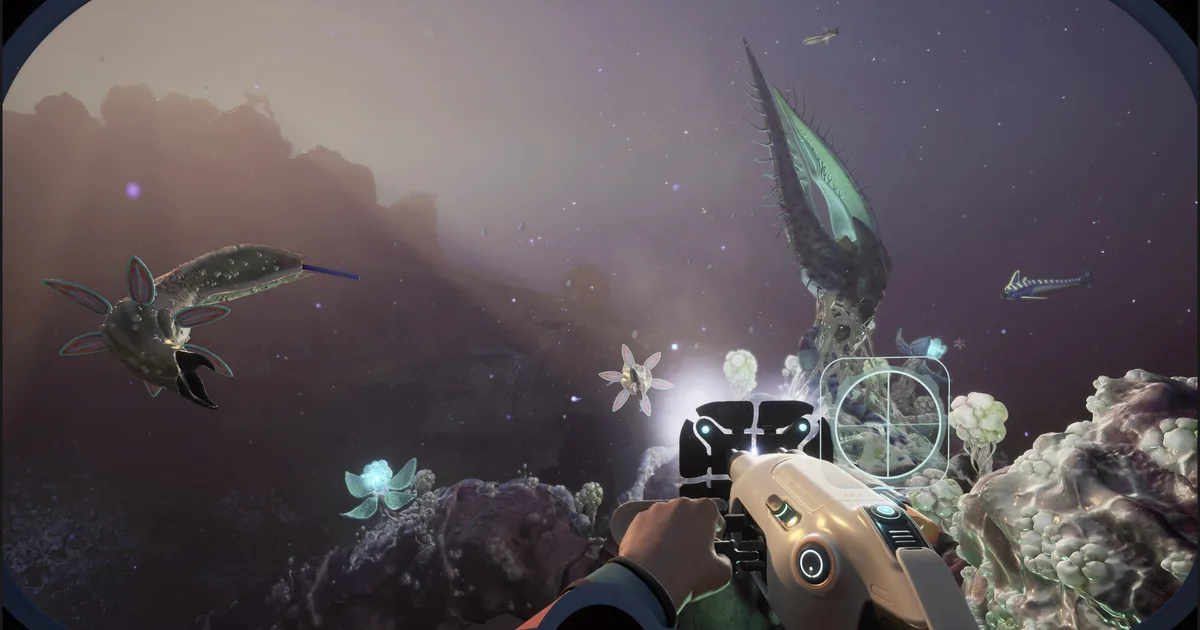
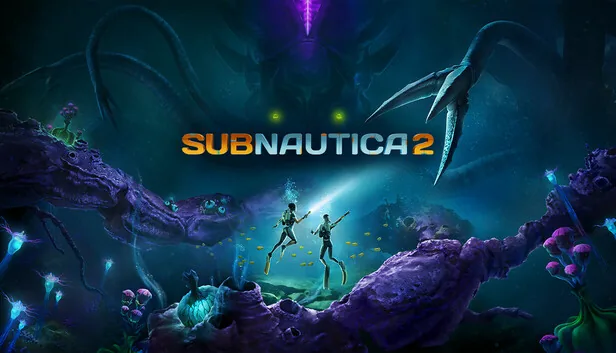 Subnautica 2 key art captures the scale difference between the divers and a large alien creature; use the scan-safe distances in the guide when you meet real fauna.
GODEEPER: New to Subnautica 2? The survival fundamentals before you hit any creature on this list. Subnautica 2 Beginner Guide →
Leviathans: invulnerable zone markers
This is the core mechanic every new player in this subnautica 2 creature guide needs to understand: Leviathans cannot be killed. Not in early access, not as a design oversight. Invulnerability is intentional.
Unknown Worlds built Leviathans as environmental features as much as creatures. They mark the edges of what your current gear can safely explore. When you encounter a Leviathan, you're not supposed to fight it. You're supposed to read the message it's sending: you're at the boundary of your current progression tier.
This reframes the whole relationship with these creatures. A Leviathan is a warning sign, and a sign pointing toward better resources. The deeper biomes that Leviathans guard are where the good materials are. You're meant to come back later, better equipped, and work around the territory.
What "work around" means: Leviathans have defined patrol paths. Learn them. The resources they're guarding aren't behind them; they're in the biome the Leviathan is marking. You don't need to pass through the Leviathan to get to what you need. You need to understand the patrol pattern.
One practical note for the subnautica 2 creature guide: you can scan Leviathans safely. They have aggro ranges, not aggro zones that cover their entire biome. Get close enough for the scanner to register, then pull back. The codex entry is worth it.
The Collector Leviathan and Sparse Plains
The Collector Leviathan is the first Leviathan most players encounter in this subnautica 2 creature guide entry. It's a four-tentacled predator, and it patrols both the Sparse Plains (roughly 0 to 250 meters depth) and the Karakorum Metal Farms.
"Sparse Plains" is an accurate name. The biome is the gentler starting area, but the Collector is an active presence. It operates on a patrol-based behavior model: defined territory, set route. It doesn't actively hunt you across the entire biome.
This means you can learn its route. New players tend to panic and treat the Collector as a roaming threat that could appear anywhere. It won't. Watch it for two patrol cycles. You'll see the boundaries. Then you can move around those boundaries confidently.
The Sparse Plains is where you'll spend your first hours in Subnautica 2. Getting comfortable with the Collector's presence early (not paranoid, just comfortable) is worth the time investment.
One thing to watch: Unknown Worlds' June 4 "Swimming Forward" dev vlog announced the EA1.1 update, headlined by a brand-new region described as the Collector Leviathan's home, with wreckage-heavy terrain, new creatures, and new story content. The studio billed it as "the scariest the game has been yet." When EA1.1 lands, this guide's Collector section gets a full rewrite; until then, treat everything above as the Sparse Plains patrol behavior only.
Non-Leviathan fauna: Hammerhead, Waterslug, and more
Not every threat in this subnautica 2 creature guide is a Leviathan. The subnautica 2 creature guide breakdown below covers the smaller fauna you'll encounter before reaching Leviathan depths.
The Hammerhead is an active predator. It hunts. Unlike Leviathans, it doesn't have strict territorial boundaries; it can pursue you. The good news: it can be outswum. The Hammerhead is a threat-level medium creature that punishes players who stop moving, not players who swim fast and keep their head up.
Two behavior changes to note. As of Hotfix 2 (May 22, 2026), the Hammerhead is no longer attracted to Tadpole submarine lights. Before this patch, taking the Tadpole into Hammerhead territory lit you up as a target. That behavior is removed. Hotfix 3 (June 1, 2026) went further: Hammerheads no longer attack unpiloted Tadpoles at all. They'll still circle and show interest in a parked sub, but you can now leave the Tadpole outside a wreck without returning to a chewed hull.
The Marrowbreach is the primary threat in Graveyard and Plateau zones (the biomes past the Sparse Plains starting area). It's a step up from the Hammerhead in lethality and operates on a different behavior model: burst-and-follow instead of sustained pursuit. The Marrowbreach closes distance fast, lands a hit, breaks off, then re-engages. New players who know the Hammerhead rhythm find it disorienting because the attack interval is irregular. The straight-line sprint tactic that handles Hammerheads doesn't apply cleanly; flares work better on the Marrowbreach but need to be thrown in the gap between burst attacks, not during an active approach. Hotfix 3 (June 1, 2026) increased the Marrowbreach's per-hit damage while spacing attacks further apart: hits harder now, but the gap between burst attacks is wider, which is a cleaner window for flare throws.
The Nibbler Mango is a pack predator found in Coral Gardens. Blue body, yellow stripes, medium build. One Nibbler Mango is annoying. Three or four cut through your oxygen and health budget faster than most new players expect from something that small. They're omnivores that will snap at fish, kelp, and human limbs without much distinction. The important mechanic: flares distract them before they close in, and scanning one unlocks the Slow Metabolism Biomod, which is a useful early acquisition. Hotfix 3 (June 1, 2026) reworked the whole package: smaller perception range and slower movement make them easier to avoid, they circle longer before committing to an attack, and they're more sensitive to Multitool hits, but each landed bite now does more damage. Net effect: avoidance got easier, ignoring them got more expensive.
The Waterslug is the opposite of everything above. Completely passive. It won't attack. Scan it for the codex entry and move on. The Waterslug is most useful as a reminder that not everything in this ocean wants to eat you.
Unknown Worlds has continued adding fauna through Early Access updates. Scan everything you find; the community is still mapping what spawns where in the deeper biomes. The Subnautica 2 base building guide helps turn those safer routes into a practical home network.
The Shiver Leviathan: pack hunter in open water
Unlike the Collector or the Great Jaw, the Shiver doesn't hunt alone: a larger female coordinates a pack of smaller, faster males, and a direct hit destroys the Tadpole submarine outright. That's why the Void, beyond the Early Access boundary, gets treated as off-limits territory rather than a biome to explore.
GODEEPER: Pack behavior, the safe-scan window at the world border, the boundary turn-back mechanic, and the co-op aggro-draw strategy all get a full breakdown of their own. Subnautica 2 Shiver Leviathan: The Void's Pack Hunter →
The Great Jaw Leviathan: stationary seafloor trap
The Great Jaw is the trap in this subnautica 2 creature guide that catches players who expect Leviathans to chase them. It doesn't move. It's a giant mollusc, a clam-type creature, sitting on the seafloor southwest of the Lifepod near the Cicada Wreck.
The shell sits open. Inside are pink tendrils. Touching any tendril triggers the shell to snap shut, trapping you inside while it deals poison damage. It will kill you if you can't escape. The approach triggers an electric shock, which is survivable: that shock is warning enough for players who recognize it. The shell snapping shut is the actual death.
Scanning it: scan the outside of the shell. The exterior is accessible and safe. You don't need to go inside to complete the codex entry. Players who walk inside to scan the tendrils are triggering the trap. Scan the shell from outside and leave.
Navigation note: the Great Jaw's fixed location is both its threat and its solution. Once you've been there once and mapped it, you know exactly where the trap is. It's a permanent landmark at the Cicada Wreck area. Route around it on subsequent visits. Unlike every other Leviathan in this guide, the Great Jaw can't surprise you with a patrol; it stays where it is.
The Deepwing Brooder and the World Tree: other large organisms
Deepwing Brooder is one of the five confirmed Leviathans, while World Tree is catalogued separately as a Titan Class organism. Neither belongs in the "actively evade" category above.
The Deepwing Brooder is a passive, migratory leviathan-class creature with no fixed biome: it roams the perimeter of the map, usually traveling in groups of three in a line. Despite its size (the largest specimens run roughly 28m long with a 33m wingspan), it moves fast enough that catching up to scan one requires a Wakemaker or Tadpole for the speed boost. It produces Deepwing Egg Clumps, one of the better food sources in the game, and it emits a low rumbling cry audible from up to 500 meters away. It has never been reported attacking a player.
The World Tree is an enormous, currently unreachable organism the game's own PDA classifies as "Titan Class." It sits in Xanadu, beyond the Great Trench, both of which are listed as potential future biomes rather than accessible content in the current Early Access build. Titan Rockbores function as its roots. There's nothing to scan or evade here yet: it's a separate large organism, not a sixth Leviathan.
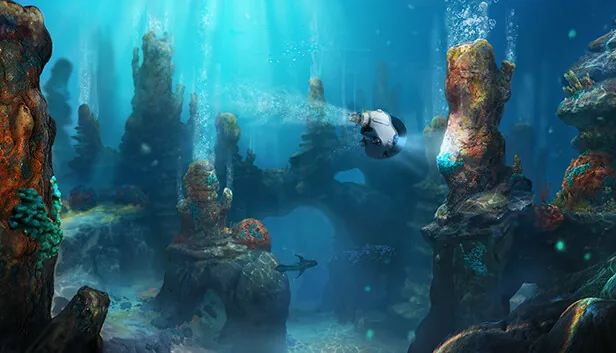 An underwater vehicle passes coral-covered rock pillars, the kind of terrain where scanning first helps you map a safe route before retreating.
Biome threat levels
This subnautica 2 creature guide organizes biomes by confirmed threat level based on available pre-launch data. Treat the deeper entries as preliminary; threat assessments will be refined as EA players explore.
Sparse Plains (0-250m): Collector Leviathan territory. One of the earliest biomes players reach after the Shallows. Relatively accessible for new players, but don't mistake "early biome" for "safe." The Collector is a real threat for unprepared swimmers.
Graveyard (0-266m): Mixed threat. Named biomes in Subnautica games tend to get their names from their contents. Expect passive and active creatures coexisting. Good place to find materials without committing to deep dives.
Plateaus (23-119m): Elevated resources come with elevated danger, though the depth itself is modest. Check your depth gauge before assuming it's shallow water.
Root Canyon (364-750m): Deep. This is the deepest biome you can currently explore, and the Karakorum Metal Farms nearby hold a second Collector Leviathan territory. Going in unprepared is how you see the "Reprint complete. You have experienced conditions incompatible with life." message.
Coral Gardens: Confirmed Nibbler Mango territory. The biome sits adjacent to Sparse Plains; players pushing north into early exploration routes will cross into Coral Garden zones. Pack-coordinated Nibblers are the primary threat here.
Necrolei Hills, Overgrown Ruins: Threat levels remain partially documented. Community mapping is ongoing. Check the scan log for new codex entries as you explore. Any creature you haven't scanned before is worth slowing down for.
GODEEPER: Building a base that keeps you safe between deep dives changes how long you can stay in dangerous biomes. Subnautica 2 Base Building Guide
Subnautica 2 creature guide: co-op communication
Subnautica 2 adds cooperative multiplayer; the original game was solo only. This subnautica 2 creature guide section is specifically for co-op players.
Leviathan sightings in co-op are a communication event. The moment someone spots a Leviathan, they call it out. Not after they check it out. Immediately. Treat it like a dive team operating near a large predator: everyone stops what they're doing, confirms their position, and coordinates movement.
The worst co-op scenario with Leviathans: one player spots the creature and doesn't say anything, keeps working, and then gets surprised when the patrol path brings it past their partner who had no idea it was nearby. That's how you lose a player and waste a reprint.
Two practical co-op rules from this subnautica 2 creature guide:
- Never split up in active Leviathan territory without confirming you both know the patrol pattern
- The player with the better view of the creature directs movement; the player closer to danger follows instructions
The Subnautica 2 co-op guide covers role splitting, communication protocols, and how to coordinate vehicle use when operating near Leviathan territory.
Per-creature encounter guide
Each creature in Subnautica 2 has a distinct behavior model. Treating them all as "things to avoid" misses the point: understanding how each one operates is what separates players who get surprised from players who navigate confidently.
| Creature | Threat | Biome | Behavior | Escape method |
|---|---|---|---|---|
| Collector Leviathan | Extreme | Sparse Plains / Karakorum Metal Farms | Fixed patrol territory | Stay outside patrol boundary; won't pursue past territory edge |
| Coral Crab | Low | Dolerite Spires / Shallows | Defensive bottom-dwelling forager with coral camouflage | Keep distance if it retreats; scan while it is foraging |
| Shiver Leviathan | Extreme | Void (beyond EA boundary) | Pack hunter (males + female); can destroy Tadpole | Abandon vehicle immediately; sprint-swim to the boundary; scan near it |
| Great Jaw Leviathan | Extreme | Dolerite Spires / Cicada Wreck | Stationary clam trap; tendrils trigger shell-close + poison | Don't enter shell; scan exterior only; fixed location, memorize and route around |
| Hammerhead | High | Sparse Plains / Graveyard | Active pursuit hunter; not attracted to Tadpole lights (Hotfix 2) or unpiloted Tadpoles (Hotfix 3) | Sustained sprint swim; pursuit has a distance cap and it will disengage |
| Marrowbreach | High | Graveyard / Plateaus | Burst-and-follow attacker: fast close, hit, break off, re-engage; Hotfix 3 raised per-hit damage, wider attack gaps | Throw flare in the wider break-off gap (post-Hotfix 3); Seaglide sprint in the distraction window |
| Nibbler Mango | Medium | Coral Gardens | Pack predator; blue body, yellow stripes; 1 is annoying, 3+ is dangerous; Hotfix 3 reduced perception range | Flares before they close in; scan for Slow Metabolism Biomod |
| Waterslug | None | Sparse Plains | Fully passive | No threat; scan and continue |
Collector Leviathan has defined territorial boundaries. It patrols a fixed route within its zone: venture outside that route and it won't chase you into open water. The critical insight most new players miss: you can learn its patrol path in two or three full cycles. Observe it. Find where the boundary sits. Once you know the route, navigating the Sparse Plains around the Collector becomes a matter of timing, not luck. Its aggro triggers on proximity, not line of sight, so staying at distance while it faces toward you is still safe if you're outside the threshold.
Hammerhead is the first creature that actually hunts you rather than guarding territory. It pursues across biome zones, unlike the Leviathans. The saving grace is that pursuit has a distance cap: sprint-swim for long enough and the Hammerhead will break off. The mistake that gets players killed is stopping to fight back. There's no weapon in the early game that justifies the oxygen burn. Swim hard in a straight line until the pursuit indicator clears. Hotfix 2 (May 22, 2026) removed Tadpole light attraction; Hotfix 3 (June 1, 2026) added that Hammerheads no longer attack unpiloted Tadpoles either, so a docked or drifting vehicle won't draw aggro.
Nibbler Mango is the Coral Gardens pack threat that catches early-game players off guard. A single Nibbler is manageable. A group of three or four drains your health budget before you have time to react to each individually. The key distinction from the Hammerhead: Nibblers are pack-coordinated, so evasion that works on a single pursuer breaks down when three are tracking you from different angles. Flares thrown ahead of the pack before they close in buy enough separation to sprint past. Scan one when you safely can: the Slow Metabolism Biomod it unlocks is a strong early-game passive.
Waterslug is passive. It will never attack. Its only interaction is via the scanner: the codex entry unlocks crafting data that's worth having. Treat every Waterslug as a free scan.
Why Subnautica 2 creatures are invulnerable
Immortal fauna is the most-discussed design choice in Subnautica 2's Steam community. The community thread asking why creatures can't be killed accumulated thousands of upvotes in the first week of Early Access. Unknown Worlds' answer, delivered through official channels: the invulnerability is intentional and permanent.
The design reasoning connects to what Subnautica's identity actually is. The franchise built its reputation on making an alien ocean feel genuinely threatening through information asymmetry: you don't know what's out there, you learn through careful exploration. Creatures that could be killed would eventually become obstacles to remove rather than features to navigate. Once you clear the Collector Leviathan, the Sparse Plains stops being tense. The game's atmosphere depends on the creatures staying.
Leviathans function as navigation infrastructure as much as living creatures. When the Collector patrols a boundary, the game is telling you something: your current gear and oxygen supply are not ready for what's past this point. The better materials are in the biome it's marking. The intended answer to a Leviathan isn't a fight: it's returning later, equipped differently, and routing around the patrol zone you've already mapped.
The community frustration is understandable from a conventional survival game perspective, where powerful enemies are ultimately defeatable with the right gear stack. Subnautica 2 asks for situational awareness instead of damage output. The skill ceiling is reading the ocean, not building the biggest weapon.
GODEEPER: Why exactly creatures can't be killed, what Unknown Worlds said about the design decision, and practical per-creature avoidance strategies. Subnautica 2 Creature Immortal Guide →
Frequently asked questions
Are Leviathans killable in Subnautica 2? No. All Leviathans in Subnautica 2 are completely invulnerable. This is an intentional design decision by Unknown Worlds. Do not attempt to fight them; retreat and put distance between you and the creature.
What Leviathans are confirmed in the Subnautica 2 creature guide at EA launch? The current guide tracks five confirmed Leviathans: Collector, Coral Crab, Deepwing Brooder, Great Jaw, and Shiver. World Tree is a separate Titan Class organism beyond the accessible map.
What does the Collector Leviathan do in Subnautica 2? The Collector Leviathan is a four-tentacled predator that patrols a defined territory in the Sparse Plains biome (0-250m depth range) and the Karakorum Metal Farms. It's the first Leviathan most players encounter. It has patrol-based behavior within its territory rather than actively hunting across the entire biome.
Should I scan Leviathans in this subnautica 2 creature guide? Yes. You can scan Leviathans safely by observing from outside their aggro range. The codex data you unlock provides lore, fabrication recipes, and crafting hints. Every creature you scan (Leviathan or not) adds permanent value to your run.
What are the safest biomes for beginners in Subnautica 2? The Sparse Plains (0-250m) is one of the earliest biomes and relatively safe compared to deeper areas, though the Collector Leviathan does patrol here. The Graveyard (0-266m) is mixed threat. The Void, beyond the Early Access boundary, is the most dangerous zone in the current build.
How does co-op change Leviathan encounters in Subnautica 2? In co-op, Leviathan sightings require immediate communication. Treat a Leviathan sighting the same way a dive team treats a large predator: stop what you're doing, call it out, and coordinate your movement. Splitting up around an active Leviathan territory is a fast way to lose a player.
What is the respawn message in Subnautica 2? The respawn flavor text in Subnautica 2 reads: "Reprint complete. You have experienced conditions incompatible with life." This matches the lore of biological reprinting replacing traditional respawn mechanics.
Related Reading
- Subnautica 2 Leviathan Guide: Collector and Shiver behavior, patrol routes, and how to avoid triggering aggression near your base.
- Subnautica 2 Creature DNA Guide: Biosampler Tips: Biosampler targeting mechanics, ability trade-offs, and how to safely sample the Collector Leviathan.
- Subnautica 2 Immortal Creatures: Why You Can't Kill Them: the design decision behind unkillable fauna and what it means for survival strategy.
- Subnautica 2 Co-op Guide: Setup, Roles, and Strategy: how to join a friend's game, divide roles between builders and explorers, coordinate vehicles, and handle Leviathan sightings together.
- Subnautica 2 Base Building Guide: how to pick build sites away from Leviathan patrol routes.
- Subnautica 2 DNA Modification Guide: which creature abilities to apply and what they unlock in your kit.
References
- Subnautica 2 on Steam
- Unknown Worlds Entertainment
- Subnautica 2 Leviathan class organism database: current five-Leviathan roster and biome entries
- Subnautica 2 Coral Crab database entry: defensive behavior and Dolerite Spires location
- Subnautica 2 official Steam announcements: current hotfix notes, including Collector pathing changes
- Subnautica 2 complete guide hub: survival, biomes, base building, DNA mods, and all cluster guides
Was this guide helpful?
About the author

Senior Critic & Analyst
Former game data analyst turned critic with 11 years covering indie and mid-tier games. Based in Austin. Runs spreadsheets on games most people just play.
- 11 years games criticism
- Former game economy analyst
- Roguelike and strategy specialist
Keep reading


Disclaimer
This article is published for informational and entertainment purposes. It does not constitute professional financial, legal, or technical advice. Game performance, online services, patch schedules, and store listings change. Verify critical details (pricing, system requirements, regional availability) with publishers and storefronts before you buy. Affiliate links, where present, help support our editorial work and are labelled in our affiliate disclosure.
Comments
Loading comments…