
GuideSubnautica 2
Subnautica 2 Shiver Leviathan: The Void's Pack Hunter
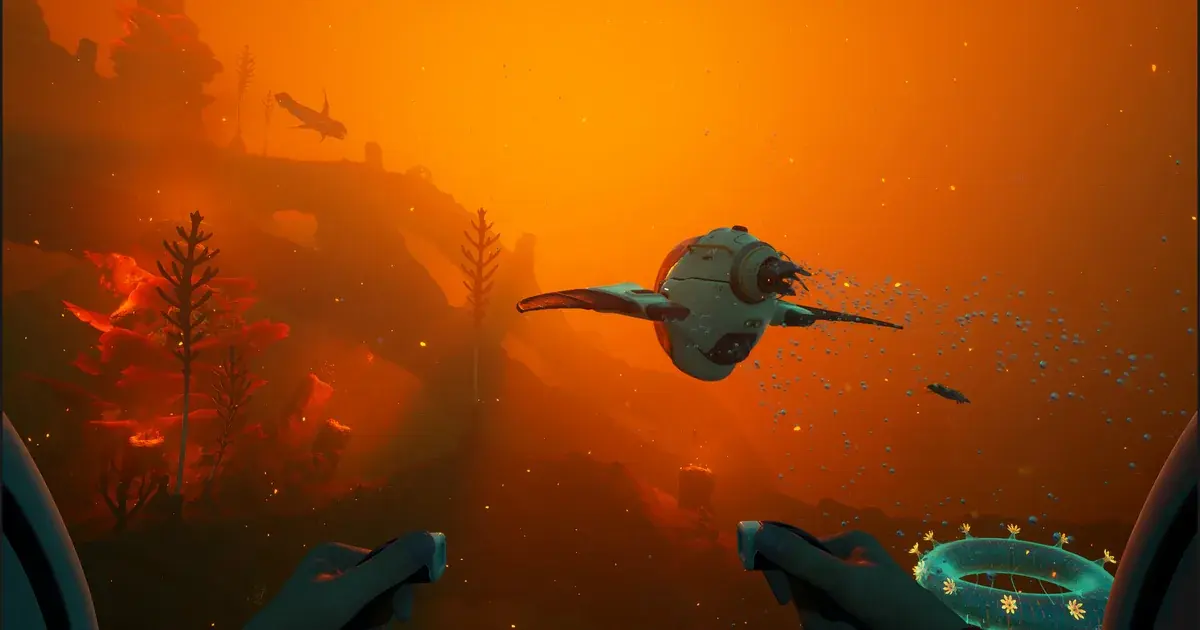
This Subnautica 2 Shiver Leviathan guide covers the creature that punishes curiosity: the pack hunter that guards the Void at the edge of the map. The Shiver is not a boss you beat, it is a wall that bites back, and the danger is not the giant female but the three agile males she launches at your Tadpole. This guide breaks down where it appears, how the pack actually attacks, why your vehicle dies in one grab, and the boundary trick that lets you scan it without dying.
Sponsored

About the game
Subnautica 2
Unknown Worlds
TL;DR: The Shiver Leviathan patrols the Void beyond the ocean boundary, the out-of-bounds guardian of the Early Access map. It hunts as a pack: one armored female carries three small, fast males on her back and launches them at you like projectiles. The males have claws that clamp your Tadpole and destroy it instantly, so any contact is a one-shot. It cannot be killed. Community testing reports that Distraction Flares are ineffective and Camouflage helps only while still, but those counters are not documented as universal rules. To scan it, wait for the boundary turn-back animation and scan during the turn; current map documentation says scanning either the male or female completes both databank entries.
Sponsored

Subnautica 2 Shiver Leviathan? (quick answer)
The Shiver Leviathan is a Void boundary creature, not a boss meant to be defeated. Current guide documentation describes one female carrying three smaller males; the males are the immediate Tadpole-killing threat. If you are scanning it, use the boundary turn-back window described below, take only the entry you need, and leave the Void instead of trying to win a damage race.
Subnautica 2 current status: September 2026
The current Steam US snapshot lists Subnautica 2 at $29.99, with a Very Positive rating across 116,266 total reviews. It released into Early Access on May 14, 2026. The official listing remains the source for the current build and price; the current Shiver mechanics below are cross-checked against two actively maintained community guide pages because the official store page does not document the creature's encounter behavior.
Sources: Subnautica 2 on Steam, Shiver Male guide, and Leviathans guide.
Subnautica 2 Shiver Leviathan: where it patrols and why you met it
The Shiver Leviathan lives in the Void, the open black water past the edge of the playable map. It is the game's out-of-bounds guardian: the moment you cross the boundary beyond the current Early Access region, a Shiver materializes to herd you back inland. You do not discover it by diving deeper into a known biome. You find it by leaving the mapped world, usually by accident, chasing what looks like one more trench to explore.
That design matters for how you treat it. The Shiver is a fence, not a fight. Most players' first encounter is a panic: they push past the boundary, the water goes empty and wrong, and then something enormous turns toward them. If you understand it as a boundary creature, you stop treating the Void as a place to survive and start treating it as a place to not be.
Two practical points matter. First, the encounter is boundary-triggered rather than something you find by following a normal biome route: the current guide sources place the Shiver in the Void beyond the playable region. Second, the exact outer-boundary geometry and any future Void depth are not exposed by the official store listing, so treat community map positions and PDA interpretations as build-sensitive rather than fixed coordinates.
Key takeaways
- The Shiver patrols the Void beyond the ocean boundary, the edge of the Early Access map.
- It hunts as a pack: one armored female carries three small, agile males.
- The female launches the males as projectiles; they are the real threat.
- A male's claws clamp your Tadpole and destroy it instantly. Contact is a one-shot.
- It cannot be killed. Distraction Flares do nothing. Camouflage is the only counter.
- Scan it during its boundary turn-back animation; one scan completes both entries.
- The encounter is boundary-triggered rather than a normal biome encounter. Exact boundary positions are build-sensitive, so do not treat community map pins as permanent coordinates.
- The official store page does not document a sonar, thermal-signature, or detection-radius model. Treat the female's turn and the scan window as observed behavior, not proof of a specific sensor implementation.
- Community guides describe the boundary turn as the practical scan window; the game's technical detection model is not documented on the official store page.
Step-by-Step: scan the Shiver Leviathan
1. Prepare a dedicated scan run: Leave valuable cargo at base, bring the scanner, and have a retreat route back to mapped water. The Shiver is a boundary deterrent, not a fight to win.
2. Approach the Void edge carefully: Use the current boundary as your reference point, but do not rely on an exact north/east coordinate or an unverified depth trigger; Early Access geometry can change.
3. Wait for the turn-back window: When the Shiver reaches the edge of its pursuit and turns back toward the Void, hold position rather than chasing the female or the launched males.
4. Scan once and leave: Current community map documentation says scanning either a male or the female completes both databank entries. Take the entry, then retreat; do not make a second pass unless your build shows otherwise.
The pack mechanic: the female is the carrier, the males are the weapons
Here is the detail that changes the whole encounter: the Shiver Leviathan hunts as a coordinated pack, not as a single creature. A massive armored female leads, and she carries three smaller, highly agile males on her back and pectoral wings.
The female rarely lunges at you directly. She is a launch platform. When she detects an intruder, the males detach and pursue, and she effectively fires them at you like projectiles. They are fast, they close the gap almost instantly, and they come from multiple angles because they spread as they pursue.
So the threat model is inverted from what your eyes tell you. Your instinct is to track the giant armored female, because she is the thing you see first. The actual killers are the three small shapes peeling off her wings. The moment she orients on you, do not watch her, watch for the males detaching, and assume they will reach you faster than you can turn the Tadpole around.
The ambush is also three-dimensional in a way that a flat description undersells. The female holds a head-on orientation that draws your attention forward. While she holds that line, one male angles around your right flank and one rises from below. The third closes from directly ahead behind her. By the time you register three separate threats, the flanking angles have already closed inside your reaction time. The visual cue you are tracking, the enormous female charging at you head-on, is actively misdirecting your attention away from where the kills are actually coming from.
GODEEPER: The Shiver is the most lethal of several unkillable apexes, and the survival rules carry across all of them. Subnautica 2 Leviathan Guide →
How to read the Shiver's approach
The current guide sources document the Shiver's pack structure and the male's lethal grab, but they do not expose an official AI description for a tail sonar organ, thermal detection, or a numeric sensor radius. Those details should not be presented as confirmed mechanics.
The useful, build-resilient rule is visual and positional: treat the female's orientation as the warning that the pack has noticed you, watch for the males detaching, and keep a route back across the mapped boundary. The turn-back behavior is the practical scan window reported by current guide coverage; it is safer to describe it as observed encounter behavior than to invent a sensor explanation for it.
Why your Tadpole dies in one grab
There is no damage race against a Shiver. The males have highly developed segmented claws built to clamp onto your Tadpole, and the grab destroys the vehicle outright.
This is what separates the Shiver from a creature like the Collector. The Collector grabs you, shakes the vehicle, and you can sometimes break away with hull left. A Shiver male does not chip your hull. It ends the craft. One successful clamp is a kill on the Tadpole, and out in the Void that means you are now a swimmer at extreme depth with three pursuers and no way home.
The practical takeaway: never approach the Void in a Tadpole you cannot afford to lose, and never approach it without an escape already planned. Because there is no surviving a grab, all of your safety has to come before contact. By the time a male has you, the decision was made several seconds earlier when you let it get into launch range.
The deep is where scanning gets dangerous. Against a Shiver there is no hull-damage race to win: a single claw grab from one of the males ends your Tadpole outright.
What is confirmed about escape tools
Like every leviathan in Subnautica 2, the Shiver cannot be killed. There is no weapon, no special tool, no damage threshold that makes it leave. It is a hard boundary by design.
The current official store page does not document a guaranteed counter table for the Shiver. Community reports commonly describe Distraction Flares as ineffective and Camouflage as useful only while completely still, but those interactions should be treated as build-sensitive testing rather than a confirmed universal rule. The confirmed safety rule is simpler: avoid contact with the males, and use the boundary turn to scan and retreat.
GODEEPER: Camouflage is one of several Biomods and tools that replace weapons entirely in Subnautica 2. The full kit matters before any Void run. Subnautica 2 Creature Evasion Guide →
How large is the Shiver Leviathan? Community scale estimates
The scale of the Shiver rarely registers properly in gameplay because the Void has no reference points. Community analyses report approximate ranges that vary by source and build: roughly 89-98 meters for the female and 33-39 meters for each male. These are estimates, not official dimensions. Use them as visual context only, not as a gameplay threshold or collision measurement.
The males read as "small" in gameplay because the female is enormous, but 33 meters is not small. When three of them detach and accelerate toward you from multiple angles, the visual speed is partly a product of their actual mass covering distance fast. They are not drones. They are large apex predators moving at pursuit speed.
What happens when the Shiver destroys your Tadpole
Understanding the full consequence keeps the Void dangerous rather than just frustrating. When a male Shiver clamps your Tadpole and destroys it, you are immediately in open water at Void depth without a vehicle. That situation compounds fast.
At Void depth, oxygen is a serious constraint, and your swim speed is far slower than the males that just destroyed your Tadpole. There is no terrain to use for cover, no rock shelf to hide behind, and any Camouflage escape depends on the behavior of the current build. Reaching your base requires an uninterrupted swim through open black water, potentially with the pack still nearby.
Survive this scenario by planning for it before it happens: approach the Void on a dedicated trip, leave excess materials at base, and accept going in that the Tadpole may not come back. A Void run where you lose the vehicle but escape on foot is a success if you got the scan. A Void run where you lose the vehicle and then panic-swim without a plan ends at the respawn screen.
How to scan the Shiver Leviathan safely
You can get the databank entry, and you do not have to die for it. The trick is the boundary itself.
The Shiver patrols the edge of the Void and reaches a movement limit, a point where it stops chasing inland and performs a sharp turning animation back toward the deep. That turn is your window. While it is committed to swinging away from you, hold the scanner on it. It is not coming at you during the turn, so the close range that would normally be suicide is briefly safe.
The bonus that makes this worth it: scanning either a male or the female automatically completes both databank entries. You do not need two separate approaches at two separate risk windows. One clean scan during one turn-back animation finishes the whole Shiver entry. So pick a single good window, get the scan, and leave. Do not greed for a second pass you do not need.
A few habits make the scan run survivable. Approach the boundary with the retreat route already in view, keep the scanner ready, and do the run on a dedicated trip with a Tadpole you have written off rather than bundling it with an objective dive where you also care about getting home with cargo.
Scanning deep fauna inside the mapped world is routine. The Shiver is the exception: get the entry during its boundary turn, when it is committed to swinging away from you, then leave before it comes back around.
Co-op Void runs: verify shared progress first
The current public guide sources describe the creature encounter, but they do not document a guaranteed multiplayer save or scan-sync rule. Do not assume one player's scan completes every player's databank. Have one player perform the scan while the others stay clear, then confirm the entry appears for the rest of the session before repeating the run.
If the current build does share the entry, a two-player setup can divide the risk: one player draws attention near the edge and retreats in-bounds while the second waits for the turn-back window. The single-player route remains the safer baseline because it does not depend on unverified co-op synchronization.
The mindset for Void edges
Surviving Shiver territory is mostly about respecting the boundary as a real thing rather than a soft suggestion. The map ends where it ends, and the water past it is not content you are meant to clear, it is a deterrent with teeth.
Treat any dive that trends toward open black water with no terrain as a warning. The Void announces itself: the seabed drops away, the ambient detail thins out, and the game stops giving you things to look at. That emptiness is the tell. The instant you notice it, turn back toward mapped terrain before a female orients on you, because once the males launch, the distance you needed to escape is already gone.
One fact that also works in your favor: the Shiver cannot cross the boundary back into the mapped world. If you are being chased and you cross in-bounds, the pursuit ends. The pack breaks off, reorients, and swims back into the Void. This is not the same as outrunning them in open water, which is not possible. It is a hard stop tied to the boundary itself.
The PDA log entry for the Shiver also contains a detail worth noting if you plan to revisit the Void as Early Access expands. The entry references Shivers as predators capable of targeting large submarines, a vehicle class that does not exist in the current build. Unknown Worlds has flagged new vehicles as part of the larger content drop roadmap. The Shiver's pack design already accounts for that threat scale. What functions now as an out-of-bounds deterrent is likely being built toward a proper deep-zone encounter timed to when the larger submersibles arrive.
Frequently Asked Questions
Where is the Shiver Leviathan? In the Void, the open water beyond the ocean boundary at the edge of the Early Access map. It appears when you cross past the playable region.
Why does my Tadpole die instantly? The small males have claws that clamp the vehicle and destroy it in one grab. There is no hull-damage race, contact is a kill.
Can you kill it? No. Like all leviathans it cannot be killed and there is no weapon for it. Survival is avoidance only.
How do you scan it? Wait for it to reach its boundary movement limit and start its sharp turn back toward the deep, then scan during the turn. One scan completes both databank entries.
What counters it? Avoidance and the boundary turn are the confirmed parts of the strategy. Community testing reports that Distraction Flares are ineffective and that Camouflage can help only while still, but neither interaction is documented as a guaranteed universal counter on the official store page.
How does the pack work? One armored female carries three agile males and launches them at you as projectiles. The males are the actual threat, not the female.
How big is the Shiver Leviathan? Community estimates vary by source and build, roughly 89-98 meters for the female and 33-39 meters for each male. Those are visual estimates, not official dimensions or collision thresholds.
What happens when the Shiver destroys your Tadpole? You are in open Void water, at depth, without a vehicle, with the oxygen penalty active and the pack nearby. Plan Void runs as dedicated trips: leave excess cargo at base, accept that the Tadpole may not return, and have a clear swim route home before you cross the boundary.
Does the Shiver chase you back into mapped territory? No. The Shiver cannot cross the boundary into the mapped world. If you re-enter in-bounds, pursuit ends immediately and the pack breaks off back into the Void. This is the hard stop that makes the aggro-draw co-op strategy viable.
How does scanning the Shiver work in co-op? Do not assume scan progress is shared until the current build shows it in your session. The safest route is for one player to scan during the boundary turn while everyone else stays clear; confirm the databank entry for the group before attempting a second approach.
Related Reading
The Subnautica 2 Leviathan Guide overviews every leviathan and the survival rules shared across all of them.
The Subnautica 2 Creature Evasion Guide covers Camouflage, Distraction Flares, and the full no-weapons toolkit you need before any Void run.
The Subnautica 2 Complete Guide Hub links every Subnautica 2 system, from survival basics to biomes and vehicles.
- Subnautica 2 Collector Leviathan: Scan, Escape & Where: how another leviathan's grab and scan window works.
- Subnautica 2 Hotfix 2: Full Patch Notes and Changes: current patch context for the Tadpole and other creatures.
- Subnautica 2 Great Jaw: The Trap You Loot, Not Fight: another creature guide focused on avoidance.
- Subnautica 2 Tips: First Steps, Base Building, and Co-op: first-hour survival and co-op setup.
- Subnautica 2 Gold Farming Guide: Gold, Sulfur and the Metal Farm loop.
- Subnautica 2 Base Building Advanced Guide: Power and Depth: power and depth planning.
- Subnautica 2 Base Building Guide: Location and Setup: safer base placement before a Void run.
- Subnautica 2 Vehicles Guide: vehicle preparation and upgrade context.
- Subnautica 2 Oxygen Survival Guide: oxygen planning when a vehicle is lost.
References
- Subnautica 2 on Steam: official Early Access page, updates, and patch notes
- Unknown Worlds: the developer behind Subnautica 2
- Shiver Male guide: current community documentation of the male's Void behavior and Tadpole grab.
- Subnautica 2 Leviathans guide: current community roster and pack description.
- Void Leviathan map entry: current community scan note for the female or any male entry.
Was this guide helpful?
About the author

Action & Design Desk
GameBrief's byline for platformers, horror and action games. Dry, short paragraphs, strong opinions about tutorials and boss design.
- Action, platformers and horror
- Tutorials, onboarding, boss design
- Sources listed per article
Keep reading
Subnautica 2 Lore: Ryley Robinson, Alien Ruins Explained
General · 9 min
Subnautica 2 Great Jaw Guide: Location, Loot and Scan
Guides · 14 min

Subnautica 2 Beginner Guide: Systems, Survival, First Hours
Guides · 12 min
Subnautica 2 Immortal Creatures: Why You Can't Kill Fauna
Guides · 6 min
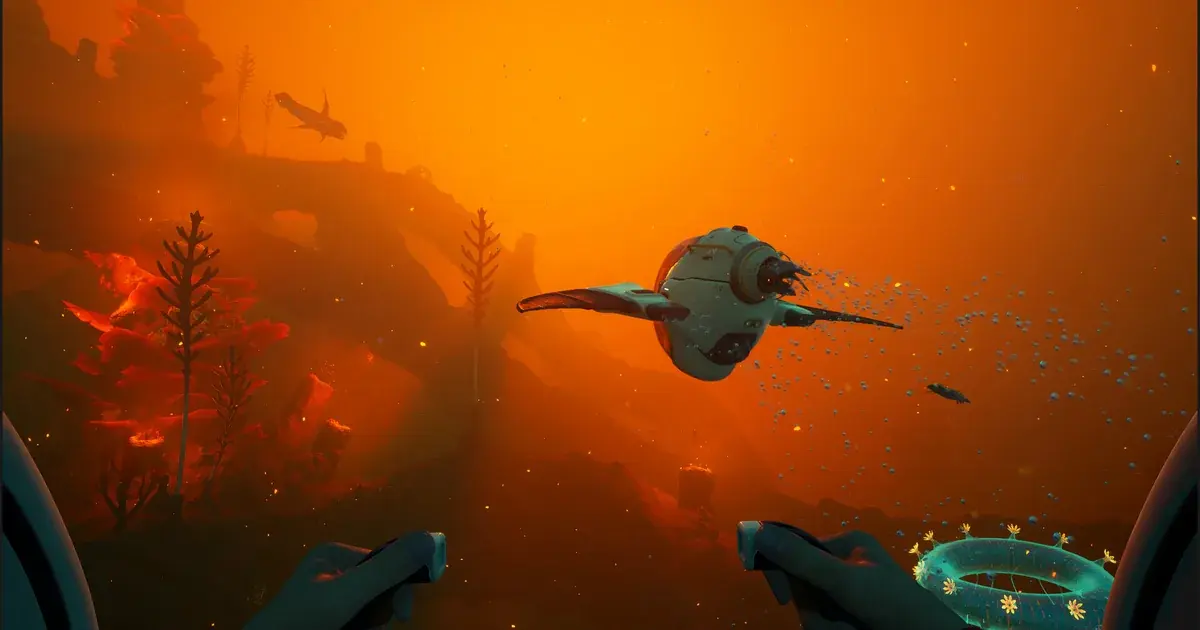
Subnautica 2 Collector Leviathan: Grab, Safe Scan & Escape
Guides · 11 min

Subnautica 2 Food Guide: Digestion, Fish, and Easy Meals
General · 8 min
Sponsored
Disclaimer
This article is published for informational and entertainment purposes. It does not constitute professional financial, legal, or technical advice. Game performance, online services, patch schedules, and store listings change. Verify critical details (pricing, system requirements, regional availability) with publishers and storefronts before you buy. Affiliate links, where present, help support our editorial work and are labelled in our affiliate disclosure.
Comments
Loading comments…