
GameBrief · General
Subnautica 2 Co-op Tips: Advanced Squad Strategies
Reviewing
Subnautica 2
Unknown Worlds Entertainment
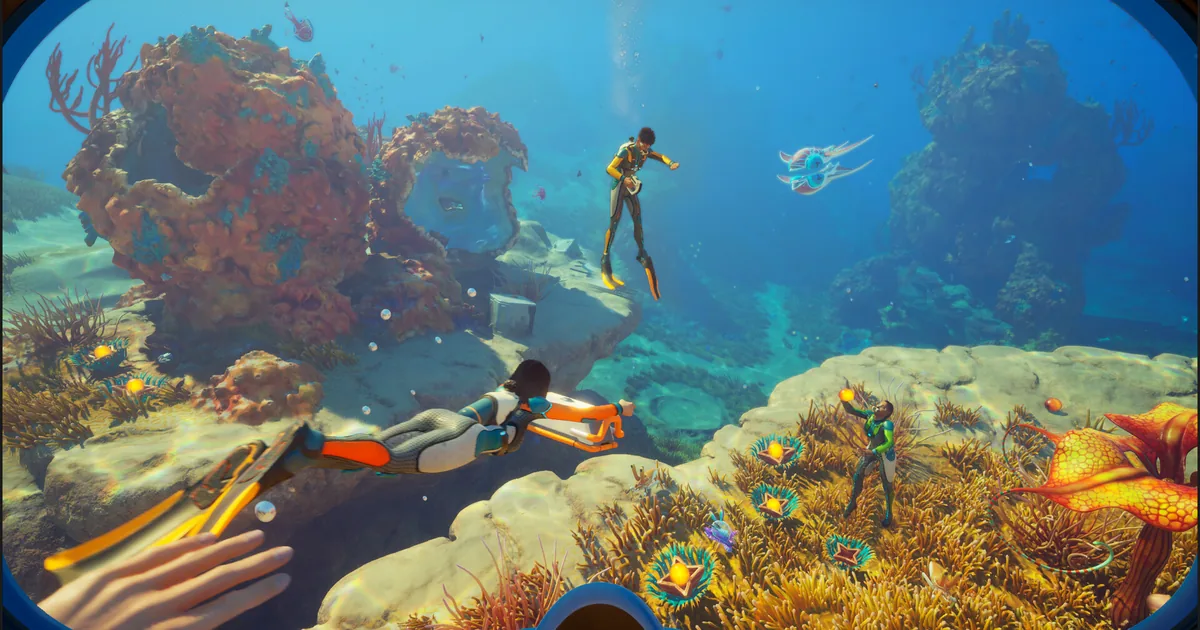
These Subnautica 2 co-op tips cover the advanced layer. The basics are covered: You know how to start a session, split Builder and Explorer duties, survive the first three hours. The Subnautica 2 co-op tips that actually separate a functional group from one that stalls out at hour six look different: specific biomod builds tied to team roles, relay outpost networks across three biomes, coordinated DNA specialization, and knowing exactly when to stop grouping up.
TL;DR: Advanced Subnautica 2 co-op tips for 4-player teams: build divergent Biomod loadouts, run a three-outpost network instead of one main base, assign players by route, and break the instinct to cluster during Leviathan encounters. EA 1.2's Buddy System Update is live with proximity voice chat, revives, trading, emotes, two new characters, and Tracking Tag support. Use one active and one passive Biomod per player, then spread coverage instead of giving the whole team the same build.
Current status: September 2026 (quick answer)
EA 1.2, the Buddy System Update, is live. The official update adds proximity voice chat, player revives, emotes, player trading, two new characters, and Tracking Tag support. A September hotfix also improved Collector Leviathan pathing in the lower canyon and addressed saves, localization, and base issues. The current Biomod roster is 15 abilities: five active and ten passive, with one active and one passive equipped at a time. This guide treats exact Leviathan detection ranges as unpublished rather than presenting old community estimates as hard rules.
Step-by-Step: organize a four-player co-op dive
1. Check the live voice tools: Use EA 1.2 proximity chat for short calls and decide who is the retreat caller before leaving the base.
2. Assign divergent Biomod coverage: Give each player one active and one passive, then avoid four copies of the same route or defensive role.
3. Set the next relay target: Use a main base, a midpoint oxygen stop, and a small deep staging point rather than forcing every player through one long transit.
4. Split the biome work: Send the scout ahead, keep the depth diver on the risky route, and let the runner collect only from confirmed nodes.
5. Spread before Leviathan contact: Keep an exit route open, call the retreat early, and regroup only after the creature has disengaged.
What advanced Subnautica 2 co-op tips actually change (quick answer)
The existing Subnautica 2 co-op guide covers session setup and the Builder/Explorer split. The dedicated Collector Leviathan guide covers the creature itself. Advanced co-op is about three things the basics guide doesn't address:
- Biomod role specialization: four players with identical biomods cover one situation; four players with divergent builds cover every situation
- Relay outpost networks: a single main base forces everyone through the same long transit corridor; a three-outpost chain cuts that bottleneck entirely
- Per-biome assignment: dividing who explores where on each dive cycle keeps resource nodes from depleting and maximizes per-hour information gain
None of these appear in the UI. The game never tells you that Chum Cloud active biomod is the best group-support tool in the Sparse Plains. It doesn't label outpost placement zones or suggest splitting biome routes. These Subnautica 2 co-op tips come from communities running 4-player sessions through 20+ hours of Early Access.
Biomod team builds: stop running four identical loadouts
Subnautica 2 currently has 15 Biomods in Early Access: five active and ten passive. Each player equips one active and one passive, so a four-player team can cover several jobs without inventing extra upgrade categories. Most co-op groups pick whatever helped them solo and never revisit the team spread; divergent coverage is the useful multiplayer advantage.
The four functional team archetypes in advanced Subnautica 2 co-op:
The Support Example pairing: Chum Cloud or Electric Discharge active, with Threat Sense or Slow Metabolism passive.
Chum Cloud and Electric Discharge are the current defensive active choices in this guide's support plan. Pair one with a threat-awareness or endurance passive, then keep that player close enough to call routes and revives. The point is coverage, not a fixed meta loadout.
The Depth Diver Example pairing: Dash or Pathfinder active, with Water Retention or Slow Metabolism passive.
Gets deepest into Root Canyon before the team's oxygen budget forces a retreat. Pairs with the Support to push the group's maximum depth range.
The Scout Example pairing: Sonic Echo active, with Homing Sense or Bioluminescence passive.
Covers horizontal range across shallow biomes, maps new corridors before the full group descends, logs resource node locations for Runners. This player earns their value over a 4-hour session, not a 30-minute one.
The Runner Example pairing: Dash active, with Sea Skimmer or Water Secretion passive.
Farms confirmed node locations the Scout tagged. Doesn't deviate. Keeps the fabrication pipeline full.
The split isn't rigid. In 2-player sessions, one player combines Support + Depth Diver, the other covers Scout + Runner. In 3-player sessions, drop the Runner and let everyone self-supply from tagged nodes. In 4-player sessions, all four roles running simultaneously is the only configuration where nobody's duplicating another player's coverage.
For biomod sourcing and Biolab setup, the Subnautica 2 DNA modification guide covers which creatures yield which traits and how to set up a Biolab at an outpost rather than only at the main base.
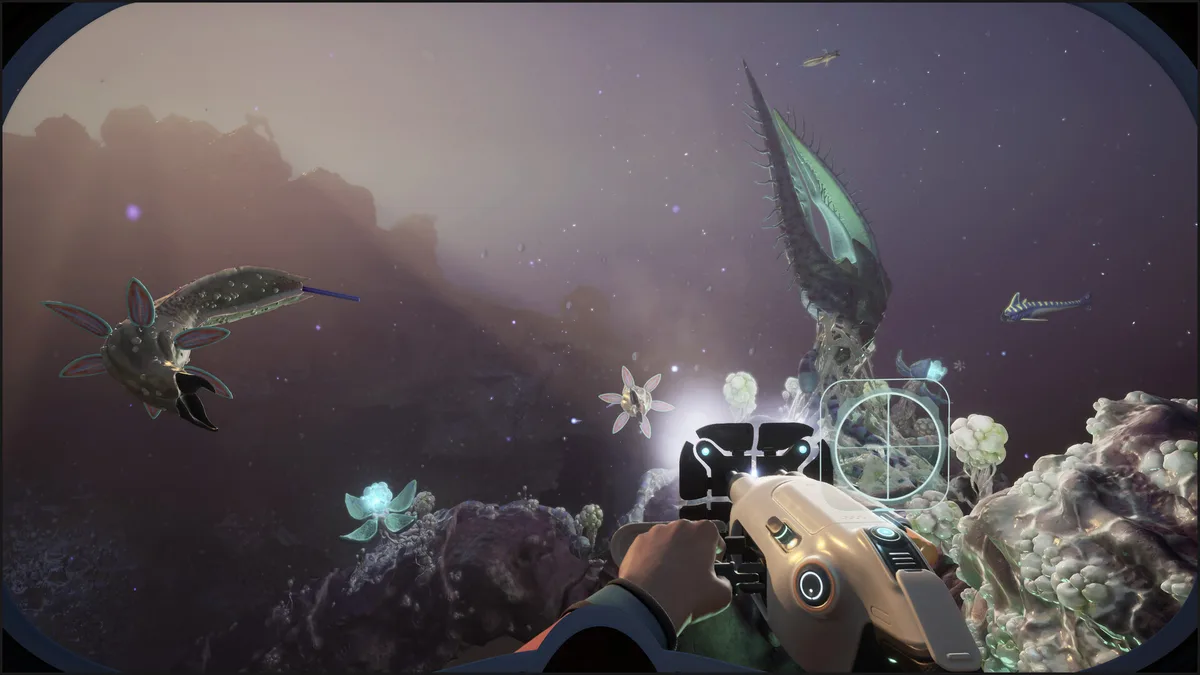 A scan run gives the Scout route information to share with the rest of the co-op team before the next descent.
GODEEPER: The creature evasion guide covers which active biomods counter which Subnautica 2 threats at each depth tier. Subnautica 2 Creature Evasion and Biomod Guide →
Relay outpost networks: the infrastructure play most groups skip
Every 4-player session that runs one main base hits the same wall eventually: transit. The main base sits near the starting route, while the deeper biomes require repeated descents. Four players making the same long trip over and over spend time on transit, burn oxygen, and add risk each way.
Three-outpost networks solve this at low material cost. Treat the locations below as route roles, not fixed coordinates: the best shelf and staging point can change as Early Access layouts and team routes change.
Outpost layout for Chapter 1:
| Outpost | Depth | Contents | Purpose |
|---|---|---|---|
| Main Base | Near the starting route | Full modules, fabrication, DNA lab | Primary crafting hub |
| Mid-Depth Relay | On the safest midpoint shelf | Oxygen reserve, labeled storage, power | Recharge point before the deep route |
| Deep Staging | At the last safe staging area | Oxygen reserve, small container, emergency supplies | Deep-dive launch point |
The mid-depth relay should shorten the return route without becoming a second main base. The deep staging outpost is most useful when it gives the group a safe reset before the deepest section. Keep both small enough to abandon or move if the route changes.
Placement tip: put the midpoint relay at a shelf edge where a safer biome route opens into deeper water. These boundary zones can pull double duty as resupply stations on shallow runs. The Subnautica 2 biomes guide maps transition boundaries and where to expect node clusters.
Satellite structures are optional infrastructure, not a promise of a particular base count. A common mistake in advanced co-op sessions is treating a small relay as a luxury when it can remove repeated long transits. Start with oxygen, power, and labeled storage; add fabrication only when the route proves it needs one.
Label containers by category before anyone adds items. The main base gets three designated lockers: raw ore, crafted components, consumables. The relay outposts get one each (emergency supplies only, no hoarding). The most common 4-player infrastructure failure isn't lack of materials. It's four people treating shared containers as personal overflow.
Wall lockers are the best interior storage option (40 slots per two-locker vertical stack versus 30 for floor lockers). Keep relay outposts light: every unused module at a satellite is a module that could be at the main base.
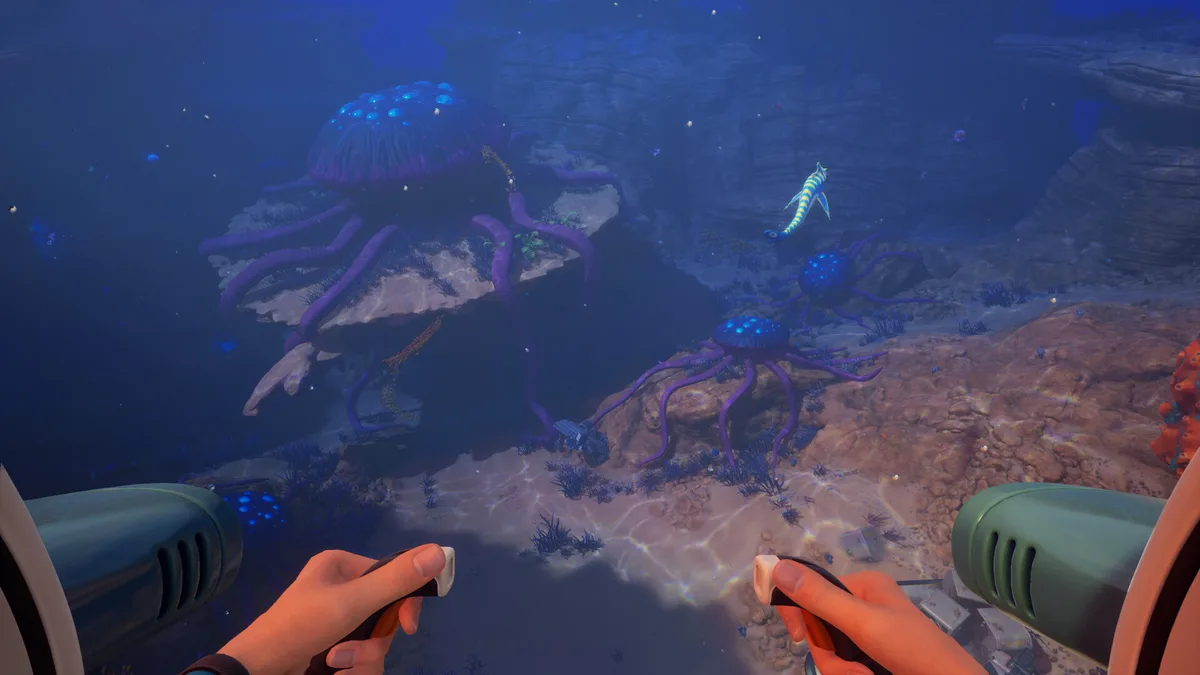 Use a recognizable biome landmark as the relay target, then keep the actual outpost small enough to move if the route changes.
GODEEPER: Advanced base construction: power adjacency, module priority order, and hull integrity across expansion phases. Subnautica 2 Advanced Base Building Guide: Power and Depth →
Per-biome assignment: who goes where on each dive cycle
The default co-op instinct is to explore together. Four players in the same biome at the same time depletes nodes in roughly half the time they'd replenish and generates information only one player needed.
Divide each dive cycle into zone assignments before leaving base. It doesn't need to be rigid, but someone should say it out loud before descent. In practice:
- Player 1 (Support build): stays with Player 2, covers whatever zone is being actively worked
- Player 2 (Depth Diver): leads Root Canyon dives, pushes maximum depth per cycle
- Player 3 (Scout): Sparse Plains horizontal expansion, maps new corridors, tags node locations
- Player 4 (Runner): farms nodes Player 3 already tagged, returns to base on each full inventory
In 2-player Subnautica 2 co-op, the split collapses to one player on vertical range (depth) and one on horizontal range (shallow coverage). Either way, two players in the same spot are competing for the same nodes.
First biome visits: Always send two players, never four. Subnautica 2's biomes are unknown-threat environments on the first descent regardless of which patch is live. Two players can retreat and report back; four players hitting an unexpected patrol route in a tight corridor have fewer options. After the first visit, the Scout's corridor map tells the group where it's safe to send the full team.
Whenever the PRAWN Suit does ship (it wasn't part of the July 8 Adaptive Measures update despite earlier dev comments pointing at that release), the standard four-role split will likely need a fifth consideration: who pilots the chassis and what that person gives up from their normal loadout.
Leviathan tactics for advanced groups: the counter-intuitive rules
The existing co-op guide establishes the safe rule: do not cluster the whole squad near a Leviathan. The official update notes improve Collector pathing, but they do not publish a detection formula or validate the exact meter ranges previously quoted in this article.
The practical rule is simpler: spread before contact, assign one retreat caller, and leave a clear route back to oxygen. Do not rely on a 30m, 60m, or 80m threshold as a universal rule. Four players spaced along separate routes give the team more options than four players stacked in one corridor, even when the exact trigger distance is unknown.
The five-step response protocol that works:
- The caller marks the retreat route and tells the squad which player is carrying the risk.
- The designated diver pulls away from the group while the others move toward separate safe routes.
- Use a defensive active if the equipped loadout has one; do not swim toward the Leviathan to help the diver.
- Keep moving until the creature disengages or the route reaches a safe staging point; do not assume a fixed reset timer.
- Rejoin only after the caller confirms the route is clear, rather than recreating the original cluster.
The mistake that kills groups: Support swimming toward the Leviathan to help the aggro player. Don't. The Depth Diver needs the reset window, not backup. Pulling multiple players back into the creature's immediate path can restart the encounter before the team reaches safety.
The live Buddy System Update adds proximity voice chat, so the group can call this protocol in-game. External voice is still useful for four-player planning, but the old claim that the game has no built-in voice is no longer current.
Tips
Track the fabrication queue across all four players
Multiple players can queue fabrication items simultaneously. The module processes one item at a time. Without a queue manager (usually the base builder), priority items back up behind lower-priority ones queued by players who logged off for an hour. Assign one player to clear dead-weight queue items every 30 minutes. It takes 90 seconds and the difference in throughput is significant across a 5-hour session.
Use the portable locker as a relay mechanism, not extra carry space
The portable locker (15 slots) gets used as personal overflow in most co-op sessions. Advanced use: deploy it at the Spires Staging outpost and use it as a transfer point. Runner fills it with raw materials on the surface run, Depth Diver grabs processed components from it before descent. It works as a small handoff point when two players are on overlapping but offset dive schedules.
Night operations and power management in 4-player sessions
Four players running workstations simultaneously drains shared power much faster than a solo session. Module adjacency reduces draw: similar-function modules in the same cluster pull less than spread configurations. If your base hits a power cap, rearrangement may be a better first fix than a new generator.
Assign a battery monitor for extended night sessions. One player tracking the base power gauge and calling out at 40% saves everyone else from mid-craft interruptions.
Don't skip voice for external communication
Subnautica 2's live EA 1.2 Buddy System Update includes proximity voice chat. Discord or another external voice tool can still help with four-player planning, but built-in proximity chat now covers the short calls that matter for Leviathan routes, oxygen turns, and biome assignments.
The 40-percent oxygen rule applies to the group's slowest Tadpole
When the first player hits 40% oxygen remaining, everyone turns back. The group's ascent speed is determined by its slowest member plus whatever unexpected detours occur. A group that consistently uses the 40% threshold avoids emergency ascents on a nearly empty tank. That scenario is how most advanced sessions end badly.
Frequently Asked Questions
What is the best biomod loadout for co-op support in Subnautica 2? Use one active and one passive from the current roster. Chum Cloud or Electric Discharge can fill the active slot, while Threat Sense, Bioluminescence, or Slow Metabolism are reasonable passive pairings for a support role. Treat this as a team-coverage choice, not a fixed five-mod build.
How many relay outposts should a 4-player team maintain in Subnautica 2? Three route roles work well for a four-player Chapter 1 team: a main base near the starting route, a midpoint relay, and a deep staging point. Each needs oxygen storage, a small container, and a power source. Keep the outposts functional and movable rather than treating an exact base count or coordinate as a permanent rule.
Can you divide biome exploration between players in Subnautica 2 co-op? Yes. Four players exploring the same biome simultaneously is redundant and depletes node density faster. The efficient split in a 4-player session is two players per biome per dive cycle, with one staying shallow (Shallows and Necrolei Hills) and one pair running Root Canyon. The fourth player stays at base, manages fabrication queue, and calls out on voice when shared storage needs replenishment.
Do DNA modifications stack or share in Subnautica 2 co-op? DNA modifications are per-player and do not stack across the team. Each player builds their own biomod profile independently. The advantage in co-op is that four players can specialize into completely different trees simultaneously, covering depth ranges and creature interactions that no single player could manage alone. Two players sharing the same tree is wasted coverage.
What is the 40-percent oxygen rule in Subnautica 2 co-op? When the first player in the group hits 40% oxygen remaining, everyone turns back regardless of depth. Not 20%. The 40% threshold accounts for slower Tadpole operators, unexpected route detours, and the lag between calling a retreat and all four players responding on voice. Most co-op deaths in Root Canyon result from rushed ascents started at 15-20%, not from Leviathan contact.
Does the EA 1.2 update affect co-op team strategy in Subnautica 2? Yes. The Buddy System Update is live with proximity voice chat, revives, emotes, player trading, two new characters, and Tracking Tag support. The September hotfix also improved lower-canyon Collector pathing. EA 1.1 remains useful historical context for the earlier Biomod and building changes, but it is no longer the current multiplayer status.
How does 4-player power management differ from 2-player co-op in Subnautica 2? Four players running workstations simultaneously drains shared base power significantly faster than two. Module adjacency matters: clustering similar-function modules reduces power draw. Assign one player as battery monitor on night operations, and build power generation before expanding modules rather than after. The base builder role includes tracking shared power output, not just placing rooms.
Related Reading
- Subnautica 2 Creature DNA: Bioscanner and Biomods Guide: Subnautica 2 creature DNA guide: how the Bioscanner, Biomods, Biolabs, and missing alien eggs work
- Subnautica 2 Early Access: What the Launch Includes: Subnautica 2 Early Access is out at $29.99. This update covers launch content, the Buddy
- Subnautica 2 DNA Modification Guide: Scan to Upgrade: Subnautica 2 DNA modification turns creature scans into upgrades: each biome unlocks different mods, and
- Subnautica 2 Update: Hotfix 3 Changes & What's Coming Next: The latest Subnautica 2 update is Hotfix 3, live now. It cuts Interior Wall cost
- Subnautica 2 Gold Farming: 4 Locations That Work (2026): Subnautica 2 gold farming: Graveyard, Root Canyon, and the Thermal Vent Clusters carry it. What
- Subnautica 2 Food Guide: Digestion, Fish, and Easy Meals: Subnautica 2 food guide: fix Digestive Incompatibility, cook fish, grow Fibrous Pulp, and build a reliable meal plan....
References
- Subnautica 2 on Steam: official store page and current Early Access status
- Subnautica 2 Buddy System Update: official EA 1.2 notes for proximity chat, revives, trading, emotes, characters, and Tracking Tag
- Subnautica 2 Buddy System update vlog: official developer video for the multiplayer update
- Subnautica 2 September hotfix: official hotfix notes, including lower-canyon Collector pathing
- Subnautica 2 Biomods: current five-active, ten-passive Biomod roster
- r/subnautica: community context for current multiplayer and Leviathan play
Was this guide helpful?
About the author

Senior Critic & Analyst
Former game data analyst turned critic with 11 years covering indie and mid-tier games. Based in Austin. Runs spreadsheets on games most people just play.
- 11 years games criticism
- Former game economy analyst
- Roguelike and strategy specialist
Keep reading

Disclaimer
This article is published for informational and entertainment purposes. It does not constitute professional financial, legal, or technical advice. Game performance, online services, patch schedules, and store listings change. Verify critical details (pricing, system requirements, regional availability) with publishers and storefronts before you buy. Affiliate links, where present, help support our editorial work and are labelled in our affiliate disclosure.
Comments
Loading comments…