
GameBrief · Guides
Subnautica 2 Leviathan Guide: Avoid, Scan, Survive

The Subnautica 2 Leviathan design is one of the most interesting parts of the current Early Access build. The official material presents the creatures as authored threats, while the exact route, damage, and scan rules continue to change as Unknown Worlds patches the game. This guide separates those confirmed update notes from player-tested survival habits.
That's a hard thing to understand when one is chasing you and you're out of good options.
TL;DR: The Collector and Shiver are the two official Leviathan names covered here. Unknown Worlds has patched Collector pathing, Collector grabs, Camouflage interaction, and Shiver multiplayer attacks, but has not published a complete patrol/depth/scan-reward table. Use observation, a clear retreat route, and current patch notes before treating any player-tested escape pattern as universal.
How to survive Subnautica 2 Leviathans (quick answer)
- Two official Leviathan names covered here: Collector and Shiver; location and depth details remain build-specific
- Both are hazards whose exact combat and escape rules can change with Early Access patches
- Official notes confirm Collector pathing work and Shiver multiplayer attack fixes, but not a complete behavior table
- Player-tested patrol and boundary observations are useful starting points, not guarantees for every build
- A scan may add creature data, but no official source checked ties the Collector to a specific best-in-slot Biomod
- Keep an abort route, oxygen reserve, and vehicle-health margin before testing either encounter
Current status: September 2026
Subnautica 2 remains in Early Access. Unknown Worlds' current official news feed lists the 1.2 Buddy System update and the September 1/3 Buddy System Hotfix 1. That hotfix specifically mentions lower-canyon Collector Leviathan pathing, Collector grab/throw and shockwave fixes, Camouflage Biomod interaction, and a Shiver multiplayer attack fix. Those notes are stronger evidence than an older guide's exact patrol map, so re-test any route after a patch.
The official Collector development vlog confirms the creature as a designed feature, but it does not publish a full depth chart or scan reward. The Steam page remains the canonical Early Access/platform reference.
Step-by-Step: plan a Leviathan encounter
- Check the build first. Read the latest official announcements, especially pathing, grab, Biomod, and multiplayer fixes.
- Mark the retreat route. Choose terrain or a map edge you can reach without crossing a second hazard, and keep oxygen and vehicle health in reserve.
- Observe from safety. Treat patrol cycles, aggro distance, and boundary behavior as in-game observations that may change, not as guaranteed coordinates or timings.
- Test one objective. If you scan or photograph a creature, stop after the result registers and return to safety; do not chain an unverified scan reward into your build plan.
How Subnautica 2 Leviathans currently work
Unknown Worlds has publicly documented the Collector's creation and has continued to adjust Leviathan behavior through Early Access patches. The current official notes mention lower-canyon Collector pathing, grab/throw and shockwave fixes, Camouflage interaction, and Shiver multiplayer attacks. They do not publish a complete creature damage model, patrol map, or scan-reward table.
That makes the useful distinction practical rather than absolute: the Collector and Shiver are named hazards, while precise route, depth, aggro, and boundary claims should be treated as build-specific observations. A player can learn a route in one version and still find it changed after a hotfix.
The safest preparation is therefore stable across versions: bring enough oxygen and vehicle health to retreat, mark a route back to familiar terrain, and test one behavior at a time. If a community guide gives an exact distance or timing, verify it in your current build before making it a hard rule.
The Subnautica 2 biomes guide covers both Leviathan zones and what gear you need before each transition: worth reading before you push past the Sparse Plains.
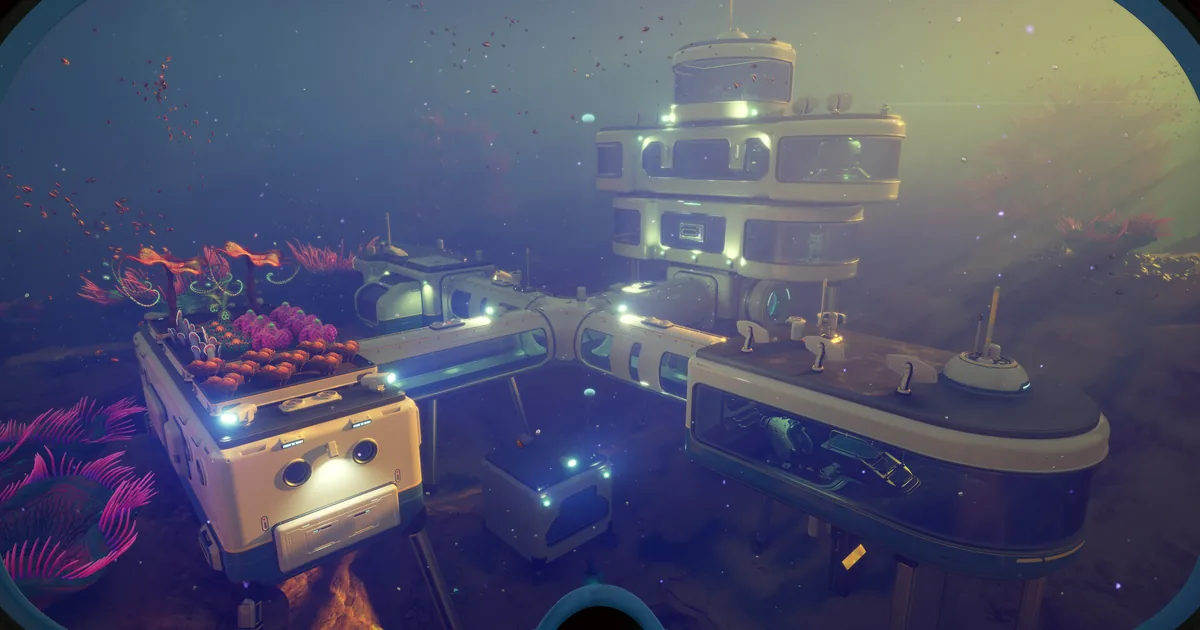
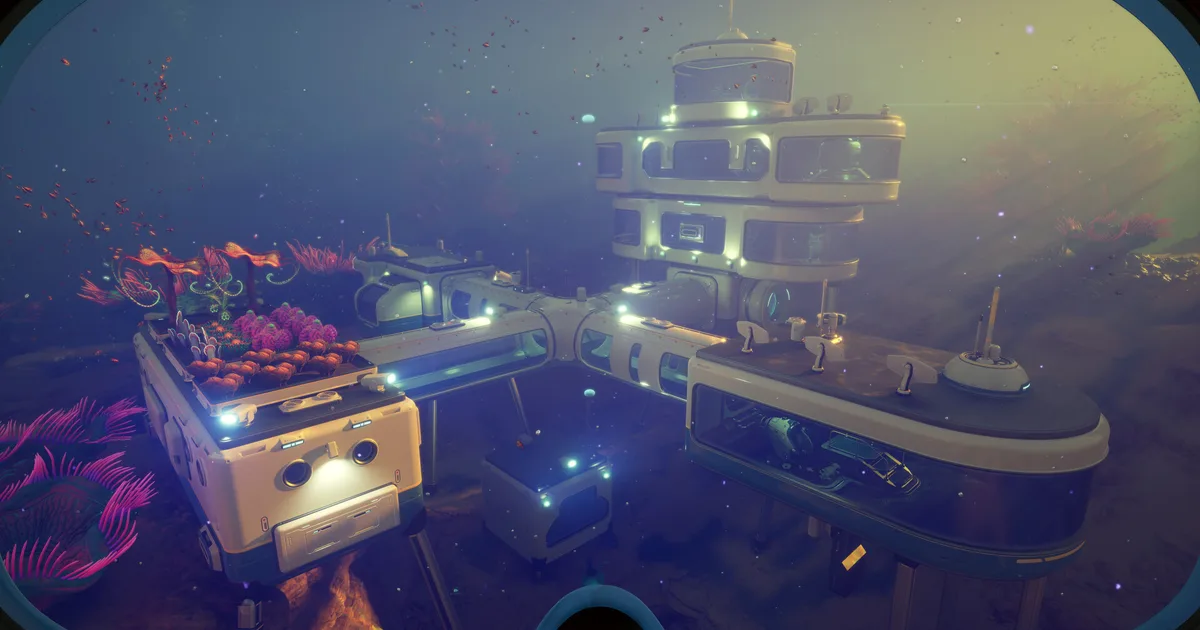
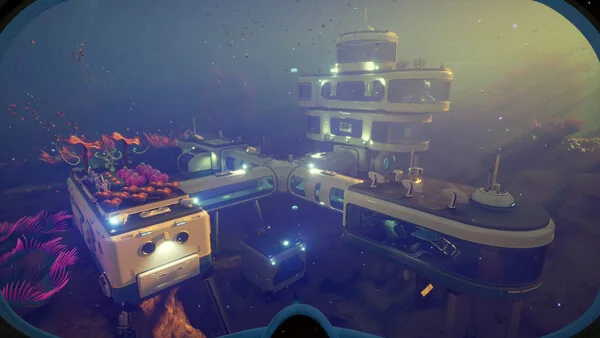 This base-and-vehicle screenshot provides world context; it does not establish a Leviathan's aggro distance or safe vehicle depth.
The Collector Leviathan: first encounter and patrol
The Collector is a four-tentacled predator documented by Unknown Worlds. Current official sources and patch notes mention its lower-canyon pathing, but they do not publish a complete depth range or a definitive list of every area it can visit. Treat Sparse Plains and adjacent location names in community maps as version-specific context rather than an official coordinate table.
First observation: players often report a repeatable route in a given build. Watch from outside danger before moving closer, but do not assume two cycles establish a permanent route. The hotfix history specifically shows that Collector pathing can change.
Second observation: an aggro distance may be learnable in your current build, but the official notes do not publish a numeric radius. Use line of sight and a retreat route rather than assuming a safe number from an older guide.
Third observation: body orientation and animation changes are useful player tells, not developer-documented guarantees. Leave room for a grab, throw, or shockwave, all of which have appeared in official fix notes.
If a scan is your goal, treat it as optional data collection. The official Biomod material does not identify the Collector scan as a uniquely strong unlock, so do not route an entire build around that unconfirmed reward.
How to scan the Collector Leviathan safely
This is a cautious player-tested process, not an official timing guide:
Find a fixed reference point (a rock formation, a distinctive piece of seafloor) near the edge of the Collector's patrol area. This is your abort marker. If anything goes wrong, you swim directly toward that marker and then past it, out of the patrol zone.
Watch from outside danger and note where the Collector slows or changes direction in your current build. Do not assume those approach windows survive the next patch.
Move only when you have a clear retreat and stop if the creature turns toward you. If the scanner registers, finish only if the risk remains acceptable; the official sources do not promise a particular reward for doing so.
Pull back immediately after the scan confirms. Do not wait for a second behavior test while you are already inside danger.
If it aggros, follow the retreat route you marked before the approach. A direct route away from the creature may be safer than crossing unknown terrain, but the exact pursuit/territory rule is not documented and should not be promised as universal.
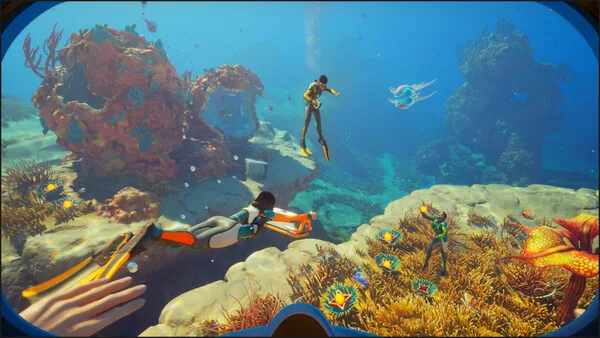 Two divers in an exploration scene; the image does not show a territorial map, patrol route, or safe-passage boundary.
GODEEPER: The Void, current Early Access geography, and player-tested Camouflage observations. Subnautica 2 Biomes Guide →
The Shiver Leviathan: the boundary gate
The Shiver is another official Leviathan name. Community guides describe Void and boundary encounters, but the current official sources checked do not publish a fixed den, exact trigger, or complete female/male behavior table.
The Shiver's behavior may differ from the Collector's, but treat that as a build-specific observation. Official patch notes confirm that its multiplayer attack behavior has required fixes, which is a reason to avoid presenting a boundary interaction as immutable.
The exact pack composition, attack damage, vehicle effect, and scan window are not established by the official material reviewed here. Keep the encounter at the level of a high-risk open-water hazard and do not test a one-hit or scan-window claim without a current in-game check.
Open water removes the cover options you may have near terrain. Keep oxygen and vehicle health in reserve, and read the latest patch notes before relying on a boundary or scan trick. The Shiver Leviathan guide can cover player-tested observations separately from official facts.
When aggro fires: escape routes
The two Leviathans in this guide behave differently when they aggro, and the escape plan has to match.
Against the Collector: it pursues within its defined patrol territory. The mistake players make (including me, twice) is swimming laterally across the territory rather than directly away from the nearest boundary. Lateral movement keeps you inside range longer.
Direct escape route: move toward the safest known terrain or route out of danger. A boundary may help in some builds, but the official sources do not guarantee that leaving a territory ends pursuit.
Against the Shiver: plan the direction back to familiar water before approaching open water. Do not promise that a particular boundary instantly ends pursuit; verify the behavior in the current build.
Co-op escape: communicate the retreat route before one player approaches. Official hotfixes have addressed multiplayer attack behavior, so both players should keep enough distance to avoid turning one test into a group wipe.
Co-op Leviathan protocol
Leviathans are the most dangerous situation in co-op specifically because they create a split-decision problem. One player spots the Collector; the other is 80 meters away focused on something else. If the first player moves toward the scan and aggros, the second player has no context for why something is suddenly chasing their partner toward them.
Communication before the scan: tell the group. "I'm approaching the Collector for the scan" covers the whole situation. Everyone knows to hold position, watch for aggro, and what the abort condition looks like.
Don't split inside patrol territory. Two players moving through Leviathan range independently doubles the aggro surface. One player does the scan approach; the other holds outside the territory at the abort position.
The Subnautica 2 co-op tips have the same principles. Call it before you do it.
Tips for both subnautica 2 leviathans
Watch the Collector before you approach. Observe from safety, but remember that pathing can change after a hotfix.
Treat scan data as a bonus, not a reason to force a death. The official sources checked do not document persistence or a special Collector reward; return alive and verify the PDA result.
Check your evasion tools before open-water tests. Camouflage interaction has appeared in official hotfix notes, but the notes do not make a universal loadout recommendation. Bring the tools your current build actually supports.
Know your route before you go in. A community map can help, but exact territory and boundary behavior are version-specific until the developer documents them.
Do not force a Collector scan on a schedule. Scan when your oxygen, vehicle health, and retreat route make the risk reasonable; no official source checked says the scan unlocks a specific best early-game Biomod.
GODEEPER: Leviathan behavioral breakdown and what the Collector's patrol pattern means for Sparse Plains navigation generally. Subnautica 2 Creature Guide: All Leviathans and Fauna →
Frequently Asked Questions
Q: Can you kill Leviathans in Subnautica 2? A: The official sources checked do not publish a universal invulnerability rule or a confirmed weapon counter. Treat the named Leviathans as hazards and do not test an unverified damage strategy during a serious run.
Q: How do you scan the Collector Leviathan? A: Watch two patrol cycles, approach during the phase when it's moving away from you, hold the scanner until the scan registers, pull back before it turns. The aggro range is finite: careful positioning makes the scan manageable.
Q: Where is the Shiver Leviathan? A: In the Void, beyond the current Early Access boundary. It isn't tied to a fixed spot: crossing the boundary is what spawns it, and crossing back is what makes it break off.
Q: What happens when a Leviathan aggros you? A: Use the retreat route you marked before the approach, keep oxygen and vehicle health in reserve, and avoid assuming that a particular territory or boundary instantly ends pursuit. Those details are not documented as universal rules.
Q: Is the Collector Leviathan scan worth it? A: It can be useful for creature data, but no official source checked ties it to a specific best Biomod. Scan only when your current build has enough oxygen, vehicle health, and a safe retreat.
Q: How many Leviathans are in Subnautica 2 Early Access? A: Three are officially catalogued: the Collector, the Deepwing Brooder, and the Shiver. This guide covers the Collector and the Shiver, the two aggressive ones you'll actively need to evade.
Related Reading
- Subnautica 2 Creature DNA: Bioscanner and Biomods Guide: Subnautica 2 creature DNA guide: how the Bioscanner, Biomods, Biolabs, and missing alien eggs work
- Subnautica 2 Deep-Sea Base Guide: Power and Co-op Tips: Subnautica 2 deep-sea base guide: plan Solar, Hydroelectric Turbines, Power Transmitters, storage, and co-op layouts
- Subnautica 2 DNA Modification Guide: what the Collector scan unlocks in the modification tree and how to specialize around it.
- Subnautica 2 Co-op Guide: Setup, Roles, and Strategy: group Leviathan protocols, co-op escape coordination, and why scan attempts require pre-comms.
- Subnautica 2 Early Access: What the Launch Includes: Subnautica 2 Early Access is out at $29.99. This update covers launch content, the Buddy
- Subnautica 2 DNA Modification Guide: Scan to Upgrade: Subnautica 2 DNA modification turns creature scans into upgrades: each biome unlocks different mods, and
- Subnautica 2 Resources: Biome Farming Guide for Early Access: Subnautica 2 resources: fractional harvests, biome rarity, and the scan-first fabrication pipeline most players get.
- Subnautica 2 Base Building Guide: Location and Setup: Subnautica 2 base building guide: where to build, module priority order, hull integrity thresholds, power.
- Subnautica 2 Vehicles: Only the Tadpole in Early Access: Subnautica 2 vehicles: only the Tadpole is in the Early Access build.
- Subnautica 2 Update: Hotfix 3 Changes & What's Coming Next: The latest Subnautica 2 update is Hotfix 3, live now. It cuts Interior Wall cost
References
- Subnautica 2 on Steam: Unknown Worlds Entertainment, Early Access, launched May 14, 2026
- Unknown Worlds Entertainment: developer page with Early Access update roadmap
- Subnautica 2 Creature Guide: All Leviathans and Fauna: Leviathan behavioral overview and general fauna
- Subnautica 2 Biomes Guide: current biome context and exploration notes
- Subnautica 2 official patch history: Collector pathing, grab/throw, Camouflage, and Shiver multiplayer fixes
- Subnautica 2 DNA Modification Guide: how Leviathan scans feed the modification tree and why they're high-priority
- Subnautica 2 complete guide hub: survival, biomes, base building, DNA mods, and all cluster guides
Was this guide helpful?
About the author

Games Critic
Games writer and reluctant optimist who has reviewed over 400 titles across 9 years. Irish, currently in Berlin. Has strong opinions about tutorial design.
- 400+ games reviewed across 9 years
- Platformer and horror specialist
- Narrative design focus
Keep reading

Disclaimer
This article is published for informational and entertainment purposes. It does not constitute professional financial, legal, or technical advice. Game performance, online services, patch schedules, and store listings change. Verify critical details (pricing, system requirements, regional availability) with publishers and storefronts before you buy. Affiliate links, where present, help support our editorial work and are labelled in our affiliate disclosure.
Comments
Loading comments…