
GameBrief · Guides
Subnautica 2 Complete Guide: Early Access Hub (2026)
Subnautica 2 complete guide hub: Early Access survival, bases, biomes, creatures, DNA modification, co-op setup, and the latest Buddy System updates.

Reviewing
Subnautica 2
Unknown Worlds Entertainment · Unknown Worlds Entertainment
Subnautica 2 complete guide: here's everything in one place. The game launched May 14, 2026 into Early Access with multiple biomes, optional cross-platform co-op, DNA modification, and an evolving creature and crafting roster. Steam currently shows 93% Very Positive from 71,905 English reviews, with 88% positive across 2,057 recent reviews. The latest official update covered by this audit is Early Access 1.2, Buddy System, followed by a September 1 hotfix.
This Subnautica 2 complete guide hub organizes every topic guide on the site by system so you can find what you need without reading three articles to answer one question.
TL;DR: Subnautica 2 launched May 14, 2026 in Early Access at $29.99, with multiple biomes, optional co-op for up to four players, DNA modification, the Tadpole submersible, and an Early Access roadmap. Steam currently shows 93% Very Positive from 71,905 English reviews. The August 19 Buddy System update added proximity voice chat, tracking, revives, emotes, player trading, two characters, and base improvements; the September 1 hotfix followed with save, localization, and lower-canyon fixes. This hub links the site's oxygen, base, creature, vehicle, and co-op guides.
Key takeaways
- $29.99 at Early Access launch. Price increases at 1.0. One purchase covers everything.
- Current Steam snapshot: 93% Very Positive from 71,905 English reviews; 88% positive across 2,057 recent reviews
- Multiple biomes and creatures are confirmed by the official store; the complete list remains Early Access content
- Optional 4-player online co-op with cross-platform support and the Tadpole submersible
- Buddy System is live: proximity voice chat, tracking, revives, emotes, player trading, two characters, and base improvements
- 2-3 year EA expectation based on Unknown Worlds' previous Early Access projects
- Developer/Publisher: Unknown Worlds Entertainment (original Subnautica). Krafton is parent company: owns UWE, not listed as publisher on Steam.
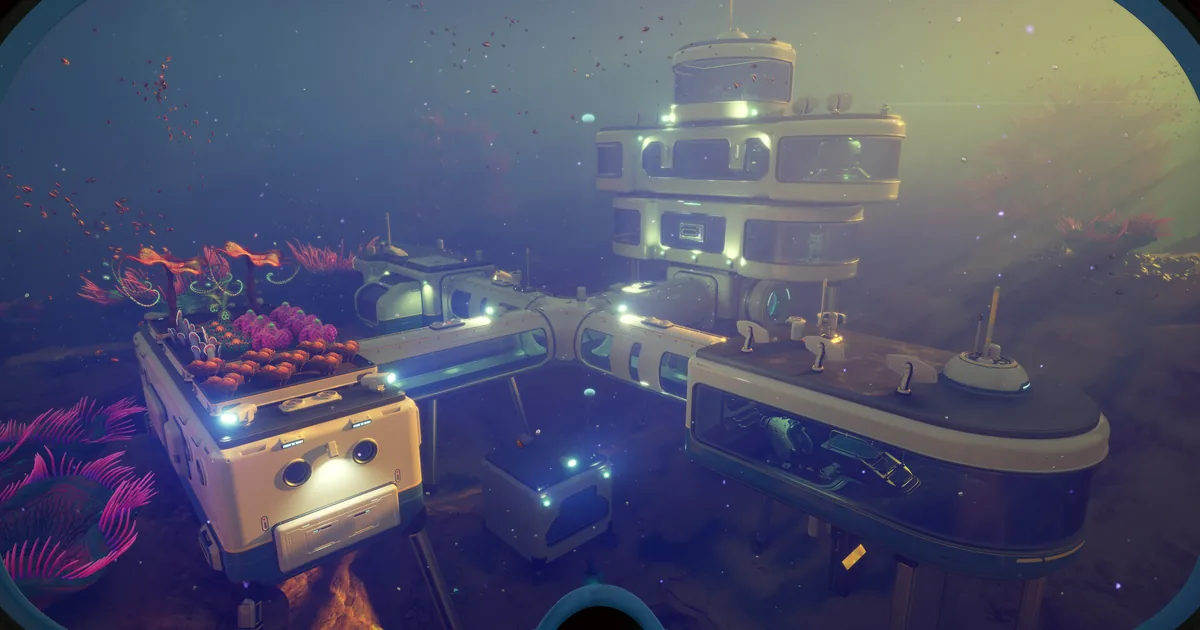
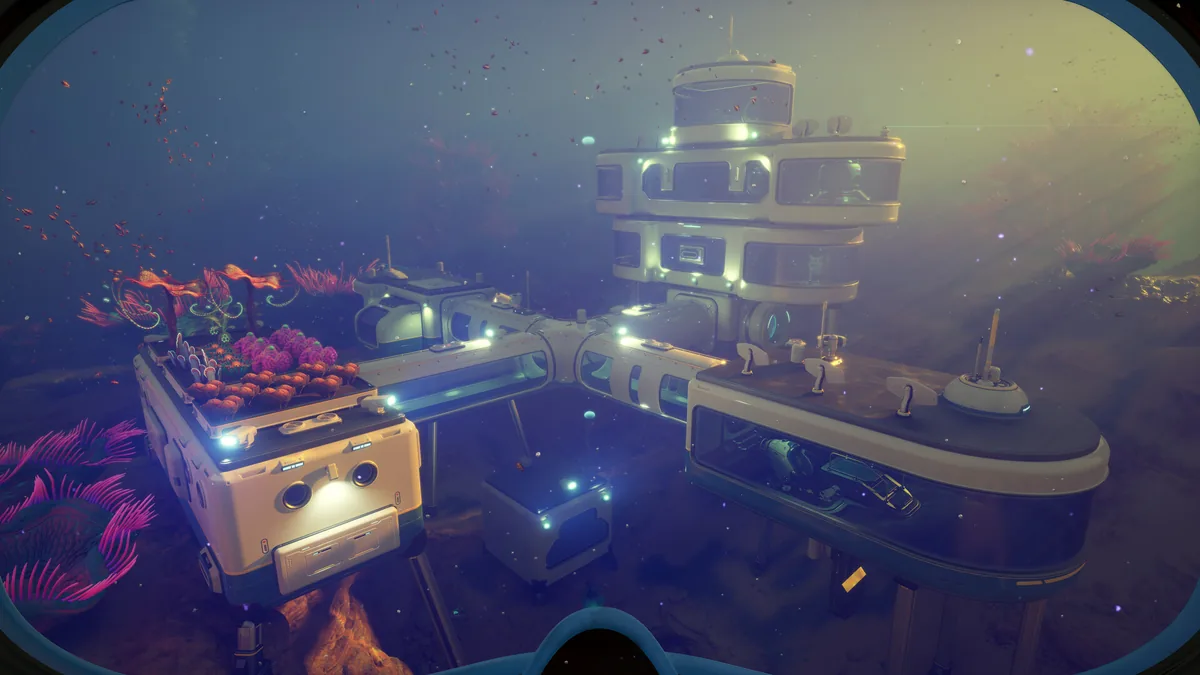 This is what a shared base looks like from just outside it: a central tower connected to smaller pod modules. No player or fauna visible in this shot, but every dive back to it runs on the oxygen budget covered below.
- Subnautica 2 Scanner Room: Build the Scanner Station: Subnautica 2 scanner room is called the Scanner Station: where to find the fragment, the...
- Subnautica 2 Food Guide: Digestion, Fish, and Easy Meals: Subnautica 2 food guide: fix Digestive Incompatibility, cook fish, grow Fibrous Pulp, and build a reliable meal plan for solo or co-op dives.
- Subnautica 2 Oxygen Guide: Dive Planning and Survival: Subnautica 2 oxygen management explained: tank upgrade path, when to turn back, depth zones, Tadpole air supply, base placement, and co-op oxygen rules.
- Subnautica 2 How Long to Beat: EA Story Length (2026): Subnautica 2 how long to beat: current Early Access playtime, co-op pacing, exploration scope, and what Unknown Worlds confirms about the 1.0 plan.
What is Subnautica 2?
Subnautica 2 is a first-person underwater survival game where you're stranded on an alien ocean world. You gather resources, build underwater bases, explore biomes at increasing depths, and navigate creature encounters while managing survival systems. The official store confirms co-op, bases, biomes, creatures, craftables, genetic modification, and the Tadpole submersible; tool and fauna behavior can evolve throughout Early Access.
Unknown Worlds Entertainment made the original Subnautica and is developing Subnautica 2 under Krafton's ownership. For this hub's freshness audit, the useful current evidence is the official Steam listing and Unknown Worlds' own update posts rather than unrelated corporate claims. The store says the game is in Early Access and warns players to expect a multi-year development window based on the team's previous projects.
The Early Access build is the beginning of a planned larger experience. The official store confirms multiple biomes, creatures, craftables, a DNA modification system, the Tadpole, and co-op for up to three friends. It does not publish a complete biome or Leviathan count, so the linked site guides should be treated as versioned indexes rather than permanent rosters.
Creature encounters are a survival and navigation problem in the current guides: use distance, tools, and route planning before assuming a fight is the intended answer. This hub does not turn that practical advice into a claim that every species is invulnerable, because the official current sources checked here do not publish a complete lethal-combat rule for the whole fauna roster.
- Subnautica 2 Early Access: May 14 Launch Details and Price: launch price, co-op player count, and the Krafton court battle backstory.
- Subnautica 2 EULA Explained: What Krafton's Terms Mean: the controversy over the Krafton EULA: no VPN, fan art licensing, arbitration clause, and what it means for early access buyers.
- Subnautica 2 Lore: Story, Connections and What's Next: the Observatory story endpoint, Ryley Robinson's absence, how Sub2 connects to the original, and what the Alien Ruins hint at next.
- Subnautica 2 Tips: First Steps, Base Building, and Co-op: Subnautica 2 tips for your first hours of Early Access: no-map navigation, when to build your base
Subnautica 2 complete guide: survival basics
The three systems that govern your first 5-10 hours: oxygen, food, and fabrication.
Oxygen governs every dive. You start with a limited tank capacity, and most decisions in the first hours run through that constraint: how deep to go, how long to stay, where to anchor your base. The Tadpole submersible maintains its own air supply and changes the math considerably; without one, you're always measuring distance back to the surface. The oxygen tank upgrade is the highest-impact early fabrication choice, the one that unlocks the first biome transitions more than anything else.
Hunger degrades over time and imposes penalties before it kills you. Food spawns throughout every biome, and the starting zone has enough that you won't notice the system much early on. In co-op sessions where exploration circuits run 90+ minutes from base, one player managing food supply while another explores removes the problem entirely.
The Fabrication module gates advanced crafting. In solo, you build toward it immediately. In co-op, it's the shared base's first priority: a Builder near the starting beacon while Explorers bring resources is the fastest path to getting it live for the whole team.
GODEEPER: Oxygen management is the survival skill that separates consistent progress from repeated deaths at inconvenient depths. Subnautica 2 Oxygen Guide: Dive Planning and Survival →
- Subnautica 2 Beginner Guide: Systems, Survival, First Hours: first-session habits that avoid the most common early deaths and wasted time.
- Subnautica 2 Food Guide: How to Feed Your Crew Underwater: how to sustain four players: fish vs slugs, Fabricator advantage, co-op food roles, and when to build the biofarm.
- Subnautica 2 Resources: Biome Farming Guide for Early Access: fractional harvests, biome rarity, and the scan-first fabrication pipeline players get wrong.
Biomes and exploration
Subnautica 2's Early Access build has multiple exploration zones and biomes. The official store confirms the biome-based exploration loop but does not publish a complete numbered roster, so the site's biome guide should be treated as a current index that can change. Not every zone is accessible from the start: progression and survival equipment gate deeper exploration.
The Shallows, part of Coral Gardens, is the starting area described by the current site coverage. It is where you learn oxygen windows, food management, base placement, and first creature encounters. The nearby Sparse Plains and its Collector Leviathan notes remain useful route guidance, but individual behavior and zone names should be checked against the current Early Access build.
Biomes further down, especially Root Canyon in the Karakorum Ruins region, introduce environmental hazards beyond depth. Pressure and creature density both increase. Beyond the map's edge, the Void is guarded by the Shiver Leviathan, and avoiding its pack while managing a co-op group requires planning, not improvisation.
The biomes aren't just resource zones. They're the context for the DNA modification system: each zone has unique fauna that offers distinct modification paths. A player who only explores the starting biome leaves a significant portion of the upgrade system inaccessible.
- Subnautica 2 Biomes Guide: Exploration Zones Ranked (2026): what each currently documented biome contains, when to visit, and what resources and creatures are associated with each zone.
Creatures and Leviathans
The safest way to approach creatures in Subnautica 2 is as a navigation and survival problem. The official store confirms creatures and creature-related exploration, but the current sources used for this audit do not publish a complete invulnerability guarantee for every species, so this hub avoids presenting that as a permanent whole-roster rule.
In practice, the linked guides emphasize evasion, distance, scanning, and deterrence. You should not plan a route around permanently clearing a patrol unless the current build explicitly documents that option. Learn the detection and movement behavior recorded by the current guide, and check the installed tooltips after each Early Access update.
This produces a different tension than most survival games. Smaller fauna, larger aggressive fauna, and Leviathan encounters all reward route planning and oxygen discipline. Treat the creature guide's individual notes as versioned evidence rather than assuming that every species shares one immutable rule.
Creature behavior remains a moving Early Access target. Use the official Unknown Worlds patch notes for changes to tools, saves, and creature behavior rather than relying on an old community interpretation. This is also why the current hub links out to individual Leviathan guides instead of claiming a permanent full roster rule.
GODEEPER: The Collector and the Shiver have specific detection mechanics and patrol resets that make them manageable once you know them. Subnautica 2 Leviathan Guide: Avoid, Scan, Survive →
- Subnautica 2 Creature Guide: All Leviathans and Fauna: full catalog of fauna by biome with behavior notes, detection ranges, and how to move through occupied zones.
- Subnautica 2 Immortal Creatures: Why You Can't Kill Fauna: the design rationale, what Unknown Worlds said, practical survival strategies for aggressive encounters, and what the modding community built in response.
- Subnautica 2 Weapons Guide: No Knife, How to Defend Yourself: what tools exist in the EA build, why there's no knife or Stasis Rifle, and the step-by-step approach to surviving Hammerhead encounters without combat options.
- Subnautica 2 Creature Evasion: 4 Biomods That Actually Work: Camouflage, Electric Discharge, Chum Cloud, and Dash explained with creature-specific compatibility tables showing which tools work on which Leviathan.
- Subnautica 2 Collector Leviathan: Scan, Escape & Where: Subnautica 2 Collector Leviathan: where it patrols, how its sonar-pulse grab works, how to bio-scan...
- Subnautica 2 Shiver Leviathan: The Void: Subnautica 2 Shiver Leviathan guide: the female-plus-males pack guarding the Void, why your Tadpole dies...
- Subnautica 2 Great Jaw: The Trap You Loot, Not Fight: Subnautica 2 Great Jaw leviathan: the Venus-flytrap clam in Dolerite Spires, why you avoid its...
Base building
Your base is the fixed anchor for everything else: oxygen recharge, storage, fabrication access, and co-op respawn point. Where you place it and what order you build modules matters more than the total number of modules.
The first placement decision: you want the base at the depth boundary between the starting zone and the first transition biome. Too shallow and it wastes its utility; too deep and you can't reach it safely while undergeared. Most players go too shallow in the first session and then relocate once they understand the biomes.
Module build order: Fabrication module first: it unlocks the rest. Then power generation, then oxygen network (which extends safe dive range from the base outward). In co-op, the oxygen network moves up the priority list because multiple players ranging from a central base at different depths means someone is always near their limit.
The base is shared in co-op. All players contribute modules, access storage, and respawn here. Individual inventories remain private. This asymmetry matters for resource planning: shared storage is a coordination tool, not automatic pooling.
- Subnautica 2 Base Building Guide: Location and Setup: first base placement decision tree, module priorities, and what to build before going deeper.
- Subnautica 2 Base Building Advanced Guide: Power and Depth: power scaling, deep base requirements, oxygen network extension, and relay module strategy for multi-biome exploration.
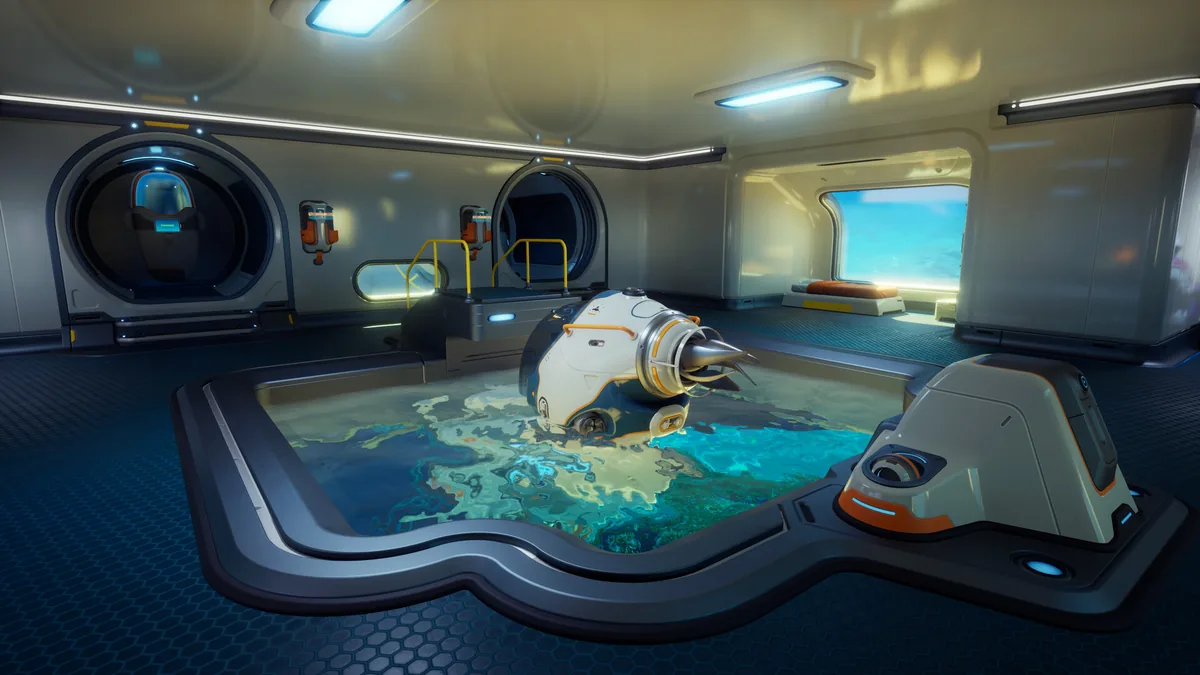 A base interior built around a moon pool: a vehicle docked in the water pit, a pilot seat, and sleeping quarters through the side window. Placement decisions like this affect creature patrol density and how far from home you can safely range.
DNA modification
The DNA modification system is one of Subnautica 2's confirmed progression systems. The official store describes genetic modification and creature research as part of the Early Access experience. Use the current fabrication and upgrade descriptions to learn which samples and tools your build can process; exact recipes can change as the game develops.
The purpose of modifications is to make later exploration more manageable, but the official store does not publish a complete list of adaptation names or numerical depth bonuses. Treat the site's DNA guide as a versioned walkthrough and verify its recipe and effect text in the current build.
In co-op, compare modification plans before duplicating the same upgrade on every player. The official store confirms optional co-op for up to three friends, but it does not promise that specialization unlocks a unique biome route, so treat that as a planning experiment rather than a guaranteed rule.
The Biosampler and related fabrication steps are documented in the site's guide. Use the current Fabrication module recipe and the current map markers as the authority instead of hard-coding a five to eight hour unlock estimate.
- Subnautica 2 DNA Modification Guide: Scan to Upgrade: how the Biosampler works, which modifications to prioritize, and the co-op specialization paths that unlock zones inaccessible to solo players.
- Subnautica 2 Creature DNA Guide: Biosampler Tips 2026: creature-by-creature DNA yield guide with which samples to prioritize for each modification path.
- Subnautica 2 Angel Comb Locations: All 4 Adaptations Found: all 4 Angel Comb locations, the Bloom Node puzzle, and why Adaptations are required.
Vehicles and mobility
The Tadpole submersible is Subnautica 2's named Early Access vehicle. The official store describes it as a craft for deeper exploration; check the current vehicle guide for its live storage, oxygen, and upgrade behavior.
The official store confirms co-op for up to four players and the Tadpole, but it does not establish a universal per-player vehicle requirement or a 150m threshold. Coordinate vehicles with the current multiplayer build and the depth your group is actually trying to reach.
Subnautica veterans may want a powered exosuit for heavy terrain and deep-zone work. Unknown Worlds has not confirmed one in the official sources used here, so do not promise a PRAWN equivalent. For the current Early Access build, the Tadpole is the named vehicle covered by the store and this hub.
- Subnautica 2 Vehicles Guide: Submersibles in Early Access: Tadpole build cost, upgrade path, internal storage, and how it changes dive range calculations compared to swimming.
- Subnautica 2 Tadpole Upgrades: 7 Locations and Effects: seven current survival upgrades, including Scout Ray and Haul chassis, module locations, limits, and the Creative-only Mk.2 distinction.
Co-op and multiplayer
Four people underwater changes the survival math in ways that aren't obvious from the solo game. The official store confirms optional co-op for up to three friends and cross-platform play, while the Buddy System update adds communication and trading tools that make coordination more direct.
Use the current co-op UI to confirm what is shared before dividing resources. The Buddy System update adds direct inventory exchange and player revives, so older advice that assumes trading or rescue is unavailable is stale. Oxygen and route planning still belong in the group conversation, even when the update makes recovery easier.
Role splitting between a builder and explorers is a useful coordination experiment, but this hub does not promise a fixed 45-60 minute efficiency gain. Compare the group resource needs and use the Buddy System's voice, tracking, trading, and revive tools when a diver gets separated.
Creature encounters can feel different with more players, but the official update sources checked here do not publish a universal multiplayer detection-radius formula. Use the current creature guide and split the group when a shared approach creates too much risk.
- Subnautica 2 Co-op Guide: Setup, Roles, and Strategy: session setup, Builder/Explorer role split, Leviathan group evasion, oxygen coordination, and the 4-player vs 2-player efficiency difference.
- Subnautica 2 Co-op Tips: Advanced Squad Strategies: advanced co-op strategies for experienced players covering biomod role builds and relay outpost coordination.
Subnautica 2 complete guide: Scanner Room
The Scanner Room is a base module that passively pings resources and fauna in a radius around your base. In the EA build, it's one of the most useful quality-of-life modules to build once the Fabrication module and oxygen network are in place. It removes the guesswork from resource farming: you can see what's in range before diving.
The scanner's upgrades extend range and improve scan fidelity for specific resource types. In co-op, a base-stationed player can use the scanner feed to direct Explorers to resource nodes without making the dive themselves.
- Subnautica 2 Scanner Room Guide: Upgrades and Efficient Use: how to place it for maximum range, which upgrades matter, and how to use the scanner feed to coordinate resource runs in co-op.
Subnautica 2 complete guide: how long to beat
There is no developer-published completion-time promise for the current Early Access chapter. The official store warns that development is ongoing and gives a multi-year expectation based on previous Early Access projects. Treat story and exploration estimates as player-specific snapshots, and expect them to change as new content lands.
There is no finished 1.0 endgame to measure yet. The useful question is how much of the current Early Access content you want to explore before the next update, not how long a complete campaign will take.
- Subnautica 2 How Long to Beat: EA Story Length (2026): detailed time breakdowns by playstyle: story only, full exploration, completionist, and co-op.
- Subnautica 2 Resources: Biome Farming Guide for Early Access: which resources are in which biomes, efficient farming loops, and which nodes are worth the depth risk.
Early Access patches
The current official update to anchor this hub is Early Access 1.2, Buddy System, released August 19, followed by a September 1 hotfix.
Early Access 1.2, Buddy System (August 19, 2026): Unknown Worlds says the update adds cross-platform proximity voice chat, Tracking Tag, player revives that preserve equipment and restore oxygen, emotes, direct inventory exchange, the Jegna and Grace characters, base placement and Move mode improvements, Feedback Resonator creature stuns, and recipe pinning. These changes replace the old assumption that co-op groups must coordinate only through external voice chat or cannot rescue one another.
Buddy System hotfix 1 (September 1, 2026): The official hotfix corrected localization issues, improved lower-canyon Collector Leviathan pathing and collision, fixed save and build-branch compatibility issues, fixed inventory sharing while in Tadpole, and addressed push-to-talk and other bugs. If an older guide says these areas are still broken, use this hotfix as the newer source.
Earlier launch patches may still matter for a specific bug, but they should not be the headline of a current hub. Link them from the topic guides, and compare their details with the installed build before quoting an old resource, creature, or multiplayer behavior as current.
All Subnautica 2 guides
All guides and patch coverage for the current Early Access build:
- Subnautica 2 Patch Notes: Adaptive Measures Update (2026): earlier EA 1.1 coverage; compare it with the newer Buddy System update below.
- Subnautica 2 Hotfix 2: Full Patch Notes and Changes: earlier resource, vehicle, and crash fixes; use the official hotfix link in References for the latest current state.
- Subnautica 2 Update: Hotfix 3 Changes & What's Coming Next: Full list of Hotfix 3 changes: Interior Wall cost cut, Nibbler adjustments, DLSS 4.5, and what followed it.
- Buddy System update: proximity chat, tracking, revives, trading, characters, and base changes in EA 1.2; see the official source in References.
- Subnautica 2 Tips: First Steps, Base Building, and Co-op: no-map navigation, base timing, co-op role splits, and reading Leviathan signals.
- Subnautica 2 Gold Farming: 4 Locations That Work (2026): where gold actually spawns, what it crafts into, and the Metal Farm loop that ends the manual grind.
- 8 Best Subnautica 2 Mods for Early Access 1.2 (2026): 8 best Subnautica 2 mods for Early Access 1.2: current CurseForge and Nexus picks for inventory, vehicles, HUD, scanner, growbeds, and building.
- Subnautica 2 Creature DNA: Bioscanner and Biomods Guide: Subnautica 2 creature DNA guide: how the Bioscanner, Biomods, Biolabs
- Subnautica 2 Weapons: What You Use Instead of a Knife: Subnautica 2 weapons guide: current Early Access tools, Sonic Resonator stun, Multitool deterrence, evasive tactics, and the 2026 patch changes.
- Subnautica 2 EULA Explained: What Krafton's Terms Mean: Subnautica 2 EULA explained: arbitration, IP-location rules, and player-submitted content.
- Subnautica 2 Resources: Biome Farming Guide for Early Access: Subnautica 2 resources: fractional harvests, biome rarity, and the scan-first fabrication pipeline most players get backwards in Early Access.
- Subnautica 2 Beginner Guide: Systems, Survival, First Hours: Subnautica 2 beginner guide: oxygen, Bioscanner scans, Biomods, food, base power, and five safe-start habits for the Early Access build and co-op.
- Subnautica 2 Angel Comb Locations: All 4 Adaptations Found: Subnautica 2 Angel Comb locations: all 4 confirmed spots with exact depths, Bloom Node distances
- Subnautica 2 Lore: Ryley Robinson, Alien Ruins Explained: Subnautica 2 lore: new planet, no confirmed Ryley Robinson, Observatory story endpoint, Alien Ruins, and the current 1.2 Early Access status.
Frequently Asked Questions
Is Subnautica 2 out now? Yes. It launched in Early Access on May 14, 2026 at $29.99 on PC and Xbox Series X|S. Steam currently shows 93% Very Positive from 71,905 English reviews. Unknown Worlds says to expect roughly 2-3 years of Early Access based on previous projects.
Can you kill creatures in Subnautica 2? The current official store emphasizes exploration, survival, and creature encounters. Evasion and deterrence are the safe strategies in this hub, but the sources checked here do not publish a complete invulnerability guarantee for every fauna species.
How many players can play co-op in Subnautica 2? Up to 4 players online, with cross-platform support. The store describes co-op with up to three friends, and the Buddy System update adds proximity voice chat, tracking, revives, emotes, trading, and two characters.
What is the Subnautica 2 price? $29.99 USD on the current Steam listing. Check the official store for current pricing and Early Access purchase terms.
How many biomes are in Subnautica 2 Early Access? The official store confirms multiple biomes, creatures, and craftables but does not publish a complete biome count. The site's biome guide is a versioned index and may change with Early Access updates.
Who made Subnautica 2? Unknown Worlds Entertainment developed Subnautica 2, with Krafton as its parent company. The official Steam listing and Unknown Worlds update pages are the relevant sources for current game information.
Is Subnautica 2 on Game Pass? Yes. Subnautica 2 launched day one on Xbox Game Pass Ultimate and PC Game Pass alongside Early Access. It's available on PC via Steam and Epic Games Store, and on Xbox Series X|S.
Related Reading
- All Subnautica 2 coverage: every Subnautica 2 guide, review, and news post published on GameBrief, in one index.
- Subnautica 2 Beginner Guide: Systems, Survival, First Hours: Subnautica 2 beginner guide: oxygen, DNA modification, food, base timing, and the 5 mistakes new.
- Best Early Access Games Worth Buying Right Now: May 2026: Early access games worth buying in May 2026: six picks including Windrose and Subnautica 2,.
References
- Subnautica 2 on Steam: current price, review snapshot, Early Access status, co-op, biomes, creatures, and craftables.
- Unknown Worlds Buddy System update: official EA 1.2 feature list and co-op changes.
- Unknown Worlds Buddy System hotfix 1: official September 1 fixes for localization, saves, bases, inventory, and lower-canyon behavior.
- Unknown Worlds Entertainment: developer site, devlogs, and Early Access roadmap updates.
About the author

Senior Critic & Analyst
Former game data analyst turned critic with 11 years covering indie and mid-tier games. Based in Austin. Runs spreadsheets on games most people just play.
- 11 years games criticism
- Former game economy analyst
- Roguelike and strategy specialist
Keep reading

Disclaimer
This article is published for informational and entertainment purposes. It does not constitute professional financial, legal, or technical advice. Game performance, online services, patch schedules, and store listings change. Verify critical details (pricing, system requirements, regional availability) with publishers and storefronts before you buy. Affiliate links, where present, help support our editorial work and are labelled in our affiliate disclosure.
Comments
Loading comments…