GameBrief · Guides
Far Far West Builds Guide: All 3 Archetypes (2026)

Reviewing
Far Far West
Evil Raptor · Fireshine Games
TL;DR: Far Far West builds work differently than most roguelites: there are no character classes. Your entire identity comes from three components: weapons, spells, and Joker cards. Storm Chain Gunner is your Hard-difficulty workhorse. Iron Reaper Melt is the Nightmare boss-killer. Deadeye Spellhand is the high-skill option for Solo Nightmare. In co-op, pairing CC with burst is the formula that wins.
Key Takeaways
- Far Far West has no class select screen: every player starts identical
- Three viable archetypes exist: Storm Chain Gunner, Iron Reaper Melt, Deadeye Spellhand
- Difficulty matters: Storm Chain works on Hard, Iron Reaper owns Nightmare, Deadeye rewards mechanical precision at any tier
- Five spell schools interact: Fire + Acid creates tornadoes, Elec + Portal duplicates spells
- Co-op team comps should pair crowd control with burst damage, not stack the same role
- Glass Cannon Joker is only worth it when you know the encounter patterns well
There are no classes here
I wasted 90 minutes looking for a class select screen that doesn't exist. Far Far West has no character class system. No class select screen, no specialization tree at the start of a run, no pre-run loadout page. You begin every run as the same robot cowboy with the same baseline stats.
What you pick during the run IS the character. The weapons you draft, the spells you build toward, the Jokers you take: those define who you are in wave 10 versus who you were in wave 1. This matters when reading build guides, because "build" in Far Far West means something closer to "planned draft path" than "configured character."
Three far far west builds hold up consistently in the current Early Access version. Here's how they break down.
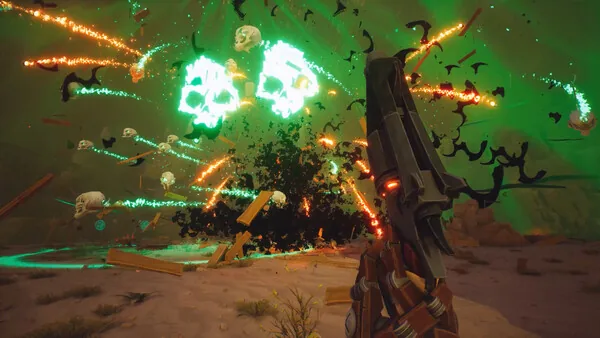 The strongest builds in Far Far West combine gear bonuses the game doesn't explicitly highlight.
Build 1: Storm Chain Gunner (Hard to Very Hard)
Weapons: Quadcylinder (primary), Revolver (secondary) Spells: Strikes, Bubble, Drain Jokers: Homing Burst, Mark Ace, Soul Siphon
Storm Chain Gunner is what I'd hand to anyone who just bought the game and wants to stop dying before wave 8. It's not flashy. It doesn't have the absurd DPS ceiling of Iron Reaper Melt. But it does something more valuable at lower difficulty tiers: it handles everything consistently.
The Quadcylinder fires in a spread pattern that makes crowd control feel almost passive. When you add Strikes (which sends out lightning arcs between nearby enemies) you get a feedback loop where dense packs essentially punish themselves for clustering. Bubble adds a bounce-projectile that synergizes with Mark Ace Joker by extending how long the Mark debuff sticks around before the Revolver's crit procs on it.
The survival piece is Drain. I've died too many times on Very Hard trying to brute-force through a Ghost Train phase without any sustain. Drain converts incoming damage into regen, which doesn't make you invincible but does forgive the occasional misread.
Where it struggles: boss single-target. The Quadcylinder's spread is a liability when you need focused fire on a single boss phase. If the Ghost Train is where you're getting stuck, consider switching to Iron Reaper Melt before you go deeper into Hard progression.
GODEEPER: The Quadcylinder and Revolver are both A-tier or above: here's how the full weapon ranking shakes out. Far Far West Best Weapons Guide →
Build 2: Iron Reaper Melt (Very Hard to Nightmare)
Weapons: Minigun (primary), Sheriff Stars (secondary) Spells: Firebeam, Portal, Voodoo (Drain or Ritual) Jokers: Frenzied Spin, Second Wind, Glass Cannon
This is the build. If you've hit Nightmare and you're looking for something that can actually end boss phases before the add waves become unmanageable, Iron Reaper Melt is the answer.
The damage core is the Dual Tornado combo: Portal + Bubble + Firebeam. Once Portal reaches level 12 in the Elec school, it duplicates spell effects: meaning your Firebeam tornadoes run in pairs simultaneously. Two fire tornadoes doing constant AoE while the Minigun's Frenzied Spin stacks damage on a single target is a lot happening at once. The field gets chaotic fast.
Sheriff Stars handle the coverage gap the Minigun has for fast-moving smaller enemies. They track, they bounce, and they don't require you to turn to aim.
Glass Cannon Joker is the reason this build is labeled Very Hard and above. It dramatically increases your damage output and makes you much more fragile in the same breath. I died to the Ghost Train's second phase six times running Storm Chain Gunner on Very Hard. Switched to Iron Reaper Melt with Glass Cannon and killed it on my second attempt: but I also had one run where a single undead buzzard clipped me during the transition and I died in two hits. Know the patterns before you commit to Glass Cannon.
Second Wind gives a death-prevention proc that partially offsets the fragility. Frenzied Spin builds a damage multiplier the longer you hold the trigger, so the playstyle is: move in, hold the trigger, get out before something hits you. Passive play kills you faster than the enemies do.
Against the Ghost Train specifically: this is your best boss-kill build. The Ghost Train's two-phase structure is punishing for crowd control builds because the add spawns in phase two eat your CC spells while the boss resets positioning. Iron Reaper Melt's single-target focus means you can burn phase one before the adds become a problem.
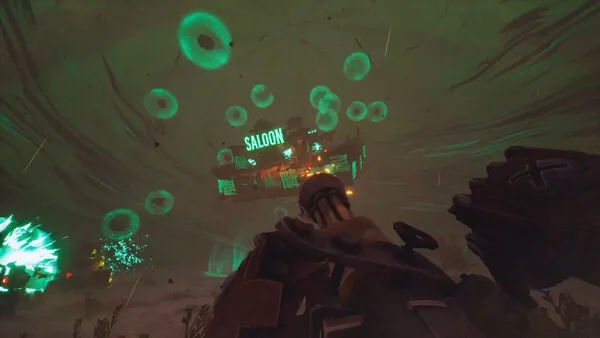 Late-zone encounters require builds that synergize specifically: generic loadouts cap out at zone 3.
Build 3: Deadeye Spellhand (Solo Nightmare)
Weapons: Leveredge (primary), Boomerang or Moverang (secondary) Spells: Boing, Wallow, Ritual Jokers: varies by run: no fixed list, these unlock based on what the draft offers
Deadeye Spellhand is the precision option. The Leveredge fires a single powerful shot per cycle (no spread, no burst) so your damage output is entirely dependent on hitting what you aim at. Boomerang and Moverang both arc, which means you're funneling enemies into a kill zone rather than chasing them around.
The spell selection leans on setup. Boing bounces projectiles, which in a funneled group creates a chain effect. Wallow slows movement: critical for making the Leveredge land on fast enemies. Ritual handles sustain during boss phases where Drain's regen is slower than the incoming damage.
I won't lie: this build is harder to execute than the other two. Storm Chain Gunner essentially rewards you for existing near enemies. Deadeye Spellhand requires you to read enemy movement paths, position for funneling before a wave arrives, and fire deliberately rather than continuously. The skill ceiling is higher, but so is the satisfaction when it works: a perfectly funneled group hitting Boing chain for four bounces feels genuinely good.
It's not the right call for players still learning encounter layouts. But for Solo Nightmare runs where Iron Reaper Melt's fragility becomes untenable, Deadeye's precision focus and strong sustain give you more control over when you take damage.
GODEEPER: Spell school synergies are what make Deadeye Spellhand tick: this guide breaks down every school and its best combos. Far Far West Spells Guide →
Spell combo reference
The five spell schools interact in confirmed ways. Here are the combos worth building toward:
| Combo Name | Spells Required | Effect |
|---|---|---|
| Dual Tornado | Portal + Bubble + Firebeam | Two simultaneous fire tornadoes (Portal must be Lv12+) |
| Mino Tesla Chain | Mino + Strikes at 66%+ CDR | Near-permanent mine field coverage |
| Wisp Conversion | Wisp + Portal + Elec school | Wisp becomes Electric, jump-chains between enemies |
| Fire + Acid Reaction | Any Fire spell + Acid puddle | Spawns roaming tornado on contact |
| Acid + Elec Reaction | Any Elec + Acid puddle | Triggers Thunderstorm reaction |
The Fire + Acid tornado reaction is the one most players hit accidentally before they understand why it happened. Once you internalize it, you start thinking about Acid school as a multiplier for your Fire spells rather than a standalone damage source.
Portal at level 12 Elec is a game-state shift. Up until that point, Portal is useful for movement and repositioning. After Lv12, it duplicates spell effects: which means any combo that requires a specific spell firing is now firing twice. If you're running Iron Reaper Melt, this is the upgrade you're drafting toward from wave 1.
Boss-specific build notes
Brief notes on how the three builds perform against each of the five bosses:
Winged Skull (tutorial boss): All three builds handle this comfortably. It's movement-pattern based and any functional loadout beats it. If you're dying here, focus on positioning rather than build choices.
Ghost Train (hardest boss, two-phase): Iron Reaper Melt. The two-phase structure with add spawns is punishing for CC-heavy builds. Burn phase one fast, then use Second Wind as insurance for the add transition.
Undead Buzzard (Storm Chain Gunner's spread handles the Buzzard's movement well. It's a fast, erratic enemy) the Quadcylinder's pattern is more forgiving than the Minigun's directional fire.
Undead Spellcaster (add-heavy): Either Storm Chain Gunner or Deadeye Spellhand. The Spellcaster spawns adds continuously; you need either CC to manage the field or precise burst to kill adds before they stack.
Necromancer: Iron Reaper Melt with Frenzied Spin active. The Necromancer's health pool rewards sustained DPS over burst cycling.
Far Far West builds for co-op: team compositions
This is the piece I haven't seen covered elsewhere: how to actually build a team in co-op rather than four people independently choosing builds.
Each player runs their own weapons and spells, but builds don't exist in isolation when you're playing together. Running four Iron Reaper Melts sounds powerful in theory. In practice, four Glass Cannon players with identical fragility tends to collapse in the same phase simultaneously.
2-player
The cleanest pairing: one Storm Chain Gunner handles crowd control and wave management, one Iron Reaper Melt focuses exclusively on boss damage. The CC player keeps the field manageable so the burst player can hold the Minigun trigger long enough for Frenzied Spin to stack. Communicate who's taking Drain for sustain: if both players have it, you're overcapping on healing and missing offensive Jokers.
3-player
Add a Deadeye Spellhand as the third slot. In a 3-player game, enemy density goes up but so does your ability to coordinate kill zones. Deadeye handles the funneling setup that benefits the other two: Wallow-slowed enemies are easier for Storm Chain to CC and easier for Iron Reaper to hold focus on. Divide boss attention: Iron Reaper on the boss, Storm Chain on add waves, Deadeye on elite enemies between them.
4-player
Four builds, two roles: damage and field control. Recommended split: one Iron Reaper Melt, one Deadeye Spellhand (damage), one Storm Chain Gunner, one Voodoo-heavy support build (control/healing). The Voodoo support player builds Drain and Rescue instead of offensive spells: in a 4-player Nightmare run, having a dedicated healer is the difference between a clean run and a collapse in the Ghost Train's second phase. Don't all go Glass Cannon.
For more on overall strategy and run structure, the Far Far West complete guide has a full progression breakdown, and the Far Far West advanced strategy guide covers Joker evaluation theory if you want to go deeper on pick priority.
Tips for all Far Far West builds
Your secondary weapon matters more than it looks. Sheriff Stars and Boomerang aren't filler: they cover the gaps your primary creates. In early waves before spell synergies come online, your secondary is doing most of the work.
Keep an eye on Portal's level. The Lv12 Elec unlock for spell duplication is worth tracking turn by turn. It changes what your build can do. If you're running any combo involving Portal, you should know exactly where it sits at any point in the run.
Treat Acid as a setup school, not a damage school. New players drop it early because the numbers look low. The value is the puddle it leaves: Fire hits an Acid puddle and spawns a tornado, Elec hits one and triggers a Thunderstorm. Acid is a catalyst. The other schools do more damage when Acid has already been there.
On Glass Cannon timing: don't take it before wave 5. You don't have enough pattern knowledge yet to absorb the fragility penalty. Learn the encounters first, then commit to it when you know what's coming.
In co-op, someone needs to call the Ghost Train's phase transitions. Phase 2 drops adds directly on top of you if you're not watching the animation. Most team wipes happen in those first five seconds of the transition. In 2-player runs, agree on who's calling it before you enter the fight.
Whichever of these far far west builds you're running, knowing the boss patterns helps. The Far Far West boss guide has phase-by-phase breakdowns for all five encounters.
References
Frequently asked questions
Are there character classes in Far Far West?
No. Far Far West has no character classes or class selection screen. Every player starts as the same robot cowboy. Your build identity comes entirely from the weapons, spells, and Joker cards you pick during a run.
What is the best build for beginners in Far Far West?
Storm Chain Gunner is the most forgiving starting build. It uses the Quadcylinder as your primary, pairs with Strikes and Bubble spells, and works across most wave types without demanding precise positioning. Start there on Hard difficulty.
What is the best Far Far West build for Nightmare difficulty?
Iron Reaper Melt is the strongest Nightmare-tier build. Minigun + Sheriff Stars as weapons, Firebeam + Portal + Voodoo spells, and the Glass Cannon Joker for maximum burst. Be warned: Glass Cannon means one bad engagement can end your run.
What spell combo does the most damage in Far Far West?
The Dual Tornado combo (Portal + Bubble + Firebeam) puts two simultaneous fire tornadoes on the field and is widely considered the highest sustained damage output in the current version. Iron Reaper Melt uses this as its core damage engine.
How does co-op work for builds in Far Far West?
Each co-op player runs their own loadout, but build synergy matters. A 2-player team works best with one Storm Chain Gunner handling crowd control and one Iron Reaper Melt focused on boss phases. In 3-4 player runs, add a Deadeye Spellhand for spell coverage and a support-oriented Voodoo-heavy loadout.
Is the Glass Cannon Joker worth using in Far Far West?
On Nightmare difficulty, yes: but only if you're comfortable tracking enemy positions while firing. Glass Cannon dramatically increases your damage output while making you extremely fragile. On Hard or Very Hard, the risk usually outweighs the benefit. Save it for when you're confident in your spacing.
What's the difference between Drain and Ritual spells in Far Far West?
Both are Voodoo school. Drain is a sustain tool that converts incoming damage into health regen over time, making it useful in prolonged wave fights. Ritual is more burst-oriented and pairs better with boss-phase builds where you need a single spike of survivability rather than consistent healing.
Related Reading
- Far Far West Best Weapons Guide: the weapons that anchor each build, ranked by wave-clear and boss damage.
- Far Far West Spells Guide: how the fire, elec, and voodoo schools feed the build archetypes here.
- Far Far West Advanced Strategy Guide: loadout theory and the run decisions that push builds into Nightmare difficulty.
- Far Far West Boss Guide: which builds counter each of the bosses these loadouts are tuned against.
- Lost Castle 2 Builds Guide: All 6 Weapon Types at 1.0: Lost Castle 2 builds guide: all 6 weapon types, how Third Layer Inscription Resonance works, and the strongest....
- Far Far West Fire Spells: All 5 Pyro Spells & Combos: Far Far West Fire spells: all 5 Pyro spells from Fireball to Finger Guns, the Fireball-then-Surcharge order, and....
- Far Far West Character Guide: All Builds Explained: Far far west character guide: no classes, three archetypes, five spell schools, and how Joker.
- Best Early Access Games Worth Buying Right Now: May 2026: Early access games worth buying in May 2026: six picks including Windrose and Subnautica 2,.
- Far Far West Early Access: 250k Sales and What to Expect: Far Far West Early Access launched April 28, 2026: Evil Raptor's 7-person co-op roguelite hit.
- Far Far West Beginner Guide: Tips for New Cowboys 2026: Far far west beginner guide: elemental combos, the Joker system, best starting weapons, and how.
Was this guide helpful?
About the author

Indie & JRPG Critic
Indie game evangelist and lifelong JRPG fan covering small studios since 2017. Mumbai-born, London-based. Writes the way she talks.
- 7 years indie games coverage
- JRPG and visual novel specialist
- Narrative design focus


Disclaimer
This article is published for informational and entertainment purposes. It does not constitute professional financial, legal, or technical advice. Game performance, online services, patch schedules, and store listings change. Verify critical details (pricing, system requirements, regional availability) with publishers and storefronts before you buy. Affiliate links, where present, help support our editorial work and are labelled in our affiliate disclosure.