
GameBrief · General
Subnautica 2 Vehicles: All Submersibles in Early Access 2026

Reviewing
Subnautica 2
Unknown Worlds Entertainment · Unknown Worlds Entertainment
The subnautica 2 vehicles situation in the current Early Access build is simple: one confirmed submersible, a clear progression framework, and a roadmap that fills in the rest over the next two to three years of development. This guide covers what's actually in the build, what the Tadpole can do that isn't obvious from the description, and how to structure vehicle use in co-op.
The short answer: the Tadpole is it right now. Unknown Worlds confirmed heavier vehicles are coming. The community's PRAWN suit anxieties are real but premature: no exosuit exists yet because nothing like it has shipped. Work with what's confirmed. The Tadpole is more capable than it looks.
TL;DR: Subnautica 2 has one vehicle in Early Access: the Tadpole. But the Tadpole comes in three distinct chassis variants. The Haul Chassis carries four players and has extra cargo pods (good for resource ferry runs). The Scout Ray Chassis is the fastest at 10 m/s (best for scouting dangerous zones). Base Tadpole crush depth is 250m; Depth Module Mk.1 extends it to 450m. The PRAWN Suit did not ship with the July 8 Adaptive Measures update (EA 1.1) despite earlier dev comments about it; it remains unreleased. Trident large submarine comes later.
What vehicles are in Subnautica 2? (quick answer)
The Tadpole submersible is the only vehicle in Early Access, but it has three chassis variants that play very differently. Here's the full picture:
- The base Tadpole (1000 cm/s² acceleration, 4 upgrade slots) is your general-purpose sub
- The Haul Chassis adds catamaran cargo pods and seating for 4 players; slowest acceleration (250 cm/s²) but best cargo capacity; good for resource ferry runs and group transport
- The Scout Ray Chassis is the fastest option (1600 cm/s², 10 m/s top speed) with folding wing hydrofoils; best for scouting and pushing into high-threat biomes
- The Seafrog Chassis is a community and preview label for an unreleased walker concept, not a current survival recipe
- Vehicle blueprints require scanning first: without the relevant scan, the recipe won't appear
- The Fabrication module must be built before any vehicle recipe becomes accessible
- In co-op, each player operates their own vehicle independently; no shared piloting in the current build
- PRAWN Suit did not arrive with EA 1.1 (Adaptive Measures, July 8) as earlier dev comments suggested; still unreleased. Trident large submarine comes in a later EA update
- Don't rush the Tadpole: build it when your gear tier matches the biomes it reaches
Current status: September 2026
The current vehicle-relevant official notes are the August 19 Buddy System update and September 1 Hotfix 1. The hotfix specifically lists a fixed Scout Ray chassis carry point, Tadpole and Haul oxygen fixes, and blocked inventory sharing while riding. The Tadpole, Haul, and Scout Ray remain the playable vehicle options in the current build; Seafrog is a community or preview label for an unreleased walker concept, not a recipe you can craft in survival. Unknown Worlds has teased more chassis and vehicles, but no new vehicle ship date is documented here.
Subnautica 2 vehicles: full comparison table
| Vehicle | Status | Top Speed | Acceleration | Seats | Best use |
|---|---|---|---|---|---|
| Base Tadpole | In game | 8 m/s | 1000 cm/s² | 1 | General progression |
| Haul Chassis | In game | 8 m/s | 250 cm/s² | 4 | Resource ferry, group transport |
| Scout Ray Chassis | In game | 10 m/s | 1600 cm/s² | 1 | Scouting, high-threat zones |
| Seafrog Chassis | Not craftable | N/A | N/A | N/A | Unreleased walker concept referenced by the community |
| PRAWN-style suit | Not craftable | N/A | N/A | N/A | Future-style exosuit concept, no current recipe |
| Large submarine | Future content | N/A | N/A | N/A | No firm ship date in the current notes |
Subnautica 2 vehicles: what's confirmed in Early Access
The subnautica 2 vehicles roster in the current build is sparse by design. Unknown Worlds said the craftable catalog expands over the EA period, and vehicles are part of that.
What's in the current build: the Tadpole submersible in three playable chassis variants (base, Haul, Scout Ray). The Seafrog name appears in community and preview references, but its recipe isn't in the current survival build.
What isn't available yet: no PRAWN-style suit equivalent and no large deep-water submarine. The chassis system is what fills that gap for now, and the Haul/Scout Ray variants are genuinely different enough to matter.
The original Subnautica's vehicle progression (Seamoth into PRAWN Suit into Cyclops) gave players different capabilities at different depth ranges. Subnautica 2 front-loads variety through the chassis swap system rather than entirely separate vehicles. You can retool the same base module for cargo runs or fast scouting without building a second vehicle from scratch. Build your strategy around what the current chassis can actually do.
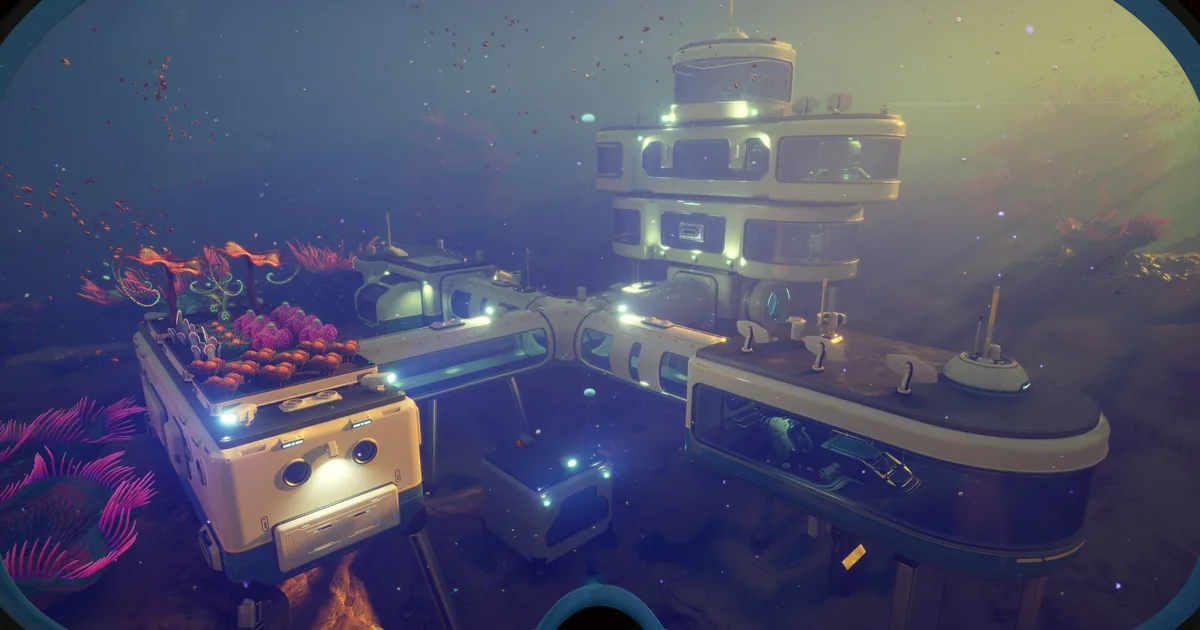
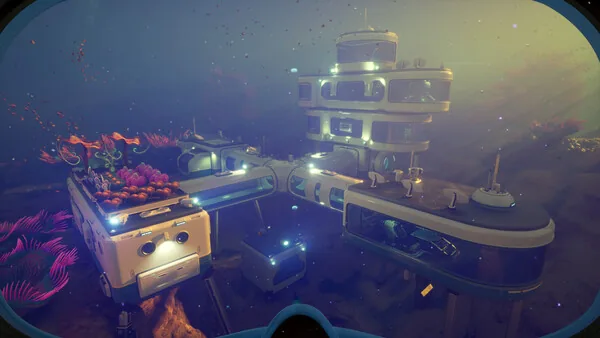 Caption: The Tadpole submersible in a mid-depth canyon: the only confirmed vehicle in the Early Access build, and more versatile than its size suggests.
Tadpole chassis breakdown: Haul, Scout Ray, and what's coming
The chassis system is the part most guides miss. The Tadpole isn't one vehicle with cosmetic options. Each chassis fundamentally changes how the sub handles and what you use it for.
Haul Chassis: the cargo ferry and group transport option
The Haul Chassis adds catamaran cargo pods on both sides of the command module and extra seating along the top bar, letting up to four players travel together in a single vehicle. It's the heaviest chassis in the current build: slowest acceleration at 250 cm/s² and a top speed of 8 m/s. You're not using this to outrun anything.
What you use it for is volume. The extra cargo pod space compresses the number of ferry runs per material target, and the passenger seating means your whole team can transit to a new staging area without building multiple Tadpoles first. In early co-op sessions before everyone has their own sub, the Haul Chassis on one player's vehicle can carry the rest of the group.
How to unlock the Haul Chassis: Scan 3 fragments located in the alien ruins area roughly 1,300 meters east of your lifepod. Fragment 1 is inside a stone cave entrance southeast of the Alien Ruins camp. Fragment 2 sits on the left side of a large pillar formation directly east. Fragment 3 is just northeast of that. Build it at the Vehicle Fabricator using 4x Titanium Ingots, 3x Strontium, 3x Enameled Glass, and 1x Dedicated Core.
Scout Ray Chassis: the fastest option in the current build
The Scout Ray Chassis adds a pair of folding wing hydrofoils that push the Tadpole's acceleration to 1600 cm/s² (55 degrees per second angular acceleration) and a top speed of 10 m/s. That's the fastest thing you can pilot in the current build, faster than the base Tadpole by a meaningful margin.
You use this when you're pushing into high-threat territory and need exit speed. Near the Void boundary, where the Shiver Leviathan pack spawns the instant you cross, a slow retreat is a dead vehicle: the Scout Ray chassis gives you a realistic chance of crossing back inbounds before hull damage accumulates. It's also the better choice for early scouting runs into unexplored biomes where you want maximum coverage per energy cell.
How to unlock the Scout Ray Chassis: Head to the Tadpole Pens location and scan the chassis attached to the docked Tadpole in the Moonpool. Follow the straight path through the facility and the Scout Ray is waiting at the end. Scan it and the blueprint is yours.
Seafrog/chassis-like walker: not playable in the current build
The Seafrog name is used in community and preview references for an exosuit-style walker concept that would let the Tadpole traverse the seabed on foot rather than swimming. Those references are not a current survival recipe, so the detailed movement values should not be treated as live player-facing mechanics.
No recipe currently exists for the Seafrog in standard survival mode. If you see references to it online, treat them as data-mined assets, preview material, or community naming rather than something you can build right now.
GODEEPER: The Fabrication module is the single most critical structure in your base: here's how to prioritize it and what it unlocks. Subnautica 2 Base Building Guide →
The Tadpole submersible: full breakdown
The Tadpole is Subnautica 2's first real vehicle: small, agile, the bridge between swimming range and whatever Unknown Worlds ships next. A few things about it aren't obvious from the store page.
What the Tadpole actually does
Cargo is the one that changes how you play. The Tadpole carries materials, and that cargo survives the return trip to base. In Subnautica 2, dying with resources in your personal inventory means losing them: that's the death penalty. The Tadpole's hold is different. If the sub makes it home, the materials make it home. Using it as a dedicated resource ferry changes the math on longer runs: fill the hold, return, deposit, repeat. This applies to any biome the Tadpole can reach, not just the deep ones.
The Tadpole docks with your base. Your first base location should account for this: open water near the approach, no terrain bottleneck blocking vehicle access. A tight cave or narrow corridor build can strand the Tadpole outside entirely. Think about the docking line before you commit to a build site.
Agility is real. The Tadpole handles tighter geometry better than whatever larger vehicle follows it. Biomes like the Graveyard (destroyed structures, reduced sightlines, navigation complexity) are genuinely easier in something this size. Don't treat it like a slower version of the Seamoth from the first game. It's not.
Depth range: the Tadpole covers the mid-range biomes of EA Chapter 1. It doesn't push the deepest Root Canyon content near 750m: that depth still requires depth-rated hull sections in your base, vehicle or not. The Tadpole gets you from the starting zone through Sparse Plains (0-250m), Graveyard (0-266m), and the Plateaus (23-119m). Those are the biomes you'll be farming before you need to worry about Root Canyon depths anyway.
Tadpole upgrade modules: all five explained
The Tadpole isn't a fixed object. It has upgrade slots for modules you fabricate separately and install at the Vehicle Upgrade Console, a station you build inside your moon pool. Five modules are available in the current survival build:
Depth Module Mk.1: The Tadpole's stock crush depth is 250m. Below that, hull integrity warnings fire and eventually hull breach follows. The Depth Module Mk.1 extends the crush depth to 450m, adding 200m of safe operating range. Find the blueprint via the Recipe Data Card located near a crashed Tadpole in the Needler Nest. Craft it using 3x Celestine, 2x Enameled Glass, and 1x System Chip. Build this before any serious Root Canyon run. A Depth Module Mk.2 pushes the limit to 800m, but it's currently only available in Creative Mode; it won't appear in your survival fabricator yet.
Engine Efficiency: Reduces power use by 20% per module and stacks up to four times, capping at 80% total power reduction. In practice, stacking two or three is the sweet spot: the fourth slot is usually better spent on Strike Armor or the Cavitation Muffler. This matters most when you're running ferry loops between a surface base and a staging base at 400m depth; without it, recharge interrupts split your farming sessions. Blueprint found inside the Alien Ruins Research Outpost via a data card. Craft using 1x Titanium Ingot, 2x Glass, and 1x System Chip.
Cavitation Muffler: Reduces the Tadpole's engine noise output, lowering the chance that large predators detect you during transit. Aggressive fauna like the Collector Leviathan have a detection range that is partly noise-triggered. Cavitation at sprint speed registers as a threat signature before you are in visual range. Note this does not help against the Shiver: the dedicated Shiver Leviathan guide confirms it tracks by thermal signature, not sound, so noise reduction is irrelevant near the Void boundary. Blueprint found in the Root Canyon area via a data card. Build this before your first serious Root Canyon push.
Strike Armor: Reinforced plating reduces incoming physical damage from attacks and collisions by 50%. The base Tadpole has 100 hull points. A single heavy creature strike without armor removes a significant chunk of that; with Strike Armor installed, the same hit does half the damage. This module pairs well with the Cavitation Muffler: reduced noise buys time, armor handles the hits you cannot avoid. Blueprint found near the Observatory biome, roughly 60 meters from the Research Outpost via a data card.
Photovoltaic Charger: Recharges the Tadpole's power cell using solar input, but only above 40m depth during daylight hours, at 15-30% charge per hour under those conditions. The practical limitation is straightforward: Subnautica 2's most demanding missions are below 40m. Where this helps is the shallow transit back to base after a deep run, recovering some cell capacity before you dock and reducing the frequency of full recharge cycles in long active sessions. Blueprint found at the Power Plant biome via a data card. Low priority compared to the other four.
Storage note: There is no standalone storage upgrade module in the current EA build. Expanded cargo capacity comes from the Haul Chassis (30-slot storage), not from a module slot. If cargo volume is your priority, the chassis swap is the path.
Build order for most players: Depth Module Mk.1 first (before any Root Canyon run, the 250m stock crush depth catches players off guard faster than expected), then Engine Efficiency at two stacks (for long cargo ferry routes), then Strike Armor and Cavitation Muffler as a pair for Leviathan-territory pushing. Photovoltaic Charger is situational. The Vehicle Upgrade Console itself requires specific materials from mid-depth scanning runs, which is another reason not to delay building it.
Depth limits by biome: which module you need
The depth system is the single most practical thing to understand about subnautica 2 vehicles. Here is where each biome sits and what you need to reach it safely:
| Depth range | Biomes | Vehicle requirement |
|---|---|---|
| 0-250m | Sparse Plains (shallow), Necrolei Hills, Dolerite Spires | Base Tadpole, no depth module needed |
| 250-450m | Sparse Plains (deep zones), Needler Nest, Graveyard, Karakorum Metal Farms (upper) | Tadpole + Depth Module Mk.1 |
| 450-750m | Overgrown Ruins (lower), Root Canyon | Tadpole + Depth Module Mk.2 (Creative Mode only in current build) |
| Beyond 750m | The Void only, which isn't a content biome | Not a Tadpole destination; this is Shiver Leviathan territory, not somewhere to farm |
The gap between 450m and 750m is the key friction point in the current EA build. Depth Module Mk.2 exists but is locked to Creative Mode. Players pushing Root Canyon past 450m should establish a depth-rated staging base at the biome boundary rather than trying to extend vehicle range further. The base hull provides pressure support; the Tadpole handles transit above that staging point. A forward base near the Root Canyon entry changes this from a one-run-and-die scenario into a sustainable farming loop.
One thing that doesn't get covered in the tooltip: modules you install are tied to the specific Tadpole hull they're installed in. If the vehicle takes enough damage to be destroyed in Root Canyon and you haven't docked it safely, you lose the installed modules. This makes vehicle hull condition more important than most players treat it in the first few sessions.
Building the Tadpole: prerequisites
The Tadpole blueprint isn't handed to you. It unlocks through scanning: you need to scan 3 Tadpole fragments scattered across the map (12 fragment locations are documented in the wiki). The wiki confirms at least one set of fragments in the starting zone area, so habitual scanning of every distinct object and creature you encounter is the fastest path.
Two things need to be in place before the recipe appears:
First, the Fabrication module. This is the advanced crafting station, not the basic Fabricator you start with. Vehicle recipes don't surface without it, even after you've done the right scans. Build it before you spend time hunting unlock targets.
Second, the 3 Tadpole fragment scans. Unlike some earlier Subnautica blueprints that trigger from creature scans, the Tadpole specifically requires fragment scanning. Once all 3 are logged, the recipe surfaces in your Vehicle Fabricator.
Materials to build the base Tadpole: 2x Titanium Ingots, 1x Glass, 1x System Chip, and 1x Power Cell. These are accessible in the early-to-mid game rather than requiring deep-zone materials, which is consistent with the Tadpole being the bridge vehicle to those zones rather than a reward for clearing them.
Step-by-step: Tadpole progression path
The sequence from swimming range to operational vehicle:
1. Finish early Sparse Plains before thinking about vehicles. Know the resource node types, have landmark clusters memorized, and have a base with the Fabrication module running. The Tadpole opens mid-depth biomes. Those biomes have mid-tier creatures. Rush to the Tadpole before your gear matches and you have a vehicle that gets you places you can't survive.
2. Build the Fabrication module. Not the basic Fabricator: the advanced module you construct as a base expansion. This is the gate on all vehicle recipes. Build it before Storage containers, before depth-rated hull sections. Nothing else in the progression path matters until this is done.
3. Scan everything in every biome. Don't wait for a specific target. Scan every distinct object and creature you encounter. Players who scan habitually unlock the Tadpole blueprint faster than those who pick and choose. You won't know which scan triggered the recipe until it appears.
4. Gather vehicle materials. Once the blueprint surfaces, you'll see what it needs. Expect mid-tier resources: stuff that pushes you into deeper Sparse Plains territory, not the very first nodes. That's by design. The Tadpole is a mid-game craft, not an early one.
5. Build it and treat it as a logistics tool immediately. A Tadpole parked at your base accomplishes nothing. Establish a cargo route, set a fill target per run, and use it to move materials rather than just yourself.
6. Use the Tadpole to build your first staging base. This is where it pays off. The Tadpole can carry the materials needed to build a forward base at the Root Canyon entry range (roughly 364-500m) before you push deeper. Without it, you're carrying materials on foot. With it, you're doing the same trip in half the runs.
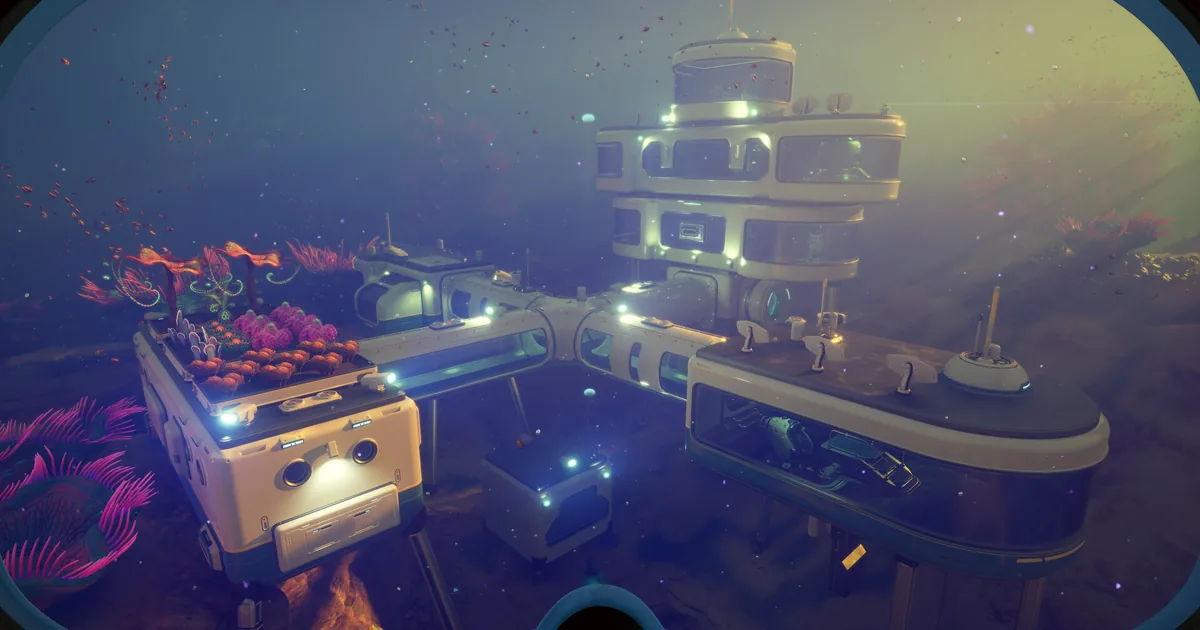
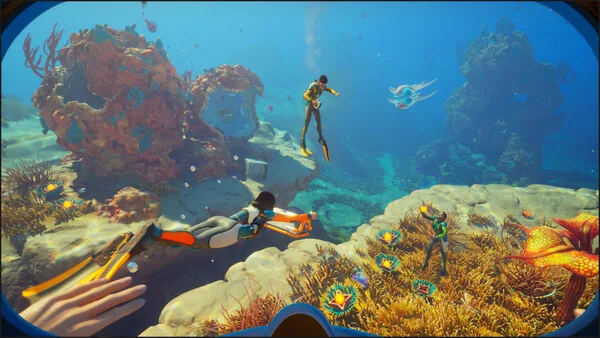 Caption: Vehicle upgrades and crafting are accessed through the Fabrication module: the prerequisite structure for any vehicle recipe in Subnautica 2.
Co-op vehicle mechanics
Subnautica 2 supports 1-4 player co-op. Each player operates their own vehicle independently in the current build: no shared piloting, no confirmed passenger seat.
In two-player sessions, the obvious split is: one player runs Tadpole cargo routes while the other processes materials at the Fabrication module. It's more efficient than both doing the same thing. The Tadpole's hold fills up; the pilot returns and deposits; the base-side player keeps the fabrication queue running without waiting for a teammate to show up with raw materials. The loop doesn't stall.
With three or four players, who has the Tadpole becomes a genuine logistics question. A second Tadpole in the mid-game is worth the investment: parallel ferry routes to different resource zones removes a lot of the gathering bottleneck. The crafting acceleration that makes co-op powerful only works if the Fabrication module has a consistent materials supply. Two ferries do that better than one.
When pushing into Root Canyon (364-750m), the whole group needs to coordinate staging bases before the push, not while doing it. One player handles staging base construction at the Root Canyon entry range; another scouts ahead. The Tadpole's cargo capacity is what makes that staging base build fast. Don't try to push full Root Canyon depth from a surface base.
One thing that genuinely catches groups off guard: Leviathan aggro on a vehicle affects everyone in the area. If the Tadpole draws the Shiver's attention near the Void boundary, the retreat path your pilot chooses affects the rest of the team's position. Call it on comms the moment aggro fires, not after you've already started the escape route.
GODEEPER: Leviathan aggro mechanics differ between the Collector in Sparse Plains and the Shiver in the Void: and vehicle presence near their territories changes the threat profile. Subnautica 2 Leviathan Guide →
PRAWN Suit and Trident: confirmed future subnautica 2 vehicles
Both of the original game's signature vehicles are confirmed for Subnautica 2's Early Access roadmap. Neither is in the current build. Here's what's actually been announced.
PRAWN Suit (status: still unreleased): A June 4 dev vlog had Design Lead Anthony Gallegos confirm the PRAWN Suit was returning "in the first major content update," which pointed at EA 1.1. That update, Adaptive Measures, shipped July 8, 2026, and it didn't include the PRAWN Suit: no new chassis, no new region, no new creature type. What 1.1 actually delivered was two new Biolabs in existing regions (Coral Gardens and Axum Ruins), Biolab-unlockable Biomod slots increasing from 4 to 6, a recoil/flee reaction on creatures hit with the Survival Multitool, a stun state from the Sonic Resonator, out-of-water sprinting, and base building quality-of-life changes. Unknown Worlds hasn't published a new date for the PRAWN Suit. Update 1.2 is confirmed to focus on multiplayer and base building rather than the exosuit, so there's no confirmed window for it yet.
Trident (later EA update): The Trident is the Cyclops successor: a large submarine positioned at the top of the vehicle hierarchy. It supports solo operation but opens extra crew slots when other players join. Unknown Worlds confirmed the Trident at the May 9, 2026 "First Dive" showcase and placed it in a later EA update after 1.1. Placeholder assets exist in game files but the vehicle can't be built in survival mode yet. No roadmap window has been given.
The practical takeaway: plan your current progression around the three available chassis and the Depth Module Mk.1. Whenever the PRAWN Suit does arrive it will likely open new build approaches, but the chassis system you're using now is the actual mid-game vehicle layer, not a stopgap.
Subnautica 2 vehicle patch history
EA 1.1, Adaptive Measures (July 8, 2026): The first major content update since launch. No new vehicle or chassis shipped (no PRAWN Suit, despite earlier dev comments pointing at this update), but the patch resized Vehicle Dock footprints so they fit smaller rooms and align properly with hatches, and it's the update that added out-of-water sprinting. It also shipped the Biomod expansion (4 to 6 Biolab-unlockable slots) and creature recoil/stun reactions to the Survival Multitool and Sonic Resonator.
Hotfix 3 (June 1, 2026): The biggest vehicle-related change in Hotfix 3 was Hammerhead behavior. Before the patch, Hammerheads would attack unpiloted Tadpoles left parked outside your base or in open water. This cost players modules when they returned to find their vehicle destroyed. Post-patch, Hammerheads no longer attack an unpiloted Tadpole. They can still take interest in a piloted one, so the threat isn't gone, just reclassified: your parked sub is now safe, but you still need to manage aggro when actively operating in Hammerhead territory.
Hotfix 3 also reduced Nibbler perception range (less interruption during shallow-water runs) and spaced out Marrowbreach attacks. Neither directly affects vehicle use but both reduce the small-creature harassment that can damage hull condition on the way to and from base.
EA 1.0 (May 14, 2026): Launch build. Tadpole (base chassis), Haul Chassis, and Scout Ray Chassis confirmed in game. Seafrog blueprint not present in survival mode. No PRAWN Suit or Trident in any available form.
Subnautica 2 vehicles: tips for getting more out of the Tadpole
Load the cargo hold on any run that takes more than two minutes from base. Personal inventory carries a death penalty: you lose materials when you die. The Tadpole's hold doesn't work that way. The vehicle's cargo is safe as long as the vehicle gets home. This isn't a minor convenience; over a long session it changes how many resources survive to base.
Your first base placement locks in the Tadpole's routing for the whole game. A base against a cliff face or inside a tight passage can physically block vehicle approach. Before committing to a location, swim the docking line first. Open water access is worth a slightly worse resource node proximity.
Gear tier gates access, not vehicle availability. Piloting into the Graveyard at 800m with early-tier gear means the Tadpole got you there and nothing else changed: the creatures there are still calibrated to mid-tier. The vehicle doesn't make the biome survivable. Your equipment does.
On longer cargo runs in the Plateaus, take five minutes per trip to scan into the next biome transition. The Tadpole's range lets you scout-scan territory you're not ready to farm yet. Blueprint unlocks you get now remove friction when you're ready to push that biome later.
Check the Tadpole's hull condition when you dock. Damage accumulates from creature interactions and pressure exposure, and it doesn't announce itself loudly. A badly damaged vehicle going out on a deep run at the wrong moment is a logistics problem, not just a combat one.
When you have mid-game materials and the urge to build a second Tadpole, the better spend is usually a forward staging base at the Root Canyon entry range. A respawn point at depth cuts total travel time more than a second vehicle does. Build the base first, then revisit the second vehicle question.
For a full picture of how the Tadpole fits into the broader progression system, see the Subnautica 2 Complete Guide Hub, which links every biome guide, survival mechanic, and base-building reference in one place.
Frequently Asked Questions
What vehicles are in Subnautica 2 early access?
The Tadpole submersible in three chassis variants: base Tadpole, Haul Chassis (4-player seating, extra cargo), and Scout Ray Chassis (fastest at 10 m/s). The Seafrog walker chassis is confirmed but not yet available in survival mode. The PRAWN Suit did not arrive with EA 1.1 as earlier dev comments suggested and remains unreleased; Trident large submarine comes in a later update.
How do I unlock the Tadpole in Subnautica 2?
The Tadpole blueprint unlocks through scanning: you need to scan the objects or creatures that trigger the vehicle recipe. The Fabrication module must be built first, or the recipe won't appear in your Fabricator regardless of what you've scanned.
Can multiple players use the same vehicle in Subnautica 2?
Each player operates their own vehicle independently in the current build. There's no shared piloting or passenger mechanic confirmed for the launch version. Co-op teams benefit from coordinated separate vehicle use rather than trying to share.
What is the Tadpole's depth rating in Subnautica 2?
Stock Tadpole crush depth is 250m. With Depth Module Mk.1 (found near a crashed Tadpole in the Needler Nest), it extends to 450m. Depth Module Mk.2 reaches 800m but is Creative Mode only in the current build. Root Canyon (364-750m) also requires depth-rated hull sections in your base, regardless of vehicle upgrades.
Does the Tadpole have storage in Subnautica 2?
Yes. The Tadpole has cargo capacity that survives your return to base. The death-penalty resource loss that hits your personal inventory doesn't apply to materials loaded in the vehicle hold.
When should I build the Tadpole in Subnautica 2?
After completing early-tier equipment progression in your starting biome. The Tadpole reaches mid-depth zones, but those zones have mid-tier creatures. Getting there before your gear matches means arriving somewhere you can't survive.
Will Subnautica 2 get more vehicles in Early Access?
Yes, though timing is open-ended. The PRAWN-style suit and large submarine are not in the current build, and no firm ship date is listed for them. Seafrog is a community and preview label for an unreleased walker concept. The 2-3 year EA window is intended to expand the vehicle and craftable roster.
Related Reading
- Subnautica 2 Co-op Guide: Setup, Roles, and Strategy: how per-player vehicles integrate into role-based co-op sessions, including the builder/explorer split and deep-dive coordination.
- Subnautica 2 Base Building Guide: Fabrication module priority and base siting rules that account for Tadpole docking access.
- Subnautica 2 Leviathan Guide: Avoid, Scan, Survive: how vehicle presence affects Leviathan aggro range near the Collector and Shiver territories.
- Subnautica 2 Beginner Guide: gear-tier gating, biome readiness, and what to build before attempting Tadpole progression.
- Subnautica 2 Complete Guide Hub: survival, biomes, base building, DNA mods, and every cluster guide in one place.
- Subnautica 2 Immortal Creatures: Why You Can't Kill Fauna: why Unknown Worlds made fauna invulnerable and how to survive.
- Subnautica 2 Base Building Advanced Guide: Power and Depth: advanced power management, hull pressure thresholds, and multi-base networks.
- Subnautica 2 Oxygen Guide: Dive Planning and Survival: tank upgrade path, turn-back timing, depth zones, and Tadpole dive planning.
- Subnautica 2 Biomes Guide: biome depth ranges and the gear checks that determine whether a vehicle run is ready.
- Subnautica 2 DNA Modification Guide: the progression systems that should come before a deeper vehicle push.
- Subnautica 2 Resources Guide: resource routes for fabricating the Tadpole and its upgrades.
- Subnautica 2 Food and Hunger Guide: food planning for long vehicle expeditions.
- Subnautica 2 Scanner Room Guide: scanning and base setup for finding vehicle fragments.
- Subnautica 2 Weapons Guide: defense options when a vehicle cannot safely enter a tight biome.
- Subnautica 2 Great Jaw Leviathan Guide: threat planning for vehicle routes near the Great Jaw.
- Subnautica 2 Collector Leviathan Guide: scanning and surviving the current Collector encounter.
- Subnautica 2 Early Access Tips: current build priorities before investing in a second chassis.
- Subnautica 2 Advanced Co-op Tips: role coordination for separate vehicles and staging bases.
- Subnautica 2 Gold Farming Guide: a resource route for vehicle fabrication materials.
References
- Subnautica 2 on Steam: Official store page with EA roadmap details and confirmed features
- Unknown Worlds Early Access Roadmap: Official EA roadmap; PRAWN Suit and Trident are confirmed for a future update but did not ship with EA 1.1
- Subnautica 2 Adaptive Measures Update, official patch notes: EA 1.1 full patch notes (July 8, 2026), confirms no new vehicle shipped
- Subnautica 2 Vehicles Wiki: Official community wiki covering chassis specs and unlock conditions
- Tadpole Haul Chassis Wiki Entry: Fragment locations and material requirements for the Haul Chassis
- Scout Ray Chassis Wiki Entry: Tadpole Pens unlock method and speed specifications for the Scout Ray
- Subnautica 2 official news feed: Buddy System update and September Hotfix 1 vehicle fixes
- Subnautica 2 Complete Guide Hub: all survival, biome, and base-building references in one place
- Subnautica 2 Base Building Guide: Fabrication module priority, base siting for vehicle access, staging base strategy
- Subnautica 2 Leviathan Guide: Collector and Shiver patrol mechanics, vehicle interaction near Leviathan territory
Was this guide helpful?
About the author

Senior Critic & Analyst
Former game data analyst turned critic with 11 years covering indie and mid-tier games. Based in Austin. Runs spreadsheets on games most people just play.
- 11 years games criticism
- Former game economy analyst
- Roguelike and strategy specialist
Keep reading

Disclaimer
This article is published for informational and entertainment purposes. It does not constitute professional financial, legal, or technical advice. Game performance, online services, patch schedules, and store listings change. Verify critical details (pricing, system requirements, regional availability) with publishers and storefronts before you buy. Affiliate links, where present, help support our editorial work and are labelled in our affiliate disclosure.
Comments
Loading comments…