
GameBrief · General
Prime Monster Characters Guide: All 3 Builds and Who to Pick
Reviewing
Prime Monster
Cavalier Game Studios · Rekoup
Prime Monster characters are the part of the game tips guides skim over. You get one paragraph on Chopper being the beginner pick, a note that Sucksworth is complicated, and a vague warning about Rotilda. None of that explains what actually changes between them, or why the community's most-discussed topic is Sucksworth at max difficulty.
TL;DR: Prime Monster has 3 characters. Chopper Badstone is the clearest entry point (authority and cash focused, Unity archetype). Viscount Sucksworth is narrower but more powerful at Elder Statesmonster difficulty (overfill the Unity meter to stack Bloodlust bonus damage). Rotilda De Cay is hardest: her Horde mechanic requires specific cards that don't always arrive. All three share the same Political Capital loop. Learn Chopper first.
How many characters does Prime Monster have? (quick answer)
Three. Chopper Badstone from Orcs-4-U, Viscount Sucksworth, and Rotilda De Cay. Chopper is the only one you can play the moment you launch your first run; Sucksworth and Rotilda open up as you keep playing. Cavalier Game Studios hasn't published the exact unlock trigger in a patch note or on the Steam page, but reviews written near launch (from thegamingoutsider.com and Yardbarker) both describe starting a fresh save with only Chopper available, and Steam's own achievement completion rates track the same order: about three-quarters of players have finished a run as Chopper, just over half have finished one as Sucksworth, and under a third have finished one as Rotilda. Each character changes which resources you prioritize, which Tactics become available, and how aggressively you need to exploit cards to fund your win condition. Once unlocked, all three stay available for every future run, and the difficulty gap between Chopper and Rotilda is real enough that starting order matters.
| Character | Party | Archetype | Core loop | Best for | Latest patch headline |
|---|---|---|---|---|---|
| Chopper Badstone | Orcs-4-U | Political bruiser (Unity) | Build authority and cash, fund Unity Tactics like Harness Anger | Learning the resource loop; most forgiving of mistakes | Entertaining Attack now fires twice a turn for up to 9 damage (was once for 6) |
| Viscount Sucksworth | Vampiric Victory | Slimy bastard (damage) | Exploit for Political Capital, spend it on Tactics that push Unity past the cap and stack Bloodlust | Elder Statesmonster; narrow but consistent | Fly, My Pretty! now costs 0 PC and hits for 12 (was 1 PC for 10); gained two new Bat Tactics |
| Rotilda De Cay | The Zombified People's Movement | Irredeemable bungler (Horde) | Revive dead MPs into a Horde that keeps fighting | The game's hardest challenge runs; highest variance | Now starts every run with a Shock Collar instead of Smelling Salts |
Source for the patch changes: Cavalier Game Studios' Patch 1.3 notes, published July 2, 2026.
Chopper Badstone: the Unity machine
Chopper is the beginner pick for a specific reason: his archetype is the most readable. Authority and cash are his two primary levers. When both are in good shape, Chopper's turns feel controlled. When one drops, the problem is visible and diagnosable in a way that Sucksworth's authority-damage issues or Rotilda's card dependency are not.
His Unity archetype means Chopper's best Tactics generate Unity with the parliamentary chamber, getting other MPs to act alongside his plays rather than against them. A good Chopper run builds coalitions with 2-3 aligned parties, keeps Political Capital funded through exploitation, and makes the parliament's natural hostility manageable rather than a constant emergency.
The practical build path: prioritize cards that build authority and establish cash flow early. Keep exploiting throughout to fund Unity Tactics. Don't try to ally with every party. Two reliable allies beat five unreliable ones.
Chopper is also the most forgiving character when you make errors. His authority-and-cash focus means misplays are recoverable more often than with the other two characters, and the Unity Tactics don't require a specific threshold of damage output to fire. New players who mess up a Sucksworth run often blame the character when the problem is actually that they haven't learned to read the four resources yet. Learn on Chopper first.
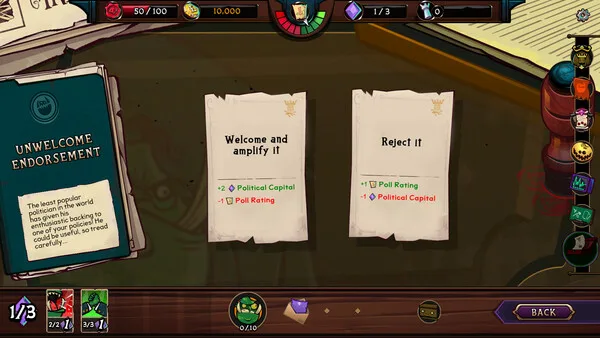 Prime Monster's event cards force a resource tradeoff every time. Reading which stat you can afford to spend, Political Capital or Poll Rating, is the same skill Chopper's authority-and-cash focus is built to teach.
One known weakness: Chopper doesn't scale into late-game damage the way Sucksworth does. In Elder Statesmonster runs, his Unity machine has to work harder because the opposing MPs are tougher. It's achievable, but the community consensus is that Elder Statesmonster runs with Chopper require more active thinking about Tactics than Sucksworth's more linear path.
Patch 1.3 (July 2, 2026) closed some of that damage gap without touching Chopper's Unity identity. "Entertaining Attack" now hits for 9 damage instead of 6 (12 upgraded, up from 9) and fires twice per turn instead of once, roughly doubling its ceiling in a single exchange. "Diss Artist" also got a timing fix: its Retort now applies at the start of the turn instead of the end, so the counter is live for the whole exchange rather than arriving too late to matter. Neither change turns Chopper into a burst character, but they make his damage floor less dependent on drawing Harness Anger specifically.
GODEEPER: The four-resource management that Chopper makes most readable is the system the tips guide covers in full. If you're still learning how political capital exploitation works, that's the place to start. Prime Monster Tips: 9 Things to Know Before Your First Run →
Viscount Sucksworth: the DPS machine
Sucksworth has one build and it's not subtle. His mechanic runs through the Unity meter, not a single finishing move: overfill Unity and he gains Bloodlust, a stacking bonus damage effect that grows with every overfill in the same debate. His slimy bastard archetype gives him access to Tactics that hit harder than what Chopper or Rotilda can access, but the condition is that you have to fund those Tactics through aggressive exploitation and then keep pushing Unity generation past the cap to keep Bloodlust stacking.
The early game is where Sucksworth players die most often. His authority starts weaker than Chopper's, and the game has at least one early opponent that the community has specifically flagged as nearly unbeatable for Sucksworth before he gets his Tactic engine online. The advice from players who've beaten Elder Statesmonster with him: winning fights by 10 or more votes in the early sessions both solves the authority problem directly and sometimes unlocks better block Tactics that address it indirectly.
Patch 1.3 shifted the timing of that early problem, though not by adding raw power. Cavalier restructured the very first Red Box decision of any run so it now offers a Tactic choice immediately, meaning every character (not just Sucksworth) picks up their first Tactic before the opening debate instead of after it. To balance the total count, the developers removed the first debate's own Tactic reward, so it's a net-neutral change in how many Tactics you end a run's opening stretch with, but for a character whose early debates are the danger zone, having that first Tactic online one debate sooner is a real, if modest, cushion.
Both his damage Tactics and his Unity generation got heavier buffs in Patch 1.3. "Fly, My Pretty!" now costs 0 Political Capital and deals 12 damage, up from 1 PC for 10 (18 upgraded, up from 15). "Deep Cut" jumped from 4x2 to 6x2 damage (8x2 upgraded). "Party Animals," one of his Unity-generation Tactics, now produces 6 Unity instead of 3 (10 upgraded, up from 5), which pushes him past the Overfill cap faster and more often. Cavalier also added two brand-new Tactics to his Vampiric Victory pool: "Flight Response," which turns 1 MP into a Bat at the start of your turn whenever you have none, and "High-Fliers," which converts an MP into a Bat for 1 PC when you have 1 or fewer. Both feed the Bat-MP synergies that already existed in his kit, giving the Unity Overfill build more consistent access to the turns where Bloodlust actually stacks.
Once the Unity engine is running, Sucksworth becomes the most consistent character at high difficulty. There's only one real build, which sounds limiting, but it means the decision-making is clearer: every card evaluation comes down to "does this push Unity past the cap this turn." Players who like having a defined win condition prefer him. Players who want flexibility across a run find him constraining.
The Retort build fits Sucksworth's damage-first archetype better than the other two. Retort converts defense into a stacking counter that fires back at opponents. Players on r/PrimeMonster have posted Retort builds hitting 282 damage in a single turn: stack defense, convert it to Retort (tripled), then provoke opponents to trigger the return fire. That specific number predates Patch 1.3, though, and the patch touched Retort math directly: Chopper's "Bait" tactic had its Retort gain cut from 4 to 2 (6 to 3 upgraded), while his "Pre-Prepared Lines+" rose from 5 to 6 and his "Diss Artist" now applies its Retort at the start of the turn instead of the end. If the original 282-damage run leaned on any of those specific Chopper tactics rather than Sucksworth-only cards, the math behind it has since moved, and nobody's posted a re-verified number under the current patch.
For Elder Statesmonster, the community assessment after many attempts: Sucksworth is the best odds of completion. The narrow build path that feels limiting at normal difficulty becomes an asset at max difficulty because you're not trying to manage multiple win conditions simultaneously.
Rotilda De Cay: the Horde machine
Rotilda is the character the subreddit spends the most time discussing and the one with the most polarizing opinions. Her Horde mechanic keeps dead MPs revived and fighting alongside her, which sounds powerful. The problem is that the Horde requires revive cards that don't always appear in the right order, and dead MPs in Prime Monster's parliament have a way of dying again at inopportune moments.
Her archetype is described as "irredeemable bungler," which is accurate to the gameplay feel. Runs that go well with Rotilda involve drawing into revive cards consistently and building a Horde that sticks around long enough to matter. Runs that go poorly involve watching the Horde die to RNG card draws in the mid-game when the session's difficulty peaks.
Rotilda's biggest problem is the first election. Getting past it without the right revive cards in hand is genuinely difficult, and unlike Sucksworth's early authority issue (which has a known workaround), her early problem depends on draw luck. There's no tactical fix for it. You either draw into revives or you don't.
Cavalier has leaned on Rotilda more than either other character across patches, and most of it has been aimed at that exact problem. Patch 1.1 cut "Overwhelming Majority's" Body Count requirement from 16 down to 6 (14 to 4 upgraded) and let "Helping Hands" revive 2 chosen Dead MPs instead of 1 (5 upgraded). Patch 1.3 went further and changed what she starts with entirely: every Rotilda run now begins with a Shock Collar item instead of the Smelling Salts she launched with in May. Cavalier hasn't published exact numbers for what the Shock Collar does differently, but the swap itself confirms the developers agreed her original starting kit wasn't pulling its weight. If a guide you're reading still describes Smelling Salts as her opening item, it's describing the pre-July build.
There's a Tactic specifically mentioned in the community as useful at high difficulty: Rotilda has a way to bypass the Little Clonker pledge, which matters at Elder Statesmonster because Little Clonker is described as one of the most oppressive pledge constraints. If you're attempting Elder Statesmonster with Rotilda, finding that Tactic is part of the strategy. Players who've managed Elder Statesmonster with all three characters describe Rotilda as "beatable if you get ridiculously lucky" more than once.
She's not unplayable. Players who've put real time into Chopper and Sucksworth do find the Horde mechanic interesting once they know how to sequence revive cards. But starting with Rotilda before you understand the Political Capital loop means handling a broken Horde engine at the same time you're still figuring out what exploitation does. That's a lot of confusion hitting at once.
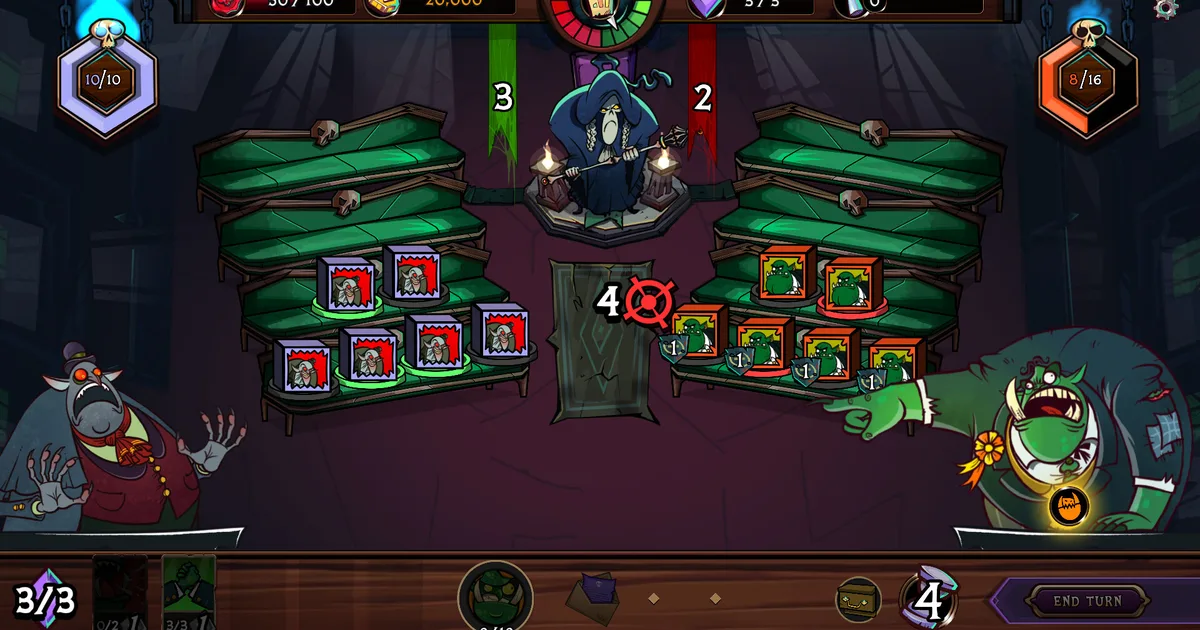
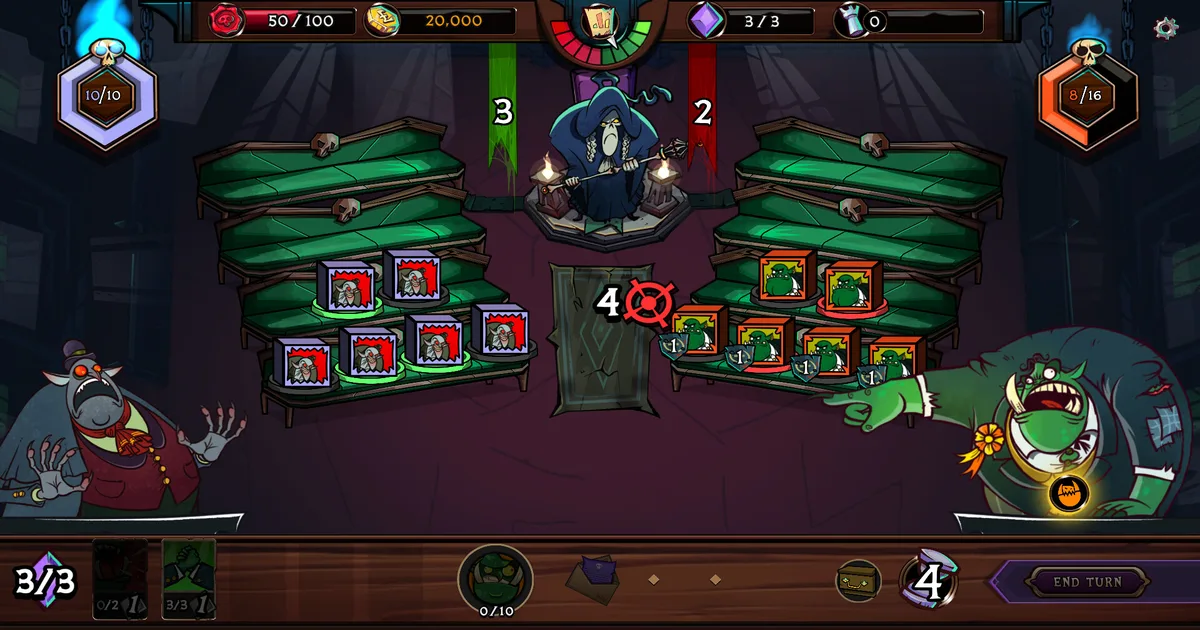
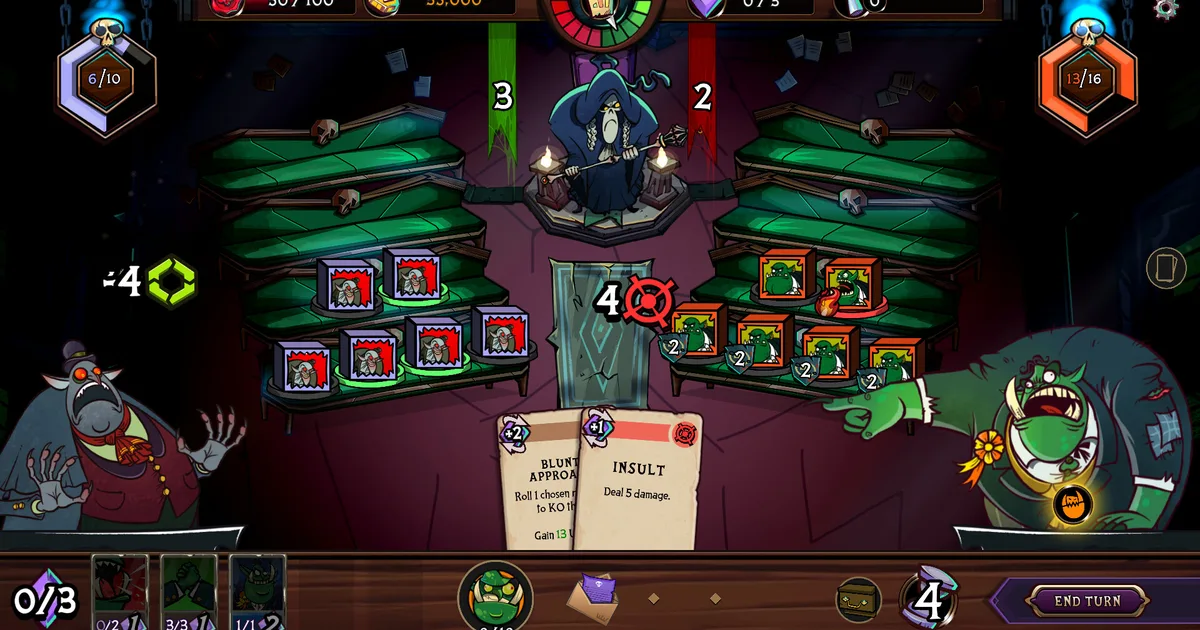
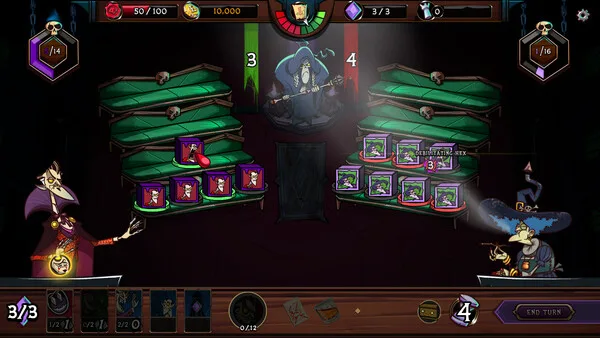 Debates in Prime Monster play out across rows of stacked cards like this, with the vote count ticking between both sides. Rotilda's version of this screen is where her Horde either holds together or falls apart.
GODEEPER: If Rotilda's variance-heavy design frustrates you, Rune Dice's class system has a similar experience spread: some classes are immediately readable, others require understanding the dice physics first. The class guide covers which ones are worth the extra investment. Rune Dice Classes: All 8 Explained and Ranked →
Elder Statesmonster and All Pledges: character rankings at max difficulty
Elder Statesmonster is the game's highest difficulty setting. Running Elder Statesmonster with all Legacy pledges active at once is what the community calls the hardest thing in Prime Monster. The character rankings at this level differ from the normal difficulty experience.
Elder Statesmonster itself got fairer since launch, independent of character choice. Patch 1.2 lowered the "Missing Funds" Red Box decision's cost from 25,000 to 5,000 and blocked the "Gift Grift" decision from appearing in Term 0, both changes made specifically, per Cavalier's own patch notes, to remove a Term 0 scenario that could auto-lose an Elder Statesmonster run before you'd made a single meaningful choice. Any older writeup describing Elder Statesmonster's opening as a coin-flip loss is talking about a build that's no longer live.
Sucksworth is the pick for best odds. His Unity Overfill build needs fewer moving parts than Chopper's coalition management or Rotilda's Horde uptime. A player who cleared Elder Statesmonster with all three characters put it plainly: "There's only one build and it's realistically achievable."
Chopper is the most fun for it. His Tactics require active decisions about coalition positioning and starting favour options, which makes each session feel different in a way Sucksworth's linear build path doesn't. Harder than Sucksworth, but more engaging turn-to-turn.
Rotilda is the hardest. Not hard in a skill-ceiling sense, but hard in a luck-dependency sense that reduces agency. Players attempting Elder Statesmonster with her have described it as "needing ridiculously lucky draws to get past the first election," with several attempts required even for experienced players.
Prime Monster has 77 Steam achievements total, and three map directly onto this character choice: "Sir Chopper" and "Sir Sucksworth" pop for completing a run as Chopper Badstone or Viscount Sucksworth, and "Dame Rotilda" for the same with Rotilda De Cay, alongside the broader "Yes, Prime Monster" achievement for winning any election at all. Patch 1.3's fix list includes a quiet but relevant note for anyone chasing all three: those three character achievements previously would not unlock if you finished the run on a difficulty above the default, so a completed Elder Statesmonster win logged before July 2, 2026 may not have actually credited. Most players who pursue the full set tackle Rotilda last, for the reasons above.
Which character fits your current run goal
Three situations, three answers:
You've never finished a run. Play Chopper. The four-resource system makes more sense when authority and cash are your primary focus. Understanding how to read those two bars while learning card exploitation will carry into the other characters later.
You want to attempt Elder Statesmonster. Start with Sucksworth. His build is narrow, but narrow means the checklist is clear: prioritize Unity generation, overfill the meter every debate you can, and let Bloodlust stack. From there, the hardest content in the game becomes a problem you can work toward rather than hope through.
You want the game's hardest challenge. Rotilda at Elder Statesmonster with all pledges is specifically what the community has documented as the ceiling. Come to her after Chopper and Sucksworth feel comfortable. The Horde system is rewarding when you already understand the baseline.
Key Takeaways
- Three characters total: Chopper (Unity), Sucksworth (DPS), Rotilda (Horde). Only Chopper is available immediately; Sucksworth and Rotilda unlock as you play
- Chopper's authority-and-cash focus makes resource management readable for new players; Patch 1.3 doubled his "Entertaining Attack" uses per turn
- Sucksworth's build: overfill the Unity meter to stack Bloodlust bonus damage; best for Elder Statesmonster. His "Fly, My Pretty!" is now free and hits harder as of Patch 1.3
- Rotilda's Horde requires revive cards that don't always arrive; considered hardest by community consensus. She now starts every run with a Shock Collar instead of Smelling Salts
- Retort build (any character) can reach 200+ damage with the right Tactic stack, though Patch 1.3 changed several Chopper Retort tactics that fed into that number
- All Pledges at Elder Statesmonster: Sucksworth for best odds, Chopper for most fun, Rotilda for the hardest. A Patch 1.2 fix also removed a common Term 0 auto-loss scenario
Related Reading
- Prime Monster Tips: 9 Things to Know Before Your First Run: the general tips guide covering card exploitation, deck composition, and the four-resource system that all three characters share.
- Prime Monster: Card Roguelike From The Sexy Brutale Devs: overview of the game, the political satire premise, and the Steam review data backing its Very Positive rating.
- Die in the Dungeon Tips: Dice, Board, and Build Basics: another roguelite where build-path clarity (like Sucksworth's) is the difference between surviving mid-game difficulty spikes and losing to variance.
- Rune Dice Classes: All 8 Explained and Ranked: class difficulty spread similar to Prime Monster's character gap, with some picks immediately readable and others requiring setup knowledge first.
- Prime Monster Advanced Deck Guide: 4 Combos That Win: Prime Monster advanced deck strategies: Drumming Unity chain, Retort loop, No-MP build, and All Pledges.
References
- Prime Monster on Steam: store page, free demo, system requirements, 77 Steam achievements, community review data
- Prime Monster Patch 1.3 notes: official July 2, 2026 balance changes cited throughout this guide, including per-character Tactic adjustments and Rotilda's Shock Collar swap
- r/PrimeMonster on Reddit: community discussion of characters, build paths, and Elder Statesmonster challenge attempts
- Cavalier Game Studios on YouTube: developer community post from the official channel
Frequently Asked Questions
How many characters are in Prime Monster? Three. Chopper Badstone (Orcs-4-U), Viscount Sucksworth, and Rotilda De Cay. Chopper is the only one available the first time you launch a run; Sucksworth and Rotilda unlock as you keep playing. Each has a distinct archetype and changes how the Political Capital loop functions.
Which Prime Monster character should beginners start with? Chopper Badstone is the best starting character for new players. His bruiser archetype relies primarily on authority and cash, making the four-resource system easier to manage. Most players who start with Sucksworth or Rotilda struggle to understand the Political Capital loop because those characters add extra complexity before the baseline is clear.
What is Viscount Sucksworth's key mechanic in Prime Monster? Sucksworth's mechanic runs through the Unity meter: overfilling it triggers Bloodlust, a bonus damage stack that grows with every overfill in a debate. His slimy bastard archetype rewards aggressive exploitation of cards for Political Capital, spent on Tactics that push Unity past the cap. Keep overfilling, and Bloodlust does the rest.
How do you play Rotilda De Cay in Prime Monster? Rotilda's Horde mechanic keeps dead MPs revived to fight alongside her, but keeping them alive depends heavily on the cards drawn each turn. The build requires revive cards and consistent Horde uptime. She's considered the hardest character because her engine breaks down if the right cards don't appear, which happens frequently in the mid-run when the game's difficulty peaks.
What is Elder Statesmonster difficulty in Prime Monster? Elder Statesmonster is the highest difficulty setting in Prime Monster. The community consensus is that Sucksworth gives the best odds of completing an Elder Statesmonster run, especially when combined with All Pledges, because his Unity Overfill build is more consistent than the other characters' win conditions.
What is the Retort build in Prime Monster? The Retort build converts incoming damage into a stacking counter that fires back at opponents. Players have documented Retort builds dealing over 200 damage in a single turn by stacking defense, converting it to Retort, and provoking opponents to trigger return fire. It works across multiple characters but fits Sucksworth's damage-first archetype particularly well.
Can you change characters between runs in Prime Monster? Yes, once unlocked, you can pick any of the 3 characters at the start of a new run. Only Chopper is available the first time you play; Sucksworth and Rotilda open up through further play. Most players find Rotilda frustrating without prior knowledge of how the Horde system behaves when the right cards don't arrive.
Was this guide helpful?
About the author

News Reporter
Games journalist and news hound with 7 years covering industry moves, studio announcements, and patch notes. Chilean. Writes tight, edits tighter.
- 7 years games journalism
- Industry and esports specialist
- Early access coverage
Keep reading
Disclaimer
This article is published for informational and entertainment purposes. It does not constitute professional financial, legal, or technical advice. Game performance, online services, patch schedules, and store listings change. Verify critical details (pricing, system requirements, regional availability) with publishers and storefronts before you buy. Affiliate links, where present, help support our editorial work and are labelled in our affiliate disclosure.
Comments
Loading comments…