
GuidePrime Monster
Prime Monster Deck Tier List: 6 Build Types Ranked (2026)
About the game
Prime Monster
Cavalier Game Studios · Rekoup
The Prime Monster deck tier list below ranks six build archetypes by consistency, ceiling, and recovery when the card draw goes badly. Most guides stop at "here's how each combo works." This one answers which combo is worth pursuing before the run becomes unwinnable.
TL;DR: Prime Monster deck tier list: Retort loop is S-tier (documented 282 damage, works on all three characters, no Capital dependency once assembled). Drumming Unity and No-MP Authority are A-tier. Sucksworth's Unity Overfill build and Horde Engine are B-tier. Pure Capital grind is C-tier. Draft toward S or A from the first debate. B-tier builds require specific cards that don't always arrive.
Which deck is strongest in Prime Monster? (quick answer)
The Retort loop is the current S-tier build. It generates free defense every turn, converts that defense to Retort using a Tactic, and fires back at opponents using their own aggression. Community runs have documented Retort builds hitting 282 damage in a single turn, and the build works across all three characters. It doesn't require Political Capital to sustain once the core is assembled, which makes it uniquely resistant to Capital drain pressure from opponents.
Key takeaways
- S-tier: Retort loop (all characters). Highest ceiling, Capital-independent once core is assembled.
- A-tier: Drumming Unity chain (Chopper only). Consistent, scales well, punishes with Harness Anger.
- A-tier: No-MP Authority loop (any character). Bypasses coalition entirely, hard to identify mid-draft.
- B-tier: Sucksworth's Unity Overfill engine. Best at Elder Statesmonster specifically, not general-use.
- B-tier: Rotilda Horde engine. Strong ceiling, but requires two separate engines to assemble simultaneously.
- C-tier: Pure Capital grind. Capital is a resource, not a win condition by itself.
S-tier: the Retort loop
The Retort loop is the strongest consistent build in Prime Monster because it converts opponent behavior (aggression) into a resource that scales without a cap. Every hit you take feeds the counter. Every Discord item you use adds more hits. The Provoke plays that fire the Retort back can reach 71 or more damage per turn without exotic card combinations.
The core setup: generate 3 x 4 free defense each turn using the relevant defense Tactic, convert that defense to Retort via a second Tactic, then triple the stack before provoking opponents. Two Provoke plays at that stack level are enough to end most debates in one turn.
The reason this sits at S-tier is that the engine doesn't require Political Capital to sustain. Most other archetypes need a reliable exploitation floor to keep Tactics funded. Retort replaces that Capital dependency with the defense-conversion path. That makes it more resilient to runs where exploitation draw is bad.
One important clarification: the "gain 3 Retort at end of turn" Tactic that sounds related is specifically called out by the community as one of the worst Tactics in the game. The Retort build doesn't use that Tactic. It uses the defense-to-Retort conversion path. The distinction matters because a player who drafts the wrong Tactic expecting Retort value will build an incoherent deck.
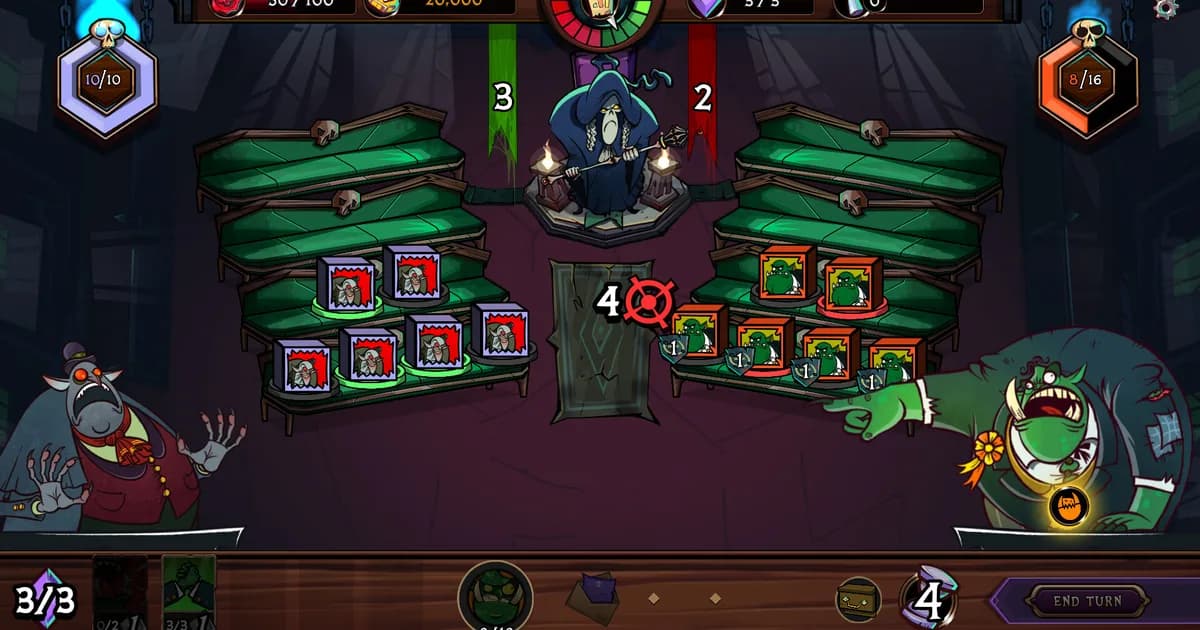
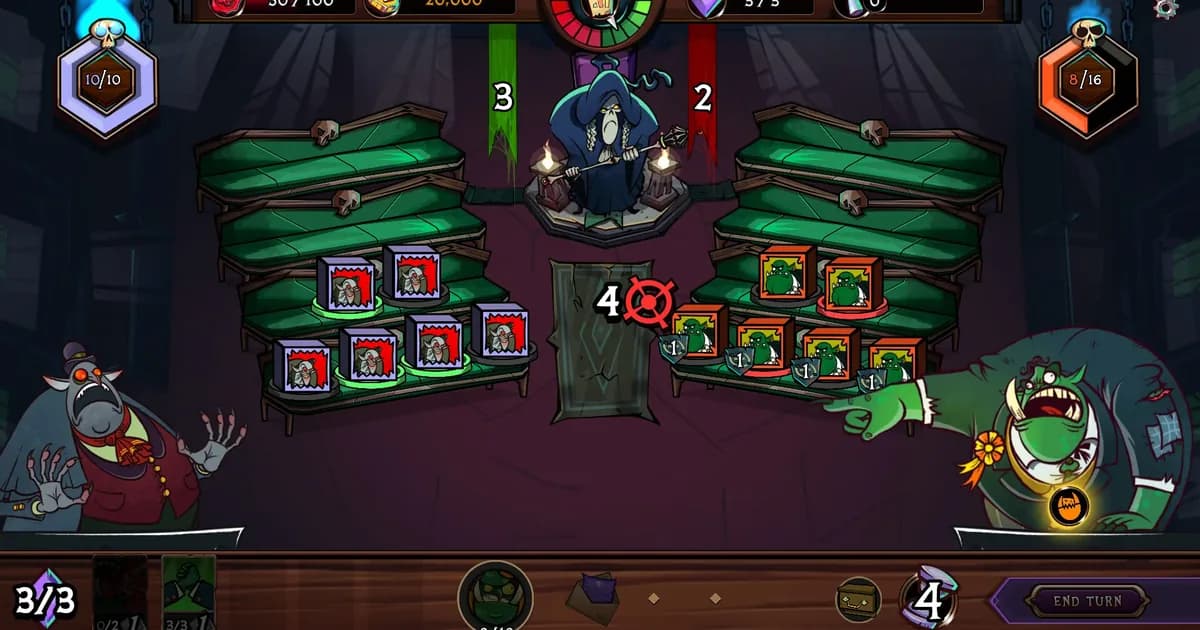
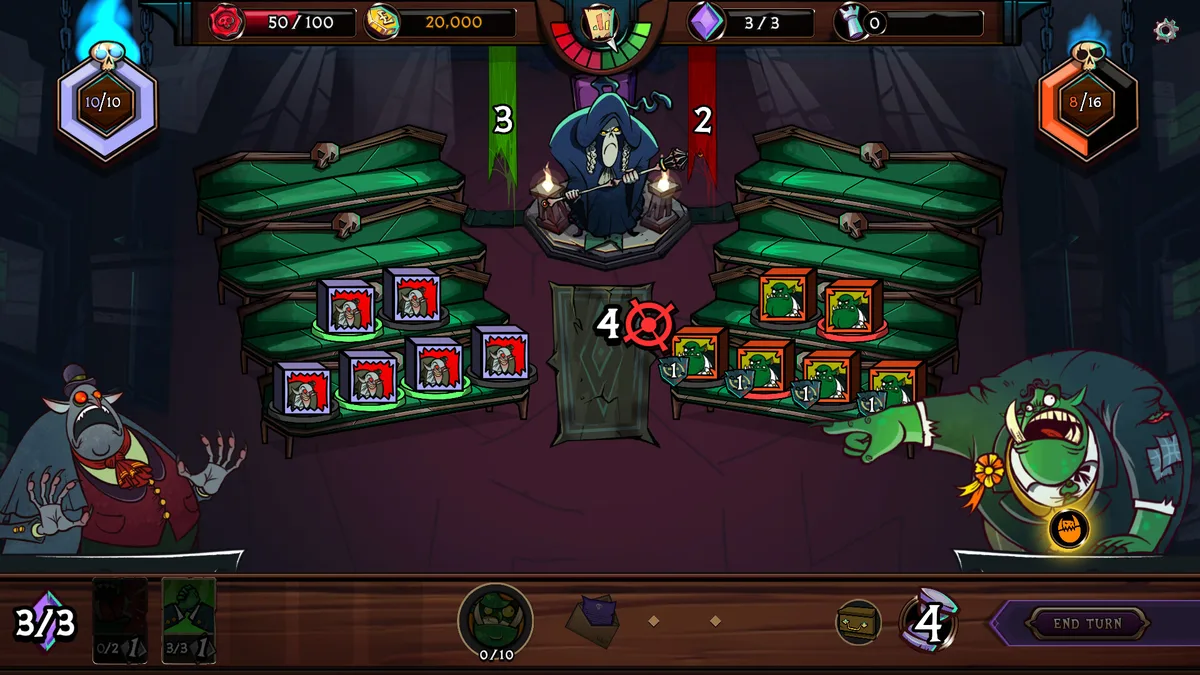 The parliament debate arena is where the Retort counter stack fires. Each incoming hit from opposing MPs feeds the counter before it returns as damage.
GODEEPER: The advanced deck guide breaks down the full Retort setup turn by turn, including which Discord items stack the counter fastest and what the 282-damage run actually required to assemble. Prime Monster Advanced Deck Guide: 4 Combos That Win →
A-tier: Drumming Unity chain
Chopper's Drumming combo is the second-strongest build in the current meta, but it's unavailable on Sucksworth or Rotilda. The chain works by placing MPs into the Drumming role, generating Unity passively at the end of each turn. Frenzied MPs then add bonus Unity multiplicatively whenever any Unity is gained. Harness Anger, the critical Tactic, doubles the next Unity action and simultaneously deals that doubled amount as damage to the opposition.
A single well-timed Harness Anger turn can both flip several of your own party members and deal serious damage to the opponent. Chopper's ceiling against tough debates is genuinely competitive with the Retort loop, even though the path there is more Tactic-dependent.
Why A-tier and not S: the chain requires Chopper specifically, and if the Harness Anger Tactic doesn't appear in the draft, the engine stalls. The Retort loop can assemble on any character with fewer required pieces. For Chopper runs, draft around Drumming first. For other characters, look toward Retort.
A-tier: No-MP Authority loop
The No-MP build is the least visually obvious archetype in the game because it doesn't look like a named combo during drafting. It works by assembling cards that generate authority and Political Capital without any dependency on which MP parties are alive. The entire coalition management layer of the game disappears.
Community players on r/PrimeMonster have documented runs using this path to complete full campaigns, citing it as valid for any character. The hard part is pattern recognition during drafting: the enabling cards aren't labeled as No-MP in the UI. Knowing which cards qualify requires either community knowledge or one careful playthrough specifically watching for cards that produce authority without an MP trigger.
When the right cards appear, the run plays out more simply than any coalition-dependent build, and the primary failure mode of allied MPs dying unexpectedly simply doesn't exist in this deck. The ceiling is lower than Retort, but the floor is higher because party dynamics are entirely removed from the equation.
Step-by-Step: how to build toward S-tier during a run
These steps apply to the Retort build specifically, which is the most accessible archetype across all three characters:
- Identify defense-generating Tactics early. Look for Tactics that produce free defense per turn rather than ones that cost Political Capital for a one-time hit.
- Prioritize the defense-to-Retort conversion Tactic in every draft window. Without this, defense accumulates but never becomes Retort.
- Take the Retort-tripling Tactic when available. This isn't the "gain 3 Retort at end of turn" Tactic. It's the one that multiplies an existing stack.
- Collect Discord items when they appear in the shop. Two per debate is the documented accelerant for the highest-damage runs.
- Add two Provoke plays to your Tactic rotation. These fire the Retort counter at the opponent, and at full stack they define the run's output ceiling.
- Draft toward Capital independence alongside the defense engine. Any card that generates exploitation income helps, but the Retort core specifically doesn't require Capital once the three key Tactics are in place.
B-tier: Sucksworth's Unity Overfill engine
Sucksworth's payoff comes from overfilling the Unity meter, which triggers Bloodlust, a bonus damage stack that grows with every overfill in a debate. At Elder Statesmonster difficulty with All Pledges, the community consensus is that this is the most reliable path to completing the run. The build accumulates Political Capital through aggressive exploitation, spends that Capital on Tactics that generate Unity and push it past the cap, and aims to overfill consistently every debate.
The reason Sucksworth drops to B-tier for general use is the Unity-generation dependency. Until the deck consistently overfills Unity, turns feel low-output compared to a Chopper Drumming chain at the same stage of the run. The characters guide notes that Sucksworth's Overfill build needs the exploitation loop dialed in before Bloodlust stacks reliably. For Elder Statesmonster runs specifically, the payoff justifies the setup cost. For normal and Legacy runs, Retort or the No-MP path are more forgiving.
B-tier: Rotilda Horde engine
Rotilda's Horde keeps dead MPs revived to fight on her side, generating additional hits that feed a Retort stack at a higher rate than standard Provoke setups. On paper, a fully assembled Rotilda Horde plus Retort stack may outperform the Chopper and Sucksworth variants. The tradeoff is that the build requires two separate engines to assemble simultaneously: the Horde revive cards and the Retort core. When the right cards appear, the run is powerful. When they don't, Rotilda stalls more than the other two characters.
B-tier reflects higher variance, not a lower theoretical ceiling. Players familiar with Rotilda and comfortable with the defense-to-Retort path should pursue Horde plus Retort as the primary build goal on that character.
GODEEPER: Choosing Rotilda over Chopper or Sucksworth changes which archetypes are available and which win conditions are realistic. The characters guide covers all three in the context of difficulty selection. Prime Monster Characters Guide: All 3 Builds and Who to Pick →
C-tier: pure Political Capital grind
Generating Capital through exploitation is necessary in every Prime Monster run. As a win condition by itself, it doesn't work.
Capital funds Tactics, and Tactics are how you win debates. But if the Tactics being funded are low-value ones, the Capital is going nowhere productive. A high Capital bar with no payoff is functionally the same as a low Capital bar, except you spent your turns exploiting instead of dealing damage or building toward a real win condition.
The community specifically flags the "gain 3 Retort at end of turn" Tactic as useless at any meaningful difficulty. That Tactic generates the impression of progress (you're building Retort) while doing nothing useful for the run. Use exploitation to fund whichever S or A-tier archetype you're building toward. Treat Capital as the fuel, not the engine.
Tips for using this tier list
Draft flexibility matters more than tier rigidity. If the Retort Tactics don't appear in the first three debates, switching to the Drumming Unity chain mid-run is better than waiting indefinitely for Retort pieces that won't arrive. A coherent B-tier deck beats an incomplete S-tier attempt every time.
Character selection affects which archetypes are accessible. Chopper unlocks the Drumming Unity chain. Rotilda has the Horde synergy with Retort. Sucksworth's build path is the narrowest but best for Elder Statesmonster. If you haven't picked a character yet, let the tier list inform that choice first, then decide which archetype to target within that character's options.
C-tier builds aren't wrong for learning runs. The Capital grind teaches the exploitation loop in a way that feels intuitive because you're actively building a visible resource. Running it once deliberately helps you understand the system before optimizing toward S-tier. Don't run it twice.
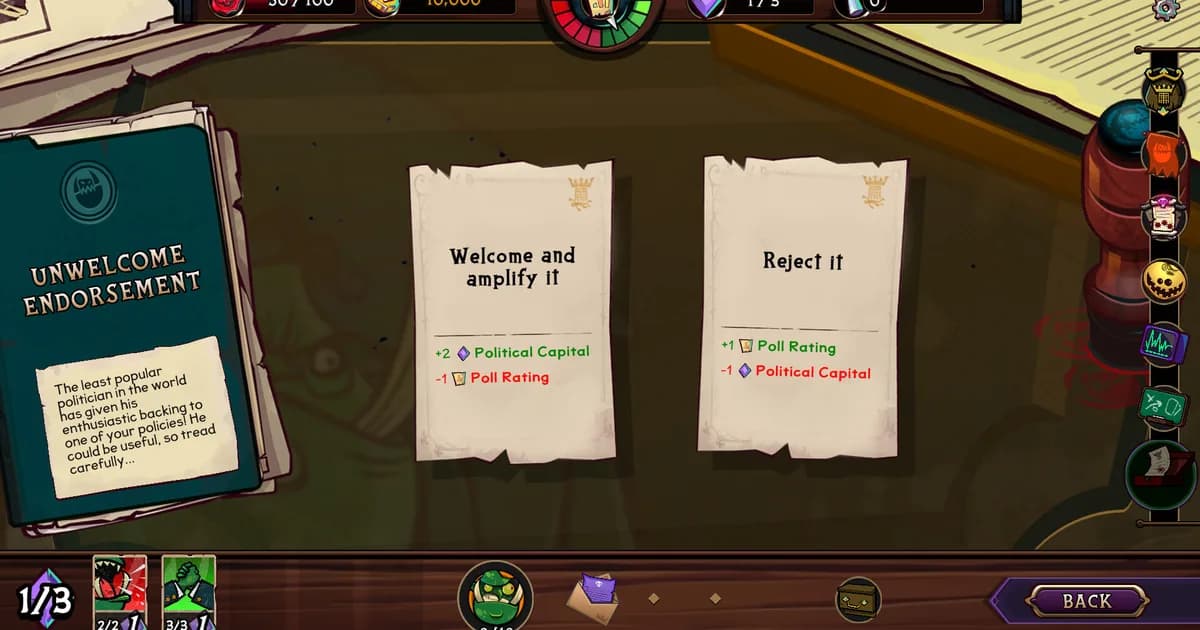
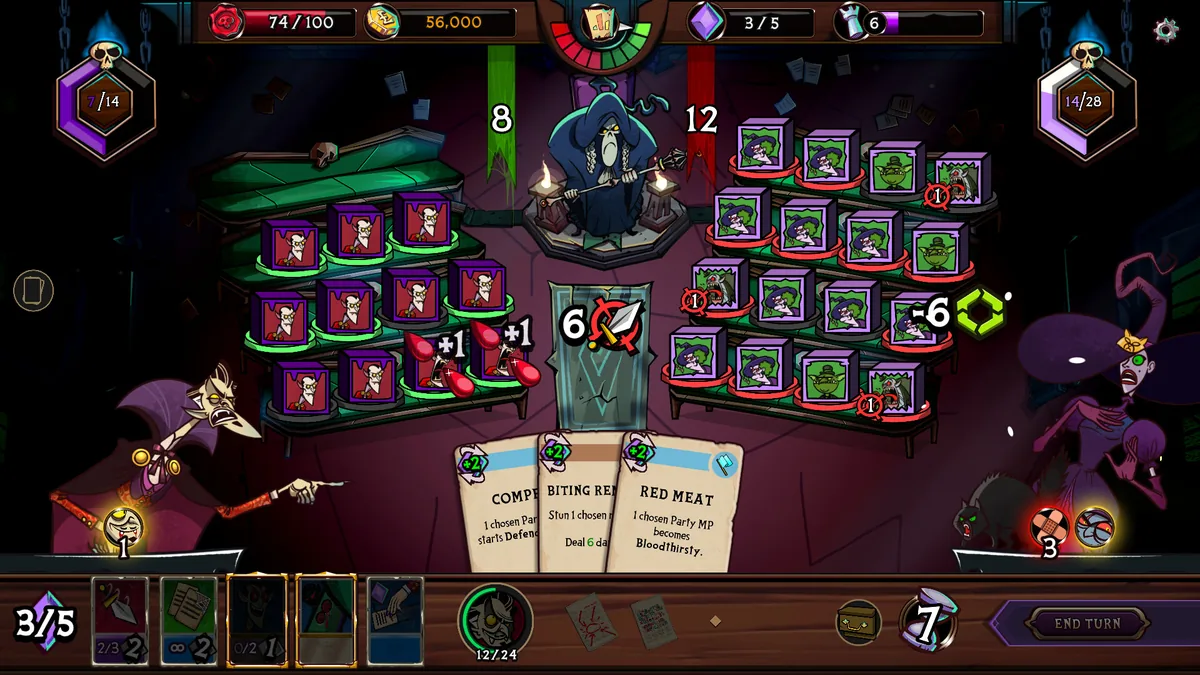 A mid-debate hand showing the kind of Tactic choices that decide which archetype a run leans toward.
Related Reading
- Prime Monster Advanced Deck Guide: 4 Combos That Win: how each of the top archetypes actually assembles, including specific Tactic requirements and Discord item usage for the Retort build.
- Prime Monster Characters Guide: All 3 Builds and Who to Pick: which character to run before deciding which archetype to target.
- Prime Monster Tips: 11 Things the Game Won't Tell You: the exploitation floor, deck size discipline, and what Patch 1.2 changed for animation pacing and action cancellation.
- Prime Monster: Card Roguelike From The Sexy Brutale Devs: context on the game's launch reception, the developer's background, and the 30 MP opponents across 15 parties.
References
Frequently Asked Questions
What is the best deck in Prime Monster? The Retort loop is the strongest deck in the current meta, with documented runs hitting 282 damage in a single turn. It works across all three characters and doesn't require Political Capital once the core defense-to-Retort conversion is in place. Rotilda may have a slightly higher ceiling because her Horde generates extra incoming hits that feed the Retort stack passively.
Is the Drumming Unity chain only good on Chopper? Yes, the Drumming Unity chain is a Chopper-exclusive build. It requires his Drumming Tactic to place MPs into the drum role, generating passive Unity each turn. Frenzied MPs then multiply Unity gains, and Harness Anger converts that into both Unity flips and direct damage. Sucksworth and Rotilda don't have access to this Tactic chain.
What makes the No-MP build work in Prime Monster? The No-MP build uses cards that generate authority and Political Capital directly without relying on coalition management. Specific cards bypass the entire MP relationship system, which means the most unreliable part of a run simply doesn't exist in this deck. The hard part is identifying the enabling cards during drafting, since they aren't labeled as No-MP cards in the UI.
Why is Sucksworth's Unity Overfill build B-tier and not A-tier? Sucksworth's build is powerful but narrow. It runs on the Unity meter: overfilling it stacks Bloodlust bonus damage, and until Unity generation is reliable, turns feel weak. The community rates it best for Elder Statesmonster, but Retort and Drumming Unity are more consistent for general runs.
What is the weakest deck archetype in Prime Monster? Pure Political Capital grinding without a secondary win condition is the weakest approach. Capital funds Tactics, but if the only payoff is weak Tactics such as the "gain 3 Retort at end of turn" Tactic that the community calls one of the worst in the game, the run stalls at higher difficulties. Capital is a means, not an end.
Can Rotilda run the Retort deck in Prime Monster? Yes, and her version may actually outperform Chopper's. Rotilda's Horde mechanic keeps dead MPs fighting on her side, and those Horde MPs absorb hits that feed the Retort counter faster than standard Provoke setups. The tradeoff is that assembling both the Horde engine and the Retort core simultaneously requires the right cards from drafting, which isn't guaranteed.
What are Discord items in Prime Monster and how do they work with Retort? Discord items are consumables that cause opponents to attack you, directly feeding the Retort counter. Two Discord items in a single debate were enough for a documented 282-damage Retort hit. They work by triggering the upgraded ability that lets opponents hit you multiple times in one turn, each hit stacking before the Retort fires back.
Was this guide helpful?
About the author

Indie & JRPG Critic
Indie game evangelist and lifelong JRPG fan covering small studios since 2017. Mumbai-born, London-based. Writes the way she talks.
- 7 years indie games coverage
- JRPG and visual novel specialist
- Narrative design focus
Keep reading
Prime Monster Advanced Deck Guide: 4 Combos That Win
General · 11 min
Prime Monster Tips: 11 Things the Game Won't Tell You
General · 20 min
Prime Monster Coalition Guide: Best Party Combos 2026
General · 8 min
Prime Monster Characters Guide: All 3 Builds and Who to Pick
General · 21 min
Prime Monster Review: Corrupt Your Way to the Top (2026)
General · 8 min
Prime Monster Complete Guide: Characters, Decks, Tips (2026)
General · 14 min
Game deals · affiliate links
Disclaimer
This article is published for informational and entertainment purposes. It does not constitute professional financial, legal, or technical advice. Game performance, online services, patch schedules, and store listings change. Verify critical details (pricing, system requirements, regional availability) with publishers and storefronts before you buy. Affiliate links, where present, help support our editorial work and are labelled in our affiliate disclosure.
Comments
Loading comments…