
GameBrief · General
Prime Monster Complete Guide: Characters, Decks, Tips (2026)
Prime Monster complete guide: every guide in one hub, covering characters, coalitions, deck tier list, advanced combos, and whether it's worth buying.

Reviewing
Prime Monster
Cavalier Game Studios · Rekoup
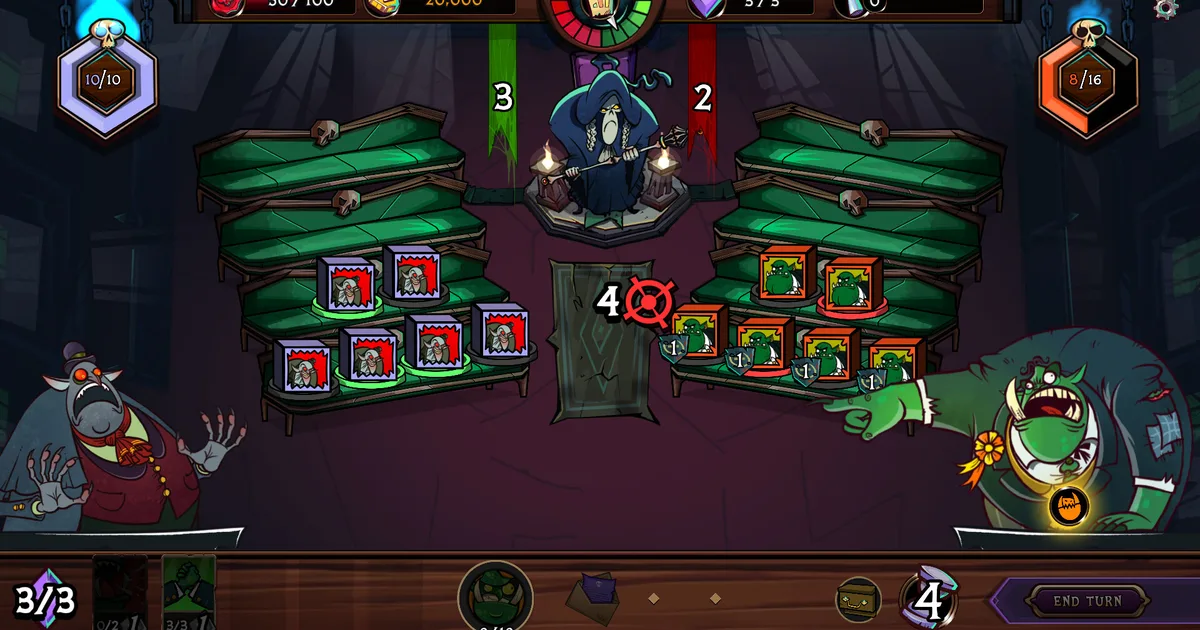
This Prime Monster complete guide pulls together every guide GameBrief has published on Cavalier Game Studios' political card roguelite: characters, coalition strategy, advanced combos, the deck tier list, beginner tips, and the worth-buying verdict. Prime Monster released May 4, 2026 for $19.99 on PC, and its hook is a parliament of 30 monster MPs across 15 parties that you have to out-legislate, bribe, or out-damage to survive.
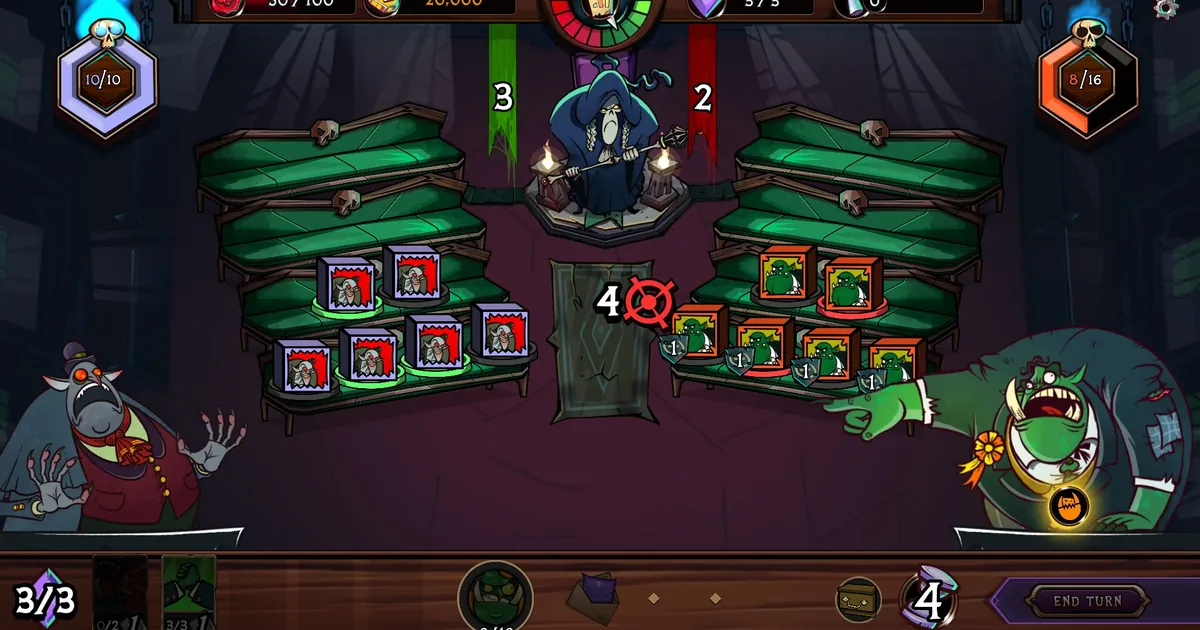
Very Positive on Steam with 307+ reviews, Prime Monster asks you to juggle four resources (authority, Political Capital, poll rating, and cash) while three very different characters give you three very different ways to survive a parliament session.
TL;DR: Prime Monster is a $19.99 political deckbuilder from The Sexy Brutale's developer. Three characters (Chopper, Sucksworth, Rotilda), four resources, and an Exploitation mechanic that converts cards into Political Capital instead of playing them for effect. The Retort loop is the current S-tier build, documented at 282 damage in a single turn. GameBrief's review scored it 7.5/10: worth it if you're patient with a thin tutorial.
Key takeaways
- Developer: Cavalier Game Studios (UK, previously The Sexy Brutale). Publisher: Rekoup
- Released May 4, 2026 on PC (Windows only), $19.99, no controller support
- Very Positive on Steam, 307+ reviews (83% positive), 77 achievements, free demo on the Steam page
- Three characters: Chopper Badstone (Unity, beginner-friendly), Viscount Sucksworth (Bloodlust stacking), Rotilda De Cay (Horde, hardest)
- Four resources track independently: personal authority, Political Capital, poll rating, and cash
- The Exploitation mechanic: sacrifice any card instead of playing it, converting it directly into Political Capital
- Prime Monster Characters Guide: All 3 Builds and Who to Pick: full breakdown of Chopper, Sucksworth, and Rotilda's build paths and Elder Statesmonster rankings.
- Prime Monster Tips: 11 Things the Game Won't Tell You: the exploitation floor, deck size discipline, and what Patch 1.2 changed.
What is Prime Monster?
Prime Monster is a card-based political roguelite where you play a monster politician trying to hold onto the top job in a parliament of 30 other monsters spread across 15 parties. It's from Cavalier Game Studios, the UK team behind The Sexy Brutale (2017), published with Rekoup. Instead of dungeon combat, you're managing legislation, bribery, and party alliances, with the same deckbuilding DNA as Slay the Spire underneath the satire.
Full release landed May 4, 2026 at $19.99, not Early Access, and the game currently sits at Very Positive on Steam. There are 77 achievements total, including one tied to each character individually (Sir Chopper, Sir Sucksworth, Dame Rotilda) and a run-completion achievement literally named "Yes, Prime Monster." Cavalier built the achievement list around actually finishing runs with each character rather than one-off collectibles, which lines up with how narrow and build-dependent each character's kit turns out to be once you're past the first few hours.
Characters guide
Prime Monster has three playable characters, though only Chopper is available the moment you launch your first run: Sucksworth and Rotilda unlock as you play. Chopper Badstone, from Orcs-4-U, is the beginner pick, straightforward and readable. Viscount Sucksworth is a narrow, one-build character that rewards mastery. Rotilda De Cay's Horde mechanic is the deepest and least forgiving of the three.
That one-line difference barely scratches the surface. The full breakdown, including exact build paths, which archetype each one leans on, how the difficulty ranking flips once you're pushing Elder Statesmonster with All Pledges active, and which character actually fits what you're trying to do this run, lives in its own dedicated guide: Prime Monster Characters Guide: All 3 Builds and Who to Pick.
Best team composition
Prime Monster's replayability comes largely from its parliament composition changing every run, and coalition strategy is how you respond to that. The core rule: commit to 2-3 parties early rather than spreading resources across all 15. Neutral runs consistently fail, because maintaining minimum standing with every party burns authority, Political Capital, and poll rating faster than the returns from any single relationship can offset. By mid-run, a neutral player is behind on all four resource bars while a committed coalition player has parties actively working with them.
Coalition choice should match your character. Chopper's authority-heavy profile pairs naturally with parties that reward sustained relationships and don't demand heavy upfront Political Capital. Sucksworth's coalition is the tightest of the three. Keeping Unity generation flowing to overfill the meter every debate leaves little room for extra upkeep, so a third coalition partner often adds more maintenance overhead than his resource loop can absorb. Most successful Sucksworth runs stay at two parties, sometimes even one. Rotilda's Horde archetype wants coalition partners that support creature-type card generation and overlapping resource types rather than fast vote production.
Reading the opening parliament matters before you commit anything. Check which 2-3 parties hold the plurality of seats, and whether that composition matches your character's resource needs. If it does, commit early. If it doesn't, decide up front whether to adapt to the majority or fight for minority-party leverage, since a misdirected first few turns compounds into deficits that are hard to recover from later. At Elder Statesmonster specifically, coalition discipline tightens further: a 3-party setup that worked fine on standard difficulty becomes unaffordable maintenance overhead once relationship costs scale with difficulty. The full step-by-step process, including how to evaluate a third party at the midpoint of a run, is in the Prime Monster Coalition Guide: Best Party Combos 2026.
Advanced deck combos
Once the basics click, four combo structures define Prime Monster's real ceiling. The Retort loop is the most accessible: generate 3x4 free defense per turn through a no-cost Tactic, convert that defense into Retort with a second Tactic, then triple the stack to a minimum of 36 Retort before any opponent interaction lands. Two Provoke plays fire the stack for 71 or more damage per turn, and the build needs no Political Capital to sustain once it's assembled, which is why it's resistant to runs where exploitation draw goes badly. Discord items, consumables that bait opponents into attacking you, accelerate it further: two Discord items in a single debate were enough for a documented 282-damage hit.
Chopper's Drumming Unity chain is the second major combo, and it's exclusive to him. Assigning MPs to drum generates Unity passively at the end of each turn, Frenzied MPs multiply that Unity whenever any is gained, and Harness Anger doubles the next Unity action while dealing that same doubled amount as direct damage. It takes longer to come online than Retort, since early turns go toward assembling the passive rather than dealing damage, but a fully set-up Drumming turn both boosts your party and hits hard in the same action.
The No-MP build replaces coalition management entirely with cards that generate authority and Political Capital directly, without any MP relationship requirement. It's the hardest of the four to evaluate mid-run because the enabling cards aren't labeled as such in the UI, but once assembled it removes the game's most unpredictable failure mode (allied MPs dying unexpectedly) from the equation. For players attempting Elder Statesmonster with All Pledges, the community-documented execution path is specific: avoid debates against Abacus and Bonar while the Little Clonker pledge is active, since both opponents effectively empty your hand, and prioritize upgrading Political Capital gain from 1 to 3 per exploitation (Chopper's Demand Defence card) before anything else. The full turn-by-turn setup for all four combos, including which Tactics to avoid, is in the Prime Monster Advanced Deck Guide: 4 Combos That Win.
Tier list: best decks
Ranking the six build archetypes by consistency and ceiling puts the Retort loop alone at S-tier: it works across all three characters, needs no Political Capital once assembled, and has the highest documented damage output in the game. Two builds sit at A-tier just below it. The Drumming Unity chain is powerful but Chopper-exclusive and stalls without the Harness Anger Tactic in the draft. The No-MP Authority loop works on any character and removes coalition risk entirely, but its enabling cards are the hardest to spot during a run.
Sucksworth's Unity Overfill build and Rotilda's Horde engine both land at B-tier: strong, but narrower. Sucksworth's build is specifically the best choice for Elder Statesmonster because its single win condition (push Unity past the cap and let Bloodlust stack) needs less resource juggling under pressure, even though it's less flexible for general play. Rotilda's Horde-plus-Retort combination has a theoretical ceiling that may exceed Chopper's, since Horde MPs absorbing hits feed the Retort stack faster than standard Provoke setups, but assembling two engines simultaneously means more runs stall than land. Pure Political Capital grinding without a secondary win condition sits at C-tier: Capital funds Tactics, but a full Capital bar spent on weak Tactics (the community specifically flags "gain 3 Retort at end of turn" as one of the worst cards in the game) doesn't win anything by itself. The complete rankings with reasoning for each tier are in the Prime Monster Deck Tier List: 6 Build Types Ranked (2026).
Tips for new players
The single biggest early-run mistake is skipping the Exploitation mechanic. Every card can be played for its listed effect or sacrificed for Political Capital instead, and players who default to playing everything for effect end up with a Capital bar near zero and Tactics that never fire. One exploited card per turn is the floor, not the target: two starts building toward real Tactic availability.
The four resources (authority, Political Capital, poll rating, and cash) each fail independently, and the common early pattern is watching one bar closely while the others quietly drain. Scanning all four at the start of every turn and prioritizing whichever is lowest relative to its safe floor catches most of that drift before it becomes a crisis. Deck size matters too: keep it under 15 cards for your first three runs, since Prime Monster's satirical cards ("Decriminalise Arson" and similar) are tempting to pick up for the joke but frequently arrive in hand at the wrong moment later.
Patch 1.2 added Fast Mode (toggle off animation delays in Settings) and action cancellation (back out of a card or Tactic with the X button before it resolves), both aimed squarely at new-player pacing complaints. Turn Fast Mode on after your first two or three runs, once you actually know what's happening on screen. Two other things worth knowing early: the Shrieker of the House enforces parliamentary rules around direct harm to MPs with a detection window the game never explains, so stick to authority and poll-rating removal until you've seen a few runs; and Legacy pledges (voluntary difficulty increases) are worth skipping until the base loop feels routine, three runs minimum. The full list of eleven things the game doesn't explain up front is in the Prime Monster Tips: 11 Things the Game Won't Tell You.
Is Prime Monster worth buying?
Prime Monster front-loads confusion. The tutorial barely covers the basics, the Shrieker's rules are communicated too quietly, and the four-resource system can feel like overload in the first hour. GameBrief's review scored it 7.5/10, praising the Exploitation mechanic for creating real economic tension on every single card draw and the four-resource system for rewarding an understanding of conversion rates rather than just card effects. Patch 1.2's quality-of-life additions (Fast Mode and action cancellation) were called out specifically as evidence of responsive post-launch development.
The case for buying at $19.99: three characters with meaningfully different starting decks, 15-25 hours of replayable content across them, and a political satire premise that Cavalier Game Studios (which shipped a complete, well-regarded game once already with The Sexy Brutale) commits to without softening it into something more conventional. The case against: if you want a deckbuilder that explains itself upfront, this isn't it, and the steep first two hours will lose some players before the systems open up. A free Steam demo exists specifically so you can test whether the tone and pacing click before spending anything. For the full pros, cons, and verdict, read the Prime Monster Review: Corrupt Your Way to the Top (2026), and for the pre-launch overview of what the game is and who made it, see Prime Monster: Card Roguelike From The Sexy Brutale Devs.
All Prime Monster guides
Every Prime Monster guide GameBrief has published, in one place:
- Prime Monster: Card Roguelike From The Sexy Brutale Devs: the pre-launch overview covering the parliament premise, the 30 representatives across 15 parties, and what the demo shows before you buy.
- Prime Monster Review: Corrupt Your Way to the Top (2026): the full 7.5/10 verdict on whether the Exploitation mechanic and character variety hold up across a full run.
- Prime Monster Characters Guide: All 3 Builds and Who to Pick: Chopper for beginners, Sucksworth for Elder Statesmonster runs, Rotilda for veterans who want the Horde challenge.
- Prime Monster Coalition Guide: Best Party Combos 2026: which 2-3 party combinations work with each character and why neutral runs fail.
- Prime Monster Advanced Deck Guide: 4 Combos That Win: the Retort loop, Drumming Unity chain, No-MP build, and All Pledges Elder Statesmonster execution.
- Prime Monster Deck Tier List: 6 Build Types Ranked (2026): all six build archetypes ranked from S-tier to C-tier with reasoning for each placement.
- Prime Monster Tips: 11 Things the Game Won't Tell You: the exploitation floor, deck bloat, Patch 1.2 changes, and Legacy pledge timing for new players.
Frequently Asked Questions
What is Prime Monster? Prime Monster is a card-based political roguelite from Cavalier Game Studios (The Sexy Brutale). You play a monster politician surviving a parliament of 30 other monster MPs across 15 parties, managing four resources and exploiting cards for Political Capital.
How many characters are in Prime Monster? Three: Chopper Badstone (Unity, the beginner pick), Viscount Sucksworth (a narrow damage build best at Elder Statesmonster), and Rotilda De Cay (the Horde archetype, considered the hardest of the three).
What is the best deck or build in Prime Monster? The Retort loop is the current S-tier build. It converts free defense into a Retort counter and fires it back at opponents, works on all three characters, and has been documented hitting 282 damage in a single turn.
Is Prime Monster worth buying at $19.99? Yes, if you're patient with a slow tutorial. GameBrief's review scored it 7.5/10 for the Exploitation mechanic's depth, with 15-25 hours of replay value across three characters.
How long is Prime Monster? A single run takes 6-10 hours. Most players report 15-25 hours across all three characters, more if attempting Elder Statesmonster or the All Pledges challenge run.
Does Prime Monster have a free demo? Yes. A free demo is on the Prime Monster Steam page (App ID 3214480), covering the exploitation system and four-resource loop well enough to judge the political satire tone before buying.
What is the Exploitation mechanic in Prime Monster? Exploitation lets you sacrifice a card instead of playing it for effect, converting it into Political Capital. It's the central tension of every turn and the mechanic most new players underuse.
References
- Prime Monster on Steam: official store page, free demo, review data, and system requirements
- Cavalier Game Studios on Steam: developer page, including The Sexy Brutale
- r/PrimeMonster on Reddit: community discussion of builds, coalitions, and Elder Statesmonster completion threads
About the author

Indie & JRPG Critic
Indie game evangelist and lifelong JRPG fan covering small studios since 2017. Mumbai-born, London-based. Writes the way she talks.
- 7 years indie games coverage
- JRPG and visual novel specialist
- Narrative design focus
Keep reading

Disclaimer
This article is published for informational and entertainment purposes. It does not constitute professional financial, legal, or technical advice. Game performance, online services, patch schedules, and store listings change. Verify critical details (pricing, system requirements, regional availability) with publishers and storefronts before you buy. Affiliate links, where present, help support our editorial work and are labelled in our affiliate disclosure.
Comments
Loading comments…