
GameBrief · General
Prime Monster Review: Corrupt Your Way to the Top (2026)
Prime Monster review: 83% Very Positive deckbuilder about surviving a parliament of literal monsters. Three characters, four resources, no neutral runs.

Reviewing
Prime Monster
Cavalier Game Studios · Rekoup
Score
Reviewed build: 1.2.0
Pros
- Exploitation mechanic creates genuine card economy tension on every single draw
- Four-resource system rewards understanding conversion rates, not just card effects
- Three distinct characters with meaningfully different starting decks
- Patch 1.2 quality-of-life changes (Fast Mode, action cancellation) show responsive development
Cons
- Tutorial barely scratches the surface; expect two runs of confusion before mechanics click
- Shrieker enforcement rules are communicated too quietly for first-timers
- Late-game turns without Fast Mode can slow noticeably on large benches
Verdict
Prime Monster is a political deckbuilder with more mechanical depth than its cartoonish monsters suggest, though it front-loads confusion and rewards only the patient.
Six runs before I understood what the Exploitation mechanic actually does to my deck economy. This is my Prime Monster review, and I suspect that sentence tells you everything you need to know. Either that experience sounds like exactly your kind of game, or it doesn't.
Prime Monster is from Cavalier Game Studios, the UK team behind The Sexy Brutale (2017), and it released May 4, 2026 for $19.99. You play as a monster politician trying to survive a parliament of 30 other literal monsters across 15 parties. The cartoonish premise hides a systems-heavy political deckbuilder that doesn't apologize for the learning curve it puts in front of you.
Key Takeaways
- Released: May 4, 2026 (PC, full release, not Early Access)
- Developer / Publisher: Cavalier Game Studios / Rekoup
- Price: $19.99
- Playtime: 6-10 hours per run; 15-25 hours across all three characters
- Review score: 83% Very Positive (299 reviews); 95% positive in the last 30 days
- Characters: Chopper Badstone, Viscount Sucksworth, Rotilda De Cay
- Genre: Political deckbuilder / roguelite with parliament simulation elements
Prime Monster Review: What You're Actually Getting
Cavalier Game Studios built their reputation on The Sexy Brutale (2017), a time-loop murder mystery with an unusual structure. Prime Monster is a different kind of game entirely but shares the same willingness to make you work out systems on your own. The studio handed publishing to Rekoup and apparently handed the tutorial design to no one.
You pick one of three monsters: Chopper Badstone, a bull-headed bruiser who favors direct attacks; Viscount Sucksworth, a scheming nobleman with manipulation-heavy cards; or Rotilda De Cay, a decomposing opportunist whose starting deck leans on attrition and disruption. Each character's deck is meaningfully different, not just a cosmetic reskin.
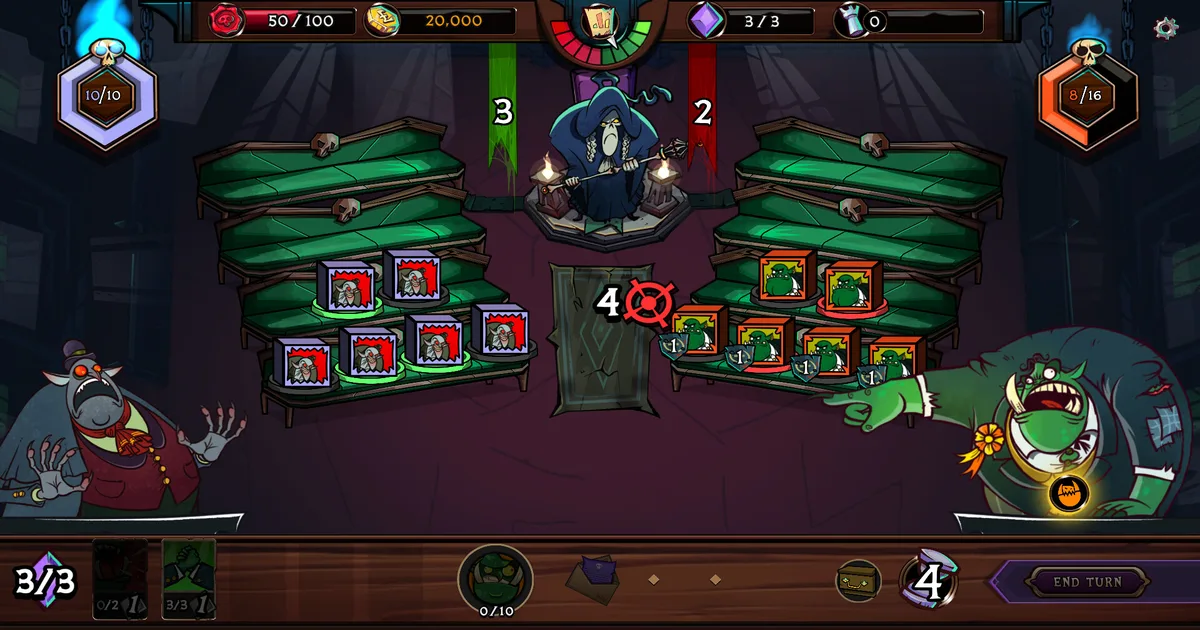
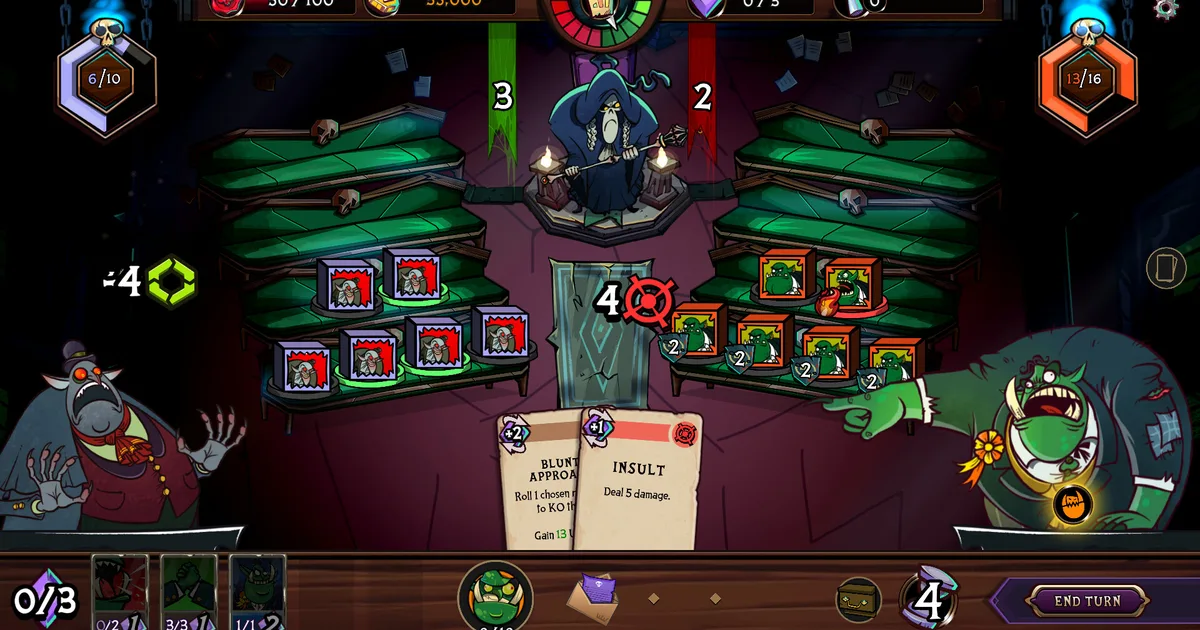
The parliament chamber splits into two sides: your coalition benches and the opposition's. Thirty representatives across 15 parties fill those benches. Some flip to your side through Political Capital expenditure. Others are permanently hostile. The Shrieker, a robed figure presiding from the center, enforces parliamentary rules you don't fully grasp until you've broken them twice.
What the Steam description calls a "political roguelike" is, in practice, a deck-construction game with a parliament theme and four resources instead of one. You're managing authority (your effective health floor), Political Capital (your offensive currency), poll rating (your social standing with the chamber), and cash (your upgrade fuel). Letting any of them collapse is how most early runs end.
The steep first two hours will lose some players. But if you stick with it, or if you read our Prime Monster beginner tips guide before you start, the systems open up in satisfying ways. There's real substance here behind the monster art.
For a detailed breakdown of each character's starting hand and what it implies about build strategy, see our Prime Monster characters guide.
Prime Monster Review: Gameplay and How the Parliament Works
The Exploitation mechanic is Prime Monster's most interesting design decision. Every card you draw has two possible uses: play it for its normal effect, or sacrifice it to generate Political Capital directly. This isn't a discard button. It's a deliberate conversion with real cost: the card disappears, and if you exploit too heavily in a single turn you'll empty your hand faster than your deck can recover.
On early runs I treated Exploitation as an emergency measure, only using it when I was desperate for Political Capital. That's why runs four and five hit walls. The game expects you to build around your deck's exploit rate, not just its card effects. Recognizing which cards are worth playing versus which are worth converting is the actual skill the game is testing.
Combat happens on the parliament floor. You target opposing representatives by type, with party alignment and seating position affecting targeting rules. The Shrieker intervenes when you violate parliamentary procedure, which in practice means certain card types are restricted on certain turns. The first time it happened to me, I genuinely didn't know what rule I'd broken. Violating this adds escalating penalties that compound quickly. It operates like a soft curse system, except it's harder to see coming because the rules aren't surfaced clearly early on.
The resource clock tightens as runs progress. Early sessions feel generous. Later, when poll rating is tanking and the opposition has a full, reinforced bench, the four-resource system starts exposing bad conversion decisions you made ten turns earlier. That slow burn of consequence is one of the game's better ideas.
Note: Fast Mode was added in Patch 1.2 and removes the animation delays between parliamentary rounds. Enable it after your first run. Without it, turns with large benches run uncomfortably long.
For players who want to push what the system can actually do: the Retort build, which focuses on response cards that trigger off opponent actions, can output 282 damage in a single turn with optimal draws. That's not something you stumble into on run one. It's a ceiling that exists to show you how much is actually possible once you understand the deck.
For a full breakdown of which cards enable the Retort combo and how to sequence draws around it, our Prime Monster advanced deck combos guide walks through the setup step by step.
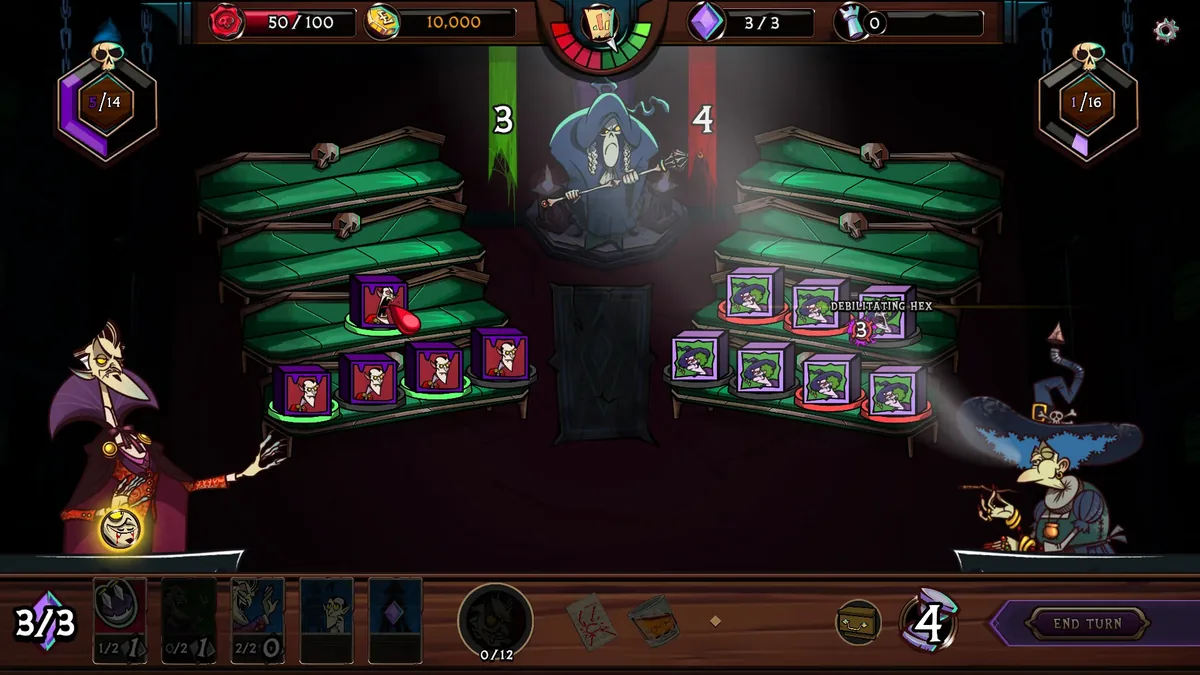 Caption: Rotilda De Cay in combat. Her disruption-heavy starting deck plays very differently from Chopper Badstone's direct aggression, and that difference matters across the run.
Replayability and What Keeps You Coming Back
Three characters alone wouldn't sustain replayability. Prime Monster extends it through difficulty scaling and structured challenge runs. Elder Statesmonster is the maximum difficulty setting, which raises opposition aggression meaningfully. The All Pledges challenge run restricts deck construction options in ways that force different approaches to the Exploitation tradeoff.
The event card system adds run-to-run variation that's better written than it has any right to be. Events like Unwelcome Endorsement place you in a genuine bind: the least popular politician in parliament has backed one of your policies. Do you welcome and amplify the endorsement for Political Capital at the cost of Poll Rating, or reject it for the reverse trade?
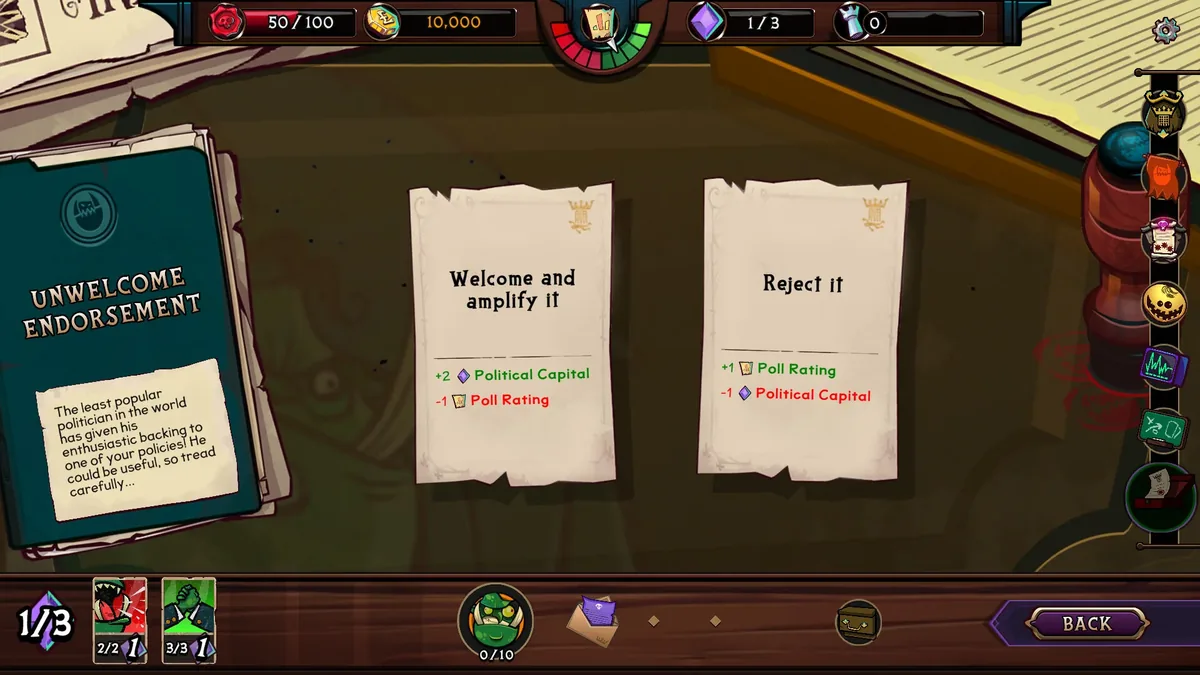 Caption: The Unwelcome Endorsement event. These resource-swap decisions accumulate across a run, and the wrong call three events back shows up as a poll rating collapse late in parliament.
I made the wrong Unwelcome Endorsement call twice before I understood what Poll Rating actually does to coalition-building in the final acts. That's the game working as intended. The knowledge that builds across runs compounds into something real.
Patch 1.2 also added action cancellation, letting you pick up a card, reconsider whether to exploit it or play it normally, and put it back without committing. It sounds minor. It completely changes the texture of decision-making. Earlier versions of Prime Monster reportedly felt more punishing because this option didn't exist.
The 95% positive recent rating (from 40 reviews in the 30 days preceding this Prime Monster review) suggests the Patch 1.2 changes landed well. The game's overall trajectory is upward.
Prime Monster Review Verdict
Prime Monster isn't an easy game to get into. The tutorial covers bare minimum, the Shrieker is under-explained, and the four-resource system can feel like overload in the first hour. If you put this down after two runs, I understand completely.
But if you push through, what's on the other side is one of the more interesting deckbuilders released in 2026. The Exploitation mechanic isn't a gimmick. It's a resource management layer built on real tradeoffs, one that separates reactive card play from structured play. Once you build your first deck around exploitation rates rather than just individual card effects, the game changes in a way that's hard to go back from.
At $19.99, this is fair value: 15-25 hours of replayable content with real mechanical depth, responsive post-launch patching, and three characters that play substantially differently.
Buy it if you're patient with systems that reveal themselves slowly and you want a deckbuilder with more economic complexity than card combat. Skip it if you want a smooth onboarding or a game that explains itself upfront. If you do pick it up, the Prime Monster complete guide hub rounds up character builds, deck tier lists, and advanced combos in one place.
Rating: 7.5/10
Frequently Asked Questions
How long is Prime Monster?
A single full run takes 6-10 hours depending on difficulty and side event engagement. Elder Statesmonster difficulty and challenge runs like All Pledges extend total playtime significantly. Most players report 15-25 hours across all three characters.
Does Prime Monster have controller support?
No. As of version 1.2.0, Prime Monster is keyboard and mouse only. There's no controller support listed on the Steam page.
Is Prime Monster worth buying at $19.99?
Yes, if you like deckbuilders and can tolerate a steep onboarding. The Exploitation mechanic and four-resource system offer more depth than most similarly priced roguelites.
How many characters are in Prime Monster?
Three: Chopper Badstone, Viscount Sucksworth, and Rotilda De Cay. Each starts with a different deck and different resource affinities, making them meaningfully different plays rather than cosmetic variants.
What is the Exploitation mechanic?
Exploitation lets you sacrifice any card instead of playing it for effect, converting it directly into Political Capital. This creates constant tension between using cards for their abilities and cashing them out as resources, which is the central decision of every turn.
Is Prime Monster similar to Slay the Spire or Balatro?
Closer to Slay the Spire in structure (roguelite runs, deck-building between encounters), but the parliament setting and four-resource system make it feel distinct. The Exploitation mechanic has a Balatro-like quality in how it rewards understanding card value beyond face use.
References
- Prime Monster on Steam: official Steam listing including reviews and system requirements
- Cavalier Game Studios on Steam: developer page, including The Sexy Brutale
- Prime Monster gameplay on YouTube: gameplay footage
About the author

Indie & JRPG Critic
Indie game evangelist and lifelong JRPG fan covering small studios since 2017. Mumbai-born, London-based. Writes the way she talks.
- 7 years indie games coverage
- JRPG and visual novel specialist
- Narrative design focus
Keep reading

Disclaimer
This article is published for informational and entertainment purposes. It does not constitute professional financial, legal, or technical advice. Game performance, online services, patch schedules, and store listings change. Verify critical details (pricing, system requirements, regional availability) with publishers and storefronts before you buy. Affiliate links, where present, help support our editorial work and are labelled in our affiliate disclosure.
Comments
Loading comments…