
GameBrief · General
Kristala Guide 2026: Builds, Bosses, Clans & Combat
The complete kristala guide for 2026: clans, builds, bosses, spells, weapons, and the Feline Skill Tree, covering the three current clan magic specialties.

Reviewing
Kristala
Astral Clocktower Studios
This Kristala guide pulls every piece of our coverage together: review, clans, builds, combat, spells, skill tree, weapons, and five named boss encounters. It is a navigation hub, not a claim that those five encounters are the complete current roster.
The short version before we get into it: the official gameplay page ties Mana regeneration to melee engagement and lists several defensive inputs. The Feline Tree also documents named recovery skills, so use the live tooltips rather than reducing the system to one deflect or hit formula.
Kristala guide: key takeaways
Kristala's combat becomes easier to read once you connect the live defensive inputs, melee engagement, and spell costs. Deflect is one option among block, dash, and roll; current Feline Tree skills add documented variations. The checked sources do not establish one universal stagger/refill sequence for every fight.
Clan choice matters more than most new players expect. It isn't just a cosmetic selection: the official developer page says it determines the type of magic you level and the character page documents starting stat/weapon/class loadouts. The public sources checked do not establish a clan-specific Feline Tree starting node.
- Release: April 23, 2026: simultaneous PC, PS5, and Xbox launch; developed by Astral Clocktower Studios
- Price: $39.99 base edition on Steam
- Core loop: choose the current defensive input → engage in melee for the documented Mana-recovery baseline → spend Mana on live spell costs
- Clan choice is your first major decision: sets starting magic group and stat direction; the public sources do not document per-clan Feline Tree starting nodes
- Three current starting magic specialties (Nisarga Nature/Eminence, Myrtuna Spirit/Malediction, Tandara Ice/Eminence); the live Notice Board lists Tandaran spells as hybrid and the wider six-clan count is lore/future roster, not six current spell trees
- Three documented starting weapon categories: Greatsword, Sword & Shield, Clawed Gauntlets
- Five named boss encounters covered here: Lophi, Grottorot Golem, Hiratrola, Elder Samwise, Elder Satine; this is not a complete current-roster claim
- Main story: the published estimate varies by route; full completion depends on the live achievement list and replay choices
- The live patch notes reference Respec Mode; verify the current Kris Menu before treating progression as permanent
Current status: September 2026
Kristala's latest official Steam patch is v1.2.4, which continues the post-launch fixes after the Cursed Realm update. Steam's current review label remains Mostly Positive, but the total and percentage move as new reviews arrive, so use the live store page for the exact count instead of the August snapshot quoted below. The $39.99 base price is still the listed edition price when no sale is active.
What is Kristala?
Kristala is a dark fantasy action RPG by Astral Clocktower Studios. You play as an anthropomorphic feline warrior in Ailur, pursuing the Sacred Six in the setting. The six-clan count is part of the lore; the current developer character page lists three starting clans, and the public sources checked do not publish a per-clan Feline Tree starting position.
The wiki documents a 32-trait character creator with 1,632 combinations. The current starting decision is among three developer-listed clans and their spell requirements; the Notice Board is more precise than a universal Eminence-versus-Malediction claim.
Ailur is a world built around bioluminescent crystals, corrupted enemies, and traversal. The developer says new traversal abilities unlock through main-story progression and can open routes in earlier areas; the checked sources do not establish a universal wall-run, ledge, or boss-arena elevation rule.
The game entered Steam Early Access on June 6, 2024, and hit 1.0 on April 23, 2026, with 248 Steam reviews at launch. Steam's current page still labels it Mostly Positive; review totals and percentages are volatile, so check the live listing for the current snapshot. PC Gamer called the design "inventive." SplatterCatGaming described the combat as comparable to mainline AAA action RPGs: a strong claim, but the deflection system earns it once the loop becomes intuitive. The free Cursed Realm update (version 1.2.0, released July 30, 2026) added a new Cursed Rifts questline, a Transmogrification system, and a Rebirth Mirror for revisiting character appearance mid-run.
Our full Kristala review covers the technical state at launch, how the game sits against indie Souls-like competition, and whether the 7.0/10 rating holds up after the early patches.
Choosing Your Clan
Clan choice is the single most consequential decision in character creation, and it happens inside a screen most players treat as mostly cosmetic.
The current developer page lists three starting clans: Nisarga, Myrtuna, and Tandara. The July 30, 2026 Cursed Realm update gave players a first look at Keoza through themed equipment and the Flaming Horse special ability, but the official notes call it “one of the clans still to come,” not a playable character option. The official v1.2.4 patch notes also reference Respec Mode and Revert in the Kris Menu, so this guide does not claim that no respec exists. The checked sources do not document changing a starting clan or a traditional New Game Plus mode; use a new character as the conservative route for a different starting group.
The two named magic stats are Eminence and Malediction, but the current spell system is more specific than a universal two-school split. The official Notice Board lists Nisargan spells with Eminence requirements, Myrtunan spells with Malediction requirements, and Tandaran spells with both. For a first playthrough, choose from the three current groups based on the listed spell requirements and descriptions.
Myrtuna is the current developer-listed Malediction group. Individual spell effects should be read from their descriptions; the checked official sources do not establish a universal curse, stacking, or boss-damage rule for every Myrtunan spell.
The developer site says new traversal abilities unlock through main-story progression. The checked public sources do not establish that clan choice determines a Feline Tree starting node or that a clan begins closer to specific parkour upgrades.
GODEEPER: Detailed breakdowns of each clan's Eminence vs. Malediction split, stat starting positions, and which clans the community recommends for first runs. Kristala Clans: Eminence, Malediction, and Which to Pick →
- Kristala Clans Guide (Which to Pick First in 2026) the three current starting clans, live spell requirements, and documented stat differences.
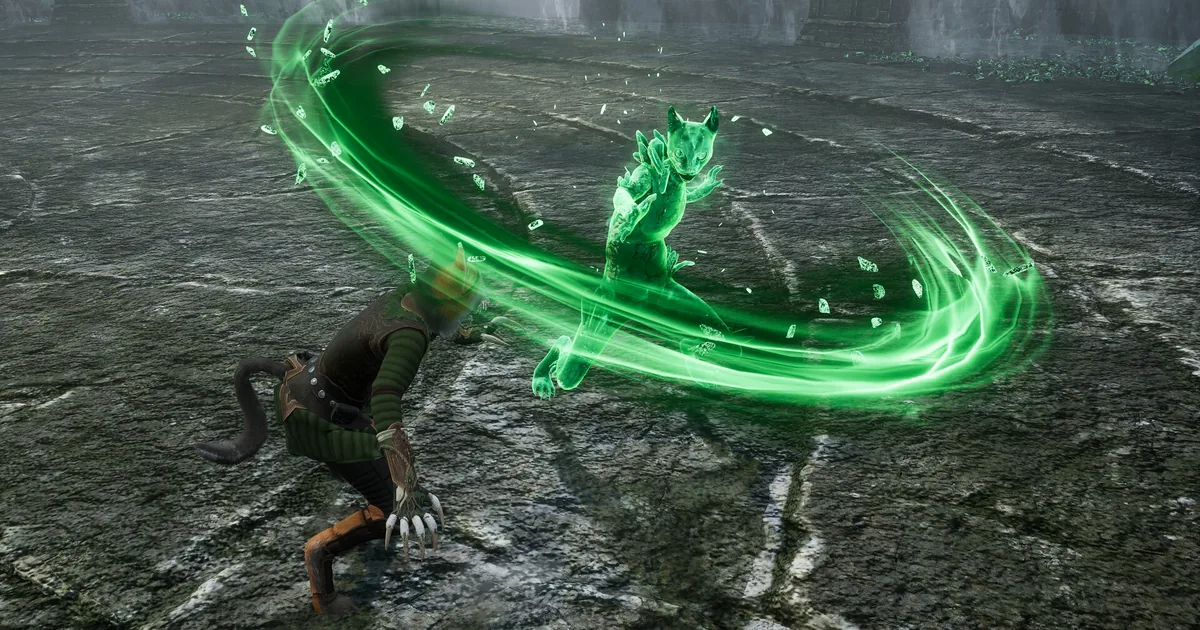
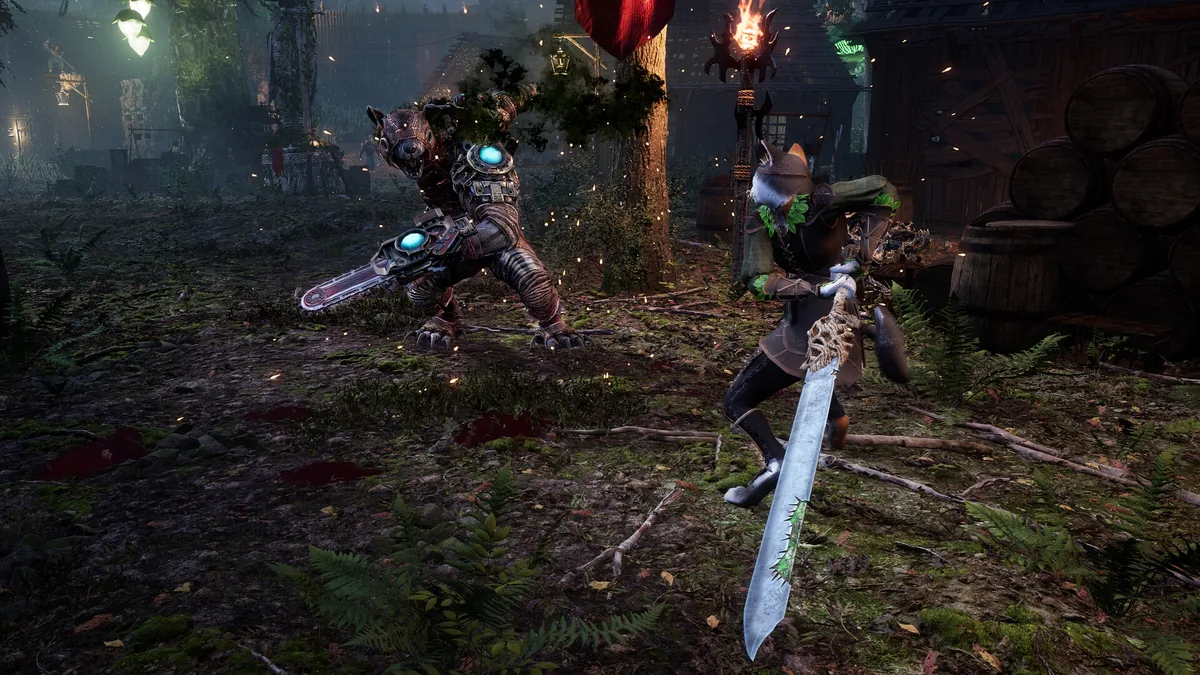 Combat in Kristala leans on deflection timing rather than pure damage racing: landing a parry against an armored enemy like this opens the counter window.
Combat fundamentals: deflect, block, and fighting
Kristala uses the term deflect for one active defensive input. The official gameplay page also lists blocking, dashing, and rolling, while the wiki Glossary defines the red/yellow attack rule. The checked sources do not establish that every deflect refills Mana, staggers the enemy, or opens the same critical window.
Read the current telegraph before choosing an input. Do not promise that an early or late deflect always produces full damage, no recovery, or no stagger, and do not erase the block option documented on the official gameplay page.
The official gameplay page says Mana is regenerated by engaging in melee combat. The Feline Tree source also names Mana Dust and Mana Surge, so the checked sources do not support a “only landed melee hits” or “no recovery path” claim.
The practical consequence is to plan when your build can safely re-engage and how much Mana its current spells cost. Use the live telegraph and tooltips rather than assuming every fight begins with melee or that a fixed hour threshold makes the loop automatic.
Willpower governs Mana according to the checked attribute source; Endurance governs Balance and maximum Equip Load. The public sources checked do not document a separate Willpower stamina pool, a sprint-attack drain, or a guaranteed double-recovery counter sequence.
GODEEPER: The full deflect timing breakdown, how different enemy types change what's deflectable, and why Malediction builds need the mana loop more than Eminence. Kristala Combat Guide: Parry Timing and Mana Loop Tips →
- Kristala Combat Guide (Parry Timing and Mana Loop Tips) Deflect timing windows, mana recovery mechanics, and why passive play starves your spell pool.
Character builds and stats
Seven attributes govern every Kristala character: Vitality, Endurance, Willpower, Strength, Finesse, Eminence, and Malediction. The wiki lists all seven as affecting Damage Negation while giving each a separate primary role; use the current attribute screen instead of calling any build mathematically impossible.
The beginners guide recommends an early Vitality/Willpower focus, but the checked sources do not establish a universal two-point/one-point Font rule. Use the live Font menu and current spell costs; the Kristala beginners guide explains the recommendation.
Three clean archetypes work across a full run:
Melee build: use the weapon category documented by the current attribute source: Strength for Heavy Weapons and Finesse for Advanced Weapons, supported by survivability. Spell investment is optional for the build plan; do not promise a universal deflect-generated Mana amount.
Eminence mage: prioritize survivability, then meet the live Eminence requirements for the Nisargan spells you actually equip. Individual spell behavior matters more than a universal feedback or completion-time claim.
Malediction build: Same survivability foundation, but build around the Malediction requirements of the spells you actually equip. The checked official sources do not establish a universal curse-stack or damage-over-time rule for every Myrtunan spell.
Hybrid builds mixing Strength/Finesse with magic stats are viable but require deliberate Font sequencing: splitting offensive investment early produces a character that does both things poorly until the mid-game.
For the full stat investment sequence and what the community has found about hybrid viability after months of play, the Kristala character build guide has archetypes for all three clean builds plus the hybrid path.
- Kristala Character Build Guide (Stats and Font Investment 2026) stat investment sequence for all three archetypes, Font priority per build, and what the community found about hybrid viability after months of play.
- Kristala Beginner Tips (First Two Hours and Early Mistakes) the universal first-Font priority, why early spell investment kills survivability, and the decisions that smooth the opening hours for new players.
The Feline skill tree
The Feline Skill Tree uses Tiger Eye and predecessor requirements for documented feline skills. The current official developer site describes traversal as story progression; it does not support treating the tree as a clan-specific parkour path with guaranteed hidden Font rewards.
The Getting Started source documents Ellarial Fonts as places to upgrade stats, unlock spells, progress the Feline Tree, teleport, and restore. Use the live Font menu for which options and costs are available at a particular stage; the checked sources do not establish a universal unspent-point or stage-availability rule.
The official sources checked do not publish a clan-specific starting-node map. Use the live Feline Tree's named skills and prerequisites rather than inventing a per-clan route.
The official developer site says new traversal abilities are unlocked by progressing the main storyline. That supports revisiting earlier areas after story unlocks, but not a guaranteed “first parkour tier opens hidden Fonts” rule.
The conservative sequence is: follow the live Font options, meet the current spell's attribute requirements, and spend Tiger Eye on documented Feline skills that match your combat inputs. Do not name “ledge-grab” or “sprint-jump” as current Feline Tree nodes without an in-game source.
For named Tiger Eye skills, costs, and the limits of the current public evidence, the Kristala Feline Skill Tree guide covers the documented tree.
- Kristala Feline Skill Tree Guide (Documented Skills and Tiger Eye) named Tiger Eye skills, costs, predecessor requirements, and traversal caveats.
Spells and magic schools
The current developer page lists three magic specialties for the three starting clans: Nisarga Nature/Eminence, Myrtuna Spirit/Malediction, and Tandara Ice/Eminence. The live Notice Board lists Tandaran spells as hybrid Malediction + Eminence. The wider six-clan count belongs to the lore/future roster and should not be presented as six current playable magic schools.
Up to 16 spells can be equipped simultaneously. Mana determines casting availability, and the official gameplay page ties its regeneration to melee engagement; current Feline Tree skills and spell costs also matter. Do not reduce the 16-slot system to a deflect-only formula.
The live Notice Board is the safer mechanical reference: it names each spell and its required attribute threshold. Do not infer a universal immediate-damage profile from the Eminence label, and do not treat Tandara as pure Eminence when its current spell list is explicitly hybrid.
Myrtunan spells use Malediction requirements. Their exact effects are spell-specific; the checked official sources do not support a universal claim about curse stacks or a guaranteed boss-damage advantage.
Any first-run timing comparison here is editorial guidance, not an official mechanic or a verified requirement. The current sources establish spell groups and attributes, not a guaranteed hours-long difference by clan.
Inspect each spell and upgrade description at the Font. The checked official sources do not publish a universal upgrade branch that maps all Eminence spells to damage/cost upgrades or all Malediction spells to curse duration/stacking upgrades.
For the full breakdown of how each school category works in fights, when to swap between spell types, and what the 50 Steam achievements lock to specific schools, the Kristala spells guide covers every angle.
- Kristala Spells Guide (Current Spell Groups and Requirements) the three current spell groups, named spells, and official attribute requirements.
Weapons: best picks by playstyle
The developer page documents three starting weapon categories: Greatsword, Sword & Shield, and Clawed Gauntlets, through the six starting classes. The wiki Controls page also lists “Switch Weapon Set,” so do not present a universal “new character required” rule; inspect the live equipment menu and current weapon sets.
Greatsword is the documented starting weapon for Warrior and Shaman. The official page describes their armor and stat emphasis; the checked sources do not publish a universal swing-speed, damage, or boss-fit table.
Sword & Shield is the documented starting weapon for Knight and Battlemage. Use the current weapon and attribute screens for exact scaling and attack behavior; the checked official sources do not publish a universal raw-damage ranking over Claws or Greatsword.
Clawed Gauntlets are the documented starting weapon for Assassin and Spellblade. The wiki identifies Finesse as the Advanced Weapon attribute, but the official sources checked do not publish a fixed attack-speed, raw-damage, or stunned/stealth multiplier, so verify those observations in the live build.
All weapons should be tested with the current defensive inputs and tooltips. The checked sources do not establish that every successful deflect creates the same stagger window regardless of weapon type.
Weapon upgrades use the current Mighty Mezuzot items at Brutus's Forge; the checked wiki says Brutus can be found in each capital city. Read the live tier tooltip for whether a current upgrade changes scaling, an ability, or another weapon value; the checked official sources do not publish a complete tier table.
For the full damage comparison data, upgrade cost breakdown, and which weapon fits each of the three character archetypes, the Kristala weapons guide has the complete picture.
- Kristala Best Weapons Guide 2026 (All Three Weapon Types) Greatsword vs Sword & Shield vs Claws compared with community damage data, upgrade costs, and archetype fit.
GODEEPER: How the three weapon categories interact with stat investment at Ellarial Fonts, and which archetypes have the clearest Font priority sequence. Kristala Character Build Guide: Stats and Font Priorities →
Boss Guide Overview
This section covers five named encounters; it is not a complete current-roster claim. The official gameplay page ties Mana regeneration to melee engagement, while the boss-specific sources below separate documented attacks from community positioning and phase reports. Healing windows should be tested against the current encounter rather than promised as a universal rule.
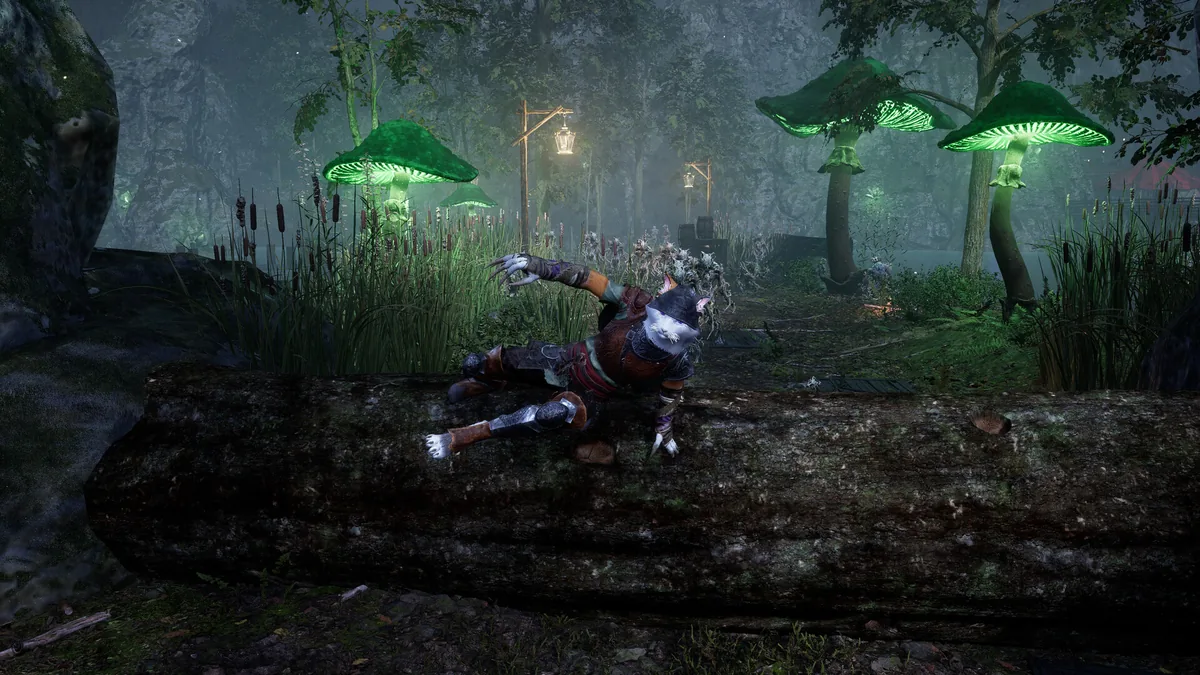 One of Kristala's swamp zones, lit by bioluminescent fungus. The parkour traversal system uses terrain like this log to route between combat encounters.
Lophi the Lost is a named encounter with official developer material that calls out Teleport, Staff Parry, and Spear Slam. The wiki Glossary's general rule says yellow attacks cannot be blocked but can be parried, while red attacks cannot be blocked or parried. The checked sources do not establish a universal Lophi phase chart or a fixed jump-apex timing.
Grottorot Golem is documented by the wiki as a massive creature in Myrish Grotto with close-range swipes, leaps, debris, stomps, and a repeated yellow ground slam. Community players report edge/run-back tactics, but the checked official sources do not establish a guaranteed environmental kill or reset rule.
Hiratrola is a large boss with melee attacks and an AoE scream documented by the developer. Build advice should use current spell descriptions; the official sources checked do not establish a universal Malediction curse-stack advantage.
Elder Samwise is confirmed by the official patch notes as Elder Samwise, Shard of Ursul, in the first Shard Guardian boss fight. Community reports discuss a spinning/tornado-like sequence and spacing, but the checked official sources do not publish a guaranteed phase-two rule or complete moveset.
Elder Satine, Shard of Morda is confirmed by the official Steam announcement as one of two new bosses in its update. Community reports discuss deflection rhythm and an unexpected move nicknamed “jumpscare,” but the checked official sources do not establish that almost every attack is parryable, that Satine is the current final boss, or that the nickname describes a formal mechanic.
GODEEPER: Source-bounded notes for the five encounters covered here, plus clearly labeled community tactics. Kristala Boss Guide: Named Boss Encounters →
- Kristala Boss Guide: Named Boss Encounters: five covered encounters with documented source boundaries.
- Kristala Lophi Boss Guide: Named Moves and Telegraphs: official developer names and current telegraph rules.
- Kristala Grottorot Golem Boss: Attack Patterns: wiki attack list and labeled community positioning advice.
- Kristala Hiratrola Boss Guide: How to Beat the Brute: official identity, wiki attack list, and telegraph rules.
- Kristala Elder Samwise Boss: official Shard Guardian identity and community spin reports.
- Kristala Elder Satine Boss: official identity and community-only rhythm terminology.
How long to beat Kristala
First playthrough to credits: 20-30 hours. The range is that wide because Kristala's parkour traversal system creates a second layer of optional content that the critical path never forces you into. Players who explore every vertical route in the mid-game consistently trend toward 28-30 hours. Players who push straight toward main objectives land near 20.
Clan choice changes the starting attributes and spell requirements. The checked official sources do not establish a universal Eminence-versus-Malediction completion-time difference or a curse-ramp timing rule.
The zone breakdown from community completion data:
- Opening areas (Coastal approach): 4-6 hours
- Mid-game ruins and cavern systems: 8-12 hours
- Late-game sanctuaries: 6-8 hours
- Endgame zones: 3-5 hours
Full completion depends on the live Steam achievement list and which choices remain character-specific. The checked official sources do not establish a universal number of clan playthroughs or a fixed 60 to 80 hour route.
The checked official sources do not document a traditional New Game Plus mode. If you want to compare a different starting clan, a new character is the conservative route; the live patch notes separately reference Respec Mode, so do not state that every progression choice is permanently locked.
For the full pacing breakdown by zone, how PS5 performance at launch affected completion times, and how to route achievement runs efficiently, the Kristala how long to beat guide has the complete picture.
- Kristala How Long to Beat (Story, 100%, and Achievement Routing) current estimates and replay caveats without treating school choice as a fixed time mechanic.
Is Kristala worth playing?
Our review scored Kristala 7.0/10, and the reasoning is worth unpacking here. That score reflects a game with genuinely strong mechanical identity held back by execution issues at launch: not design failures.
The interaction between defensive inputs, melee engagement, and spell spending is the best argument for Kristala. The official gameplay page lists blocking, dashing, rolling, and deflecting, and ties Mana regeneration to melee engagement. The developer also advertises parkour and story-unlocked traversal; the checked sources do not support a universal “passive defense means no spells” formula.
Three current clan spell groups are documented right now. Keoza equipment in the Cursed Realm update is explicitly described as a first look at a future clan still to come. Replay value may come from trying different starting groups, but the public sources do not support claims about per-clan Feline starting positions or a universal school-specific fight loop.
The launch weaknesses were real. AMD GPU owners saw geometry-disappearing FSR bugs. PS5 players dealt with 30-second death-screen load times and input drops during multi-enemy encounters. Xbox had a menu-locking bug that prevented skill investment before key fights. These aren't obscure edge cases: they affected common hardware configurations in the game's opening hour.
The post-launch patch trajectory has been active. If you're reading this kristala guide after May 2026, check the current Steam community for the state of these issues before starting on PC with an AMD card or on console.
At $39.99 and 20-30 hours of story with three current starting magic groups, the value case is solid for players who want a deflect-driven action RPG with identity beyond difficulty. Players who need day-one polish should verify the current technical state on their platform first.
The Kristala review has the full critical assessment: including the detailed performance notes, the stealth system's underdelivery relative to the marketing, and how the game compares to other indie Souls-likes at this price.
For a comparison baseline with another dark fantasy action RPG in a similar price range, our Bylina review covers a Slavic mythology-themed Souls-like released around the same period.
- Kristala Review (PS5 and PC Feline Souls-Like With Caveats) 7.0/10 review covering the deflect system, technical issues at launch, and whether Kristala earns its $39.99 price.
- Kristala Endgame Guide: What to Do After the Story: What to pursue after credits, which achievements require second-clan runs, and whether post-game content justifies the additional playtime.
Frequently Asked Questions
What is Kristala? Kristala is a dark fantasy action RPG developed by Astral Clocktower Studios. Players control an anthropomorphic feline warrior in the world of Ailur, choosing a clan that determines their magic school and character progression. It launched version 1.0 on April 23, 2026, across PC, PS5, and Xbox after nearly two years in Early Access.
Which clan should I pick in Kristala? For a first playthrough, compare Nisarga Nature/Eminence, Myrtuna Spirit/Malediction, and Tandara Ice. The current Notice Board labels Tandaran spells hybrid and lists exact requirements, so read the live spell descriptions instead of assuming a universal damage profile.
How does combat work in Kristala? The official gameplay page lists blocking, dashing, rolling, and deflecting, and says Mana is regenerated by engaging in melee combat. The Feline Tree also documents Mana Dust and Mana Surge. Read the current telegraph and live tooltips rather than assuming one fixed deflect/stagger/refill sequence.
How many bosses are in Kristala? This hub covers five named encounters: Lophi the Lost, Grottorot Golem, Hiratrola, Elder Samwise (Shard of Ursul), and Elder Satine (Shard of Morda). The official Steam update also names Rhylotha, so five is not a safe complete-roster claim.
How long does it take to beat Kristala? Main story: 20-30 hours on a first playthrough. Any 100% estimate depends on the live achievement list and replay choices; the official sources checked do not establish a six-school or no-respec requirement.
Is Kristala worth buying in 2026? Yes for players who want a deflect-driven action RPG where the combat demands aggression. The parkour traversal and three current magic specialties give it mechanical depth; six Sacred Kristals are part of the world lore, not six current starting spell trees. Check the current patch state on your platform before starting.
What weapons are in Kristala? Three starting categories are documented: Greatsword, Sword & Shield, and Clawed Gauntlets. The current official sources do not publish a universal damage ranking or fixed Claws multiplier, while the wiki Controls page documents switching weapon sets; verify the live equipment menu for the current scope.
Related Reading
- All Kristala coverage: every Kristala guide, review, and news post published on GameBrief, in one index.
- Kristala Beginners Guide: Stats, Fonts, and Clan Tips: Covers core stats, the Font system, and which starting choices matter most for a first playthrough.
- Kristala Clans: Eminence, Malediction, and Which to Pick: Breaks down the three current starting clans and their documented magic/stat differences.
- Kristala Combat Guide: Defensive Inputs and Mana Loop: current defensive options and melee-based Mana evidence.
- Kristala Boss Guide: Named Boss Encounters: source-bounded notes for the five encounters covered there.
- Kristala Review: PS5 and PC Feline Souls-Like With Caveats: Full critical take on whether the game earns its price at launch state.
References
- Astral Clocktower Studios: Kristala characters: current clan, class, and magic mapping
- Astral Clocktower Studios: Kristala Notice Board: current spell requirements and Respec Mode note
- Astral Clocktower Studios: Kristala gameplay: current defensive inputs, up to 16 spells, and melee-based Mana regeneration
- Kristala wiki: Combat, Stats, and More: attribute roles and Damage Negation note
- Kristala wiki: Glossary: red/yellow attack definitions
- Kristala wiki: Feline Tree: named Tiger Eye skills and costs
- Kristala wiki: Controls: Block/Deflect and Switch Weapon Set controls
- Kristala wiki: Brutus Azar: Brutus's capital-city Forge locations and upgrade interface
- Kristala wiki: Items: Mighty Mezuzot weapon-upgrade item
- Kristala v1.2.0 / Enemy AI announcement: official Elder Satine and Rhylotha naming
- Kristala on Steam: official page and current patch notes
- Kristala v1.2.4 patch notes: latest official post-launch fixes checked for this audit
- Astral Clocktower Studios on Steam: official developer page
- r/Kristala community: launch discussion, developer posts, and ongoing community testing
- Kristala Wiki (Getting Started) clan comparisons, Font breakdowns, and stat tables
About the author

Indie & JRPG Critic
Indie game evangelist and lifelong JRPG fan covering small studios since 2017. Mumbai-born, London-based. Writes the way she talks.
- 7 years indie games coverage
- JRPG and visual novel specialist
- Narrative design focus
Keep reading

Disclaimer
This article is published for informational and entertainment purposes. It does not constitute professional financial, legal, or technical advice. Game performance, online services, patch schedules, and store listings change. Verify critical details (pricing, system requirements, regional availability) with publishers and storefronts before you buy. Affiliate links, where present, help support our editorial work and are labelled in our affiliate disclosure.
Comments
Loading comments…