
GameBrief · General
Starsand Island Farming Guide: GMAX Crops, Seasons (2026)
Reviewing
Starsand Island
This Starsand Island farming guide exists because I lost an entire GMAX attempt by harvesting all nine tiles at once out of habit. That single mistake is the difference between a two-day reroll and starting a 3x3 plot from bare soil again, and it's the kind of detail no generic "how to plant crops" guide mentions.
TL;DR: Starsand Island's farming loop starts simple (till, plant, water, harvest) but layers in real depth fast: GMAX giant crops are a chance roll on fully grown plots, boosted by GMAX Fertilizer; trellis-grown crops like cucumbers and grapes give multiple harvests per planting instead of one; and crops are season-locked, with a greenhouse as the only way around it. None of this is explained in-game.
How does farming work in Starsand Island? (quick answer)
Till soil with a hoe, plant seeds, water daily, and harvest once the crop matures. Beyond that basic loop, Starsand Island adds trellis structures for climbing crops, a GMAX system for giant harvests, and season locks that determine which seeds will actually grow in your shop that month.
Starsand Island farming: key takeaways
- Your starting Homestead plot grows row crops like watermelon and cabbage plus staked pole beans, confirmed directly from the starting farm layout.
- GMAX crops are a giant-harvest chance roll, most reliably farmed on a 3x3 block with GMAX Fertilizer applied.
- Trellis crops (cucumbers, grapes, tomatoes) regrow two to three times per planting instead of once, and must be watered individually.
- Crops are tied to seasons; a greenhouse unlock is the only confirmed way to grow certain crops year round.
- Immortal seeds regrow from scratch automatically after harvest, trading convenience for a slower full-output cycle than a healthy trellis plant.
- Not every purchasable property is farmable. Windflute Island supports trellises but not tilled row crops.
- Buying land isn't available from the start. It unlocks through the Island Life phone app once you've hit Junior in a profession and placed furniture in your house, a prerequisite players commonly miss.
Overview
This guide covers the crop-growing loop specifically: what you can plant, how trellis and GMAX systems actually work, how seasons gate your seed shop, and how far your starting Homestead can expand. It does not cover fishing, mining, romance, or the general controls covered elsewhere on the site (linked below), so if you're brand new to the island, start with the basics first.
Starsand Island launched into Early Access on February 11, 2026, from developer and publisher Seed Sparkle Lab, and it currently sits at Very Positive on Steam with well over 6,300 reviews (about 82.7% positive). Version 1.0 is scheduled for August 18, 2026, adding co-op, so everything here describes the current Early Access farming systems, which may shift once multiplayer lands. The official Steam description promises you'll "grow tropical fruits and vegetables on your own farm" and "decorate cascading terrace gardens," and the farming systems match that pitch closely once you get past the tutorial-level basics.
What you need before this guide is useful: access to your starting Homestead plot, a hoe, and a watering can, which the early quests hand you automatically. Expect your first real decision point (whether to chase a GMAX crop or just farm normally) to show up a few in-game days in, once the "Become a Junior Farmer" quest line opens cucumber seeds and trellis planting.
GODEEPER: Curious how the farming systems hold up against the rest of the package, launch controversy included? Starsand Island Review: Charm, Bugs, and a Bot Scandal →
Step-by-Step
Planting your first crops on the Homestead
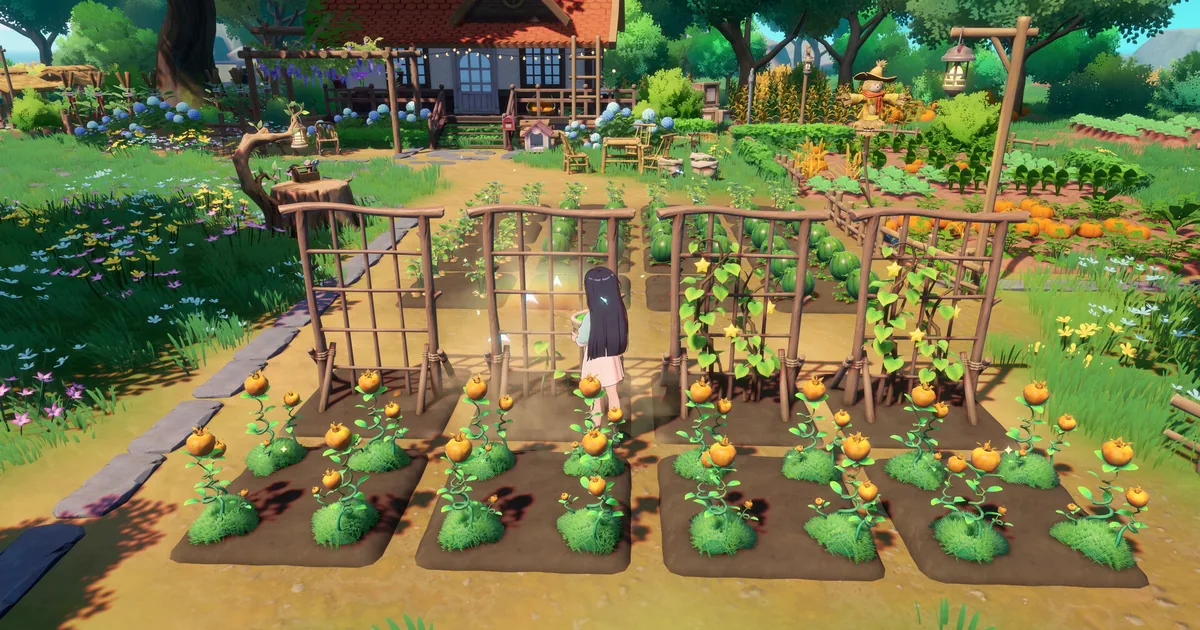
Your starting plot is called the Homestead, and it's where every new save begins. Till a square of soil, select a seed from your inventory, plant, and water it daily; most row crops wither if you skip a watering, and multiple players report that a single watering pass doesn't always cover a full day if the weather turns. Confirmed crops visible in an early Homestead layout include watermelon, cabbage, and staked pole beans, planted in clearly separated tilled squares.
Corn and pumpkins show up a little later as you unlock more seed slots, both grown in standard tilled soil rather than on a trellis. Pumpkins, in particular, double as one of the game's quest-crop staples: the "Intermediate Farmer" quest line that unlocks GMAX fertilizer specifically calls for a giant pumpkin in autumn, after asking for a giant melon in summer, which is your first real signal that Starsand Island tracks seasons on individual crops rather than treating farming as a static, always-available system.
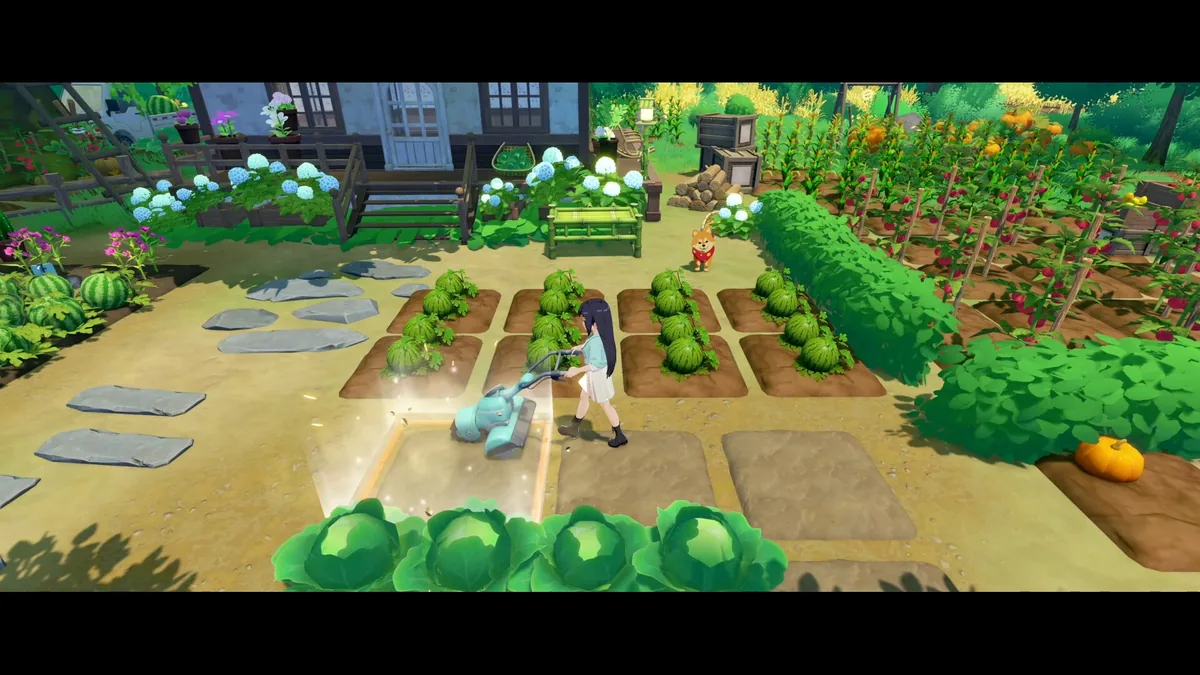 Caption: A Homestead layout mid-expansion, mixing watermelon and cabbage rows with corn and a berry trellis once you've unlocked more seed variety.
Trellis crops: cucumbers, grapes, and tomatoes
Trellis structures are wooden frames you place to grow climbing crops, confirmed for cucumbers, grapes, and tomatoes. The important distinction from row crops: a healthy trellis planting doesn't die after one harvest. Players describe getting two to three separate pickings off a single trellis crop before it's spent, with a short ripening wait between each round rather than an instant new fruit.
That multi-harvest structure changes the math on which crops are actually worth your plot space. One detailed profit breakdown shared on the official subreddit flagged this exact gap: a trellis fruit selling for a few hundred coins a piece looks weak next to a one-shot row crop until you multiply it by the two or three harvests you'll actually get from that same planting slot.
Two placement details matter here that aren't obvious from the build menu. First, place trellises on untilled land, the way the game intends; several players who tilled the soil first before adding a trellis reported the tiles becoming permanently stuck and unplantable after harvest, a bug you avoid entirely by placing trellises in the normal order. Second, tools that water several tiles at once skip trellis plots, so you'll be watering those individually regardless of what upgraded watering can you're using.
GMAX crops: growing a giant harvest
GMAX crops are Starsand Island's giant-produce system, and they're one of the most frequently asked "how does this actually work" topics on the community subreddit, with multiple separate threads asking the same question in different words. Here's what's confirmed: growing a GMAX crop is a chance outcome on a fully matured plot, most consistently attempted on a 3x3 block of nine tiles. GMAX Fertilizer, purchased or crafted at a fertilizer box once you're far enough into farming progression, raises your odds without guaranteeing a result.
The community's most-repeated strategy for improving your odds costs almost nothing extra: plant your full block, fertilize, and let it mature without harvesting anything. If no GMAX result appears, don't clear the whole plot and start over. Harvest just one tile, replant only that single spot, and let it catch up to the rest. Multiple players independently describe this as noticeably better than a full replant, and at least one reported landing a GMAX roughly every two to three re-seeded attempts using this method rather than starting from bare soil every time. I tried a full-plot reset the first time I whiffed a GMAX pumpkin and lost close to a full growth cycle for nothing; the single-tile reroll is the version I use now.
Watch your season timing here too. If your 3x3 block is still growing when the season flips, you can lose the whole attempt and have to restart with whatever crop is now in-season, which is exactly what tripped up more than one player mid-quest according to community reports.
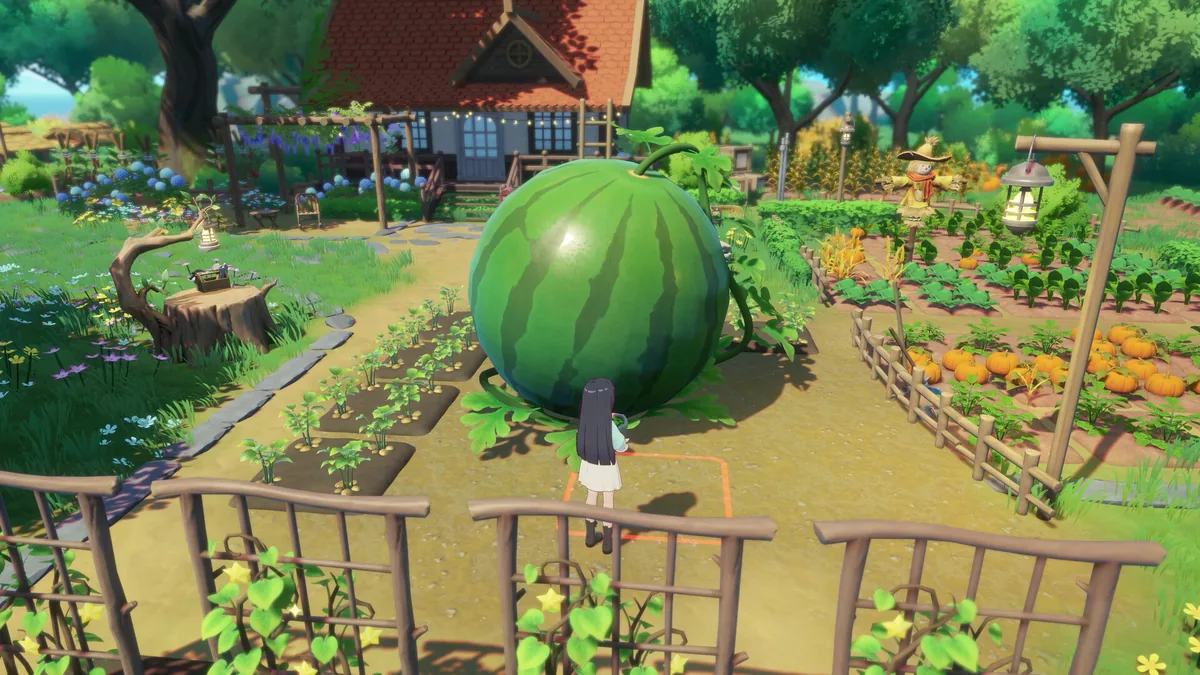 Caption: A successful GMAX watermelon, dwarfing the player and the regular-sized crops planted next to it.
GODEEPER: Want to see how another cozy life sim handles crafting and resource decisions once the basics click? Tales of Seikyu Crafting Guide: What to Build First →
Expanding beyond the Homestead: Cloudrest Lake and Windflute Island
The "buy land" option doesn't show up automatically, and it's one of the most repeated confusion points on the community subreddit, multiple separate threads ask this exact question. Land purchases happen through the Island Life app on your in-game phone, but the app option itself is locked behind two prerequisites players consistently report missing: reaching the Junior milestone in at least one profession, and placing multiple pieces of furniture in your house (a bed, bookcase, desk, and plants come up repeatedly as examples). Skip the furniture step and the buy-land option reportedly never appears no matter how far your professions progress. If you've met both and it's still not showing, several players report a save-and-quit followed by a reload fixes it. Beyond the unlock itself, expect the purchase to cost a real amount of gold; one player's strategy for affording it early was farming blue crystals in the Moonlight Forest and refining them into Starflare at the Gear Smith, which reportedly sells well.
Once your Homestead fills up, additional properties open up for purchase, and they don't all behave the same way. Cloudrest Lake mixes paddy fields (flooded plots better suited to certain crops) with regular tillable ground and trellis space, though some players report scattered clutter objects blocking specific tiles until cleared with a machete or impact hammer.
Windflute Island is the odd one out: it isn't farmable with standard tilled soil at all, but you can still place trellises there and grow climbing crops like grapes and tomatoes. If you're planning a Windflute expansion expecting a normal second farm, budget for trellis crops only.
Paddy fields bring their own pest problem. Snails target paddy crops specifically, and chickens don't help; ducks are the confirmed pest control for snails, while regular bugs on trellis and row crops respond to bug nets, bug traps, and scarecrows instead.
Tips
Process crops before selling them raw
Raw produce consistently undersells processed goods. A Juicer converts fruit into higher-value drinks; two lemons and four sugar make Golden Lemonade, and two Star Plum with three sugar make a chilled bayberry juice, both selling well above what the raw fruit fetches individually. A Separator does the same job for vegetables, breaking them into pulp and flour for recipes like veggie noodles, which one detailed community profit spreadsheet flagged as one of the most consistently profitable routes in the current build, more so than fruit trees even when grown in a greenhouse.
Understand Immortal seeds before you buy them
Immortal seed variants (confirmed for at least pumpkin, pineapple, watermelon, and winter melon) regrow automatically from the seed stage after you harvest, so you never manually replant. The tradeoff: because they restart from scratch every cycle, they lose the "few short harvest windows" advantage that a healthy trellis planting gets from its multiple pickings per season. If you're optimizing for total yield rather than convenience, a well-tended trellis crop can out-produce the equivalent Immortal seed over a full season.
Match crops to the season before you plant
Community crop-profit breakdowns list specific harvests by season rather than treating the whole shop as always available, and the game itself enforces this on at least one quest line by switching required crops from melons in summer to pumpkins in autumn. Check what's actually purchasable in the seed shop before committing plot space, since a seed you liked last month may simply not be sold anymore.
Use the greenhouse to skip season locks
Unlocking a greenhouse lets you grow certain crops, including GMAX attempts and fruit trees, year round instead of only during their normal season. It's not a universal fix (some players report fruit trees still underperforming even in a greenhouse) but for GMAX farming specifically, it removes the risk of a season change wiping an in-progress 3x3 attempt.
Common Mistakes
Tilling before placing a trellis. Place trellis structures on untilled ground first. Tilling that soil before adding the trellis has caused tiles to become permanently unselectable for some players after the first harvest.
Harvesting a whole GMAX plot after a failed attempt. If your 3x3 block matures without producing a giant crop, don't clear it all. Harvest one tile, replant that single spot, and let the rest catch up; it's cheaper and reportedly more effective than a full reset.
Ignoring the season clock on quest crops. A GMAX attempt or quest crop still growing when the season changes can be lost outright. Time your planting so a full growth cycle fits comfortably inside the current season, especially near a seasonal boundary.
Selling produce straight off the vine. Raw sale prices are consistently the worst option once you have access to a Juicer or Separator. If gold is the goal, process first.
Assuming every purchased plot works like the Homestead. Windflute Island supports trellis crops only, and Cloudrest Lake can have clutter blocking specific tiles until cleared. Scout a new property before assuming it farms exactly like your starting land.
Frequently Asked Questions
What are GMAX crops in Starsand Island? GMAX crops are oversized versions of a normal harvest, awarded by chance to a fully grown plot, commonly a 3x3 block of nine tiles. GMAX Fertilizer, bought or crafted at a fertilizer box, raises the odds but doesn't guarantee one.
How do I increase my chance of getting a GMAX crop? Plant a full block, apply GMAX Fertilizer, and let it mature without harvesting. If it fails, harvest only one tile and replant just that spot rather than the whole block. Players report this reroll trick works more reliably than starting over.
Do trellis crops like cucumbers and grapes regrow after harvest? Yes, but not instantly. Trellis crops usually yield two to three harvests per planting with a short ripening wait between each, rather than one harvest per seed like row crops.
Are there seasons in Starsand Island that affect crops? Yes. Community crop guides list specific harvests tied to spring, summer, autumn, or winter, and some quest crops (melons, then pumpkins) switch as the season changes. A greenhouse lets you grow certain crops year round instead.
What is the most profitable way to sell Starsand Island crops? Raw crops sell for less than processed goods. Players report juicing fruit into drinks and running vegetables through a separator into flour for recipes like veggie noodles outperforms selling produce straight from the field.
Can I farm on every plot of land in Starsand Island? No. Some purchasable land, like Windflute Island, cannot be tilled for row crops but still supports trellises for climbing plants such as grapes and tomatoes.
How do you buy more land or expand your farm in Starsand Island? Through the Island Life app on your phone, but the option only unlocks once you've reached Junior in at least one profession and placed multiple pieces of furniture in your house. Players who skip the furniture step report the buy-land option never shows up, regardless of profession progress.
What's the difference between Immortal seeds and regular seeds? Immortal seeds regrow automatically from the seed stage after harvest, so you never have to replant, but each regrowth cycle restarts from scratch. Regular trellis plants can be picked multiple times per planting before dying off.
Related Reading
- Starsand Island Review: Charm, Bugs, and a Bot Scandal: covers the farming systems in context of the game's launch controversy and overall verdict.
- Tales of Seikyu Crafting Guide: What to Build First: crafting and resource priorities in another cozy life sim with a comparable early progression curve.
- Tales of Seikyu Tips: 9 Things to Know Before Year 1: beginner-focused advice for players who like the genre but want a different game's take on it.
- Farm to Table Game: Is This Early Access Worth It?: a look at a different Early Access farming title for anyone comparing options in the genre right now.
- Starsand Island Complete Guide: Every System Explained: the full hub tying farming into fishing, romance, and every other system on the island.
References
Was this guide helpful?
About the author

Indie & JRPG Critic
Indie game evangelist and lifelong JRPG fan covering small studios since 2017. Mumbai-born, London-based. Writes the way she talks.
- 7 years indie games coverage
- JRPG and visual novel specialist
- Narrative design focus
Keep reading



Disclaimer
This article is published for informational and entertainment purposes. It does not constitute professional financial, legal, or technical advice. Game performance, online services, patch schedules, and store listings change. Verify critical details (pricing, system requirements, regional availability) with publishers and storefronts before you buy. Affiliate links, where present, help support our editorial work and are labelled in our affiliate disclosure.
Comments
Loading comments…