
GameBrief · General
Dark Scrolls Co-op Guide: Ghost System and Hero Pairings
Reviewing
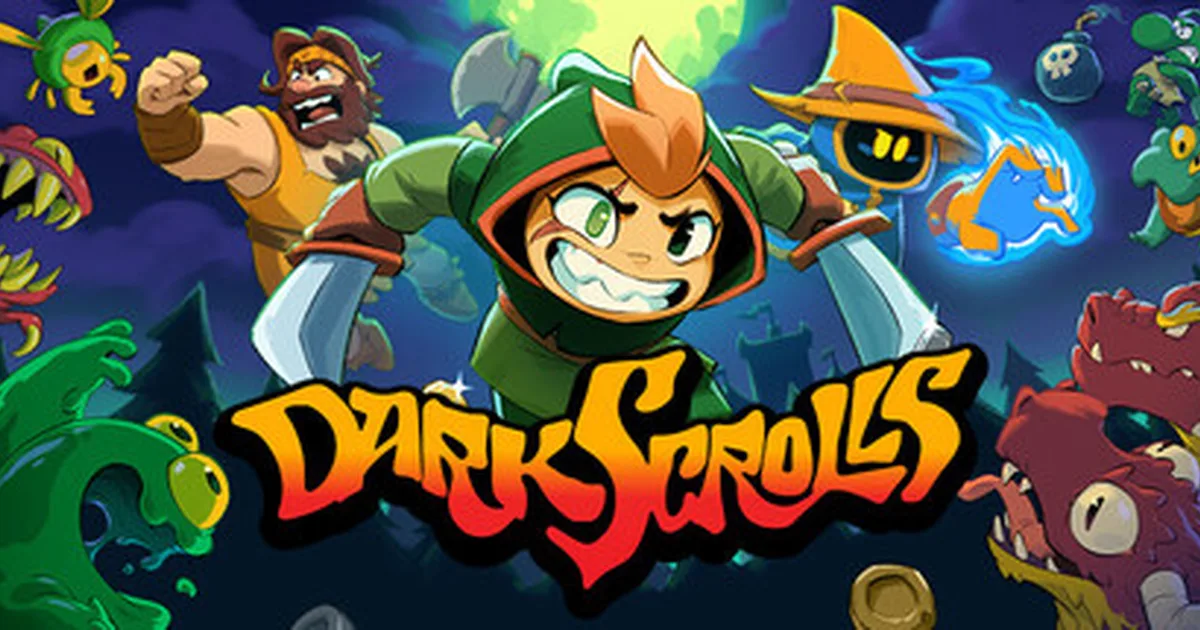
Dark Scrolls
doinksoft · Devolver Digital
This Dark Scrolls co-op guide covers the ghost system, hero pairings, and Shoppe coordination. The official Steam page confirms solo, local co-op, online co-op, and Remote Play Together, and says players can combine attacks and revive one another if they fall. A third-party guide adds the more specific ghost behavior; this article labels those observations instead of presenting them as an official mechanic list.
This Dark Scrolls co-op guide covers the systems that the tips guide only touches: how the ghost system is described by available guides, which hero pairings make sense from the documented kits, how Shoppe coordination works, and which multiplayer-scaling details remain undocumented.
Use the all-hero builds guide for perk priorities, the hero tier list for solo versus co-op rankings, the unlock guide for the manual-backed roster triggers, and the route guide for Forest, Bridge, Mountain, River, Cave, Castle, Moon, and Heck.
TL;DR: The Steam page confirms that co-op partners can combine attacks and revive one another. Games.GG reports that a fallen player can remain as a ghost platform with weak stagger shots, and reports Shoppe/checkpoint recovery. Best pairings from the official kits: Grizz and Pigeon for readable damage roles, Biscuit and Grizz for screen-wide stun into Axe Nova, and Emerys and Nezumi for projectile control plus song effects. Exact enemy-density and Shoppe-cost scaling is not documented officially.
Dark Scrolls co-op guide: what does the ghost mechanic actually do? (quick answer)
When a player dies in co-op, the Steam page confirms that the partner can be revived. Games.GG reports that the fallen player remains as a ghost, can reposition within the scroll area, fires weak projectiles that stagger enemies, and can act as a platform for living players. Keep those details attributed to that third-party guide.
What the third-party report does not describe is a meaningful damage role: it presents the ghost as a support platform and weak stagger source. It also reports loss at the scroll edge. Treat the ghost as an asset that needs protecting, not a spectator seat, while remembering that these edge cases are not listed in the official manual.
Solo play is fully supported without the ghost. Dark Scrolls launched June 22, 2026 with local co-op, online co-op, and Remote Play Together all present on day one. The official listing does not establish a fixed two-, three-, or four-player limit in the sources checked here.
Reviving ghosts: when and how
The Steam page confirms that players can revive one another after a fall. Games.GG reports Shoppe/checkpoint recovery for its ghost system, but the official manual does not specify a coin price or a guaranteed visit schedule, so keep the economy advice conditional.
Two rules for revive economy:
Don't spend every coin at an early Shoppe visit. Keeping a reserve is sensible if a partner is down, but the sources checked here do not establish a universal revive price.
Treat the Shoppe as a choice point. If a third-party guide's revive option is available and a partner is down, weigh it against a perk. Do not promise that a revive appears at every named route point.
Games.GG also reports checkpoint recovery when the ghost remains in bounds. That is useful practical guidance, but it is not a mechanic specified in the official manual.
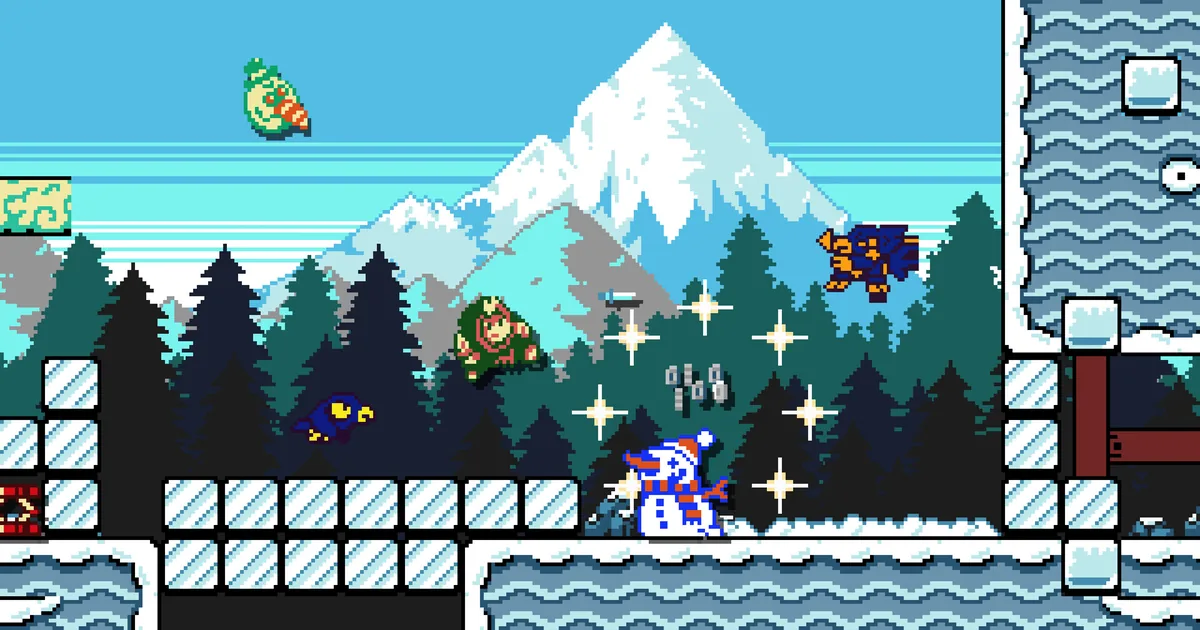
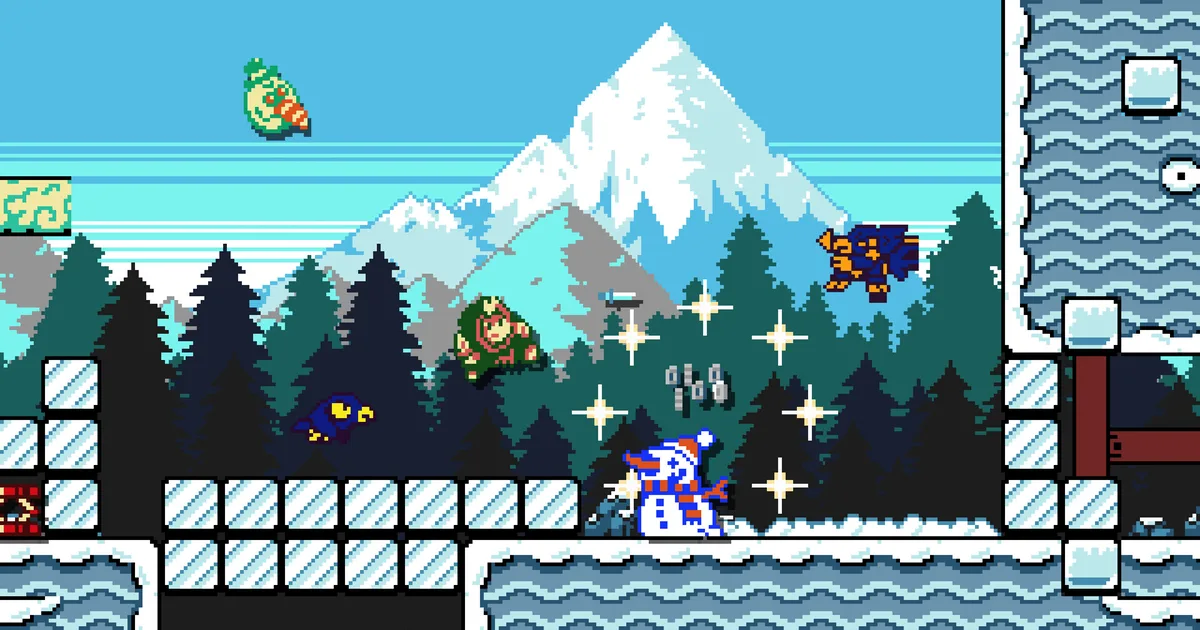
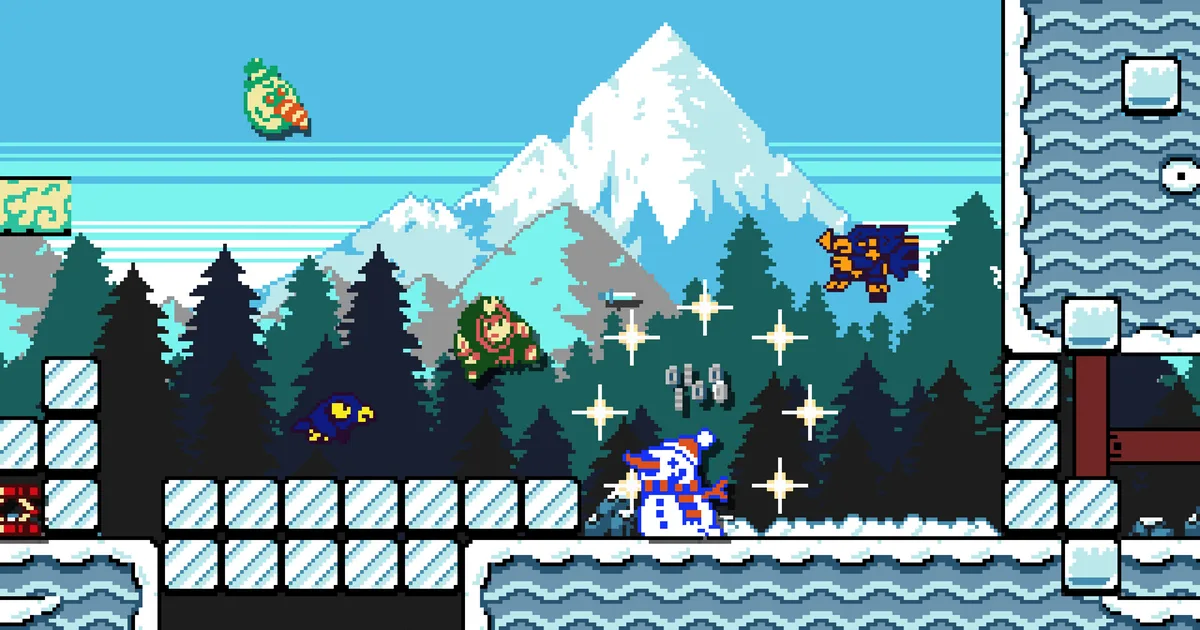
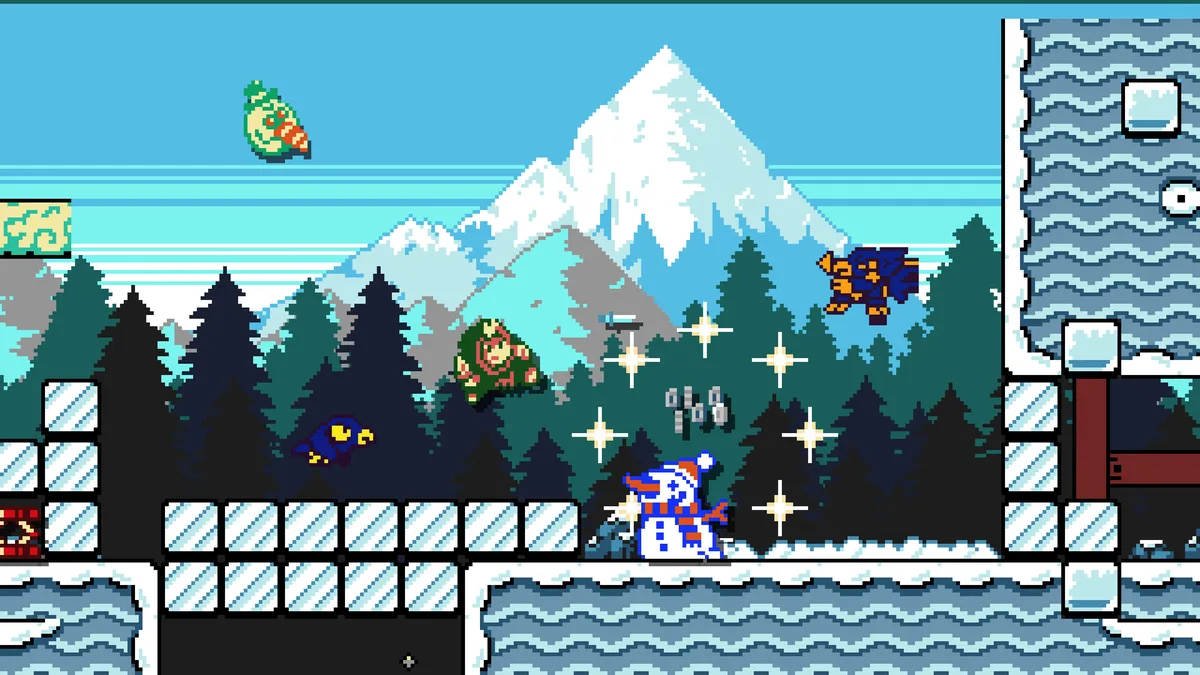 A winter-biome stage from Dark Scrolls. This screenshot shows the level's enemies rather than the ghost mechanic itself; see the positioning advice below for how the ghost works in practice.
Ghost positioning: the skill that separates good co-op from bad
Most players who die in co-op let their ghost drift to wherever it landed. That's wasted potential. Ghost position is under your control, and where you put it matters almost as much as where the living players are.
Three positions that consistently pay off:
Ahead of a difficult platforming section. If you can see a gap or an elevated ledge coming, position the ghost above or at the edge before the living player reaches it. The ghost acts as a step that turns a high jump into two smaller ones.
Inside an enemy cluster. The ghost's stagger shots are weak, but they interrupt attack animations. In a group of four enemies firing at your partner simultaneously, a ghost firing into that group from one side buys a half-second window. In Dark Scrolls, a half-second is a dodge and a burst attack charge.
Near the right side of the screen, not the left. A ghost on the left side of the screen is close to the scroll edge. A ghost on the right side has distance to maneuver and can fire into the enemy approach direction. Default to staying right unless there's a specific platform or gap that needs covering to the left.
The single worst ghost positioning mistake: sitting idle at whatever height the death happened on, firing randomly. Passive ghosts contribute almost nothing. A ghost actively seeking to get in front of the next threat is still playing the game.
GODEEPER: Understanding how doinksoft built the ghost system and what separates this from standard co-op revival loops is part of what makes Dark Scrolls' design work. For the route context where ghost scenarios play out, read the Dark Scrolls Dungeon Guide: Routes and Shoppe 2026 →
Hero pairings that work in co-op
Not every two heroes make a functional run. Some pairings overlap in combat role, compete for the same Shoppe perks, or leave obvious gaps against specific threats. You want range bands that don't crowd each other and roles that actually differ.
Grizz and Pigeon (recommended for most co-op players) This is the cleanest pairing for players still learning the game. Pigeon's rapid dagger attacks build the star meter quickly and handle enemies approaching from the front at range. Grizz's arcing axes and chain ground pounds handle elevated enemies and wide group clearance. They operate at different range bands, so they rarely crowd each other for position.
Biscuit and Grizz (screen-wide stun into Axe Nova)
Biscuit's Scary Bark stuns every enemy on screen. Grizz's Axe Nova creates a circle of bouncing axes when the Star Meter is full, so the pairing has a concrete setup-to-special interaction without a fabricated sneeze burst.
Emerys and Nezumi (projectile control plus songs)
Emerys's Orbitals summons magical orbs that damage enemies and destroy projectiles. Nezumi stores notes and uses Perform; the manual says a valid song triggers its associated named effect for both players. That is the documented basis for the pairing, not an orb shield or a fixed later-zone spike.
Avoid two melee heroes in early runs
Two Grizzs, or Grizz and Biscuit before either player knows the scroll, tends to collapse into both players fighting the same enemy cluster on the left half of the screen. The scroll catches up there. Spread range bands rather than doubling up.
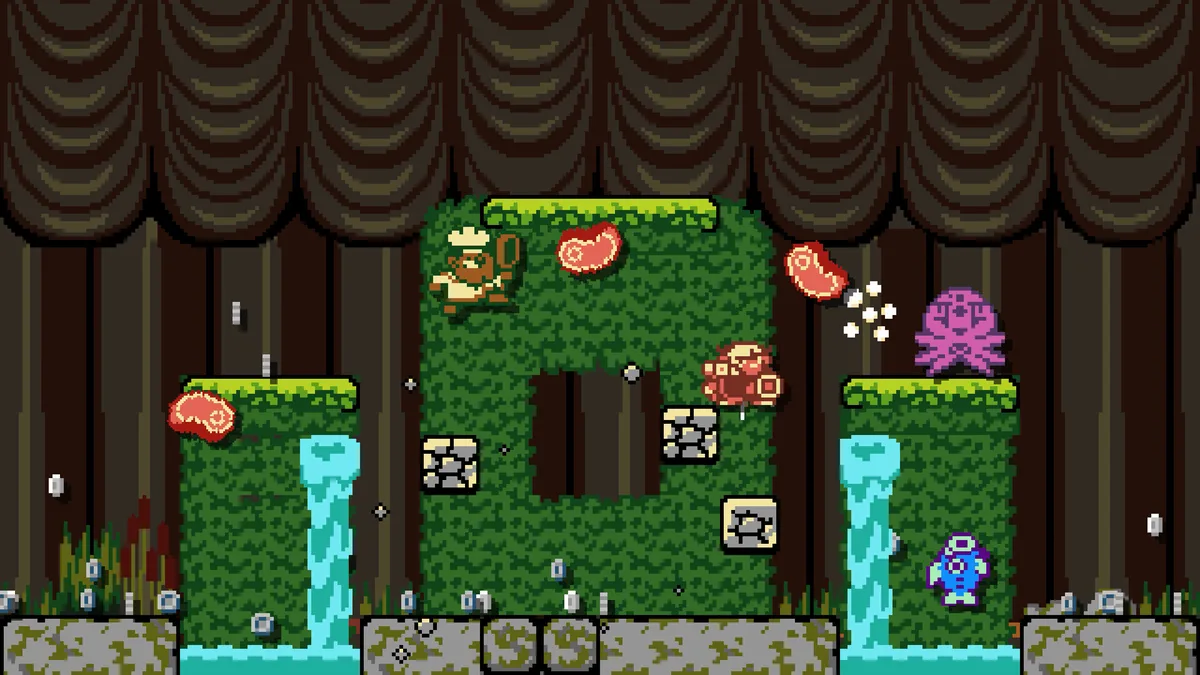 Run gameplay rather than the Shoppe screen itself: Dark Scrolls' stage-curtain backdrop and floating pickups mid-level. Build toward your hero's weapon type at the Shoppe between zones, not toward what your partner is buying.
Shoppe coordination between players
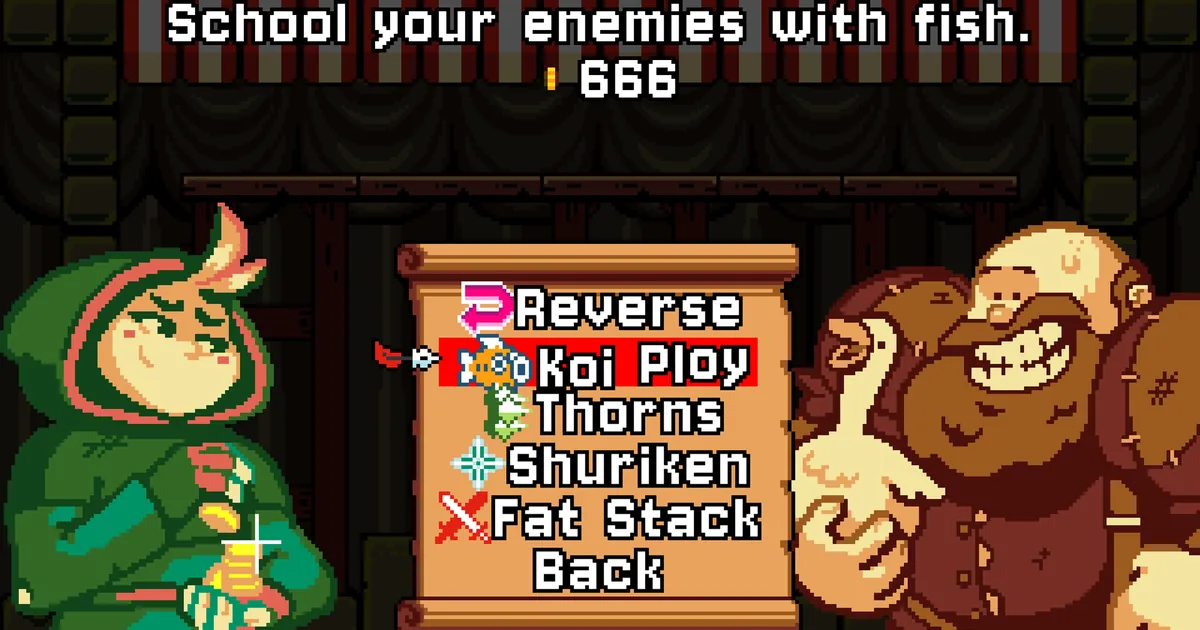
Each player buys their own perks at Bruce and Goose's Shoppe. There's no shared pool to fight over, which means the solo advice applies individually: pick the perk that stacks with your hero's weapon type, don't spread across incompatible categories.
What co-op adds is a strategic layer on top of that:
Assign roles at the start. One player can handle forward damage and star-building (Grizz, Pigeon, or Confit). Another can handle screen control or support (Biscuit's Scary Bark or Emerys's Orbitals). This is a build recommendation from the documented kits, not a hard class assignment.
Use summoned allies for independent coverage. The Steam page confirms that Bruce and Goose's Shoppe offers summoned allies. Whether one or two is optimal depends on the run; there is no official diminishing-returns formula to assert.
Banking coins between Shoppe visits is a co-op tool. If your partner is down, keep a reserve for the revive option described by the Steam page and reported by Games.GG. Do not treat a particular zone-one budget or exact price as official.
Nezumi's song system. Nezumi stores up to five notes with 1 = UP, 0 = FORWARD, and 2 = DOWN; double-jumping sends the notes as homing projectiles and clears the sax. Perform triggers a valid song's named effect for both players. That is a co-op interaction the manual actually documents; it does not establish a blanket Shoppe exemption or a fixed number of free effects.
What co-op difficulty scaling does and does not document
The official Steam listing confirms solo, local co-op, online co-op, and Remote Play Together. It does not publish enemy-density, scroll-speed, Shoppe-cost, or player-count formulas. Earlier claims that exactly enemy density and coin costs scale while scroll speed stays fixed were not traceable to an official source, so they are removed here.
What can be said safely is that more players change the screen state and that the official design gives partners revive and combined-attack tools. Games.GG's ghost report adds a platform and weak stagger role for a fallen player. Use those observations as practical co-op advice, not as a quantified difficulty equation.
For a complete breakdown of what the zones throw at you and when, the Dark Scrolls Dungeon Guide covers the zone-by-zone structure in detail.
GODEEPER: The hero pairing logic here mirrors build decisions in other co-op roguelites where role assignment at the start shapes the entire run. Dark Scrolls Best Builds: All 9 Heroes Ranked 2026 →
Step-by-step: a functional first co-op run
If you and a partner are going in for the first time:
- One player picks Grizz, one picks Pigeon. This is a readable first pairing, not a required composition.
- Use the documented roles. Pigeon brings dual daggers and a double jump; Grizz brings axe-lobbing, ground-pounding, and Axe Nova.
- Keep a coin reserve if a partner falls. The Steam page confirms revives; Games.GG reports Shoppe/checkpoint recovery, but neither source gives a universal price schedule.
- Ghost positioning is the active player's job too. If your partner dies, remind them to move their ghost ahead of the next difficult section rather than leaving it static.
- At the Shoppe: read the actual effect before buying. Shuriken spawns a bouncing shuriken; Thorns drains money before health unless money is depleted; Koi Ploy is a school of fish.
- Use Biscuit or Emerys for concrete control tools. Scary Bark stuns every enemy on screen; Orbitals damages enemies and destroys projectiles.
- Do not assume a four-player formula. The official listing confirms co-op modes but the sources checked here do not publish a fixed player cap or exact scaling math.
Related Reading
- Dark Scrolls Best Builds: All 9 Heroes Ranked 2026: Full Shoppe priority lists and individual hero build theory for each of the nine characters. Pairs with this guide's hero pairing section.
- Dark Scrolls Dungeon Guide: Routes and Shoppe 2026: The manual-listed route sequences, Shoppe categories, and source-backed survival guidance.
- Dark Scrolls Tips: 9 Things to Know Before First Run: The foundational tips covering autoscroll behavior, star system basics, and the co-op ghost mechanic at a surface level. Read this first if you're new to the game.
- Dark Scrolls Review 2026: Full critical review covering what the game gets right and where it loses a fraction of its score.
- Dark Scrolls: Devolver Co-op Roguelike Launches June 22: Launch coverage including doinksoft's studio history and the co-op mode lineup at launch.
References
- Dark Scrolls on Steam: Store page confirming co-op modes, Remote Play Together, combining attacks, and revives
- Dark Scrolls official instruction manual (PDF): official roster, specials, unlocks, routes, perks, trinkets, and Nezumi songs
- Games.GG Dark Scrolls guide: third-party report on autoscroll and ghost behavior
- Dark Scrolls hands-on preview (Checkpoint Gaming): Pre-launch preview covering co-op mechanics and ghost system
- Devolver Digital on Twitter/X: Publisher announcements including hero reveals and co-op mode confirms
Frequently Asked Questions
How does the ghost mechanic work in Dark Scrolls co-op? The Steam page confirms that a fallen co-op partner can be revived. Games.GG reports the more specific ghost behavior: the fallen player can act as a platform, fire weak stagger shots, and be recovered at the Shoppe or a checkpoint; it also reports loss at the scroll edge. Those details are third-party guide observations, not an official manual list.
Can you revive a ghost in Dark Scrolls? Yes. The Steam page explicitly says co-op players can revive one another if they fall. Games.GG reports Shoppe/checkpoint recovery, but the official manual does not specify a price or guaranteed schedule.
What are the best hero pairings for co-op? Grizz and Pigeon is the cleanest pairing for most players. Biscuit and Grizz combines Scary Bark's screen-wide stun with Axe Nova's bouncing axes. Emerys and Nezumi combines Orbitals' projectile destruction with Nezumi's songs, which can trigger a named effect for both players.
Does difficulty scale in co-op? The official sources confirm multiple co-op modes but do not publish an enemy-density, Shoppe-cost, scroll-speed, or player-count formula. Treat exact scaling claims as unverified.
How do players split Shoppe perks in co-op? Each player buys perks independently. Build toward your hero's weapon type, not toward what your partner is buying. Assign roles before the run: one damage dealer, one support, and buy accordingly.
Is online co-op available in Dark Scrolls? Yes. The game launched with solo, local co-op, online co-op, and Remote Play Together all present on day one, June 22, 2026.
Is Nezumi good in co-op? Yes, once both players know the note system. The partner can cover forward pressure while Nezumi stores notes and uses Perform; the manual says a valid song triggers its associated named effect for both players. The manual does not justify a blanket free-Shoppe claim.
What happens if the ghost hits the scroll edge? Games.GG reports that the ghost is lost at the scroll edge. Keep living players ahead of the boundary and treat that as third-party practical guidance, not a behavior listed in the official manual.
Was this guide helpful?
About the author

Games Critic
Games writer and reluctant optimist who has reviewed over 400 titles across 9 years. Irish, currently in Berlin. Has strong opinions about tutorial design.
- 400+ games reviewed across 9 years
- Platformer and horror specialist
- Narrative design focus
Keep reading

Disclaimer
This article is published for informational and entertainment purposes. It does not constitute professional financial, legal, or technical advice. Game performance, online services, patch schedules, and store listings change. Verify critical details (pricing, system requirements, regional availability) with publishers and storefronts before you buy. Affiliate links, where present, help support our editorial work and are labelled in our affiliate disclosure.
Comments
Loading comments…