
GameBrief · General
Dark Scrolls Tips: 9 Things to Know Before First Run

Reviewing
Dark Scrolls
doinksoft · Devolver Digital
These Dark Scrolls tips cover what the game doesn't bother telling you before it starts scrolling. Dark Scrolls is doinksoft's co-op hack-and-slash roguelike, published by Devolver Digital on June 22, 2026, and while the chunky pixel art looks approachable, the first run tends to end faster than expected. The screen moves constantly. You move with it or you die. That single fact shapes every other decision in the game.
TL;DR: The screen scrolls automatically and will kill you if it pushes you offscreen, so keeping up is priority one. Charge the Star Meter by dealing damage, spend coins at Bruce and Goose's Shoppe on documented effects, and in co-op, a fallen partner can be revived. Each of the nine heroes has a distinct documented kit, so pick one that fits how you already move.
Dark Scrolls tips: what new players get wrong first (quick answer)
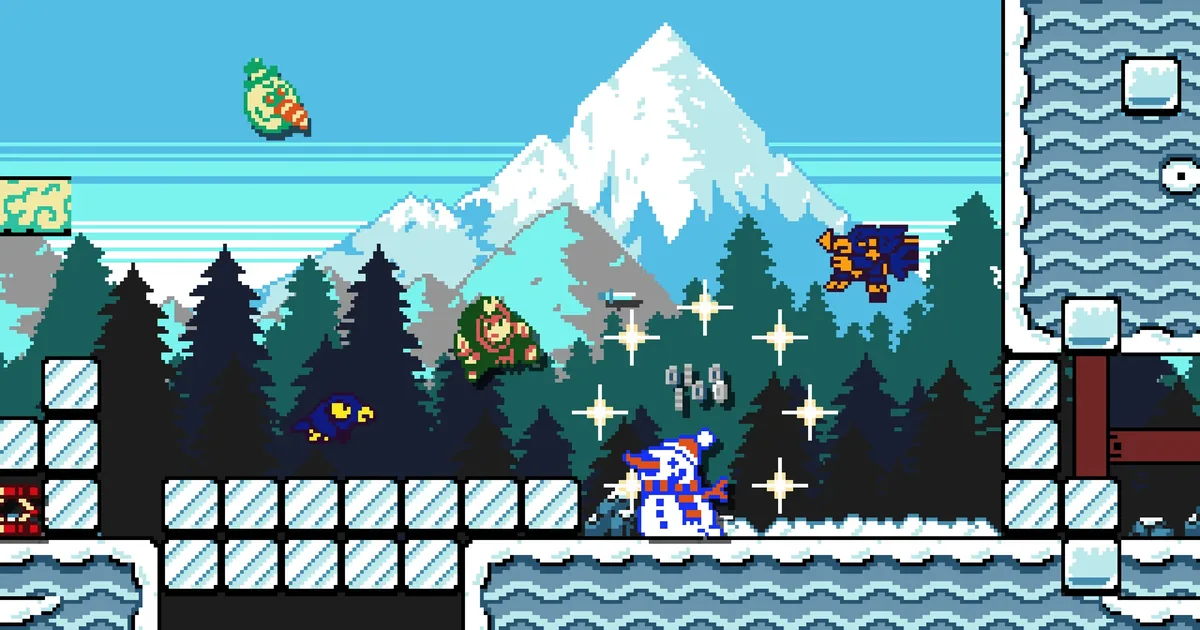
Most early deaths aren't about the enemies. They happen because a player stops moving to fight something in the wrong spot, the scroll edge catches up, and that's it. Dark Scrolls is an autoscrolling platformer first and a roguelike second. Surviving long enough to buy perks and stack a build means treating the scroll boundary as the most dangerous thing on screen, not the boss at the end of the level.
The second most common issue is not attacking enough. The Star Meter charges from damage dealt. Standing back to observe costs you meter progress and delays the named special that becomes available when the meter is full.
The autoscroll is the real difficulty
Nothing in the game's description is dishonest about this, but it doesn't fully prepare you either. Each room and level scrolls steadily to the right. The pace is "measured," as one preview put it -- not so fast that survival requires inhuman reaction time, but fast enough that stopping to dig a stuck character out of a corner will get them killed.
Three practical consequences for early runs worth internalizing:
The risk-reward on chests is constant. A chest visible to the left of your current position might require dropping back toward the scroll edge to open it. Worth it sometimes, fatal if the timing is wrong.
You can't park and wait for a safe moment. The game doesn't have safe moments at the scroll edge. If you prefer holding position and reading patterns before committing, Dark Scrolls will punish that instinct hard. The fix is learning to dodge while moving forward, not dodging and stopping.
Enemy placement respects the scroll logic. Enemies spawn ahead of you and are designed so that fighting them doesn't require backtracking. When a layout feels like it's trying to push you back, that's usually a trap for a chest or an alternate path, not a design error.
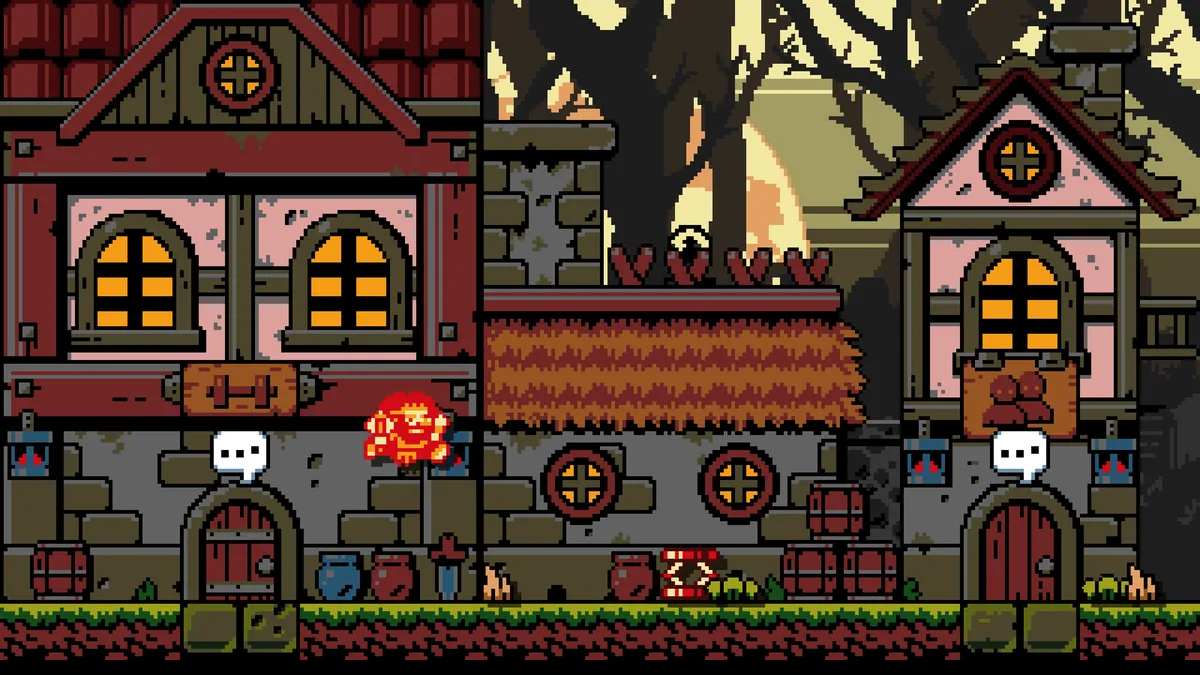 A flaming combat run in the village biome. Skull enemies spawn in pairs. Moving forward and attacking simultaneously is the correct response, not stopping to fight both before advancing.
How the star system works and why you should always be attacking
Dealing damage charges the Star Meter. It is not just a score display: the manual says a full meter enables the chosen hero's special, and perks can be assigned to Star Levels. Games.GG reports a five-star display and threshold behavior, but the hero special still has its own documented name and effect.
The design quirk worth understanding early: a perk assigned to a Star Level is tied to that level. The manual also says the chosen character's special resets the Star Meter to zero when used, so plan the timing of the special and any threshold perks together.
Aggression is useful because the meter charges from damage dealt. Grizz's axe-lobbing kit, Pigeon's dual daggers, and Quinn's arrows all reward landing hits; avoid claiming that a generic berserker class or an invented burst mechanic is responsible for the meter.
Three stars is the first meaningful threshold for most builds. Getting there before the first major enemy group is the early-run target.
GODEEPER: Co-op roguelikes with layered progression systems reward different approaches than solo play. 33 Immortals Beginner Guide: 9 Tips for Your First Runs →
Bruce and Goose's Shoppe: what to spend on first
The Shoppe appears between stages. You spend coins collected during the run on a rotating selection of perks, attacks, and summoned allies. The options change between visits, so you won't see the same list twice.
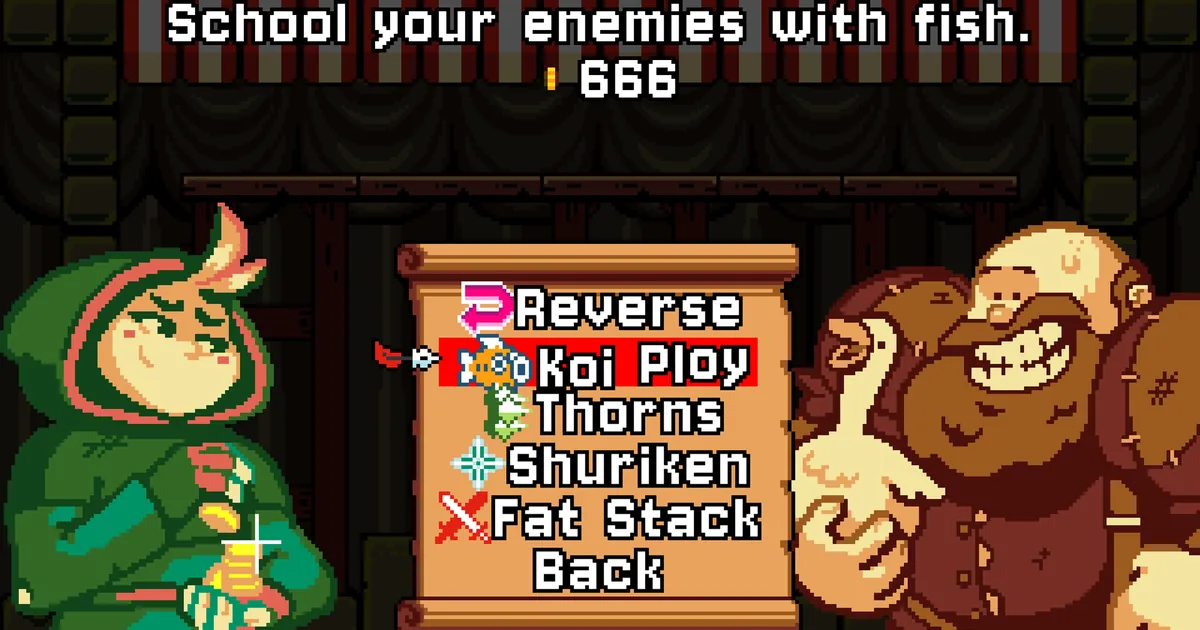
The manual defines several named effects: Thorns makes damage drain money instead of health unless money is depleted; Shuriken spawns a bouncing shuriken when you shoot; Koi Ploy creates a school of fish; and Fat Stack increases damage by 1x the number of active perks, including itself. Reverse appears in third-party Shoppe screenshots, but the manual does not define its effect, so do not assign it a trajectory rule.
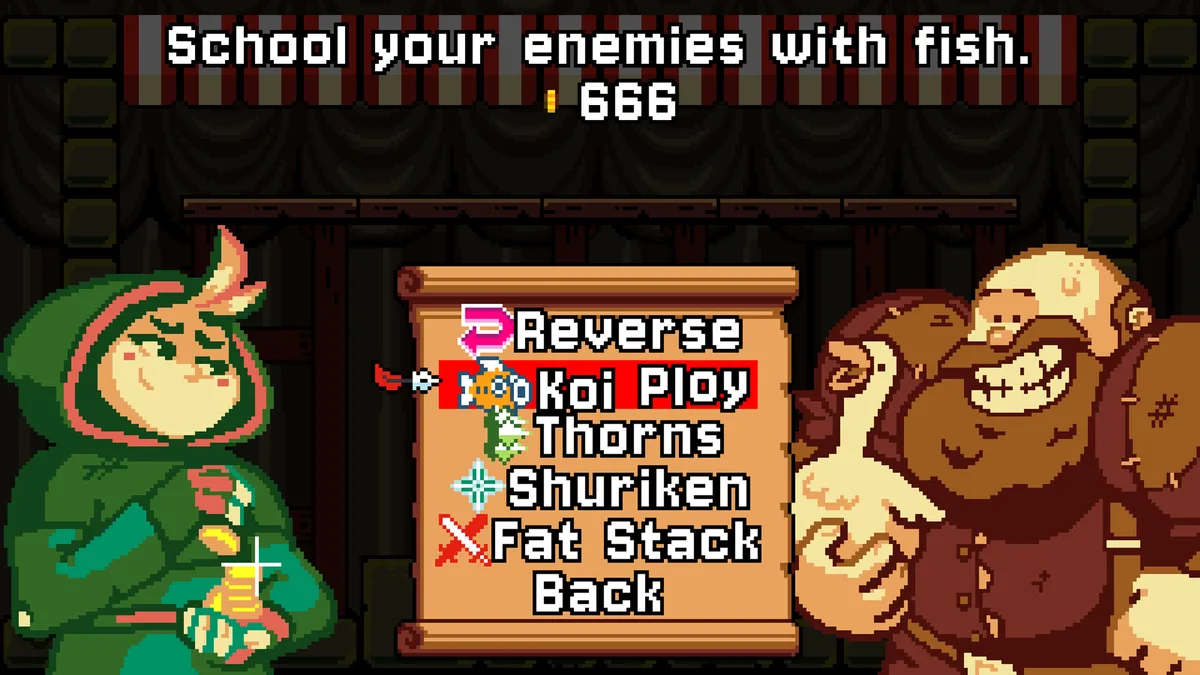 The Shoppe mid-run. Koi Ploy creates a school of fish. Thorns is a money-before-health defensive tradeoff, not contact reflection. Stack effects that you can identify rather than spreading perks across guesses.
The beginner mistake here is picking the most interesting-sounding perk rather than the most compatible one. Two unrelated perks that both sound strong produce a mediocre run. One perk that directly amplifies your hero's weapon type produces a good one. Shuriken on a knife-thrower stacks cleanly. Shuriken on the saxophone rat doesn't do much.
Allies purchased from the Shoppe follow you through the stage and attack independently, which helps in sections where scroll speed picks up. They're not infinite. Budget coins accordingly rather than spending everything on a single visit.
Step-by-step: how to approach your first three runs
Starting from zero in Dark Scrolls, this is the cleanest path to understanding what you actually have to work with.
-
Run 1: pick Grizz and don't buy anything. Seriously. Observe the autoscroll, learn when enemies spawn relative to your position, and find out where the Shoppe appears. Die without having spent coins so you have a clean read on the default difficulty. This sounds like a waste of a run. It isn't. You'll play two hours longer if you understand the baseline first.
-
Run 2: focus the Star Meter. Pick the same hero. Attack everything immediately rather than dodging first. Charge the meter and trigger Grizz's
Axe Novaso you know what a named special feels like. The rhythm is build, attack, dodge, not dodge-wait-attack. -
Run 3: make one Shoppe decision. Pick an effect whose documented behavior matches your hero. Shuriken adds a bouncing shuriken; Koi Ploy adds a school of fish; Fat Stack scales damage from active perks. Ignore effects you cannot verify. One coherent perk beats two unrelated guesses.
By run four or five you'll have a feel for route choices, the chest risk-reward timing, and whether you want to pursue a specific manual-listed hero trigger.
For a longer progression reference, the complete guide hub, best builds guide, and route guide keep the verified roster and route facts in one place.
Tips for playing Dark Scrolls in co-op
The co-op mode changes the run substantially rather than just adding a second health bar to the screen.
The ghost mechanic isn't a punishment. The Steam page confirms that a fallen partner can be revived. Games.GG reports that the dead player stays as a ghost that can act as a platform and fire weak stagger shots. Your partner is still contributing, but those ghost details are third-party guidance rather than a complete official manual specification.
Keep a revive reserve. The Steam page confirms revives, and Games.GG reports Shoppe/checkpoint recovery. The official sources checked here do not publish a universal price or visit schedule, so keep the advice conditional.
Combine documented kits when the game sets it up. The Steam page explicitly supports combining attacks. Biscuit's Scary Bark can stun every enemy on screen, Emerys's Orbitals can destroy projectiles, and Nezumi's valid songs trigger named effects for both players. Do not build around Thorns as a reflection effect; the manual defines it as money-before-health damage.
In co-op the scroll edge still matters. Games.GG reports that a ghost can be lost at the scroll edge. The Steam page confirms revives. Treat ghost positioning as third-party practical guidance, not as an official scaling formula.
GODEEPER: If you're playing a co-op roguelike with nine hero options, understanding which builds stack well together is the meta layer under the chaos. Lost Castle 2 Beginner Guide: Weapons, Build and First Run →
The nine heroes: what each one actually does
The official manual names all nine heroes and their specials. The hero you pick is the base kit; Shoppe perks modify it, while character side objectives belong to the separate trinket system.
- Grizz: axe-lobbing and ground-pounding attacks;
Axe Novacreates a circle of bouncing axes. - Pigeon: dual daggers and a double jump;
Stealthgrants temporary invincibility and critical hits. - Emerys: bouncy fireballs and blink-dash;
Orbitalssummons damaging orbs that destroy projectiles. - Biscuit: enemy-piercing barks and a bouncy double jump;
Scary Barkstuns every enemy on screen. - Quinn: walking/flying movement and love-infused arrows;
Auracreates a healing ring and temporary fire-rate increase. - Confit: flips steaks;
Cooksends damaging food flying or creates hearts. - Ironbeard: launches pickaxes and makes temporary platforms by double-jumping;
Tinkerbuilds a cannon and fires cannonballs. - Saturn: flies with an alien machine gun;
Abductpulls in enemies, coins, and props and improves ammo capacity, fire rate, and firepower through experience. - Nezumi: saxophone magic;
Performattempts songs using the1 = UP,0 = FORWARD,2 = DOWNnote inputs and triggers a valid song's named effect for both players.
Three heroes, Grizz, Pigeon, and Emerys, are unlocked by default. The manual's other triggers are: Biscuit's first-boss cage; Quinn's maximum cumulative Camp wishing-well donation; Confit's Mountain quest, Perk Shop key, and Castle cell; Ironbeard after freeing Confit and throwing meat at him in Cave; Saturn after completing Moon; and Nezumi from the meta-shop. Do not replace this list with a generic "six dungeon secrets" claim.
Common mistakes in early runs
Stopping to fight an enemy the scroll will handle. An enemy near the left edge is about to be pushed off. You don't need to engage it. Moving forward and leaving it behind costs nothing.
Spreading Shoppe picks across incompatible perks. Three different perk categories make a mediocre generalist build. Pick one direction and stack it.
Playing ranged at maximum distance from the start. Stars build on hit, not on shot fired. Ranged heroes firing from the back of the screen and missing build no meter. Close the distance until you know your effective range.
Leaving the ghost unpositioned in co-op. A ghost sitting near the scroll edge isn't doing much. The ghost's usefulness comes from proactive positioning: ahead of difficult platforming sections, in enemy clusters where stagger helps, or elevated to provide a jump platform over a trap gap. A passive ghost is wasted.
Spending every coin on the first Shoppe visit. Later Shoppe visits sometimes offer better synergies for your specific hero. Banking coins is a real option if the current list doesn't match your build.
Related Reading
- Dark Scrolls Complete Guide: All 9 Heroes and Zones 2026: the full hub linking every Dark Scrolls guide on this site, from hero builds to dungeon zones.
- Dark Scrolls Launch: Co-op Roguelike from doinksoft Hits June 22: The announcement and launch preview covering what doinksoft built and why the pedigree from Gato Roboto and Gunbrella matters.
- 33 Immortals Beginner Guide: 9 Tips for Your First Runs: Thunder Lotus's 33-player co-op roguelike has a completely different structure but the same first-run principle: learn the loop before optimizing the build.
- Lost Castle 2 Beginner Guide: Weapons, Build and First Run: The best comparable in the co-op beat-em-up roguelike space right now, with weapon categories and progression decisions worth understanding before your Dark Scrolls build clicks.
- Best Indie Co-op Games Steam Summer Sale 2026: 6 Picks: Context for where Dark Scrolls sits in the June 2026 co-op indie release window.
- Dark Scrolls Co-op Guide: Ghost System and Hero Pairings: Dark Scrolls co-op guide: when a player dies they haunt enemies as a ghost.
- Dark Scrolls Best Builds: All 9 Heroes Ranked 2026: Dark Scrolls best builds guide: 9 heroes ranked for solo and co-op.
- Dark Scrolls Review: 9 Heroes, One Sharp Roguelite: Dark Scrolls review: doinksoft's co-op roguelite delivers 9 distinct heroes, a Shoppe system with real.
- Dark Scrolls Dungeon Guide: All Floors and Zones 2026: Dark Scrolls dungeon guide: how floors progress, enemy types by zone, Shoppe timing between stages,.
Frequently Asked Questions
Does Dark Scrolls have a tutorial? No formal tutorial. The game starts scrolling and expects you to adjust. The autoscroll behavior especially catches new players off guard.
How does the star system work? Deal damage to charge the Star Meter. The manual says a full meter enables the chosen hero's special and perks can be assigned to Star Levels. Games.GG reports a five-star display and threshold behavior, but do not rename the hero's special as a generic burst.
What's the best hero for beginners?
Grizz is the most forgiving starting choice for this guide. His axe-lobbing and ground-pounding kit is straightforward, and Axe Nova creates a circle of bouncing axes when the Star Meter is full.
Can you play Dark Scrolls solo? Yes, fully. The game scales to one player. Co-op adds the ghost mechanic and combined attack opportunities, but solo is a complete experience.
How does the ghost mechanic work in co-op? The Steam page confirms that a fallen partner can be revived. Games.GG reports that the dead player remains as a ghost that can act as a platform and fire weak stagger shots, with Shoppe/checkpoint recovery; those details are third-party guidance.
What does Bruce and Goose's Shoppe sell? Perks, devastating attacks, and summoned allies. The manual defines Thorns as money-before-health damage, Shuriken as a bouncing shuriken when shooting, Koi Ploy as a school of fish, and Fat Stack as damage scaling with active perks. Reverse appears in third-party screenshots, but its effect is not defined in the manual.
How do you unlock more heroes in Dark Scrolls? Grizz, Pigeon, and Emerys start unlocked. The manual lists Biscuit's first-boss cage, Quinn's Camp wishing well, Confit's Mountain quest and Castle key, Ironbeard's Cave meat interaction after Confit, Saturn's completed Moon level, and Nezumi's meta-shop purchase. Unlocked heroes are permanent.
References
- Dark Scrolls on Steam
- Dark Scrolls official instruction manual (PDF): official roster, specials, unlocks, routes, perks, trinkets, and Nezumi songs
- Games.GG Dark Scrolls guide: third-party report on autoscroll, Star Meter thresholds, and ghost behavior
- Dark Scrolls Official New Release Date Trailer
- Devolver Digital and doinksoft announce Dark Scrolls for Switch, PC (Gematsu)
- Dark Scrolls preview: worthplaying.com Switch/PC preview
Was this guide helpful?
About the author

Games Critic
Games writer and reluctant optimist who has reviewed over 400 titles across 9 years. Irish, currently in Berlin. Has strong opinions about tutorial design.
- 400+ games reviewed across 9 years
- Platformer and horror specialist
- Narrative design focus
Keep reading

Disclaimer
This article is published for informational and entertainment purposes. It does not constitute professional financial, legal, or technical advice. Game performance, online services, patch schedules, and store listings change. Verify critical details (pricing, system requirements, regional availability) with publishers and storefronts before you buy. Affiliate links, where present, help support our editorial work and are labelled in our affiliate disclosure.
Comments
Loading comments…