
Complete guideDeep Rock Galactic: Rogue Core
Deep Rock Galactic Rogue Core Guide: All 5 Classes 2026
Deep Rock Galactic Rogue Core guide: all 5 Reclaimer classes, roguelite upgrade loop, co-op builds, EA roadmap, and how it compares to the original DRG.
About the game
Deep Rock Galactic: Rogue Core
Ghost Ship Games · Ghost Ship Publishing + Coffee Stain Publishing
Deep Rock Galactic Rogue Core entered Early Access on May 20, 2026 as a standalone roguelite. Ghost Ship Games kept the Hoxxes IV setting and the dwarven tone, but stripped out the extraction loop that defined the original and built a floor-descending roguelite in its place. Five new Reclaimer classes, 100+ upgrades across six tiers, and a structure that ends when you fail or clear the final chamber.
Launch was rocky. Server outages hit May 21, preventing co-op for several hours. Ghost Ship published a roadmap on May 22 confirming an 18-24 month EA window. On September 18, the official Steam page showed Mixed English reviews at 69% from 7,458 reviews, with recent reviews Mixed at 59% from 308. The same page showed a temporary $23.99 price, down from $29.99, through September 21.
This hub collects every Deep Rock Galactic Rogue Core guide on this site. If you're comparing it to the original DRG, there's a dedicated article for that. If you're new to Deep Rock Galactic Rogue Core entirely, start with the classes. If you're new, start with what the classes do and how the upgrade loop works. If you're a veteran of the original, the comparison article is the fastest way to understand what actually changed.
TL;DR: Deep Rock Galactic Rogue Core launched May 20, 2026 at $29.99 as a standalone roguelite, separate from the original DRG. Five new Reclaimer classes (Guardian, Slicer, Falconer, Spotter, Retcon), 100+ upgrades across 6 tiers, and a floor-descending structure where nothing carries over between runs except meta-progression. On September 18, Steam showed Mixed English reviews at 69% from 7,458 reviews and recent reviews at 59% from 308; the current sale price was $23.99 through September 21. Ghost Ship shipped Update 01 on June 17, adding selectable Assault Pace difficulty, two new weapons, a new flying enemy, and a full rework of the shared upgrade negotiation system.
Key takeaways
- DRG Rogue Core is a standalone roguelite: no extraction missions, no original miner classes
- Five Reclaimers at Early Access launch: Guardian (stun), Slicer (melee), Falconer (drone), Spotter (crits), Retcon (time control)
- Upgrade pool has 100+ options across Common, Uncommon, Rare, Epic, Legendary, and Artifact tiers
- Three enemy factions at launch: Corespawn, Rafkan, Shatterclaw: more confirmed for EA updates
- Co-op supports up to four players; the Falconer's revive mechanic is the co-op backbone
- Reception: Mixed, 69% from 7,458 English reviews; recent reviews Mixed at 59% from 308 on September 18
- Roadmap: 18-24 month EA window confirmed May 22, 2026
- Update 01 (June 17, 2026): selectable Assault Pace difficulty, 2 new weapons, new Voidkin Drifter enemy, upgrade negotiation rework, free "First Responder" cosmetic DLC
- Update 2 (September 2, 2026): five Threat Levels, Depth progression changes, boss invulnerability rework, and 7 new Expenite upgrades plus 1 new Artifact
- September 18 price snapshot: $23.99 USD on Steam, down from $29.99 through September 21
- DRG Rogue Core Early Access: What Update 01 Changed: DRG Rogue Core early access: Update 01 added Assault Pace, two new weapons, and upgrade rework.
What is Deep Rock Galactic: Rogue Core?
Ghost Ship Games built Deep Rock Galactic Rogue Core as a deliberate departure from the extraction formula. In the original Deep Rock Galactic, runs end when you extract: you drill in, complete an objective, reach the drop pod, get out. Rogue Core removes the pod entirely.
Instead, you descend. Each run is a series of floors on Hoxxes IV, each harder than the last. Between floors, you choose upgrades from a rotating pool. When your squad dies, or when you've cleared enough floors to reach the final chamber, the run ends. Everything you built for that run is gone. What persists across runs is a separate meta-progression layer that unlocks starting options for future attempts.
The setting is still Hoxxes IV. The tone is still the specific flavor of corporate deadpan that fans of the original recognize. But the mechanics are new enough that knowledge of the original DRG doesn't carry over cleanly, which is part of why the comparison article exists.
Rogue Core launched at $29.99 USD on Deep Rock Galactic: Rogue Core on Steam. The same listing showed a temporary $23.99 price through September 21 during this audit. It remains Early Access pricing, and Ghost Ship hasn't announced a final release price.
The five Reclaimer classes
The original DRG had four miners: Driller, Engineer, Gunner, Scout. Deep Rock Galactic Rogue Core has five Reclaimers, none of which are those four. They share the same corporate-soldier-on-a-dangerous-planet energy but have distinct ability kits and different roles in co-op play.
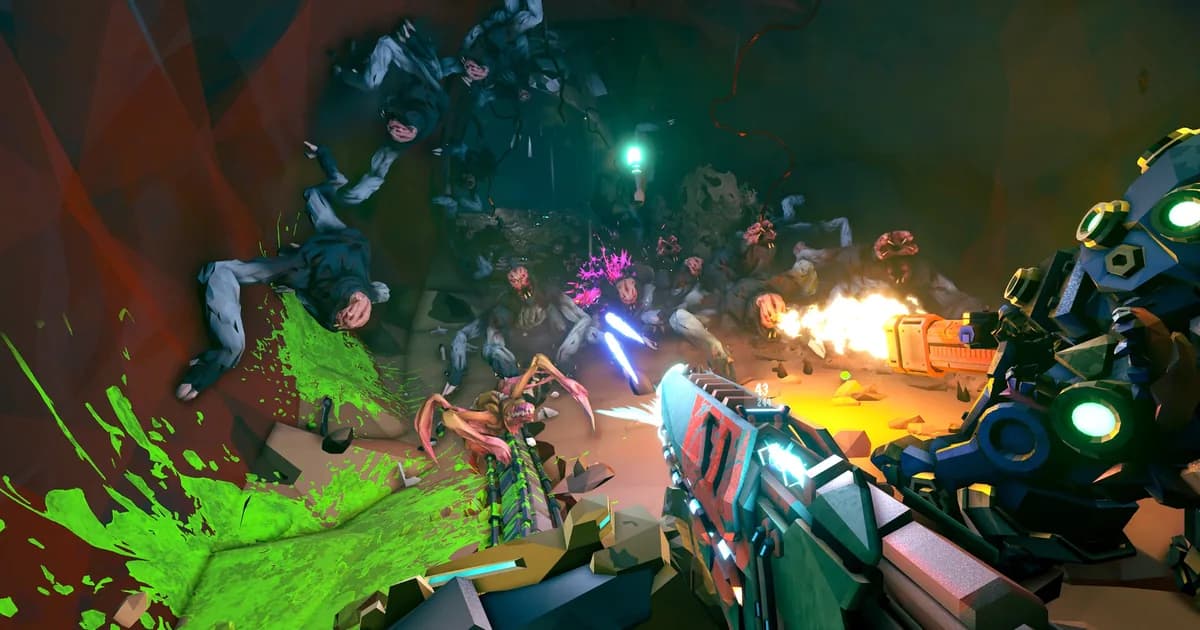
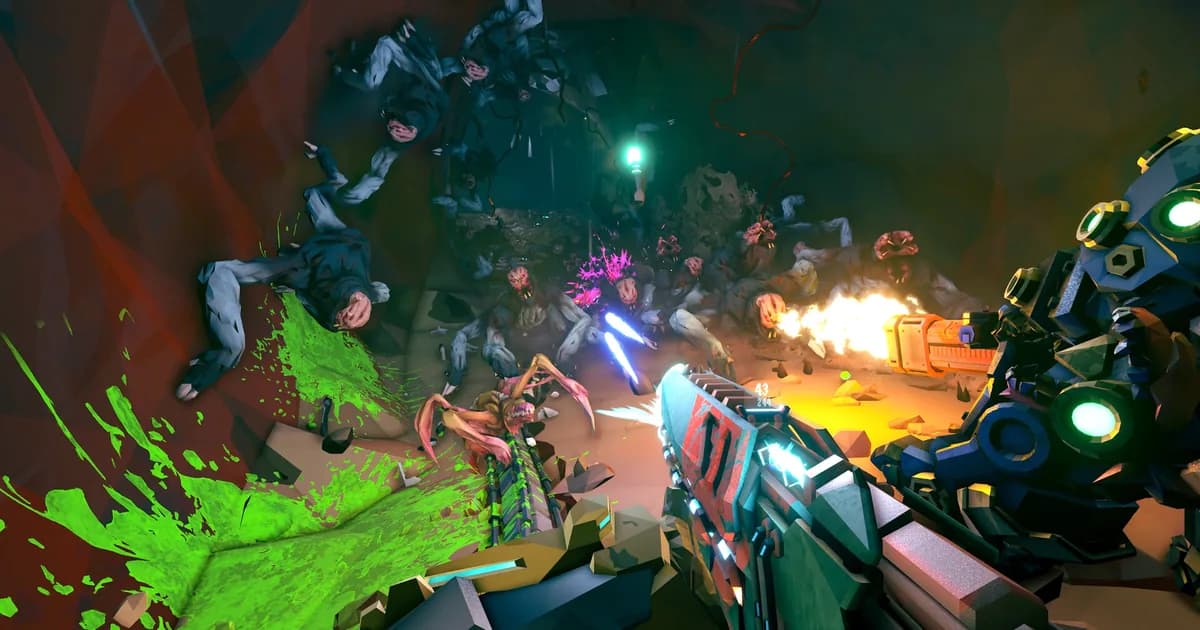
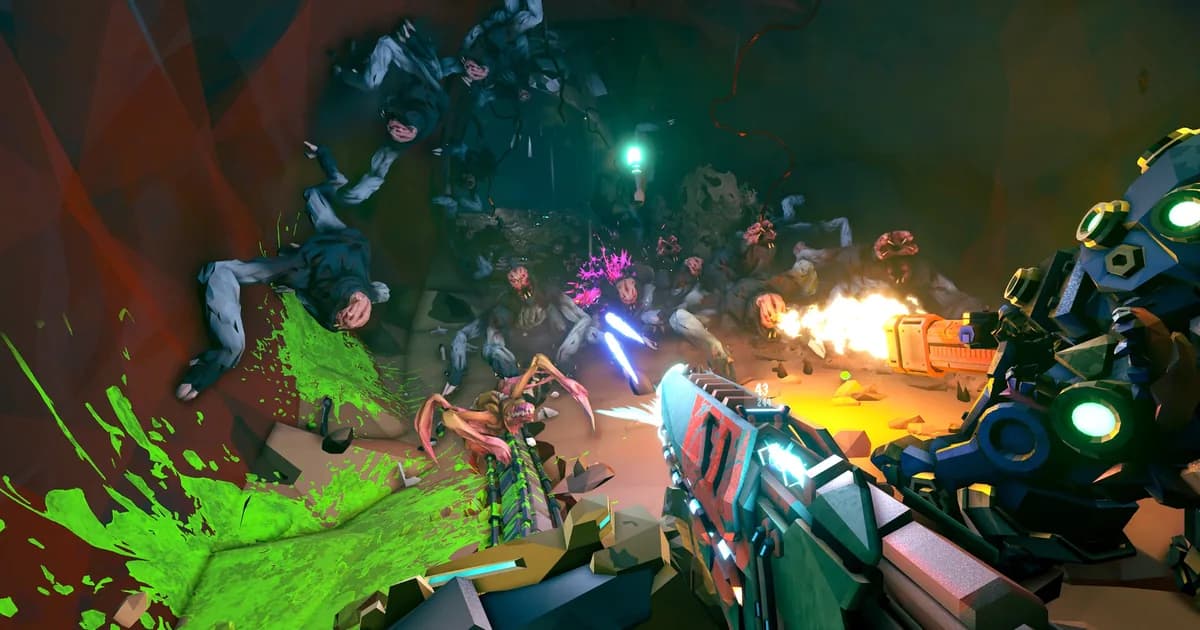
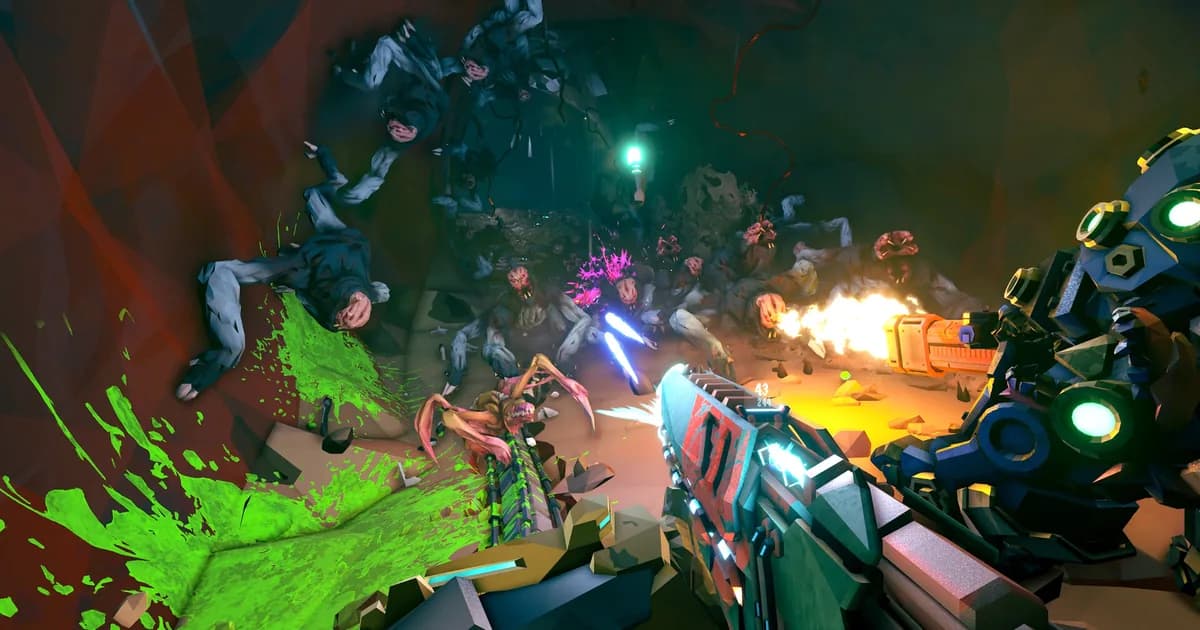
Combat inside Rogue Core's caves: enemies swarm fast, and clearing a cluster before it closes the distance is the core moment-to-moment loop.
Guardian uses Seismic Gloves with two separate modes: Repulsion Field creates a 4-second fear zone, while Concussive Barrage fires 12 munitions and stuns direct hits for 6 seconds. The ability has 2 charges and a 20-second cooldown; generic tier language is strategy advice.
Slicer carries a Plasma Blade rated at 560 melee damage per swing, the highest single-strike number of any class in the current build. The tradeoff is positioning: Slicer needs to be at melee range to deal that damage, and the class lacks the defensive utility to survive poor positioning. High ceiling, low floor.
Falconer deploys a Shock Drone with 5 charges and 10-second per-charge replenishment. Each barrage fires 4 projectiles for 35 direct-hit damage and 25 area damage, and the class page documents stun/electrocution plus Remote Drone Revive. The Thunder Rod grants +100% Electric Damage within 8m for 15 seconds.
Spotter fires Crit Darts that apply +100% Crit Chance to a direct mark for 5 seconds; a ground shot creates a 10-second marking zone. That is a chance increase, not a guarantee that every hit becomes critical. In structured co-op, coordinate focus fire around the mark.
Retcon has Time Rewind and Rage: Rewind restores the recorded position, ammo, health, and armor after up to 20 seconds and has a 75-second cooldown; full Rage grants +100% Damage and +30% Pickaxe Speed for 12 seconds. Rewind does not save Retcon from fatal damage while active.
- DRG Rogue Core Classes: All 5 Reclaimers Explained (2026): Per-class ability breakdowns, damage numbers, upgrade priorities, and solo vs co-op viability for all five Reclaimers.
GODEEPER: Per-class ability breakdowns, upgrade paths for each Reclaimer, and tier list rankings across solo and co-op contexts. Deep Rock Galactic Rogue Core Classes Guide →
- DRG Rogue Core Classes: All 5 Reclaimers Explained 2026: DRG Rogue Core classes: 5 Reclaimers, each with a unique signature and upgrade path. Guardian,...
The roguelite upgrade loop
Deep Rock Galactic Rogue Core puts you in front of the upgrade selection screen after each floor. The pool pulls from 100+ options across six tiers: Common, Uncommon, Rare, Epic, Legendary, and Artifact. What you're offered is randomized, so no two runs have the same upgrade sequence.
The high-end of the tier list includes Artifacts with strong upside and significant drawbacks, but the exact effect table is versioned. Read the current in-game tooltip; do not turn an unverified community Artifact name or numeric modifier into a build rule.
Update 2 changed how difficulty works. Five Threat Levels control enemy count, swarm frequency, enemy health and movement, enemy aggression, and overall damage. Assault Pace controls the mission timer. Depth is now content progression, mainly governing access to certain bosses and their biomes, so a deeper mission is not automatically harder just because of its Depth number.
The six-tier structure creates deliberate pacing choices that aren't obvious until a few runs in. Common and Uncommon upgrades strengthen what you're already doing: more damage, broader area, faster cooldowns. Rare and Epic upgrades start reshaping a build: you might pick up a secondary ability that changes your engagement style entirely. Legendary and Artifact tiers are where a run finds its identity and loses flexibility to reverse course.
The practical advice for first runs: read Artifact tooltips carefully and compare the actual tradeoff with your build. High-variance picks can redefine a run, but the checked official sources do not verify every community-described modifier.
- DRG Rogue Core Upgrade Guide: Expenite, Tiers, Best Picks: Expenite cost curve, how all 6 tiers work in practice, and verified per-class Enhancement priorities.
- DRG Rogue Core Team Compositions: Best Co-op Squads 2026: DRG Rogue Core team compositions: which Reclaimers to bring, how pick order affects Enhancement pools
Depth progression and when to take Artifact upgrades
Early community shorthand divided runs into floors 1-3, 4-7, and 8-10, but that is no longer a reliable difficulty guide after Update 2. Choose Threat Level for enemy pressure, Assault Pace for timer pressure, and Depth for the content you want to unlock.
When learning: start at a lower Threat Level and use Cautious Assault Pace if the timer is the part that causes mistakes. Establish a build direction early, but do not assume the first few floors are easy because Depth itself is applying a hidden difficulty multiplier.
As your build develops: let the offered upgrades determine your route. A Spotter who takes compatible Crit Dart options can create more consistent support, while a player who spreads picks across unrelated upgrade trees may get less value. That build advice remains useful across Threat Levels because it is about synergy, not a fixed floor chart.
Artifact upgrades appear in the pool according to the current build. Read the offered tooltip and compare its actual cost with your survivability baseline; no specific named Artifact effect was verified for this sweep.
Late floors are where build coherence matters most, but the checked official class and upgrade pages do not publish a universal enemy-health multiplier or a boss-duration target. Read the current encounter and upgrade tooltips rather than relying on invented thresholds; a coherent damage plan and a survivability fallback remain safer than a build whose payoff depends on an unverified number.
The meta-progression layer that unlocks across runs affects what upgrades appear in your pool from floor 1. The current official sources do not establish a universal number of runs for opening the full pool, so use the live upgrade and Enhancement screens rather than relying on an 8-12 run estimate.
- DRG Rogue Core Bio-Boosters and Artifacts Guide 2026: how Bio-Boosters and Artifacts work and why they're not the same as permanent upgrades.
Co-op mechanics and team composition
Deep Rock Galactic Rogue Core is designed for four players. That doesn't mean solo is unplayable; certain mechanics, particularly the Falconer's revive, assume a squad context that changes how the game feels.
Glowing green mineral deposits like this appear throughout Rogue Core's caves and are tied to the game's Expenite upgrade economy.
The fundamental co-op tension is upgrade divergence. Four players each select independently after each floor. A squad where everyone understands their role (Guardian for crowd control, Spotter for Crit Chance support, Falconer for revives/electric pressure, Slicer or Retcon for direct burst) can build toward those roles deliberately. A squad where players take what looks good individually tends to end up with redundant kit and gaps in coverage.
Enhancement deck strategy is the other co-op layer. Enhancements are passive bonuses that stack across the squad. Which Enhancement pairs create synergy and which create waste is a coordination question, not an individual one.
The efficient approach in a coordinated squad: assign Enhancement focus areas before the run starts. One player runs damage amplification for whoever handles burst output. One player takes cooldown reductions: specifically for Retcon if someone is running Time Rewind as the defensive anchor. At least one player takes a healing Enhancement, since some floor damage is unavoidable and passive recovery compounds across a ten-floor run. Enhancement decks that try to cover everything cover nothing. Pick a direction per player and build toward it.
Solo Deep Rock Galactic Rogue Core is viable but requires adjusting expectations. Guardian handles it well: the Seismic Gloves fear/stun modes create control windows. Retcon is another solo option: Time Rewind can restore the recorded state when timed correctly, but it is not invulnerability or a guaranteed second life.
From the DRG Rogue Core co-op guide: Falconer and Spotter form a practical co-op pairing. Spotter marks targets with +100% Crit Chance; Falconer's drone delivers repeated hits while the mark is active. The official pages do not establish a universal best pairing or guaranteed crits on every burst.
GODEEPER: Team composition tables, Enhancement deck synergies, and Spotter crit math for a full four-player squad. Deep Rock Galactic Rogue Core Co-op Guide →
- DRG Rogue Core Co-op Builds: Best Team Compositions 2026: which Reclaimers to bring, how pick order affects Enhancement pools, and why Falconer is in every squad worth running.
How DRG Rogue Core compares to the original
The short version: same tone, same setting, different game. The long version requires a section.
Deep Rock Galactic Rogue Core keeps Hoxxes IV, the dwarves, and Management's deadpan corporate voice. What they removed is the extraction loop, the thing that generated the tension arc of every original DRG run. That loop had structure: enter, complete objective, fight toward the pod under increasing pressure, extract. The risk/reward at the pod moment, the last push when everyone knows the Swarm is coming: that specific feeling isn't in Rogue Core.
What Rogue Core has instead is the floor-by-floor pressure of a roguelite. Each floor is its own contained risk window. The meta question shifts from "can we get to the pod" to "can we take one more floor with this build."
The original's four classes don't appear. No Driller tunneling shortcuts, no Engineer platforms, no Gunner zip lines. Rogue Core's Reclaimers are competent co-op archetypes but they don't have the original cast's spatial utility. The game feels more like a corridor encounter game than the open sandbox that original DRG enabled.
If you played hundreds of hours of Deep Rock Galactic, the most disorienting adjustment is that floor-reading replaces spatial construction. There's nothing to build. You upgrade between floors and fight within them.
From the DRG Rogue Core vs Deep Rock Galactic differences guide: the article covers 11 specific mechanical changes in detail: including what carries over (tone, setting, developer quality) and what doesn't (extraction, original classes, spatial tools).
Early access: what's in the launch build
Deep Rock Galactic Rogue Core launched into Early Access on May 20, 2026. The launch build includes all five Reclaimer classes, the full 100+ upgrade pool, and three enemy factions: Corespawn, Rafkan, and Shatterclaw.
What is still version-sensitive: Ghost Ship has not published one universal floor-count rule for every mission. Update 2's official notes refer to 5-stage and 6-stage missions, lock Depth 4 until a fourth Gatekeeper is ready, and make Depth a content-progression system rather than a direct difficulty scale. Treat old 8-10 floor summaries as launch context, not as a current rule. Enemy variety beyond the three launch factions is confirmed for later EA patches, but no timeline. The meta-progression system that persists across runs is live but limited in scope compared to what the full release is expected to have.
Ghost Ship Games published a formal roadmap on May 22 committing to an 18-24 month EA window. No specific milestones are dated, but the studio says the full release will include more classes, more enemy factions, additional floors, and expanded meta-progression. Ghost Ship's track record with the original DRG (about two years in EA before 1.0) suggests the timeline is realistic.
The reception has been more mixed than Ghost Ship typically sees. Steam opened around 70% (Mostly Positive), while the official page showed Mixed English reviews at 69% from 7,458 and recent reviews at 59% from 308 on September 18. The May 21 server outage that blocked co-op for several hours remains part of the launch context. Ghost Ship acknowledged the "rollercoaster launch" publicly. The first patch (RC:EA:00.07.09, May 21) extended the Depth 1 Critical Threat Level timer by 10% to ease the starting difficulty curve.
That day-one timeline and the server outage resolution are covered in detail above.
Update 01 (June 17): Assault Pace, new weapons, and the upgrade rework
Ghost Ship shipped Rogue Core's first major update on June 17, 2026, and it touches nearly every system covered above. If you last played at launch, several of the mechanics described in this guide now work differently.
Assault Pace selection is the headline change. Before a run, you now pick one of three paces directly from the Mission Map: Cautious (lower time pressure), Standard (the original launch experience), or Reckless (higher time pressure, higher mission XP). Base XP rewards were rebalanced around this choice, and new OpsCom terminal tasks were added for each pace.
Two new weapons joined the pool: the Trident, an energy shotgun with a semi-automatic triangle-pattern shot and a chargeable barrage mode, and the Corrosive Sludge Pump, a heavy weapon that mixes crowd control with damage-over-time and melts enemy armor. A chargeable lob attack saturates an area in corrosive sludge.
A new airborne enemy, the Voidkin Drifter, expands the Corespawn/Rafkan/Shatterclaw roster from launch. It's highly mobile and hard to hit, and only stops moving to charge its ranged Void Bolt attack, slow-moving but heavy-hitting if it connects.
The shared upgrade negotiation system was reworked. The "Skip for Health" option is gone entirely; health upgrades now appear in the normal rotation alongside everything else, and all upgrades offered within a single draft now share the same rarity tier. Ghost Ship also added 14 new Expenite upgrades and rebalanced several existing weapons (Boomstick, Decker SMG, M1000, PGL, Warthog). To offset removing "Skip for Health," more Red Sugar (the game's healing resource) now spawns throughout the caves.
Co-op got a direct quality-of-life fix: starting an R.E.P.D. upgrade no longer requires the whole squad to group up first. Any Reclaimer can initiate it, and the upgrade link establishes with all four players regardless of where they are on the floor, a change worth knowing if your squad has been manually herding everyone to the terminal each time.
Other additions: a new Core Biome for the Ramok boss fight (shared temporarily with Molaktula), 13 new mining constructions for cave-generation variety, 2 new OpsCom Deployments (Eliminate Corespawn, Clear Facility Levels), and 3 new Risk Vectors. Ghost Ship also released "First Responder," a free cosmetic DLC pack, as a thank-you to early players.
- DRG Rogue Core Early Access: What Update 01 Changed: Post-Update 01 state-of-EA overview: what changed, what the Mixed recent reviews are about, and whether to buy now or wait.
Update 2 (September 2): Threat Levels separate difficulty from Depth
Update 2 added five Threat Levels that control enemy count, swarm frequency, enemy health and movement, enemy aggression, and overall damage. It also lets players join missions at Depths they have not unlocked, while hosting a Depth still requires unlocking it.
Assault Pace remains the timer setting: Cautious adds breathing room, Standard preserves the original pace, and Reckless raises time pressure. Depth now determines access to content such as certain Gatekeepers and their biomes. Ghost Ship also removed the long boss invulnerability phases and added 7 Expenite upgrades plus 1 new Artifact. These changes are why the older floor-by-floor difficulty shorthand in this hub is no longer the right way to read a run.
All Deep Rock Galactic Rogue Core guides
Every Deep Rock Galactic Rogue Core guide on this site, organized by what you need:
Starting out:
- Deep Rock Galactic Rogue Core Beginner Guide: first-run fundamentals, upgrade priorities by class, and the three most common mistakes new Reclaimers make.
Class and team knowledge:
- Deep Rock Galactic Rogue Core Classes Guide: all five Reclaimers, ability breakdowns, upgrade paths, solo vs co-op tier rankings.
- Deep Rock Galactic Rogue Core Co-op Guide 2026: four-player team comps, Enhancement deck synergies, Falconer revive timing, Spotter crit math.
- DRG Rogue Core Gatekeeper Bosses: All 3 Explained 2026: attack patterns and weak points for Gotoorak, Ramok, and Molaktula.
Context and comparison:
- DRG Rogue Core vs Deep Rock Galactic: 11 specific differences between the two games. Essential reading if you played the original and are trying to calibrate expectations.
Roadmap and class builds:
- DRG Rogue Core Roadmap 2026: 3 Priority Fixes Confirmed: DRG Rogue Core roadmap runs on priorities, not deadlines. More bosses, weapons, and enemy factions confirmed.
- DRG Rogue Core Slicer Build: Plasma Blade and Slice: DRG Rogue Core Slicer build: how the Plasma Blade and Slice ability fit a direct melee route.
- DRG Rogue Core Falconer Build: The Co-op Anchor Class: DRG Rogue Core Falconer build: the Shock Drone, the Thunder Rod electric zone, the in-run...
- DRG Rogue Core Guardian Build: Seismic Crowd Control: DRG Rogue Core Guardian build: the Seismic Gloves stun zone, the enhancement priority that makes...
- DRG Rogue Core Spotter Build: Crit Darts on the Ground: DRG Rogue Core Spotter build: why you shoot the ground not the enemy, the Critical...
- DRG Rogue Core Retcon Build: The Rewind-Rage Tank Loop: DRG Rogue Core Retcon build: how Time Rewind reclaims your health and ammo, how Rage...
- DRG Rogue Core Bio-Boosters and Artifacts Guide 2026: DRG Rogue Core Bio-Boosters and Artifacts guide covering how each system works, how to unlock Artifacts
Frequently asked questions
Is Deep Rock Galactic Rogue Core a standalone game? Yes. Deep Rock Galactic Rogue Core is completely separate from the original. Same developer, same setting, different title on Steam. You don't need to own the original DRG to play Rogue Core.
How many players can play Deep Rock Galactic Rogue Core co-op? Up to four. Online co-op is the designed experience. Solo is supported but the Falconer's revive mechanic (which is the main way squads recover from deaths) only functions in co-op.
Which class is best for beginners in DRG Rogue Core? Guardian is a reasonable beginner choice. Its Seismic Gloves offer separate fear and direct-hit stun modes that create control windows while new players learn enemy patterns.
Does Rogue Core have the original miner classes? No. Guardian, Slicer, Falconer, Spotter, and Retcon are entirely new characters. The original Driller, Engineer, Gunner, and Scout don't appear.
How long does a Deep Rock Galactic Rogue Core run take? 45-90 minutes in early access. This will likely change as Ghost Ship adds more floors and content updates.
Is there cross-progression with original Deep Rock Galactic? No cross-progression. Separate title, separate progression.
What enemies are in Rogue Core Early Access? The launch summary names Corespawn, Rafkan, and Shatterclaw as factions, while the official creature roster also lists variants and other encounters. Current difficulty comes from Threat Level, while Assault Pace controls the timer and Depth controls content access.
How can you progress faster in DRG Rogue Core? Progress faster by learning the upgrade system, understanding class roles, and building around consistent synergies instead of random picks each run. Focus on stable progression paths, prioritize survivability early, and only scale into high-risk upgrades once your core build is solid.
What changed in DRG Rogue Core Update 01? Update 01 (June 17, 2026) added selectable Assault Pace difficulty, two new weapons (Trident, Corrosive Sludge Pump), a new flying enemy (Voidkin Drifter), and reworked upgrade negotiations by removing "Skip for Health" and making same-draft upgrades share one rarity tier.
Related Reading
- All DRG: Rogue Core coverage: every DRG: Rogue Core guide, review, and news post published on GameBrief, in one index.
- DRG Rogue Core Classes: All 5 Reclaimers Explained (2026): per-class ability breakdowns, upgrade priorities, and solo vs co-op tier rankings for all five Reclaimers.
- DRG Rogue Core Upgrade Guide: Expenite, Tiers, Best Picks: how all 6 upgrade tiers work in practice and verified per-class Enhancement priorities.
- Deep Rock Galactic Rogue Core Beginner Guide: first-run fundamentals, floor-by-floor upgrade discipline, and the three most common mistakes new Reclaimers make.
- DRG Rogue Core vs Deep Rock Galactic: 11 specific mechanical differences between the two games, covering what carries over from the original and what does not.
- Deep Rock Galactic Rogue Core Co-op Guide 2026: four-player team compositions, Enhancement deck synergies, and Falconer revive timing.
References
- Deep Rock Galactic: Rogue Core on Steam: store page, reviews, patch notes
- Rogue Core official Steam announcements: Update 2 Threat Levels, Depth progression, and boss changes
- Ghost Ship Games on Steam: developer page
- Deep Rock Galactic: Rogue Core was listed at $23.99 on Steam, down from $29.99 through September 21, when checked September 18, 2026.
- DRG Rogue Core beginner guide: first-run fundamentals and class upgrade priorities
- DRG Rogue Core classes guide: all five Reclaimers with ability breakdowns
- DRG Rogue Core vs Deep Rock Galactic: 11 specific mechanical differences
- DRG Rogue Core co-op guide: team composition and Enhancement deck strategy
About the author

Senior Critic & Analyst
Former game data analyst turned critic with 11 years covering indie and mid-tier games. Based in Austin. Runs spreadsheets on games most people just play.
- 11 years games criticism
- Former game economy analyst
- Roguelike and strategy specialist
Keep reading
DRG Rogue Core vs Deep Rock Galactic: What Actually Changed
Guides · 10 min
Deep Rock Galactic Rogue Core Co-op Team Guide 2026
General · 9 min
Deep Rock Galactic Rogue Core Beginner Guide: 2026
General · 8 min
DRG Rogue Core Upgrade Guide: Expenite, Tiers, Best Picks
General · 11 min
Farever How Long to Beat: Current Early Access Hours (2026)
Features · 7 min

Cursemark Tips: 10 Things to Know Before Your First Run
General · 9 min
Game deals · affiliate links

Disclaimer
This article is published for informational and entertainment purposes. It does not constitute professional financial, legal, or technical advice. Game performance, online services, patch schedules, and store listings change. Verify critical details (pricing, system requirements, regional availability) with publishers and storefronts before you buy. Affiliate links, where present, help support our editorial work and are labelled in our affiliate disclosure.
Comments
Loading comments…