
GameBrief · Guides
DRG Rogue Core vs Deep Rock Galactic: What Actually Changed
DRG Rogue Core vs Deep Rock Galactic: extraction loop gone, 5 new classes, roguelite meta-progression. What carries over and what Ghost Ship rebuilt.
Reviewing
Deep Rock Galactic: Rogue Core
Ghost Ship Games · Ghost Ship Publishing + Coffee Stain Publishing
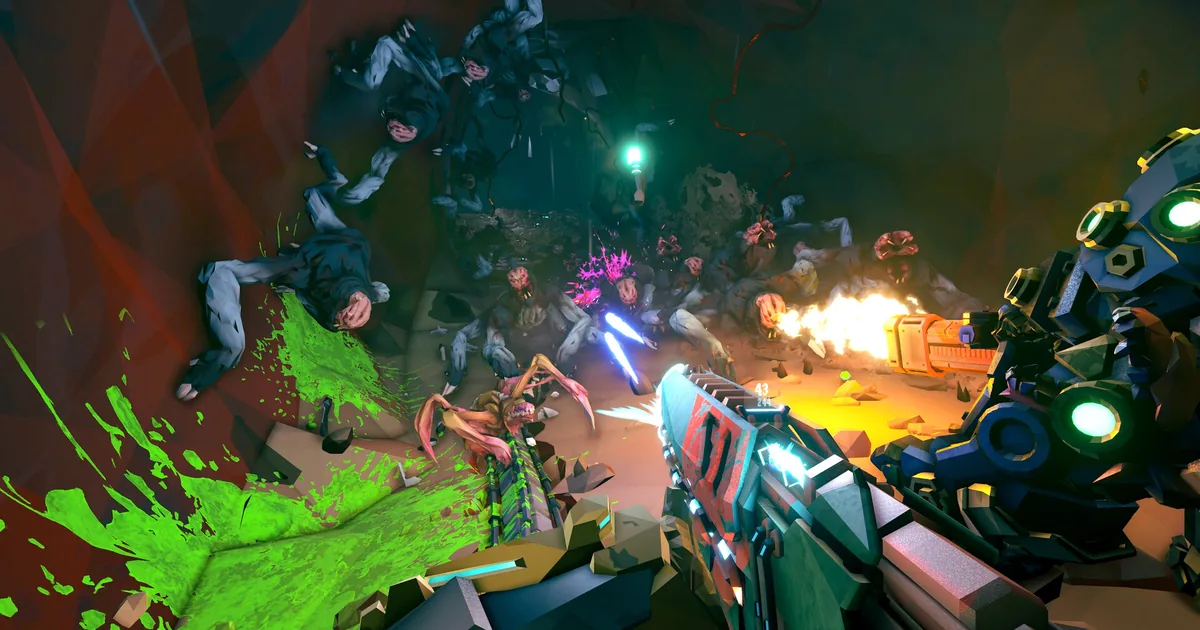
DRG Rogue Core vs Deep Rock Galactic is a question with a short answer: they're different games. Ghost Ship kept the setting, the Dwarf aesthetic, and the coffee. Almost everything else changed.
If you're figuring out whether Rogue Core replaces your DRG hours or sits alongside them: it's not a sequel and it's not more DRG. It's a spinoff that shares a world but not a genre. Here's what actually changed and what carried over.
TL;DR: The extraction loop is gone. The original four classes are gone. The mission structure is gone. What remains: Hoxxes IV, co-op Dwarves, Ghost Ship's design sensibility, and a roguelite loop that uses them differently.
DRG Rogue Core vs Deep Rock Galactic: what's different? (quick answer)
Rogue Core is a roguelite spinoff, not a sequel. The extraction loop is gone, the original four classes are gone, and the mission structure is gone. Ghost Ship kept the Hoxxes IV setting, the co-op, and the Dwarf tone but rebuilt everything structural around a room-clearing roguelite format with five entirely new classes.
Key takeaways
- Rogue Core is a roguelite, not a mission-based co-op shooter: the drop pod extraction is absent
- 5 new classes replace the original 4 (Driller, Scout, Engineer, Gunner)
- The RV-09 Ramrod drilling vehicle replaces the Space Rig hub
- Meta-progression runs through the game's separate account-level systems, not the original game's mission rewards; the checked official pages document Reclaimer Enhancements and Merits but do not provide a verified Security Clearance table
- New enemies: Corespawn (swarm-oriented), Rafkan, Shatterclaw
- No shared progression between Rogue Core and the original DRG
The core structural difference: extraction vs. roguelite runs
This is the biggest change and the one that reframes everything else.
In the original Deep Rock Galactic, every mission ends the same way: you call the drop pod, wait for it to land, then fight through a tightening bug swarm to reach the extraction point before it lifts off. That final sprint is the emotional peak of most DRG sessions. Experienced players have died in the sprint after surviving the entire mission. The swarm that converges during extraction is explicitly designed to punish overconfidence.
Ghost Ship removed that mechanic for Rogue Core.
What replaced it: roguelite runs. You move through a series of rooms with escalating difficulty, no planned exit, no countdown. The run ends when the team clears the final room or wipes. Between runs, you return to the RV-09 Ramrod, a mobile drilling vehicle that replaced the Space Rig as the hub, and advance meta-progression before going again.
This isn't a small adjustment. The extraction loop shaped how DRG players thought about every mission: pacing, ammo conservation, when to push and when to hold. None of that calculus applies in Rogue Core. The tension comes from escalating room difficulty, not a shared sprint to safety. If the extraction countdown was the part of DRG you loved most, you're buying a different kind of tension here.
What DRG Rogue Core carried over from the original
The setting is Hoxxes IV. Same deep cave systems, same bioluminescent grot formations, same ambient hostility. That part didn't change.
The tone didn't change either. The Dwarf voice lines, the sardonic attitude, the Rock and Stone slogan: Ghost Ship kept the personality intact. It would have been easy to do a tonal reset for a spinoff. They didn't.
The original bug roster shows up in Rogue Core alongside the new Corespawn-class enemies, so players who know the Praetorian's armor behavior or the Glyphid Slasher's charge pattern aren't completely lost. That said, the new enemies are designed specifically for the roguelite format, which means familiar enemies are showing up in unfamiliar contexts.
The co-op structure carries over: 1-4 players, class roles that complement each other, a design assumption that you're making actual composition decisions rather than just filling slots. And the underlying Ghost Ship readability is there: rooms where skilled play can plan a route, with enough chaos that something will still go sideways.
The 5 new classes: what replaced Driller, Scout, Engineer, and Gunner
The original four DRG classes (Driller, Scout, Engineer, Gunner) were designed with extraction in mind. The Engineer's platform gun created extraction routes. The Scout's grapple hook got you to the drop pod faster. The Driller cut tunnels to safety when the swarm got between you and the exit.
None of that maps onto Rogue Core's room-to-room format. Ghost Ship built five new classes from scratch:
Guardian punches enemies into terrain via Seismic Gloves. It sounds simple; the actual skill expression is reading enemy movement fast enough to set up environmental knockbacks, which matters a lot against Corespawn swarm density. The highest ceiling of the launch roster if you're willing to learn the positioning.
Slicer swings a Plasma Blade for 560 melee damage per hit: the highest single-strike number of any class. The skill ceiling is positioning: Slicer needs to be at melee range to deal that damage and lacks defensive tools to survive careless engagement. High ceiling, low floor.
Falconer runs a Shock Drone that chains electrocution between nearby targets and, critically, carries the only in-run revive mechanic in the class set. The interesting thing about the Falconer is how it changes everyone else's behavior: groups with one tend to play more aggressively, knowing there's a safety net. That risk-tolerance shift is the class's actual value, not the drone itself. It compounds as runs go deeper and the cost of wiping gets higher.
Spotter marks targets with Crit Darts. A direct mark grants +100% Crit Chance for 5 seconds, while a ground shot creates a 10-second marking zone. Solo, that support window benefits only your own attacks; in a coordinated group, multiple players can focus the same mark. This class rewards communication, but the source does not define a universal damage multiplier.
Retcon rewinds time on a short delay, which functions as an on-demand dodge: you activate it knowing you already got hit. The passive variant auto-revives on team death. It's the run-extension specialist, most useful in the final rooms when you're one mistake from losing a long attempt.
GODEEPER: Full breakdown of every Rogue Core class ability, passive, and recommended unlock order. Deep Rock Galactic Rogue Core Classes Guide →
Meta-progression: what changed
DRG's original progression was relatively flat: run missions, earn Credits and Experience, unlock cosmetics and weapon overclocks from the Space Rig upgrade screen. Promotions were class-specific milestones, tracked separately per class. The Space Rig had a bar, a jukebox, and a beer-drinking animation that had no mechanical function but was deeply correct.
Rogue Core's meta-progression is closer to a Hades-style loop: its per-run deck resets, while the official pages checked for this sweep document permanent Reclaimer Enhancements purchased with Merits. Do not treat an unverified Security Clearance or Perk-unlock table as shipped mechanics.
The RV-09 Ramrod hub, where you manage all of this between runs, is more utilitarian than the Space Rig. The bar is gone. The jukebox is gone. Whether that's a loss or just a different aesthetic is a fair debate, but the vibe shift is real.
New enemies: what Rogue Core adds
The official creature roster is broader than a three-name enemy-type list. It includes Corespawn variants, Voidkin, Rafkan, Shatterclaw, and other listed encounters; use those source pages and the current in-game roster rather than treating Corespawn, Rafkan, and Shatterclaw as the complete set. Their exact attack patterns and weak points should be described only when the relevant source documents them.
The original DRG bug roster shows up too, but the Corespawn design is purpose-built for the room-clearing format. Same universe, different pressure.
Is DRG Rogue Core worth it for original DRG fans?
Depends on what drew you to DRG in the first place.
If the extraction loop was the draw (the drop pod countdown, the converging swarm, the sprint to safety with your whole team) Rogue Core doesn't have that. The tension is different, not the same tension repackaged. Some DRG players will prefer the roguelite format. Others won't, and Ghost Ship isn't pretending otherwise. Every piece of Early Access marketing leads with "roguelite," not "more DRG."
If you played DRG for the setting, the humor, and the co-op role differentiation, Rogue Core has all of that. The Hoxxes IV aesthetic is intact. The class composition decisions are arguably deeper in Rogue Core than they were in the original. The Dwarf attitude survived the format change.
Rogue Core is a better fit for players who have time in Hades or Risk of Rain 2 than for players who played DRG for its specific mission loop. That's not a criticism of either game: it's just the honest split.
Rogue Core is $29.99 on Steam right now with no discount. Loaded (sponsored) lists the same Steam key at $27.89, worth checking before buying direct.
GODEEPER: Full beginner guide for Rogue Core: class picks, first-run priorities, and upgrade sequencing for the Early Access build. Deep Rock Galactic Rogue Core Beginner Guide →
Frequently asked questions
Is DRG Rogue Core a sequel to Deep Rock Galactic? Spinoff, not sequel. Same universe and developer, completely different game structure. Ghost Ship is maintaining both: the original DRG continues to receive updates while Rogue Core enters Early Access.
Do the original four DRG classes appear in Rogue Core? No. Guardian, Slicer, Falconer, Spotter, and Retcon are purpose-built for the roguelite format. None of them are ports of Driller, Scout, Engineer, or Gunner.
Does DRG Rogue Core have the drop pod? No. The extraction mechanic was removed. Runs end when the team clears the final room or wipes, not at a drop pod landing zone.
Can DRG veterans skip the tutorial? Familiarity with enemy behavior helps (original DRG bug patterns carry over), but Rogue Core's class mechanics are entirely new. The Guardian's Seismic Gloves and the Slicer's close-range positioning are not intuitive from DRG experience.
Do Rogue Core and DRG share progression? No. Separate games, separate accounts, separate progression tracks. DRG Promotion ranks do not replace or modify Rogue Core's own permanent-progression systems.
How long will Rogue Core be in Early Access? Ghost Ship expects an 18-24 month Early Access window before the 1.0 release. The launch build includes 5 classes and the RV-09 Ramrod hub; future EA updates will add content. The checked official pages do not establish a separate Security Clearance zone structure.
Is the original DRG still being updated? Yes. Ghost Ship has not indicated Rogue Core replaces ongoing DRG development. Both are active projects.
Related Reading
- Deep Rock Galactic Rogue Core Classes Guide: full breakdown of all 5 launch classes with abilities, passives, and recommended unlock order.
- Deep Rock Galactic Rogue Core Beginner Guide: first-run priorities, class picks, and co-op setup for new Rogue Core players.
- Deep Rock Galactic Rogue Core Early Access Overview: everything confirmed in the launch build plus the 18-24 month EA roadmap.
- DRG Rogue Core Complete Guide Hub: every Rogue Core guide in one place, from classes to meta-progression.
- The Spell Brigade 1.0 Launch: another co-op roguelite that shipped its 1.0 the same month as Rogue Core; useful contrast for how a smaller studio handled the EA-to-launch transition.
- DRG Rogue Core Roadmap: What's Coming in Early Access: DRG Rogue Core roadmap runs on priorities, not deadlines. More bosses, weapons, and enemy factions confirmed. Here's what....
- DRG Rogue Core Team Compositions: Best Co-op Squads 2026: DRG Rogue Core team compositions: which Reclaimers to bring, how pick order affects Enhancement pools,.
- Deep Rock Galactic Rogue Core Co-op Team Guide 2026: Deep Rock Galactic Rogue Core co-op guide: best team comps, Falconer revive mechanic, Spotter crit.
References
- Deep Rock Galactic: Rogue Core on Steam: official store page, class descriptions, Early Access roadmap
- Ghost Ship Games: developer page
- Deep Rock Galactic Rogue Core classes guide: all 5 classes with abilities and unlock order
- Deep Rock Galactic Rogue Core beginner guide: first-run priorities and co-op setup
- Deep Rock Galactic Rogue Core: full early access overview: everything confirmed before launch
- Deep Rock Galactic original (Steam page) for comparing the original mission structure and class roster
- DRG Rogue Core complete guide hub: all five classes, the roguelite loop, and every guide in the cluster
About the author

Critical game theorist with a background in film criticism. Writing for print and digital outlets since 2015. Specialises in genre analysis and design heritage.
- Background in film criticism
- 10 years games coverage
- Genre theory and design history specialist
Keep reading

Disclaimer
This article is published for informational and entertainment purposes. It does not constitute professional financial, legal, or technical advice. Game performance, online services, patch schedules, and store listings change. Verify critical details (pricing, system requirements, regional availability) with publishers and storefronts before you buy. Affiliate links, where present, help support our editorial work and are labelled in our affiliate disclosure.
Comments
Loading comments…