
GameBrief · General
Deep Rock Galactic Rogue Core Co-op Team Guide 2026
Reviewing
Deep Rock Galactic: Rogue Core
Ghost Ship Games · Ghost Ship Publishing + Coffee Stain Publishing
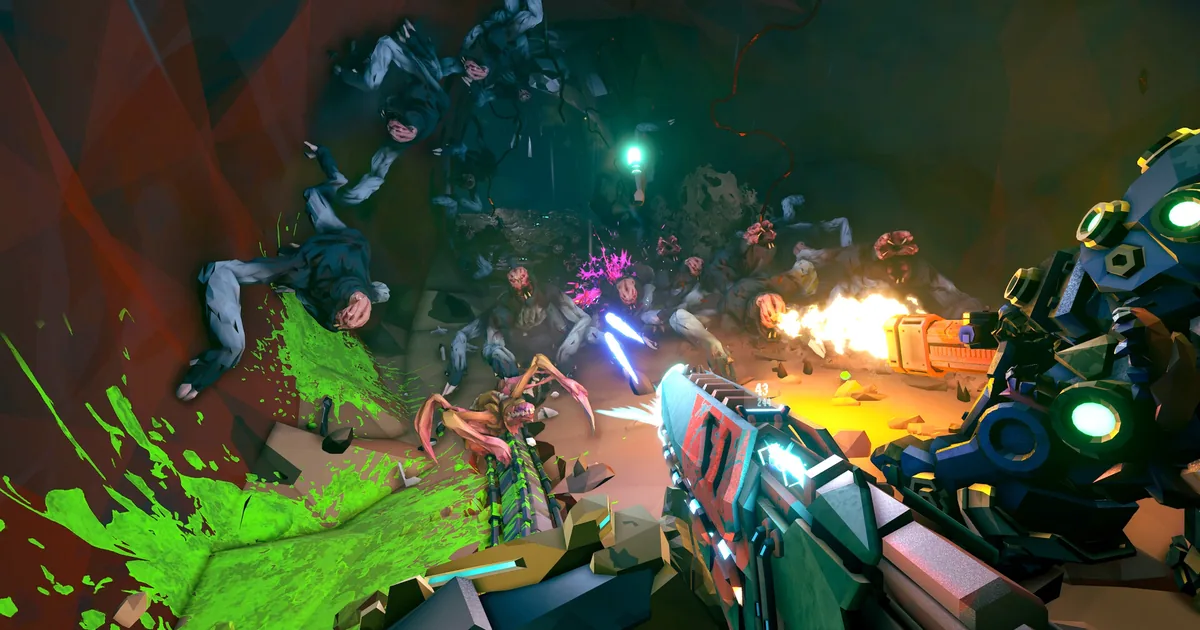
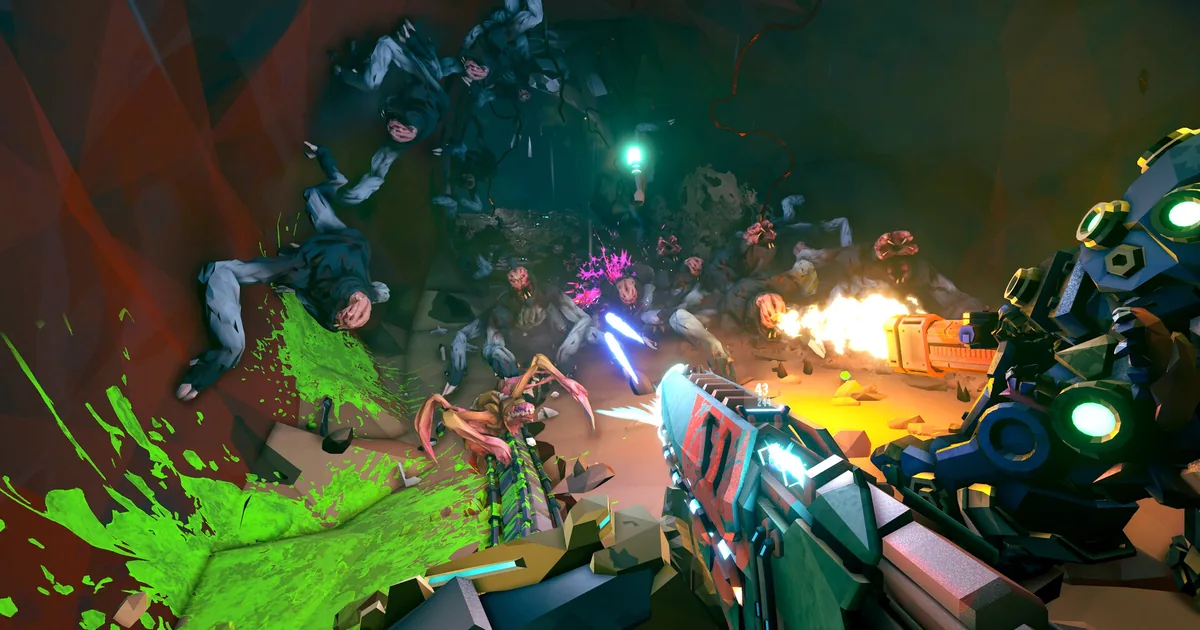
Deep Rock Galactic Rogue Core co-op and the solo experience are different games wearing the same suit. The Enhancement deck mechanics, the Falconer revive loop, and the Spotter crit window all exist in solo: but they're balanced around 4-player scenarios. Knowing which class does what in a group is more important here than in most roguelites, because the gap between classes' solo and co-op performance is unusually wide.
This guide covers Deep Rock Galactic Rogue Core co-op specifically: team composition by player count, how the Enhancement deck distributes across a squad, and the mechanics most groups don't use until they've wiped a dozen times.
TL;DR: Falconer is a strong co-op option because it has Remote Drone Revive. Spotter's Crit Darts raise Crit Chance against a direct mark or ground marking zone; they do not guarantee a critical result. Each player sees their own event options in the current co-op flow. Co-op tier order is strategy advice: Falconer, Spotter, Guardian, Slicer, Retcon.
Deep Rock Galactic Rogue Core co-op: key takeaways
- Falconer is a strong co-op class: the Reclaimer with Remote Drone Revive
- Spotter supports coordinated squad fire with Crit Chance marks; +100% Crit Chance is not a blanket damage-doubling guarantee
- In a normal 4-player squad, each player sees 4 Enhancement options per event: 16 options total, selected in random order; the official page lists 3 options for 1-3 players
- Enhancement pools are per-player: there is no shared deck
- Co-op tier order is a strategy judgment: Falconer > Spotter > Guardian > Slicer > Retcon
- Solo tier order (different game): Slicer > Guardian > Retcon > Spotter > Falconer
- Class selection should start with intended player count, not which ability sounds interesting
Overview
Deep Rock Galactic: Rogue Core entered Early Access on May 20, 2026. The full Deep Rock Galactic: Rogue Core launch overview covers what shipped in the EA build. Developed by Ghost Ship Games and published by Ghost Ship Publishing and Coffee Stain Publishing, it's available at $29.99 USD on Steam. The game supports 1-4 players in online co-op; solo play includes Cooper, an AI companion.
Unlike the original Deep Rock Galactic (mission-and-extraction loop, persistent loadouts) Rogue Core is a roguelite descent. Each run starts with the same equipment state. You descend floor-by-floor through procedurally assembled cave systems, building your Enhancement deck through Expenite deposits as you go. The run ends when the squad wipes or completes the descent. Permanent progression is a separate meta layer; its Early Access unlock table is versioned and should not be inferred from the in-run class mechanics.
Five Reclaimer classes (Guardian, Slicer, Falconer, Spotter, Retcon) each have solo and co-op roles that don't always match. Falconer's revive utility is naturally stronger in co-op. Spotter's Crit Chance support also becomes more useful when multiple players can focus the same mark, but neither point establishes a canonical tier.
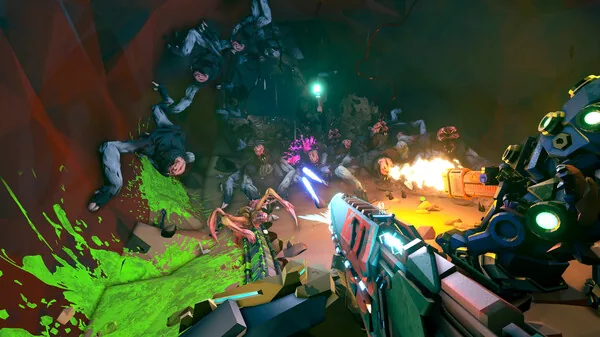 Co-op synergies are build-dependent: random queuing without class coordination loses late waves.
Step-by-step: Deep Rock Galactic Rogue Core co-op session setup
Step 1: Hosting a session
From the main menu, select New Game → Multiplayer. Set session visibility before anyone joins: changing visibility mid-run isn't reliably supported at EA launch. Friends Only restricts entry to your Steam friends list. Private requires invites you send manually.
The host's game settings apply to the session: difficulty scaling, any modifiers in effect. Confirm with squad members before the run starts, not at the first enemy wave.
Step 2: Class selection for the squad
Class selection before the run determines the entire run's power ceiling and failure mode. The five Reclaimers have enough distinct roles that class overlap is a real cost.
Guardian: Seismic Gloves have separate modes: Repulsion Field creates a 4-second fear zone, while Concussive Barrage fires 12 munitions and direct hits stun for 6 seconds. Crowd control and squad anchor. Beginner-friendly; pick this as your first class if you want control.
Slicer: Plasma Blade at 560 damage per swing and a direct Slice ability. High close-range output; co-op value is real but depends on having someone else handle crowd control. The official class page does not document a persistent kill-chain mechanic.
Falconer: Shock Drone with 5 charges replenished on a 10-second timer; each barrage fires 4 projectiles for 35 direct-hit damage and 25 area damage, with stun/electrocution. It also has Remote Drone Revive. Solo viability is lower because the revive has no target; in co-op, Falconer becomes a rescue-focused option.
Spotter: Crit Darts apply +100% Crit Chance to a direct mark for 5 seconds; a ground shot creates a 10-second marking zone. The ability has 3 charges on an 18-second per-charge cooldown. In solo it is functional; in a squad it supports coordinated fire, but it does not guarantee every hit is critical.
Retcon: Time Rewind restores the recorded position, ammo, health, and armor after up to 20 seconds and has a 75-second cooldown. Full Rage grants +100% Damage and +30% Pickaxe Speed for 12 seconds. It has a high learning curve; it is not a canceled-on-hit 6-second buff.
GODEEPER: Full breakdown of each class including signature stats, Enhancement priorities, and the co-op vs. solo tier table. Deep Rock Galactic Rogue Core Classes Guide →
Step 3: Team compositions by player count
2-player: Falconer + Guardian. Falconer's remote revive covers the most likely failure mode in 2-player runs: one person getting caught out and downed. Guardian's crowd control protects Falconer's drone charges. If both players are experienced, Slicer can replace Guardian for more raw output once the revive discipline is established.
3-player: Falconer + Spotter + Guardian. Spotter's mark can support coordinated fire in a 3-player squad, but +100% Crit Chance is not a blanket double-damage guarantee. Guardian holds ground while Spotter marks, and Falconer provides Remote Drone Revive.
4-player: Falconer + Spotter + Guardian + Slicer. The full balanced composition. Each class fills a distinct role without redundancy. Adding a second Falconer or a second Guardian provides theoretical redundancy but wastes the multiplicative effects that come from diverse class composition.
Retcon works in the 4th slot for squads with real run experience. Its timing window is demanding and can be rewarding once learned. A Retcon player still learning the window may contribute less burst than a Guardian; clear the descent in solo before bringing Retcon to a group if you want to learn the timing first.
Step 4: Enhancement deck coordination
The Enhancement system is where co-op sessions either gain efficiency or bleed it.
Each normal Enhancement event gives a 4-player squad 4 options per player, for 16 visible options, drawn from the pool randomly. The official Upgrades page lists 3 options for 1-3 players and 4 for 4 players; Jumble uses a separate count. What you select is replaced with another option of the same rarity, so the pool recycles without presenting the old six-option claim as a mechanic.
The first upgrade costs 120 Expenite. The official table then lists 130, 140, 150, 165, 180, 195, 210, 225, 240, 255, 270, 285, 300 and later increases; it does not support a simple +10 progression capped at 230.
What this means in practice: call out what you're building before the Enhancement event. If Spotter is stacking mark-duration Enhancements and Guardian is also taking mark-interaction Enhancements, you're doubling up on the crit window instead of building Guardian's stun deck. That overlap is fine if you've decided both players run the same synergy: it's a problem when it happens by accident.
Coordinate Enhancement targets before floor 1, not during floor 4 when you're in the middle of a dense wave and the Expenite deposit window closes.
Update 01 changed two things that matter for squad coordination specifically. First, starting an R.E.P.D. upgrade no longer requires the whole squad to group up at the terminal: any Reclaimer can initiate it, and the upgrade link establishes with all four players regardless of where they are on the floor. If your squad has been herding everyone back to the terminal for every upgrade, that's no longer necessary, saving real time across a full descent. Second, "Skip for Health" is gone from upgrade drafts, health upgrades are folded into the normal rotation, and every option within one draft now shares a single rarity tier, so a squad can no longer see one player get an Epic pick while another gets stuck with Commons in the same event.
GODEEPER: How Expenite works in full runs, first-session Enhancement priorities, and how the current R.E.P.D. cost table shapes class pacing. Deep Rock Galactic Rogue Core Beginner Guide →
Step 5: The Falconer revive loop
Falconer's remote revive is getting ignored in early sessions. The drone deals damage and players are treating it like a damage tool: the revive gets used as an afterthought when someone's already dead rather than as the planned response it's designed to be.
The drone has 5 charges replenished on a 10-second timer, and Remote Drone Revive can reach a downed Reclaimer at range. Keep a charge available when a teammate is in danger; the official class page does not support the former exact timing/full-health sequence claims.
In combat, prioritize the downed teammate before spending the remaining charges on offense. The sources verify Remote Drone Revive and its charge economy, but not the former under-3-second timing, full-health result, or automatic redirection sequence.
What breaks it: using all 5 drone charges on the enemy wave right before a squadmate drops means waiting 10 seconds for the charge to replenish. The discipline for Falconer players is keeping at least 1 charge in reserve whenever a squadmate is below half health.
Tips
Spotter's ground zone is positional, not tracking. Drop a Crit Dart on the bottleneck (the doorway or cave narrowing enemies run through) and enemies inside the 10-second zone receive the documented Crit Chance increase. It supports coordinated fire, but does not guarantee every hit is critical. Find the geometry, place the zone, let enemies walk into it.
Guardian's control doesn't stop everything. Repulsion Field's 4-second fear zone and Concussive Barrage's 6-second direct-hit stun serve different purposes; certain enemy behaviors or enemies outside the effect can remain active. Use the appropriate mode for the room rather than expecting a full-room freeze.
Don't all take Enhancement events simultaneously when timings are tight. If an Expenite deposit window opens during an enemy wave, the squad has to decide: pause fighting to Enhancement, or fight through it. In co-op, the options most worth pausing for are signature ability Enhancements and mark/stun duration increases. Skip Common rarity options that don't interact with your class signature. The window matters more on floor 6+ when Enhancement counts start defining your class identity.
Retcon players: tell the squad when you're using Rage. Full Rage grants +100% Damage and +30% Pickaxe Speed for 12 seconds. Squadmates can hold a clear lane for Retcon during that window, while the Retcon player still respects normal incoming damage and Rewind's fatal-damage limitation.
The Enhancement overlap problem. In a 4-player session, generic synergies can stack, but the official Falconer page does not establish a named electrocution-chain enhancement. Coordinate around the verified class kits and the options shown in the current draft rather than assuming a hidden combo.
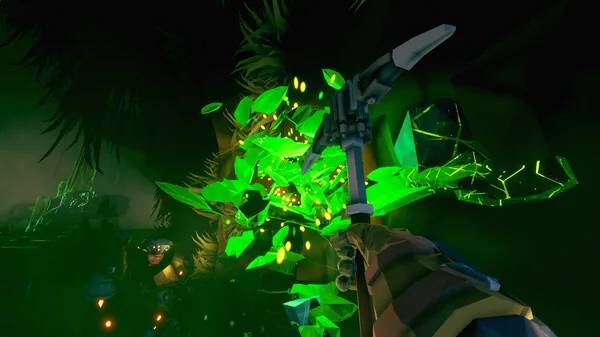 Cover the drilling hole and the extraction zone simultaneously: most wipes happen when neither is covered.
Deep Rock Galactic Rogue Core co-op common mistakes
Treating Falconer as only a damage class in co-op. Falconer's verified value is the Shock Drone's 4-projectile barrage, stun/electrocution, Thunder Rod zone, and Remote Drone Revive. A Falconer player spending all 5 drone charges on offense while ignoring revive opportunities is giving up its defining utility.
Overstating class synergies in Enhancement selection. Guardian + Falconer is a reasonable strategy pairing: Guardian controls with fear/stun modes while Falconer supplies repeated electric hits and rescue utility. The official pages do not require an Arc enhancement or promise a special frozen-target damage multiplier.
All four players entering a new floor without clearing the previous one. The descent structure in Rogue Core has Expenite deposits that trigger on floor completion. Skipping to the next floor before the current one is fully cleared means skipping Enhancement events. Early floor skips that seem efficient turn into late-floor Enhancement deficits that decide runs.
Running duplicate classes without a plan. In a full 4-player squad, a second Falconer may add another Shock Drone but duplicates Remote Drone Revive utility. Whether that trade is worth it is strategy, not an official “only one optimal” rule.
Frequently asked questions
How many players does Deep Rock Galactic: Rogue Core support? Deep Rock Galactic: Rogue Core supports 1-4 players in online co-op. Solo players are accompanied by Cooper, an AI companion.
Which class is best for co-op in Rogue Core? Falconer is a strong option for Remote Drone Revive. A common strategy ranking is Falconer > Spotter > Guardian > Slicer > Retcon, but it is not an official tier.
How does the Enhancement deck work in 4-player co-op? Each player sees their event options in the current co-op selection flow, and selections are per-player rather than a single shared deck. The official Expenite table starts at 120, then 130, 140, 150, 165, 180, 195, 210, 225, 240 and continues upward; there is no verified 230 cap.
What is the best 4-player team composition? Falconer + Spotter + Guardian + Slicer is a practical balanced recommendation: revive, Crit Chance support, crowd control, and direct melee. It is strategy advice, not a canonical best team or guaranteed-damage formula.
Can Retcon be used in co-op? Yes. Rewind Time restores the recorded state after up to 20 seconds, and full Rage grants +100% Damage and +30% Pickaxe Speed for 12 seconds. In co-op, Retcon works best when squadmates understand that timing window; “last to pick” is strategy advice.
Is Falconer weak in solo? Its remote revive has no target in solo play, so it loses its defining co-op utility. The Shock Drone still has 5 charges, 10-second replenishment, and a 4-projectile barrage for 35 direct-hit/25 area damage. Solo players may prefer Slicer or Guardian, but that preference is strategy.
What does the Spotter's Crit Chance mark mean in a full squad? +100% Crit Chance applies against the direct-marked target for 5 seconds, while a ground shot creates a 10-second marking zone. Multiple players can focus the same mark, but the source does not establish a guaranteed-crit or damage-doubling formula for every attack.
Do you still need to group up to upgrade at the R.E.P.D.? No, as of Update 01 (June 17). Any Reclaimer can initiate an R.E.P.D. upgrade, and the link establishes with all four players regardless of position on the floor. Previously the whole squad had to be physically grouped at the terminal to start the process.
Related Reading
-
DRG Rogue Core Roadmap: What's Coming in Early Access: DRG Rogue Core roadmap runs on priorities, not deadlines. More bosses, weapons, and enemy factions confirmed. Here's what....
-
DRG Rogue Core Classes: All 5 Reclaimers Explained 2026: DRG Rogue Core classes: 5 Reclaimers, each with a unique signature and upgrade path. Guardian, Slicer, Falconer, Spotter,....
-
DRG Rogue Core Co-op Builds: Best Team Compositions 2026: DRG Rogue Core co-op: which Reclaimers to bring, how pick order affects Enhancement pools, and why Falconer is....
-
Deep Rock Galactic Rogue Core: Complete Pre-Launch Guide: Deep Rock Galactic Rogue Core launches May 20: every confirmed mechanic before EA. All 5 classes, the upgrade.
-
DRG Rogue Core Slicer Build: Plasma Blade and Slice: DRG Rogue Core Slicer build: how the Plasma Blade and Slice ability fit a direct melee route.
-
DRG Rogue Core Falconer Build: The Co-op Anchor Class: DRG Rogue Core Falconer build: the Shock Drone, the Thunder Rod electric zone, the in-run revive, and why....
-
DRG Rogue Core vs Deep Rock Galactic: What Actually Changed: DRG Rogue Core vs Deep Rock Galactic: extraction loop gone, 5 new classes, roguelite meta-progression.
References
- Deep Rock Galactic: Rogue Core on Steam
- Ghost Ship Games official site
- DRG Rogue Core complete guide hub: all five classes, the roguelite loop, and every guide in the cluster
Was this guide helpful?
About the author

Senior Critic & Analyst
Former game data analyst turned critic with 11 years covering indie and mid-tier games. Based in Austin. Runs spreadsheets on games most people just play.
- 11 years games criticism
- Former game economy analyst
- Roguelike and strategy specialist
Keep reading

Disclaimer
This article is published for informational and entertainment purposes. It does not constitute professional financial, legal, or technical advice. Game performance, online services, patch schedules, and store listings change. Verify critical details (pricing, system requirements, regional availability) with publishers and storefronts before you buy. Affiliate links, where present, help support our editorial work and are labelled in our affiliate disclosure.
Comments
Loading comments…