
GuideDeep Rock Galactic: Rogue Core
DRG Rogue Core Falconer Build: The Co-op Anchor Class
A drone that stuns, a rod that doubles electric damage, and a revive from across the room. The Falconer is the reason squads survive.
VerdictTake Talon Surge and Expanded Battery Capacity first, run the Storm deck, and never spend Remote Drone Revive's cooldown on anything but a real save.
The DRG Rogue Core Falconer is the Reclaimer who keeps a squad alive. Her Shock Drone stuns whatever it hits directly, her Thunder Rod doubles electric damage for everyone standing near it, and Remote Drone Revive picks up a downed teammate from a distance. Build the drone for more projectiles and charges, take the Storm deck, and save the revive for real saves.
Sponsored

About the game
Deep Rock Galactic: Rogue Core
Ghost Ship Games
Updated 2026-10-15: checked against the official Rogue Core wiki. We fixed how the revive works (it's its own skill on a two-minute cooldown, not something you spend drone charges on), dropped an unsourced claim that Falconer plus Spotter "tops co-op", replaced an out-of-date key price and added Workbench and Bio-Booster numbers.
| Falconer kit | Numbers |
|---|---|
| Shock Drone | 5 charges, 10 s each; bursts of 4 projectiles, 35 direct / 25 area; direct hits always stun; every burst electrocutes |
| Thunder Rod | +100% electric damage for allies within 8 m, 15 s, 120 s cooldown |
| Remote Drone Revive | Drone revives a downed teammate you're looking at, 120 s cooldown |
| Bio-Booster decks | Mixed Tactics and Storm |
Sponsored

The Shock Drone
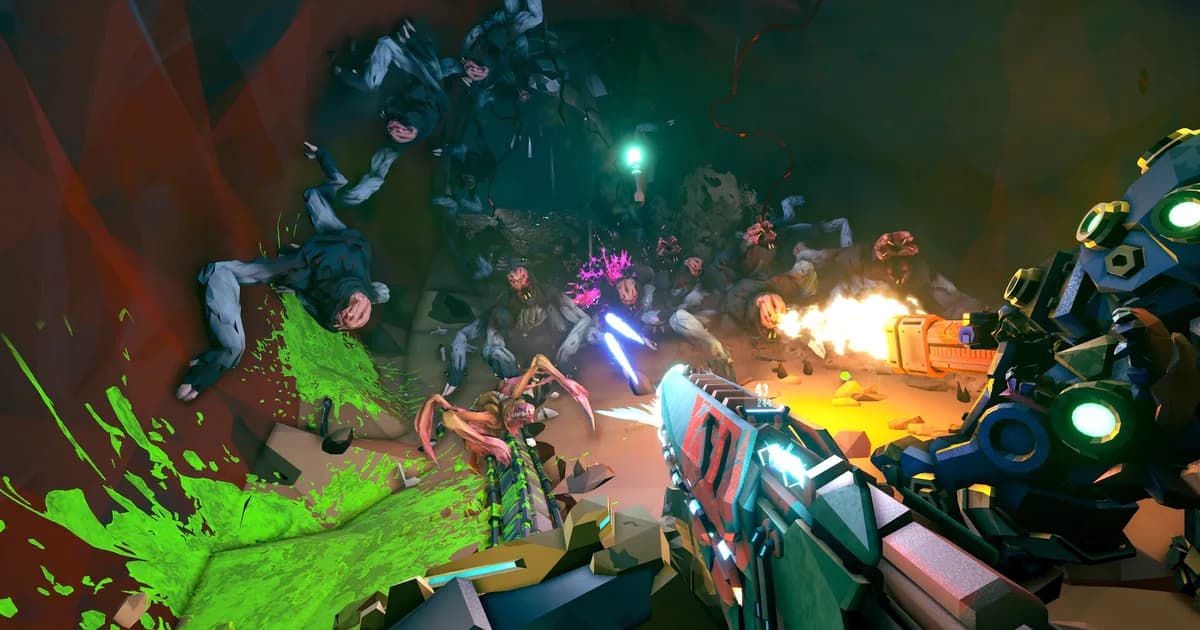
Hold the ability key to ready the drone and left click to send it where you're aiming. It searches near that point and along the way, and when it finds an enemy it fires a burst of four projectiles. Each one deals 35 on a direct hit and 25 to enemies around it, direct hits always stun, and the burst electrocutes. One burst costs one charge. If it finds nothing, it comes back by itself; right click recalls it, and clicking an enemy forces it onto that target.
Five charges at ten seconds each is a steady supply rather than a big reserve. Send the drone into packs where the splash hits several enemies, and click it onto anything dangerous that needs stunning right now.
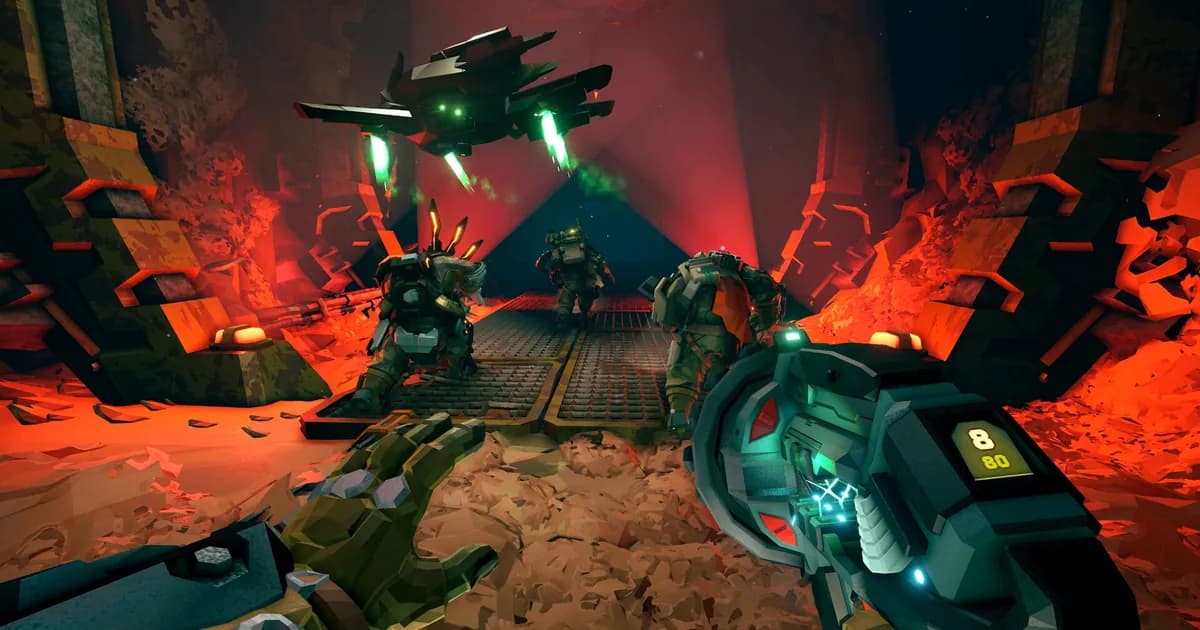
Screenshot: Steam store page, Deep Rock Galactic: Rogue Core (Ghost Ship Games)
BESTPRICE: Want Deep Rock Galactic: Rogue Core? These stores list it: Buy on Eneba → Buy on Loaded →
Thunder Rod and Remote Drone Revive
Thunder Rod plants a zone that doubles electric damage for every ally within 8 m for 15 seconds, then goes on a two-minute cooldown. Drop it before a wave or where the squad is about to hold, not after the fight has already spread out. It's best when teammates carry electric weapons or upgrades; your drone's electrocution benefits too.
Remote Drone Revive is the reason squads bring a Falconer. Look at a downed teammate, hold the ability key and press use, and the drone goes to get them up. It has its own two-minute cooldown and doesn't use drone charges. That cooldown is the thing to manage: if you revive someone at the start of a fight, you won't have it again for two minutes, so make sure the next teammate to go down isn't in a place only the drone can reach.
Workbench upgrades
| Workbench upgrade | Effect |
|---|---|
| Expanded Battery Capacity | +2 drone charges |
| Fledgling Blitz | +3 drone charges while below the health regen threshold |
| AMP Relay Booster | +25% drone rate of fire |
| Talon Surge | +2 projectiles per burst |
Our order: Talon Surge first, since six projectiles per burst is a straight increase to every charge you spend. Expanded Battery Capacity next, which takes you to seven charges. AMP Relay Booster after that. Fledgling Blitz only helps when you're already hurt, so it's last.
GODEEPER: The Falconer is one of five Reclaimers. See how all of them compare before you lock a squad. DRG Rogue Core Classes Guide →
Bio-Booster decks
| Deck | Card | Effect |
|---|---|---|
| Mixed Tactics | Synergy | +1% ability charge each time you hit an enemy with a weapon |
| Mixed Tactics | Flush Out | +20% damage for 6 s after using your ability |
| Mixed Tactics | Power Efficiency | -20% ability cooldown |
| Mixed Tactics | Constant Pressure | +15% reload speed while total ability charge is under 50% |
| Storm | Thunderstrike | Melee hits deal +50% extra as electrocution while ability charge is below full |
| Storm | Back Charge | +50% ability recharge rate per electrocuted enemy within 10 m |
| Storm | Chain Lightning | Electrocuted enemies dying within 15 m trigger a +30 electrocution blast in 7 m around you |
| Storm | Death Torrent | +20% damage against electrocuted targets |
We'd take Storm. Your drone electrocutes every burst, so Back Charge and Death Torrent are almost always on. Mixed Tactics is the safer deck if you want more drone bursts without relying on electrocuted enemies being nearby.
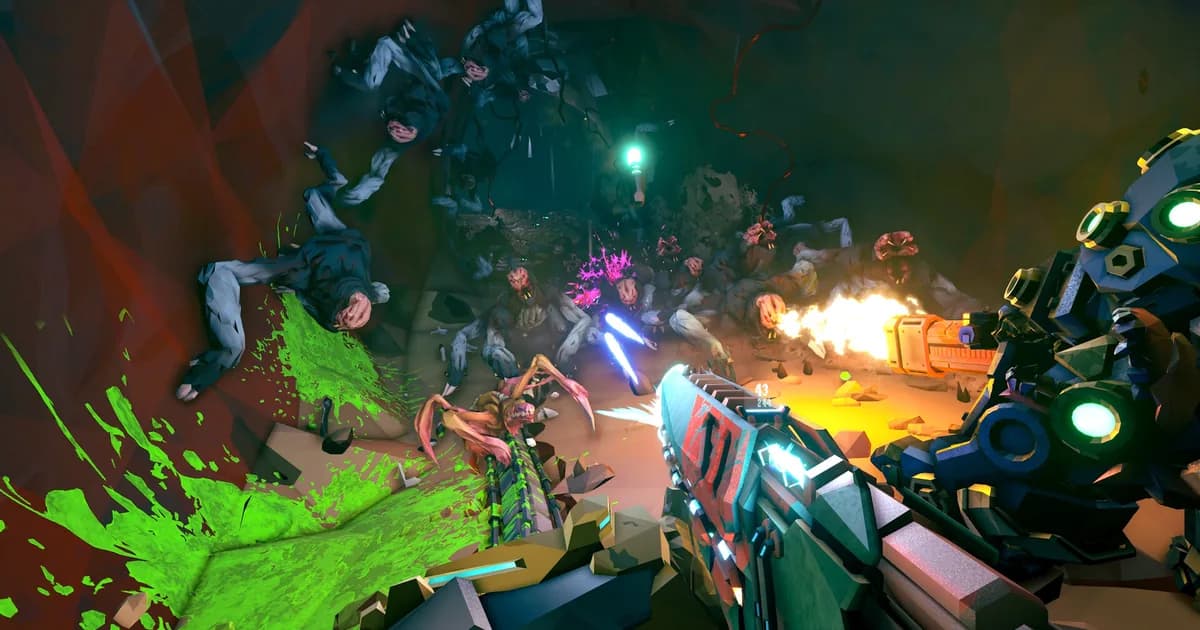
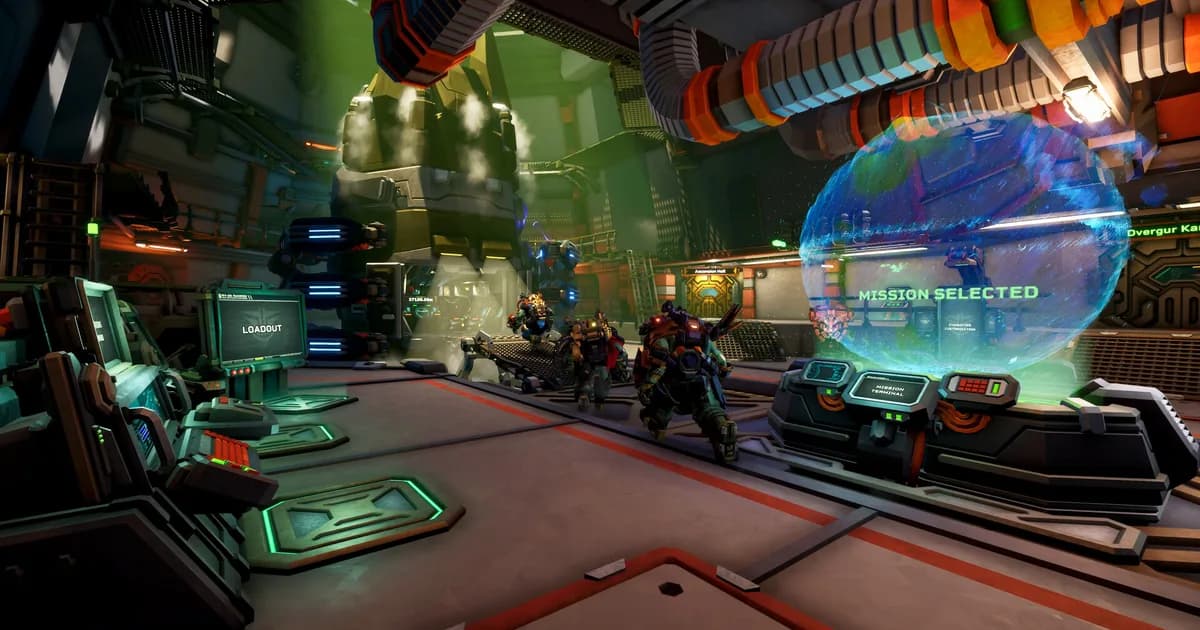
Screenshot: Steam store page, Deep Rock Galactic: Rogue Core (Ghost Ship Games)
Falconer in a squad
With a Spotter, the drone's stun holds a target still while the Spotter's dart makes it far easier for the whole squad to crit. With a Guardian, the Concussive Barrage stuns a group for six seconds and the Thunder Rod turns that pile into an electric-damage window. Neither is a hidden combo bonus; they just stack well.
Two Falconers aren't wasted, because more than one teammate can be down at once and each has a separate revive cooldown. Most squads still get more from a different fourth kit. Our co-op team builds cover squads for two, three and four players.
Solo
Without a team the revive has nothing to do. Keep the drone on whatever is closest to you so the stuns buy time, plant the Thunder Rod where you'll fight, and lean on the Mixed Tactics deck for more drone uptime. Solo players also get Cooper, the companion drone, which drafts its own upgrades alongside yours.
Our take
The Falconer is the class we'd want in every squad of three or four, because the revive turns a lost run into a close call. Build the drone for more projectiles, take Storm, and treat the two-minute revive cooldown as the most valuable resource on your team.
GODEEPER: The Spotter's dart pairs well with your drone's stuns. DRG Rogue Core Spotter Build: Crit Darts on the Ground →
Frequently Asked Questions
How does the Falconer work? A Shock Drone with five charges that fires stunning, electrocuting four-shot bursts, plus Thunder Rod and Remote Drone Revive.
How does Remote Drone Revive work? Look at a downed teammate and order the drone to revive them. It's on a 120-second cooldown and doesn't cost drone charges.
What's the best Falconer build? Talon Surge, then Expanded Battery Capacity, with the Storm deck.
Is she good solo? She works, but the revive has no target. She's built for squads.
What does the Thunder Rod do? Allies within 8 m deal double electric damage for 15 seconds.
Related Reading
- DRG Rogue Core Classes Guide: all five Reclaimers side by side.
- DRG Rogue Core Co-op Team Builds: squads built around the Falconer.
- DRG Rogue Core Slicer Build: the melee class.
- DRG Rogue Core Guardian Build: Seismic Gloves and Armor Beacon.
- DRG Rogue Core Retcon Build: Rewind and Rage.
- DRG Rogue Core Bio-Boosters and Artifacts Guide: every class deck.
- DRG Rogue Core Roadmap 2026: what's shipped and what's next.
References
- Rogue Core: Falconer (official wiki): Shock Drone, Thunder Rod, Remote Drone Revive, decks and Workbench upgrades
- Rogue Core: Reclaimers (official wiki)
- Deep Rock Galactic: Rogue Core on Steam
- Deep Rock Galactic: Rogue Core is $29.99 on Steam. Eneba (sponsored) sells Steam keys for PC.
Was this guide helpful?
About the author

News Desk
GameBrief's byline for industry news, patch notes, studio announcements and esports results. Tight sentences, dated facts.
- News, patch notes and early access
- Industry and esports results
- Sources listed per article
Keep reading
DRG Rogue Core Guardian Build: Seismic Crowd Control
Guides · 8 min
DRG Rogue Core Slicer Build: The 560-Damage Plasma Blade
Guides · 7 min
DRG Rogue Core Spotter Build: Crit Darts on the Ground
Guides · 6 min
DRG Rogue Core Retcon Build: The Rewind-Rage Tank Loop
Guides · 6 min
DRG Rogue Core Team Compositions: Best Co-op Squads
Guides · 7 min

DRG Rogue Core Classes: All 5 Reclaimers Explained 2026
General · 10 min
Sponsored
Disclaimer
This article is published for informational and entertainment purposes. It does not constitute professional financial, legal, or technical advice. Game performance, online services, patch schedules, and store listings change. Verify critical details (pricing, system requirements, regional availability) with publishers and storefronts before you buy. Affiliate links, where present, help support our editorial work and are labelled in our affiliate disclosure.
Comments
Loading comments…