
GuideDeep Rock Galactic: Rogue Core
DRG Rogue Core Guardian Build: Seismic Crowd Control
The Guardian doesn't kill rooms, it pauses them. Build for the stun and let the rest of the squad do the damage.
VerdictTake Overclocked Stun Modules first, lean on Concussive Barrage over Repulsion Field, and drop the Armor Beacon before the elevator call, not after.
The DRG Rogue Core Guardian is the class that buys time. His Seismic Gloves stun or scare a whole cone of Corespawn without precise aim, and his Armor Beacon refills the squad's armor in a pinch. Build him for stun duration and charges, not damage. Every Reclaimer shares the same health and weapon damage, so the Guardian's value is the control window he hands everyone else.
Sponsored

About the game
Deep Rock Galactic: Rogue Core
Ghost Ship Games
Updated 2026-10-15: checked against the official Rogue Core wiki. We removed a claim that the game recommends the Guardian as its starting class (it doesn't; that's our opinion now, labelled as such), fixed how Concussive Barrage spends charges (one charge per barrage, not per hit), dropped unsourced lines about community opinion and added Armor Beacon and Bio-Booster numbers.
| Guardian kit | Numbers |
|---|---|
| Seismic Gloves charges | 2, each on a 20 s cooldown |
| Concussive Barrage (left click) | 12 munitions in a cone, 6 s stun, 1 charge per barrage |
| Repulsion Field (right click) | 4 s fear zone around you; keeps spending charges until you cancel it |
| Armor Beacon | 6 m dome, 15 s, refills armor up to 50%, 120 s cooldown |
| Bio-Booster decks | Protection and Devastation |
Sponsored

Seismic Gloves: pick the mode for the room
The gloves are one ability with two modes. Concussive Barrage fires 12 concussive munitions in a cone; everything they hit is stunned for 6 seconds, and each projectile also carries a small explosion and heavy armor breaking. One barrage spends one charge. Repulsion Field throws up a fear zone around you that lasts 4 seconds, and it keeps eating charges until you press right click again to cancel it.
That last detail is the one people miss. Hold Repulsion Field too long and you've burned both charges, with 20 seconds before the next one comes back. We'd default to the barrage: a six-second stun on a whole cone is the longer window, and it leaves enemies standing still where your squad can shoot them. Save the field for when you're being swarmed from every side and need the space right now.
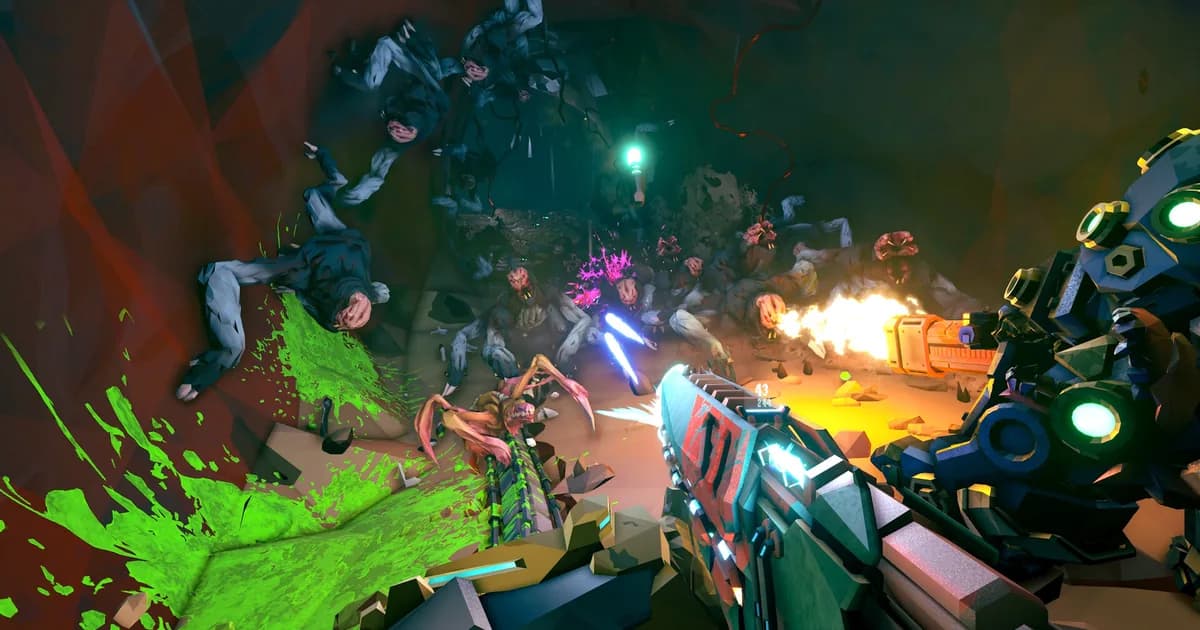
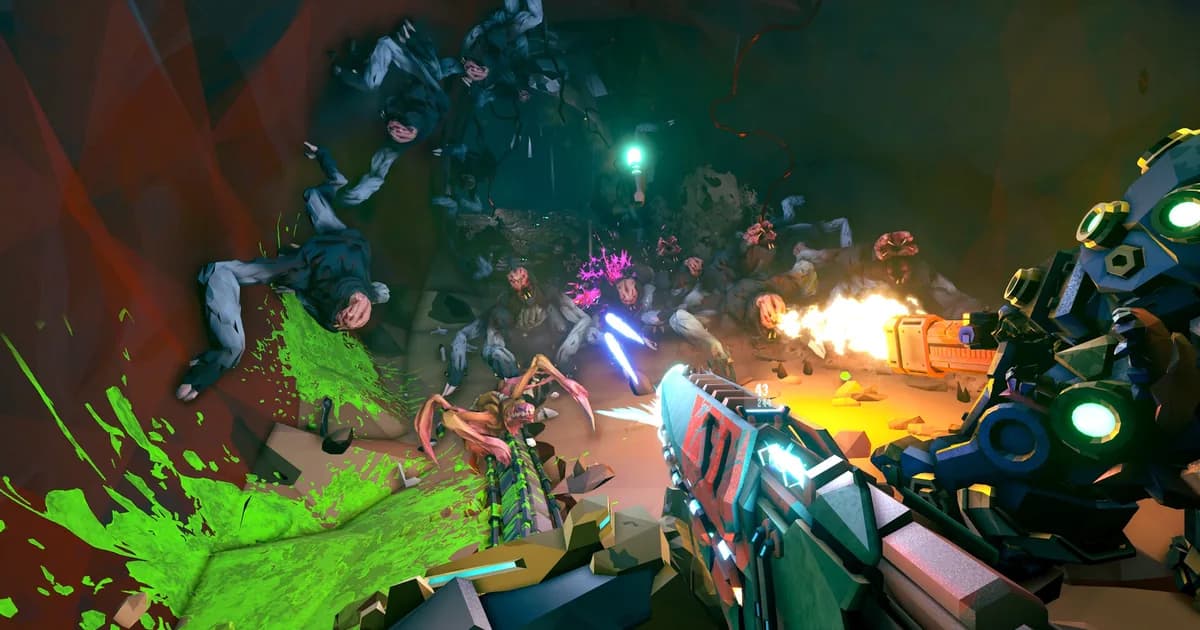
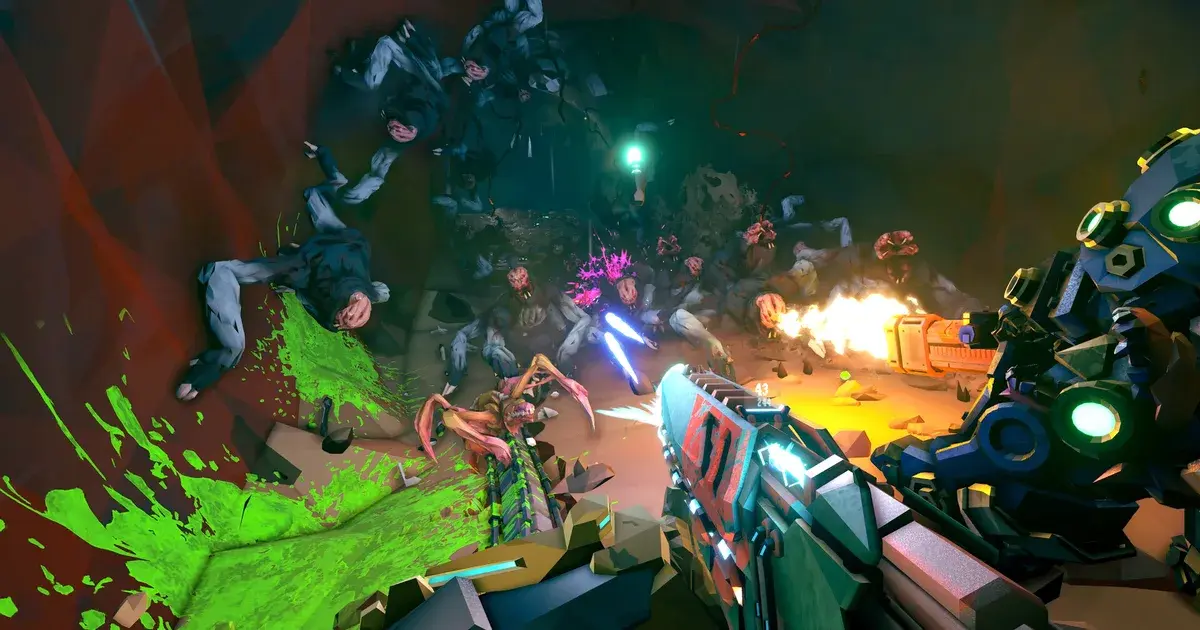
Screenshot: Steam store page, Deep Rock Galactic: Rogue Core (Ghost Ship Games)
BESTPRICE: Want Deep Rock Galactic: Rogue Core? These stores list it: Buy on Eneba → Buy on Loaded →
Armor Beacon: drop it early
The Guardian's class skill places a defensive dome. Allies inside a 6 m radius rapidly regain armor, up to half of their maximum, for 15 seconds, and the cooldown is two minutes. It doesn't heal health.
Because it caps at half armor, the beacon is best before a fight, not as a rescue after armor is gone. Calling the elevator triggers an enemy attack, so put the beacon down by the elevator and then call it. With a two-minute cooldown you'll usually get one beacon per stage, so don't waste it on a small wave.
Workbench upgrades for the Guardian
Workbenches on each stage can roll a class ability upgrade instead of a weapon upgrade. These are the Guardian's five:
| Workbench upgrade | Effect |
|---|---|
| Force Blast Amplifier | +5 barrage projectile damage |
| Overclocked Stun Modules | +1 s barrage stun duration |
| Salvo Augmentor | +4 barrage projectiles |
| Pressure Waves | Repulsion Field stuns everything for 2 s when it expires |
| Repulsion Field Booster | +1 m Repulsion Field radius |
Our order: Overclocked Stun Modules, then Salvo Augmentor, then Pressure Waves if you use the field at all. A seventh second of stun across 16 projectiles is a lot of control for one card. Force Blast Amplifier is last; the barrage's job was never damage.
GODEEPER: The Guardian is one of five Reclaimers. See how his kit compares with the damage and support classes. DRG Rogue Core Classes Guide →
Bio-Booster decks: Protection or Devastation
Each stage has a Bio-Booster, and the Guardian draws from two decks.
| Deck | Card | Effect |
|---|---|---|
| Protection | Damage Reflection | Enemies attacking you take +20 damage |
| Protection | Daunting | Enemies within 6 m move +10% slower |
| Protection | Defensive Stance | -4 damage taken from enemies in front of you |
| Protection | Sturdiness | +20% armor |
| Devastation | Tremmoring | Damage has a 15% chance to stun for +2 s |
| Devastation | Reach | Area effects get a +20% larger radius |
| Devastation | Explosive Shots | Direct-damage weapons deal +25% of their damage in a 1.5 m radius |
| Devastation | Aftermath | Area damage leaves a zone dealing +100% of the initial damage over 6 s (max 4 zones) |
We'd lean Devastation. Tremmoring turns every gun into a weak stun source, and Reach widens the Repulsion Field and any explosive weapon you picked up. Protection is the better deck when you're the one standing in front of the swarm for a squad with fragile damage dealers.
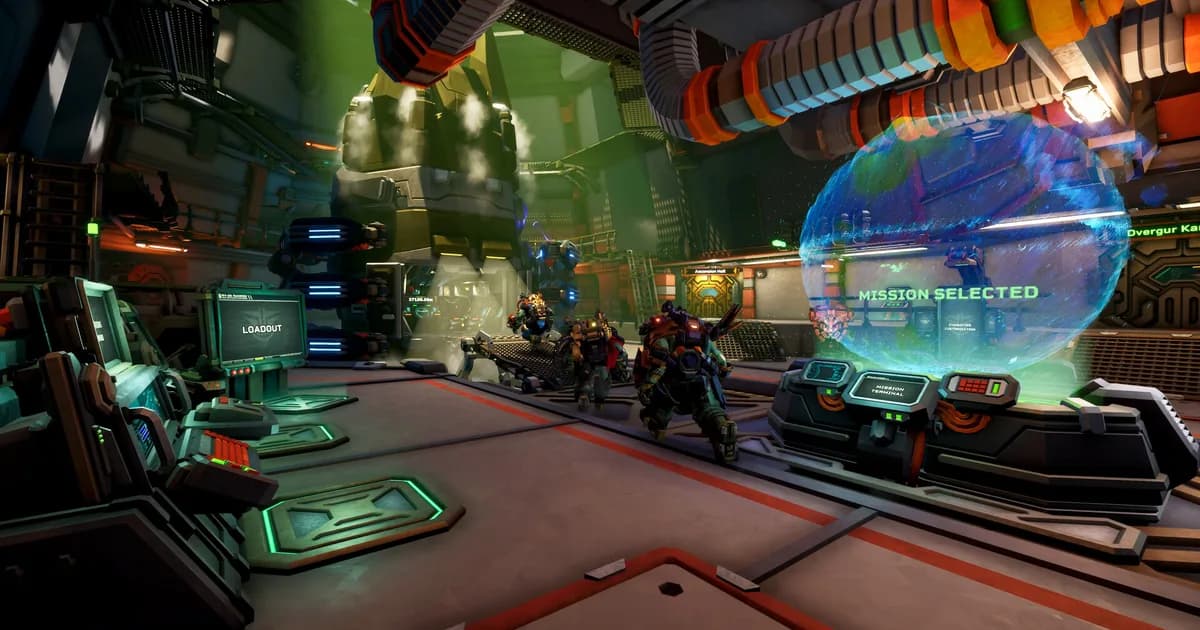
Screenshot: Steam store page, Deep Rock Galactic: Rogue Core (Ghost Ship Games)
Playing the Guardian in a squad
The Falconer is the natural partner. Her Shock Drone stuns on direct hits and her Thunder Rod gives every ally inside 8 m +100% electric damage for 15 seconds. Stun a group with the barrage, the Falconer drops the rod on it, and the squad shoots fish in a barrel. There's no hidden combo bonus here; stunned enemies standing in a damage zone simply die faster.
With a Slicer, call your barrage. His Slice deals 560 damage that ignores armor, and a stunned target can't dodge or hit back while he's in melee range. With a Spotter, stun first and let him mark the biggest thing standing still.
Position for the team. The Guardian is the one who should be at the front of the room taking the rush, because both glove modes work best on enemies close to you. If a teammate is getting swarmed, a barrage into their attackers is worth more than one into yours.
Is the Guardian good solo?
Yes. Solo play is mostly about not getting overwhelmed while you mine, and two charges of crowd control cover that well. Cooper, the solo drone companion, adds his own damage. What the Guardian lacks alone is burst against a boss, so take damage weapons from the Weaponry Container and Workbenches and leave the gloves for the adds.
Our take
The Guardian is the most forgiving way into Rogue Core, which is why we'd start new players on him, but that's our opinion, not a label the game gives him. He stays useful deep into a run as long as you build the stun and treat Armor Beacon as a pre-fight tool. If you want big damage numbers, play the Slicer. If you want the squad to stop dying, play the Guardian.
GODEEPER: The Guardian fits almost every squad. See which team setups make the most of his control kit. DRG Rogue Core Co-Op Team Builds →
Frequently Asked Questions
How does the Guardian work? Two glove modes on 2 charges: Concussive Barrage stuns a cone, Repulsion Field scares everything around you. Each charge takes 20 seconds to come back.
What's the best Guardian build? Overclocked Stun Modules, Salvo Augmentor, then Pressure Waves at the Workbench, with Devastation Bio-Boosters.
Is the Guardian good for beginners? We think he's the easiest class to learn. The game doesn't label an official starter.
What does Armor Beacon do? A 6 m dome that refills allies' armor up to half for 15 seconds, on a 120-second cooldown.
Guardian and Falconer combo? Stun with the barrage, then the Falconer's Thunder Rod and drone hit the stunned group. No special multiplier, just easy targets.
Related Reading
The DRG Rogue Core Classes Guide covers all five Reclaimers and how the Guardian compares.
The DRG Rogue Core Falconer Build breaks down the Guardian's best co-op partner.
The DRG Rogue Core Slicer Build covers the damage class to try once the Guardian feels comfortable.
- DRG Rogue Core Retcon Build: The Rewind-Rage Tank Loop: how Time Rewind restores the recorded state and how full Rage grants its 12-second bonus.
- DRG Rogue Core Spotter Build: Crit Darts on the Ground: why you shoot the ground, not the enemy.
- DRG Rogue Core Team Compositions: Best Co-op Squads: which Reclaimers to bring and how pick order works.
- Deep Rock Galactic Rogue Core Guide: how a run works, every class and every update.
References
- Rogue Core: Guardian (official wiki): gloves, Armor Beacon, Bio-Booster decks and Workbench upgrades
- Rogue Core: Falconer (official wiki): Shock Drone and Thunder Rod
- Deep Rock Galactic: Rogue Core on Steam: official Early Access page
- Deep Rock Galactic: Rogue Core is $29.99 on Steam. Eneba (sponsored) sells Steam keys for PC.
Was this guide helpful?
About the author

Systems & Economy Desk
GameBrief's byline for roguelikes, strategy and simulation. Reads patch notes, wiki tables and Steam stats and puts the numbers on the page.
- Roguelikes, strategy and simulation
- Builds, progression and economy
- Sources listed per article
Keep reading
DRG Rogue Core Spotter Build: Crit Darts on the Ground
Guides · 6 min
DRG Rogue Core Retcon Build: The Rewind-Rage Tank Loop
Guides · 6 min
DRG Rogue Core Falconer Build: The Co-op Anchor Class
Guides · 7 min
DRG Rogue Core Slicer Build: The 560-Damage Plasma Blade
Guides · 7 min
DRG Rogue Core Team Compositions: Best Co-op Squads
Guides · 7 min
DRG Rogue Core Classes: All 5 Reclaimers Explained 2026
General · 10 min
Sponsored
Disclaimer
This article is published for informational and entertainment purposes. It does not constitute professional financial, legal, or technical advice. Game performance, online services, patch schedules, and store listings change. Verify critical details (pricing, system requirements, regional availability) with publishers and storefronts before you buy. Affiliate links, where present, help support our editorial work and are labelled in our affiliate disclosure.
Comments
Loading comments…