
GuideThe Spell Brigade
The Spell Brigade Tips for Surviving 1.0 Bullet Hell
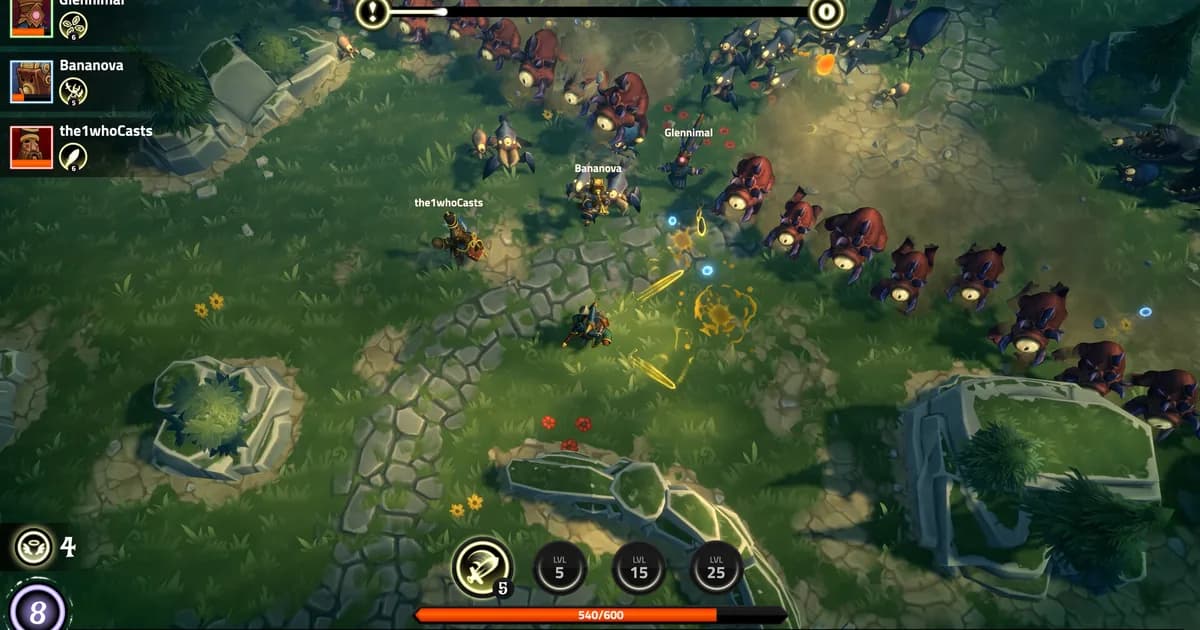
About the game
The Spell Brigade
The Spell Brigade tips below cover what the tutorial never spells out. None of these are in the game's tutorial. Some you'll figure out by hour two. The rest are things Bolt Blaster Games has patched into or out of the game since April 29, and players running early advice guides are playing a different version than what's on Steam right now.
The Spell Brigade is a 1-4 player co-op Survivors-like from Bolt Blaster Games, launched in 1.0 on April 29, 2026. Spell brigade tips that made sense at early access don't account for Patch 2's gold economy overhaul or the balance work happening in the May 13 Open Beta branch. These do.
TL;DR: The Spell Brigade is a 1-4 player co-op Survivors-like where your element-plus-enchantment combination matters far more than the base spell. Early on, commit to one element and build a pure setup before chasing synergies, which only pay off in longer runs. The 1.0 build has shifted since launch (Patch 2 reworked the gold economy), so older advice may not match the current version. Online co-op only, with cross-play.
Key Takeaways
- Gold cost scaling was significantly reduced in Patch 2: you can afford more upgrades per run than early access players could
- Friendly fire is always on; your spells hurt teammates. Position based on this, not against it
- Revive Cores are shared resources in co-op. One Core can save a run; don't treat them as emergency reserves
- Scrolls are one-time use but strong. Use them during mid-run threat spikes, not just boss doors
- Build around one element before mixing: pure builds are easier to manage and still viable in longer runs
- The May 13 Open Beta branch adds more balance changes; stable players should expect another update soon
Overview
These tips are written for players who've done 1-3 runs and hit a wall: either in solo, where runs feel like they end arbitrarily, or in co-op, where the group keeps wiping because someone's spells are hitting the wrong things. The game version is the current stable 1.0 branch as of May 16, 2026 (patch 1.0.2.16727). If you're on the Open Beta branch, some numbers may differ.
The rest of this guide covers what the 1.0 launch changed from Early Access.
Tips That Actually Help
Step-by-Step: Applying These in Your First Real Run
Before your run starts, you make spell and enchantment selections. Most new players pick the spell they like the visual of. That's fine for the first run. For the second run, pick based on your intended element (Fire, Lightning, Earth, or whichever pair the lobby agrees on) and then select enchantments that reinforce that element. A Fire spell with a Lightning enchantment doesn't behave like either; it creates a hybrid that's harder to build around mid-run.
Tip 1: Build around element first, spell second. The upgrade system revolves around enchantments and augments that respond to spell type. If your lobby has two Fire wizards and one Lightning wizard, one of those three is getting fewer relevant upgrades per wave. Agree on element distribution before the run starts, not mid-boss.
Tip 2: Treat gold like it replenishes, because now it does. Early access players learned to hoard gold carefully because upgrade costs scaled steeply after the first two tiers. Patch 2 "significantly reduced gold cost scaling." In the current version, you can afford three or four upgrades per round in a normal run. Saving gold for a theoretical better upgrade later often means you clear fewer waves with weaker spells.
Tip 3: Quests give upgrades you can't get from enemy drops. The team-based Quest system in The Spell Brigade rewards specific group behaviors: survive for a certain duration, hit a kill threshold, or complete an objective before time runs out. These grant upgrades that aren't available through normal enemy drops. Many players ignore Quests in early runs because the core loop feels like pure survival. Completing Quests is what separates a run that ends at wave 12 from one that reaches the back half of the dungeon.
Tip 4: Revive Cores are not emergency items: they are tools. In solo, Revive Cores let you continue after dying. In co-op, one player's Core can pull a downed teammate back immediately. The mistake is treating them as reserves for impossible situations. Use a Core when a teammate drops during a manageable wave and you're confident the next 90 seconds won't kill you both again. Reviving at 30% health with two waves left to the checkpoint is a better use than holding the Core until the final boss drops the last teammate.
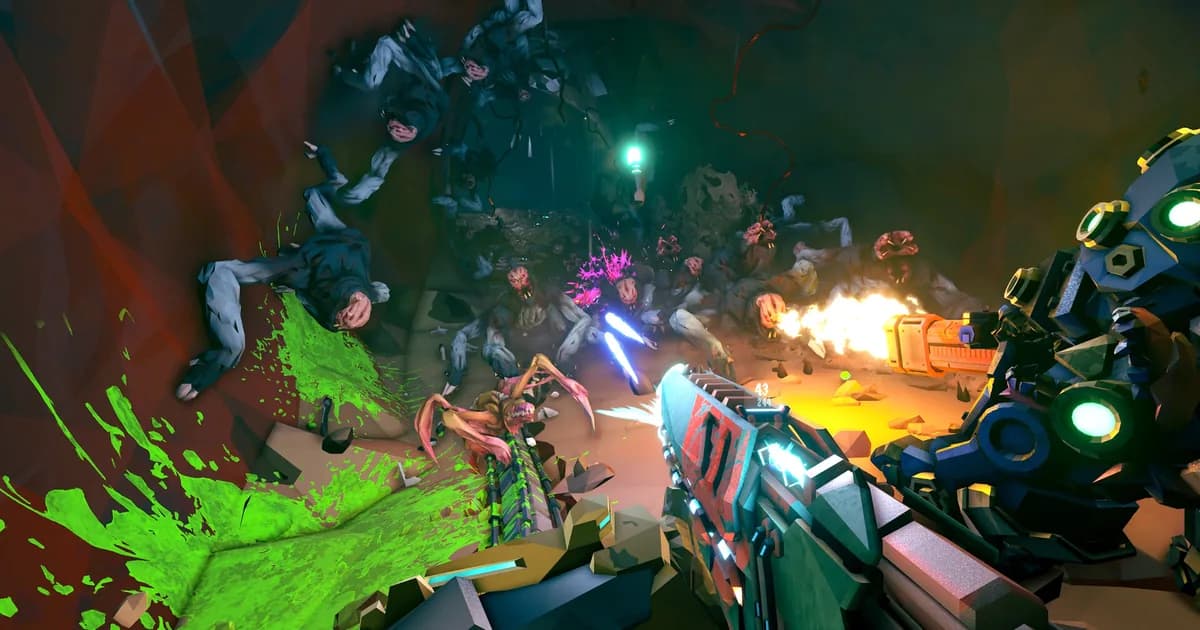
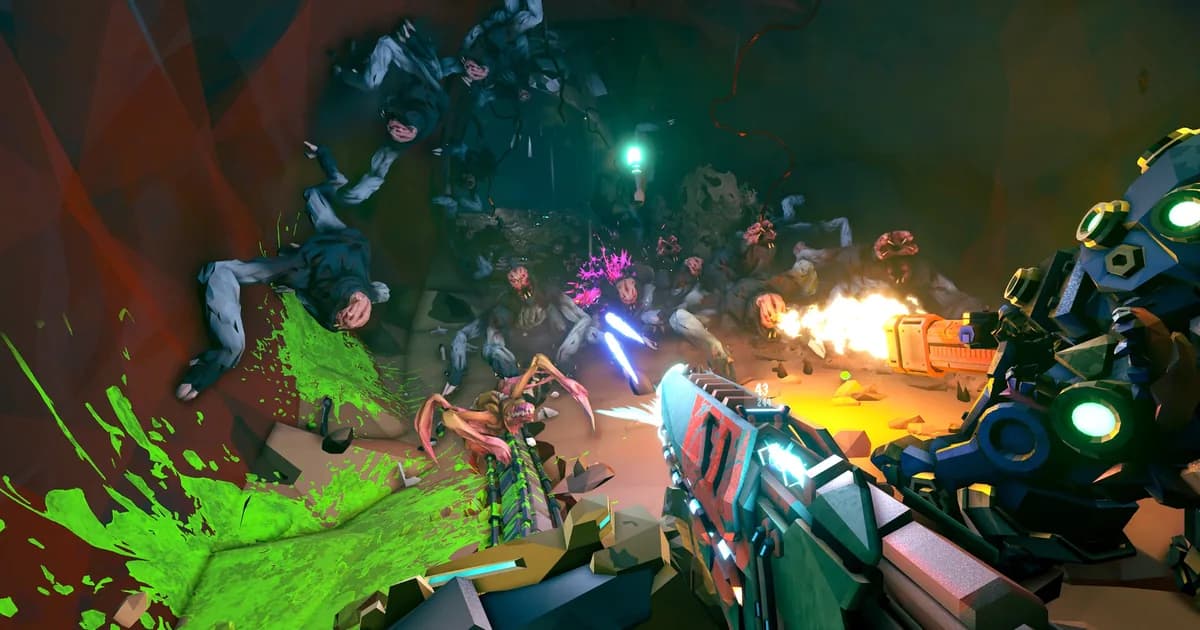
GODEEPER: Deep Rock Galactic: Rogue Core launched in EA this month with its own co-op coordination demands: here's how the class communication and role assignment work in that game. Deep Rock Galactic Rogue Core Co-Op Guide →
Tip 5: Friendly fire spreads outward from your position, not your target. In narrow corridors and choke points, your area spells will hit teammates behind the enemy cluster. Spread laterally and designate loose lanes: one wizard left, one wizard right. Don't all point at the same kill zone. In solo, this doesn't apply, but it's worth practicing positioning anyway because some enchantments have large blast radii.
Tip 6: Use Scrolls on threat spikes, not boss doors. Scrolls are one-time use consumables with strong effects. New players collect them and wait for boss doors, then forget to use them until the boss is at 30% health. The better use is during mid-run moments when enemy density spikes unexpectedly: dense clusters between waves, surprise objective events, or a wave you misjudged. Scrolls don't save struggling runs; they extend winning ones.
Tips
Watch the Dodge Mastery enchantment in large groups. In Patch 3, Dodge Mastery had a bug where bosses wouldn't spawn when it was active. That's fixed as of 1.0.2.16727. Post-fix, Dodge Mastery is solid in solo and risky in dense co-op groups: its timing window requires deliberate movement, and in four-player chaos, deliberate movement is hard to maintain. Take it if you're disciplined; skip it if the lobby is unpredictable.
The Open Beta branch (May 13) changes some values significantly. Bolt Blaster released an Open Beta on May 13 to address major 1.0 criticisms (specifically, progression grind and a few enchantment interactions. If you've been playing stable, expect another patch to drop to the main branch soon that rebalances some spell combinations. Build tier lists posted online may be based on stable or beta values) check the patch notes before trusting them.
Infuse after you've committed to an element. The Infuse system lets you add elements to existing spells. It's powerful, but adding a second element to a spell that's already hitting upgrade synergies can dilute the bonuses you're getting from element-specific enchantments. Infuse once you've maxed the useful upgrades for your primary element, not as your first shop purchase.
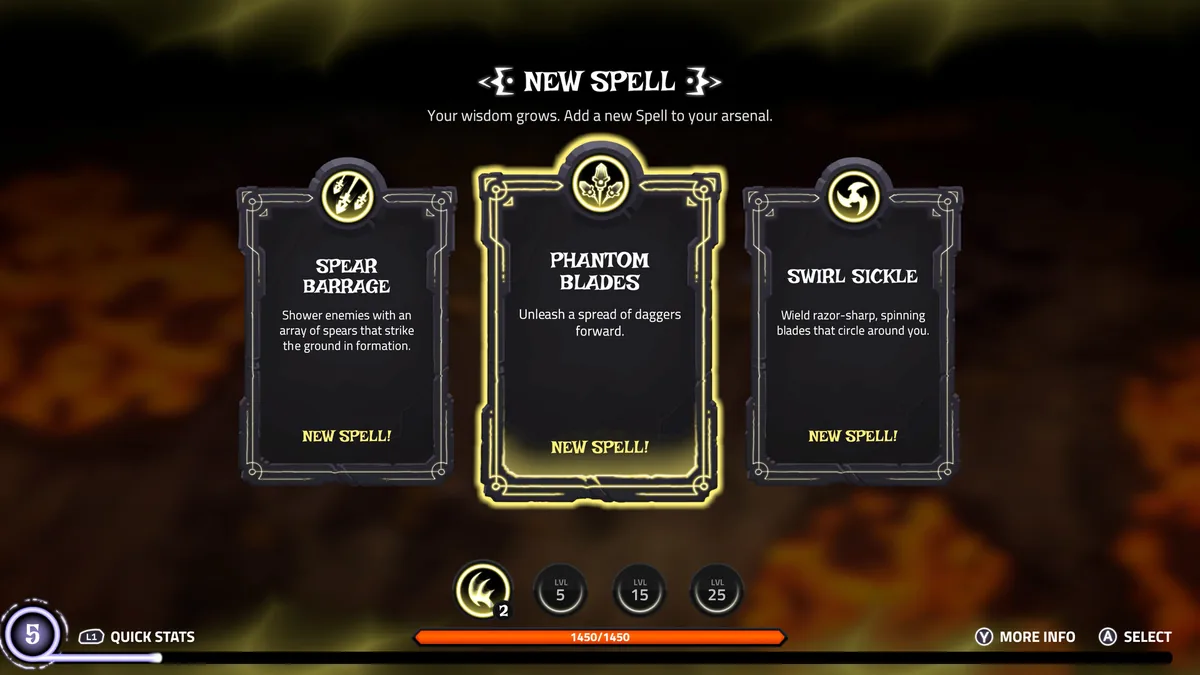 Caption: Enchantment selection happens before spells during upgrades: most players have this backwards.
Coordinate on Revive Core holds in co-op. In a four-player run, having all four players hold one Core each isn't efficient: you'll reach a situation where two players die simultaneously and both use Cores before either can revive the other. Designate one player as the Core holder early (often the most defensively-specced wizard) and have them hold the group's spare Cores while others focus on offensive upgrades.
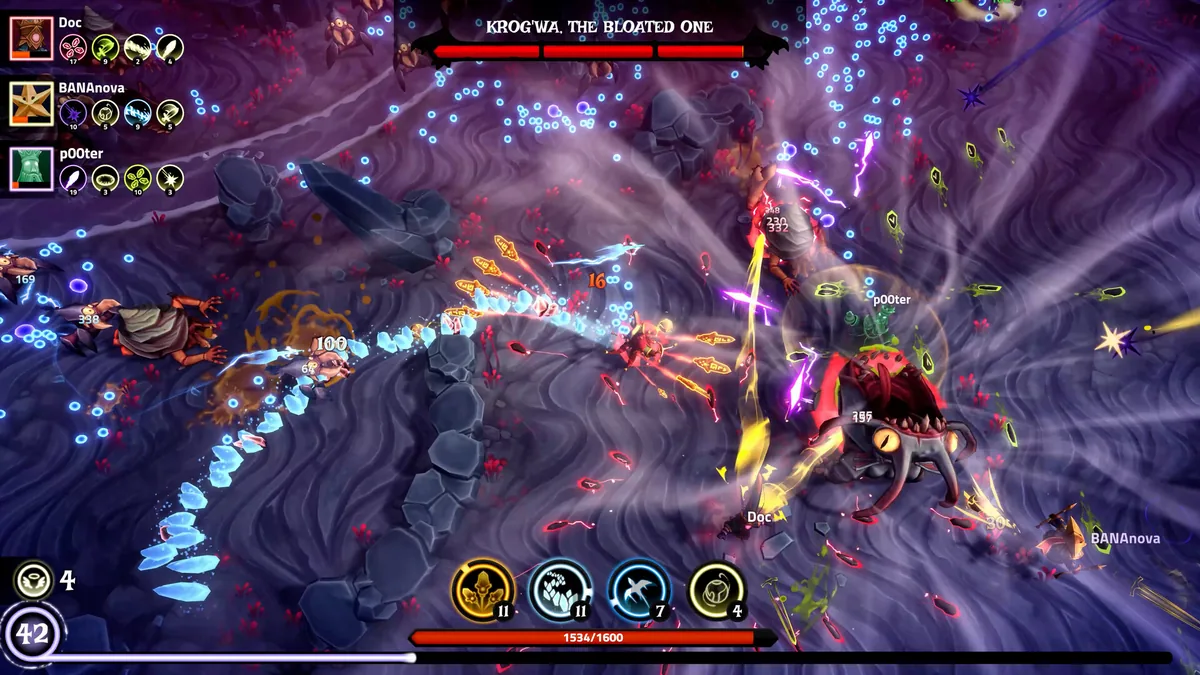 Caption: Lane discipline matters more as wave density increases: bunching costs runs.
GODEEPER: For a broader look at where The Spell Brigade fits in the 2026 roguelite landscape: and what other games hit that co-op sweet spot. Best Roguelike Games 2026 →
Frequently Asked Questions
Is The Spell Brigade good solo? Yes. The Spell Brigade is fully playable solo with 1 player. The co-op mechanics scale down appropriately, and solo runs let you focus entirely on your own spell synergies without friendly fire risk. That said, the game was designed around multiplayer, and co-op adds meaningful difficulty and chaos.
What are Revive Cores in The Spell Brigade? Revive Cores are items that let you blast yourself or teammates back into action after dying. In solo, they extend your run. In co-op, they're a shared resource: one player's Revive Core can pull a downed teammate back at the cost of the Core itself.
How does friendly fire work in The Spell Brigade? Friendly fire is always active in The Spell Brigade. Your spells can damage and kill teammates. This is intentional design: positioning and communication matter. In co-op, you can also use this to your advantage by landing certain area spells near clustered enemies while teammates are clear.
Did The Spell Brigade get easier after 1.0 patches? The gold cost scaling was significantly reduced in Patch 2 (released within the first week of 1.0). Early access veterans will find upgrades much more affordable. An Open Beta branch released May 13, 2026, adds further balance changes that haven't shipped to the stable version yet.
How many players can play The Spell Brigade? The Spell Brigade supports 1 to 4 players in online co-op. Cross-platform multiplayer is supported. There is no local co-op: all multiplayer is online.
What is the best early spell to focus on in The Spell Brigade? There's no single best spell: the element and enchantment combination matters more than the base spell itself. In early runs, prioritize building around one element before mixing. Pure builds are easier to manage while learning the system; synergy builds become stronger in longer runs once you understand how enchantments interact.
References
- The Spell Brigade on Steam
- The Spell Brigade 1.0 Patch 2 notes: Bolt Blaster Games (gold cost scaling change, May 2026)
Related Reading
- Rune Dice Tier List: All 8 Classes Ranked: another roguelite where build coherence beats raw power, useful for the synergy mindset.
- Die in the Dungeon Relic Tier List: how to evaluate build pieces against your current run rather than a fixed best list.
- Gambonanza Tips: Crumble Mode, Reserve, and Gambits: a roguelike where reading the systems early is what carries deeper runs.
Was this guide helpful?
About the author

Games Critic
Games writer and reluctant optimist who has reviewed over 400 titles across 9 years. Irish, currently in Berlin. Has strong opinions about tutorial design.
- 400+ games reviewed across 9 years
- Platformer and horror specialist
- Narrative design focus
Keep reading
All Hail the Orb New Player Mistakes: 8 Common Errors
Guides · 13 min
Deep Rock Galactic Rogue Core Beginner Guide: 2026
General · 8 min
Deep Rock Galactic Rogue Core Co-op Team Guide 2026
General · 9 min
Besmirch Tips: 12 Things to Know Before Your First Night
General · 8 min
Farever Builds Guide: Best Class and Team Comp 2026
General · 9 min

Farever Class Guide: All 4 Classes and How to Pick
General · 10 min
Game deals · affiliate links

Disclaimer
This article is published for informational and entertainment purposes. It does not constitute professional financial, legal, or technical advice. Game performance, online services, patch schedules, and store listings change. Verify critical details (pricing, system requirements, regional availability) with publishers and storefronts before you buy. Affiliate links, where present, help support our editorial work and are labelled in our affiliate disclosure.
Comments
Loading comments…