
GuideSunderfolk
Sunderfolk Beginner Guide: Best Classes and Party Tips
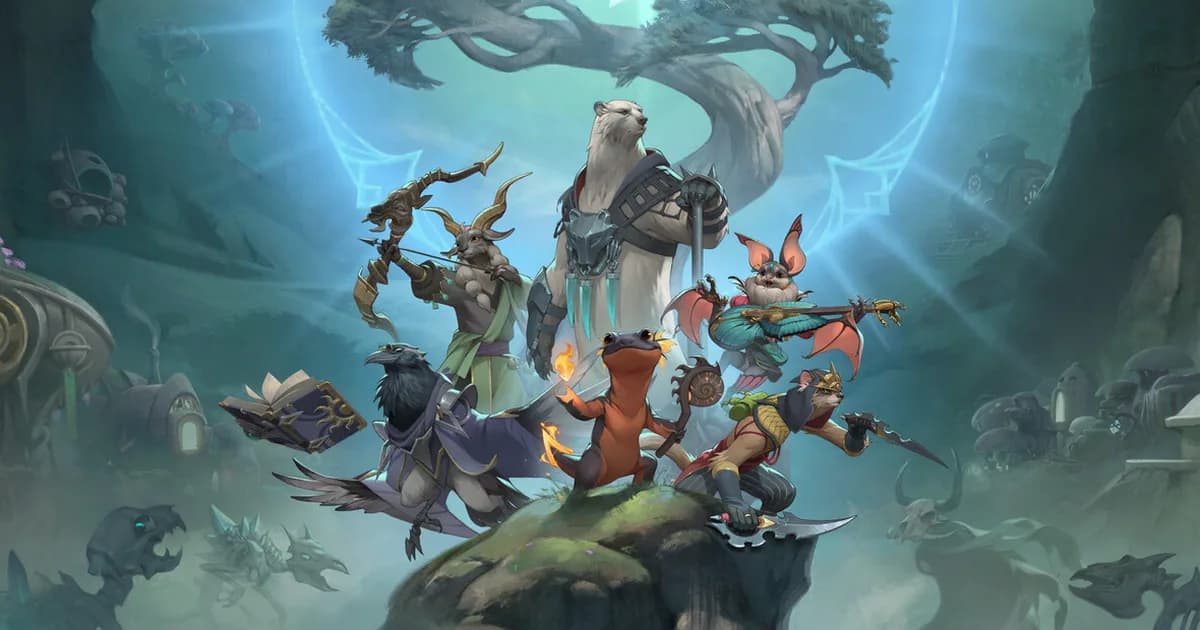
About the game
Sunderfolk
Secret Door · Dreamhaven
This Sunderfolk beginner guide covers all 7 classes, the best party compositions, and first-run setup for players new to this grid-based co-op tactical RPG.
Updated 2026-10-02: Steam's live all-language review snapshot is Very Positive across 2,303 reviews, with 2,066 positive and 237 negative.
TL;DR: Sunderfolk is a 1-4 player grid-based tactical RPG where each hero plays a customizable deck of skill cards. There are seven classes (the Vanguard arrived in Update 2.0); Berserker and Ranger are the most forgiving entry points. Turn on Coordination Mode (pause combat to plan) immediately, and in a full party aim for a frontline tank, the Bard for buffs, and ranged damage. It plays solo but shines at 3-4 players.
BESTPRICE: Don't own Sunderfolk yet? Loaded sells Steam keys for it, so compare the current price with Steam before you buy. Get Sunderfolk on Loaded →
Key takeaways
- Developed by Secret Door, a studio built from former Blizzard staff, published by Dreamhaven
- 7 playable classes (Vanguard added in Update 2.0), 4-player co-op max, full online and local play supported
- Coordination Mode (pause combat to plan) is essential for beginners: turn it on immediately
- Berserker and Ranger are the two best entry points for players new to grid-based tactics
- Each hero uses a physical deck of skill cards, which you customize and upgrade through runs
What is Sunderfolk?
Sunderfolk is a co-op tactical RPG from Secret Door and Dreamhaven that blurs the line between a board game and a video game. The fundamental idea: up to four players sit together (locally or online), each controlling a different hero, working through a dungeon campaign one grid-based encounter at a time.
The game launched in April 2025 and has a Very Positive Steam snapshot of 2,303 all-language reviews, with 2,066 positive and 237 negative. Its free stint on the Epic Games Store starting May 14, 2026 has introduced a new wave of players to it.
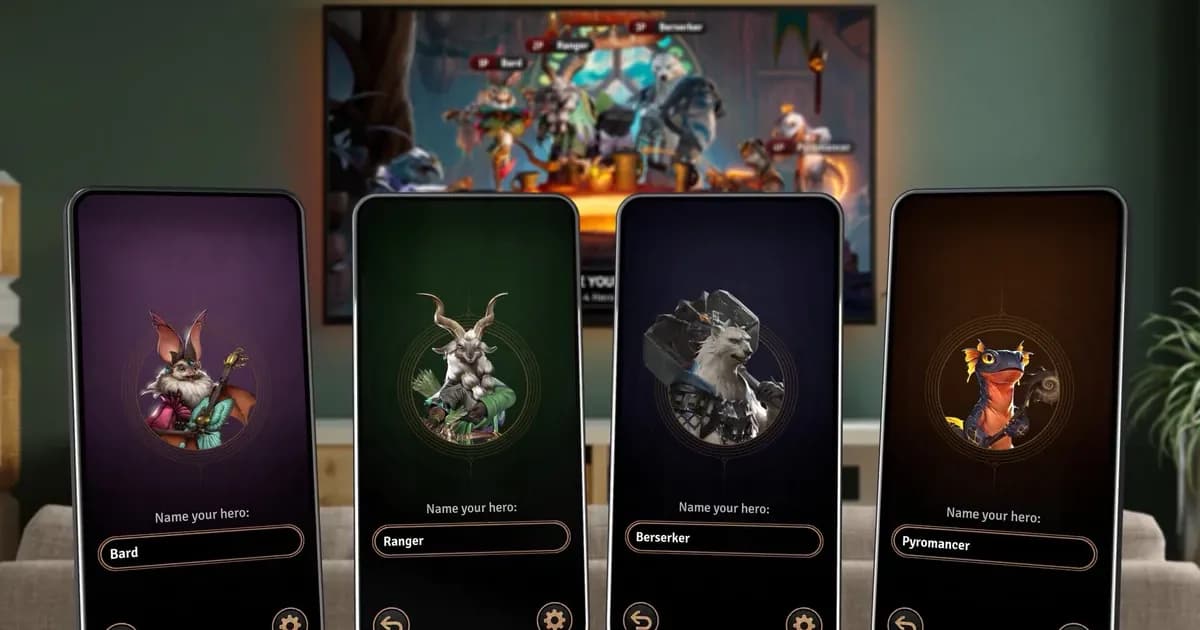
What separates Sunderfolk from most tactical RPGs is the controller setup. Each player uses either the free Sunderfolk mobile app on their phone as their controller, treating it like a hand of cards they hold and play, or standard keyboard and mouse. The phone option genuinely changes how the game feels: you hold your cards, play them in secret (other players can't see your choices until they're made), and the physical act of choosing and discarding makes the game more tactile than a typical mouse-click menu.
This Sunderfolk beginner guide covers everything a new player needs: class breakdown, party compositions, Coordination Mode, and the town upgrade decisions that matter early on.
Setting up: controller and Coordination Mode
Before touching a class, two setup steps matter for new players.
Phone controller setup. Download the free Sunderfolk app on iOS or Android. The host launches the game on PC, creates a session code, and each player enters it in the app. Once connected, your phone is your character screen and card hand. This works over local Wi-Fi or online with a direct friend invite. If you prefer mouse/keyboard, skip it: the PC controls work fine.
Coordination Mode. This is the setting that separates a frustrating first session from a fun one. With it active, you can pause, hover over every tile to see movement ranges, preview enemy attack lines, and plan the full team's turn before committing. Turn it on. Experienced tactical RPG players might find it slow (fair complaint) but without it, new players make mistakes that feel random rather than learnable.
Both settings are in the main menu before a session starts.
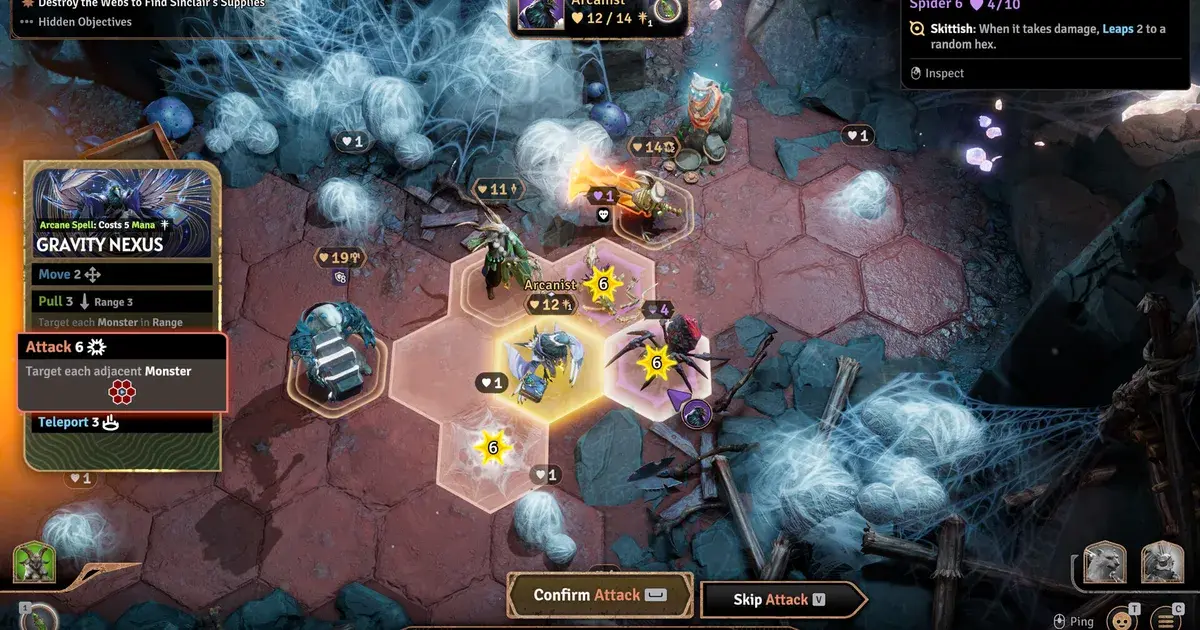
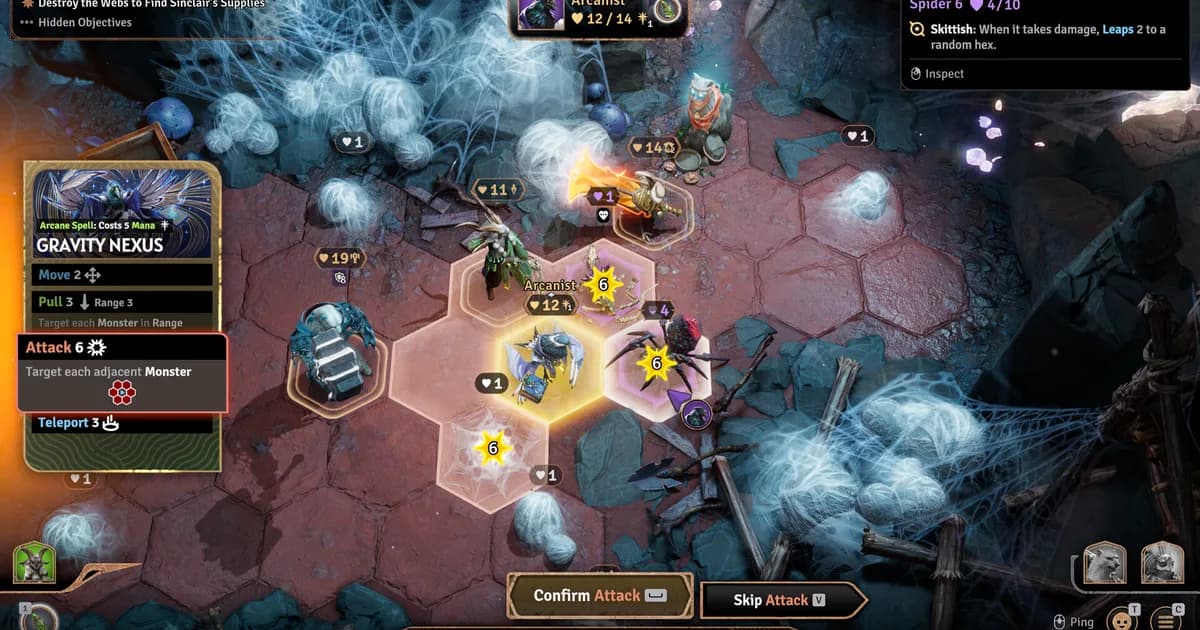
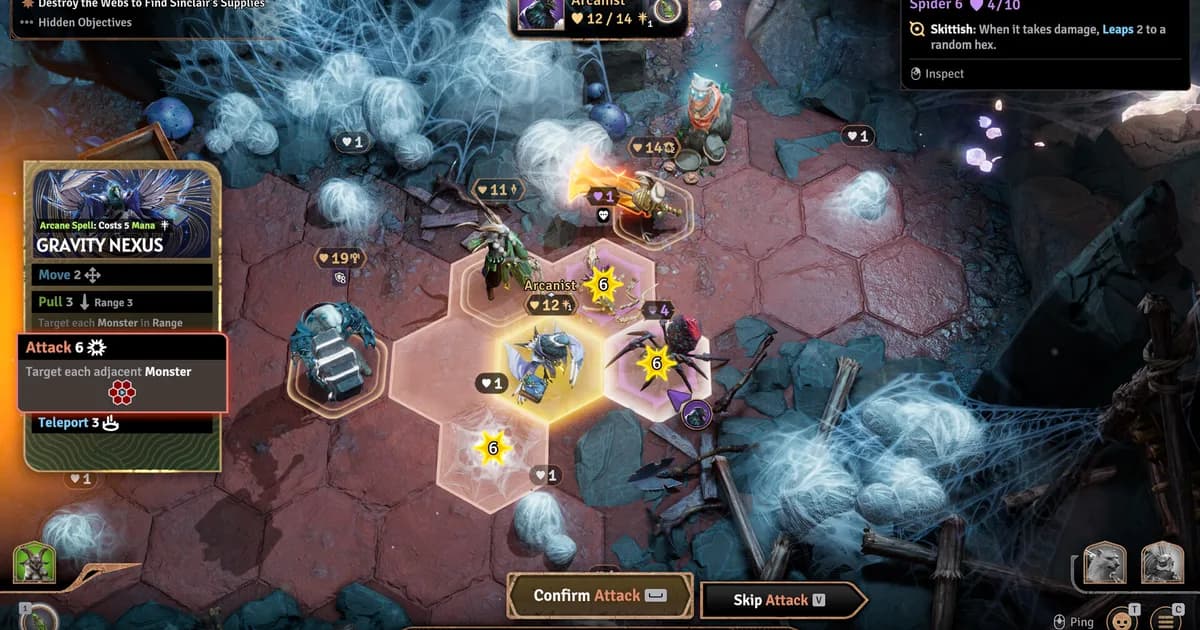
A live encounter with enemy health, abilities, and the Confirm Attack prompt all visible on screen: this is the kind of information Coordination Mode lets you review before committing.
All 7 Sunderfolk classes explained
Each class in Sunderfolk plays a genuinely different role. The game works with any four-class combination, but some pairings are noticeably stronger: the Sunderfolk beginner guide picks are in the next section.
Berserker is the frontline tank and primary damage dealer. The Protector's Fury passive reduces incoming damage and increases outgoing damage while active. You can pick up enemies and throw them to reposition the battlefield. Best feature for beginners: the self-sustain mechanic means you won't die immediately if you make a positioning error. The Berserker should absorb the hardest hits.
Arcanist deals burst magic damage and controls space. Teleport abilities let you reposition both allies and enemies mid-turn. The Arcanist places Decoy tokens that draw enemy attacks, giving your team breathing room. High ceiling, moderate floor: rewarding to play once you understand the map layout.
Bard is the team's support engine. Its Two-Step ability swaps the Bard's position with a hero or ally, gains 1 Move, and drops a music note; several Bard cards and trinkets create notes directly. Those notes sit on the field as Healing, Strengthening, or Shielding effects that allies pick up by walking on or near them. A well-played Bard keeps the entire team healthier and stronger across a full encounter without spending extra resources. The catch: notes don't appear from ordinary movement, so beginners sometimes play a plain damage card and forget to use Two-Step or a note card at all, generating nothing for the team that turn.
Pyromancer burns everything. Area-of-effect fire cards deal strong damage across multiple enemies, but the Pyromancer has low health and needs protection from the Berserker or Ranger. A Pyromancer positioned poorly gets deleted. Positioned well, it clears rooms faster than any other class.
Ranger is the safest entry point for players who dislike standing in the middle of enemy clusters. High single-target damage at range, some traps and area denial, and enough durability to survive a mistake. The Ranger's main challenge: enemies close in quickly, and you need to actively maintain distance.
Rogue rewards players who've already beaten the game once. Stealth positioning, high burst combos, and abilities that trigger differently based on positioning relative to enemies. Technically strong but requires reading the full encounter layout before acting: not ideal for a first run. For reference, Farever's Rogue-adjacent class has a similar positioning-first design: Farever class guide →
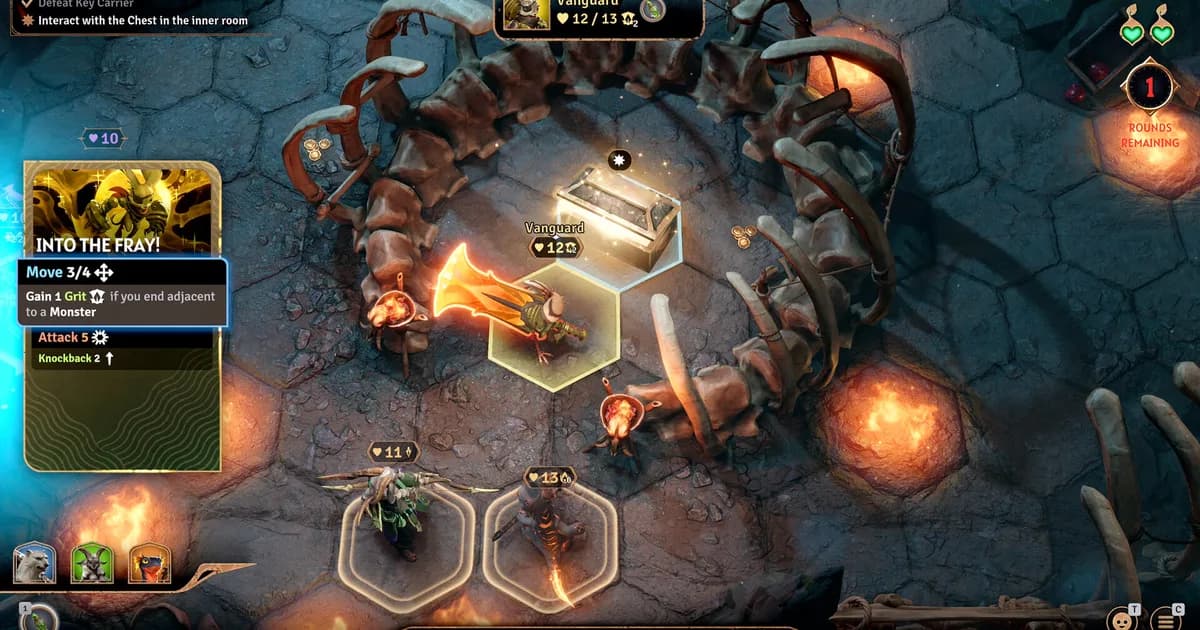
Vanguard is the seventh hero, added in Update 2.0, and a strong second tank option alongside the Berserker. Its Grit passive stacks up from dealing damage with certain Skill Cards, and while Grit is active it reduces incoming damage and reflects that damage back at whoever lands the hit, though each hit that connects also burns off a stack. It brings more mobility and board control (Knockback) than the Berserker but is less forgiving: it falls off when Grit isn't building. Capable for beginners who like a frontline role, though the Berserker is the steadier first pick. Full details in the Sunderfolk Vanguard guide.
GODEEPER: Class synergies follow similar principles across co-op tactical games. LegionBound Class Synergy Guide →
Sunderfolk beginner guide: best party compositions for 2-4 players
Solo: Berserker. It's self-sufficient. The Ranger works too.
2 players: Berserker + Bard. The Berserker soaks hits and deals damage; the Bard's Two-Step swaps and note cards boost both players without requiring a big attention split, since there's only one other hero to place a note near. This pair clears most encounters without mechanical difficulty.
Alternatively: Ranger + Arcanist. The Ranger handles single-target threats while the Arcanist teleports and controls group positioning. A bit more fragile but very flexible.
3 players: Berserker + Bard + Pyromancer is the standard pick. You have a frontline, healing/buffs, and AoE damage. The Pyromancer benefits from having a Berserker available to move enemies into fire zones.
Berserker + Ranger + Arcanist is the more tactical option: good for groups that want to think through each turn rather than brawl through.
4 players: Berserker + Bard + Pyromancer + Ranger covers all roles. The Ranger handles priority threats while the Pyromancer clears clusters. This is the composition the game is balanced around.
If your group insists on Rogue, pair it with Bard (Two-Step and note cards help the Rogue set up combos) and keep the Berserker for stability.
How the Sunderfolk card system actually works
Every hero runs a deck of cards, draws from it each turn, and plays from their hand. The whole difficulty curve of Sunderfolk lives in this system, so understanding it before your first run changes how you make every shop decision.
You draw a fixed number of cards at the start of each turn. When your deck runs out, your discard pile reshuffles into a new draw pile. This means the deck cycles predictably: the more cards you have, the longer before you see any one card again. A 10-card deck cycles twice as fast as a 20-card deck. You see your best cards twice as often. This is the entire reason deck-thinning is the most important shop habit.
Three decisions happen at shops: buy a new card, upgrade an existing card (at the Forge in town), or remove a card. For the first five encounters, remove before you buy. Every starting deck has weak filler that dilutes draws. Cutting one weak card before adding a strong one nets more output than just adding the strong one to a larger deck.
Card upgrades don't expand deck size: they improve the effect of an existing card. An upgraded Berserker swing hits harder in the same slot. This matters because new players who buy every new card they find end up with a large, inconsistent deck by Chapter 3. The counterintuitive move is to frequently run with fewer cards than you think you need.
The practical target: by the end of Chapter 2, aim to have a deck where you'd genuinely be glad to draw any card in it. If there are two or three cards you're always disappointed to see, that's your removal priority for the next shop.
Town upgrades: what to build first
Between dungeon runs, you manage a small town with upgradable buildings. The priority order for the first few upgrades:
If your team runs melee-heavy (Berserker + Pyromancer), go Meal system first. The buffs reduce incoming damage at dungeon entry, which matters more than card quality when everyone is standing in the front line.
Two or more ranged characters? Start at the Forge. Card quality determines how consistently Arcanist and Ranger draw what they need: early upgrades remove dead draws before they become a problem.
The Inn is a quality-of-life pick for longer sessions, not a priority. Passive regen between encounters adds up, but you don't need it until mid-run.
Don't split upgrades evenly across everything. Pick a direction based on your team and commit.
The town hub between dungeon runs: the Workshop is where Forge and Meal system upgrades get spent, so commit to one direction based on your team's class mix rather than spreading upgrades evenly.
GODEEPER: Co-op role design works similarly in Farever's dungeon system. Farever Co-op Guide →
How Sunderfolk difficulty cycles work
Beating the main campaign once doesn't end Sunderfolk. The game loops into difficulty cycles: each new cycle uses the same five chapters but scales enemy health and damage, adds elite enemy variants with different behavior patterns, and unlocks new card options and class upgrades unavailable in Cycle 1.
Your town upgrades carry over between cycles, which is why early upgrade choices have longer consequences than they appear on the first run. A Forge you maxed in Cycle 1 is already maxed when Cycle 2 starts: you get the benefit for harder content without re-spending gold.
What actually changes between cycles:
Enemy health scaling. AoE damage (Pyromancer) and single-target burst (Ranger) start to diverge in value around Cycle 2. Against basic enemies, Pyromancer AoE clears rooms faster. Against elite enemy variants with high health pools, single-target burst from Ranger finishes individual threats before they act again. Cycle 1 parties that ran Pyromancer as the damage anchor sometimes need to reconsider composition in Cycle 2 when elites resist the AoE pattern.
Elite variants. Starting in Cycle 2, elite versions of regular enemies appear. Their telegraphs look similar to standard enemies but their attack patterns differ. Coordination Mode becomes more important, not less, in later cycles: experienced players who turned it off in Cycle 1 often turn it back on when elites start appearing.
New class content. Each class has a set of advanced cards and passive upgrades locked behind cycle progression. The Rogue's higher-ceiling builds, for example, don't unlock until you've pushed into Cycle 2 or 3. This is part of why the Rogue's stated difficulty floor is "for players who've beaten the game once": by then, you're cycling into the runs where the class's full toolkit becomes available.
The 12-20 hours figure is Cycle 1 only. Completing all five chapters and then running further cycles up to difficulty maximum accounts for the 25-35 hour completionist estimate. If you're playing casually with friends and finishing the story once, the lower end of the range is the more accurate target.
Sunderfolk beginner guide: tips for your first run
Remove cards before adding them. Starting decks have filler that produces dead draws. At early shops, delete a bad card before buying a new one. A smaller, consistent deck outperforms a larger deck with dead draws every time.
Watch the telegraphs. Every enemy shows its planned attack before you move. Coordination Mode projects exactly which tiles will be hit. Moving out of attack zones before they trigger is worth more than squeezing extra damage: this is the core loop and it takes a couple of runs to internalize.
The Bard has to use Two-Step or a note-generating card to make a music note appear. New Bard players play a plain damage card out of habit, skip Two-Step entirely, and wonder why the support effects aren't landing. Every Bard turn the question is "does Two-Step or a note card get played this turn, and where does the note need to land?" before "what else do I play?"
Use voice chat, even if it's just Discord. Sunderfolk has proximity chat built in, but the main coordination need is simple: call which enemy you're targeting so the team doesn't dump damage into different targets and waste turns.
Wipes are fast. Each run starts with a basic deck and you're back in under two minutes after a wipe. The game is designed around learning encounter patterns through failure, not punishing you for them.
Sunderfolk tips: what goes wrong in the first 10 encounters
Most early wipes come from the same five mistakes, not from bad luck.
Splitting damage across multiple enemies. The most common cause of early wipes. Enemies take their turn based on the threat closest to them, which means leaving multiple enemies at half health means all of them get a turn. Focus one enemy to zero, then move to the next. A dead enemy never attacks.
The Pyromancer needs a bodyguard. Pyromancer has the lowest health pool and the highest damage output. If you're running Pyromancer, the Berserker's job for the first two rounds is to stand between the Pyromancer and the heaviest enemy. The Berserker's ability to throw enemies back or to the sides means it can physically reposition threats away from the squishier teammates. Pyromancer + Berserker throw combo (Berserker throws an enemy into a fire zone Pyromancer already laid down) is the fastest room clear in a 2-player run.
Skipping Two-Step for a plain damage card. Music notes come from Two-Step (the Bard's swap ability) or specific Bard cards and trinkets, not from moving around the grid. New Bard players play a damage card because the number looks bigger, then realize afterward that Two-Step or a note card would have put a Healing, Strengthening, or Shielding effect on the field for the whole team to use. The Bard's turn order should be: decide whether Two-Step or a note card gets played this turn and where the resulting note needs to land, then fill out the rest of the turn. Reversing that order, damage first and notes as an afterthought, wastes a large share of the Bard's output on a given turn.
Deck size creep. After three or four shops, decks bloat with situational cards that were hard to evaluate at purchase. A 12-card deck that draws the same 5 useful cards per hand is worse than a 7-card deck with no filler. Before any shop visit, identify the two weakest cards in your current deck and cut at least one before buying anything.
Ignoring the Vanguard's Knockback direction. Vanguard's Knockback is excellent for creating space, but if the knocked-back enemy lands adjacent to the Pyromancer, you've traded one problem for another. Call the Knockback direction before activating it so the Pyromancer can pre-position. In co-op with voice chat this takes two seconds. Without it, the Vanguard should default to knocking enemies toward walls or away from the back line.
Step-by-Step: Your First Sunderfolk Session
1. Turn on Coordination Mode: it's in the main menu before a session starts. It lets you pause, preview movement ranges, and see enemy attack lines before committing, which turns random-feeling early deaths into learnable mistakes.
2. Pick Berserker or Ranger as your first class: Berserker's self-sustain forgives positioning errors, and Ranger keeps you out of the middle of enemy clusters while you learn the grid.
3. Build a party around one frontline, the Bard, and a damage dealer: Berserker plus Bard plus Pyromancer is the standard 3-player pick; add a Ranger for the full 4-player group the game is balanced around.
4. Remove a weak card before you buy a new one: starting decks have filler that dilutes your draws. Cutting one dead card before adding a strong one nets more output than just growing the deck.
5. Commit your first town upgrades to one direction: go Meal system first for a melee-heavy team, or the Forge first if you're running two or more ranged classes. Don't split upgrades evenly across everything.
Frequently Asked Questions
How many players can play Sunderfolk? Sunderfolk supports 1 to 4 players. Online co-op requires each player to use the free Sunderfolk mobile app as their controller, or play on keyboard/mouse on the host PC.
Do you need a phone to play Sunderfolk? No. You can use keyboard and mouse on PC. The phone app is an optional controller: download the free Sunderfolk app, connect to the session, and use your phone screen to play cards. It's a fun couch co-op setup but not required.
Is Sunderfolk free on Epic Games Store in 2026? It was. Sunderfolk: Standard Edition was free on the Epic Games Store from May 14 to May 21, 2026 and anyone who claimed it during that window keeps it permanently. That giveaway is over; the game now retails at full price on Steam and the Epic Games Store.
What is the best class for Sunderfolk beginners? Berserker is the most straightforward class for new players. High damage, built-in damage reduction, and a forgiving playstyle. Ranger is the second-best option for players who prefer ranged play.
Does Sunderfolk support online co-op? Yes, both local and online co-op for up to 4 players.
How long does it take to beat Sunderfolk? A full playthrough takes approximately 12-20 hours depending on group size. Completionists can expect 25-35 hours across all difficulty cycles.
What do Sunderfolk difficulty cycles change? Each cycle scales enemy health and damage, introduces elite enemy variants with different attack patterns, and unlocks advanced card options unavailable in Cycle 1. Town upgrades carry over between cycles. Elite variants appear from Cycle 2 onward with similar telegraphs but different behavior than standard enemies.
Related Reading
-
Sunderfolk Class Tier List: All 7 Heroes Ranked 2026: S-to-C ranking for every class once you understand the basics, with best 2-player and solo recommendations.
-
LegionBound Class Synergy Guide: Class synergy mechanics in a different tactical game, useful cross-reference for readers building team-based game knowledge.
-
Farever Co-op Guide: Co-op role design and dungeon party composition from another indie tactical RPG in the same 2026 window.
-
Sunderfolk Rogue Guide: Stealth Builds and Tips 2026: Sunderfolk Rogue guide: C tier for most players, technically powerful for experienced ones. Shroud timing, card priority, and when.
-
Sunderfolk Online Co-op Guide: Setup, Fixes, and Party Tips: Sunderfolk online co-op supports 1-4 players on Steam and Epic. Phone app setup steps, AccelByte connection fixes, and.
References
- Sunderfolk on Steam
- Sunderfolk on Epic Games Store
- Sunderfolk official site: Dreamhaven
- Sunderfolk Steam key on Loaded: compare the price with Steam before you buy.
Was this guide helpful?
About the author

Critical game theorist with a background in film criticism. Writing for print and digital outlets since 2015. Specialises in genre analysis and design heritage.
- Background in film criticism
- 10 years games coverage
- Genre theory and design history specialist
Keep reading
Sunderfolk Class Tier List: All 7 Heroes Ranked 2026
General · 8 min
Sunderfolk Online Co-op Guide: Setup, Fixes, and Party Tips
Guides · 8 min
Sunderfolk Complete Guide: All 7 Classes, Co-op Tips 2026
General · 18 min
Sunderfolk Berserker Guide: Protector's Fury and Best Builds
General · 8 min
Sunderfolk Bard Guide: Music Note System and Best Builds
General · 7 min
Sunderfolk Vanguard Guide: Grit, Retaliation, Best Builds
Guides · 7 min
Game deals · affiliate links

Disclaimer
This article is published for informational and entertainment purposes. It does not constitute professional financial, legal, or technical advice. Game performance, online services, patch schedules, and store listings change. Verify critical details (pricing, system requirements, regional availability) with publishers and storefronts before you buy. Affiliate links, where present, help support our editorial work and are labelled in our affiliate disclosure.
Comments
Loading comments…