
GameBrief · Guides
Die in the Dungeon Relics: All Types, Triggers, and Effects

Reviewing
Die in the Dungeon
ATICO
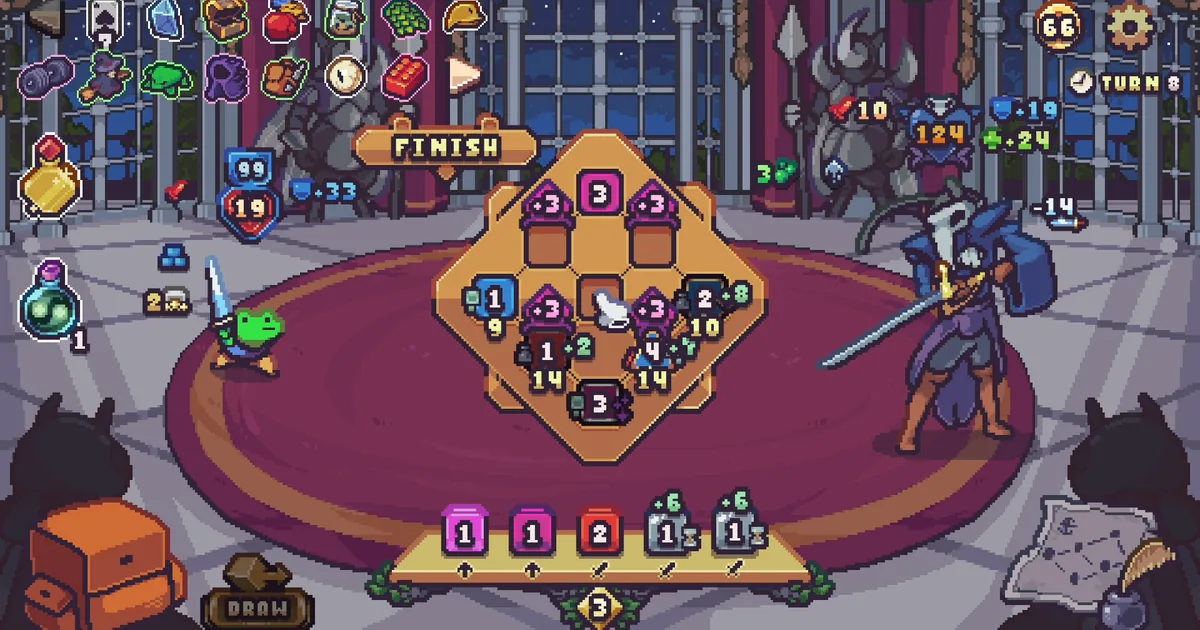
Die in the dungeon relics number 142 in the pool. You'll see 30 to 40 per run, which means you're constantly making decisions about die in the dungeon relics you may not have encountered before. The difference between good relic decisions and bad ones isn't memorizing which relics are "good": it's understanding how to read any relic's trigger condition against your current dice.
This guide covers all five trigger categories that die in the dungeon relics fall into, what each one does mechanically, which of the four characters benefits most, and how to evaluate a relic you've never seen before without needing to look it up.
TL;DR: Five relic categories: attack-trigger, poison-trigger, parry-trigger, reroll-trigger, and broad-condition. Attack-trigger relics are the most consistent across all characters. Broad-condition relics are safe picks early before your build direction is established. Skip any relic whose trigger your current dice can't meet consistently: the effect ceiling doesn't matter if the trigger is unreachable.
Key takeaways
- 142 relics in the pool (1.0 release, May 2026). Each run surfaces 30-40.
- Five trigger categories: attack, poison, parry, reroll, and broad-condition
- Attack-trigger relics appear in the largest category and have the widest character compatibility
- Broad-condition relics (fire on any roll, on damage taken, or on combat start) are safe picks at any point in a run
- Relics with cooldowns are usually stronger per activation: account for the cooldown when estimating value
- Two relics that fire on the same trigger in the same turn produce compounding effects, not additive ones: this is the source of late-floor burst damage
- Skip relics whose trigger requires a face count your current dice can't reach in 70% of combat turns
How die in the dungeon relics are structured
Every relic has three parts: a trigger condition (what has to happen for it to fire), an effect (what it does when it fires), and sometimes a cooldown (how long before it can fire again).
 Every relic's value reduces to three questions: what triggers it, what it does, and how often it can fire. Reading these three fields correctly takes about 10 seconds per relic.
The trigger is the most important part. A relic that deals 3 damage per activation is meaningless if the trigger requires 3 poison faces and your dice have none. Conversely, a relic with a modest 2-damage trigger that fires 4 times per combat ends a floor fight faster than a flashy relic that activates once.
Cooldowns gate the strongest effects in the pool. If a relic has a 3-turn cooldown, estimate how many times it realistically fires in a standard floor encounter: usually 2 to 3 times. Build your value calculation around that, not the maximum possible activation count.
Category 1: Attack-trigger relics
Attack-trigger relics activate when attack faces land. Attack faces appear in the starting dice of three of the four frog warriors and in most replacement dice offered mid-run, which makes this the largest category in the pool and the most forgiving to build around.
The attack-focused frog warrior can use attack-trigger relics from floor 1. The other three can build into them by floor 3 if they're picking up attack-heavy dice from encounters. The window is real: this is not a "commit immediately or skip" category.
The compounding mechanic matters more here than anywhere else. Two attack-trigger relics that fire on the same turn both apply independently: a 3-damage relic and a 2-damage relic hitting the same attack face produce 5 extra damage per qualifying face, not 5 total for the turn. That's why late-floor attack builds can hit numbers that look unreasonable: each relic fires on its own math.
Skip attack-trigger relics if your current dice average fewer than two attack faces per roll. They'll fire rarely enough that you're better off with a broad-condition relic that doesn't need specific faces. This is mostly an early-run problem: by floor 4, if you've been adding dice, you'll know whether attack faces are viable.
GODEEPER: How to evaluate attack builds vs. poison builds by character, with floor-by-floor decision points. Die in the Dungeon Best Build Guide →
Category 2: Poison-trigger relics
Poison-trigger relics activate when poison faces land or when poison status fires at end of turn. The distinction matters: relics that trigger on face landing fire during your roll sequence; relics that trigger on poison damage applying fire afterward, which means they can chain with other end-of-turn effects in ways that aren't immediately obvious.
 Poison-trigger relics fire at end of turn regardless of board position: that's the build's floor 5 advantage. Attack-trigger relics need your roll to hit the right face; poison just needs time.
The poison-focused character can run these from floor 1. Other characters need at least 3 poison faces on their current dice before poison-trigger relics start firing consistently: the face commitment requirement is higher than it looks.
The reason poison builds hold up on floor 5 and beyond is the persistence. Poison damage ticks at end of turn regardless of what happened during the roll. If a flanking enemy forces you to move rather than attack, attack-trigger relics don't fire: but the poison you already applied keeps dealing damage. That extra turn of breathing room decides a lot of late-floor fights.
On a character with zero poison faces, a poison-trigger relic is dead weight. Don't take it planning to build toward poison later unless the dice you need are already available in the floor pool. If they're not, it's a slot you'll wish you'd filled with something else by floor 6.
Category 3: Parry-trigger relics
Parry-trigger relics activate when parry faces land. The defensive frog warrior (the one built around a parry-reroll mix) can use these from early floors; the other three need to invest in parry-heavy dice before the trigger fires with any consistency.
The most interesting relics in this category convert defense into offense: parry faces dealing damage or applying debuffs rather than just reducing incoming hits. Finding one of these converts a defensive action into something that also advances the fight, which changes the calculus on the parry-heavy character from "survive longer" to "survive longer while also doing work."
Parry-trigger relics underperform on floors 1-3 where enemy hits are modest and attack-trigger relics generate more value per turn. They come into their own from floor 5 onward, when taking a full unmitigated hit becomes genuinely costly and every parry face matters. The character who's been building parry faces since floor 2 is a different proposition on floor 7 than the character who panicked-pivoted into parry at floor 5.
If your build is attack or poison committed and you have no parry dice, skip parry-trigger relics. You'd need to rebuild your dice composition mid-run to make the triggers fire, and that usually costs more than you'd gain.
Category 4: Reroll-trigger relics
Reroll-trigger relics activate when reroll faces land: and here's the mechanic that makes this category weird: the trigger fires before the reroll happens. The reroll face lands, the relic activates, and then the face is consumed in the reroll that follows. On a build with many reroll faces, this means you're generating relic trigger events every turn from faces that are immediately spent. The relics fire; the dice cycle; both things happen.
The reroll-heavy character is the only one who can make this work from floor 1. The other three either need reroll-heavy dice (which compete with your actual build direction) or need to find specific dice that bridge the gap. Neither is a clean setup.
The honest assessment of reroll builds: the ceiling is high and the floor is low. Good turns chain reroll-trigger firings into significant damage or recovery. Bad turns produce a sequence of rerolls that generates nothing useful. Attack and poison builds are more predictable. Reroll is the choice for players who've already learned the game and want variance.
Skip reroll-trigger relics if you have fewer than two reroll faces. One face firing once per combat isn't a build: it's noise.
Category 5: Broad-condition relics
Broad-condition relics fire on triggers that don't need a specific face type: any successful roll, combat start, taking damage, turn end, or health dropping below a threshold. They work on every character, every build, every dice composition. If you're not sure what else to take, these are the pick.
Combat-start relics fire once per encounter, fixed value regardless of fight length. They're strongest on floors with many short fights and weakest on boss floors where the fight runs 12 turns and per-turn compounding relics pull ahead.
Damage-taken relics create a weird incentive structure: they reward getting hit. On builds with poor parry coverage, they fire constantly and produce real value. On well-defended runs, they might activate twice a floor and barely register. There are late-floor situations where deliberately not using a parry face lets a damage-taken relic fire multiple times: that's a legitimate call if the math works out.
Health-threshold relics are run-savers and under-rated picks mid-run. They often look unattractive on floor 3 when your health is fine. By floor 7, when a bad fight is about to end your run, a relic that fires below 30% health can produce the healing that keeps you alive. Evaluate them against your current health situation, not their theoretical maximum.
The only real skip case for broad-condition relics: when a narrow-condition relic matches your current dice composition so cleanly that the compounding value is obviously higher. If your dice are heavily attack-weighted and you already have two attack-trigger relics, a third attack-trigger is probably worth more than another broad-condition pick. That's a late-run luxury problem: most of the time, broad-condition is the right call.
GODEEPER: Complete relic evaluation framework: how to rank any relic against your current dice composition on floors 1-5 vs. 6+. Die in the Dungeon Relics Tier List →
How to read a relic you haven't seen before
You'll encounter relics mid-run that you haven't seen before. The evaluation takes about 10 seconds if you know what to look for.
First, find the trigger condition. What has to happen? Attack face lands, three poison faces in one turn, you take damage, combat starts? Categorize it against the five above.
Second, count your current face composition. How many of the required face type do your dice show on an average roll? A relic that needs 2 attack faces on a build showing 4 per roll fires most turns. A relic that needs 3 poison faces on a build showing 1 fires once every several turns: that's effectively never.
Third, account for the cooldown. A 3-turn cooldown fires approximately twice in a standard 6-10 turn floor encounter. Build the value estimate around two activations, not the theoretical maximum.
Fourth, check whether you already have a relic with the same trigger. Compounding is the whole game in late floors. Two relics that both fire on the same attack face applying their effects independently can justify picking a relic whose individual effect looks modest.
Tips for managing your die in the dungeon relics
Shop die in the dungeon relics are worth more than floor drops. Shops appear at points where ATICO assumes your build is established. Shop relic pools offer effects tuned for sustained synergy rather than early setup. After floor 5, check shops before skipping them, even if the current floor drops look attractive.
Three die in the dungeon relics that all fire on the same turn is the configuration to aim for. Late-floor runs that feel decisive usually have this: three relics with the same trigger type, all compounding on the turns your dice favor that face type. It's not about having many relics. It's about having matching ones.
Cooldown relics in shops are stronger than they look. Shop relics tend to have larger per-activation effects, and a cooldown relic that fires twice per fight often beats a no-cooldown relic that fires 6 times for modest value. Don't automatically default to the no-cooldown option.
Stop adding narrow-condition die in the dungeon relics if your dice composition changes mid-run. If a floor encounter upgrade removes your poison faces, your poison-trigger relics are now dead slots. Check after any major dice change that your existing relics can still fire their triggers.
Frequently asked questions
How many relics are in Die in the Dungeon? 142 unique relics in the 1.0 pool. Each run surfaces 30 to 40 based on floor depth and biome. The full pool isn't visible in one run.
What are the five relic trigger categories? Attack-trigger, poison-trigger, parry-trigger, reroll-trigger, and broad-condition. Attack-trigger is the largest category. Broad-condition relics are the most universally applicable.
Do relics stack? Yes. Multiple relics of the same trigger type apply independently on the same turn. Two attack-trigger relics both fire when conditions are met, producing compounding not additive effects.
What is the best relic in Die in the Dungeon? There's no single best relic: the value depends entirely on your dice composition. The evaluation framework above applies to every relic in the pool: trigger type, face count on your current dice, cooldown, and whether existing relics compound the same trigger.
Which character benefits most from broad-condition relics? All four benefit equally: that's what makes broad-condition relics the safest picks in the pool. If you're running a character whose face type doesn't match available narrow-condition relics, always take the broad-condition relic.
Where do the strongest relics appear? Shop relics after floor 5 tend to have stronger sustained effects than standard floor drops. Boss floor reward relics also pull from a stronger subset of the pool. Early-floor drops are intentionally modest: the pool widens as you go deeper.
Related Reading
- Die in the Dungeon Best Build Guide: How attack concentration, poison DoT, and reroll chains work, mapped to each character's starting die.
- Die in the Dungeon Dice Tier List: Every dice type ranked from S-tier Grow and Mirror to C-tier Eternal and Pierce, with scaling analysis.
- Die in the Dungeon Achievement Guide: All achievements listed with unlock conditions, including the four hidden ones.
- Die in the Dungeon Complete Guide: Hub for all Die in the Dungeon content covering combat, characters, and progression.
- Die in the Dungeon Tips: Dice, Board, and Build Basics: Die in the dungeon tips: board positioning, dice face priority, and relic synergies.
- Die in the Dungeon Floor Guide: Floors 1 to 6 Breakdown: Die in the dungeon floor guide: what each floor demands, how floor 5 kills most.
- Die in the Dungeon Characters: Which to Pick First: Die in the dungeon characters guide: 4 frog warriors with distinct starting dice.
- Die in the Dungeon Review: Dice-Building With Brains: Die in the dungeon review: 31 dice, 142 relics, 4 frog warriors, and the 1.0.
References
- Die in the Dungeon on Steam: official store page and community hub
- ATICO: developer page
- Die in the Dungeon relic tier list: relic evaluation framework and best picks per category
- Die in the Dungeon best build guide: attack, poison, and reroll build paths with floor-by-floor decision points
- Die in the Dungeon complete guide: hub for all GameBrief Die in the Dungeon content
Was this guide helpful?
About the author

Senior Critic & Analyst
Former game data analyst turned critic with 11 years covering indie and mid-tier games. Based in Austin. Runs spreadsheets on games most people just play.
- 11 years games criticism
- Former game economy analyst
- Roguelike and strategy specialist
Keep reading




Disclaimer
This article is published for informational and entertainment purposes. It does not constitute professional financial, legal, or technical advice. Game performance, online services, patch schedules, and store listings change. Verify critical details (pricing, system requirements, regional availability) with publishers and storefronts before you buy. Affiliate links, where present, help support our editorial work and are labelled in our affiliate disclosure.
Comments
Loading comments…