
GameBrief · General
Killer Bean Tips: 9 Things to Know Before You Play
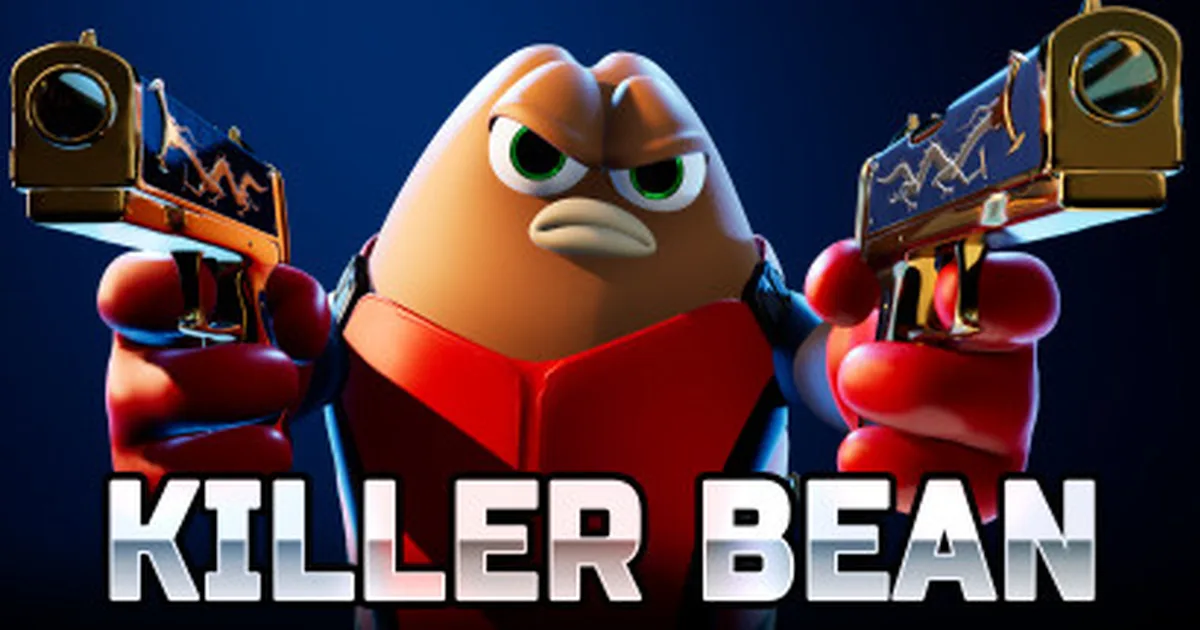
Reviewing
Killer Bean
These Killer Bean tips cover the mechanics the game doesn't explain. It launched June 8, 2026 on Steam as a $14.99 Early Access FPS roguelite, and the first few hours are rougher than they need to be if you go in blind. Two energy bars, four skill trees, a slow-motion dive that changes everything about boss fights, a Conquest mode most players ignore until they're bored of Campaign. None of that gets explained at the start.
These 9 tips cover what the game expects you to figure out on your own: which skill tree to prioritize, when the dual pistols are actually the right call, and why the special move energy bar is worth protecting even when regular fights feel easy.
TL;DR: The dive ability (slow-motion free-fall) is Killer Bean's single most powerful tool. Max the Guns Blazing skill tree first, abuse dual pistols until Mission 4, then add Parkour upgrades for sustained campaign runs. Protect your special move energy bar for bosses. Conquest mode unlocks after Campaign starts and rewards a different playstyle entirely.
What are the best Killer Bean tips for new players? (quick answer)
Prioritize the Guns Blazing skill tree, use the dive ability on every boss, and keep ammo full from safezone crates before entering mission-critical areas. The dual pistols have infinite ammo and strong enough base damage to finish the campaign without switching. Spend your first skill points on ranged damage before touching Melee or Stealth.
Tip 1: The dual pistols will carry you further than you expect
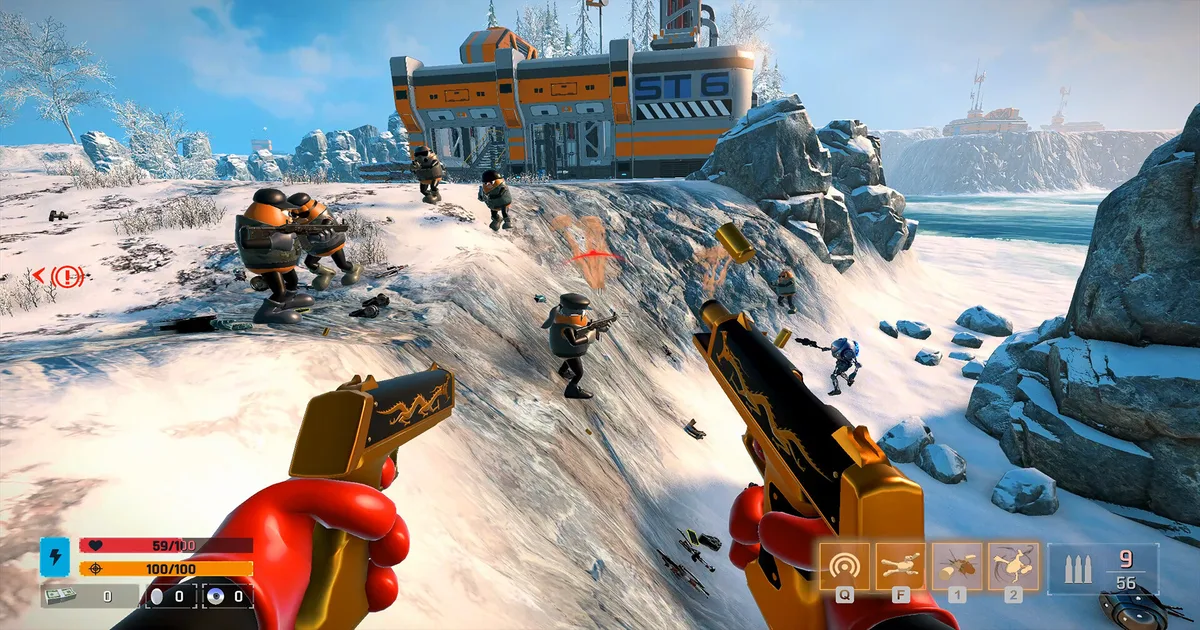
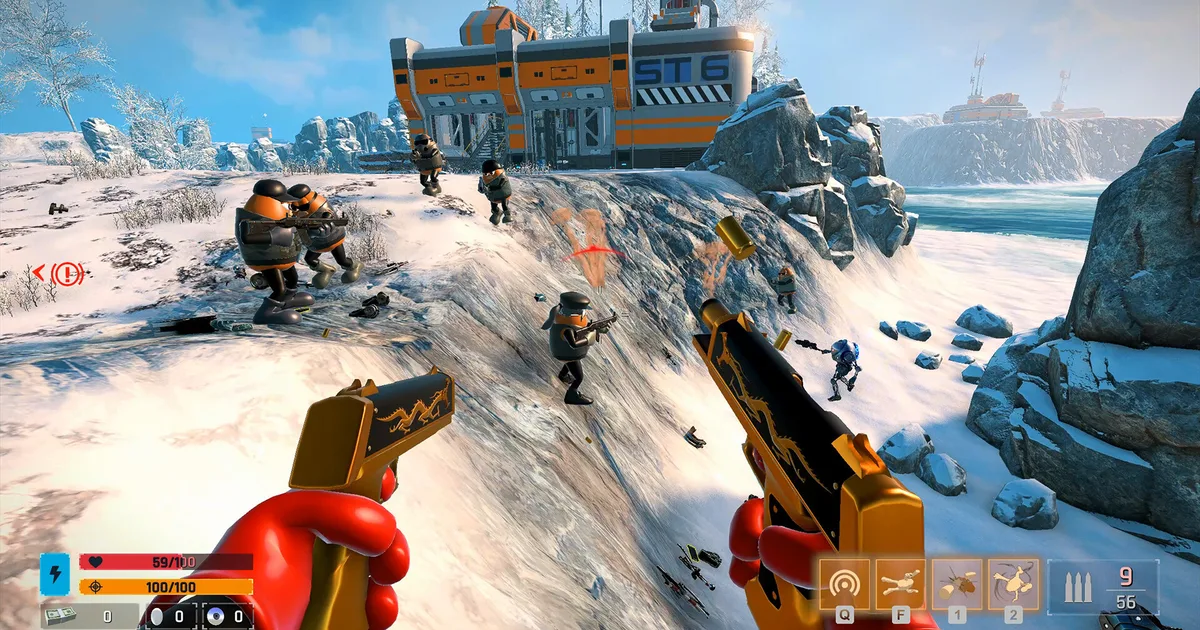
Killer Bean starts with dual pistols and they have infinite ammo. Sounds like a tutorial weapon. It isn't. Players have confirmed they're powerful enough to carry you through the full campaign at launch. Competitive damage per shot, no reload stress during long fights.
When you find weapons like the shotgun, grenade launcher, or KRG-25 Assault Rifle on later missions, treat them as situational tools rather than upgrades. The rocket launcher is excellent in enclosed spaces (Mission 2 interiors especially), but the pistols handle most open-island encounters without burning your limited supply of heavier rounds.
Save the special ammo for tight spaces and bosses. The dual pistols handle the rest.
Tip 2: The game has two separate energy bars
This catches new players mid-fight. Killer Bean has two separate energy systems:
The regular energy bar powers movement, including the double jump. Each double jump costs 5 energy. In a long fight where you're constantly repositioning vertically, that drains faster than expected.
The special move energy bar powers Breakdance (area-of-effect attack), Bullet Time, and Sonar. It doesn't regenerate in combat the same way as the regular bar.
Knowing which one you're burning is the difference between running out of jumps mid-firefight and running out of Bullet Time against a boss. Watch both, not just one.
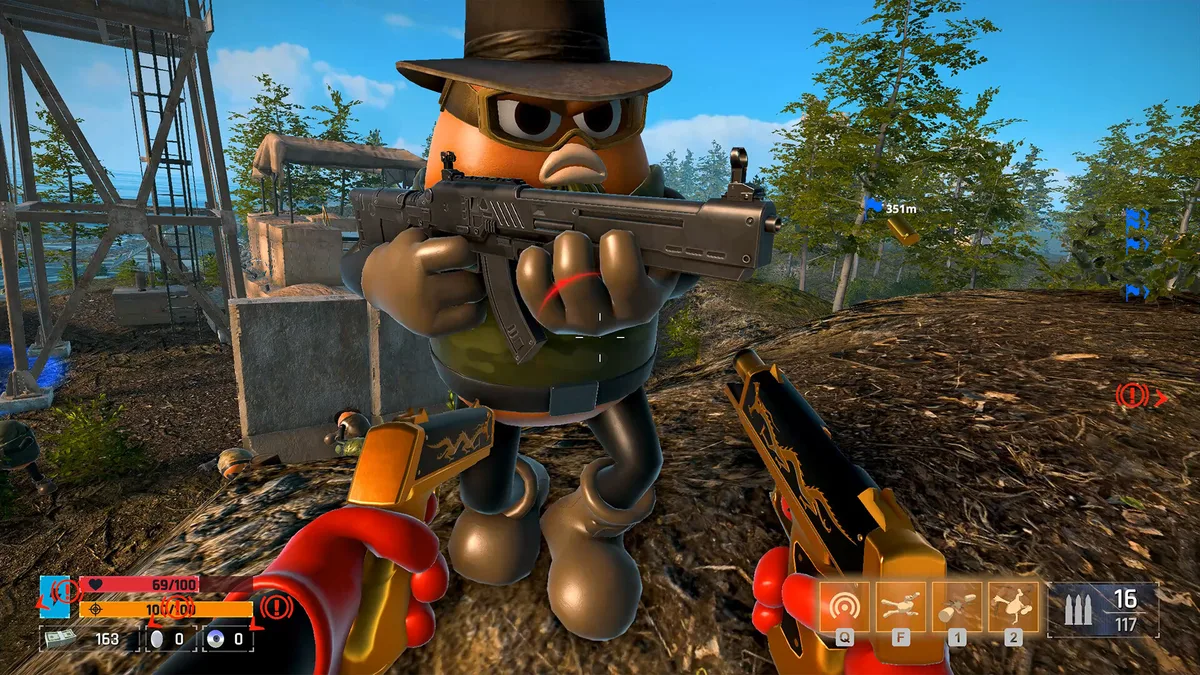 Both energy bars sit stacked in the lower-left HUD: the regular bar on top, the special-move bar underneath.
GODEEPER: Want to see how another FPS roguelite handles skill progression? Marine.exe Beginner Guide →
Tip 3: The dive ability is your best boss tool
The dive ability triggers slow-motion during a free-fall. Time slows while you aim and fire, giving you a clean window to place multiple shots on a boss before the effect ends. Structure every major boss encounter around dive windows and it changes how manageable they feel.
Three specific examples:
- Warlord (Mission 3): This is the first boss where dive goes from optional to necessary. The verified approach: dive in, slow time, fire your clip, reposition. Warlord without dive is a war of attrition you'll often lose.
- Bullet Eyes (Mission 7): Same approach, different terrain. Dive during the platform ascent gives you stable firing windows on a target that's hard to track in normal movement.
- Monitor (Mission 9, three phases): Phase 2 adds shoulder grenade launchers, Phase 3 shifts to a flying form with tentacles. Dive gives you the reaction time to place shots during phase transitions. Phase 3 without it is significantly harder.
Practice on normal encounters first. The timing feels different from regular movement and learning it on Bad Beans is better than figuring it out on a boss.
Tip 4: Prioritize the Guns Blazing skill tree first
Killer Bean has four skill trees: Guns Blazing (ranged), Melee (close combat), Parkour (movement), and Stealth (concealment). For a first campaign run, spend skill points on Guns Blazing before anything else.
Most combat happens at range. Melee has animation issues the developer has acknowledged (they've confirmed plans to redesign it from hitbox to raycast for better hit registration, so it's not in a reliable state right now). Stealth works for specific approaches but isn't a primary damage path. Parkour gets more useful in the second half when biome traversal gets complicated.
Two or three Guns Blazing upgrades locked in before Mission 4 will smooth out the damage curve noticeably. After that, add Parkour for the movement improvements. Consider Stealth only if you're specifically targeting Conquest mode, where the faction infiltration structure makes it pay off.
Tip 5: Conquest mode rewards a different build entirely
Conquest puts you on a procedurally generated island where you join one of four factions: Bad Beans, Mercenaries, Pirate Commandos, or Shadow Troops. Your faction choice determines who's an ally and who's a target, and the island objectives are different from Campaign missions.
Stealth pays off in Conquest in a way it doesn't in Campaign. Faction-controlled islands reward entering enemy zones undetected before clearing them. That's exactly the scenario Stealth is built for. A Stealth-heavy build that struggles through the linear Campaign fights is actually well-suited to this mode's faction infiltration structure.
If you're running both modes, keep separate skill priorities in mind rather than treating the system as one unified build. They pull in different directions.
GODEEPER: Curious which roguelites in 2026 handle mode variety the best? Best Roguelike Games 2026 →
Tip 6: Don't shoot inside the shop
Between missions, Killer Bean visits a shop to buy weapons and upgrades using money or eggs. Firing a weapon inside triggers a security response and locks you out of purchases for that visit.
It sounds like the kind of mistake you only make once, but the shoot button is the primary interaction throughout the game and new players have fired into the shop by muscle memory more often than you'd expect. Notice you're in the shop before the combat controls kick in.
Tip 7: Mission 5 requires environmental awareness
The Overseer (Mission 5) has surge armor that can't be damaged directly. To strip the protection, lure the Overseer to one of the power generators on the map and shoot the generator to overload the armor. Once the surge protection is down, standard weapons work normally.
This is the first mission that requires environmental problem-solving rather than straight combat pressure. There's also a laser-dodge section on the control panel walkway during the disarming phase. Plan your movement through the generator room before engaging, not during.
If you go in without knowing the generator mechanic, you'll spend a lot of time confused about why your shots aren't connecting.
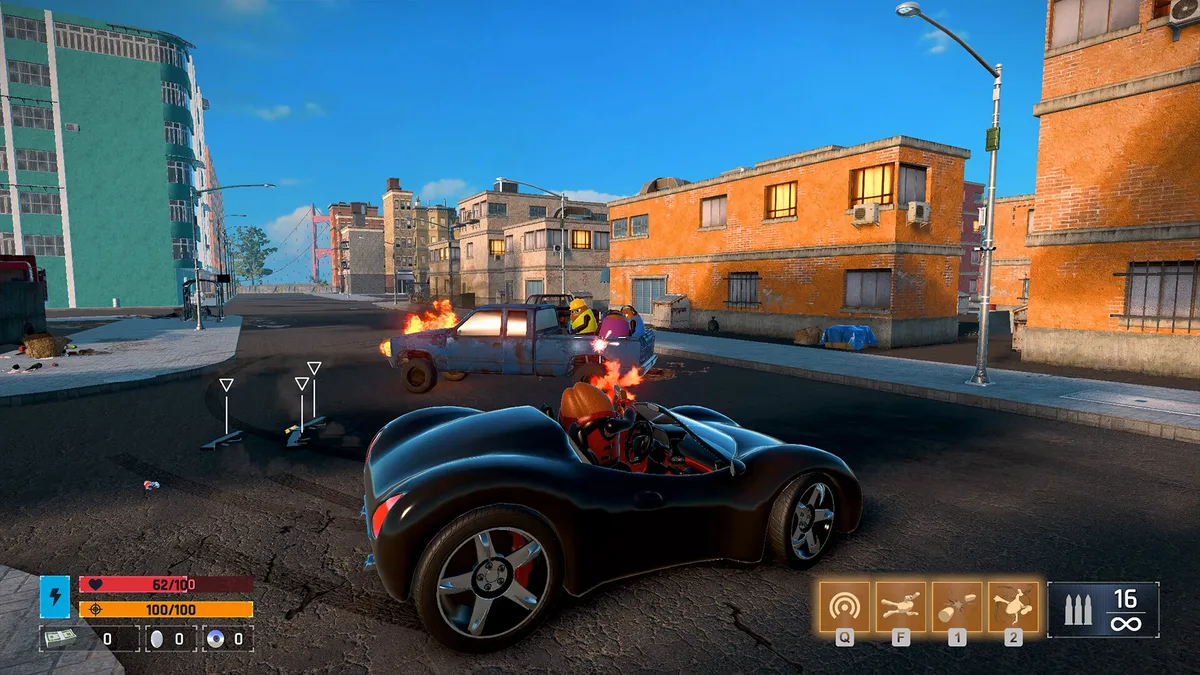 Vehicle sections mix driving and shooting, and the infinite-ammo weapon slot stays active while you're behind the wheel.
Tip 8: Get close before firing RPGs at helicopters
Enemy aircraft and helicopters appear from Mission 2 onward and feel dangerous from range. The actual approach: stop trying to hit them from a distance and move closer before firing RPGs or explosive weapons. At close range, splash damage and direct hits are reliable. From long range, projectile drop plus the helicopter's movement makes consistent contact genuinely difficult.
Mission 4 flips this. Toy Maker sends explosive vehicles toward you rather than helicopters. Don't get close to those. Shoot them before they close the distance.
Tip 9: Complete the mission objective AND the boss
Completing a mission objective in Killer Bean doesn't end the mission. Mission 1 makes this clear: you recover the car, and then the helicopter boss spawns. The mission resolves only after you beat it.
That two-part structure runs through the whole campaign. Each mission has a retrievable objective (hard drive, override key, target computer) and a combat gate that triggers once you secure it. Pushing through the objective underprepared is how you get caught out.
Check your ammo before activating the final objective each mission. Ammo crates sit in safezones and refill between phases. They're one of the most useful items in the campaign and the easiest to walk past when the objective is right there ahead of you.
Related Reading
- Killer Bean Early Access Launches June 8: What's in It: Full launch overview including all four modes, biomes, and roadmap details.
- Killer Bean Early Access: What the New Roguelike Gets Right: How the game plays post-launch including the permadeath removal and current review state.
- Best Roguelike Games 2026: Ranked list covering 2026's strongest roguelites across every budget, including other FPS entries.
- Marine.exe Beginner Guide: If you're new to the FPS roguelite format, this covers similar mechanics with a longer-form breakdown.
- Early Access Games Worth Buying in 2026: Which EA launches this year delivered on their premise and which needed more time.
- Killer Bean Boss Guide: All 4 Main Bosses Explained: Killer Bean boss guide: all 4 main bosses, every phase.
References
- Killer Bean on Steam: official store page, patch notes, and launch price
- Killer Bean Playtest 003 discussion thread: player-reported mechanics and mission structure from the playtest build
- Killer Bean community feedback thread: developer responses on melee redesign, skill system, and bullet trick behavior
- Killer Bean walkthrough (IntoIndieGames): mission-by-mission objective walkthrough used to verify boss encounter details
Frequently Asked Questions
What is the best starting build in Killer Bean? Early on, lean into the Guns Blazing skill tree and abuse the dual pistols. They have infinite ammo and deal enough damage to carry you through the first several missions. Only branch into Parkour or Stealth once you have Guns Blazing anchored with two or three upgrades.
How does the dive ability work in Killer Bean? Pressing the dive button triggers a slow-motion free-fall effect. During the dive, time slows and your shots deal bonus damage. It is also your best tool against bosses: dive toward a boss, fire your full clip in slow-motion, then reposition before the slow effect ends.
Is permadeath still in Killer Bean? No. Killer Bean Studios removed permadeath on June 11, 2026 after the community responded poorly to losing campaign saves on death. Progress now persists across runs regardless of how many times you die.
Do I need to spend money to play Killer Bean? Yes. Killer Bean is a paid Early Access title on Steam priced at $14.99, with no free-to-play tier or demo available. That single purchase unlocks the full campaign and all four game modes.
What are the four game modes in Killer Bean? Campaign (9-mission story mode), The Party (infiltrate and clear dance venues), Battle Arena (survive endless enemy waves), and Conquest (join one of four factions to control a procedurally generated island). All four are available in the current Early Access build.
How many skill trees does Killer Bean have? Four: Guns Blazing (ranged weapon abilities), Melee (close-range combat upgrades), Parkour (movement and navigation), and Stealth (concealment and disguise). Skill points unlock abilities within each tree.
What is the Sonar ability used for in Killer Bean? Sonar is a special ability drawn from the special move energy bar. It pings nearby enemies through walls, making it useful before entering a room or flanking route. It does not deal damage but reveals enemy positions you would otherwise need to scout manually.
Was this guide helpful?
About the author

Senior Critic & Analyst
Former game data analyst turned critic with 11 years covering indie and mid-tier games. Based in Austin. Runs spreadsheets on games most people just play.
- 11 years games criticism
- Former game economy analyst
- Roguelike and strategy specialist
Keep reading


Disclaimer
This article is published for informational and entertainment purposes. It does not constitute professional financial, legal, or technical advice. Game performance, online services, patch schedules, and store listings change. Verify critical details (pricing, system requirements, regional availability) with publishers and storefronts before you buy. Affiliate links, where present, help support our editorial work and are labelled in our affiliate disclosure.
Comments
Loading comments…