
GameBrief · General
Dinoblade Review: A Souls-Like Where You Play the Monster
Dinoblade review: a Spinosaurus wielding a Buster Sword in a Sekiro-style souls-like. Solo dev, single-player, and now listed at $19.99 on Steam.
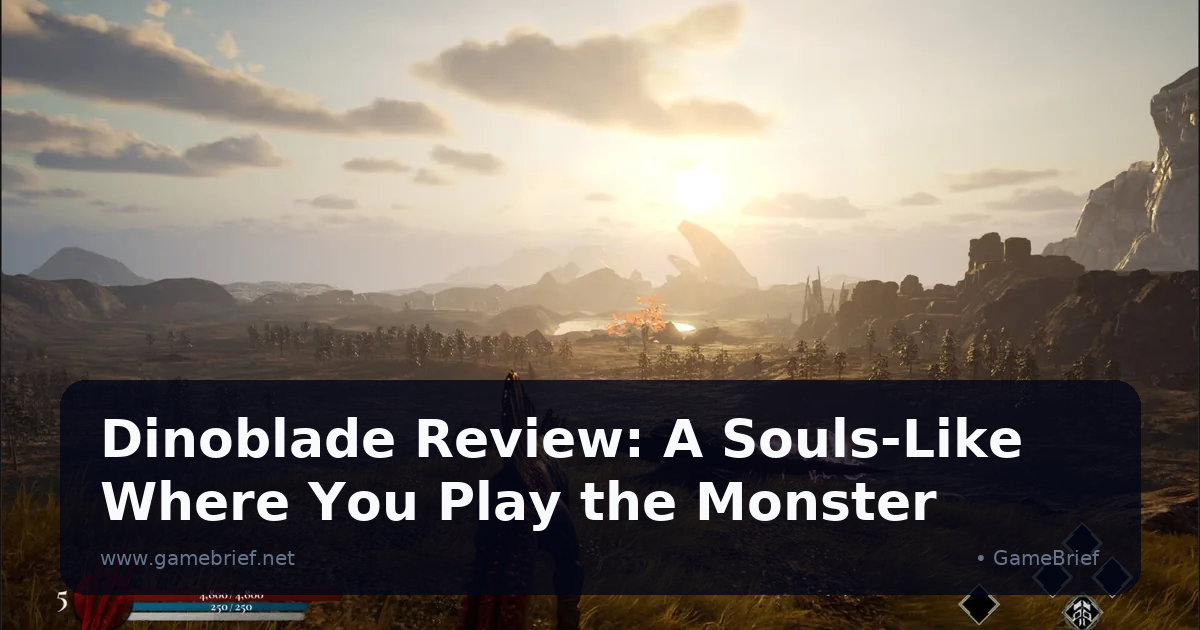
Reviewing
Dinoblade
Team Spino LLC · Team Spino LLC, Boltray Games
Score
Reviewed build: 1.0 launch build
Pros
- A genuinely novel premise (a sword-wielding dinosaur) backed by real Sekiro-style parry combat, not just a gimmick skin
- Solo developer Jean Nguyen turned a 4-year-old viral animation into a shipped, Very Positive game
- Boss Rush mode unlocks after the final boss for players who want to replay just the fights
- Aggressive post-launch patching, with balance and bug-fix updates landing days apart
Cons
- No confirmed biome names anywhere, official or community; the world doesn't tell you where you are
- The full boss roster and boss-to-area pairing aren't documented, so planning a fight order in advance isn't really possible yet
- Windows-only, no Mac or Linux support
- No dedicated legendary weapon system beyond marketing language; the promised depth isn't visible from the outside yet
Verdict
A genuinely inventive solo-dev souls-like that nails the core combat feel, held back only by how little of its own world has been documented anywhere, including by the game itself.
This Dinoblade review covers the launch build and the first post-launch patches. Dinoblade's pitch sounds like a joke until you actually play it: you are a Spinosaurus, you carry a colossal great sword modeled after Final Fantasy VII's Buster Sword, and the combat underneath that premise is a real, functioning Sekiro-style souls-like.
For comparison points beyond Dinoblade's own complete guide, see the Dinoblade boss guide, Alabaster Dawn tips, Kristala review, Windrose combat guide, and Crimson Desert parry guide. Each comparison is about combat feel, not genre identity.
The current Steam snapshot shows the game listed at $19.99 and the English-language review score at roughly 91% positive. That is a current store snapshot, not a replacement for the 8.0/10 launch-build assessment below; Team Spino has also continued shipping bug fixes after release.
Key Takeaways
- Released July 23, 2026 on PC, solo developer Jean Nguyen (Team Spino LLC), co-published with Boltray Games
- $19.99 list price in the current Steam snapshot; the $17.99 launch discount was temporary
- Steam remains Very Positive, with roughly 91% positive English reviews in the September 16 snapshot
- Souls-like combat: dodges, parries, weapon-skill abilities, closest comparison is Sekiro
- Single-player only, no co-op
- Boss Rush mode unlocks after beating the final boss
- Biome names and the full boss roster are not documented anywhere, official or community
Overview
Team Spino LLC is, as far as anyone can confirm, one person: Jean Nguyen, a solo developer whose Dinoblade concept traces back roughly four years to a viral short animation of a Spinosaurus wielding a Buster-Sword-style weapon. That origin story matters for calibrating expectations. This isn't a small studio's polished second release; it's one person's multi-year passion project finally shipping, composer Johannes Westenrieder aside, with Boltray Games attached as co-publisher.
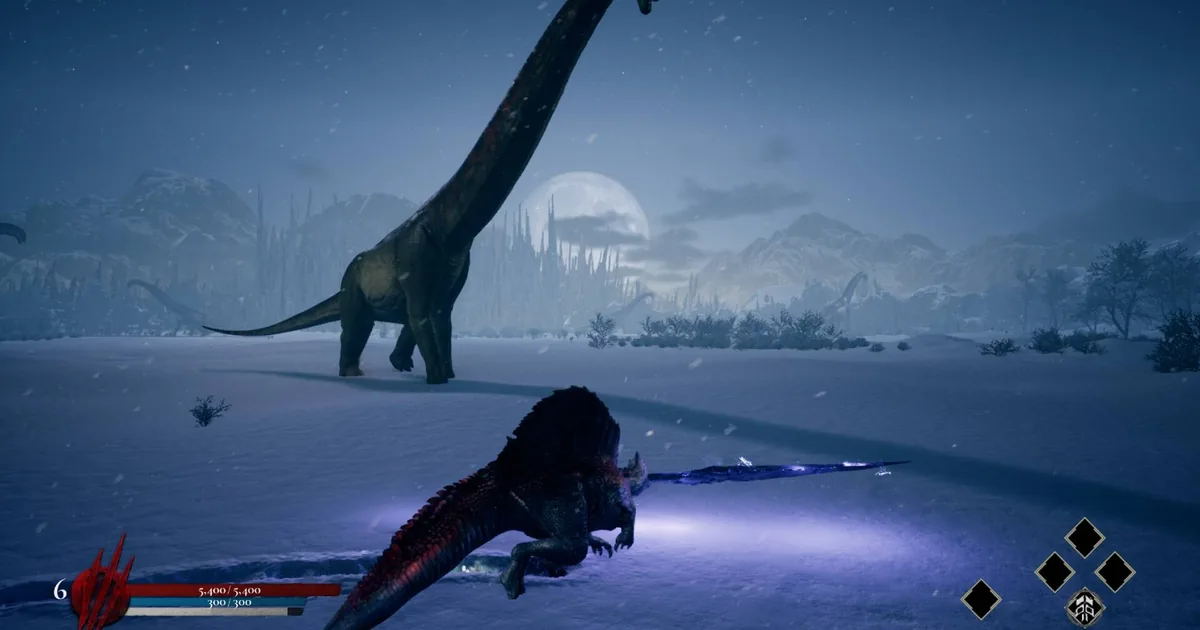
The game runs on Unreal Engine 5 and puts you directly in control of that sword-wielding Spinosaurus across a series of distinct, visually varied environments: a foggy, bioluminescent swamp, sun-lit grassland canyons, a night-time flower meadow, snowy plains under a full moon with wandering sauropods in the background, autumn forest, and a coastal beach at dusk. None of these areas have a confirmed proper name anywhere I could find, official or otherwise, which is a genuinely unusual gap for a shipped 1.0 game still this early in its release. Steam's own store description leans on generic descriptors ("dry canyons," "mist-shrouded jungles," "forgotten ruins") rather than naming anything specific, and no wiki or community source has filled that gap yet either.
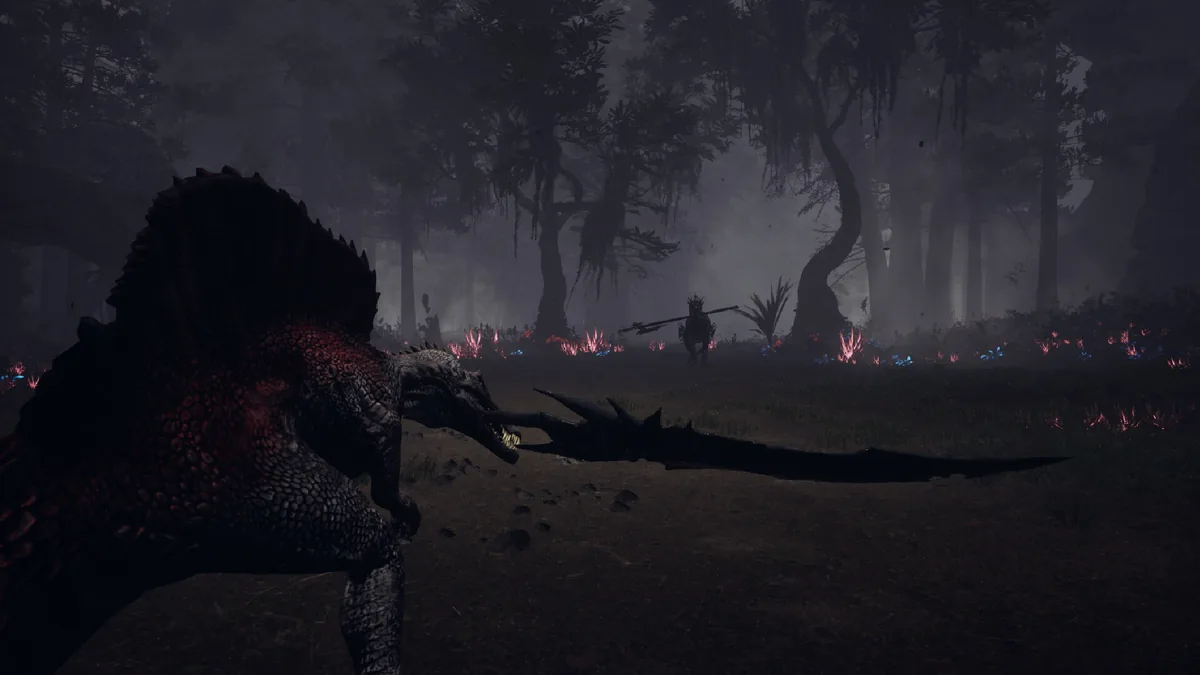 One of Dinoblade's several distinct biomes. None of them have a confirmed official name yet, official sources included.
Gameplay
The headline mechanic is direct: dodge, parry, and answer with weapon-skill attacks, the same rhythm Sekiro built its combat around, translated onto a dinosaur body instead of a human swordsman. Confirmed abilities beyond the base sword swings include a summon that calls in a previously-defeated dinosaur to fight alongside you, an energy beam fired directly from the sword, a freezing roar attack, and a leveled "Alpha Roar" transformation ability that scales with progression. That's a real, if still thin from the outside, ability kit, and it's enough to make combat feel like more than dodge-then-swing repetition once a few of those tools are unlocked.
Despite marketing copy about venturing across a "sprawling world," Steam's own store tags include "Linear" (a heavily-used tag on the store page), and official patch notes reference players getting stuck and unable to "move forward to next level," which points clearly to stage-based, sequential progression rather than one seamless open map. That's not necessarily a knock: a tightly directed sequence of boss-focused levels is a defensible structure for a solo-dev souls-like. It's worth knowing going in, though, if the marketing language led you to expect something closer to an open-world survival game.
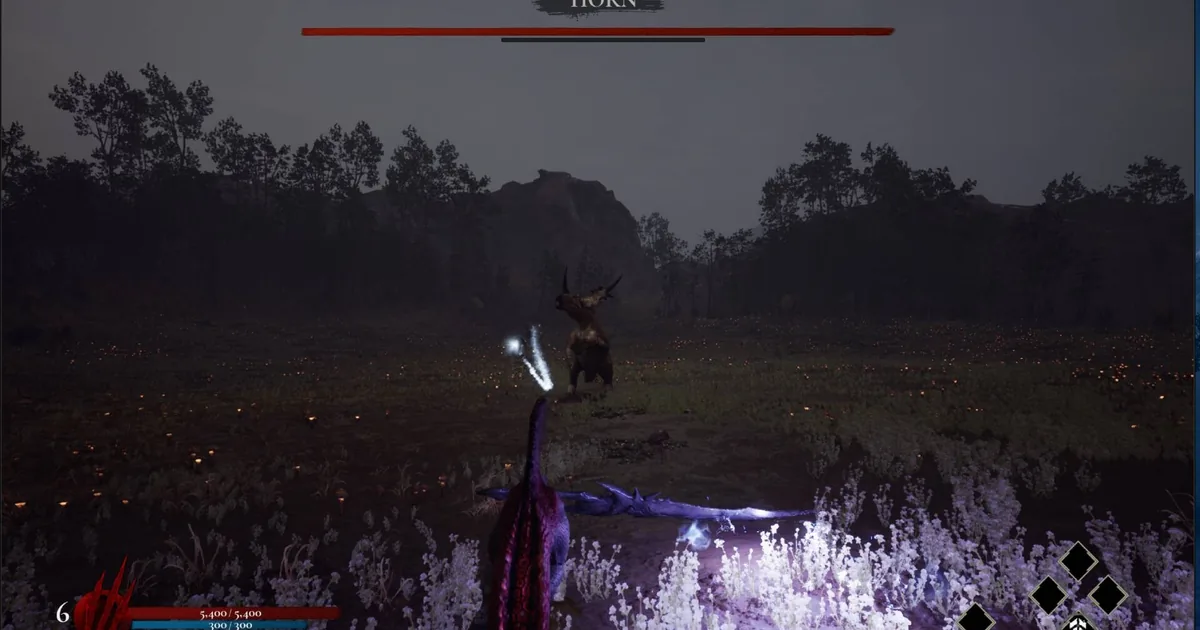
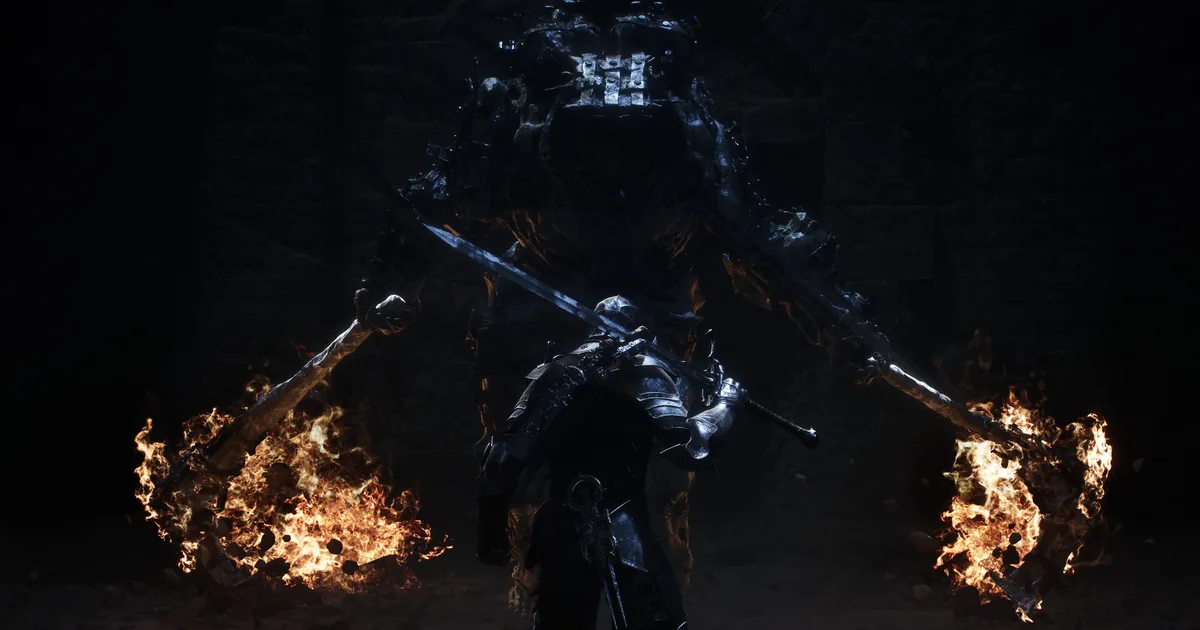
Combat culminates in named boss fights, and this is where the documentation gap is most obvious. Four bosses are confirmed by name through official patch notes and direct screenshot evidence: Akai, Kasei the Tyrant, Red Ashe, and HORN (a horned, ceratopsian-type opponent whose name appears directly in its own on-screen health bar). The game's official soundtrack release, titled a "Boss Theme Collection," has eight tracks (The Tyrant, The Titan, The Giant Claw, The Blood Moon, The True Form, The Ice King, The Flame Reborn, The Great Cataclysm), which suggests roughly seven main bosses plus a credits theme. But no source, official or community, maps all seven track titles to specific confirmed boss names with certainty, and no biome-to-boss pairing has been documented at all. If you're the kind of player who likes planning a fight order in advance, that information doesn't exist to plan around yet.
Beating the final boss unlocks Boss Rush mode, confirmed directly in the official store description, letting players replay just the boss encounters once the campaign is cleared. That's a real, useful piece of structure for a game whose main draw is clearly the fight design rather than exploration or story.
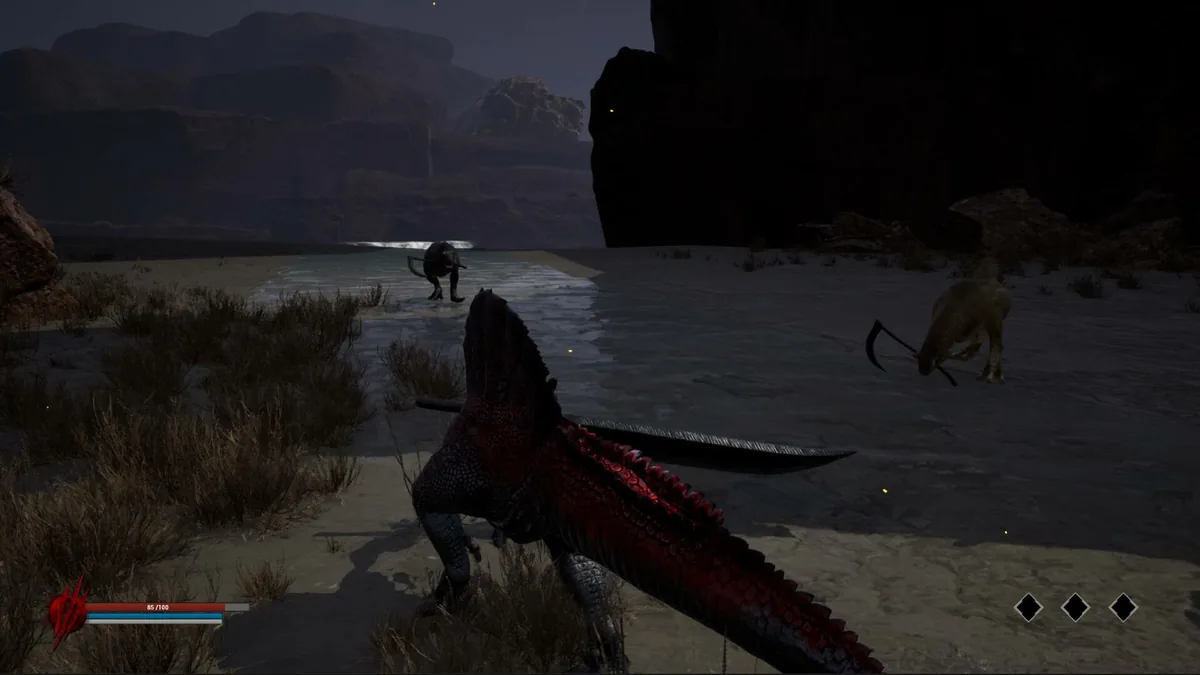 A coastal biome encounter against armed enemy dinosaurs, another unnamed area in a game still short on published location names.
Verdict
Dinoblade earns its Very Positive Steam reception on the strength of its core idea actually working: playing as the dinosaur, with real Sekiro-derived parry timing, is a genuinely different feeling than anything else currently in the souls-like space. The solo-developer story behind it, a four-year-old viral animation turned into a shipped, patched, actively-supported 1.0 release, is the kind of thing worth rewarding with a purchase on principle alone.
What holds this review back from a higher score is how little of the game's own world has been written down anywhere this early after launch. No biome has a confirmed name. The boss roster is four names deep with strong hints of three or four more, and no pairing between bosses and areas exists in any source. That's not necessarily the game's fault; it's a young 1.0 release, and thin early documentation is normal for any new game. But it does mean this review, and the accompanying guide, are honest about what isn't known yet rather than filling gaps with confident-sounding guesses.
Rating: 8.0/10
Frequently Asked Questions
Is Dinoblade worth buying? The launch-build answer was yes at $17.99, when the game had a 10% discount. It is listed at $19.99 in the September 16 Steam snapshot, and the English-language review score remains roughly 91% positive. Go in expecting a solo-dev-scale game, not a AAA open world.
Is Dinoblade an open world game? No, despite marketing language about a "sprawling world." Steam's own store tags include "Linear," and official patch notes reference moving to a "next level," which points to stage-based progression rather than one seamless open world.
Does Dinoblade have co-op or multiplayer? No. Steam's category list confirms single-player only, with no co-op or multiplayer category present. Play solo.
Who made Dinoblade? Solo developer Jean Nguyen, credited as Team Spino LLC, co-published with Boltray Games. The game grew out of a viral animation Nguyen posted around four years before launch, showing a Spinosaurus wielding a Buster-Sword-style weapon.
How many bosses are in Dinoblade? Not fully documented. Four named bosses are confirmed through official patch notes and screenshots (Akai, Kasei the Tyrant, Red Ashe, HORN), and the official 8-track boss soundtrack suggests roughly seven main boss themes plus a credits track, but no source maps the full roster or confirms a total count.
Is Dinoblade a Monster Hunter game? No. You play as the dinosaur, not a hunter fighting one. The closer comparison, per outlet coverage, is Sekiro: dodges, parries, and weapon-skill combat rather than a Monster Hunter-style gear-grind loop.
Related Reading
- Dinoblade Complete Guide: the hub for every Dinoblade guide on this site.
- Dinoblade Bosses and Abilities: What's Confirmed So Far: the 4 named bosses and confirmed skill kit in more depth.
- Alabaster Dawn Review: CrossCode's Shadow, Its Own Light: another indie action game built around tight, punishing combat.
- Crimson Desert Combat Guide: Parry, Dodge, and Builds: a different take on parry-and-dodge combat design worth comparing against Dinoblade's Sekiro-derived system.
References
- Dinoblade on Steam: official store page, patch notes, and current review data.
- Dinoblade Steam Community hub: official post-launch patch notes, including the July 24 and July 25 fixes.
- Dinoblade Official Release Date Trailer: official trailer, developer's own YouTube channel.
- Rock Paper Shotgun: Dinoblade impressions: independent impressions coverage (not a scored review).
About the author

Games Critic
Games writer and reluctant optimist who has reviewed over 400 titles across 9 years. Irish, currently in Berlin. Has strong opinions about tutorial design.
- 400+ games reviewed across 9 years
- Platformer and horror specialist
- Narrative design focus
Keep reading

Disclaimer
This article is published for informational and entertainment purposes. It does not constitute professional financial, legal, or technical advice. Game performance, online services, patch schedules, and store listings change. Verify critical details (pricing, system requirements, regional availability) with publishers and storefronts before you buy. Affiliate links, where present, help support our editorial work and are labelled in our affiliate disclosure.
Comments
Loading comments…