
FeatureHorror Games
The Uncanny Valley Extends Beyond Static Faces: How Horror Games Prove It
How horror games push the uncanny valley past static faces into movement, anatomy and behaviour, from faceless humanoids to Backrooms entities.
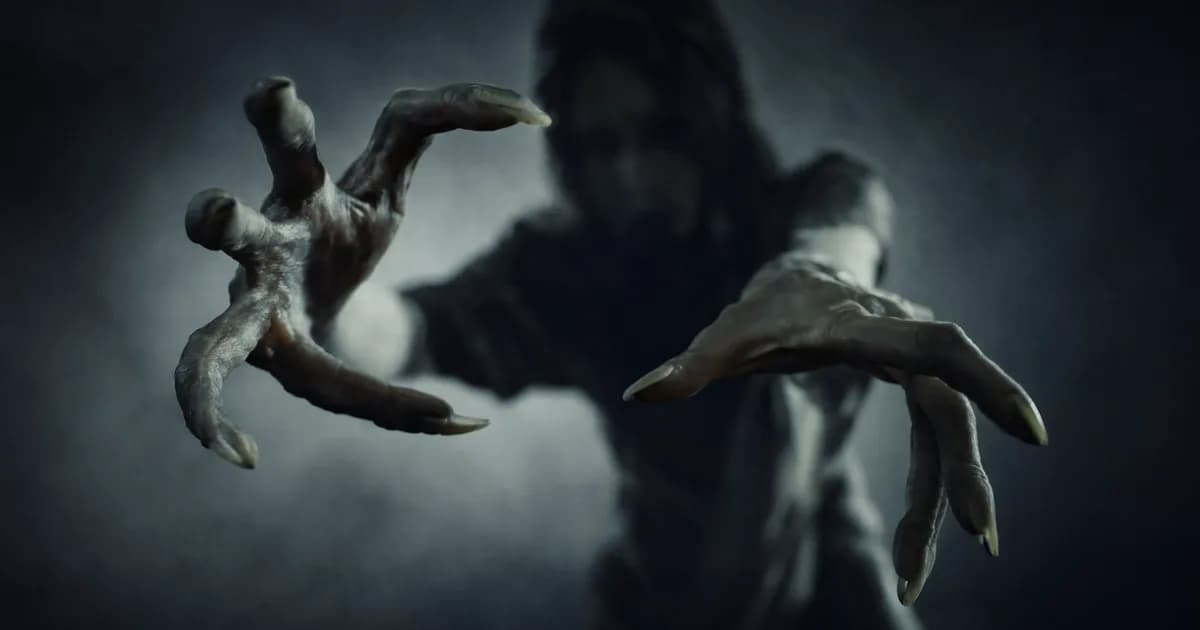
Masahiro Mori’s 1970 concept of the Uncanny Valley remains one of the most vital psychological frameworks for understanding human-computer interaction. Traditionally, this theory describes the profound neurological revulsion individuals experience when they encounter an entity that appears almost, but not entirely, human. For decades, academic and clinical analysis has focused heavily on static facial features, synthetic skin textures, and the visual aesthetics of robotics. However, as digital folklore and modern game design have evolved, we see this phenomenon applied in much more complex and dynamic ways. When developers and internet creators design modern digital antagonists, they often exploit subtle behavioral and anatomical inaccuracies rather than relying on traditional monstrous traits. A prime example of this broader application is the featureless humanoid entity commonly documented as a faceling within online community expansions. By examining entities that are almost human, we can see exactly how the Uncanny Valley extends beyond a simple photograph or a static 3D render, bleeding deeply into the mechanics of movement, anatomy, and artificial behaviour.
The Anatomy of Incompletion and Facial Processing
To understand why an almost-human entity generates such intense dread, we must look at how the human brain processes biology. Human beings are heavily hardwired for facial recognition. We possess a specific region in the visual cortex called the fusiform face area (FFA), which is dedicated entirely to identifying eyes, noses, and mouths, and interpreting the emotional data they convey.
When an observer encounters a humanoid with smoothed-over, blank skin where features should be, the FFA misfires entirely. The brain recognises the anatomical structure — a head atop a bipedal torso—and immediately searches for the eyes to establish social telemetry and threat assessment. Finding nothing but a seamless expanse of flesh creates a severe cognitive dissonance. The brain's biological alarm system interprets this not as a different species, but as a human being that is fundamentally broken or diseased.
Developers brilliantly exploit this by keeping the rest of the character's anatomy entirely mundane. These entities are frequently dressed in standard clothing — suits, casual wear, or uniforms — which grounds them in human reality. If the entity were a multi-limbed alien, the brain would simply categorise it as a predator. By presenting a standard human silhouette with a deliberately erased face, game designers force the player's brain into an endless, uncomfortable loop of attempting to categorise a biological impossibility.
The Kinematic Uncanny Valley: When Movement Betrays Humanity
Beyond static appearance, the Uncanny Valley applies heavily to biomechanics. Humans possess an innate, subconscious understanding of physics, gravity, and weight distribution. When a real person walks, their centre of gravity shifts, their shoulders compensate for the movement of their hips, and their joints operate with specific limitations.
In digital spaces, character movement is governed by skeletal meshes and animation rigging. To make an entity truly unsettling, animators will deliberately break the rules of human kinematics. Instead of using complex inverse kinematics (IK) that ground a character’s feet to the floor, they might use older animation techniques where the 3D model simply glides along a trajectory. The entity’s legs may move, but they do not appear to carry any actual physical weight.
This creates a kinetic Uncanny Valley. The entity walks, but its spine remains entirely rigid. Its head tracks the player with mathematical precision, snapping to specific angles without the natural delay and muscular smoothing of a real human neck. These incorrect, jerky, or overly smooth movements signal to the primitive parts of our brain that the creature we are looking at is merely a puppet mimicking life. In the context of horror games, this unnatural locomotion is often far more terrifying than a fast-moving monster, because it weaponises our own understanding of human anatomy against us. The entity moves in a way that flesh and bone mathematically should not.
Behavioural Dissonance and Algorithmic Emptiness
The third pillar of this expanded Uncanny Valley is behavioural logic. Human interaction is governed by an invisible social contract. We expect other humans to react to stimuli: to turn their heads when they hear a loud noise, to blink, to shift their weight when standing idle, and to navigate around obstacles logically.
Digital folklore entities and horror game NPCs frequently break this social contract through what we can term algorithmic emptiness. Instead of programming complex reaction states, developers will assign these entities broken or deliberately minimalist behaviour trees. An entity might stand completely still in the centre of a room, facing a blank wall for an extended period. It might pace in a perfect, geometric circle, or completely ignore the player until a specific proximity threshold is crossed.
A similar approach can be seen in digital folklore surrounding entities such as backrooms partygoers, whose unsettling combination of humanoid appearance and unpredictable behaviour challenges our expectations of how human-like beings should act.
This incorrect behaviour triggers a deep psychological revulsion. In the real world, human beings who exhibit totally unresponsive or highly repetitive, robotic behaviour often do so due to severe medical episodes. Therefore, when an observer sees a humanoid entity in a game standing completely rigid and staring into a corner, it triggers an immediate biological warning. The entity looks human, but its cognitive processes are clearly alien or corrupted. The Uncanny Valley of the mind is crossed. The horror does not come from what the entity is doing, but rather from the glaring absence of what it should be doing.
The Synthesis of the Almost-Human
When we synthesise these elements, it becomes clear why certain digital entities dominate modern internet folklore and horror design. An entity that lacks facial features, moves without the correct distribution of physical weight, and behaves with algorithmic repetition serves as the ultimate vessel for the Uncanny Valley.
This psychological effect is particularly evident in the design of backrooms entities, which often combine familiar human characteristics with disturbing anatomical abnormalities and unnatural patterns of movement.
These characters do not rely on traditional tropes like sharp teeth, claws, or excessive gore to generate fear. Instead, they operate on a much more sophisticated psychological level. They present the observer with a corrupted human file. They look like us, they dress like us, and they occupy our spaces, but every micro-interaction — from the lack of an eye-blink to a slightly rigid walking animation — screams that they are impostors.
This approach demonstrates a masterful understanding of human psychology by digital creators. It proves that the human brain is an incredibly harsh critic of its own reflection. We are far more disturbed by something that gets humanity ninety-nine percent correct than we are by something entirely monstrous.
Final Conclusion
The Uncanny Valley is a far more robust and expansive concept than its early applications to robotics suggested. By examining the mechanics of digital horror and internet folklore, we can appreciate how the phenomenon encompasses much more than just the visual render of a face. The true power of the uncanny lies in the subtle betrayal of human norms. Entities that exhibit biological incompletion, incorrect kinematic movement, and dissonant, algorithmic behaviour prove that our brains are constantly evaluating the authenticity of the human form on multiple levels. Digital horror thrives on this exact vulnerability, showing us that the most terrifying thing we can encounter is a mathematically incorrect reflection of ourselves.
Hero image: supplied by the author
Related Reading
- Halloween: The Game Review: a licensed horror game that was banned before it launched.
- The Sinking City 2 Review: a genre swap in Lovecraftian horror.
- Welcome to Elderfield Beginner Guide: farming sim mixed with horror.
- Temple 13 Time Collapse Beginner Guide: tips for spotting anomalies.
- Security 51 Tips Guide: surviving your first night shift.
- Static Dread: The Submarine Launch: an underwater horror game and what is known so far.
- Twisted Tower Preview: a BioShock-style horror shooter from 3D Realms.
- Permafrost Trailers Breakdown: story and Gamescom footage for an upcoming survival horror game.
About the author

Games Critic
Games writer and reluctant optimist who has reviewed over 400 titles across 9 years. Irish, currently in Berlin. Has strong opinions about tutorial design.
- 400+ games reviewed across 9 years
- Platformer and horror specialist
- Narrative design focus
Keep reading
Emberville Trailer Breakdown: Towns, Dungeons, and Tone
Features · 12 min
Emberville Developer: Cygnus Cross and SteamDB Momentum
Features · 12 min

Permafrost Trailers: Story and Gamescom Breakdown (2026)
Features · 9 min
Permafrost Developer: SpaceRocket Games and Toplitz
Features · 9 min
Steam Autumn Sale 2026: 9 Indie Deals Worth Buying
Features · 6 min
No. 10: Full Confidence PC Port: Claims vs Confirmed
Features · 12 min
Game deals · affiliate links

Disclaimer
This article is published for informational and entertainment purposes. It does not constitute professional financial, legal, or technical advice. Game performance, online services, patch schedules, and store listings change. Verify critical details (pricing, system requirements, regional availability) with publishers and storefronts before you buy. Affiliate links, where present, help support our editorial work and are labelled in our affiliate disclosure.
Comments
Loading comments…