
GameBrief · Guides
LegionBound Endbringer Guide: When to Fight and How to Win

Reviewing
LegionBound
Spicy Garlic Games
This LegionBound Endbringer guide is about the one fight where the question is not only how to win, but when to stop building. The official Steam description says that Adventure Mode's final foe gains power while you build and that you can confront it or loop back for more power. It does not publish a fixed scaling formula, so the practical advice below separates confirmed structure from editorial build suggestions.
Below: what the Endbringer is, how the scaling mechanic works, when to commit to the fight, and which team composition handles it most reliably based on what works in the community.
TL;DR: The Endbringer is Adventure Mode's named final foe. The official store page confirms the loop choice: confront it now or loop back to gain more power. Read the current map, party, row, and Ascension state before committing; the exact hero count, turn threshold, and “best build” claims below are not official constants.
LegionBound Endbringer guide: quick answer
- The Endbringer is the named final foe of Adventure Mode, confirmed by the Steam achievement.
- The official store page says the final foe gains power as you build and lets you confront it or loop back.
- There is no official 20-30 hero, two-Ascension, or fixed-turn threshold in the sources used here.
- Use row positioning, recruitments, items, spells, and Ascensions to answer the failure mode your current run shows.
- Treat Magus, Druid, Mender, and tank-front suggestions as community/editorial experiments, not mandatory classes.
Current status: September 2026
Legionbound's latest official announcement is Patch 1.12 on September 11, which fixed a faulty-targeting crash, a hang caused by lingering zones, and item disables that could become stuck. Patch 1.11 also reworked Boss Idols and included Adventure Mode fixes. The live game lists 42 classes, up to 50 heroes, and 800+ Ascension combinations, so a static “best team” claim ages quickly.
Step-by-step: deciding when to fight the Endbringer
- Read the current Adventure Mode map. Confirm that the Endbringer choice is available and note the next route cost.
- Check the whole party. Compare damage, survival, row placement, items, spells, and available Ascension effects instead of counting heroes alone.
- Test one more node only for a reason. Loop when the next reward addresses a real weakness, not because an old guide says a particular loop is optimal.
- Commit when the party clears current threats cleanly. Use your actual encounter results as the readiness signal.
- After a loss, change one variable. Reposition, recruit, spend a skill point, or choose a different loop, then test again.
What the Endbringer actually is
The Endbringer is the final boss encounter in LegionBound's Adventure Mode. Unlike regular encounters, which you fight on approach, the Endbringer sits on the Adventure Mode map waiting: and the decision of when to face it is yours.
That choice is where the mechanic gets interesting. The Endbringer is not a static final check: the official store copy says the final foe gains power while you build. Treat every optional route as a tradeoff rather than assuming preparation is free.
The official store copy also warns that waiting too long can bring the end to you. The live map is the authority for whether your run can still loop or confront on your terms.
The strategic layer of the Endbringer isn't how to beat it in a head-to-head: it's understanding the scaling well enough to know exactly when your team is ready to commit.
How the scaling mechanic works
The official store description confirms the broad mechanic: the final foe gains power while you build and you can loop back for more power. Exact HP values, damage multipliers, scaling rates, and turn comparisons are not published in the sources used here. Treat every numeric threshold in older guides as a community observation, not a rule.
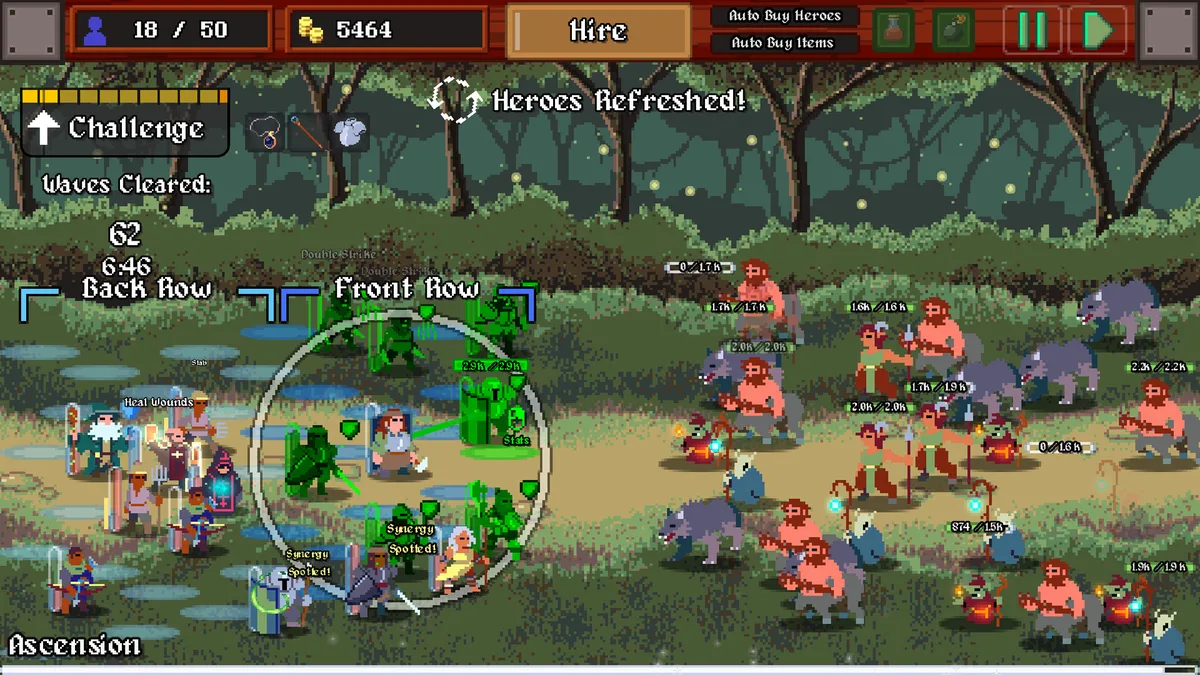 Every optional node you route through before the Endbringer is a tradeoff: more heroes, buildings, and Ascension opportunities in exchange for a stronger final fight. The map is asking you to price that tradeoff on every decision.
The official store copy also warns that waiting too long can bring the end to you. The page does not give a universal turn count, so watch the current map state and avoid promising a precise deadline.
What this means practically: over-preparing is a real failure mode. The instinct to keep looping for one more hero or one more building sometimes produces a team that theoretically looks stronger but faces a boss so far ahead of its original power level that the extra preparation didn't close the gap.
When to commit to the fight
There is no official hero-count or Ascension minimum. Use the current party's clean clears, survival margin, row placement, item coverage, and available Ascension effects as the readiness test. If the next loop fixes a specific weakness, it may be worth the scaling cost; if it only adds a small upgrade, confronting can be the better experiment.
GODEEPER: How class synergies form and how to experiment with row coverage. LegionBound Synergy Guide →
The best composition for the Endbringer fight
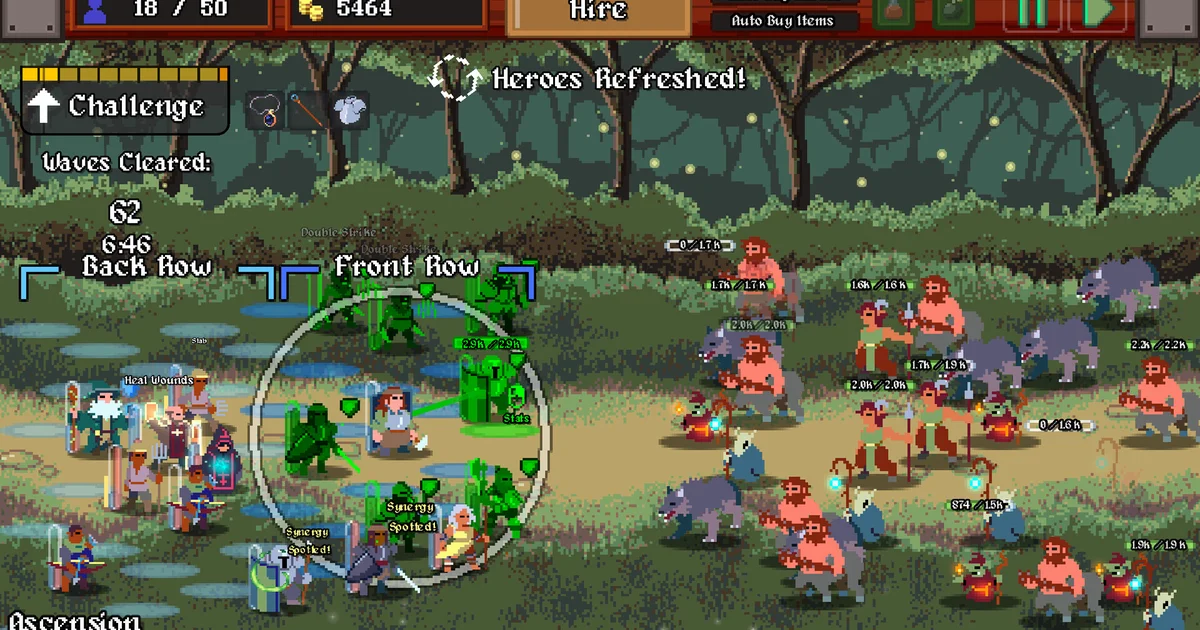
The most useful composition principle is coverage, not a named roster. The official store page confirms that heroes fight automatically while the player repositions rows, casts unlockable spells, buys passive items, and combines heroes into Ascension classes. Use those tools to cover the failure you can see: damage, durability, status control, or recovery.
Magus, Druid, Mender, and Warrior/tank-front examples can be useful community experiments, but the official sources do not establish their skills as a mandatory Endbringer package. Read the current tooltips and replace any class that does not solve the problem your run is showing.
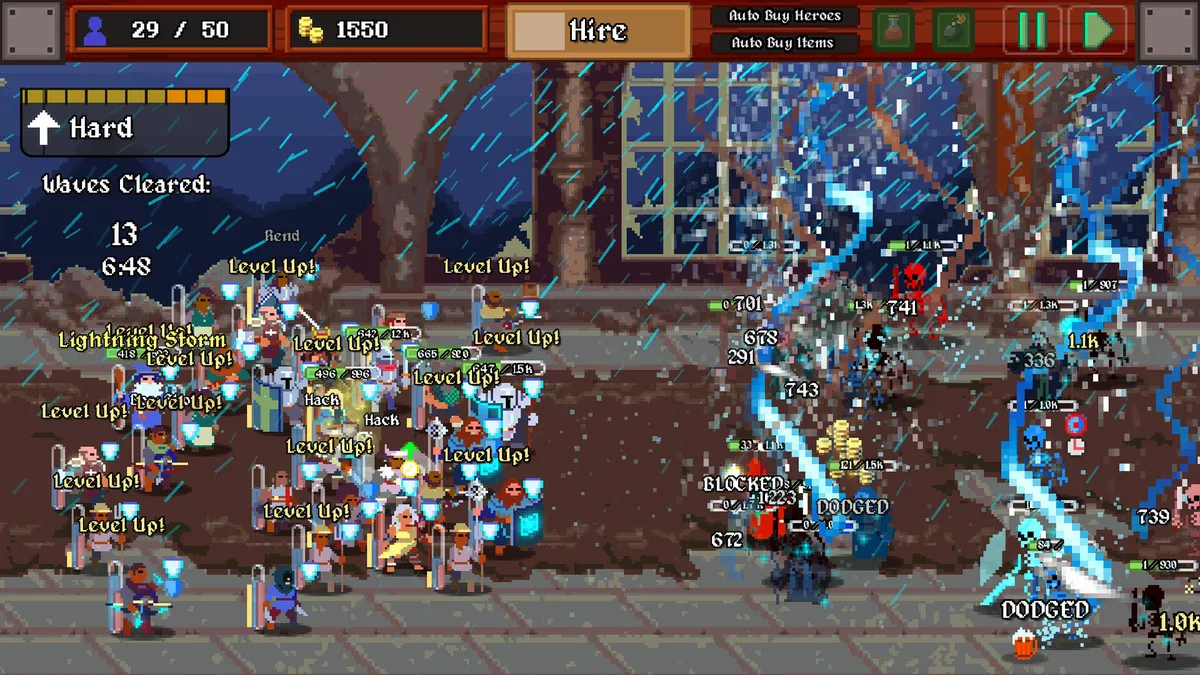 A front and back row is one community experiment, not a mandatory Endbringer formation. Use the current tooltips and reposition heroes to answer the live encounter.
Pure caster builds don't work here
This is worth calling out specifically because pure caster compositions can look very strong through the mid-game of Adventure Mode. Casters with good Ascensions clear regular encounters fast and efficiently.
If a damage-heavy or caster-heavy build keeps collapsing, first test row placement, a defensive item, or a recovery option before declaring the archetype impossible. The store page confirms repositioning and passive-item choices, but not a mandatory number of front-row Warriors.
Ascension priority before the fight
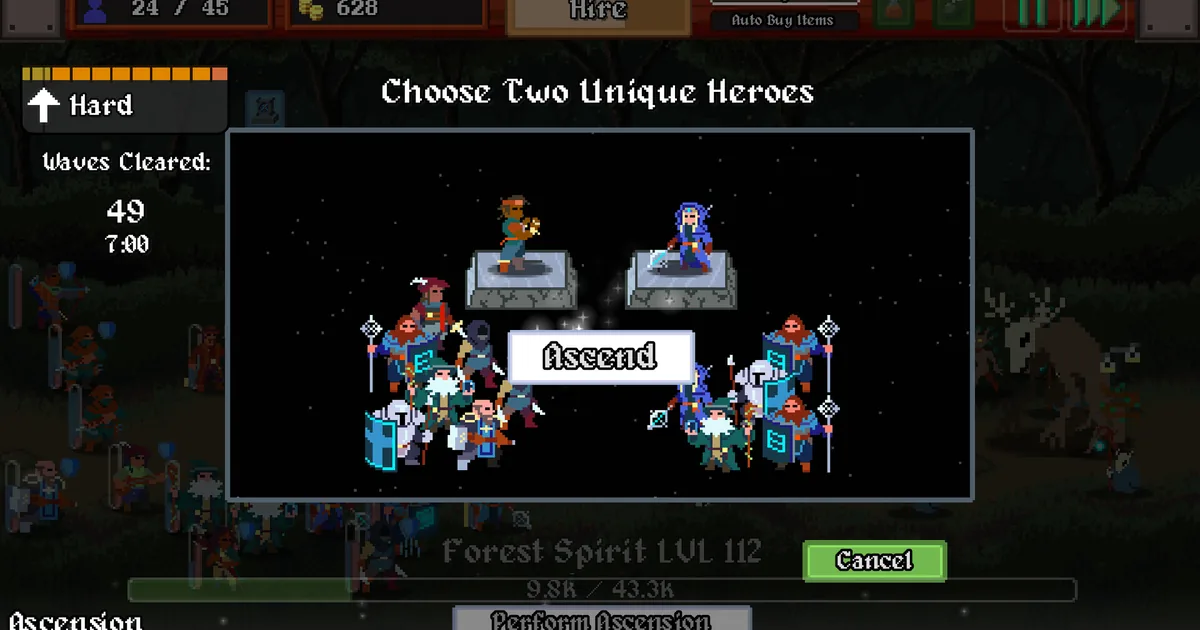
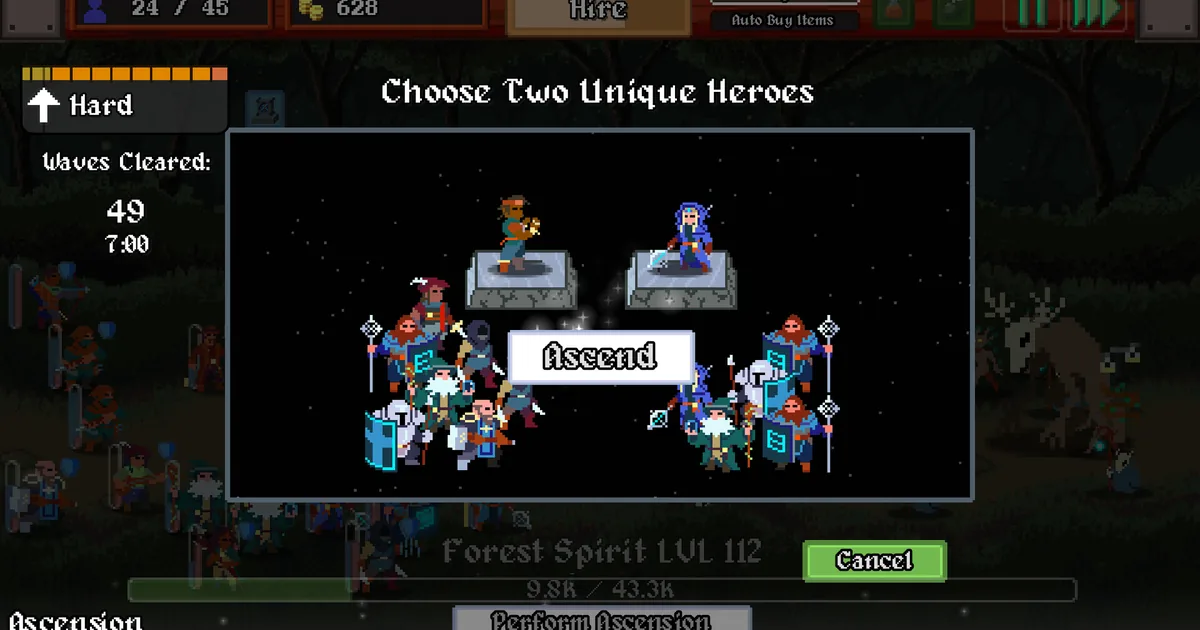
Do not treat two Ascensions as a universal baseline. Prioritize the next Ascension whose live tooltip fixes the current run's largest gap, whether that is damage, durability, control, or economy. Compare the result against the cost of another loop.
GODEEPER: How Ascensions work mechanically and how to compare their live effects. LegionBound Ascension Guide →
What changes with higher Endbringer scaling
At higher self-imposed scaling, re-evaluate the same four questions: can the party survive, can it deal reliable damage, can it answer statuses or control, and is the next loop worth the extra power given to the final foe? No official source makes Druid, Magus, Mender, or any numeric roster threshold mandatory.
Frequently asked questions
What is the Endbringer? The Endbringer is Adventure Mode's named final foe. The official store page says it gains power while you build and gives you the choice to confront it or loop back for more power.
Does the Endbringer scale indefinitely? The official description establishes that the final foe gains power as you build and warns that waiting too long can bring the end to you. It does not publish a universal turn threshold or scaling formula.
Is the Endbringer different in harder difficulty modes? The available official materials do not publish a mode-by-mode Endbringer table. Read the current map and encounter modifiers, then adapt rows, items, spells, and Ascensions to what the live build shows.
Can you beat the Endbringer without a Magus? Yes, there is no official Magus requirement. Use the current tooltips to build enough damage and survival for the encounter, then replace any named class that is not addressing your run's failure mode.
How many heroes do I need? There is no official fixed hero count. Compare the party's actual clear quality, survival margin, and available Ascension or item upgrades against the cost of another loop.
Related Reading
- LegionBound Ascension Chain: Timing, Risk, Recovery 2026: merge timing and recovery context.
- LegionBound Warrior Group: All 14 Classes & Synergies: a class-group comparison.
- LegionBound Barkeep Group: All 11 Classes & Synergies: another synergy route.
- LegionBound Tax Collector Group: All 4 Classes Loop: an economy-focused experiment.
- Legionbound Battle Mode Guide: Endurance Runs 2026: the separate endurance mode.
- LegionBound Adventure Mode Guide: Route, Build, Win: map routing and loop context.
- LegionBound Advanced Builds: Late-Game Class Chains (2026): late-game class planning.
- Legionbound Launches on Steam: 50 Heroes, 30 Classes: roster and launch context.
References
- LegionBound on Steam: official store page and community hub
- LegionBound Adventure Mode announcement: official Adventure Mode overview
- LegionBound Steam achievements: confirms the Endbringer Adventure Mode achievement
- Legionbound Patch 1.12: current crash, hang, and item-disable fixes
- Spicy Garlic Games: developer page
- LegionBound synergy guide: all class combinations and how synergies form by wave
- LegionBound ascension guide: how Ascensions unlock and which to prioritize
- LegionBound tips guide: beginner and mid-run decision framework
- LegionBound complete guide: hub for all GameBrief LegionBound content
Was this guide helpful?
About the author

Senior Critic & Analyst
Former game data analyst turned critic with 11 years covering indie and mid-tier games. Based in Austin. Runs spreadsheets on games most people just play.
- 11 years games criticism
- Former game economy analyst
- Roguelike and strategy specialist
Keep reading
Disclaimer
This article is published for informational and entertainment purposes. It does not constitute professional financial, legal, or technical advice. Game performance, online services, patch schedules, and store listings change. Verify critical details (pricing, system requirements, regional availability) with publishers and storefronts before you buy. Affiliate links, where present, help support our editorial work and are labelled in our affiliate disclosure.
Comments
Loading comments…