
GameBrief · General
Pratfall Speedrun Tips: Clear Caves Faster in 2026

Reviewing
Pratfall
Quad Head
Pratfall speedrun community has an active Speedrun.com leaderboard now. The current verified solo world record is 7:29, set in July 2026, down dramatically from the original 15:29 mark (that older record now lives in the [Legacy] category after a terrain-generation update forced a category reset). If you're coming to this game planning to learn it casually and only then start caring about time, that's fine: but the physics system rewards learning the same habits that speedrunners use regardless of intent.
The falling is the movement. That's the thing the tutorial doesn't tell you directly: walking downward is slower than falling. Anytime you can turn a walking path into a controlled drop, you're saving time. The speedrun is, at its core, a series of decisions about when to fall and when not to.
TL;DR: In Pratfall, falling is the movement: walking downward is slower than a controlled drop, so the speedrun is really a series of decisions about when to fall and when not to. The verified Speedrun.com solo world record is now 7:29 (July 2026), down sharply from the original 15:29 mark. Learn the controlled-drop habits early and even casual runs get noticeably quicker.
Key Takeaways
- Falling beats walking. Vertical movement is always faster than navigating platforms. Choose routes that let you drop.
- Bombs open shafts; drills cut walls. Use explosives for vertical drops, drills for horizontal shortcuts where blast damage would compromise the path.
- Weekly Challenge is a memory game. Fixed layouts mean multiple attempts per week reward route familiarity over raw physics skill.
- Flares before drops in Lava Cave. Reactive terrain collapses. Drop a flare first to see what you're falling into before you commit.
- Catching teammates beats reviving them. In 4-player runs, one dedicated catcher below vertical sections saves more time than any item.
Pratfall speedrun basics
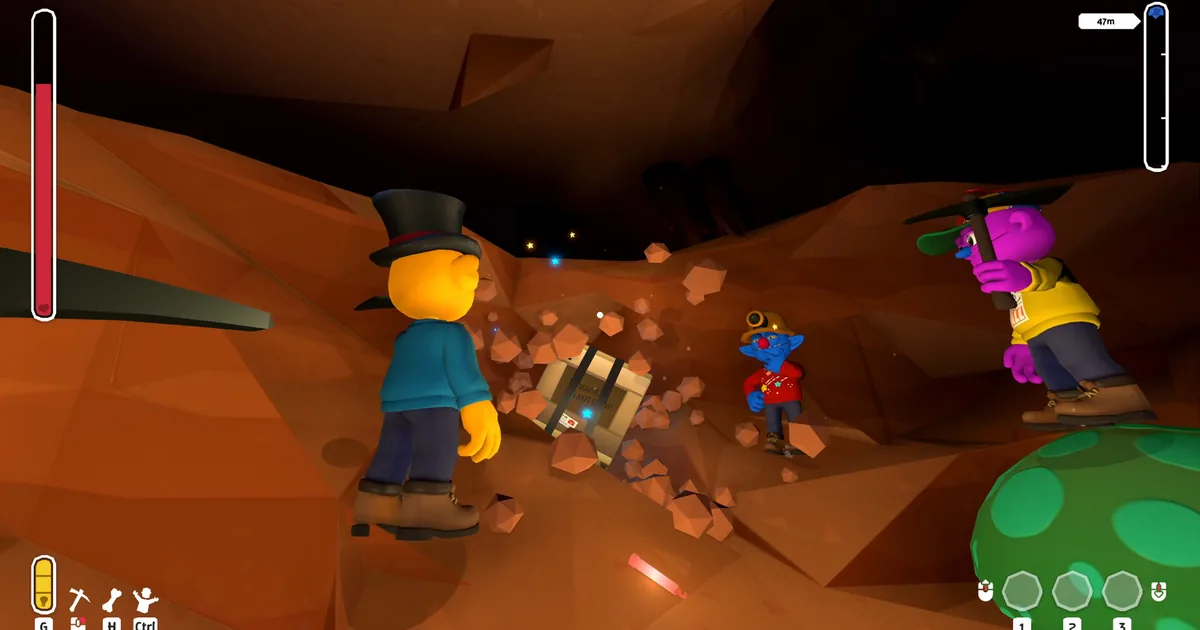
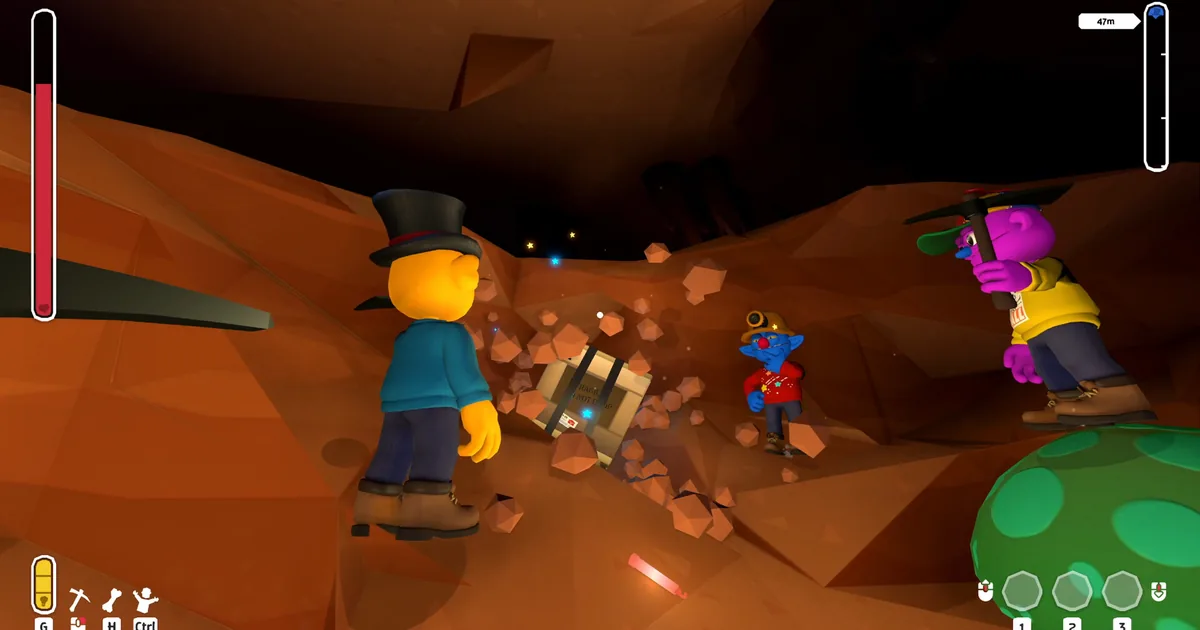
Pratfall launched on April 20, 2026 from Quad Head, a four-person studio in Cologne. The game is a physics-based co-op cave crawler: up to four players fall, dig, and explode through procedurally generated Dirt, Ice, and Lava caves to rescue a lost dog. Solo play is fully supported. Current price: $7.99.
The speedrun basics come from understanding what the game's physics actually want to do. Pratfall isn't a game where precise platforming makes you fast. It's a game where gravity compounds. A fall that clears three platforms at once is faster than landing on each one. Everyone fast at this game is falling more than they're walking.
There are 30+ items in the caves, but the speedrun toolkit is much smaller. Bombs, drills, pickaxes, flares, and ziplines account for most time-saving plays. Food and health items are survival tools, not speed tools: pick them up if the run is falling apart, skip them if you're clean.
Step-by-Step: Applying These to Each Cave
Dirt Cave (start here)
Dirt Cave is where you learn what Pratfall's physics actually do. Terrain responds predictably to dig tools. Fall angles are readable before you commit. Bombs open clean vertical shafts: blast a hole, fall through it, land clean. The most common time loss in Dirt Cave is digging around hazards instead of over them. If a wall is blocking a drop, the bomb is almost always faster than the pickaxe.
One specific thing to do in Dirt Cave before moving on: find a high ledge and fall without digging first. See where your character lands, how much damage they take (or don't), and how long recovery takes. That gives you your safe-fall baseline: how much drop you can survive without items, which tells you how aggressively you can route the other biomes.
Ice Cave (control the slide)
Ice Cave kills clean runs. The surfaces are slippery, so a drop that stops safely in Dirt Cave travels further here. Falling fast is still the goal, but the landing math changes. Most useful adjustment: land on a slope rather than a flat surface. Slopes bleed momentum sideways instead of dumping it all into your feet, which keeps the character upright instead of stumbling through a recovery animation.
Carry flares into Ice Cave. Lighting is worse here, and terrain reflectivity creates false depth cues: surfaces look closer or further than they actually are. A flare dropped before a big descent gives you three to four seconds to read what's below, which is enough to spot a reactive ledge or gap before you're already past it.
Ziplines matter more in Ice Cave than anywhere else. Horizontal traversal on slippery terrain is slow and unpredictable. A zipline over a gap takes less time than sliding across the floor hoping you don't drift off the edge. If there's a zipline, use it.
GODEEPER: Every item in the cave system explained, including which tools stack and which conflict. Pratfall Items Guide: Glow Sticks, Tools, and More →
Lava Cave (read before you fall)
Lava Cave has reactive terrain: sections that collapse, shift, or catch fire when disturbed. This changes the bomb routing logic. In Dirt Cave, bomb downward and fall through the hole. In Lava Cave, bomb downward and wait a beat before following. Reactive terrain can redirect your fall or put fire damage in the shaft you just opened.
The Lava Cave rule: flare first, fall second. Drop a flare at the top of any significant descent. It lights what's below and gives the lead player a second to read the terrain before committing. In co-op, the first player down calls the route ("left shaft clean," "right side is collapsing, hold") and the rest follow. Without that call, multiple players dropping simultaneously into reactive terrain costs more time than the speed gained.
Drilling horizontal shortcuts works better than bombing in Lava Cave. A bomb that opens a wall section too fast can collapse the adjacent floor you need to stand on. A drill cuts slower but doesn't disturb the surrounding terrain. Use drills when the path you need sits next to terrain you want to keep.
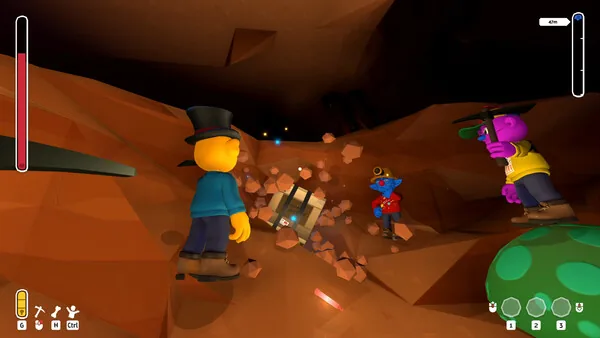 Speedrun strats depend heavily on map knowledge: the optimal routes aren't obvious from normal play.
Pratfall speedrun tips that actually help
Weekly Challenge is a memory game
Weekly Challenge Mode locks the cave configuration for seven days. Everyone attempting it that week plays the same layout. That flips the speedrun logic: instead of adapting to procedural generation, you're optimizing a known route across repeated attempts.
Treat your first run through a Weekly Challenge cave as a scouting run, not a submission run. Learn the layout. Note where the major drops are, where the hazards sit, which items spawn in reachable positions. The second and third runs are where time savings compound, because you're making route decisions before the cave makes them for you.
Community members have documented Weekly Challenge completions in under 45 seconds. That time requires already knowing the layout: it isn't achievable first attempt. That's the entire point of the mode, if you're chasing the leaderboard.
Solo runs vs. co-op runs
Solo speedrunning and co-op speedrunning are different problems. Solo removes coordination overhead and gives you full control over item usage and routing. The current 7:29 WR is a solo run.
Co-op has a higher ceiling but more variance. The catch mechanic (positioning below a falling teammate to grab them mid-air) eliminates fall damage and cuts the time cost of reviving downed players. A 4-player run with a designated catcher on vertical sections can clear those passages faster than solo. The catch is (unavoidably) that catching requires communication, and missed catches in Lava Cave cost more time than a solo player taking the fall independently.
For Weekly Challenge leaderboard attempts: solo if you want consistency, co-op if your group actually talks to each other. Don't attempt co-op on a new weekly cave until you've run it at least twice solo first.
Item priority for speed
Not all 30+ items matter for speedrunning. The ones that do:
Bombs are the fastest vertical path opener. They create wide shafts you can fall through immediately. Primary tool for Dirt Cave and the upper sections of Ice Cave.
Drills handle precise horizontal shortcutting without disturbing adjacent terrain. Use them instead of pickaxes when the surrounding floor or wall matters.
Flares are an information tool. They're required before any committed drop in Ice Cave or Lava Cave. The speed cost is zero if you drop the flare before starting the fall, not mid-drop.
Ziplines cross horizontal gaps. Always faster than sliding across slippery Ice Cave terrain. Pick them up when you see them.
Magic beans create climbable vine paths. Useful in specific layouts where the natural route is blocked and bombing would take longer than a short climb. Situational: don't plan around them.
Skip food and health packs unless the run is already in trouble. Every second on inventory management that doesn't create a faster path is a second lost.
GODEEPER: How each biome's hazards change your tool choices and movement options. Pratfall Biomes Guide: Dirt, Ice, and Lava Caves →
The first few seconds set the rest of the run
In campaign and Weekly Challenge both, the opening of each biome determines whether the rest goes clean or goes into recovery mode. A bad first drop creates problems that compound: bad fall angle leads to a missed hazard, missed hazard leads to a downed player, downed player costs 20-30 seconds of revival time you spent the whole run trying to avoid.
The fix feels wrong: slow down for the first five seconds of each biome. Identify the first major drop, confirm what's below with a flare if needed, then commit fully. Two seconds of patience before the first drop is worth thirty seconds of clean movement on the other side of it.
Frequently asked questions
What is the current Pratfall solo speedrun world record? The Speedrun.com-verified solo world record is 7:29, set July 2026. The route has been cut down dramatically from the original 15:29 mark, which now sits in the [Legacy] Normal Rescue category after a terrain-generation update forced a category reset.
Does Weekly Challenge Mode reset the leaderboard each week? Yes. Each week presents a new fixed cave configuration with a fresh leaderboard. Times from previous weeks are not carried over. This means every week is a new opportunity to place, and early attempts at a fresh weekly layout start from equal footing.
Is Pratfall worth playing solo for speedrun practice? Yes. Solo runs are the cleanest learning environment for route optimization because they remove teammate variables. The procedural campaign in solo mode builds physics intuition faster than co-op, where the chaos of multiple players can obscure what the terrain is actually doing. Learn the physics solo, then apply it co-op.
What happens if someone falls too far ahead in a co-op speedrun? Pratfall's proximity voice chat fades with distance, which means you lose audio coordination when players separate. More practically, a player who's too far ahead can't catch a falling teammate or share items. For speed runs, keep the group within catching distance through vertical sections, even if it means the lead player waits briefly at a ledge bottom.
Can explosives damage teammates in co-op? Yes: bomb blast radius affects all players, not just terrain. This is a speedrun consideration in tight cave sections: a bomb that opens a fast route can also knock a teammate off their planned path. Call bomb usage verbally in co-op, or agree pre-run on who controls explosives.
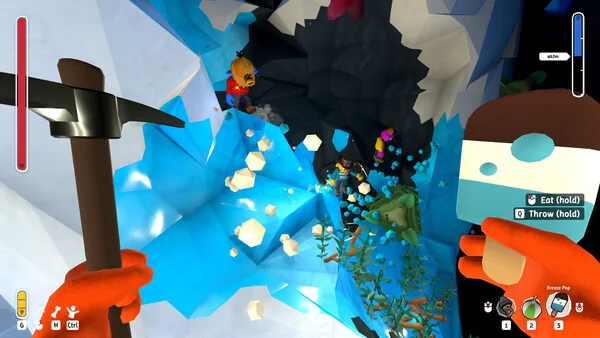 The skip on stage 3 requires two precise inputs in a window most players miss entirely.
Related Reading
- Pratfall Game: What It Is and Why 90% of Players Love It: Pratfall game: physics co-op cave crawler by Quad Head, $7.99, 90% Very Positive on Steam. Up to 4....
- Pratfall Advanced Tips: Catch, Weekly Challenge, Lava Cave: Pratfall advanced tips: catch mechanic negates fall damage, Weekly Challenge cave is fixed per week for routing, Lava....
- Pratfall Biomes Guide: Dirt Cave, Ice Cave, and Lava Cave: Biome-by-biome breakdown of terrain behavior, useful for understanding why Dirt Cave routes faster than Ice Cave.
References
- Pratfall on Steam: official store page, game details, and community hub
- Pratfall on Speedrun.com: official moderated leaderboard, 7 categories, current solo WR 7:29
- Pratfall Speedrun (15:29) - Solo WR: the original solo world record, now in the [Legacy] category after a terrain-generation update forced a category reset
- Chaotic Co-op Cave Adventure Pratfall Out Now on Steam: launch details and developer info
Was this guide helpful?
About the author

Games Critic
Games writer and reluctant optimist who has reviewed over 400 titles across 9 years. Irish, currently in Berlin. Has strong opinions about tutorial design.
- 400+ games reviewed across 9 years
- Platformer and horror specialist
- Narrative design focus
Keep reading

Disclaimer
This article is published for informational and entertainment purposes. It does not constitute professional financial, legal, or technical advice. Game performance, online services, patch schedules, and store listings change. Verify critical details (pricing, system requirements, regional availability) with publishers and storefronts before you buy. Affiliate links, where present, help support our editorial work and are labelled in our affiliate disclosure.
Comments
Loading comments…