
GameBrief · General
Slay the Spire 2 Ironclad Build 2026: Strength + Exhaust
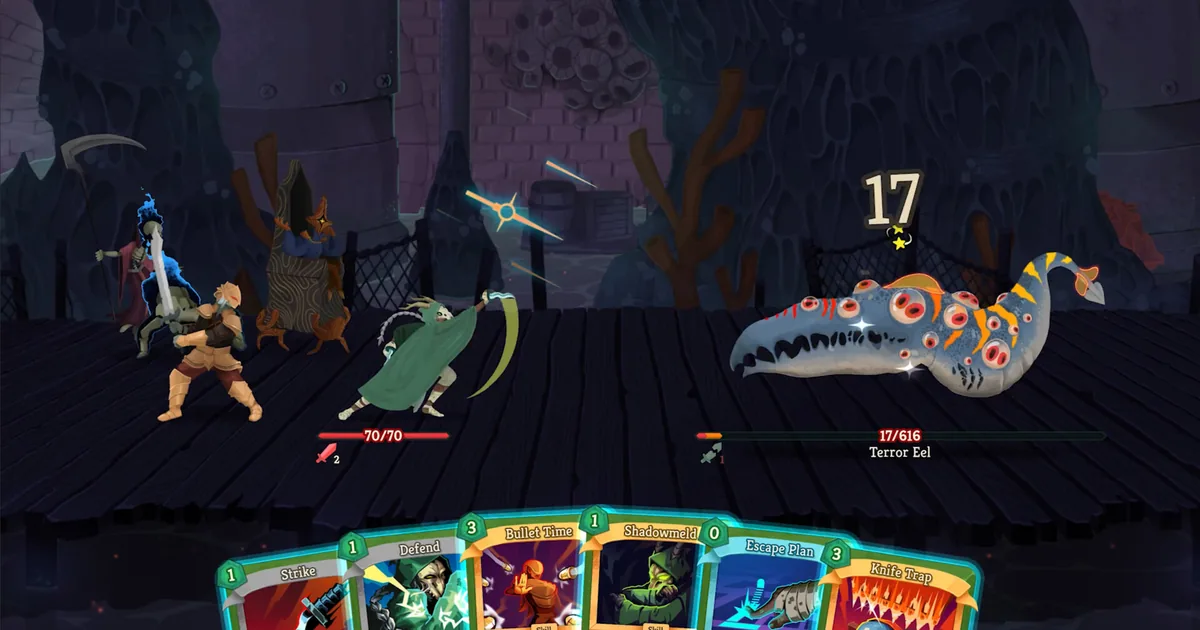
This Slay the Spire 2 Ironclad build guide gives the returning warrior a flexible plan for the current Early Access card pool. Start with a damage answer and enough Block to survive the next route, then follow the rewards into Strength, Exhaust, self-damage, or Barricade instead of forcing a remembered first-game list.
The character choice is also up to date. Mega Crit's official release material names five playable characters: Ironclad, Silent, Defect, Necrobinder, and Regent. The current Steam page still shows five and says the game supports up to four-player co-op. Ironclad is the next character-specific build gap in this site's Slay the Spire 2 coverage, alongside the existing five-character co-op guide and Defect build guide.
If you are deciding whether to buy during Early Access before starting a run, the Slay the Spire 2 review covers the current value and patch context. This guide assumes you are already in the climb.
TL;DR: Strength is the cleanest Ironclad default when the reward screen offers efficient attacks and a way to scale them. Exhaust becomes excellent when Dark Embrace, Feel No Pain, Corruption, or other glue pieces make removing cards pay for itself. Self-damage and Barricade can win, but only when the run supplies sustain, draw, and a way to finish fights. Build a damage shell first, keep Block honest, and read every current card description because official Early Access patches have already changed Ironclad tools.
Slay the Spire 2 Ironclad build: the quick answer
The best Ironclad build is the lane your rewards can support without leaving the deck unable to solve its next fight. Use this priority order:
- Early damage first: Ironclad needs a way to end hallway fights before small wounds become a route problem. One efficient attack can be worth more than a late-game rare that does nothing for the next three encounters.
- One dependable Block plan: A Strength deck still needs to block. A Barricade shell still needs damage. Do not treat attack and defense as separate decks that can ignore each other.
- Choose the engine from the cards you see: Strength is the direct tempo line, Exhaust turns removal into draw and Block, self-damage can feed Rupture, and Barricade rewards a deck that can make more Block than it needs this turn.
- Add draw and Energy only when they solve a real hand problem: Expensive payoffs are not a plan if the deck cannot draw or play them in the same fight.
- Stop drafting when the shell works: Ironclad has many appealing attacks. A smaller deck with a clear lane usually beats a pile of individually exciting cards.
The Slay the Spire 2 complete guide is the hub for the wider roster, co-op, Ascension, and Early Access context. This article stays focused on Ironclad's run decisions. If you want a wider deckbuilder comparison, the site's best roguelike games guide covers the larger genre around Mega Crit's sequel.
Key Takeaways
- The verified current roster is Ironclad, Silent, Defect, Necrobinder, and Regent. Mega Crit's official release post names all five, while Steam confirms the five-character count.
- Strength is the easiest Ironclad lane to pilot because it turns ordinary Attacks into better damage, but it still needs Block, draw, and a route that does not overtax the deck.
- Exhaust is an engine, not a downside to erase blindly. Dark Embrace can draw when a card Exhausts, Feel No Pain can turn Exhaust into Block, and Corruption can make Skills cost zero before they Exhaust.
- Self-damage with Rupture has a real ceiling, but losing HP without sustain is a route error rather than a build.
- Barricade is strongest when the deck can create more Block than the current turn requires and has enough draw to keep the defense moving.
- The game remains in Early Access. Exact card values and the strongest Ironclad tiers can change after a patch, so the current in-game text wins over any older guide.
Roster check: why Ironclad is the next build gap
Before choosing a character guide, verify that the roster has not changed. Mega Crit's official release post shows the five characters as Ironclad, Silent, Defect, Necrobinder, and Regent. The image description on that official page names the same five directly. The live Slay the Spire 2 Steam page also says the game has five playable characters and up to four-player co-op.
That verification matters because the official August newsletter discusses another character in development. It is roadmap context, not a sixth character that is already available. For this coverage sequence, Ironclad is therefore the next real character-build gap. The characters and co-op guide remains the better page for the full roster and duo recommendations, while the Silent solo guide and Defect guide cover two other character-specific paths.
GODEEPER: The five-character roster, Necrobinder and Regent identity checks, duo recommendations, and current co-op limits are in the Slay the Spire 2 Best Duo Characters guide →
Step-by-step: draft an Ironclad run
To draft a strong Ironclad run, solve immediate damage first, add enough Block for the map, and let the reward stream choose the engine. The steps below keep the deck alive while it decides between Strength, Exhaust, self-damage, and Barricade.
1. Solve the first damage check: Take an efficient Attack or a card that makes the starter damage more reliable. The first question is whether the deck can end normal fights without losing too much health, not whether it has found a final archetype.
2. Add a Block answer: Ironclad cannot spend every reward on damage. Take a defensive card when the current deck would be forced to absorb an enemy hit, especially if the map points toward an Elite. A Block card that works now is better than a perfect defensive payoff that needs three other cards.
3. Read the reward screen for a lane: A Strength card plus efficient Attacks points toward tempo. Exhaust payoffs plus Skills that are safe to remove point toward an Exhaust shell. Rupture and reliable self-damage suggest a self-damage route. Barricade is a signal to value repeatable Block, not a reason to stop drafting damage.
4. Upgrade the card that changes the next fight: Upgrade the Attack or Block card you already expect to play. An upgrade is valuable when it makes a hallway fight, Elite, or boss turn safer. Do not delay every practical upgrade while waiting for a rare engine card.
5. Add draw or Energy when your hand exposes the problem: If good cards regularly sit unplayed, the deck needs cheaper cards, draw, Energy, or a better curve. Add the missing tool instead of another expensive payoff that creates the same failure.
6. Remove starter cards with a reason: Strikes and Defends become less impressive as the deck gains focused cards, but removal is not automatically correct. Keep enough basic damage and Block until the new shell can handle the route you chose.
7. Stop adding when the deck answers the map: A card needs to improve the next route, the scaling fight, or the final boss plan. If it does none of those jobs, skip the reward and keep the draw quality high.
Slay the Spire 2 Ironclad build: Strength tempo
Strength is the cleanest default because it improves the damage of Attacks. The current Ironclad wiki snapshot describes Strength as additional damage for Attacks, so the lane rewards efficient attacks that are already good before the scaling arrives. Inflame is a natural example of a card that points toward this plan, while Headbutt and Uppercut are current community examples of attacks worth considering when the reward screen supports them.
The important word is tempo. Strength is useful when it helps Ironclad kill an enemy before the enemy's next dangerous intent. Do not spend multiple turns playing setup while a fight is already asking for damage. One scaling card plus a hand that attacks and blocks is often better than three scaling cards and no immediate answer.
Demon Form can be a strong late-fight direction in the current snapshot because it adds Strength at the start of the turn, but its cost and setup time make it a poor automatic pick. Take it when the deck can survive the turns before it pays back. If a cheaper Attack, draw card, or Block card fixes a current weakness, choose that first.
Strength also asks you to protect the damage multiplier from dilution. A deck with too many expensive Attacks can draw a hand that hits hard in theory but cannot block. Keep a useful curve, prioritize cards that perform a job immediately, and let the map decide whether another slow payoff is safe.
Exhaust builds: turn dead cards into value
Exhaust removes a card from the combat for the rest of that fight. That sounds like a loss until the deck has effects that reward the removal. The current wiki descriptions give Ironclad a clear package: Dark Embrace draws one card whenever a card is Exhausted, Feel No Pain grants three Block whenever a card is Exhausted, and Corruption makes Skills cost zero before they Exhaust.
The strongest Exhaust turns are not about deleting the whole deck immediately. They are about converting cards that have finished their job into another resource. A Skill that blocks this turn and disappears can make room for a better draw. A starter card that would otherwise clog a late fight can become Block or card access if the engine is online.
Corruption deserves restraint. Zero-cost Skills are powerful, but the card also removes those Skills after play. If the fight is long and the deck has no other Block or draw plan, playing every Skill for free can leave the next turns empty. Use it when the fight's timeline favors a decisive turn, or when Dark Embrace and Feel No Pain make the removal pay for itself.
Exhaust cards also need to appear in the right order. A payoff that is drawn before the deck can Exhaust anything may be a blank. An Exhaust card without draw or Block support may solve one hand and lose the next. Draft the glue first when possible, then take the payoff that changes how the whole deck plays.
Self-damage and Rupture: high ceiling, real risk
Rupture rewards Ironclad when the character loses HP on the player's turn by granting Strength in the current card snapshot. That creates a self-damage line with an obvious appeal: turn a controlled cost into permanent attack scaling. It also creates one of the easiest ways to mistake a high ceiling for a complete build.
Self-damage is only good when the run can pay the health bill. Ask three questions before committing:
- Does the deck have enough immediate damage to end the fight before repeated HP loss becomes fatal?
- Can it block the enemy's largest intent while still triggering the self-damage plan?
- Does the route provide enough healing, sustain, or safe fights to make the cost reasonable?
If the answer is no, Rupture is a reason to keep the card in mind, not a reason to take every card that loses HP. The Slay the Spire 2 beginner guide covers the route, campfire, potion, and Elite decisions that determine whether a risky build survives long enough to scale.
Self-damage also pairs naturally with Exhaust when the rewards cooperate. A card can lose HP, leave the deck, trigger the Exhaust engine, and accelerate the next hand. That is a real interaction, but the exact value depends on current card text and the rest of the deck. Read the tooltips in your build instead of importing a first-game combo by name.
Barricade block shells: when to hold defense
Barricade makes Block stay between turns in the current card description. That changes the value of every defensive card because a turn spent blocking can become future safety rather than a resource that disappears at the end of the round. The shell is attractive when the deck can create a large amount of Block, draw through the deck, and still finish the fight.
The trap is taking Barricade before the deck can make Block. A three-cost payoff that does not affect the current attack leaves Ironclad exposed. Take it when the deck already has a repeatable defensive backbone or when the map gives enough time to assemble one. If the next Elite is a close damage check, a cheaper Block card or an efficient Attack may be the better pick.
Barricade does not mean “never attack.” A successful shell banks Block while it searches for a finisher, then uses the stored safety to spend a turn on damage. If the deck can only defend and never close the fight, the saved Block delays the loss rather than solving it.
 Event choices can change a run's card quality and route safety. Read the reward or transformation text before taking a risky Ironclad line.
Card priorities, removals, and current tier-list limits
Ironclad card priority is simple: take cards that solve the next fight, strengthen the lane already supported, or repair a real draw and Energy problem. A community tier list can point to candidates, but it cannot replace the reward screen, map, and current patch.
The current community snapshot on the dedicated Ironclad wiki highlights Grapple, Headbutt, Uppercut, Inflame, Ashen Strike, and Taunt as strong examples. That is useful for knowing which reward deserves a closer look, but it is not an official Mega Crit tier list and it should not become a shopping list. The card you need depends on the damage and Block already in the deck, the map, and the next boss.
Use this practical filter when a card appears:
- Does it improve the next fight? Early damage and Block are worth more when the deck is still taking damage from hallway encounters.
- Does it strengthen the lane already supported? Strength, Exhaust, self-damage, and Barricade should make each other better rather than compete for every draw.
- Does it solve a hand problem? Draw, Energy, cost reduction, or a card that works at a different timing can be more important than another finisher.
- Does it leave the deck when it has finished its job? Exhaust is valuable when the deck has a reason to remove cards, not when every card is treated as disposable.
Remove a starter card when the replacement is reliable and the deck has enough copies of that role. Removing the last cheap attack because a rare finisher looks exciting is a common way to lose the next Elite. The same applies to Block. Deck compression is a tool for making the plan appear, not a purity test.
Ironclad's cards have already changed in official patches. Recent beta notes reworked or adjusted tools including Expect a Fight, Forgotten Ritual, Rampage, Conflagration, and Drum of Battle across different versions. That is why this guide describes roles and interactions while avoiding a permanent numerical tier list.
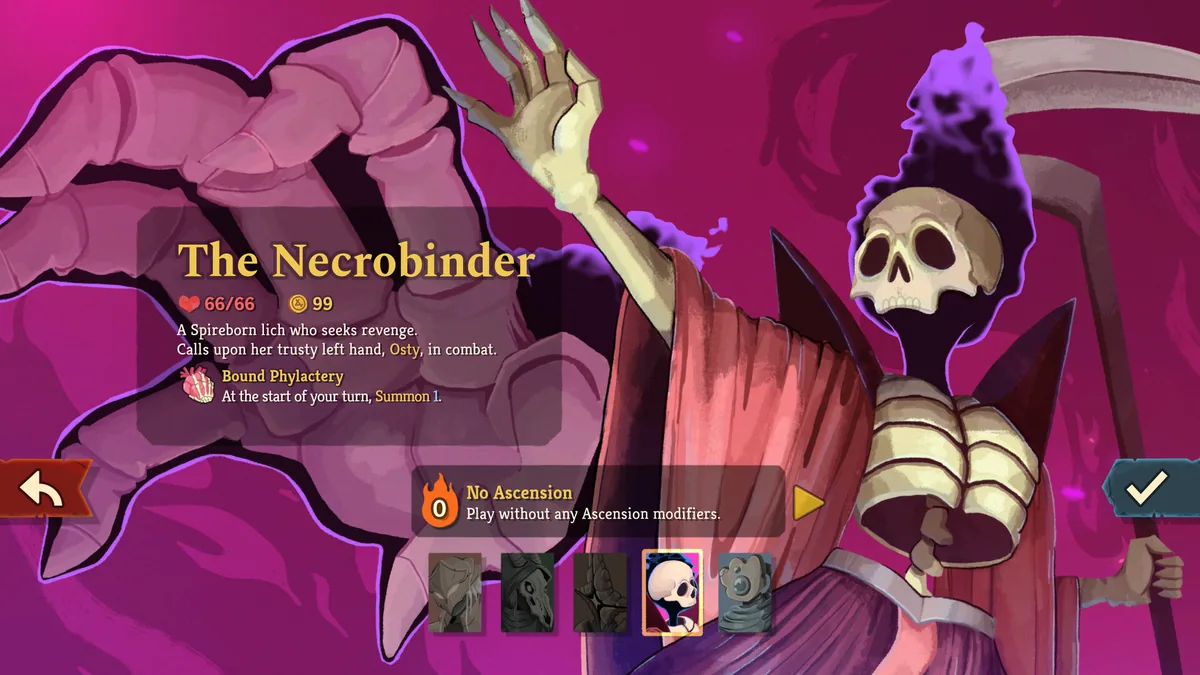 The character screen is a useful reminder that the sequel's five-character roster includes two new identities. Ironclad's build logic still has to start from the current run's rewards.
Relics, potions, map, and upgrades
The right relic, potion, map, and upgrade choices keep an Ironclad build alive long enough to reach its payoff. Use them to solve the next route and preserve health, not to protect an imagined perfect deck.
Ironclad's build is not finished when the card reward looks coherent. Relics can change whether a slow Strength or Barricade line is safe, and potions can bridge the one fight that the deck has not solved yet. Spend a potion when it protects a high-value route, saves health before an Elite, or converts a close boss turn into a kill. A full potion belt that never gets used also blocks the next drop.
Use campfires to upgrade the card that appears in the most important upcoming hands when your health can tolerate the route. Rest when the map says the next Elite or boss will kill you without the extra health. An Ironclad build that reaches the boss with a perfect theoretical engine but no HP has not solved the run.
For map decisions, prefer a path that gives the deck a chance to fix its immediate weakness. Early shops are valuable when removal or a cheap role player improves the whole deck. Elites are attractive when the deck has damage, Block, and a potion reserve. The best Strength or Exhaust card is not worth a route that takes three unavoidable fights while the deck is still unfinished.
The wider Slay the Spire 2 review covers the game's current Early Access value and patch volatility. Use it for the buying decision, then use this guide for the Ironclad decisions once the run starts.
Ironclad in co-op
Steam currently supports up to four-player co-op and advertises multiplayer-specific cards and team synergies. That makes Ironclad a clear communication role, not a promise that the game uses a fixed tank system. Tell the group whether the current hand is solving immediate damage, Block, or an engine turn, and let the other players plan around the same enemy intent.
An Ironclad player can take the straightforward pressure line while a teammate assembles a slower engine, but do not draft every Attack because someone else is expected to handle defense. Co-op rewards still depend on the cards that appear. A Strength plan can leave space for another player's utility, while an Exhaust plan may create a valuable turn where the team needs to survive and draw deeper.
The Slay the Spire 2 co-op guide has the roster and duo recommendations. The best co-op games list puts Slay the Spire 2 in context for groups choosing between deckbuilding, tactics, and other shared-session games. Groups comparing co-op roguelites can also use the Deep Rock Galactic Rogue Core co-op guide for a very different team structure.
Common Ironclad mistakes
The most common Ironclad mistakes all come from choosing an exciting payoff before the deck can survive the next fight. Keep the current map, enemy intent, and card draw in view while deciding whether a reward is actually useful.
- Forcing Strength before finding damage: One scaling card is not a deck. Take the efficient Attack or Block card that keeps the current route safe.
- Treating Exhaust as a goal by itself: Removing cards without draw, Block, or another payoff can leave the next hand worse.
- Taking self-damage without a health plan: Rupture does not refund the HP immediately. Check healing, potions, and route safety first.
- Playing Barricade before making Block: The payoff needs a defensive backbone and enough time to pay back its cost.
- Taking every expensive Attack: A hand full of powerful cards can still lose when Ironclad cannot block or spend the Energy.
- Using a community tier list as a script: Current rankings are a snapshot. The reward screen, map, and patch matter more than a letter grade.
- Ignoring the next boss: A deck that beats hallway fights but cannot handle the final damage or scaling check is unfinished.
Frequently Asked Questions
What is the best Ironclad build in Slay the Spire 2? Strength is the cleanest default when the rewards support it, while Exhaust is the strongest value engine when its draw and Block pieces appear. Self-damage and Barricade are real lanes, but they need a complete shell rather than one exciting card.
What are the Ironclad build paths in Slay the Spire 2? The useful paths in the current Early Access snapshot are Strength tempo, Exhaust value, self-damage with Rupture, and slower Barricade block shells. Treat these as drafting directions, not fixed decks.
What does Exhaust do for Ironclad? Exhaust removes a card from the combat for the rest of that fight. Ironclad can turn that cost into value with cards such as Dark Embrace for draw and Feel No Pain for Block, while Corruption makes Skills cost zero before they Exhaust.
Is Ironclad good in Slay the Spire 2 co-op? Yes. Steam supports up to four-player co-op and mentions multiplayer-specific cards and team synergies. Ironclad is a useful straightforward damage and defense role, but co-op rewards depend on the cards and current patch.
What cards should Ironclad prioritize? Prioritize an early damage answer, a reliable Block plan, and then draw, Energy, or a payoff that matches the rewards. Current community snapshots often highlight Grapple, Headbutt, Uppercut, Inflame, Ashen Strike, and Taunt, but those are not official tier ratings.
Is this Ironclad guide permanent? No. Slay the Spire 2 is still in Early Access, and official patches have already changed Ironclad cards and systems. Use the current in-game card text and treat exact numbers, tiers, and route advice as a dated snapshot.
Related Reading
- Slay the Spire 2 Complete Guide: 5 Characters and Co-op: the pillar hub for the roster, co-op, Ascension, and current Early Access status.
- Slay the Spire 2 Best Duo Characters: All 5 Ranked: verified roster names, two-player roles, and co-op habits.
- Slay the Spire 2 Defect Build Guide: Orbs and Focus: a different character engine built around Orbs, Focus, and flexible lanes.
- Slay the Spire 2 Silent Solo Build Guide for Ascension 10: Poison, Mirage, card control, and solo route planning.
- Slay the Spire 2 Beginner Guide: All 10 Ascension Levels: map, campfire, potion, relic, and route fundamentals.
- Slay the Spire 2 Review: What the Steam Score Misses: current Early Access value, co-op, and patch volatility.
References
- Slay the Spire 2 on Steam: official five-character count, co-op, Early Access status, and current store information.
- Mega Crit release date and trailer: official source naming Ironclad, Silent, Defect, Necrobinder, and Regent.
- Mega Crit August 2026 Neowsletter: official roadmap context for another character in development and Early Access work.
- Slay the Spire 2 official beta patch notes: current Ironclad balance and card changes in the v0.111 snapshot.
- Slay the Spire 2 official v0.104 patch notes: prior official Ironclad changes including Conflagration and Drum of Battle.
- Slay the Spire 2 Ironclad wiki: current community card descriptions, build directions, and tier snapshot, checked September 21, 2026.
Was this guide helpful?
About the author

Indie & JRPG Critic
Indie game evangelist and lifelong JRPG fan covering small studios since 2017. Mumbai-born, London-based. Writes the way she talks.
- 7 years indie games coverage
- JRPG and visual novel specialist
- Narrative design focus
Keep reading




Disclaimer
This article is published for informational and entertainment purposes. It does not constitute professional financial, legal, or technical advice. Game performance, online services, patch schedules, and store listings change. Verify critical details (pricing, system requirements, regional availability) with publishers and storefronts before you buy. Affiliate links, where present, help support our editorial work and are labelled in our affiliate disclosure.
Comments
Loading comments…