
FeatureCo Op
Best Co-op Games to Play Right Now in September 2026
Best co-op games to play right now in September 2026: six verified picks for party chaos, deckbuilding, tactics, exploration, and co-op shooters.
The best co-op games to play right now are not all trying to do the same thing. Some give your group five minutes of shared panic. Others ask everyone to plan a deck, a tactical turn, or a route through a hostile cave. This September 2026 list focuses on games with a clear reason to bring friends along, not games that merely add a multiplayer checkbox.
Sponsored

TL;DR: Pick Gamble With Your Friends for fast party chaos, Slay the Spire 2 for serious shared strategy, and Sunderfolk for a tactical game night. Big Walk is the relaxed social walk, Far Far West is the mission-based roguelite shooter, and Deep Rock Galactic: Rogue Core is the Early Access pick for four-player sci-fi runs. Mortal Shell II is not included because Steam currently lists it as single-player only.
Sponsored

Best co-op games to play right now: the quick answer
These are the six games I would put in front of a group today, with a different group need attached to each one.
- Best for a loud party night: Gamble With Your Friends. It supports one to six players online, and the shared bank account makes every risky decision a group argument.
- Best for a strategy-first group: Slay the Spire 2. Its Early Access multiplayer supports up to four players and adds cards and synergies designed for co-op.
- Best for couch tactics: Sunderfolk. Up to four players can use phones as controllers for a tabletop-style tactical RPG, or play online.
- Best for a relaxed social session: Big Walk. House House built a cross-platform online walker-talker where the conversation is as important as the destination.
- Best for short combat runs: Far Far West. Its one to four-player missions combine guns, spells, bounties, and a clear get-in-and-get-out rhythm.
- Best for four-player sci-fi runs: Deep Rock Galactic: Rogue Core. The Early Access spinoff turns the familiar dwarf teamwork into procedural roguelite missions.
Prices below are US Steam list-price snapshots checked on September 21, 2026. Store discounts and regional prices can change, so use the linked Steam page as the final check before buying.
How this September 2026 co-op list was chosen
The basic filter was real co-op support, confirmed by the current Steam store metadata or official store description. I then looked for a distinct group experience: a shared economy, complementary decks, tactical positioning, social exploration, mission roles, or a run-based team build. That keeps this list useful for choosing a game for a specific friend group.
This is a different job from our Best Indie Co-op Games Steam Summer Sale 2026 list, which is organized around the old sale and its price bands. This article is a current September recommendation slate. It also calls out a tempting-looking game that does not pass the co-op check, because a wrong multiplayer assumption is worse than a missing recommendation.
1. Gamble With Your Friends: best for party chaos
Steam snapshot: $7.99 | 1 to 6 online players | released May 1, 2026
Gamble With Your Friends is the easiest recommendation when your group wants a game that creates stories immediately. It calls itself a casino crawler, but the important design choice is the shared bank account. Everyone is gambling with the same pool of money and trying to meet a daily quota before time runs out. A spectacular personal win can still be a team disaster if it leaves the group unable to pay its debt.
The current Steam description lists 17 games of chance, more than 15 items, four casino floors, three endings, proximity voice chat, and an expected two to three hours for a run. The five-minute daily rhythm gives the game a useful reset point. Someone can make one terrible decision, laugh about it, and still have time to recover instead of watching a long survival session collapse.
The best part of the co-op design is the argument over risk. One player wants to protect the bank, another sees a chance to buy an item, and a third is convinced the next game is favorable. The rules are simple enough for a new player to join without homework, while the shared money creates enough pressure to stop everyone from playing alone in the same room.
Start with our Gamble With Your Friends tips guide if your group keeps missing the floor quotas. The co-op roles guide is the better follow-up for larger groups that need one person watching the bank while others take calculated risks.
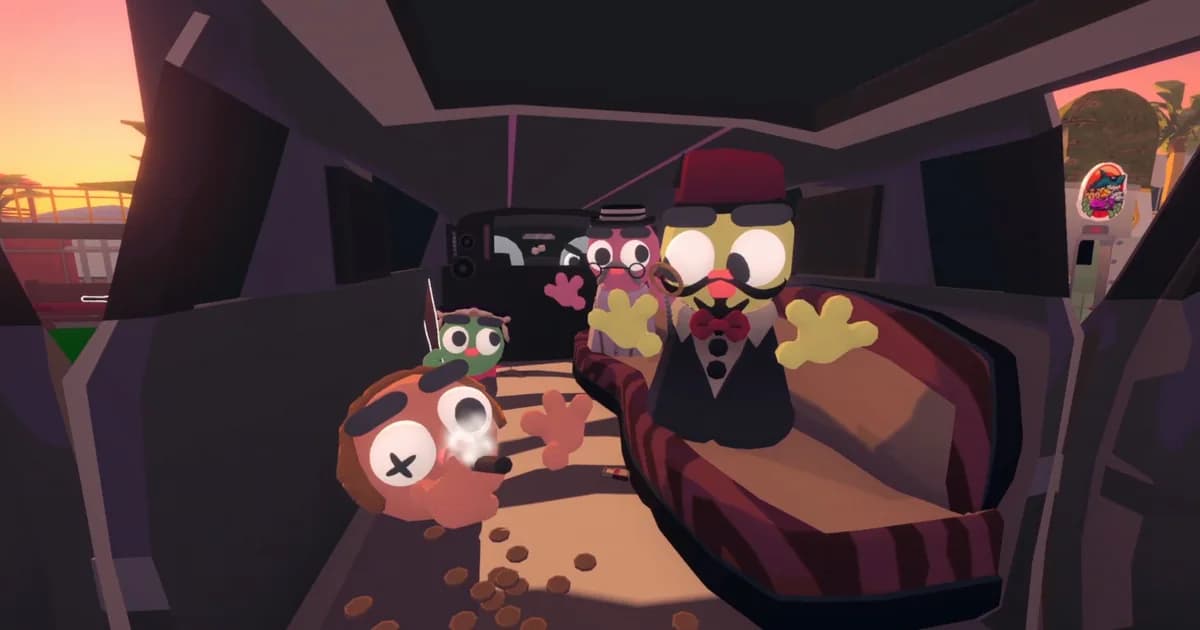
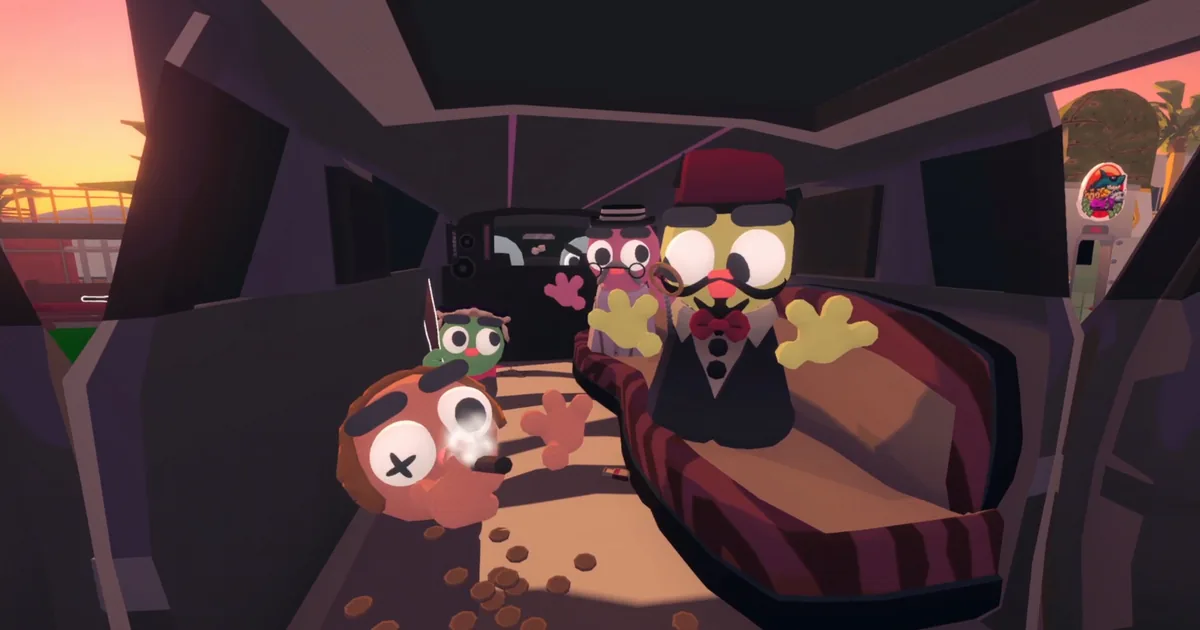 Gamble With Your Friends makes the shared bankroll visible. The car full of characters and loose coins captures why every player feels responsible for the same bad decision.
2. Slay the Spire 2: best for a strategy-first group
Steam snapshot: $24.99 | up to 4 players online | Early Access
Slay the Spire 2 is the pick for a group that wants co-op to change how it thinks, not just add more bodies to a combat arena. Mega Crit's current Steam page lists up to four-player multiplayer, and the store description calls out multiplayer-specific cards and team synergies. That makes the co-op mode a reason to discuss turns rather than four solo runs happening in parallel.
The catch is that this is still Early Access. Card pools, encounter balance, and the strongest team patterns can move. That is a reason to treat this recommendation as a good invitation to learn together, not a promise that a single solved composition will stay best for months. A group willing to compare plans and adjust after a patch will get more from it than a group looking for a static tier list.
The five-character roster currently verified against Mega Crit's release material and the Steam page is Ironclad, Silent, Defect, Necrobinder, and Regent. The existing Slay the Spire 2 characters and co-op guide is the starting point for deciding who should share a run. For a player who already knows the basics, the Defect build guide shows how a single character's plan changes when another player can cover a different job.
The best table rule is to announce intent before playing the obvious card. If one player is building a slow scaling engine, the other should say whether the team needs immediate damage, block, or a way to solve the next elite. That tiny communication habit matters more here than memorizing a list of cards.
Slay the Spire 2's combat interface makes the shared planning problem visible: the enemy has a dangerous intent while the team chooses from a limited hand and resource pool.
GODEEPER: If your group is deciding between new characters, the Slay the Spire 2 complete guide hub collects the roster, beginner route, co-op roles, and current build coverage.
3. Sunderfolk: best for a tactical game night
Steam snapshot: $49.99 (frequently discounted, check for an active sale) | up to 4 players | online or couch co-op
Sunderfolk is the most direct answer for a group that wants a board-game night without asking everyone to learn a new control scheme. The Steam page supports up to four players online and couch co-op with phones as controllers. The phone setup is not a tiny side mode. It is the intended way to turn a shared screen into a tactical RPG table where each player can manage their own hero.
The difference between Sunderfolk and the other strategy pick is pace. Slay the Spire 2 asks a group to reason about decks and an uncertain run. Sunderfolk asks everyone to read a tactical board, coordinate movement, and choose how to spend the party's tools on a specific encounter. That makes it a better choice for a group that enjoys discussing one battle at a time.
The online ownership rule matters before you schedule the night. Couch mode with phone controllers is different from remote online multiplayer, where players should check the current store requirements for their setup. Our Sunderfolk online co-op guide covers the phone controller flow, connection fixes, and party setup. If the group is still choosing heroes, the Sunderfolk class tier list is a useful starting conversation, not a command to play one fixed party.
Sunderfolk puts the party discussion directly on the board. The Arcanist is selecting a spell while allies and enemies occupy nearby hexes.
4. Big Walk: best for a relaxed social session
Steam snapshot: $19.99 | online co-op | cross-platform multiplayer
Big Walk is for the group that wants to hang out more than optimize. House House describes it as a cooperative online walker-talker, and the current Steam metadata includes online and cross-platform multiplayer. That tells you what kind of night it is: explore, get distracted, solve small problems together, and let conversation fill the space between objectives.
The recommendation depends on your group being comfortable with a loose pace. There is no need to turn every moment into a route-planning exercise. The value is in how the game gives friends a place to wander and react to the same odd world. It is a better fit for a long voice-chat session than for players who need a clear checklist every ten minutes.
Our Big Walk review covers why the focused two-person feel works, while the Big Walk achievements guide is there when your relaxed walk turns into a completion run. Keep this one in reserve for the evening when the group wants to talk and play at the same time.
5. Far Far West: best for short mission-based runs
Steam snapshot: $19.99 | 1 to 4 players online | Early Access
Far Far West is the action pick. Steam currently describes it as a one to four-player co-op shooter where cowboys blast monsters, sling spells, complete missions, and collect bounties. The useful distinction is its mission shape. A group can decide on a target, build a loadout, get paid, and stop after a run without leaving a shared open world in a half-finished state.
That makes it a good bridge between a party game and a long roguelite. There is enough room for players to specialize around weapons and spell schools, but the group still needs to react to the same mission problems. The early-access label is important. Content, balance, and the best combination of spells can change, so the right expectation is a functional co-op framework that is still growing.
Use the Far Far West co-op guide for multiplayer setup and team habits. The Far Far West complete guide is the wider route if your group wants to follow the regions, bosses, and loadout systems across several sessions.
6. Deep Rock Galactic: Rogue Core: best for four-player sci-fi runs
Steam snapshot: $29.99 | 1 to 4 players online | Early Access
Deep Rock Galactic: Rogue Core keeps the appeal of a four-player sci-fi crew but places it inside procedural caves and a roguelite upgrade loop. The current Steam description confirms one to four-player co-op, random upgrades, maze-like mines, and alien hordes. It is the choice for a group that wants everyone to have a job when the room gets busy.
This is not simply a cheaper way to play the original Deep Rock Galactic. Rogue Core has its own run structure and an Early Access development path. That makes it a better fit for a group that enjoys restarting, comparing upgrades, and learning a new mission rhythm. If your friends want a finished campaign with a stable progression plan, choose Sunderfolk or Big Walk instead.
The useful prep is team communication, not a perfect build. Say who is clearing a route, who is watching the back, and who is carrying the objective. Our DRG Rogue Core team compositions guide explains how role choices interact, while the DRG Rogue Core guide hub tracks the broader class and progression coverage.
GODEEPER: If your group has not played the Rogue Core version of the formula before, start with the DRG Rogue Core co-op team guide before choosing classes. The important decision is how the squad covers problems across an entire run, not which character looks strongest in a screenshot.
Why Mortal Shell II is not on this list
Mortal Shell II was a deliberate verification check, not a forgotten anchor pick. The current Steam store page lists the game as single-player only. It does not list online co-op, local co-op, or shared-screen co-op in the feature categories. That is enough to leave it out of a co-op recommendation list, even if the sequel's action-RPG premise sounds like it could support a friend.
This is also why I have not used a review snippet or an assumption about the original game to fill the gap. Multiplayer status is a live store fact. If Cold Symmetry or Playstack adds co-op later, it can earn a place in a future update after the feature is confirmed on the official page.
Which co-op game should your group choose?
Use the shape of your evening as the first filter.
- Choose Gamble With Your Friends if everyone wants to laugh, argue about risk, and finish a run in a few sessions.
- Choose Slay the Spire 2 if the group enjoys planning and does not mind Early Access balance changes.
- Choose Sunderfolk if one person can put the game on a TV and everyone wants a tactical board-game feel.
- Choose Big Walk if the voice chat matters as much as the objective.
- Choose Far Far West if the group wants combat missions with a clear beginning and end.
- Choose Deep Rock Galactic: Rogue Core if four players want procedural caves, roles, and run-to-run decisions.
The strongest general recommendation is still Gamble With Your Friends because it asks so little before the first laugh. The strongest long-term strategy recommendation is Slay the Spire 2. Those two cover the most different versions of co-op, and they are the pair I would send to a group that cannot agree on a genre.
Related Reading
- Gamble With Your Friends Complete Guide: shared bank rules, floors, items, roles, and endings.
- Slay the Spire 2 Best Duo Characters: the verified roster and co-op character pairings.
- Sunderfolk Online Co-op Guide: phone controllers, remote setup, and connection fixes.
- Big Walk Review: how the social walker works for a real group.
- Far Far West Co-op Guide: multiplayer setup, spell reactions, and team roles.
- DRG Rogue Core Team Compositions: squad planning for four-player runs.
- ATMOSFAR Early Access: What's In on October 29: a flying survival game for up to four players, and what its first build includes.
Frequently Asked Questions
What is the best co-op game to play right now in September 2026?
Gamble With Your Friends is the easiest recommendation for a group that wants a short, funny session. Slay the Spire 2 is the deeper pick for a group that wants a long strategy game. Sunderfolk is the best fit for a tactical couch or phone-controller night.
Which of these co-op games works best for four players?
Slay the Spire 2, Sunderfolk, Far Far West, and Deep Rock Galactic: Rogue Core all support groups of up to four. Gamble With Your Friends supports up to six, while Big Walk is the better choice for a smaller conversation-heavy group.
Is Mortal Shell II co-op?
No. The current Steam store page lists Mortal Shell II as single-player only. It is not included because the live store metadata does not confirm online or local co-op.
Which pick is best for a short co-op session?
Gamble With Your Friends is the clearest short-session choice because its casino floors use a five-minute daily rhythm and a full run is described as roughly two to three hours. Far Far West is better if you want mission-based combat instead of party-game chaos.
Which co-op games on this list are in Early Access?
Slay the Spire 2, Far Far West, and Deep Rock Galactic: Rogue Core are currently marked Early Access on Steam. The other three picks are listed as released games, though their prices and review totals can still change.
Do all six recommendations require every player to buy the game?
The answer depends on the game and mode. Online modes generally expect each player to own a copy. Sunderfolk also supports couch co-op with phones as controllers, while Gamble With Your Friends uses Steam invites for its online group. Check the current store page before buying multiple copies.
References
About the author

Indie & JRPG Desk
GameBrief's byline for indie, JRPG, visual novel and cozy games. Warm, direct, and willing to say which one to buy.
- Indie, JRPG and visual novels
- Early access and survival
- Sources listed per article
Keep reading
Shift At Midnight Is Out Now on Steam and Xbox Game Pass
General · 6 min
Best Indie Co-op Games Steam Summer Sale 2026: 6 Picks
Features · 9 min
Sons of the Forest Multiplayer Save Guide: Co-op Progress
General · 14 min
Risk of Rain 2 Multiplayer: 4-Player Co-op, Items, Revives
General · 10 min

Over the Hill co op and crossplay: 4 players, saves, status
General · 11 min
Graveyard Keeper 2 Multiplayer: Is There Co-op in 2026?
General · 16 min
Sponsored
More game deals
Disclaimer
This article is published for informational and entertainment purposes. It does not constitute professional financial, legal, or technical advice. Game performance, online services, patch schedules, and store listings change. Verify critical details (pricing, system requirements, regional availability) with publishers and storefronts before you buy. Affiliate links, where present, help support our editorial work and are labelled in our affiliate disclosure.