
GameBrief · General
Solarpunk Tips: 9 Things Every New Player Must Know

Reviewing
Solarpunk
These Solarpunk tips cover the decisions that matter in Cyberwave's floating-island survival game without pretending that an old community spreadsheet is a permanent rules manual. The full review covers whether it's worth buying. This guide focuses on a stable opening: learn the research tree, build a renewable-energy network, keep storage ahead of demand, and use the airship to turn the starting island into a launchpad rather than a final base.
TL;DR: Start with the research and crafting stations the current build makes available, then connect sunlight, wind or water generation to storage before adding always-on automation. Use the live power readouts instead of a fixed panel-to-battery ratio: the primary sources checked do not verify the old numerical table. Soft Mode is the lower-pressure option, while airship exploration, farming and co-op form the long-term loop.
What are the best Solarpunk tips for new players? (quick answer)
The safest opening is deliberately boring: gather broadly, unlock the next research tier, build a small renewable-energy network, and postpone a decorative mega-base until you understand the current power and weather behavior. Cyberwave's official description confirms floating-island survival, construction, farming, crafting, airships, co-op and automation. It does not publish a universal numerical power table, so the current research screen and in-game readouts should beat any fixed ratio copied from an early guide.
Current status: September 2026
Solarpunk is fully released, not an Early Access title. Steam lists a $22.99 standard price, 24 achievements and a Steam Deck Playable rating; the current snapshot is 81% positive from 1,870 English reviews, with 75% positive from 193 recent reviews. Official platform material lists PC, Xbox Series X|S, PlayStation 5 and Nintendo Switch 2, with Xbox advertising Game Pass and Play Anywhere availability. Cross-platform multiplayer work appears in the update trail, but the sources checked here do not establish every crossplay combination as currently live.
Step-by-step: your first Solarpunk session
Step 1: Gather broadly. Collect the common materials visible on the starting island and keep storage near the first work area.
Step 2: Unlock research. Follow the current research tree until the next useful crafting and energy options are available.
Step 3: Connect a small grid. Link the renewable generators and storage the build provides, then watch the live production and consumption readouts.
Step 4: Test one automation chain. Add one useful powered machine and observe it through the available weather cycle before expanding.
Step 5: Prepare the first flight. Keep a reserve of materials, research and storage capacity before using the airship to scout another floating island.
Build research before you commit to a permanent base
The game's first temptation is to spend the starting resources on walls, roofs and furniture. Resist the urge to make the first island look finished. Research and crafting are what open the energy, automation, farming and airship layers, so the first useful base is a work site rather than a showcase.
Collect the common materials you can see, keep storage close to the work area, and read the in-game Survival Guide when a recipe or system is unclear. The official material emphasizes construction and automation, but it does not support a universal unlock order for every table, cable or drill. Treat the current research tree as the source of truth for the build you are playing.
The practical rule is to unlock the next research tier before spending an hour on a complex layout. You will learn which machines need power, water or open space, and you will avoid designing a beautiful base around an early recipe that the current progression later replaces.
Start with a measured renewable-energy network
Solar panels, wind turbines and water are all part of Solarpunk's renewable-energy pitch. The official publisher describes using sunlight, wind and water to automate processes such as gathering and watering plants. That broad rule is reliable. The old exact table in this article was not: the checked primary sources do not verify fixed outputs for clear weather, storms, turbine height, battery capacity or charge speed.
Place the generators the current research tree gives you, connect them to storage, and watch the production and consumption readouts while the weather changes. A network that looks healthy at noon may be undersupplied after dark or during a storm. Add storage before adding another machine that will run continuously, and test one new automation chain at a time so you know which demand caused a stall.
The official Advanced Power Logic update is a useful way to think about the system. It describes switches controlling networks, rain sensors disabling sprinklers, and day/night sensors controlling lights. That is more actionable than memorizing a number: make the network respond to conditions instead of leaving every device active at every moment.
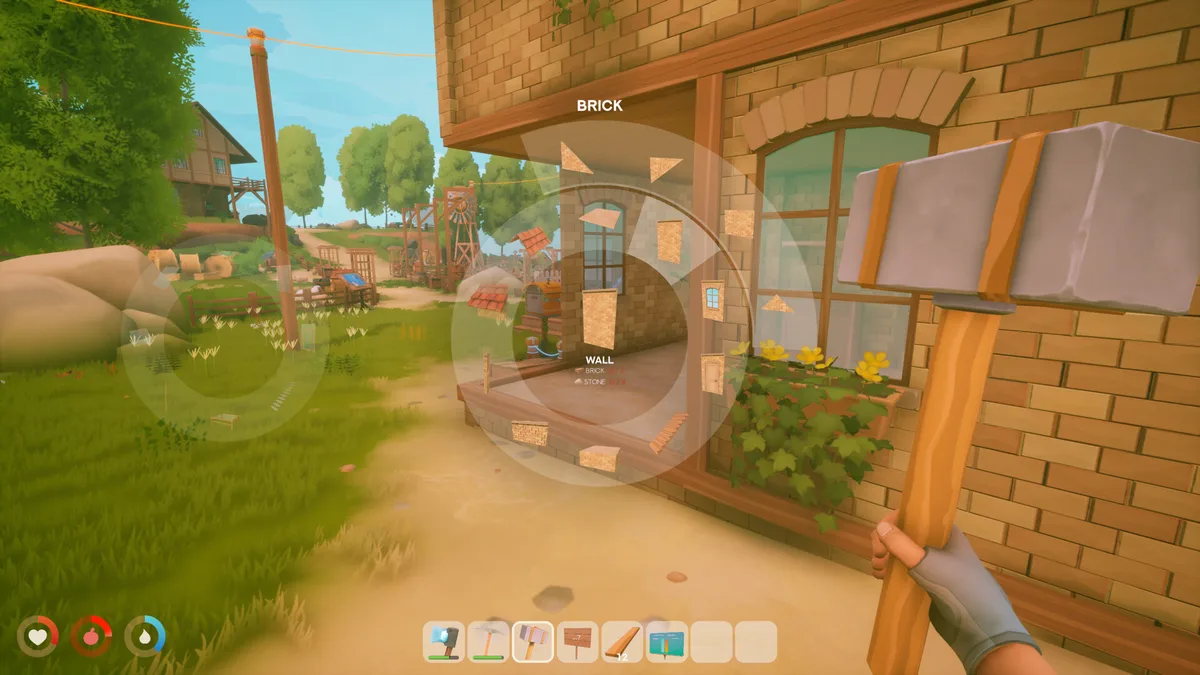 Place the first power network where you can inspect it. The current readouts matter more than an old fixed ratio.
Expand automation only after the grid survives a cycle
The common beginner mistake is not choosing the wrong generator; it is adding several machines before observing what the first one does to the network. Start with one useful automation task, let the system run through the available weather cycle, and then add another machine if storage is still recovering.
Keep the generator, storage and consumer close enough that you can inspect the connections without rebuilding half the island. If a line fails, isolate the new machine and check whether the problem is production, storage, a switch condition or a recipe requirement. Solarpunk's automation is a planning problem, not a race to place every unlocked object.
Demolition is worth testing early because a survival-builder is easier to learn when the first layout is not sacred. The current UI is the authority on how much material a demolition returns; do not promise a universal 100% refund from an old guide. Keep a reserve of common resources anyway, especially before a weather-sensitive trip or a large airship recipe.
Choose Soft Mode for building-first sessions
Soft Mode is the obvious starting point for players who care more about construction, farming and exploration than survival pressure. Standard mode is the better choice if you want the weather and survival systems to punish mistakes. The public sources checked for this audit do not publish a complete numerical comparison for death inventory, hunger, thirst and lightning, so use the current settings description rather than the old exact modifier table.
Either mode still asks you to understand energy, research and travel. Soft Mode is not a substitute for storage planning, and Standard is not a reason to postpone building until every system is understood. Pick the pressure level you will actually enjoy, then learn the same core loop: gather, research, connect, test and expand.
Farm what the starting island gives you
Do not build an opening plan around a crop-location claim that the current official material does not spell out. Gather the plants and materials visible on the starting island, read the Survival Guide, and use the first farm to keep food and crafting ingredients moving while you research travel. The useful early habit is parallel work: plant what you have, collect building materials, check the power network, and keep progressing toward the airship.
Watering and irrigation deserve the same incremental approach as electricity. Establish a small reliable setup before adding a large field. When the research tree offers a sprinkler or pump, test one section first and make sure the network has enough production and storage to support it through weather changes. The official description confirms farming and automation; it does not justify a fixed recipe/timing table for every crop or water device.
Treat the airship as exploration progression, not a finish line
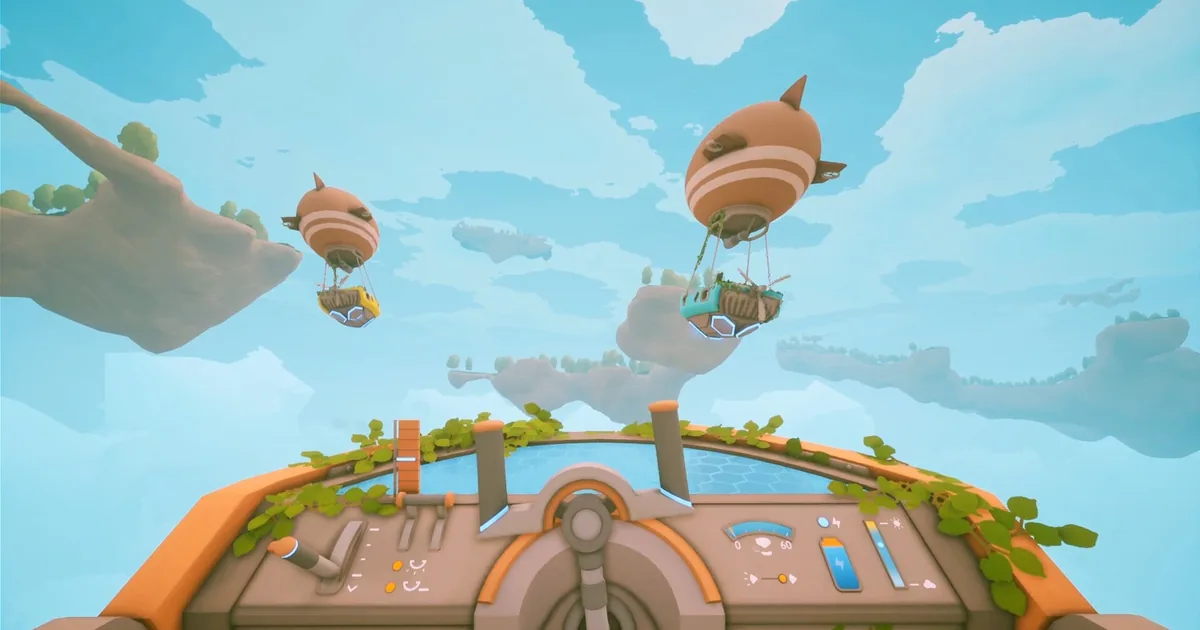
Airships are the bridge from the starting island to the wider floating-island world. Gather the materials and research needed by the current build, then leave a little storage and power capacity for the trip instead of emptying the base into one launch attempt. The destination is new recipes, resources and building options, not a requirement to abandon the home island.
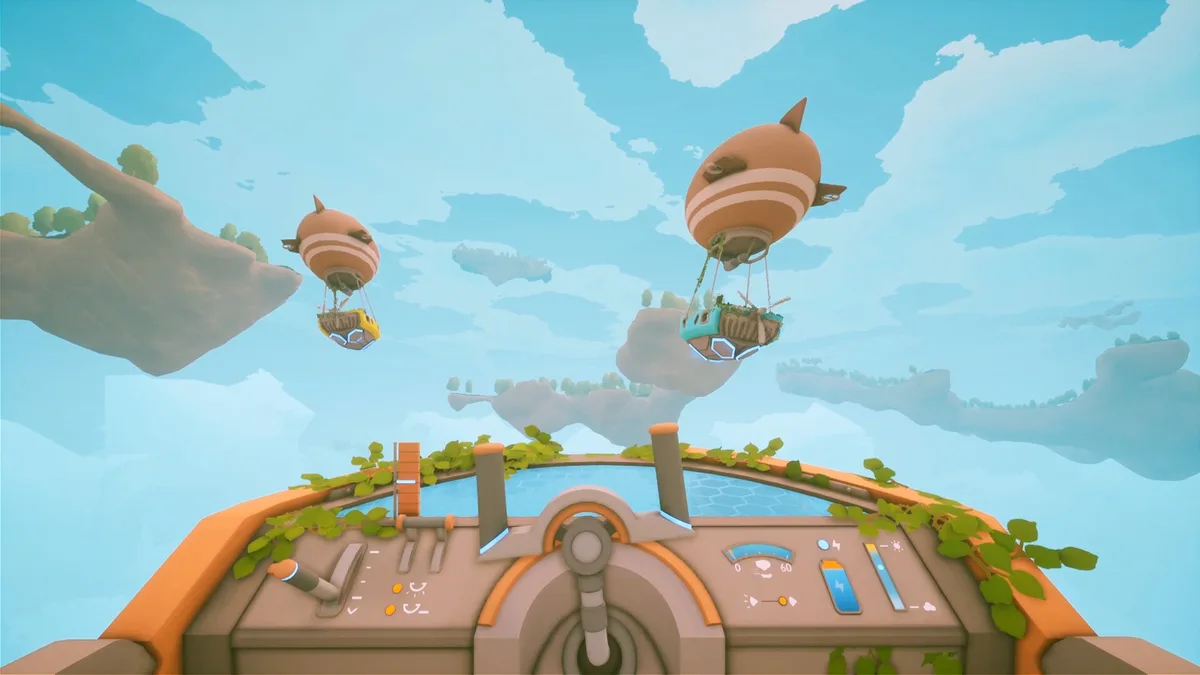 Use the first flight as a scouting run. Bring enough supplies to return safely, then expand the route once the controls feel familiar.
Co-op makes planning more important, but the exact airship-sharing and inventory rules should be checked in the current multiplayer build. Official updates mention cross-platform multiplayer work; they do not support this article's former guarantee that every player must build an independent airship. Coordinate goals, communicate before spending shared-looking resources, and treat crossplay as an announced feature unless the live session confirms it.
Use the Survival Guide instead of guessing
The in-game Survival Guide is the right place to verify recipes, research requirements and survival rules because those are the details most likely to change between launch material and the current release. When an old guide gives you a number for a battery, turbine, crop, material refund or completion time, compare it with the live tooltip before designing around it.
This is also where the guide's best beginner advice converges. Keep the first base functional, use small test networks, read the weather sensors, and expand only after you have observed a full cycle. Solarpunk rewards players who make the next decision legible; it punishes a giant automated system whose failure has ten possible causes.
Key Takeaways
- Research and craft before committing to a decorative permanent base.
- Use sunlight, wind and water as the official renewable-energy foundation, but trust current readouts over fixed community ratios.
- Add storage before adding always-on automation, and test switches/sensors one network at a time.
- Soft Mode lowers survival pressure; the current settings screen is the source for exact modifiers.
- Farm available starting-island resources while researching the airship instead of waiting for an unverified crop table.
- Airship travel opens the wider floating-island progression; current multiplayer/crossplay behavior should be checked in-game.
- Keep the Survival Guide open whenever a recipe or numerical mechanic conflicts with an older article.
Related Reading
- Solarpunk Game Review: Floating Island Survival 2026: full verdict on the energy system, co-op design, and where the long-term loop holds up.
- Outbound Energy Management Guide: another survival game where power management is the central challenge, with comparable resource-planning lessons.
- Outbound Co-op Guide: multiplayer survival co-op mechanics explained, useful context for Solarpunk's shared-session design.
- Shapez 2 Tips Guide for Beginners: logistics and automation thinking that transfers directly to Solarpunk's drone and factory systems.
- Solarpunk Base Layout Guide: Animal Care and Zoning 2026: Optimal zoning for citizen happiness, animal care building placement, and the resource density principles that keep late-game districts from stalling.
- Best Indie Games Under $20 in 2026: for players who want to compare Solarpunk's value against other survival and building games in the same tier.
- Solarpunk Progression Guide: Mid to Late Game 2026: Solarpunk progression guide covering research tree tiers and when to automate.
- Solarpunk Roadmap 2026: current development context for features that may still change.
- Shapez 2 Review: another automation-heavy game for comparing factory-planning habits.
- Outbound Review: a separate survival-builder comparison for co-op and resource planning.
- Outbound Complete Guide Hub: a broader reference for survival-builder progression and automation.
References
- Solarpunk on Steam
- RokaPlay official Solarpunk page: platforms, co-op, floating-island survival and renewable-energy overview
- Solarpunk Advanced Power Logic update: switches, rain sensors and day/night automation
- Solarpunk release announcement: launch status and broad systems
- Xbox Solarpunk listing: Game Pass and Play Anywhere status
- Steam Community Guide: Read Before You Play Solarpunk
- Solarpunk Official Co-Op Gameplay Trailer (IGN Fan Fest 2026)
- Solarpunk Energy System Wiki
- PixelNitro: Solarpunk Building Guide
Frequently Asked Questions
How many solar panels do I need per battery in Solarpunk? There is no universal ratio verified in the primary sources checked for this audit. Connect the generators and storage available in the current research tree, then use the live production and consumption readouts as you expand.
Does Solarpunk have a soft mode and what does it change? Yes. Soft Mode is the lower-pressure option. The exact death, weather and survival modifiers should come from the current settings screen because the public sources checked here do not publish a complete numeric comparison.
Can you get wheat on the starting island in Solarpunk? Do not rely on an old crop-location table. Gather what the starting island provides, check the current Survival Guide, and use the airship when the live progression directs you to wider crop and resource options.
Do you lose materials when you demolish buildings in Solarpunk? Treat demolition as a testable quality-of-life feature. Do not promise a universal 100% return unless the current build's UI confirms it, and keep a small material reserve while experimenting.
Does each co-op player need their own airship? The game supports co-op and airship exploration, but the sources checked here do not establish every airship-sharing and inventory rule. Confirm the behavior in the current multiplayer build rather than assuming every player needs an independent airship.
What is the best early energy setup in Solarpunk? Start with the renewable generators, storage and connections the current research tree makes available. Watch the live readouts, add storage before always-on automation, and use switches or sensors when the network supports them. No fixed panel-to-battery ratio was verified here.
How long does Solarpunk take to complete? The public sources checked here do not establish a guaranteed completion time. Expect progression through floating islands plus open-ended building, farming and exploration, with total play time depending on how much automation and co-op work you pursue.
Was this guide helpful?
About the author

Senior Critic & Analyst
Former game data analyst turned critic with 11 years covering indie and mid-tier games. Based in Austin. Runs spreadsheets on games most people just play.
- 11 years games criticism
- Former game economy analyst
- Roguelike and strategy specialist
Keep reading

Disclaimer
This article is published for informational and entertainment purposes. It does not constitute professional financial, legal, or technical advice. Game performance, online services, patch schedules, and store listings change. Verify critical details (pricing, system requirements, regional availability) with publishers and storefronts before you buy. Affiliate links, where present, help support our editorial work and are labelled in our affiliate disclosure.
Comments
Loading comments…