
FeatureCursemark
Cursemark Review: A Roguelite Built Around Rune Depth (2026)
Cursemark review: 86% positive across 599 Steam reviews and 95% recent. Boreal Ascent is live with a new zone, while deep runes shape the EA build.
Cursemark review, with Boreal Ascent now live in Early Access: Very Positive on Steam (86%), 7 spell schools, and a rune system that changes how abilities behave. CLYDE games, the studio behind Into the Necrovale, released it on Steam on June 8, 2026, and the reception remains strong for an Early Access roguelite.
Sponsored

About the game
Cursemark
Updated September 29, 2026: The live Steam snapshot is 86% positive across 599 reviews and 95% across 40 recent reviews. Boreal Ascent is live with 37 locations, new enemies, an unnamed miniboss and an unnamed major boss.
TL;DR: Cursemark is a hack-and-slash roguelite from CLYDE games where runes rewrite how every ability behaves. It launched June 8, 2026 with 7 spell schools, and holds a Very Positive 86% Steam rating across 599 reviews in the current snapshot. Boreal Ascent is live with a new zone and 37 locations. It is $14.99 with a $10.49 sale ending September 30 and a free demo available.
Sponsored

Cursemark review verdict (quick answer)
Strong Early Access launch that's held up. The Very Positive rating (86% across 599 reviews, with 95% across 40 recent reviews) is a more useful signal than the launch-week snapshot. A rune system that changes how abilities work, seven distinct spell schools, and combat with a deliberate, soulslike-leaning weight give the game a clear identity. The open questions are the post-Boreal scope and long-term balance, which no Early Access launch can fully answer.
If you liked Into the Necrovale or enjoy roguelites where build theory is the main draw, the Cursemark review case at this price is solid. If you want a finished game with the full content slate before spending money, the demo is your clearest path to an honest answer.
Current status: September 2026
The current Steam snapshot shows Very Positive reception at 86% across 599 reviews and 95% across 40 recent reviews, with the standard price listed at $14.99, a $10.49 sale ending September 30, and the game still in Early Access. The official announcements feed shows the September 25 Boreal Ascent update is live with 37 locations, new enemies and new boss encounters; Scarred Wastes remains the next named major zone. The Cursemark complete guide hub tracks the companion guides. The seven-school count and rune examples below describe the current build, not a promise that the final roster will stop there.
The rune system: ability modification across 7 schools
The core mechanic that separates Cursemark from most roguelites isn't the hack-and-slash combat or even the spell schools. It's the rune system and what it does to each ability slot.
You have four ability types: attacks, spells, wards, and ultimates. Runes don't just add flat stat bonuses. They change how each ability category behaves. From the official store description:
- A rune applied to attacks can add chain lightning to a melee sword swing
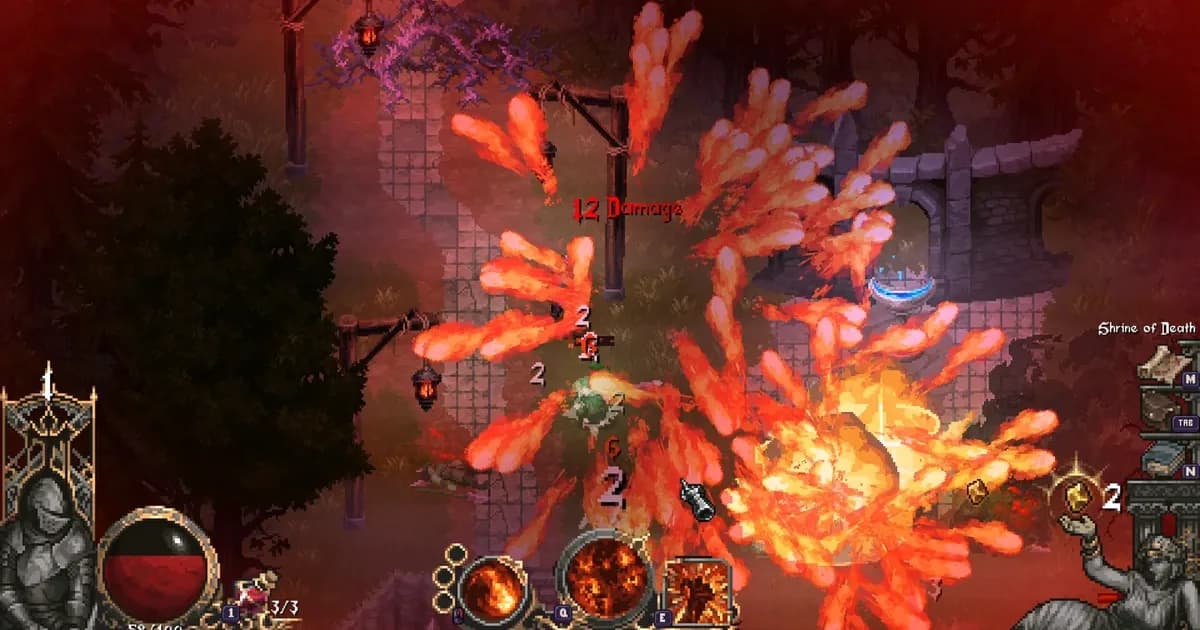
- A rune on a fireball can make it multiply on impact
- A rune on a ward can make it blind enemies and heal you when triggered
- A rune on an ultimate can add ice pillars to a spell that did not originally produce them
Because runes stack across all four types, and because you're choosing from seven spell schools (Celestial, Divine, Draconic, Lightning, Ice, Rot, and Umbral) with multiple spells per school, the combination space is large enough that two runs feel mechanically distinct without the developer overpromising.
The 7 schools aren't just flavor labels. Each holds different spells, and runes affect those spells differently depending on which school they came from. Players compare this to games where the items are the build, except here the items actively rewrite the verbs of what your abilities do rather than just scaling the numbers. That's a real distinction, not marketing copy.
GODEEPER: If rune-driven build systems interest you and you want a comparison point, Rune Dice uses a different but related philosophy: physical dice throws that chain into ability combinations. Worth knowing the reference. Rune Dice Complete Guide 2026: Classes, Relics, and Builds →
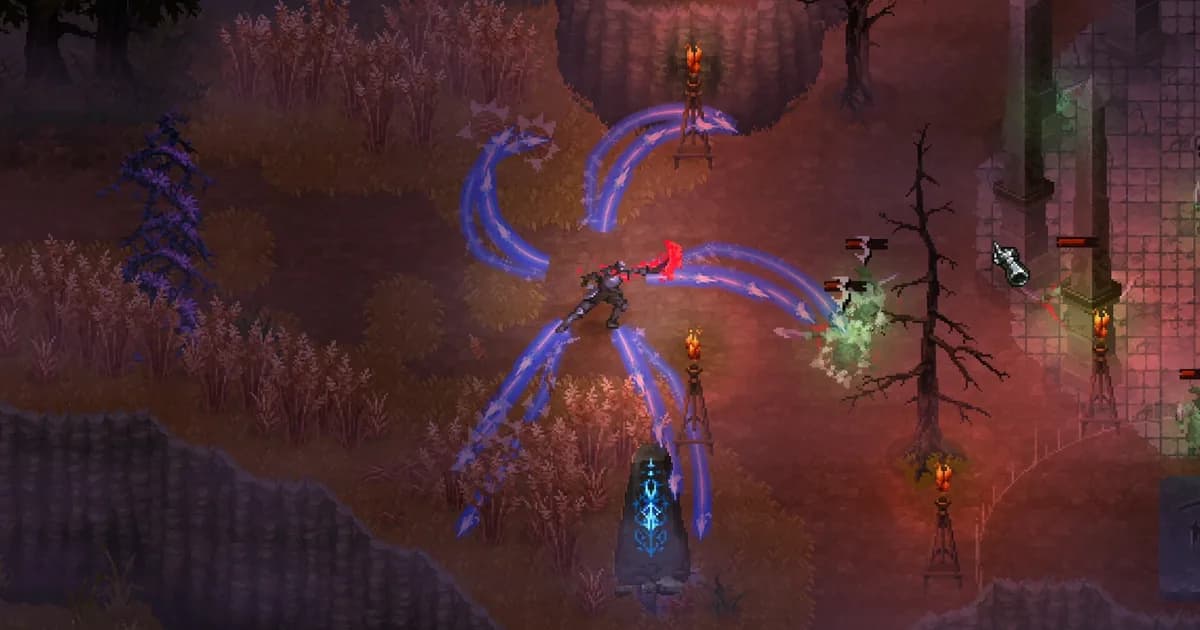
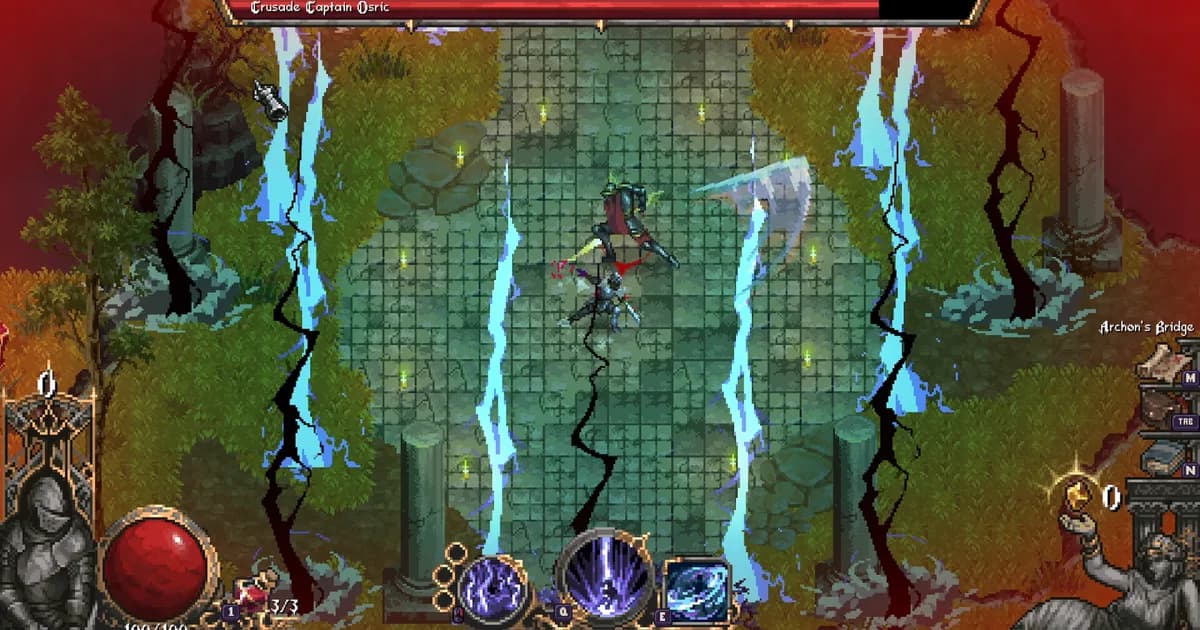
Caption: The Ice school in action; runes applied to this spell can add secondary effects like erupting pillars or area slow on top of the base damage.
What you get in the Early Access build
The live Boreal Ascent update adds a new zone with 37 locations. The official notes do not publish a single total area count, so this review treats the exact footprint as versioned rather than presenting the old launch-area estimate as current. Replay value still comes from running different builds through the available zones rather than a linear story getting longer.
Each area has its own enemy population and ambient design. The core loop plays out as expected from a roguelite: you enter, read enemy patterns, fight, collect runes and spells, and push toward the next zone. The soulslike comparison shows up primarily in the combat pacing. Enemies telegraph. Trading blows without reading attack animations gets punished.
Full controller support is confirmed and functional. Cursemark is single-player with no co-op at this stage.
The demo for Cursemark is available free on Steam and was up before the Early Access launch. If you're uncertain about the combat feel or the rune system's learning curve, the demo is the right first step.
GODEEPER: Looking at how Cursemark fits among the strongest indie roguelites on sale right now? Our roundup covers 8 picks across the steam sale window. Best Indie Roguelites on Steam Sale 2026: 8 Picks Worth Buying →
CLYDE games and the Into the Necrovale comparison
Knowing a developer's prior work changes how to read an Early Access launch. CLYDE games' previous game is Into the Necrovale, a roguelite dungeon crawler that built a genuine community reputation among players who compare it favorably to classics in the genre. It's not famous. It is respected, which is harder.
That track record matters for a Cursemark review because Early Access launches are, at their core, a bet on a development team finishing what they started. CLYDE games has finished a game before and delivered one the community responded to. That's a stronger signal than a debut studio's first early access build.
The developer responded directly to community posts during the pre-launch period, which also suggests active engagement rather than a launch-and-step-back approach.
Is $14.99 the right price for Cursemark right now?
Cursemark launched with a 15% introductory discount at $12.74, and the standard price is $14.99. Steam is currently showing a separate 30% discount, putting it at $10.49; sales come and go in Early Access, so check the live store page for the current number rather than treating either figure as fixed.
At its standard $14.99, or $10.49 during the sale ending September 30, for a roguelite with a live Boreal Ascent zone, 7 spell schools, and a rune system built around ability modification, the Cursemark review value case still holds up well against most Early Access roguelites. The demo also de-risks the purchase: you can test the core loop before spending anything.
The comparison isn't other EA roguelites at $15. It's whether you'd pay $15 to play a roguelite with a Very Positive reception and a developer with a completed game on their record. The 86% positive rating now comes from 599 players, with 95% across 40 recent reviews, so the signal has had time to stabilize rather than reflecting only day-one enthusiasm.
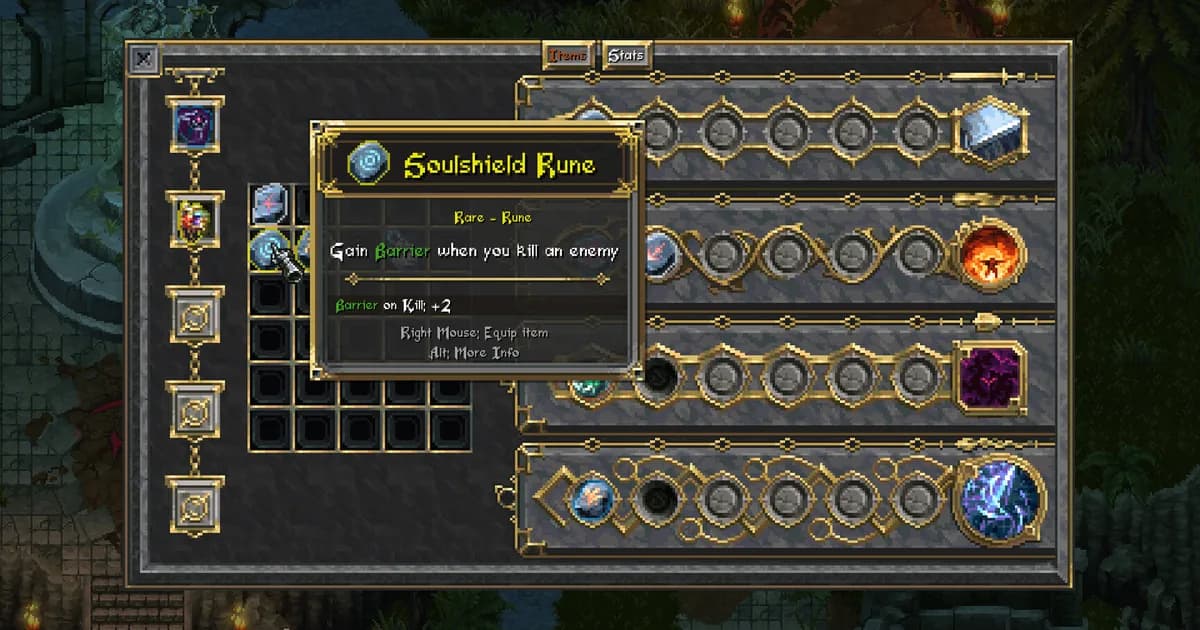
Caption: The rune and equipment interface is where run planning happens before entering each area.
Related Reading
- Cursemark Roguelite: Runes, Builds and Early Access Launch: the launch news breakdown covering what each rune type does with specific examples from the official materials.
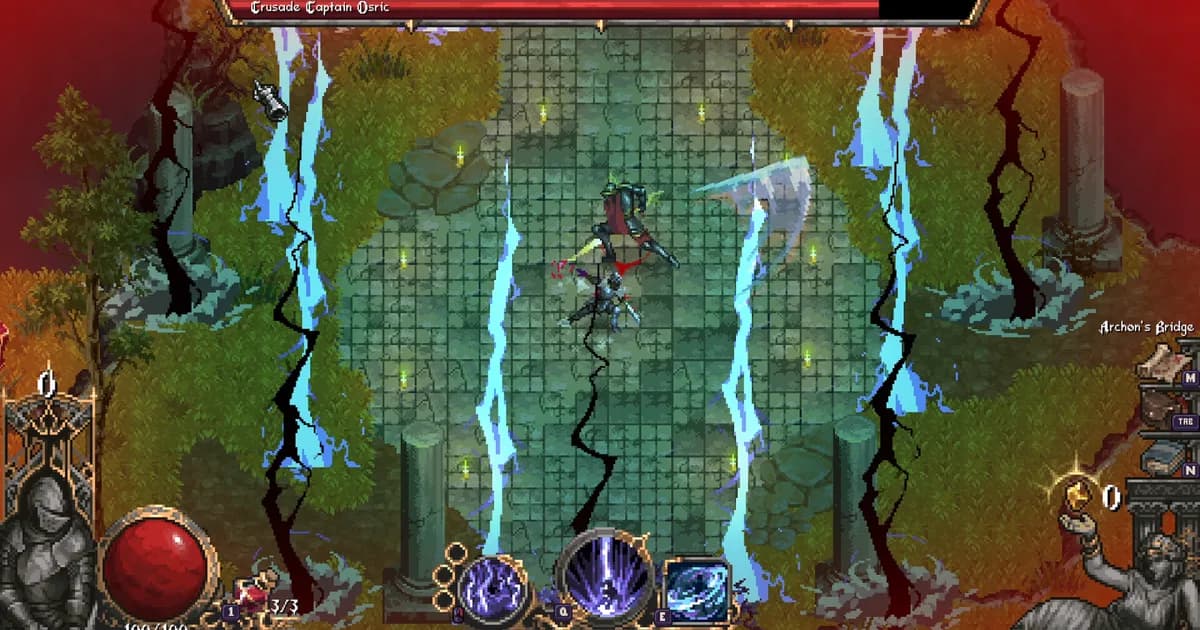
- Cursemark Boss Guide: Launch Bosses and Routes (2026): launch-boss routes for Iron Bastard, Osric, and Lucian, with a note about the live Boreal encounters.
- Cursemark Weapons Tier List: All 7 Weapons Ranked 2026: Cursemark weapons tier list: Divine Spear ranks first for range and crit damage. All 7
- Lost Castle 2 Review: Is the 1.0 Launch Worth It? (2026): Hunter Studio's beat-'em-up roguelite review for a nearby comparison point.
- Cursemark Secrets and Sigils Guide: All Unlocks (2026): where Attunement Sigils, hidden areas, and elemental puzzles fit into the run.
- Cursemark Tips: 10 Things to Know Before Your First Run: practical advice for rerolling runes and pacing the curse.
Frequently Asked Questions
Is Cursemark worth buying in Early Access? Yes. Cursemark holds a Very Positive rating at 86% across 599 Steam reviews, with 95% across 40 recent reviews. Boreal Ascent is live with a new zone, the standard price is $14.99, and the current sale is $10.49 through September 30.
What is the Cursemark rune system? Runes modify how each of your abilities behaves. You can slot runes into attacks, spells, wards, and ultimates. One rune might add chain lightning to your sword swing; another could make your fireball multiply on impact. Because runes stack across all four ability types, the build combinations are significant even in the current Early Access content.
How many spell schools are in Cursemark? The current build includes 7 spell schools: Celestial, Divine, Draconic, Lightning, Ice, Rot, and Umbral. Each school holds multiple spells, and runes modify how those spells behave, which is where the depth compounds.
Who made Cursemark? Cursemark is developed by CLYDE games and published by Mad Mushroom. CLYDE games previously made Into the Necrovale, a roguelite dungeon crawler with a strong community reputation.
Does Cursemark have a demo? Yes. A free demo for Cursemark is available on Steam. It gives a reasonable sense of the combat and rune system before buying.
How long is Cursemark in Early Access? The live Early Access build includes the Boreal Ascent zone and its 37 locations, while the official update does not publish one total area count. The game launched June 8, 2026, and CLYDE games is actively developing more content.
Is Cursemark a soulslike? Players describe Cursemark as having a soulslike roguelite feeling, combining methodical enemy-read combat with roguelite run structures. It draws consistent comparisons from players who have tried both genres.
References
- Cursemark on Steam: official store page with reviews, feature list, and developer news
- Cursemark official announcements: roadmap, patches, and the August 2026 rune and talisman update
- Cursemark Boreal Ascent update: the live zone, 37 locations, new enemies, bosses and skills
- Cursemark official launch trailer (YouTube): the launch combat and rune-system overview
- Cursemark magic schools guide: current seven-school roster reference checked for this audit
- Cursemark on Reddit r/roguelites: early community discussion with player impressions and developer response from CLYDEgames account
- Into the Necrovale on Steam: CLYDE games' previous title, useful as a reference point for the studio's design sensibility
About the author

Systems & Economy Desk
GameBrief's byline for roguelikes, strategy and simulation. Reads patch notes, wiki tables and Steam stats and puts the numbers on the page.
- Roguelikes, strategy and simulation
- Builds, progression and economy
- Sources listed per article
Keep reading
Cursemark Roguelite: 7 Spell Schools and Rune Builds
General · 5 min
Cursemark Tips: 10 Things to Know Before Your First Run
General · 9 min
Cursemark Secrets and Sigils Guide: All Unlocks (2026)
General · 12 min
Cursemark Boss Guide: Launch Bosses and Routes (2026)
General · 9 min
Cursemark Complete Guide: Nearly 100 Runes & Builds
General · 14 min
Cursemark Weapons Tier List: 7 Launch Weapons Ranked 2026
General · 9 min
Sponsored
Disclaimer
This article is published for informational and entertainment purposes. It does not constitute professional financial, legal, or technical advice. Game performance, online services, patch schedules, and store listings change. Verify critical details (pricing, system requirements, regional availability) with publishers and storefronts before you buy. Affiliate links, where present, help support our editorial work and are labelled in our affiliate disclosure.
Comments
Loading comments…