
GameBrief · General
Cursemark Tips: 10 Things to Know Before Your First Run

Reviewing
Cursemark
CLYDE games · Mad Mushroom
These Cursemark tips come from the place all useful beginner advice comes from: failing in specific, instructive ways. The game launched June 8, 2026 in Early Access, and the community has already mapped most of the early-run traps. This guide covers the survival layer the builds guide doesn't touch: when to push rooms, how the curse mechanic shapes routing decisions, what the wells actually give you, and the few gear choices that matter more than the builds themselves.
TL;DR: Cursemark is a soulslike-flavored roguelite where the curse tightens with every cleared room. Take 20% max HP at wells early, always equip runes immediately, and explore every corner for sigils that permanently unlock weapons. Divine Spear is the safest starting weapon. Voltara is the strongest early ultimate. Essence is scarce: upgrade depth beats upgrade breadth. Rune slots unlock permanently from bosses and key areas, so every run pays forward even when you die.
What are the best Cursemark tips? (quick answer)
Here's the one that matters most: the curse isn't the enemy, inefficient clearing is. Each room tightens it by design. What kills new players isn't the damage output of individual enemies but the compounding pressure of clearing optional rooms they didn't need to clear, arriving at bosses with the curse already high and HP already low. Learn the route before the builds, and the rest follows faster.
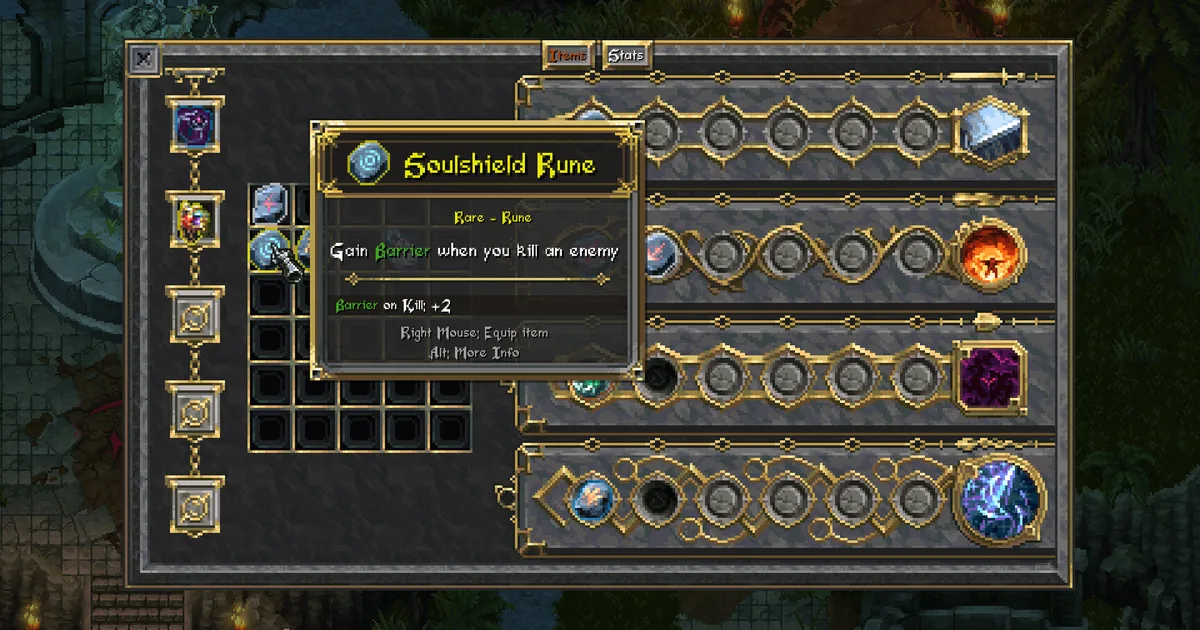
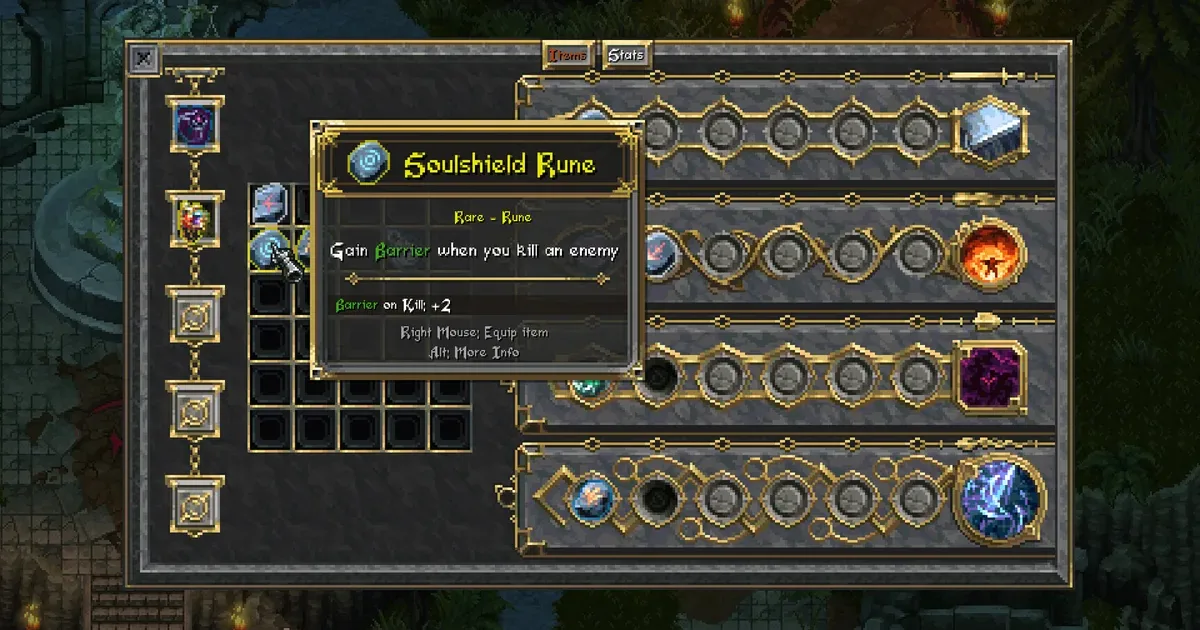
1. Equip every rune the moment you find it
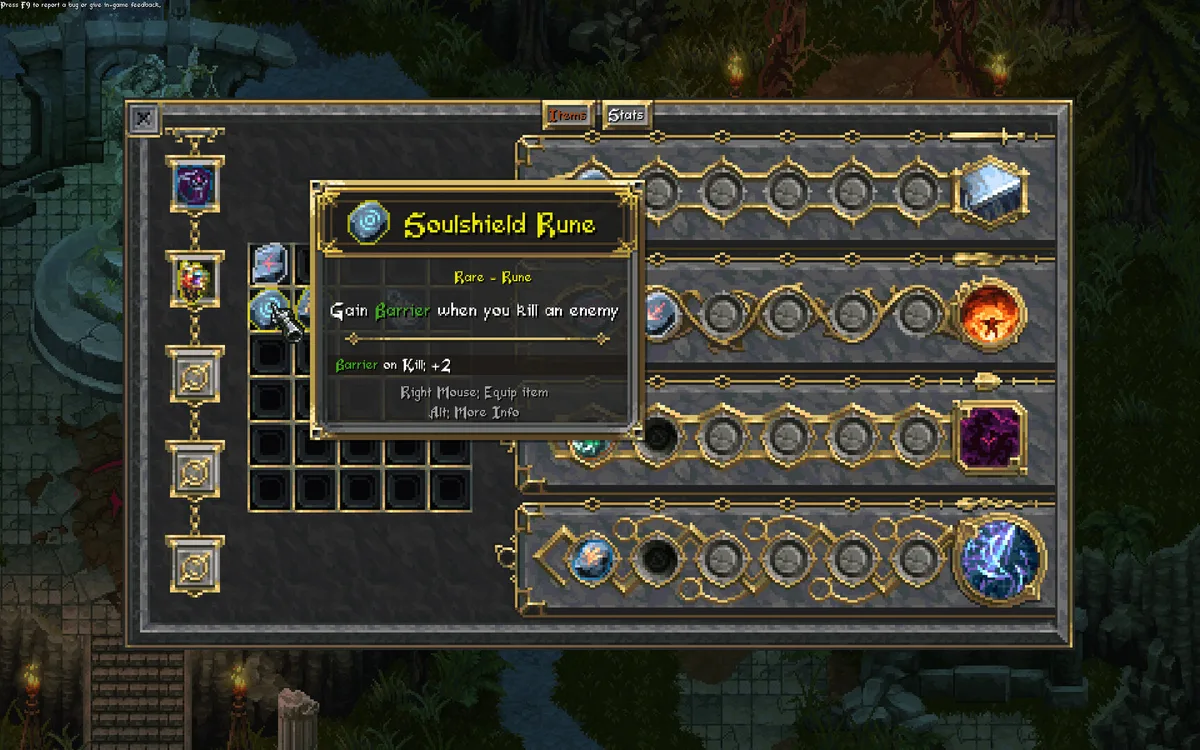
The game doesn't stop you from running bare slots into a fight, and it doesn't explain why that's a bad idea until your second or third death. Runes don't just add damage, they change how abilities behave. A ward with no rune is a block. A ward with the right rune blinds enemies and heals you when it triggers. Running a naked ward into a boss room means you missed half of what that ability does.
Equip as soon as you pick up. Swap later if something better shows up. Holding a rune "until you find something better" is almost always wrong: the ability modifier you have now matters more than the theoretical one in the next room.
2. The well choice compounds over time
Wells offer two options: restore 20 HP flat, or increase max HP by 20%. Early runners default to the restore because they're usually hurt when they find one. That's understandable and usually wrong.
The 20% increase scales. If your base health is 100, that first well gives 20 extra points of ceiling. The second well on a 120-point ceiling gives 24. The third well on 144 gives almost 29. By mid-run, the gap between taking percentage every time versus taking the flat restore is real and it shows. Take the flat 20 HP only when you're genuinely at risk of dying before the next checkpoint. Otherwise, take the ceiling.
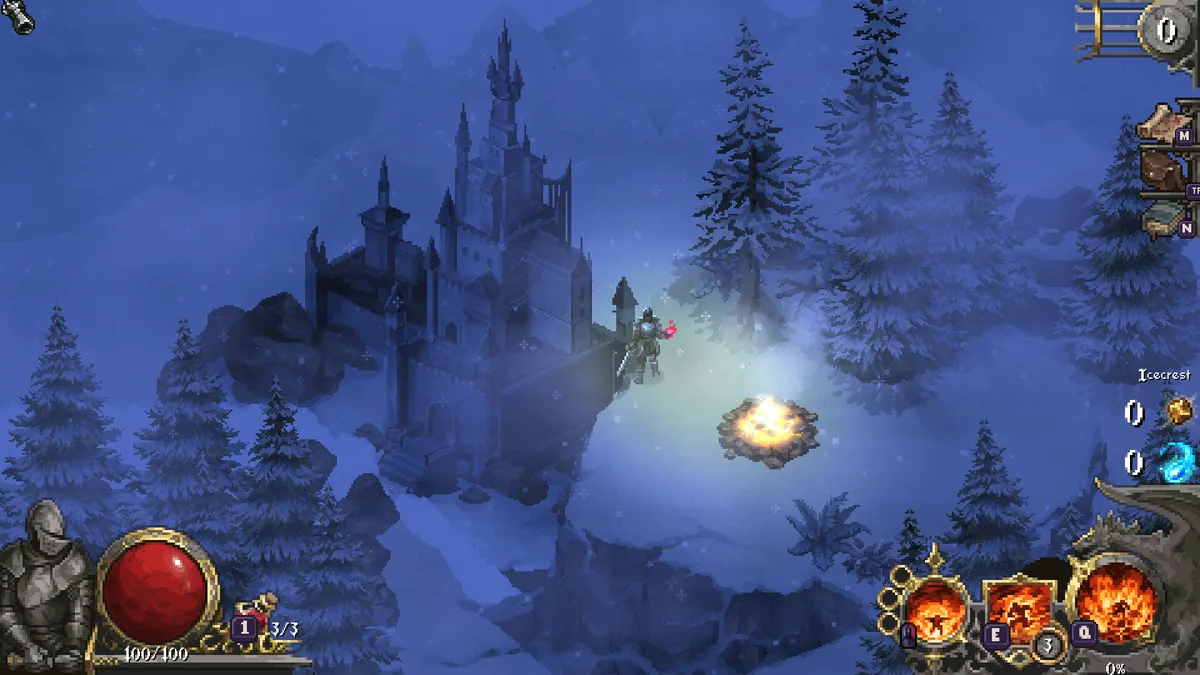
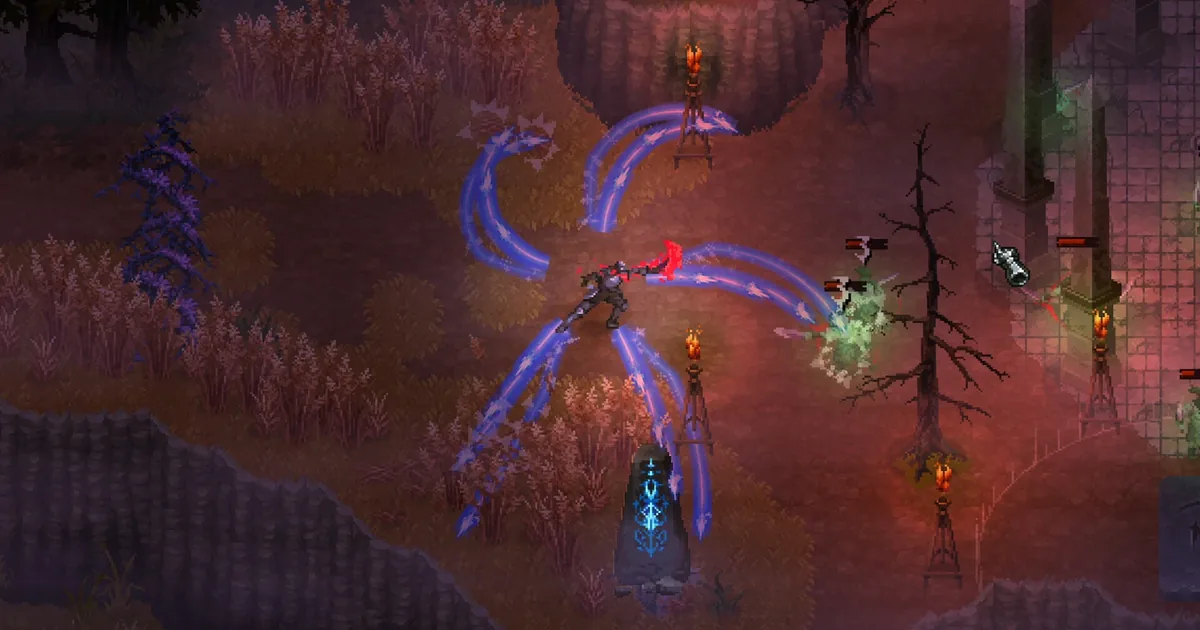
 The Divine Spear's poke attack concentrates damage on a single point, which is what makes it effective with the Embershot Rune rather than the slash, which spreads flame widely.
3. Red vases are not decoration
Break them. Every red vase contains a Botyl, a healing consumable. The Botyl purchase price goes up each time you buy from merchants, so the vases are how you accumulate healing outside the well system. Skip a vase because you were busy fighting and you'll arrive at the first boss with fewer options than you needed.
There's also an upgrade for Botyl slots that grants an extra slot and one free Botyl as part of the deal. Worth knowing before you spend essence elsewhere.
4. Explore every corner, but route the curse intentionally
Cursemark has hidden passages, NPCs, and sigils throughout its areas. Sigils permanently unlock new weapons and skills, so a run where you find a new sigil is a useful run even if you die immediately afterward. Exploring is correct.
So is knowing which rooms to skip. The curse tightens with every cleared room. Optional rooms that contain only enemies and no loot, shrines, or sigils are pure curse cost. The community tips that hold up across multiple runs are the ones about recognizing those rooms early and routing around them when the curse is already elevated.
You can't ignore the map forever. But you can learn which rooms are worth the curse price and which aren't.
GODEEPER: Rune-driven build systems like Cursemark's can go deeper than a single tips guide covers. Our full build breakdown explains which rune combinations work across each of the 7 spell schools and what to prioritize at different run stages. Cursemark Roguelite: Runes, Builds and Early Access Launch →
5. Upgrade depth, not breadth
Essence is the run currency, and it's scarce. The instinct is to spread upgrades evenly: a little health, a little rune level, a little blessing. That instinct is wrong.
Runes cap at level 5. Blessings too. Talismans cap at level 3. A level-5 Embershot Rune, per community reports, obliterates enemies in a single hit. A level-2 Embershot Rune is decent. The difference between level 3 and level 5 is larger than the difference between two different level-2 runes.
Pick one rune that fits the build and max it, then the next. Spreading essence across six half-upgraded runes produces less output than two fully upgraded ones. You won't have enough essence to do both in a standard run, so stop trying.
6. Voltara Ultimate is the strongest early unlock
Cursemark has multiple ultimates to unlock. Voltara handles single-target and area-of-effect simultaneously, which makes it the most versatile choice for runs where you don't yet know what the room composition will look like. The early game throws both lone enemies and grouped packs at you, and an ultimate that covers both saves real decision-making overhead.
It won't be the best ultimate forever. Build-specific options will outperform it in the right setup. But for the first several hours of getting familiar, Voltara is the unlock worth prioritizing.
 The rune screen is where run-to-run variety actually happens. Rune slots unlock permanently from bosses and key area visits, so the depth available to you expands with each full run.
7. Boss telegraphs are longer than they feel
Cursemark draws soulslike comparisons because the combat rewards reading over reacting. Enemy attack telegraphs exist. First time you fight a new boss, you probably won't register the telegraph in time. Second time, you might catch the wind-up but misjudge the timing. Third time, you dodge it.
That three-attempt curve is intentional. It's not the game being cruel; it's asking you to pay a different kind of attention than most action games require. The dodge window is real. The boss is beatable with the gear you have. If you're dying to the same boss repeatedly, the answer is usually timing, not more damage.
8. Every run expands the next one
Early runs have too few rune slots to build properly around. That's not a design flaw; it resolves quickly. Rune slots unlock permanently by defeating bosses and visiting new key areas. Each run expands what's available on the next.
A run that ends at the second area boss still moved things forward. You might've unlocked two new slots. You might've found a sigil that opens a weapon you want to test. The permanent progression in Cursemark isn't just shrines and forges; it's the whole unlock layer, and it compounds even when the run itself ends early.
9. Clearing corruption enables altar access
Altars are where you level runes and blessings. You can't access them until the corruption in the current area is cleared. This is easy to miss on the first run because the game doesn't announce it; you walk to the altar, it doesn't respond, and you move on without understanding why.
Clearing corruption requires defeating enemies in the area, but not every optional room. Learn which enemies count toward it in each zone and you can hit the altar earlier in the progression.
GODEEPER: If you want the full picture of what Cursemark is before investing runs into learning it, the review covers the launch state, review score, and whether the Early Access build is worth buying right now. Cursemark Review: A Roguelite Built Around Rune Depth (2026) →
10. RNG shapes the run ceiling, not the floor
Here's the honest one. Successful runs depend on getting rune combinations that work together. Some runs hand you a coherent build early. Some give you five runes with no obvious synergy and ask you to work with it. That second kind of run feels harder because it is harder.
The floor of any run (surviving the early rooms, reaching the first boss) is mostly skill. The ceiling (whether this is a run where everything clicked or just a run where you made it) involves RNG. Knowing that distinction prevents the frustration spiral where you blame yourself for a bad outcome that was partly bad cards.
What doesn't vary is everything in sections 1 through 9. A run with weaker runes, well-managed curse, and correct well choices outlasts a run with strong runes and sloppy routing more often than you'd think. The floor is yours to control. Build for it.
Related Reading
- Cursemark Roguelite: Runes, Builds and Early Access Launch: the full breakdown of how rune mechanics work across each spell school, with specific examples of build-altering combinations.
- Cursemark Review: A Roguelite Built Around Rune Depth (2026): whether the current Early Access build is worth buying and how it compares to similar games in the genre.
- Best Indie Roguelites on Steam Sale 2026: 8 Picks Worth Buying: how Cursemark fits against the wider indie roguelite field if you're deciding where to spend your time.
- Rune Dice Complete Guide 2026: Classes, Relics, and Builds: a different rune-driven roguelite worth knowing as a comparison point for Cursemark's design philosophy.
- Cursemark Secrets and Sigils Guide: All Unlocks (2026): Cursemark secrets and sigils: where Attunement Sigils drop, hidden area names, elemental puzzles, and every.
Frequently Asked Questions
What is the best starting weapon in Cursemark? The Divine Spear. It one-shots archer enemies at base damage and defeats most common enemies in two hits. It also synergizes well with the Embershot Rune because poke attacks concentrate the flame damage instead of scattering it the way slash attacks do.
Should I spend wells on health restore or max health increase? Early in a run, take the 20% max health increase: the ceiling gain compounds across future wells. Mid-run when you're genuinely hurt and the next checkpoint is far, take the flat 20 HP restore. The percentage option scales better the longer you survive.
When should I reroll runes? Reroll when a rune actively conflicts with your weapon or spell school, not just when it is suboptimal. A mid-tier rune that matches your school is usually worth upgrading to level 5 rather than trading for an unknown. The upgrade ceiling matters more than the starting floor.
How does the curse mechanic work? Every room or tile you clear tightens the curse. Enemies deal more damage and attack faster the further you push. Smart routing that skips optional enemy-only rooms keeps the pressure manageable at boss encounters.
Does Cursemark have permanent progression? Yes. Shrines and forges carry progress between runs. Sigils unlock new weapons and skills permanently. Rune slots unlock permanently from boss defeats and key area visits. Even failed runs expand your options for the next attempt.
How many runes are in Cursemark Early Access? Nearly 100 runes and talismans across 7 spell schools in the current build. CLYDE games is adding content through the EA period, which is expected to last 6 months to 2 years.
Is Cursemark hard for new players? The first few runs end early. The game explains less than players expect, and the curse mechanic punishes brute-force clearing without routing. The difficulty is real but fair once the core loops click, typically within 3-5 runs.
References
- Cursemark on Steam: official store page with reviews, current price ($14.99, the introductory EA price has expired), and developer announcements
- Cursemark Beginner's Guide + 8 Tips and Tricks (YouTube): video guide covering early-game decisions
- Cursemark: Ultimate Tips and Tricks Guide (Into Indie Games): community tips guide covering health management, weapon choices, and rune priorities
Was this guide helpful?
About the author

Games Critic
Games writer and reluctant optimist who has reviewed over 400 titles across 9 years. Irish, currently in Berlin. Has strong opinions about tutorial design.
- 400+ games reviewed across 9 years
- Platformer and horror specialist
- Narrative design focus
Keep reading

Disclaimer
This article is published for informational and entertainment purposes. It does not constitute professional financial, legal, or technical advice. Game performance, online services, patch schedules, and store listings change. Verify critical details (pricing, system requirements, regional availability) with publishers and storefronts before you buy. Affiliate links, where present, help support our editorial work and are labelled in our affiliate disclosure.
Comments
Loading comments…