
GameBrief · General
Cursemark Spell Schools Guide: All 7 Schools Explained

Reviewing
Cursemark
CLYDE games
This Cursemark spell schools guide exists because nearly every other guide stops at listing the seven names shown on the spell selection screen. This one covers what each school actually does: the theme, the combat role, and which one to reach for depending on how you want a run to feel.
TL;DR: Cursemark has 7 spell schools, each shaping your Offensive spell, Ward, and Ultimate slots. Celestial is balanced damage with clean projectiles, the easiest to learn. Umbral leans into debuffs and lifesteal-style effects. Rot is poison damage-over-time and area denial. Draconic is high-burst, close-range fire. Ice slows and controls with crowd-control pillars. Lightning hits multiple targets fast. Divine focuses on healing wards and smite effects. Runes read differently depending on which school they're slotted into.
What do spell schools do in Cursemark? (quick answer)
Each of the seven spell schools defines your three active ability slots: an Offensive spell, a Ward, and an Ultimate. Picking a school isn't just picking a damage type. It's picking a combat identity, since a Rot build kiting poison clouds plays nothing like a Draconic build standing in melee range for burst damage. Runes then modify how that identity's abilities behave, which is where build depth compounds on top of the school choice.
Cursemark spell schools: key takeaways
- Seven schools total: Celestial, Divine, Draconic, Lightning, Ice, Rot, and Umbral
- Each school shapes 3 slots: Offensive spell, Ward, and Ultimate
- Celestial is the beginner-friendly pick: balanced damage, clean projectiles, nothing situational to set up
- Rot and Umbral reward patience over aggression: damage-over-time and debuffs pay off on longer fights, not quick trades
- Draconic is the highest floor-to-ceiling swing: strong burst, but only at close range
- Runes interact differently with each school, so a rune that's strong on one school can underperform on another
The 7 schools, one at a time
Celestial: balanced damage, clean projectiles
Celestial is themed around stars and radiance, and it plays like the name suggests: even, reliable, nothing flashy. Its projectiles are described as clean, meaning consistent behavior without a secondary condition you need to trigger first. For a new player still learning enemy attack patterns and room layouts, that consistency matters more than a higher ceiling would.
If you're not sure which school to start with, Celestial is the safe answer. It doesn't ask you to master a mechanic like Rot's poison stacking or Draconic's melee-range burst window before it starts working.
GODEEPER: Weapon choice pairs with school choice more than either system explains on its own. The full weapons breakdown covers which of the 7 weapons synergizes best with which combat style. Cursemark Weapons Tier List: All 7 Weapons Ranked →
Divine: healing wards and smite effects
Divine reads as a holy and protection theme, and its kit backs that up: healing wards and smite-style offensive effects. Where Celestial is about consistent offense, Divine is about staying power. A Divine ward doesn't just block, it can actively heal you while it's up, which changes how aggressively you can play the rest of your kit since you're not one bad trade away from a run-ending mistake.
The tradeoff is that Divine's damage output leans lower than Draconic or Lightning in exchange for that sustain. It's a strong pick if you're dying to avoidable mistakes rather than losing straight damage races.
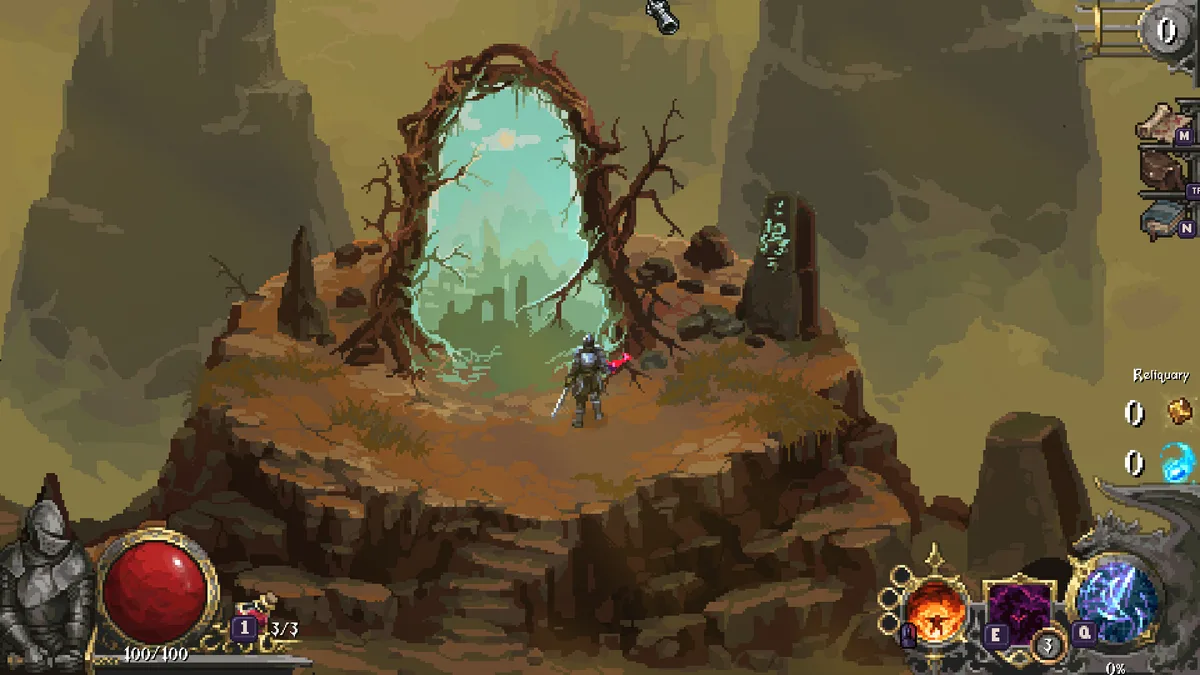 The three ability slots (bottom right: Offensive spell, Ward, Ultimate) are visible here. Which school fills them decides the shape of your whole kit, not just the damage numbers.
Draconic: fire, rage, high burst, close range
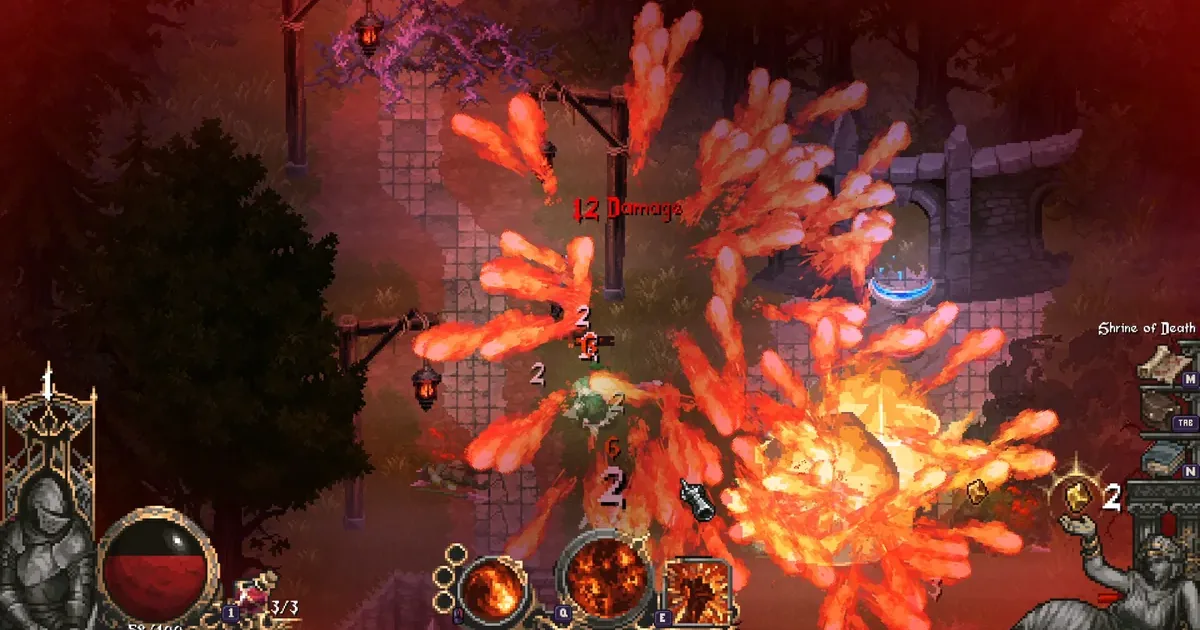
Draconic is built around fire breath and rage, and its combat role is exactly what that theme implies: hard-hitting, close-range burst. This is the school with the widest gap between its ceiling and its floor. Played well, close enough to land full hits consistently, it can end fights faster than anything else on this list. Played from a safe distance, it underperforms since its identity depends on proximity.
New players tend to reach for Draconic because burst damage sounds appealing on paper, then bounce off it because Cursemark's enemies punish standing in melee range without a plan. It rewards the same precise positioning habit that a good Divine Spear player already has, which makes it a natural second school to try once you're past the beginner stage.
Lightning: multi-target, fast cast
Lightning is themed around chains and speed, and it delivers on both: multi-target hits with a fast cast time. Where Draconic wants you close to one target, Lightning wants you in the middle of a group, since its chaining behavior is what separates it from a school like Celestial that hits cleanly but doesn't spread.
This makes Lightning the strongest pick against the game's more crowded room layouts, where a single-target school spends more time cleaning up stragglers than a Lightning build does.
Ice: slow, crowd control pillars
Ice is a frost and control school, and its signature mechanic is exactly that: slowing enemies and generating crowd-control pillars that lock down space. It's not a damage-race school. It's a school for players who want to dictate the pace of a fight rather than out-trade an enemy directly.
Ice pairs unusually well with schools that need a setup window, since a slowed or pillar-trapped enemy group gives a Draconic or Rot build time to do what it actually wants to do. Several community-shared builds lean on Ice as a secondary utility layer rather than a primary damage school for exactly this reason.
Rot: poison, decay, damage-over-time
Rot's theme is poison and decay, and its combat role is damage-over-time paired with area denial. Instead of hitting hard once, Rot spells punish enemies for standing in a space over time, which flips the usual roguelite instinct of rushing a kill into something closer to zoning an enemy out of a fight.
This is the school most guides undersell, since its value is hard to see in a single hit and easy to see over a full encounter. A Rot build that spreads poison clouds across a room and then kites while the ticks do the work looks passive compared to a Draconic burst combo, but the total damage across a longer fight can be comparable or better.
 Rot's poison-and-decay theme matches the game's swamp biomes visually, and that's not a coincidence, area-denial spells reward exactly this kind of open, hazard-filled space.
Umbral: debuffs, lifesteal-style effects
Umbral leans into shadow and curse theming, with debuffs and lifesteal-style effects as its signature mechanics. It's the closest thing to a sustain-through-offense school: rather than healing passively like Divine, Umbral is built to recover resources by actively hitting things, which suits a more aggressive playstyle than Divine's defensive posture while still solving the same survivability problem.
Debuffs also compound with a party of one differently than they would in a co-op game. In Cursemark's solo structure, a debuff that weakens an enemy's attack or defense is pure value with no one else around to benefit from the enemy staying at full strength longer.
GODEEPER: Runes are what actually turn a school's baseline kit into a build. The full rune and build breakdown covers which combinations hold up across a run. Cursemark Roguelite: Runes, Builds & Early Access Launch →
Tips for choosing a school
Start with Celestial if you're new to Cursemark specifically, not just roguelites generally. Its consistency means you spend your first few runs learning enemy patterns and room layouts instead of also learning a school's setup requirements at the same time.
Match your school to your weapon's range, not just its damage. Draconic's close-range burst pairs naturally with melee-focused weapons like Shadow Blade, while Lightning and Celestial's cleaner ranged behavior fits better with Divine Spear's poke-focused playstyle.
Don't judge Rot or Umbral by their first few hits. Both schools compound over the length of a fight rather than front-loading their value, so a Rot build that looks weak in the opening seconds of an encounter is often still ahead by the end of it.
Use Ice as a bridge, not a whole identity. Its slow and crowd-control pillars work best paired with a school that wants a setup window, rather than being the only source of damage in a build.
Reroll a rune before rerolling a school. If a school feels underwhelming, the rune slotted into its ability is more often the mismatch than the school itself. A Rot ward without a rune that extends its area denial, for instance, plays much weaker than the school is actually capable of.
Frequently Asked Questions
How many spell schools are in Cursemark? Seven: Celestial, Divine, Draconic, Lightning, Ice, Rot, and Umbral. Each school shapes your three active ability slots (Offensive spell, Ward, and Ultimate), and each has its own theme and combat role rather than just a different damage type on the same kit.
What is the best spell school in Cursemark for beginners? Celestial is the most forgiving. It's built around balanced damage and clean, reliable projectiles rather than a mechanic you need to set up, which makes it easier to learn the game's curse-and-room-clearing loop before committing to a more situational school like Rot or Umbral.
What does the Rot school do in Cursemark? Rot is Cursemark's poison and decay school, built around damage-over-time and area denial. Instead of burst damage, Rot spells punish enemies for standing in bad positions, which rewards a kiting playstyle over standing and trading hits.
Is Draconic good in Cursemark? Draconic is a high-burst, close-range school themed around fire and rage. It hits hard, but the close-range requirement means it's less forgiving than Celestial or Ice for players still learning enemy attack timing, since you have to be near the fight to get full value from it.
What is the difference between Divine and Celestial in Cursemark? Both read as light-themed on the surface, but Divine is built around healing wards and smite-style effects, leaning defensive and sustain-focused. Celestial is balanced offense with clean projectiles. Divine keeps you alive longer; Celestial kills things faster and more consistently.
Do spell schools in Cursemark affect Runes? Yes. Runes modify how a spell, ward, or ultimate behaves, and a rune's effect reads differently depending on which school's ability it's slotted into. A rune that adds a damage-over-time tick compounds naturally with Rot but does less for a burst-focused Draconic build.
Related Reading
- Cursemark Boss Guide: All 3 Bosses in Early Access: Cursemark boss guide for all 3 EA bosses: Iron Bastard, Osric, and Lucian. Weaknesses, attack
- Cursemark Roguelite: Runes, Builds & Early Access Launch: how the rune layer turns a school's baseline kit into a full build.
- Cursemark Tips: 10 Things to Know Before Your First Run: early-run priorities beyond school and weapon choice.
- Cursemark Review: the full Early Access verdict on CLYDE games' rune-driven roguelite.
- Cursemark Complete Guide: All 3 Bosses, Runes & Weapons: the full hub covering every school, boss, and build in one place.
References
- Cursemark on Steam: official store page, current pricing, and patch notes
- Cursemark release date trailer (YouTube): official launch trailer
Was this guide helpful?
About the author

Indie & JRPG Critic
Indie game evangelist and lifelong JRPG fan covering small studios since 2017. Mumbai-born, London-based. Writes the way she talks.
- 7 years indie games coverage
- JRPG and visual novel specialist
- Narrative design focus
Keep reading



Disclaimer
This article is published for informational and entertainment purposes. It does not constitute professional financial, legal, or technical advice. Game performance, online services, patch schedules, and store listings change. Verify critical details (pricing, system requirements, regional availability) with publishers and storefronts before you buy. Affiliate links, where present, help support our editorial work and are labelled in our affiliate disclosure.
Comments
Loading comments…