
GuideDenshattack!
Denshattack Trick and Combo System: How Chains Work
This Denshattack trick and combo system guide breaks down what's actually confirmed about how the chain mechanic works, sourced from the game's own achievement list, Steam's store description, and a developer interview describing the design intent directly. Denshattack's whole pitch is Tony Hawk's Pro Skater with a train instead of a board, and the trick-chaining system is the mechanic that makes that comparison hold up.
Sponsored

About the game
Denshattack!
TL;DR: Denshattack's core moves are ollies, kickflips, and grinds, confirmed in Steam's own store copy, with a named "Impossible" trick family for more advanced variants. Chaining requires a timed second input on top of the button press, not just mashing through prompts. The combo counter tracks chain length as a real stat (confirmed by dedicated 3x through 50x achievements), separately from per-stage gold medal grading. Train customization is purely cosmetic and never touches the trick math.
BESTPRICE: Want Denshattack!? These stores list it: Buy on Eneba → Buy on Green Man Gaming → Buy on Humble Bundle → Buy on Loaded →
How does the trick and combo system work in Denshattack? (quick answer)
You build chains out of three core moves, ollies, kickflips, and grinds, confirmed directly in Steam's own "About the Game" copy. What separates it from a simple button-mash chain is a timed-input layer: extending a chain needs a correctly-timed second press on top of the initial trick input, and missing that window drops the chain instead of just failing to grow it. That's the mechanic doing the actual work behind the Tony Hawk comparison, not the trick names themselves.
Sponsored

Key takeaways
- Core moves: ollies, kickflips, grinds, confirmed via Steam's own store description
- "Impossible" is a real named trick family, with specific named variants like the 720 Impossible referenced in developer interview material
- Chains require a timed second input, not just holding a prompt or mashing
- The on-screen trick-prompt HUD cues the next required input, and can blur into noise during long chains at speed
- Chain length is formally tracked: discrete achievements exist for 3x, 5x, 10x, 25x, and 50x chains
- Gold medal grading and the combo counter are separate systems, not the same score
The three core moves
Steam's own store page describes the moment-to-moment loop directly: "Ollie, kickflip, and grind your way through Japan's biggest cities." These three moves form the base vocabulary every chain is built from. It's the same base vocabulary skateboarding games have used for two decades, which is exactly the point: Denshattack isn't hiding its influence, it's translating it onto a train.
On top of that base sits a named trick family called "Impossibles," a real skateboarding term the game has adopted rather than invented. Image captions from a developer interview reference specific variations, a "720 Impossible" and a "back 180 Impossible," which suggests a fuller family of directional and rotational Impossible variants exists beyond just the two named examples. Exactly how many variants, and what unlocks each one, isn't documented anywhere found for this guide, so treat the two confirmed names as a floor, not a complete list.
The timed-input bar in action. Landing the marker inside the green zone is what actually extends a chain, not just pressing the trick button.
GODEEPER: These moves get their real test during the campaign's nine boss fights, where a dropped chain costs more than it does on a normal stage. Denshattack Boss Guide: All 9 Chapter Bosses Explained →
The timed-input layer is what actually makes chains work
This is the mechanic doing the heavy lifting behind the whole "arcade trick game" identity. Landing a trick isn't the end of the interaction, extending the chain afterward requires a second, correctly-timed input layered on top of the initial press, closer to a fighting game's input-timing window than a simple hold-to-combo system. Get the timing right and the chain grows. Miss it and the chain ends there, rather than just stalling at its current length.
The trick-prompt HUD exists specifically to cue this: on-screen icons show the next required input, whether that's a lane change or a jump, timed to when you need to hit it. It works well at moderate chain lengths. The site's own Denshattack review flags a real problem here though: during long combos at speed, the HUD blurs into visual noise, making it harder to actually read the next prompt in time. If you're dropping chains that feel like they should have connected, it may be the HUD readability at fault rather than your reflexes, particularly on longer stages where speed keeps climbing.
How the combo counter actually scores
The combo counter climbs fast once a chain is genuinely flowing. Player reports describe reaching combo counts past 10,000 on a single extended loop, and per-stage scores climbing past 1 billion points on long sessions, high enough that the visible on-screen counter appears to wrap or reset its own display past that threshold. None of this is officially documented by the developers, it's drawn from player-reported numbers, so treat the exact thresholds as approximate rather than confirmed design values.
What is formally confirmed: chain length is tracked as a real stat, not just a HUD number that resets meaninglessly between attempts. Denshattack has discrete Steam achievements for hitting 3x, 5x, 10x, 25x, and 50x trick chains. Five separate tiers existing as their own achievements is a strong signal that chain length is something the game genuinely wants you optimizing toward, not an incidental score readout.
Gold medal grading is a separate system entirely, confirmed by the game's own "Golden" achievement for winning every stage's gold medal. A monster combo chain and a gold medal aren't automatically the same accomplishment: you can likely hit a long chain without qualifying for gold if a stage's medal thresholds weight other factors too, so don't assume chasing raw combo length is the same strategy as chasing full gold clears.
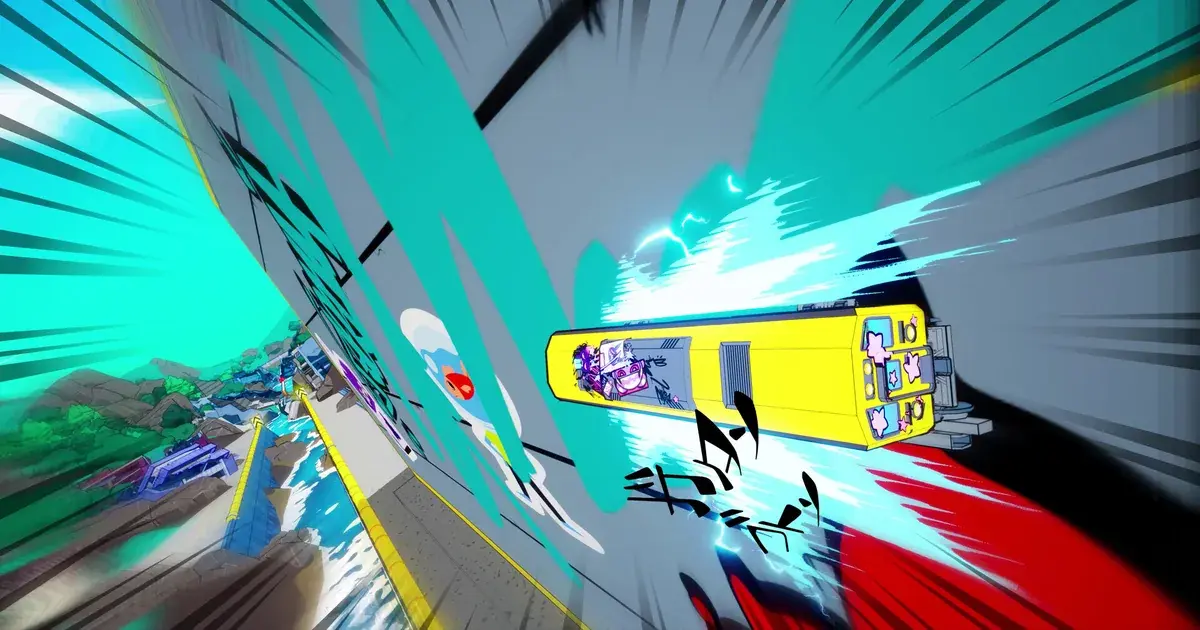
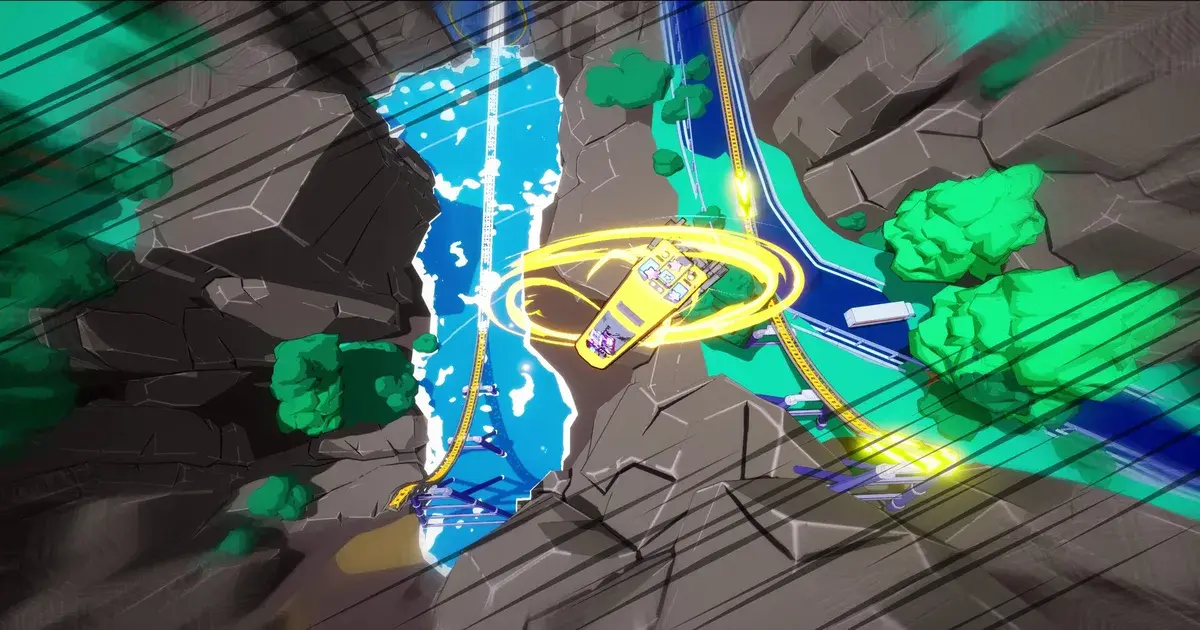
One of the setpiece locations producer Angel Beltran described as deliberately "sprinkled" throughout the campaign to keep levels surprising.
That design choice matters for how you approach chain-building specifically. A stage that keeps introducing new obstacle shapes gives you fewer chances to fall into a memorized input pattern, which pushes the trick-timing skill toward genuine reaction rather than route memorization. Longer chains on unfamiliar layouts are a better signal of real mastery than the same chain length repeated on a stage you've already run a dozen times.
Train customization doesn't touch any of this
Denshattack lets you buy and collect different trains, apply sticker decals, and unlock cosmetic sets, confirmed via a developer interview reference to "the spray-painted decals you can apply to your train" and a full set of collection-based Steam achievements (first train, all trains, first sticker set, all sticker sets). None of it changes the underlying trick math. The game's own review, already fact-checked by this site, states this directly: a specific train doesn't make tricks easier or chains longer. Pick whatever train and decal combination you like the look of. It's a completionist and cosmetic layer sitting entirely on top of a trick system that plays identically underneath it.
Frequently Asked Questions
How does the combo system work in Denshattack? You chain ollies, kickflips, and grinds together, but extending a chain requires landing a timed second input on top of the initial button press, not just pressing it. Miss the timing window and the chain drops instead of extending.
What are Impossibles in Denshattack? Impossibles are a named trick family borrowed from real skateboarding terminology. Developer interview material references specific variations like the 720 Impossible and the back 180 Impossible, suggesting a full family of directional and rotational variants exists.
How high can the combo counter go in Denshattack? Past 10,000 easily on a long looping section, and per-stage scores can climb past 1 billion points on extended sessions, high enough that the visible counter appears to wrap or reset its display, based on player reports rather than official documentation.
Does train customization affect tricks in Denshattack? No. Stickers, paint jobs, and collected trains are cosmetic and completionist layers. They don't change the underlying trick math or combo timing, so picking a specific train for its look doesn't cost you anything mechanically.
What ranks a stage in Denshattack, gold medals or the combo counter? They're tracked separately. Gold medal grading exists per stage (confirmed by the "Golden" achievement for winning all gold medals), while the combo counter measures chain length within a run. A high combo doesn't automatically mean a gold medal.
Are there achievements tied to trick chain length? Yes. Denshattack has discrete achievements for hitting 3x, 5x, 10x, 25x, and 50x trick chains, confirming chain length is a formally tracked stat and not just a HUD display number.
Related Reading
- Denshattack Complete Guide: the hub for every Denshattack guide on this site.
- Denshattack Boss Guide: All 9 Chapter Bosses Explained: where this trick system gets its real test, chapter by chapter.
- Denshattack Achievements Guide: the full 39-achievement list, including all five trick-chain tiers.
- Denshattack Review: Tony Hawk on Trains, 98% Positive: the full review, including the HUD-clarity issue during long combos.
References
- Denshattack! on Steam: official store page description and achievement list.
- Denshattack! Launch Music Video: the official launch trailer, Fireshine Games channel.
Was this guide helpful?
About the author

Systems & Economy Desk
GameBrief's byline for roguelikes, strategy and simulation. Reads patch notes, wiki tables and Steam stats and puts the numbers on the page.
- Roguelikes, strategy and simulation
- Builds, progression and economy
- Sources listed per article
Keep reading
Denshattack Achievements: All 39 Plus Creator Skin Codes
General · 9 min

Denshattack Boss Guide: All 9 Chapter Bosses Explained
General · 10 min
Denshattack Complete Guide: Bosses, Tricks, Achievements
General · 8 min
Denshattack Review: Tony Hawk on Trains, 98% Positive
General · 9 min
Denshattack: Release Date, Platforms, and the July Delay
General · 3 min
Denshattack Soundtrack: 81 Tracks, Composers, and DLC
General · 9 min
Sponsored
Disclaimer
This article is published for informational and entertainment purposes. It does not constitute professional financial, legal, or technical advice. Game performance, online services, patch schedules, and store listings change. Verify critical details (pricing, system requirements, regional availability) with publishers and storefronts before you buy. Affiliate links, where present, help support our editorial work and are labelled in our affiliate disclosure.
Comments
Loading comments…