
GameBrief · General
Farever Gear Guide: 5 Rarity Tiers and Dungeon Loot

Reviewing
Farever
Shiro Games · Shiro Games
This Farever gear guide covers a system the game barely explains: five rarity tiers, gear power that scales with which named dungeon you can enter rather than any numbered depth, and crafting jobs that have nothing to do with your combat class. Most players spend their first session comparing raw item levels and miss what's actually gating their upgrades.
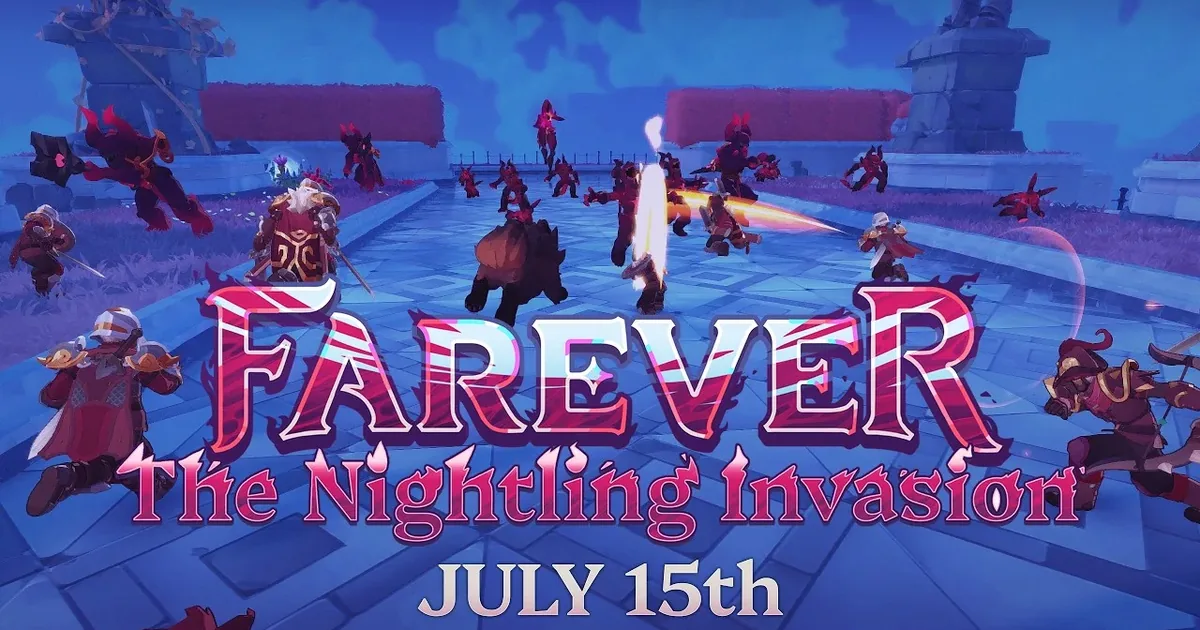
This guide covers the gear system as it stands after Shiro Games' first major content patch, The Nightling Invasion (July 15, 2026): how loot drops, what rarity actually unlocks, which stats matter by class, and how crafting jobs fit the loop. The mechanics here are drawn from Farever's own datamined item and dungeon tables, Steam's store and news pages, and community reporting, not from guesswork about how a system "probably" works.
TL;DR: Farever has five gear rarities: Common, Uncommon, Rare, Epic, and Legendary. There's no floor-numbered tier system; instead, gear power scales with the level requirement of the specific named dungeon you're running, from the level 5 Lost City of Mayda up through the level 16 Abyss of New Atlaan and beyond. Rarity gates how many stats an item rolls (Uncommon gets primary attributes only, Rare and up adds secondary stats), and the enemy faction that dropped it sets which secondary stat you get. Crafting jobs are separate from combat class, so coordinate who crafts what before your first dungeon run.
How does Farever gear work? (quick answer)
Farever's gear system runs on two separate axes, and conflating them is where most confusion starts. The first is rarity: Common, Uncommon, Rare, Epic, and Legendary, in that order, and rarity determines how many stats an item can roll. The second is dungeon level: Farever has more than a dozen named dungeons, each with its own boss and its own level requirement, from Lost City of Mayda at level 5 up past Abyss of New Atlaan at level 16. An item's power scales with the level of the dungeon it dropped in, not with a separate depth counter inside that dungeon.
This matters because the drop odds for weapon rarity look nearly identical whether you're running a level 5 dungeon or a level 16 one, roughly 89% Rare, 10% Epic, and 1% Legendary on boss loot tables. What changes as you push into higher-level dungeons is the item's underlying power, not your odds of a lucky rarity roll.
Farever current status: September 18, 2026
Farever remains in Early Access. The official Steam listing showed $19.99, Mostly Positive at 74% from 5,104 English reviews, and 74% from 229 recent reviews when checked for this audit. The store page still describes the current build as fully playable while noting that more content, balance work, and the 1.0 release remain ahead. The Farever co-op guide and how-long-to-beat guide add party-planning context around the loot route.
Key Takeaways
- Five gear rarities in Farever: Common, Uncommon, Rare, Epic, Legendary. There is no separate "Exotic" rarity.
- Gear power scales with the level requirement of the named dungeon it dropped in, not a numbered floor depth
- Boss weapon drop odds (about 89% Rare, 10% Epic, 1% Legendary) stay roughly consistent across dungeons; item power is what actually scales
- Rarity gates stat count: Uncommon rolls primary attributes only, Rare and above adds secondary stats
- The enemy faction or zone an item drops from sets which secondary stat appears, not your class
- Passive skills come from weapons specifically, extracted through the level 7 Arsenal System, which lets you borrow a second weapon's passive from any class
- Crafting jobs are chosen separately from combat class; groups must coordinate assignments
- The Nightling Invasion (July 15, 2026) raised the level cap to 25 and added new gear sets
Step-by-Step: turn a Farever drop into an upgrade
Use this order when a new piece lands in your inventory. It keeps rarity, dungeon level, faction, and class decisions separate instead of treating every higher number as an automatic upgrade.
1. Identify the role and slot: Check the Farever class guide and beginner tips guide before comparing the item. A piece built for another role can have the wrong armor value even when its level looks better.
2. Check rarity before base power: Rare and above can add secondary stats, so compare the extra stat line before replacing it with an Uncommon item. The Farever builds guide shows how that threshold changes each class's priorities.
3. Match the dungeon level to the upgrade goal: Use the Farever dungeon guide to confirm the level requirement and difficulty before farming. Higher-level content raises item power, but it does not automatically improve rarity odds.
4. Target the faction when a secondary stat matters: If the drop has the right rarity but the wrong stat, plan a faction or zone farm instead of pushing blindly into the next dungeon. The Farever complete guide keeps the wider zone and progression references together.
5. Coordinate the craft and the next run: Assign jobs across the party, then use the Farever co-op guide, Farever review, and Farever early access guide to decide whether the group needs a crafted replacement or another dungeon clear. That keeps a single weak slot from becoming a full-party gear wall.
Gear rarity and dungeon level: how progression actually works
Farever's rarity ladder has five steps, confirmed against the game's own extracted item data: Common, Uncommon, Rare, Epic, and Legendary. That's the full list. There's no separate "Exotic" tier above Legendary, whatever a given guide might tell you.
Rarity alone doesn't tell the whole story, though, because Farever doesn't gate its content behind a numbered floor system the way a lot of dungeon crawlers do. Instead, it has a growing roster of named dungeons, each with a fixed level requirement and a single boss:
- Mine Estrone (level 8, boss Reblochonk): the starter-tier dungeon most new groups hit first.
- Lady Bee's Palace (level 13, boss Lady Bee): a mid-game step up once your party is comfortably past Farever's opening zones.
- Ruins of Gorgon's Hollow (level 15, boss Golcano): mid-to-late content that starts asking more of your build.
- Abyss of New Atlaan (level 16, boss Sponge Blob): the underwater endgame dungeon for the pre-Nightling-Invasion content, drops gear scaled to that level.
Here's the part that surprised us pulling the loot tables: boss weapon drops in Mine Estrone and boss weapon drops in Abyss of New Atlaan roll the same rarity odds, roughly 89% Rare, 10% Epic, and 1% Legendary. A level 8 dungeon and a level 16 dungeon aren't gatekeeping rarity differently. What's different is the item's power level, which is tied to the dungeon's level requirement, not a separate rarity gate. In practice, this means you don't "unlock" better rarity odds by grinding deeper. You unlock stronger items, at the same rarity odds, by being high enough level to enter a higher-level dungeon.
Difficulty also matters within a single dungeon. Every named dungeon can be run on Normal or Hard, and Hard mode unlocks loot table entries Normal doesn't, including specific armor pieces that only drop on Hard. If you're stuck seeing the same items from a dungeon you've cleared a dozen times, check whether you've actually run its Hard version.
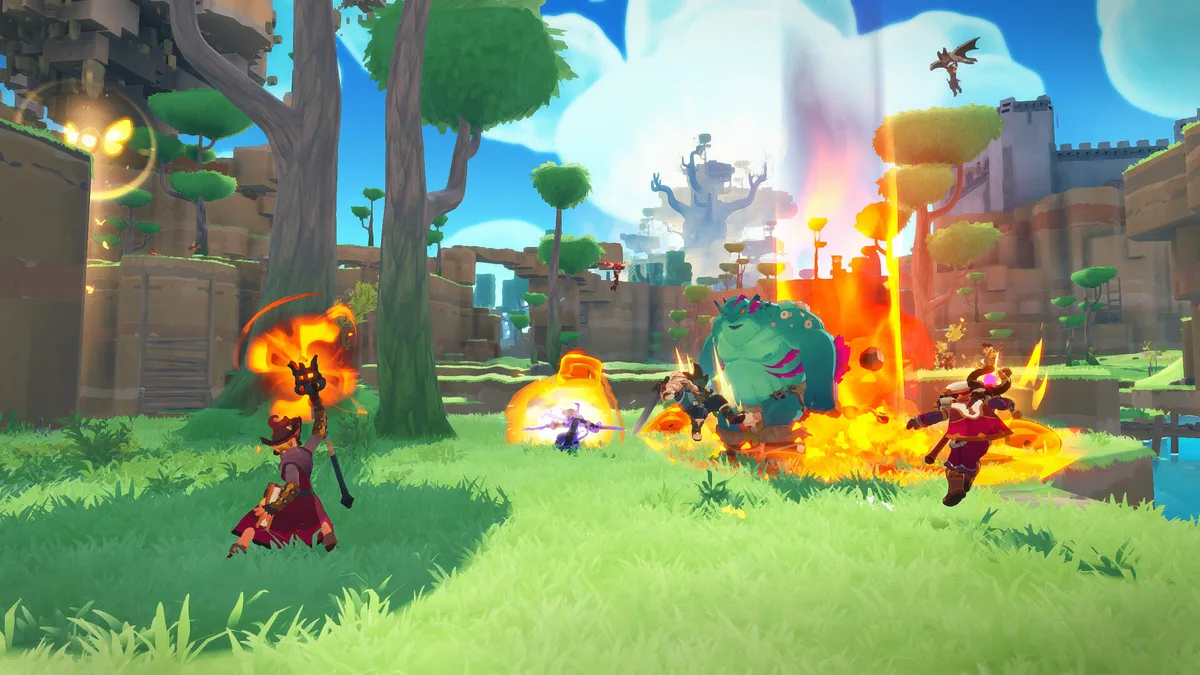 Boss and elite fights like this one drop weapons and armor scaled to that specific dungeon's level requirement, not to a numbered floor depth.
GODEEPER: How Farever's dungeon difficulty scales by dungeon level, and how party composition, especially having a Support, changes what a group can push through. Farever Dungeon Guide: Floor Depth and the Support Edge →
What actually determines an item's stats
This is the part most players get wrong, and it's not the mechanic you'd expect. Farever's items aren't itemized so the same drop gives every class a different bonus. Gear stats are fixed on the item. What varies by class is armor value and which class the piece is designed for.
Three separate things gate an item's stats, and they're easy to mix up:
Rarity gates stat count. An Uncommon item rolls primary attributes only, whatever the base stat for that slot is. Rare rarity and above starts adding secondary stats on top of the primary. This is why a Rare item with a modest base number can still outperform a higher-base Uncommon piece: the Rare item has an extra stat line the Uncommon one structurally can't roll.
Enemy faction sets the secondary stat pool, not your class. Gear that drops from certain enemy types leans toward specific secondary stats. Items from Kobold-type enemies tend to roll Crit Chance; items tied to the Crimson faction (the same Crimson Citadel zone you'll recognize from the open world) tend to roll Fervor. If you want a specific secondary stat, farm the zone or enemy type known for it, not just a higher-level dungeon in general.
Class gates armor value and itemization pairing. Gear pieces are often built around class pairs, like Warrior/Rogue gear or Mage/Priest gear, rather than being universal. Warrior gear carries the highest defensive values in the game. Mage and Priest armor is noticeably lighter. When a piece is shared between two classes, its armor value averages between them, skewed toward whichever class in the pair has the higher base.
Where passives actually come from is the part the tooltip system explains worst. Passive skills in Farever are tied to weapons specifically, and you unlock the ability to use more than one at level 7 through the Arsenal System. Once unlocked, you can equip a secondary weapon from a different class and extract that weapon's attached passive skill onto your hotbar. That's how hybrid builds happen, pairing a Priest's base kit with a Warrior's weapon for a Paladin-style melee-plus-heal build, or a Rogue's mobility with a Mage's weapon passive for a caster-rogue hybrid. It's a weapon-and-Arsenal mechanic, not a "every item behaves differently per class" mechanic.
Stat priorities still break down sensibly by class once you know what's actually gating them. Warrior wants block chance and flat mitigation stacked together on Warrior-itemized pieces, since the class already carries the highest base armor values. Mage benefits most from Rare-and-above gear specifically, since the elemental and spell-power secondary stats that matter for a caster only show up once an item clears the Uncommon-to-Rare stat-count threshold. Rogue should prioritize Kobold-faction drops if crit is the build target, since that faction's items lean toward Crit Chance secondary rolls. Priest support builds want healing-relevant secondary stats, which show up on the same Rare-and-above items as everyone else, just gated by which zone or faction dropped them rather than by class.
Crafting jobs: how gear gets made
Crafting jobs in Farever are separate from combat classes. You choose a crafting specialization independently of whether you're playing Warrior, Priest, Mage, or Rogue. A Rogue can be your group's primary crafter for Warrior or Priest gear. The specialization affects what you craft, not what you fight with.
Each class has a crafting job that fits its gear needs. The practical guidance early on is to develop your class's associated crafting job before touching a second one. Most players hit the comfortable branching point around 5-8 hours in, once the primary job is producing reliable output at Rare quality. Going earlier means two half-developed trees instead of one that's actually useful.
The group coordination problem most new teams hit: all four players choose crafting jobs that produce damage-class gear. Three of the four combat classes lean toward dealing damage, so it feels natural. The Warrior and Priest end up under-equipped while the two damage players have more crafted items than they know what to do with.
The fix is one conversation before the first dungeon. Assign who crafts for each role: one person on damage gear, one on Warrior gear, one on Priest gear. The fourth player covers whatever's left or doubles up where it's needed most. That's the difference between a group that progresses cleanly and one that hits a gear wall and goes in circles trying to figure out why.
Crafting materials from Siagarta's open world zones break down by zone type. Surface coastal and plateau areas produce Common and Uncommon materials for early gear, useful while your group is still under the level requirement for Farever's earliest named dungeons. Shiro Games has continued adjusting gear stat values in balance patches since launch, so treat specific numbers as a moving target and check the in-game tooltip over anything printed here for exact figures.
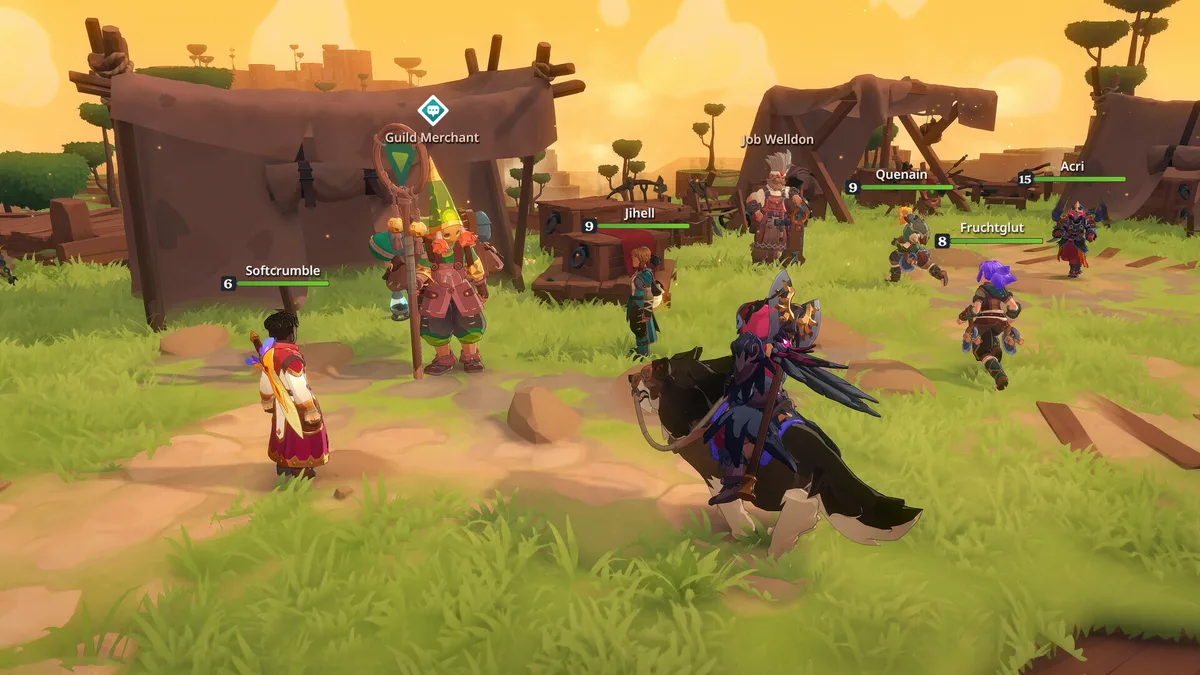 Crafting recipes and vendor NPCs are tied to open-world hub zones like this one, not to a crafting-only menu screen.
GODEEPER: How class choice shapes gear bonuses and crafting priorities, broken down role by role for co-op groups. Farever Builds Guide: Best Class and Team Comp →
Gear and underwater cave pressure ratings
Pressure ratings don't get explained at the start, and they'll cost you a bad session if you ignore them. Every item in Farever has a pressure rating that determines how deep into Siagarta's underwater caves you can go before the environment starts damaging you.
The game does give you a warning before you enter a cave that exceeds your current gear tolerance. It's easy to dismiss, especially when you can see good loot through the cave entrance. Don't dismiss it. Below gear tier 2 on chest and legs, the passive environmental pressure outpaces your recovery options even if the actual combat is manageable. You'll survive the fights and still die to the zone.
Shallow underwater sections in the first biome don't have this restriction. Those are fine to explore early. The pressure system kicks in at the cave depths where the better early-tier gear caches are hidden, which is exactly when it's most tempting to push through.
Tips for Farever gear optimization
Check what an item's rarity unlocks before comparing raw item levels. A Rare item with secondary stats can outperform a higher-level Uncommon item that structurally can't roll them. Rarity, not the number on the tooltip, decides how many stat lines you're even working with.
Target specific enemy factions for specific secondary stats. If your build wants Crit Chance, farm Kobold-type enemies. If it wants Fervor, farm the Crimson faction. Grinding a random higher-level dungeon doesn't guarantee the secondary stat you actually need.
When you need materials, farm open zones first. Surface encounters give you Common and Uncommon materials without the risk of a dungeon disconnect. If your group isn't ready for a level-appropriate dungeon yet, open zone farming is the low-stakes version of the same loop.
Don't double up on crafting jobs that produce the same gear type. Two players both producing damage-class crafted gear means half the group's output at the same resource cost. Sort this before the session starts.
Unlock the Arsenal System at level 7 as early as your build allows. That's what actually lets you borrow a passive skill from a different class's weapon. Skipping it means missing out on the hybrid-build passives that define a lot of Farever's stronger builds.
Don't assume a higher-level dungeon fixes a stat problem a faction farm would fix faster. If you know which enemy type rolls the secondary stat you want, farming that source directly at your current level beats grinding for level access to a harder dungeon first.
What's new for gear since this guide was first written
Shiro Games shipped Farever's first major content update, The Nightling Invasion, on July 15, 2026. It raised the level cap to 25, added a new region, and introduced Rifts, portals that lead to the demon-infested realm of Niflel with escalating waves of enemies for groups of up to 15-plus players. Clearing those world events earns Demonic Souls, a currency traded for exclusive mounts, weapons, and runes, alongside new gear sets and achievements tied to the update.
Beyond that patch, Shiro Games' publicly stated roadmap for the rest of 2026 includes more dungeons, more regions, a Heroic difficulty mode, and two new classes, Monk and Druid, both targeted for the second half of 2026. Nothing in Shiro's own announcements describes a numbered gear-tier expansion or a "floor ceiling" being raised; the studio's language is about more dungeons and higher difficulty modes, not a depth counter. Expect the rarity ladder and dungeon-level scaling described in this guide to hold, with new named dungeons simply extending the level range upward.
Related Reading
- Farever Dungeon Guide: Floor Depth and the Support Edge: Breaks down how dungeon difficulty scales and why party composition, especially having a Support, changes what a group can push through.
- Farever Builds Guide: Best Class and Team Comp 2026: Passive priority order by class and how gear modifiers compound with build direction.
- Farever Class Guide: All 4 Classes and How to Pick: Role-by-role breakdown including gear paths and crafting synergies for each class.
- Farever Tips for Beginners: First Hours in Siagarta: First-session fundamentals before you start optimizing gear for dungeon content.
- Farever Review 2026: Good Bones, Rough Early Access: Full assessment of where the EA build stands including the gear system's overall place in the game.
- Farever How Long to Beat: Early Access Hours and v0.2: Farever how long to beat: roughly 10-15 hours in current EA. The Support class meaningfully extends how long a group can push before retreating.
Frequently Asked Questions
How many gear tiers are in Farever? Five rarity tiers: Common, Uncommon, Rare, Epic, and Legendary. There's no floor-based tier system on top of that. Gear power instead scales with the level requirement of whichever named dungeon it dropped in.
Does class affect the stats on your gear? Class affects armor value and which class a piece is itemized for, not the passives on a shared item. Warrior gear has the highest defensive values, Mage and Priest armor is lighter, and hybrid pieces average between the two classes involved.
What is the best gear stat priority in Farever? Prioritize rarity first, since Rare and above is what unlocks secondary stats at all. Then match secondary stats to your role by targeting the enemy faction known for that stat, Kobold-type enemies for Crit Chance, Crimson-faction enemies for Fervor.
Where does Legendary loot drop? From named dungeon bosses, at roughly a 1% roll rate, with Epic around 10% and Rare making up most of the rest. Those odds hold steady whether you're running a level 5 dungeon or a level 16 one; only the item's power scales with dungeon level.
How do crafting jobs work in gear progression? Crafting jobs are separate from combat class. Assign one player per gear type in co-op groups to avoid producing duplicate gear. Develop your primary crafting job to reliable Rare-quality output, around 5-8 hours in, before branching into a second.
What are the underwater cave gear requirements? Gear tier 2 on chest and legs minimum. Each item has a pressure rating, and the game warns you before deep caves that exceed your current gear's tolerance. Ignore the warning and environmental pressure damage will outpace recovery.
What do surface zone materials craft? Common and Uncommon materials from coastal and plateau zones craft early gear, useful while you're still under the level requirement for Farever's earliest named dungeons, like the level 5 Lost City of Mayda.
What did Farever's first major update change for gear? The Nightling Invasion (July 15, 2026) raised the level cap to 25 and added new gear sets tied to its Rift world events, along with a new region and the Demonic Souls currency for exclusive mounts, weapons, and runes.
References
- Farever on Steam: official store page including patch note history and news announcements from Shiro Games
- Shiro Games on Steam: developer profile page with Wartales and Northgard development context
- Farever complete guide hub: all Farever guides organized by topic including classes, builds, and dungeon progression
- Farever Early Access Launch Trailer: Shiro Games' official EA launch trailer on YouTube
- Farever - The Nightling Invasion major update, Steam News: Shiro Games' own announcement of the July 15, 2026 content update referenced in this guide
Was this guide helpful?
About the author

Senior Critic & Analyst
Former game data analyst turned critic with 11 years covering indie and mid-tier games. Based in Austin. Runs spreadsheets on games most people just play.
- 11 years games criticism
- Former game economy analyst
- Roguelike and strategy specialist
Keep reading

Disclaimer
This article is published for informational and entertainment purposes. It does not constitute professional financial, legal, or technical advice. Game performance, online services, patch schedules, and store listings change. Verify critical details (pricing, system requirements, regional availability) with publishers and storefronts before you buy. Affiliate links, where present, help support our editorial work and are labelled in our affiliate disclosure.
Comments
Loading comments…